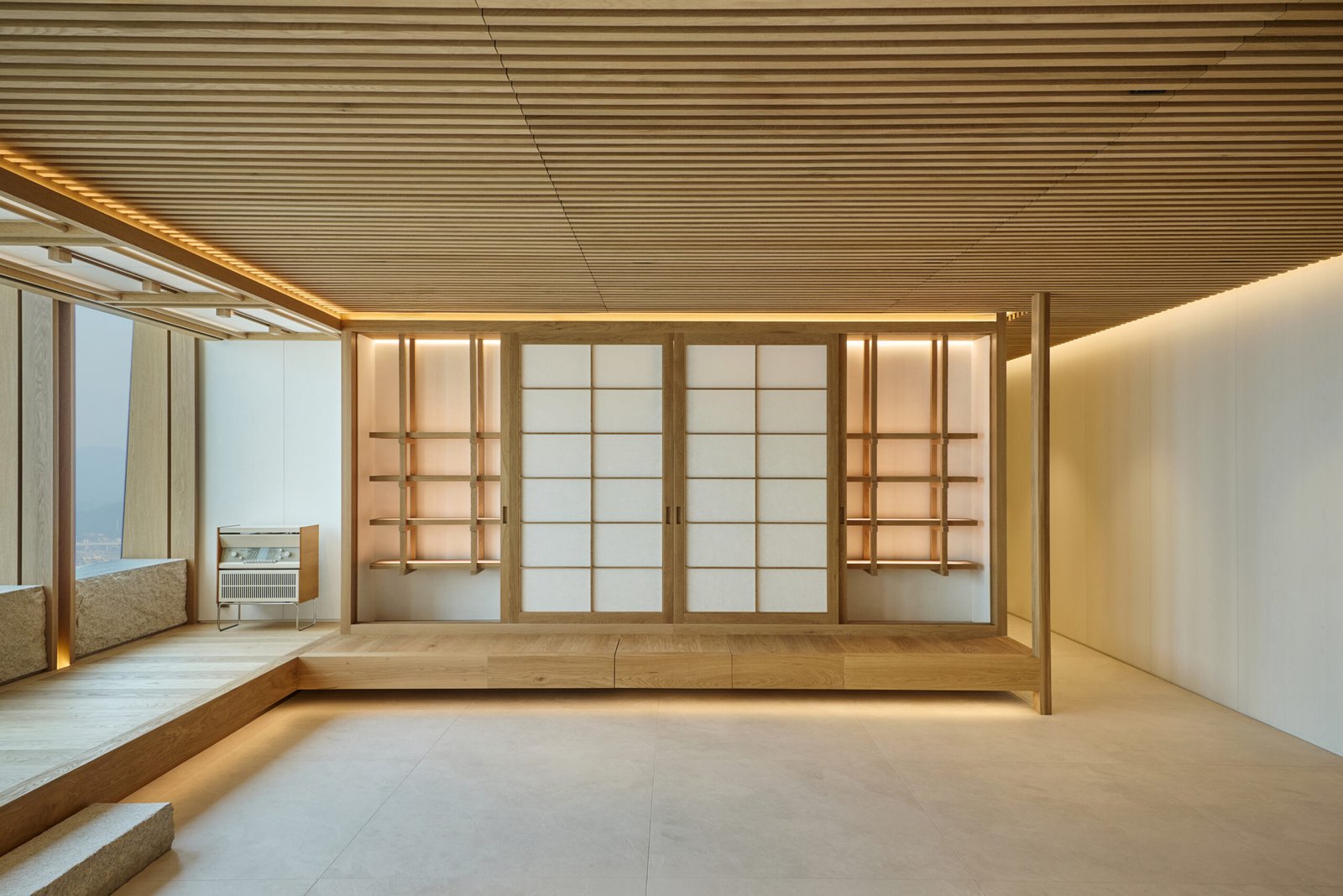
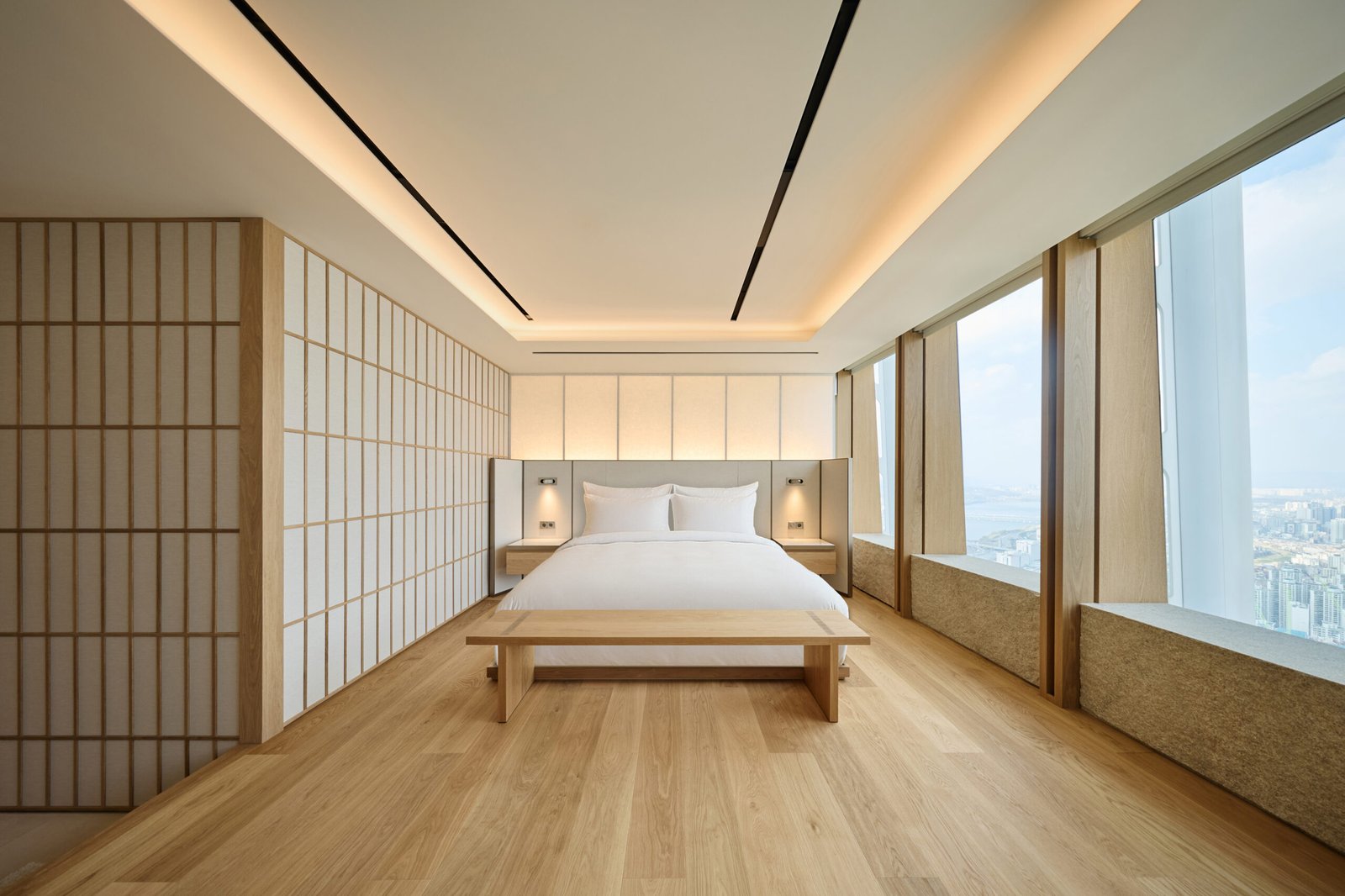
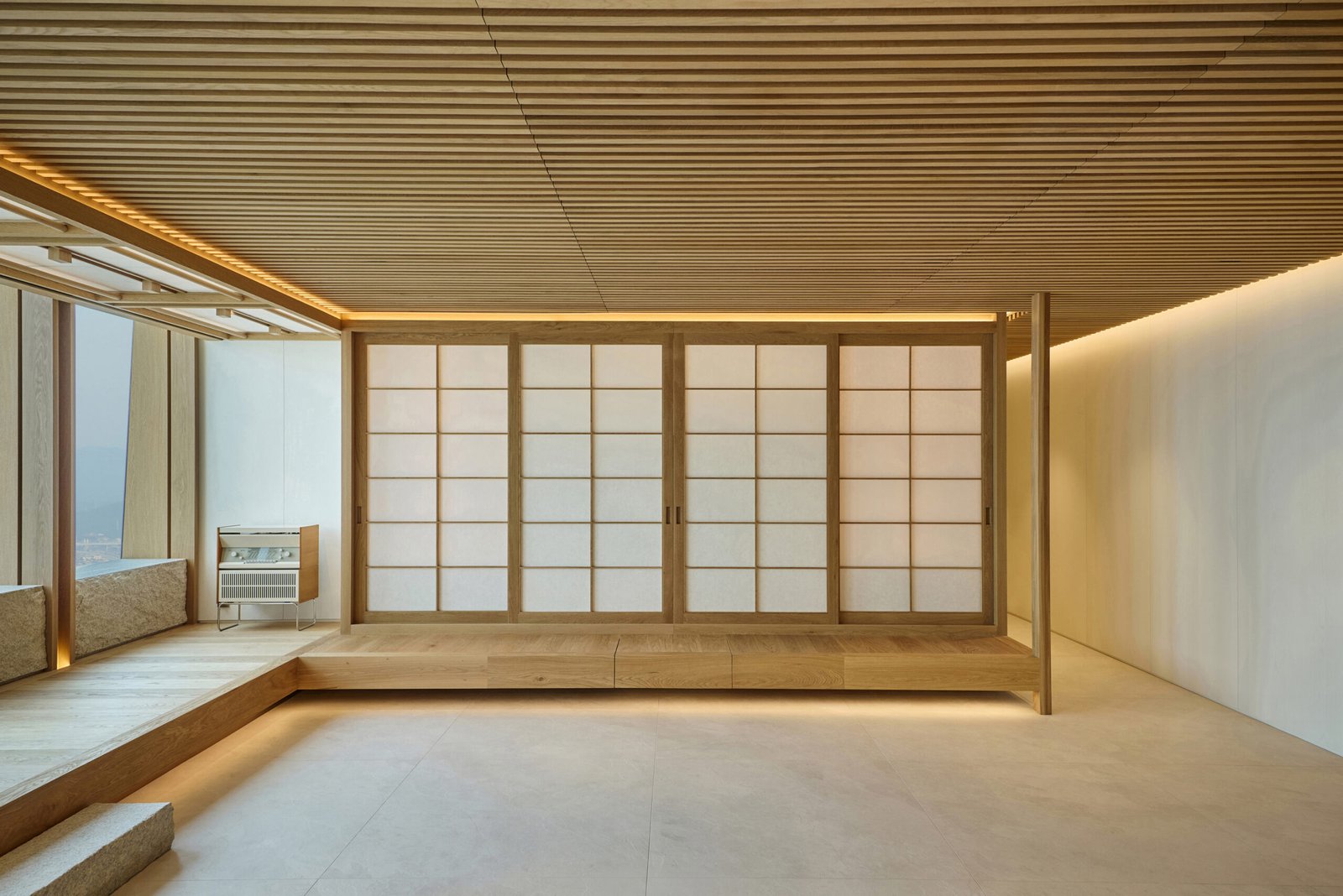
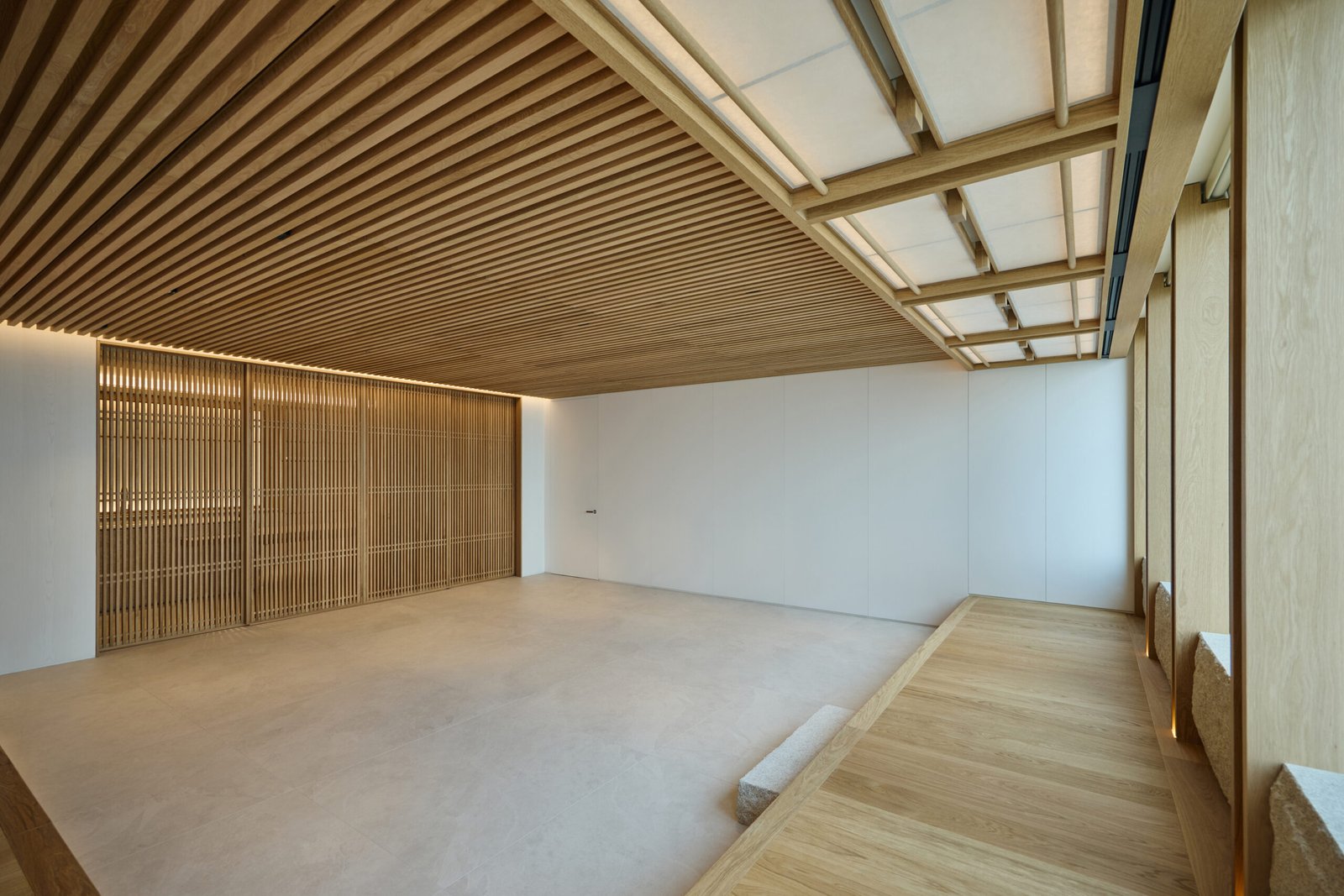
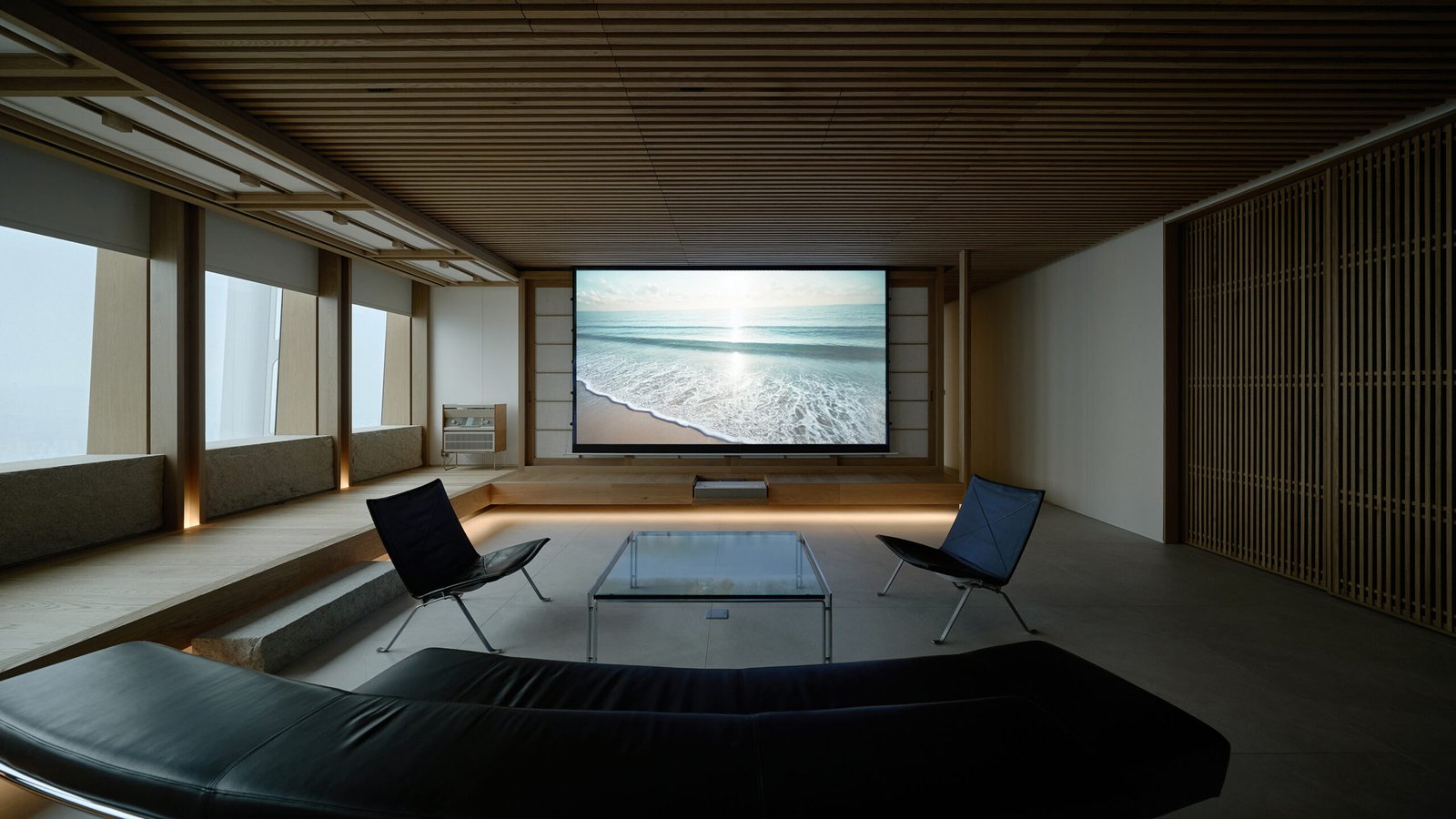
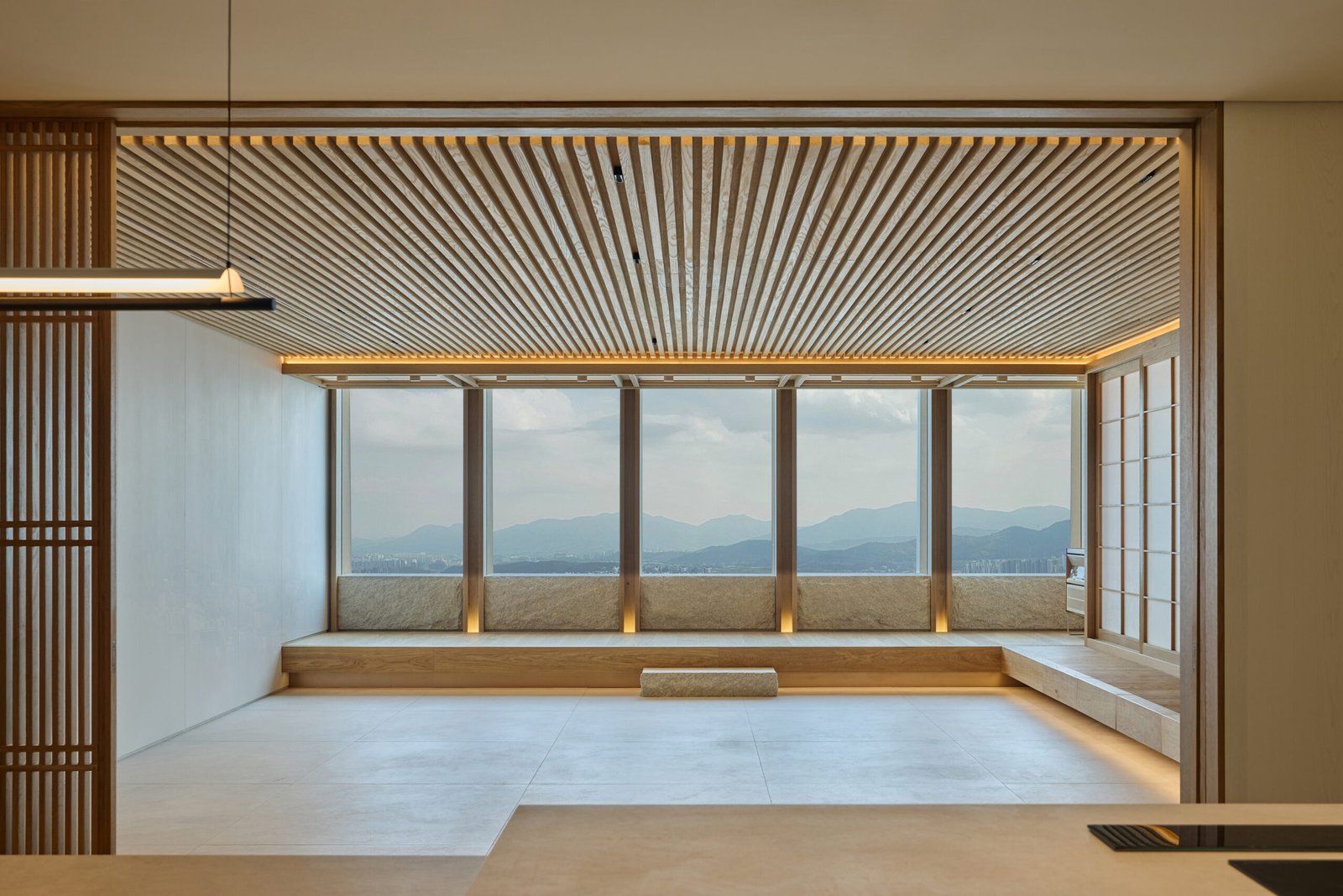
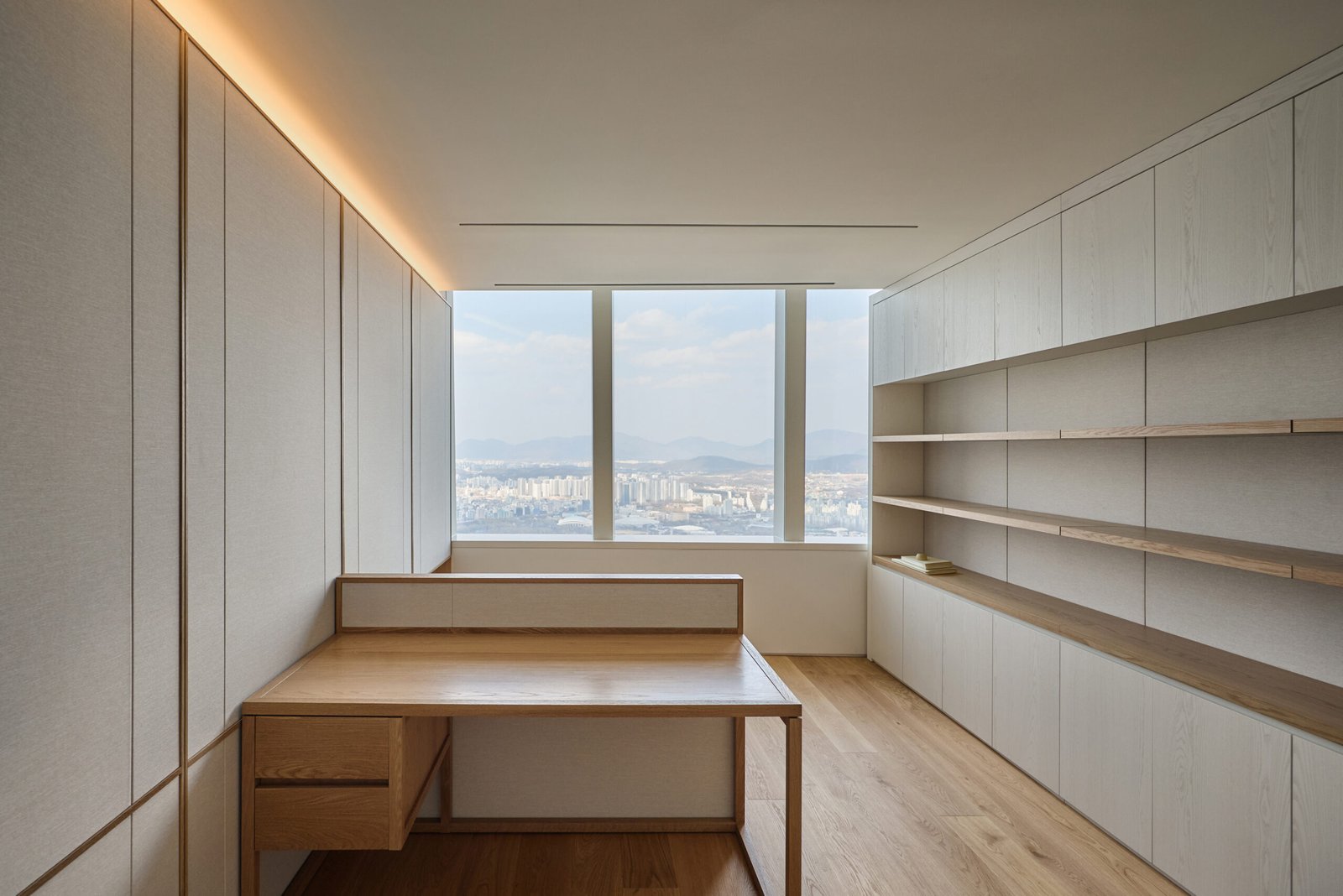
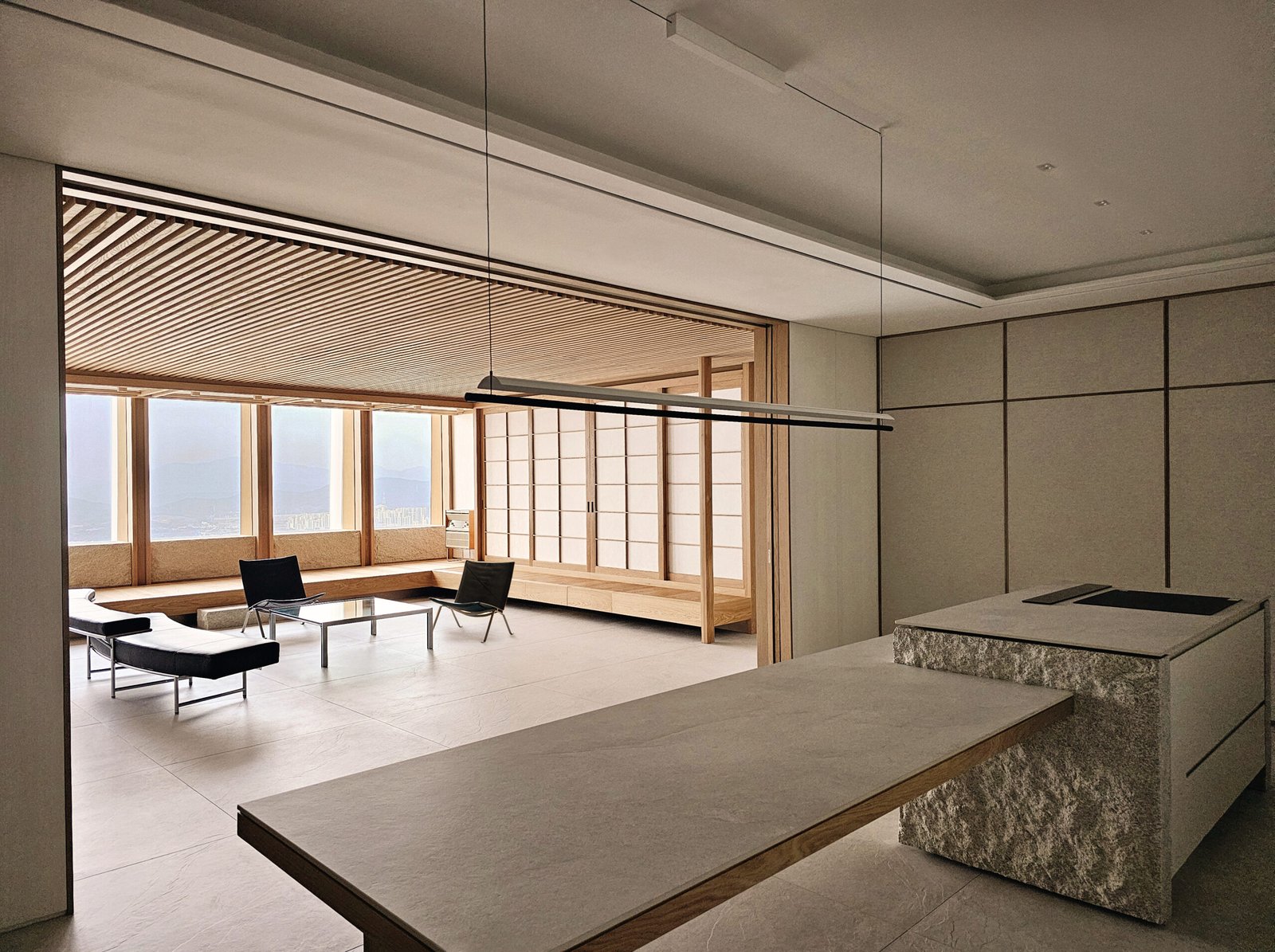
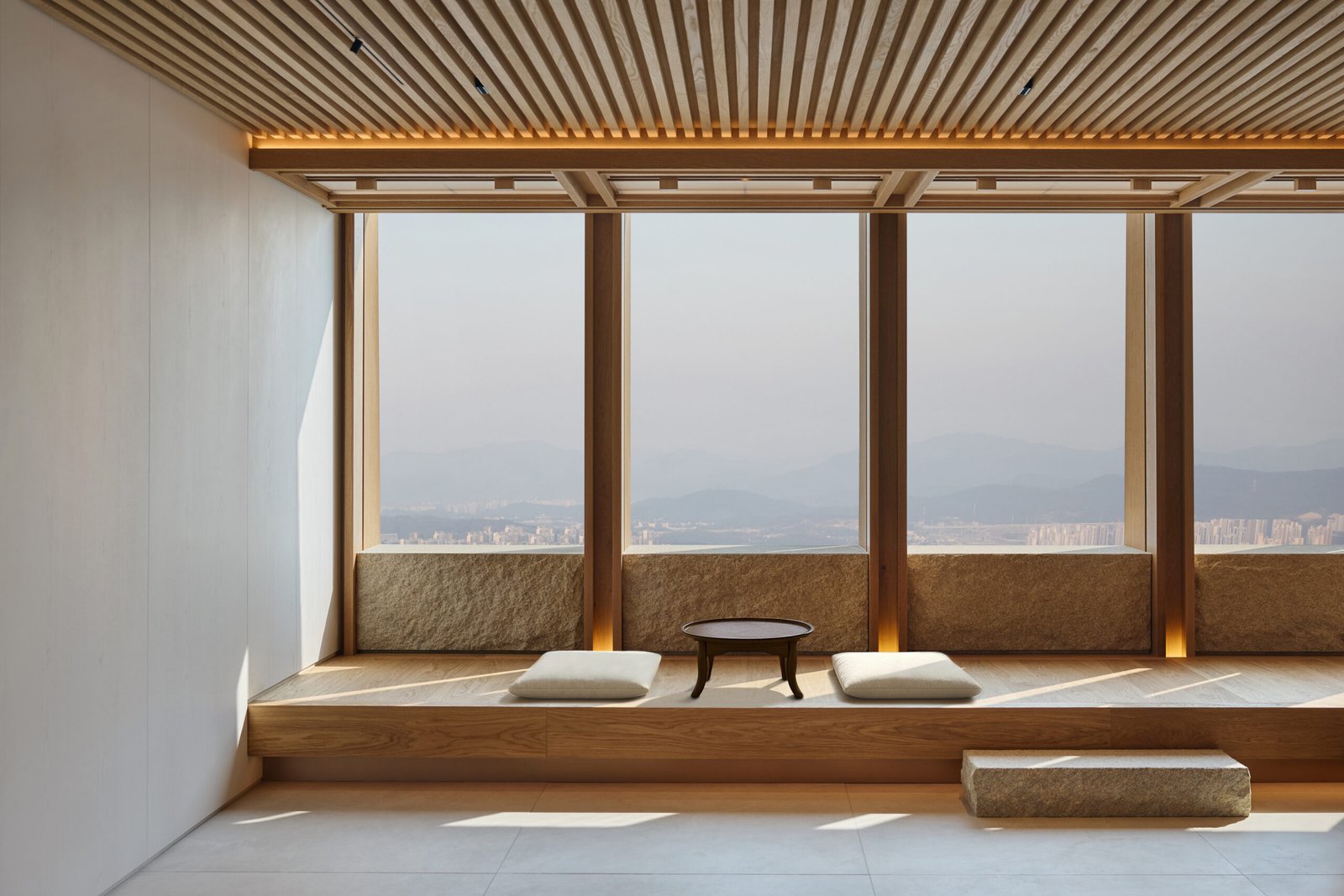
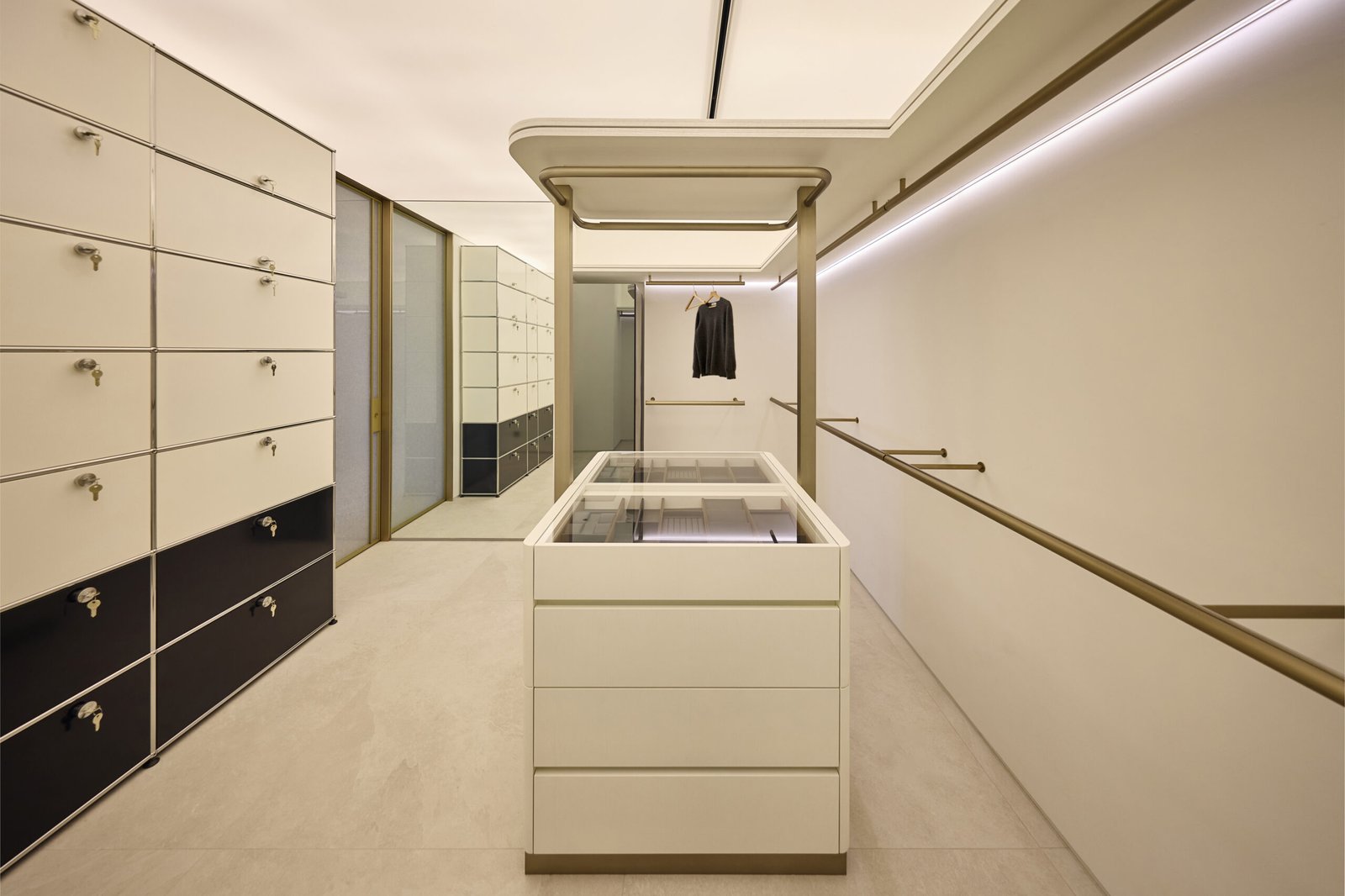
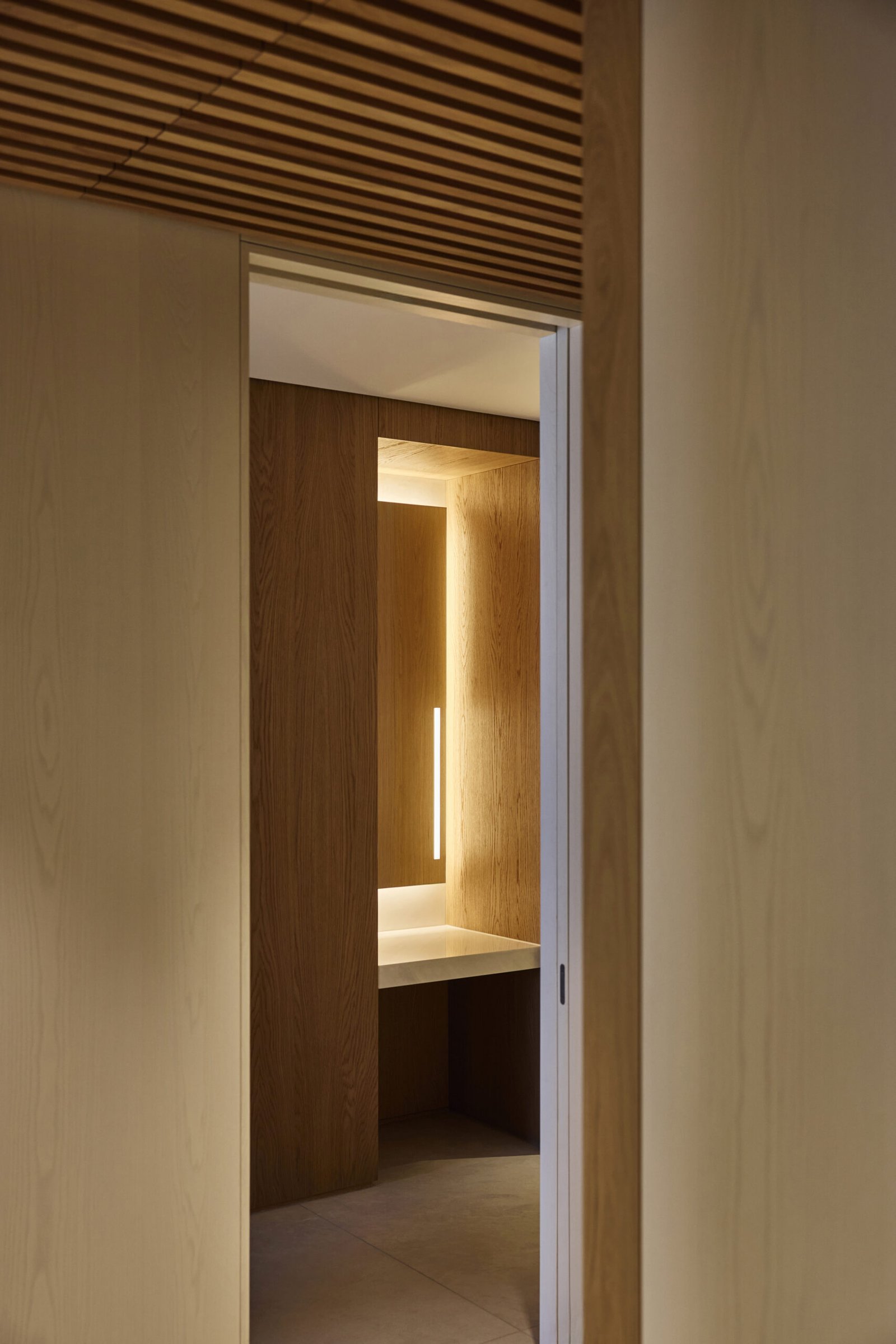
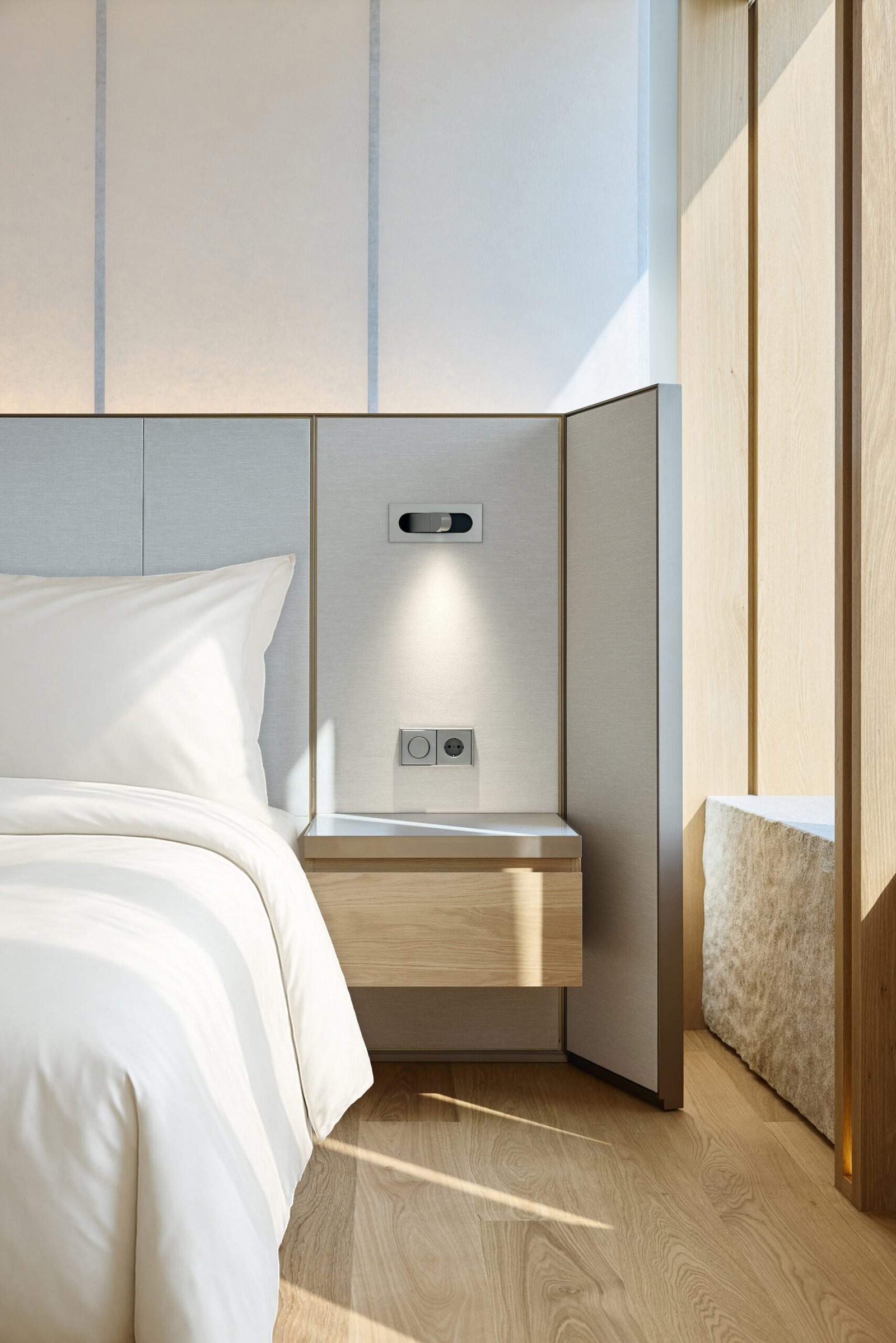
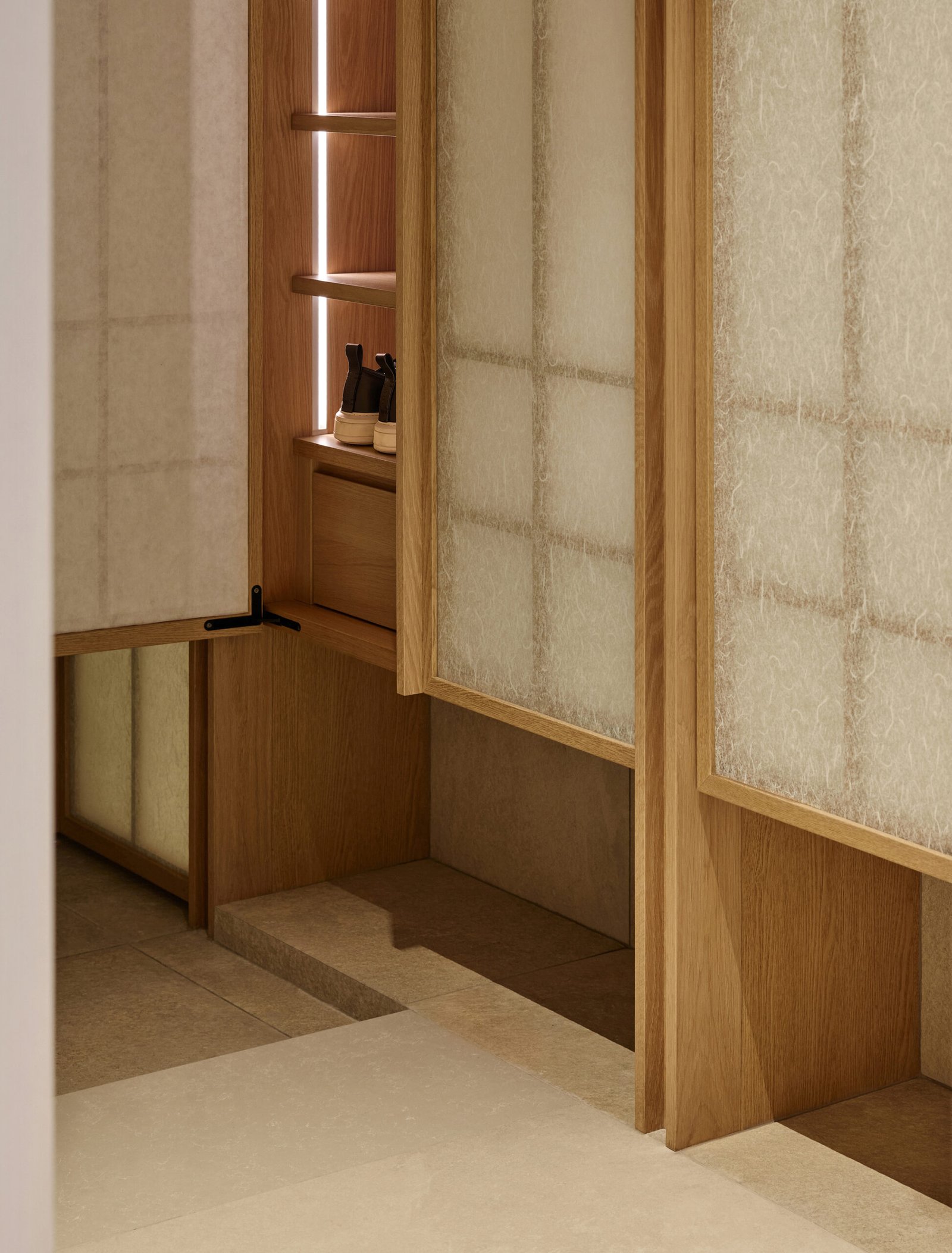
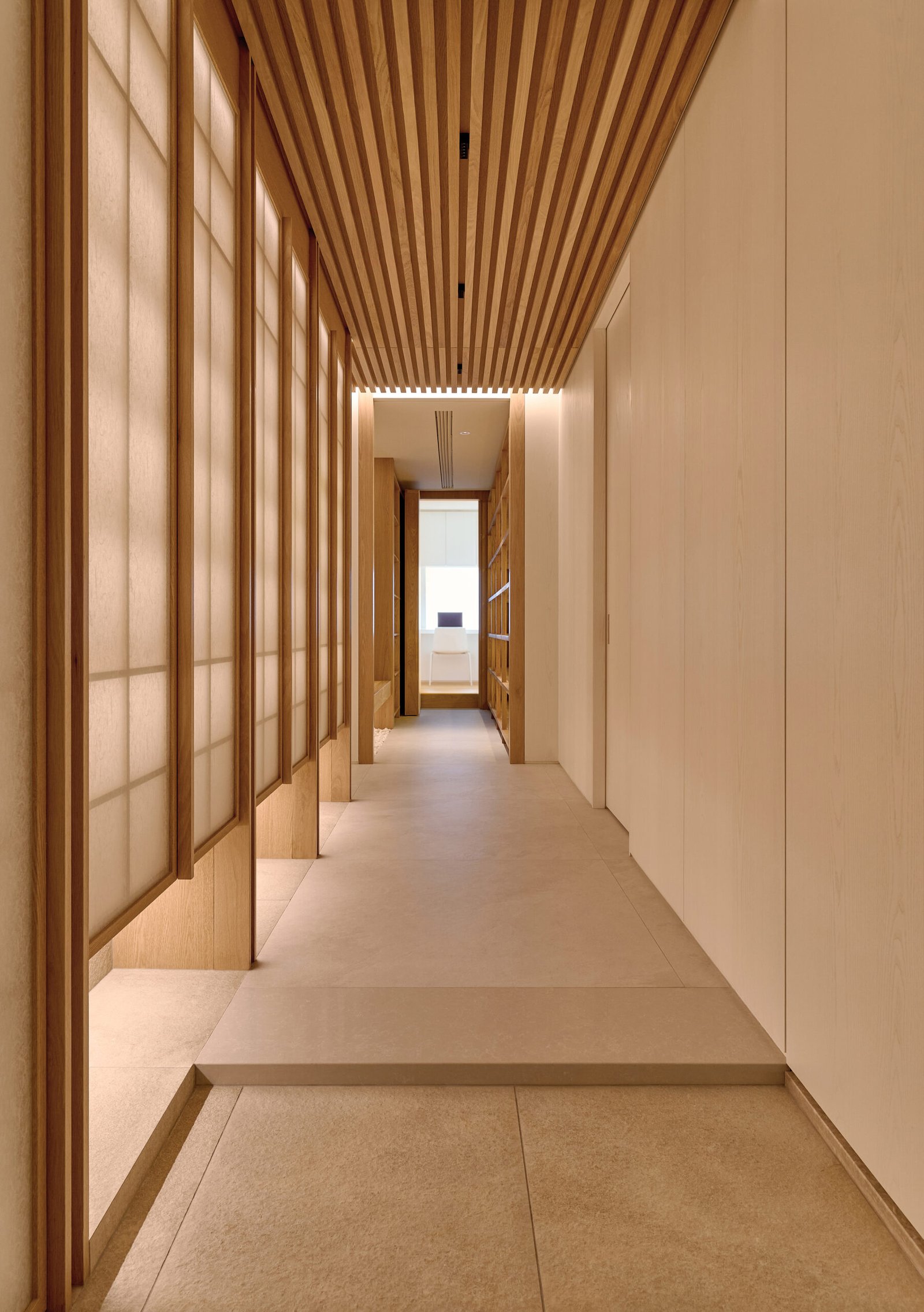
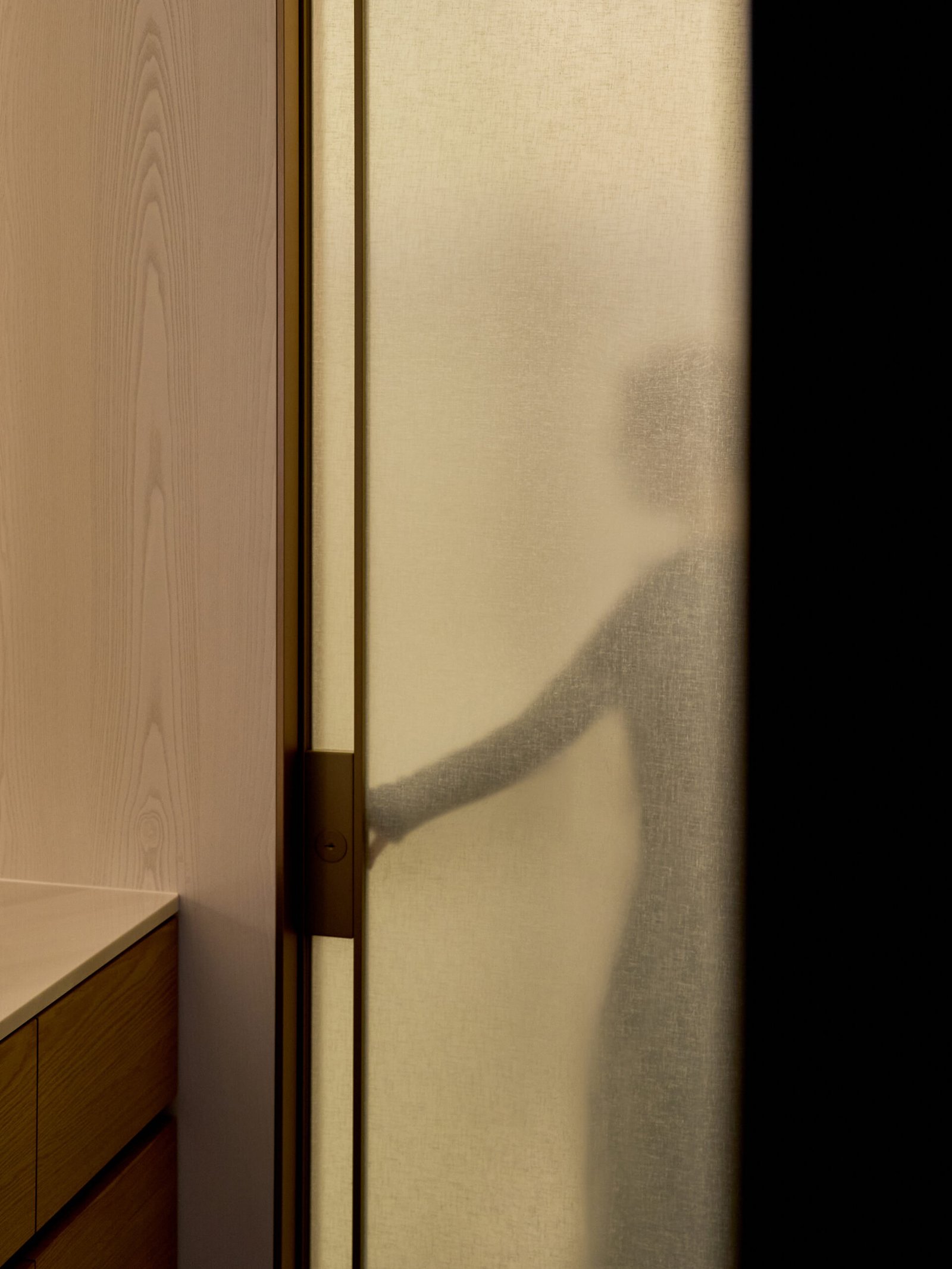
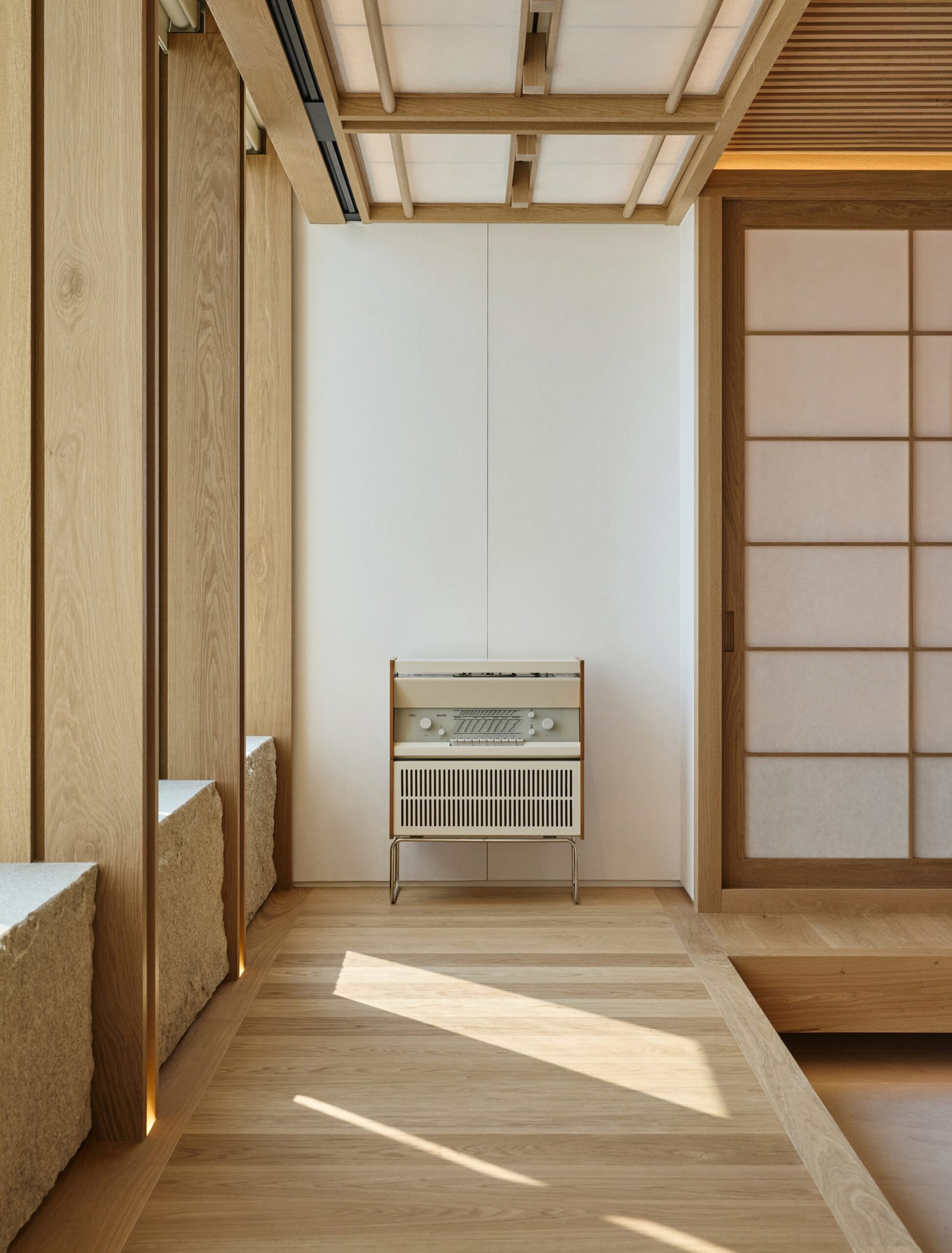
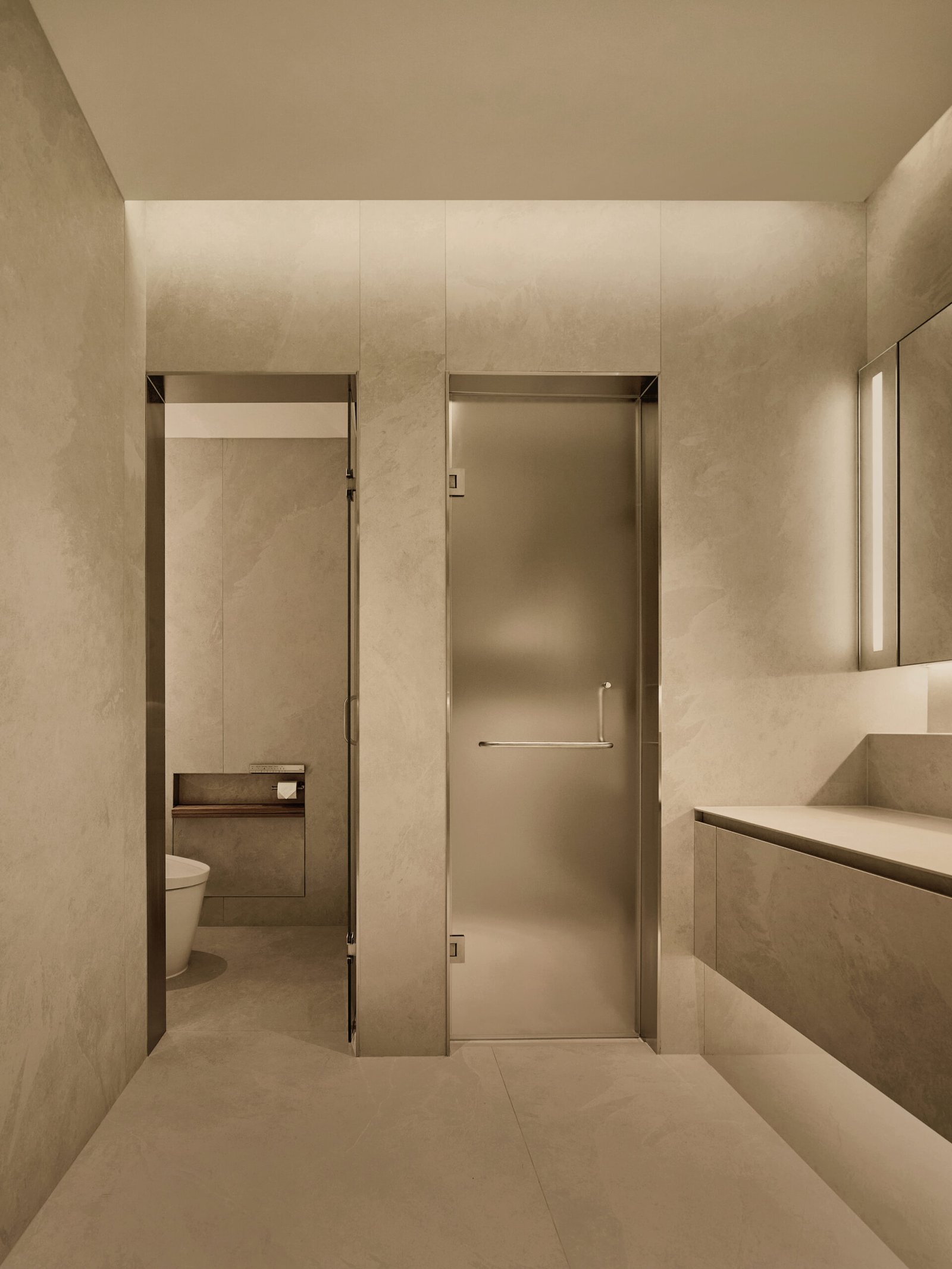
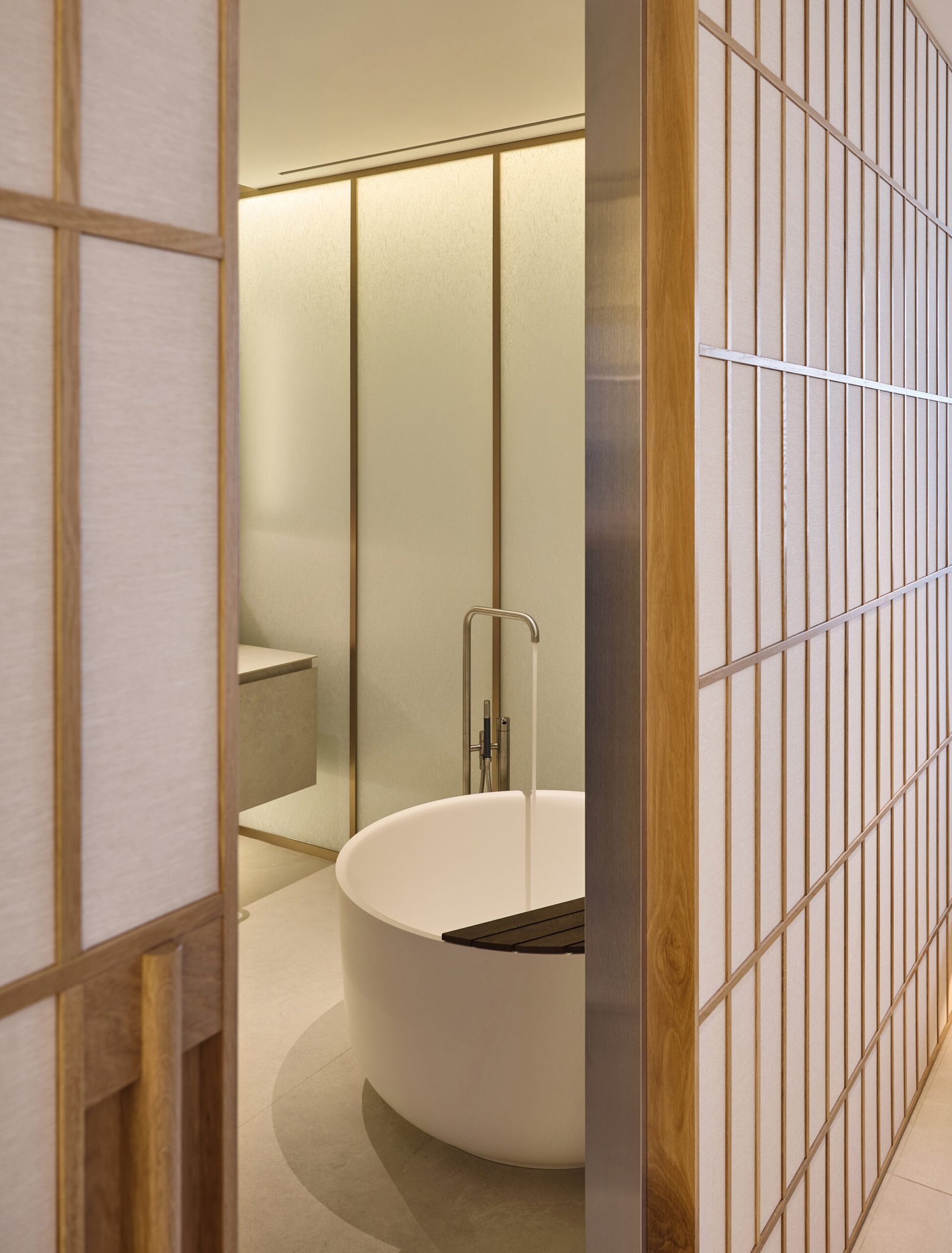
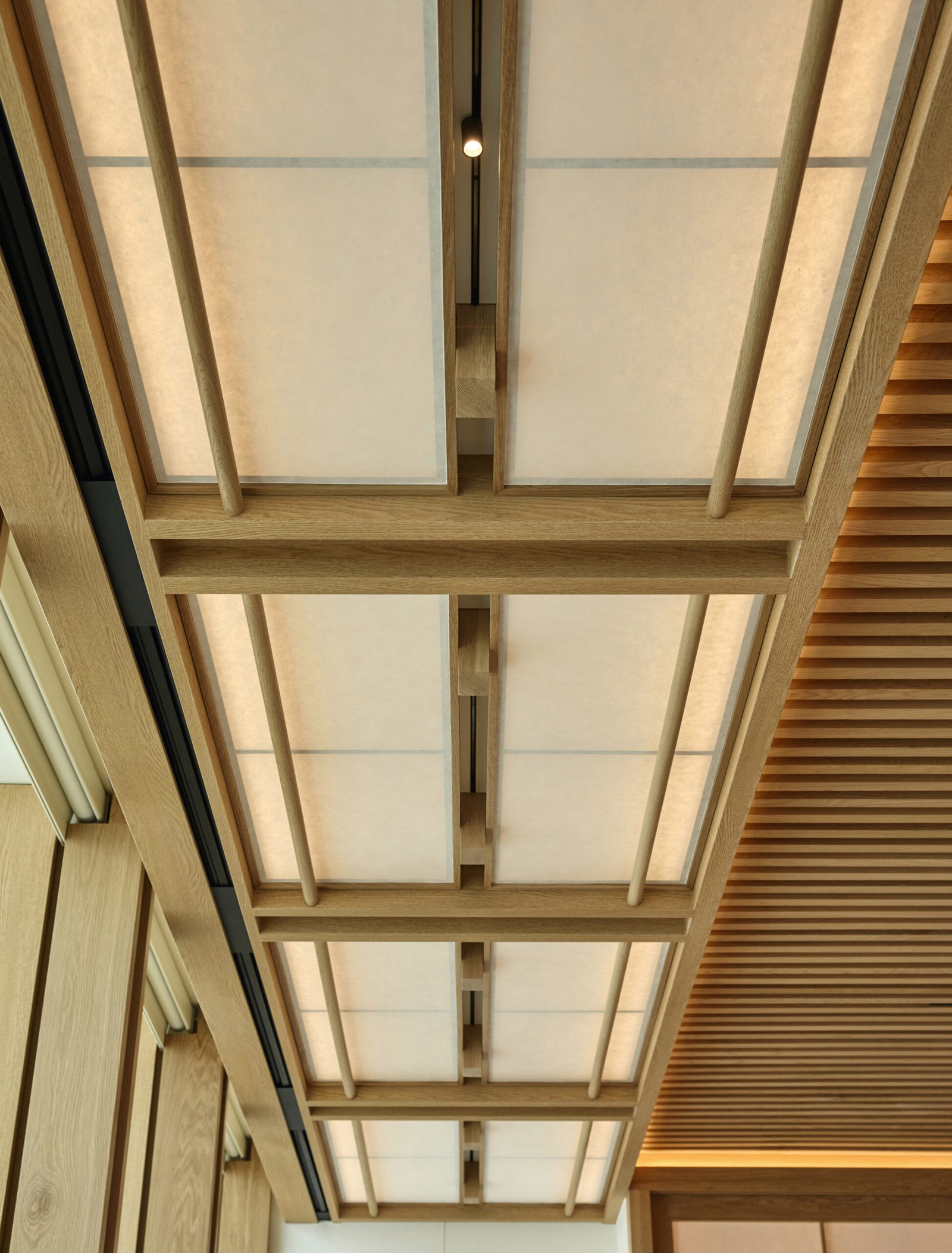
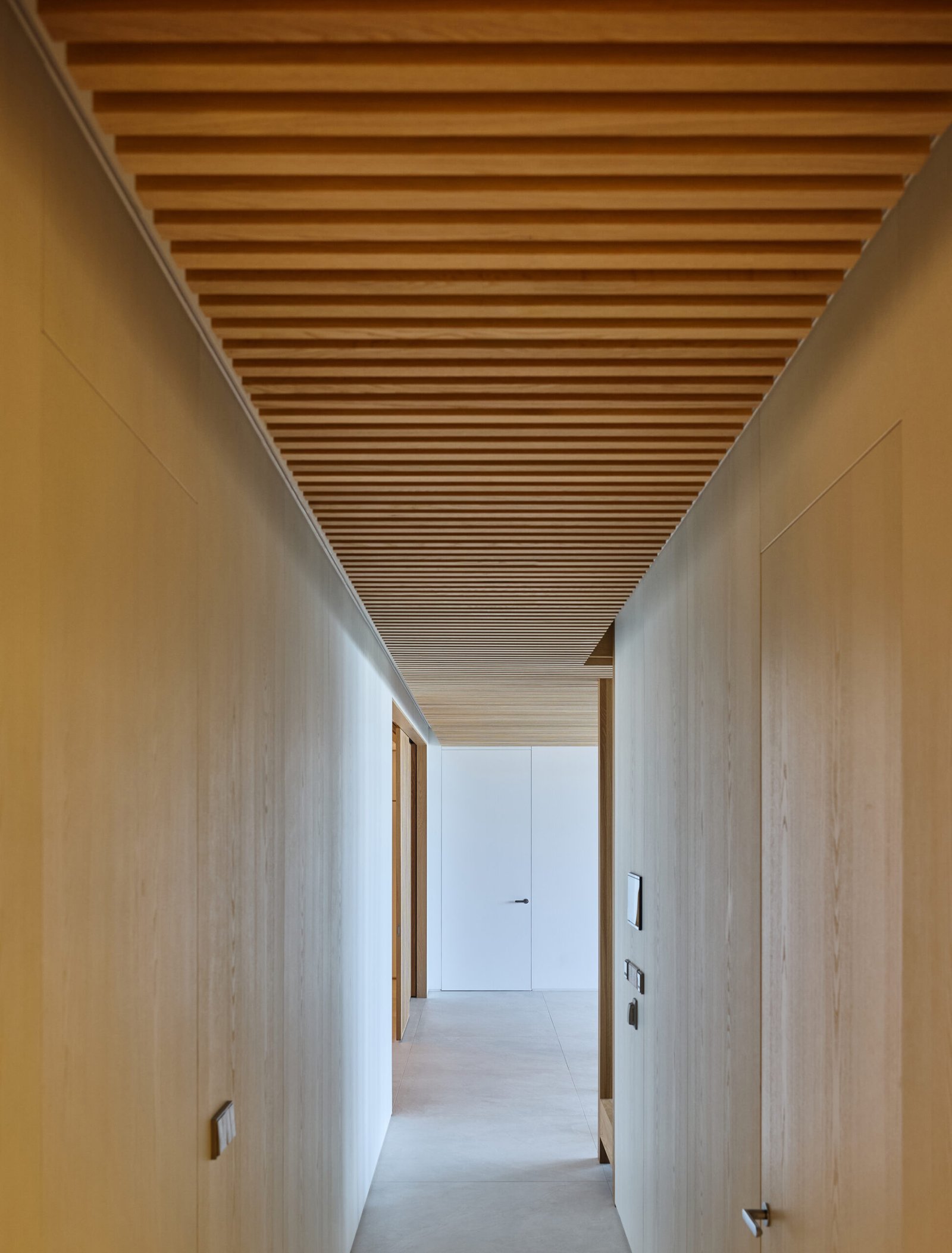
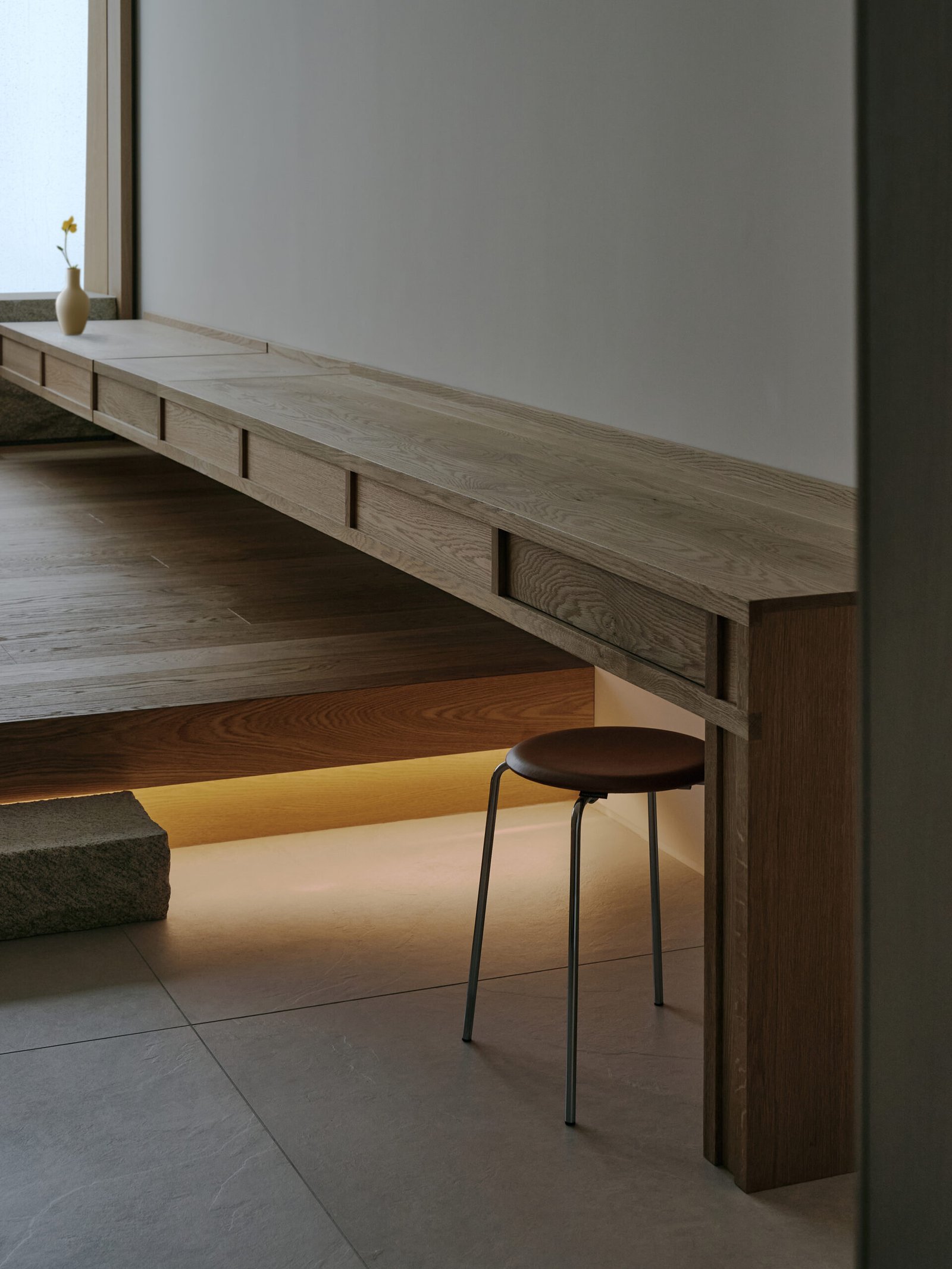
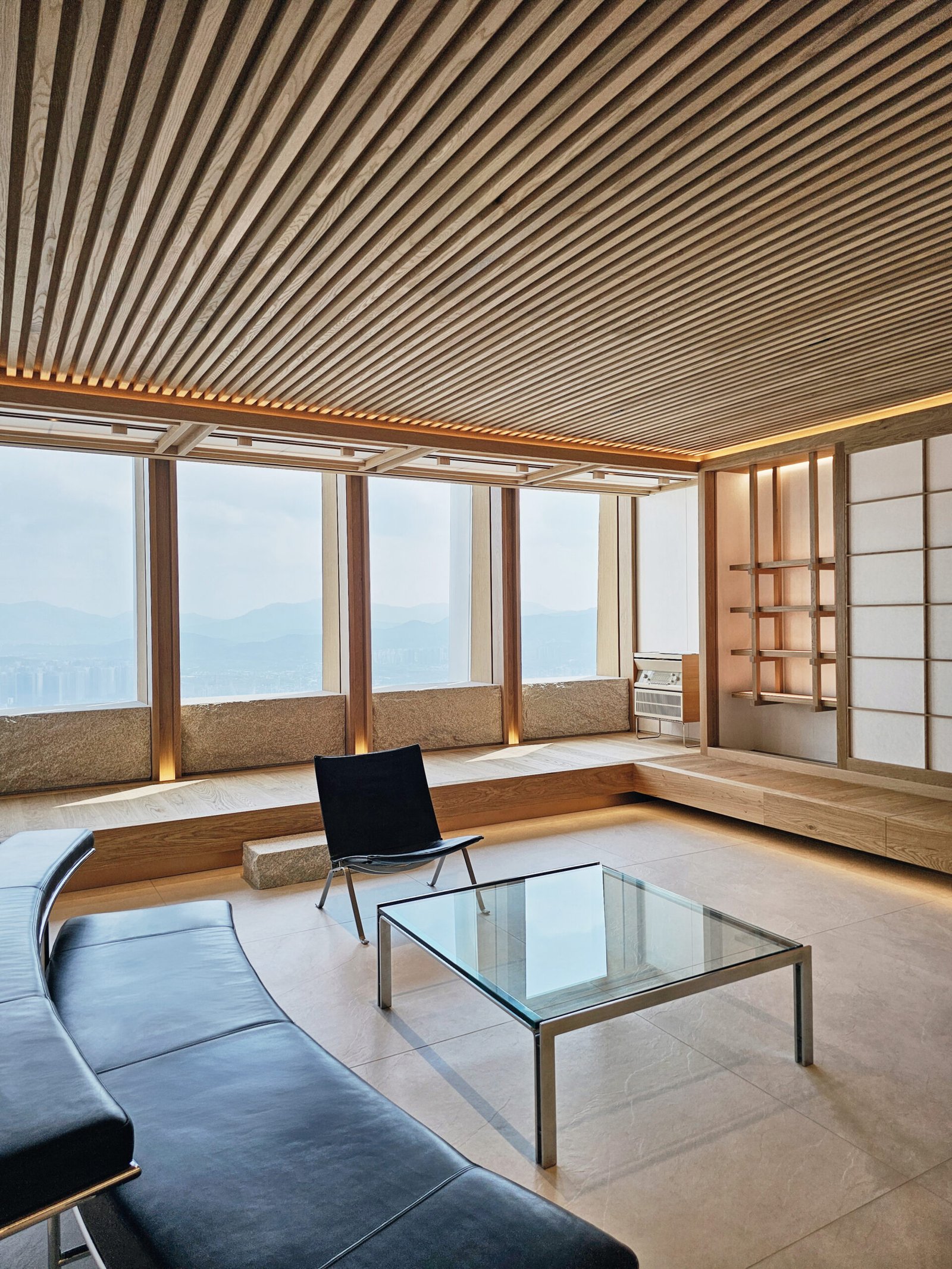
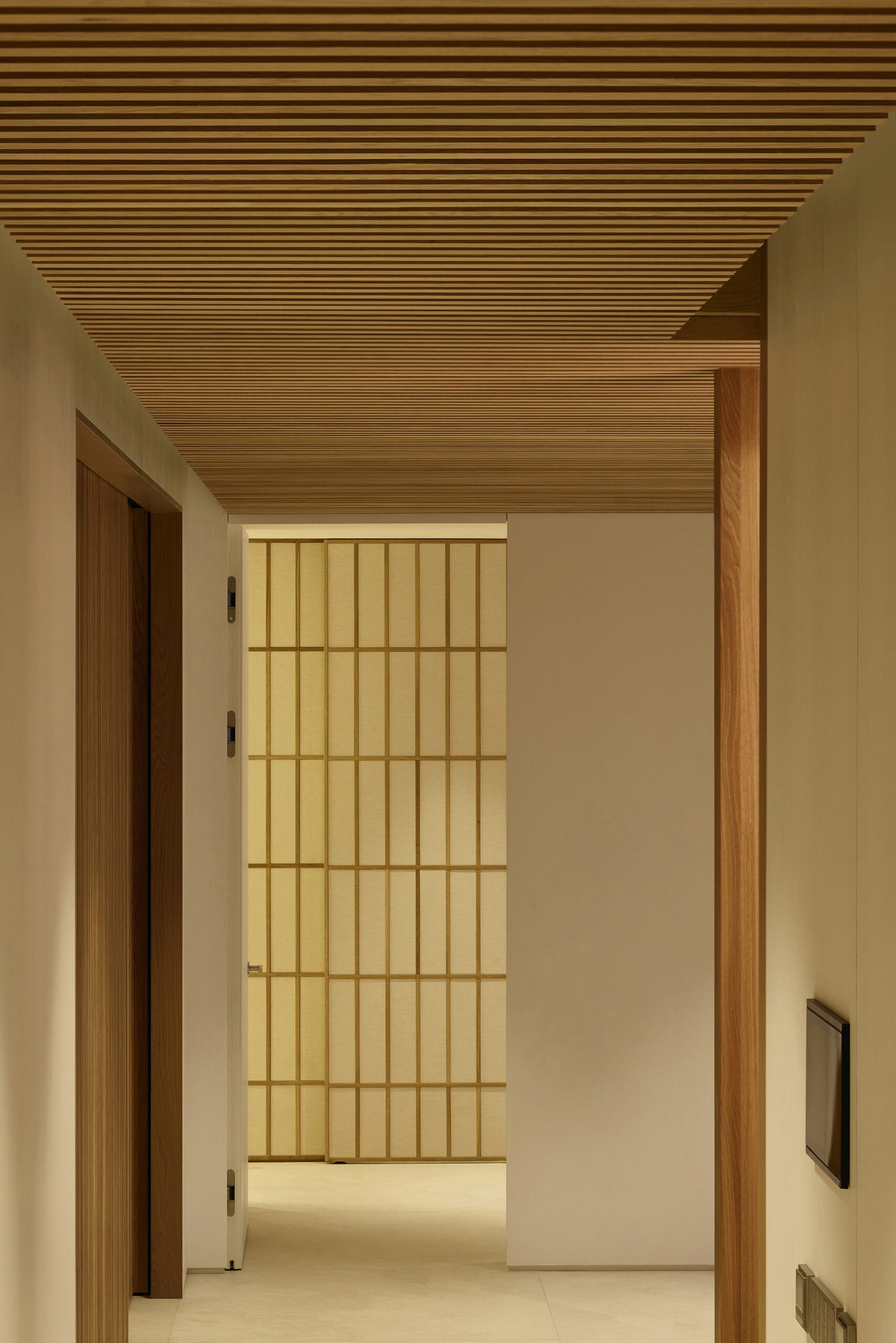
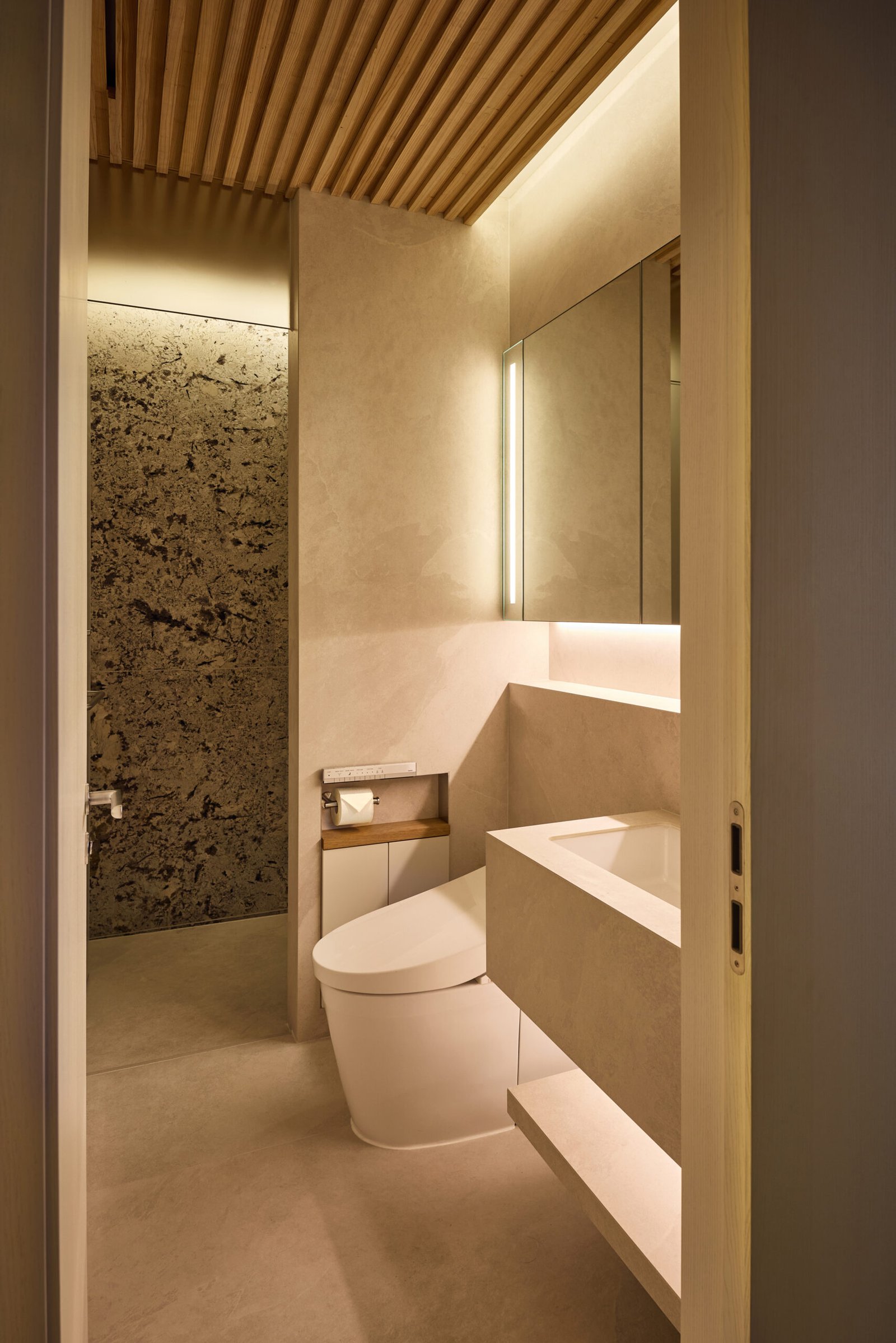
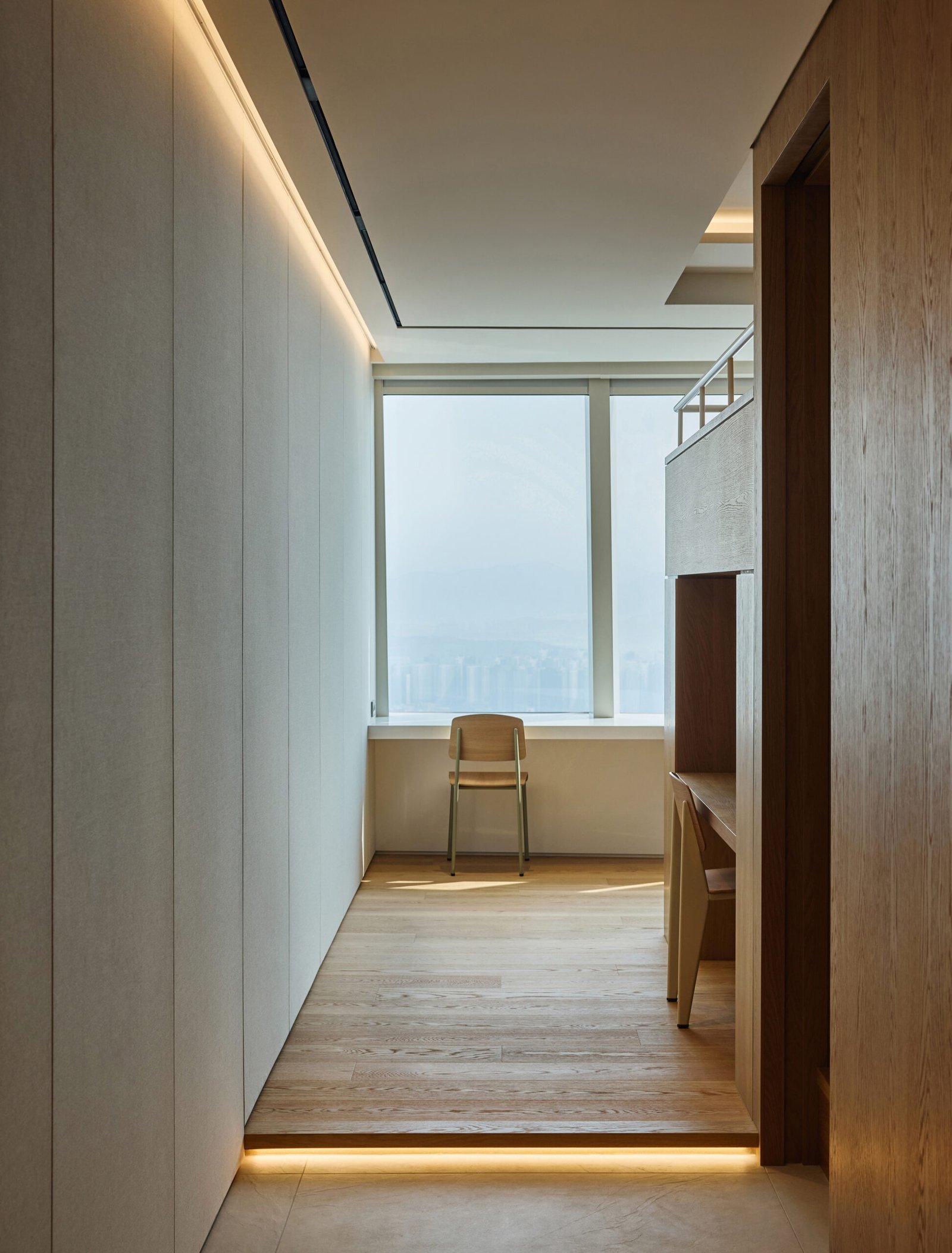
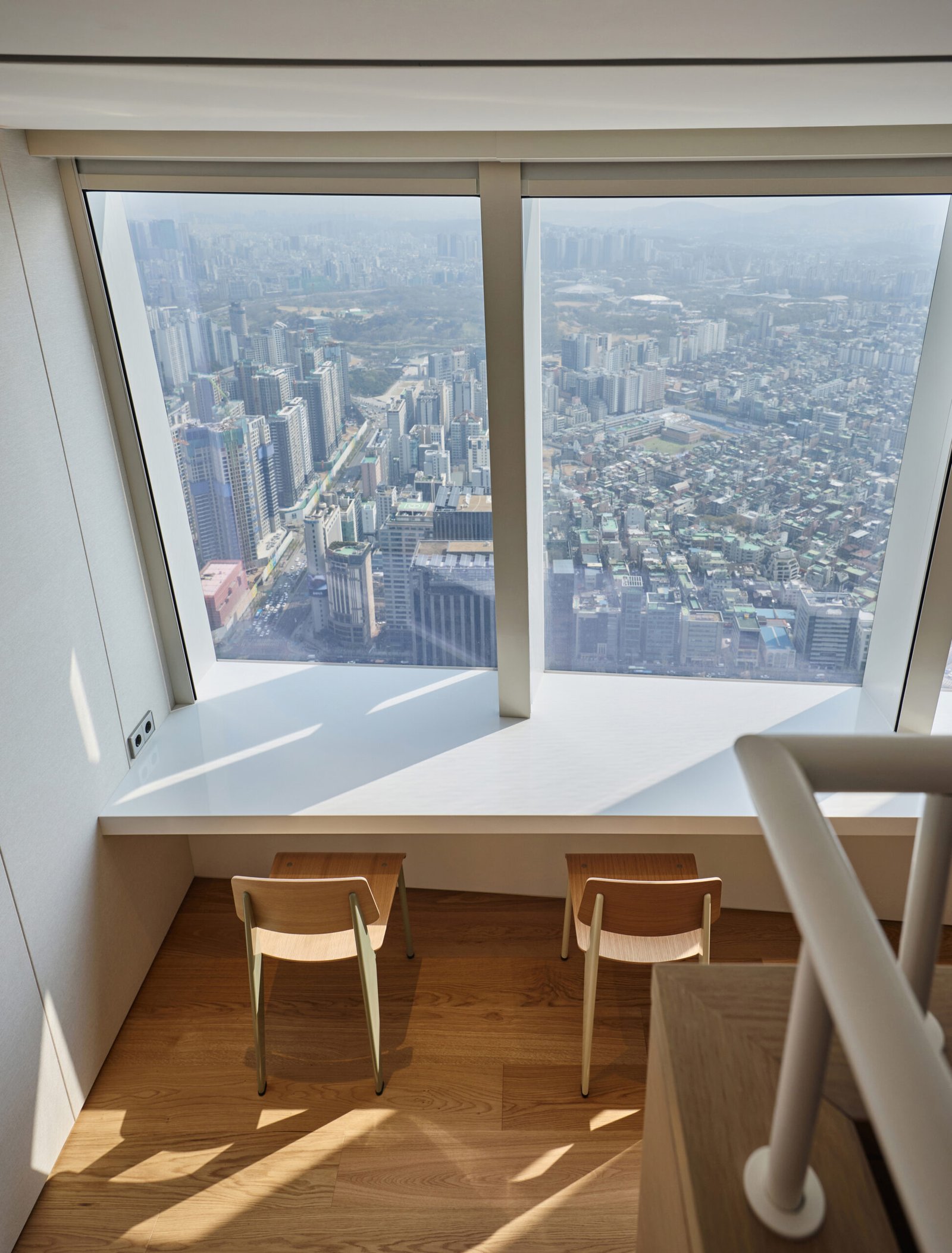
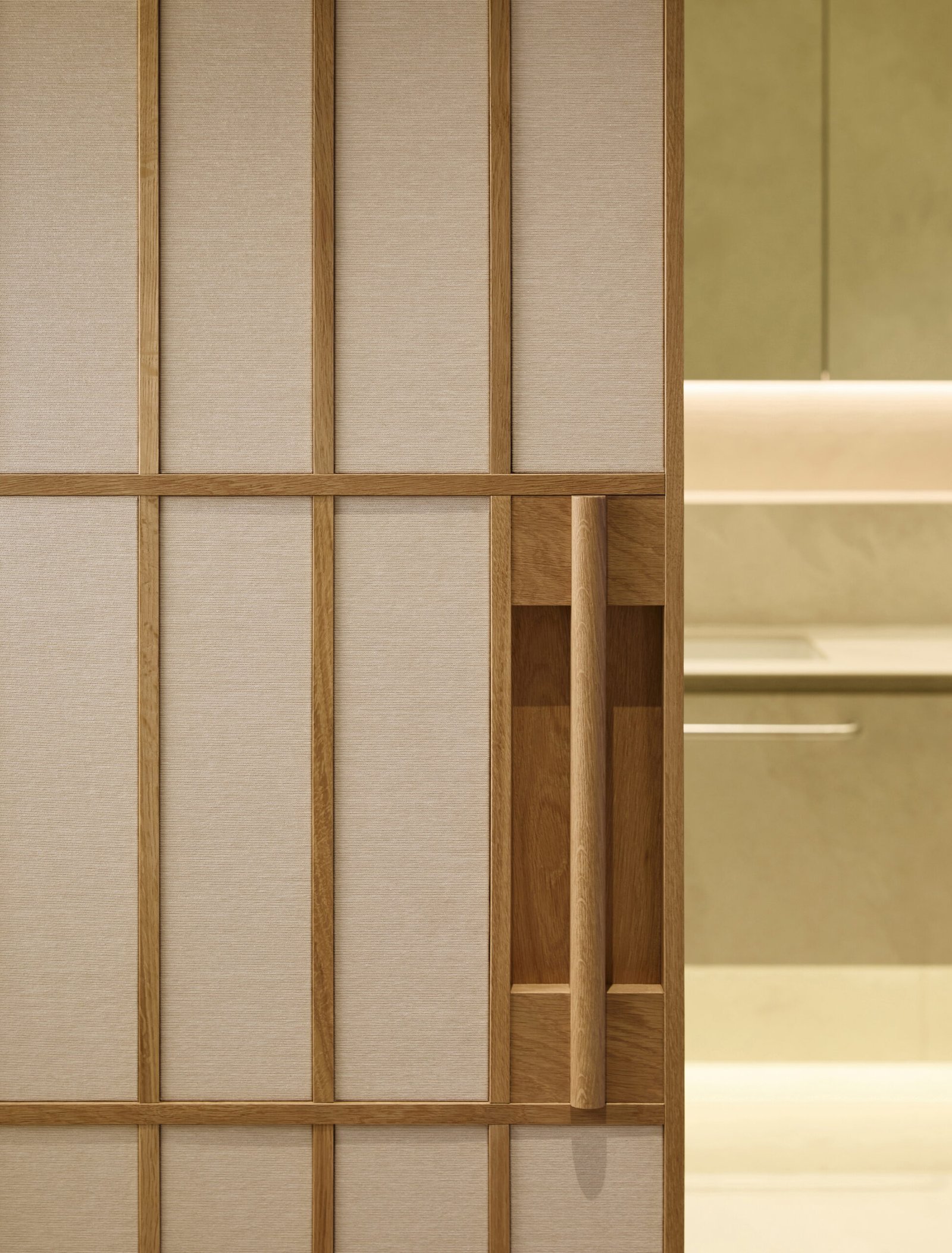
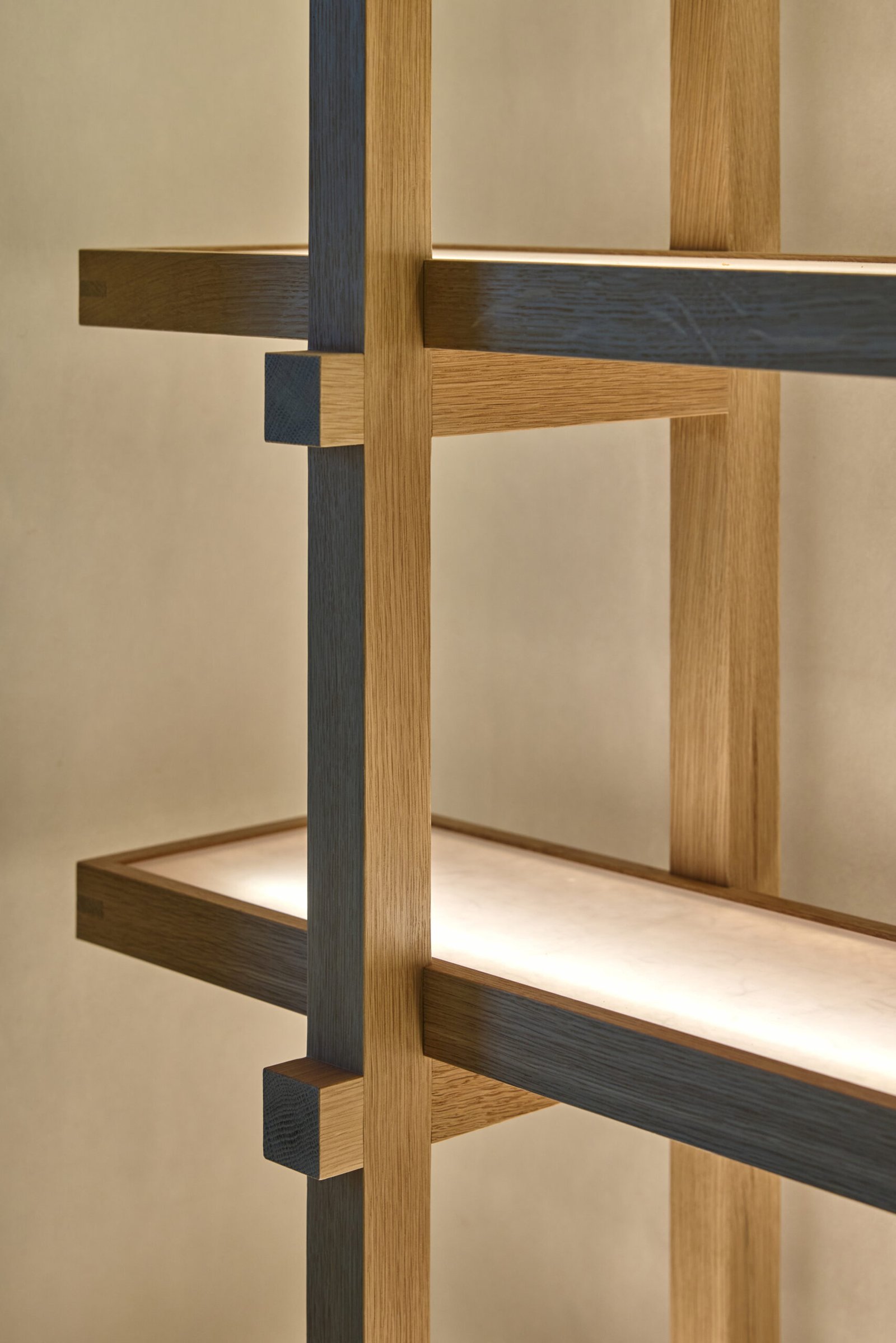
The Signiel Residence Renovation Project, located on the upper floors of Lotte World Tower, the symbol and tallest building in Seoul, the capital of South Korea, is a space that contains the philosophy of the client and designer Kim Sang-yoon, who wanted to blend cutting-edge architectural style, long-standing Korean tradition, the temporality and emotion of the city of Seoul, and the calm layers of Korean sentiment into everyday life. The spatial layers inspired by Hanok, the scent of raw wood permeating the space, and the city and the overlapping natural landscapes seen through the windows that change every day are not disconnected but part of continuity, creating a psychological connection between the space and the city of Seoul.
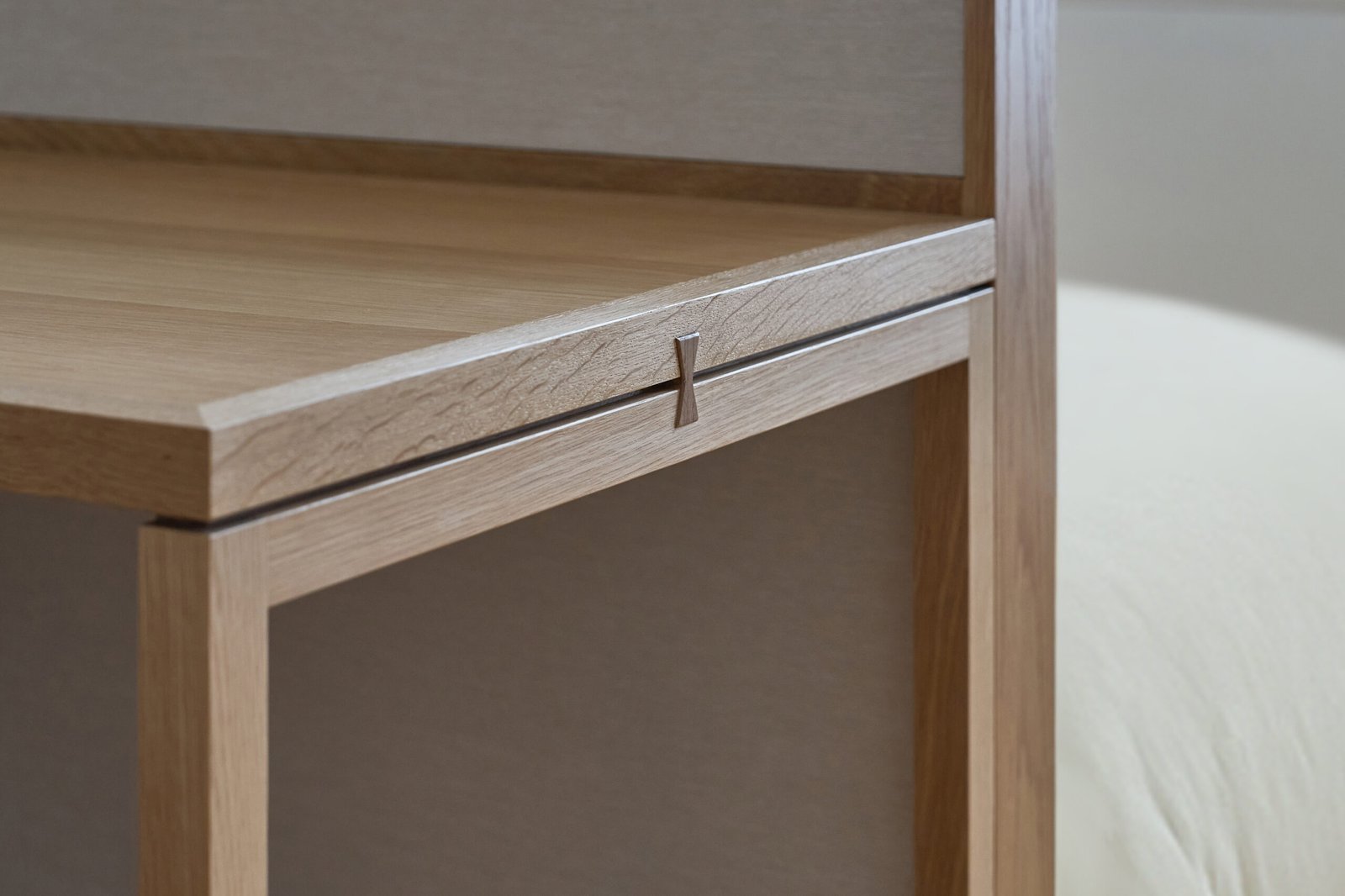
The design of Layered Seoul was inspired by the desire to create a personal sanctuary above the city that blends modern innovation with the quiet strength of Korean tradition. For the client, the vision was to harmonize the prestige of living in Seoul’s tallest landmark with an environment that offers calm, warmth, and continuity of daily life. For designer Kim Sang-yoon, the project embodies his philosophy of layering time, memory, and culture into spatial form. Drawing from the principles of Hanok architecture, he introduced raw wood textures, stone bases, and crafted elements that carry the rhythm of Korean sentiment. In doing so, the project reflects the client’s aspiration for balance between luxury and serenity, while also expressing the designer’s belief that tradition should not remain static, but evolve into new narratives for contemporary living.
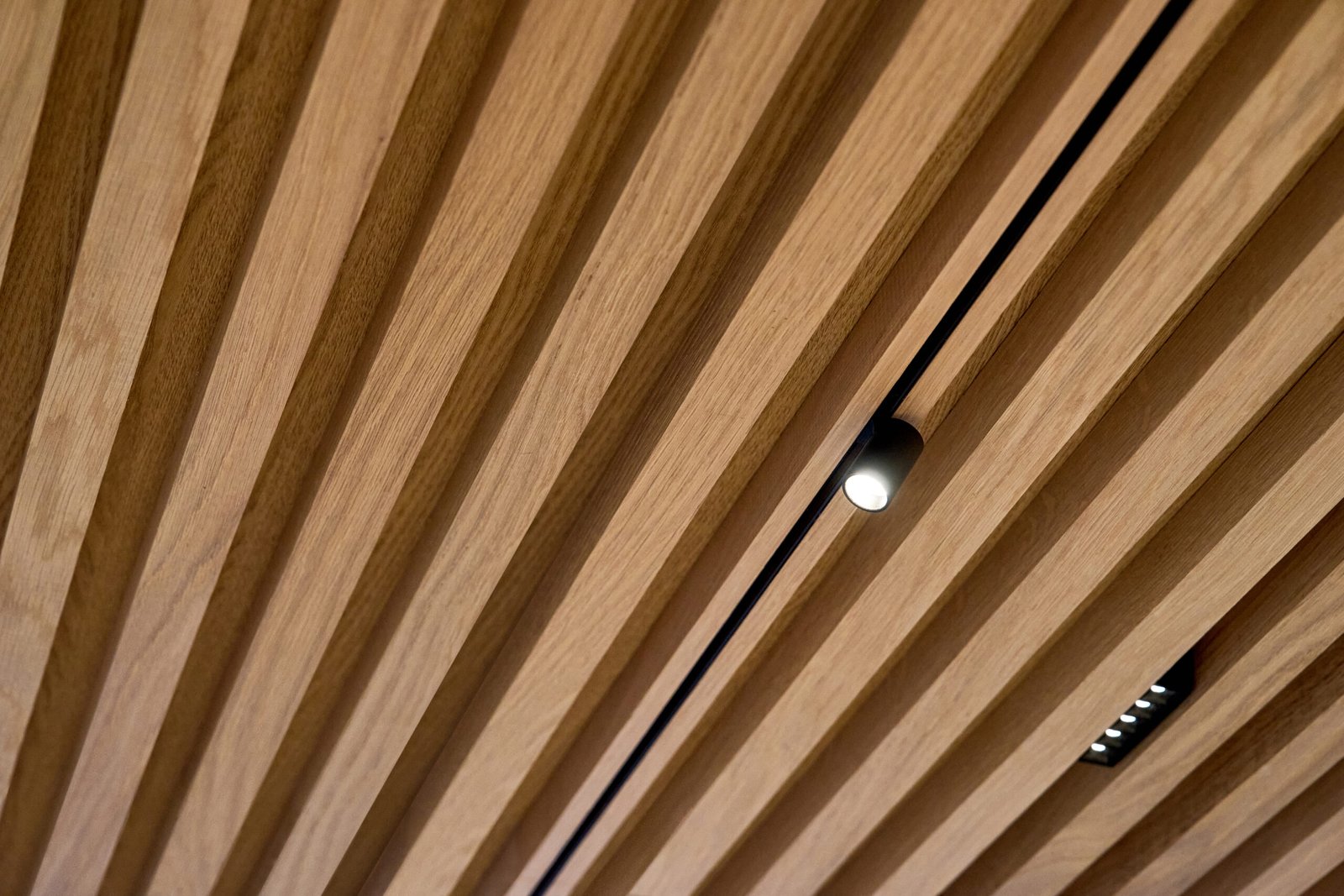
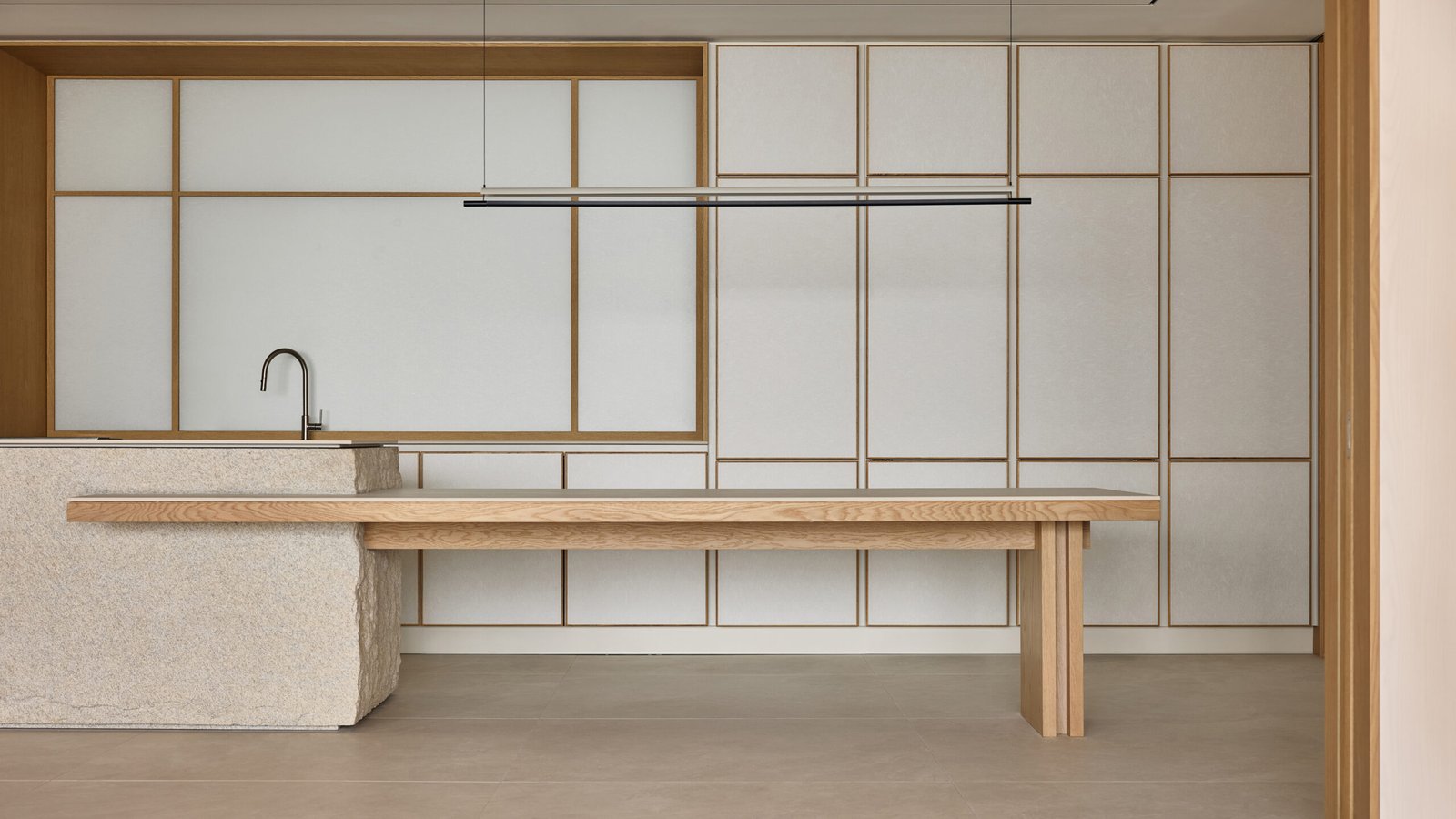
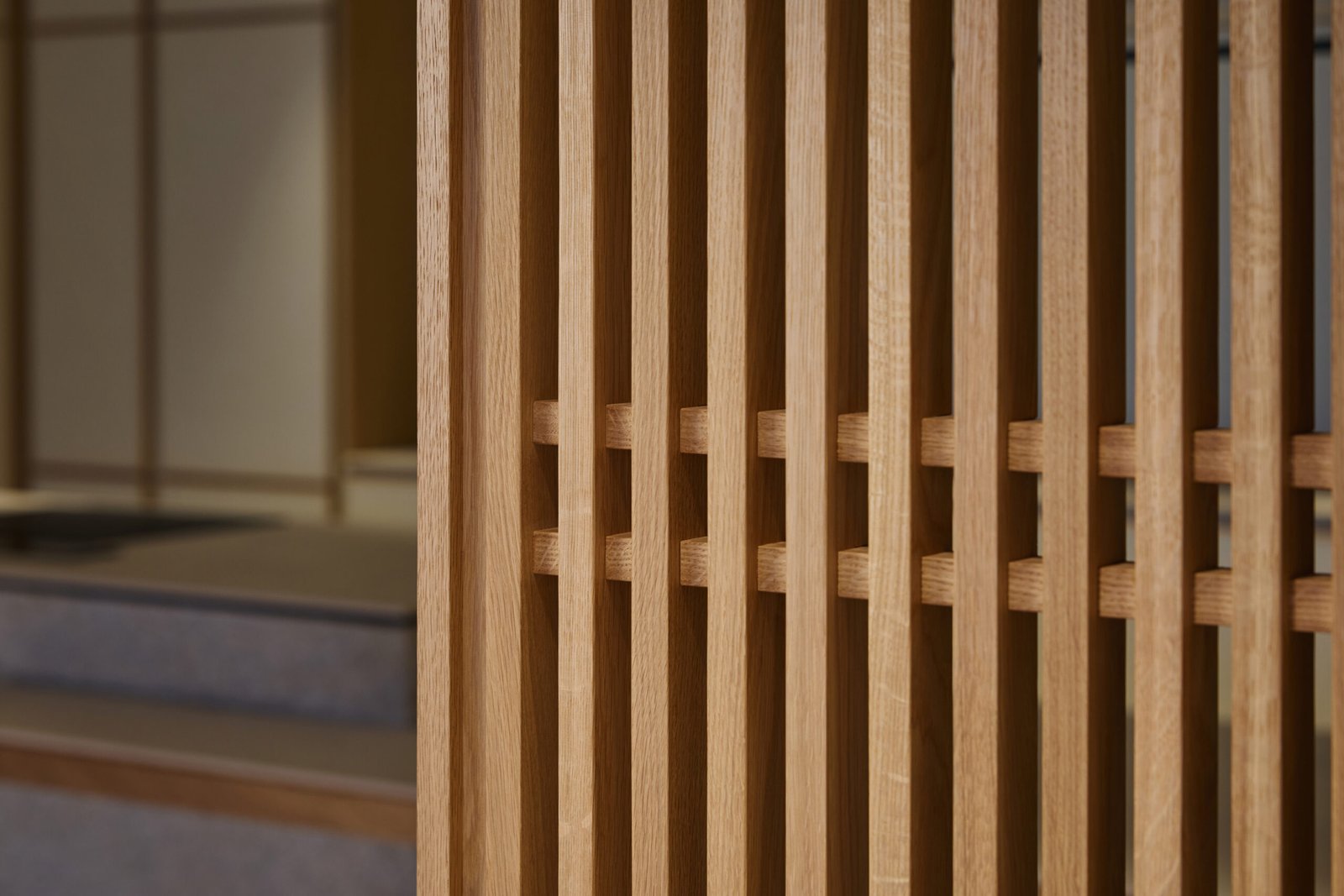
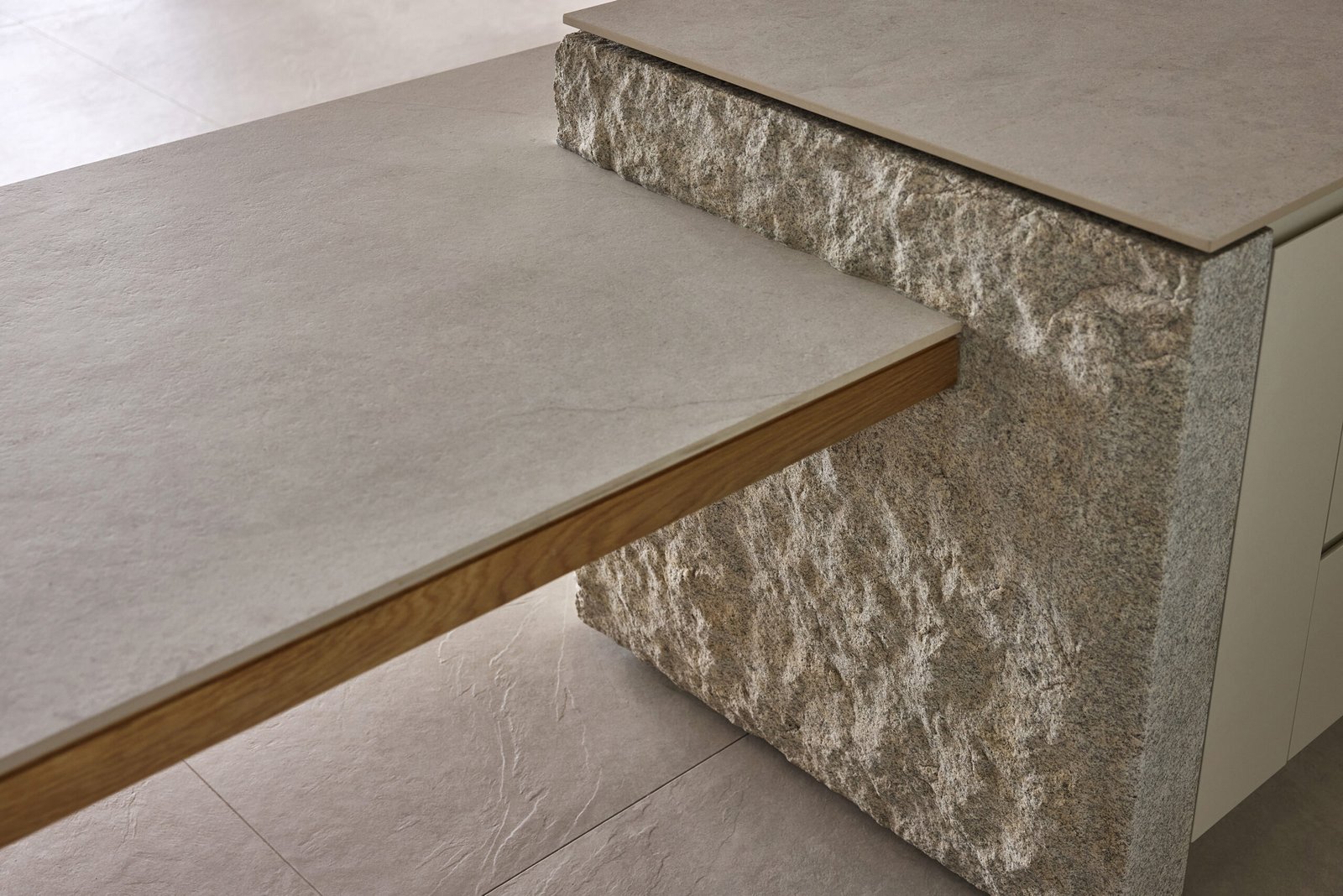
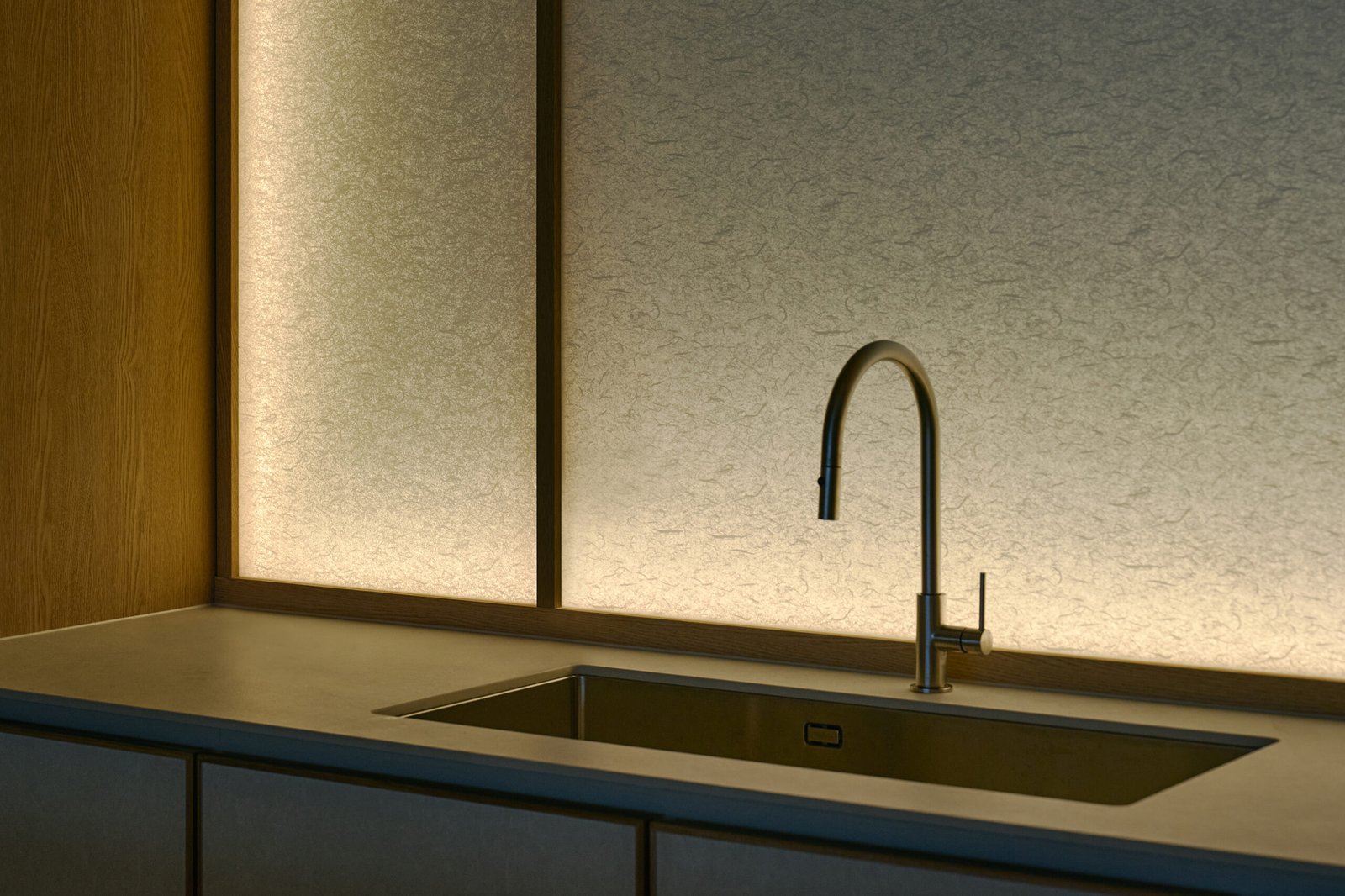
Nestled within Korea’s tallest building, Layered Seoul aims to transcend the simple concept of a modern, sophisticated space and embody a Korean sensibility. While respecting the building’s cutting-edge architectural technology and structural efficiency, the interior incorporates the layered structure of a hanok, eco-friendly materials, and craftsmanship. For example, finishes that emphasize the material properties of wood and stone evoke a warm and calming resonance within the urban skyline, while the light and views streaming through the windows offer a contemporary interpretation of the openness of traditional Korean architecture, inviting nature.