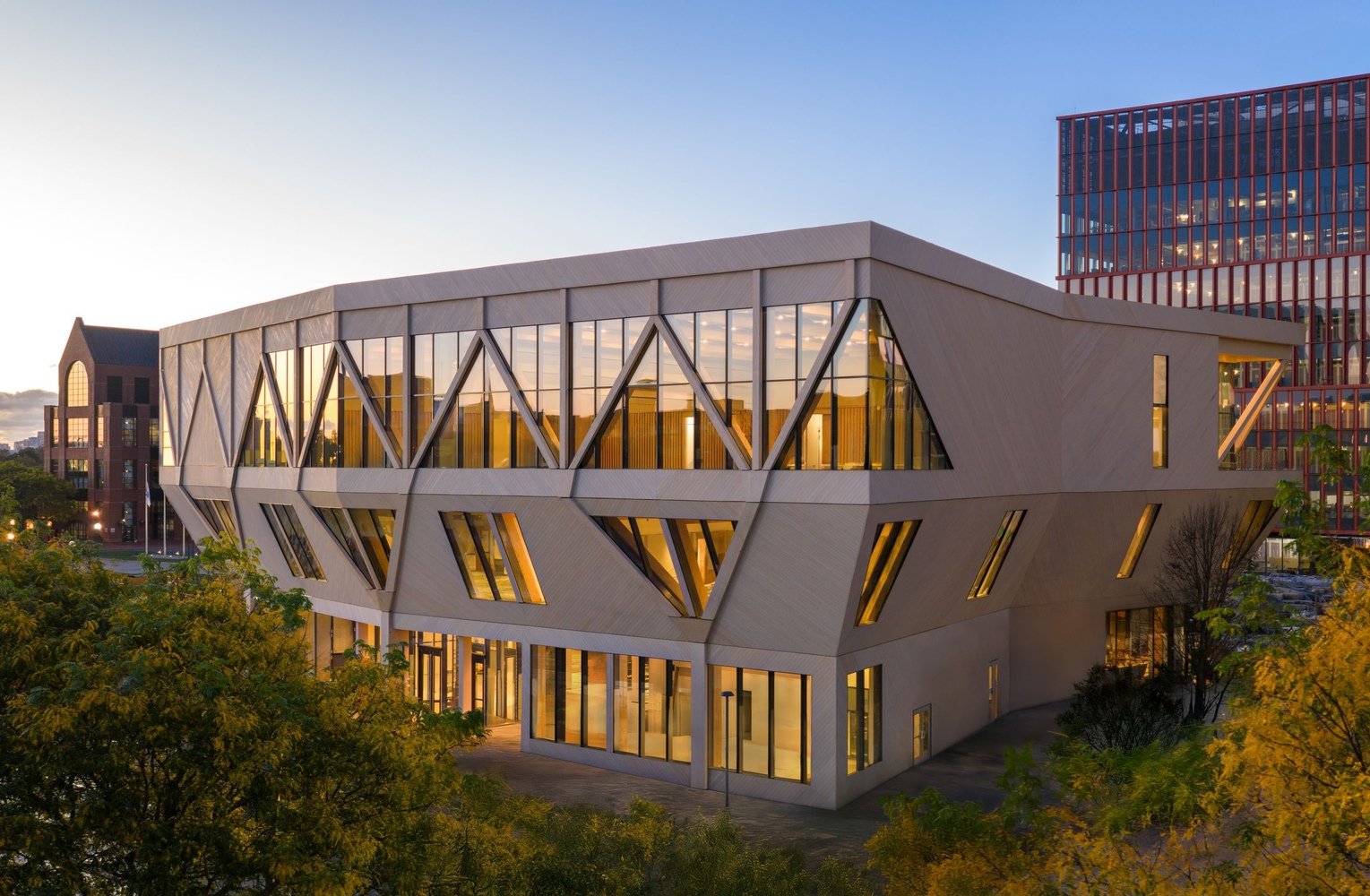
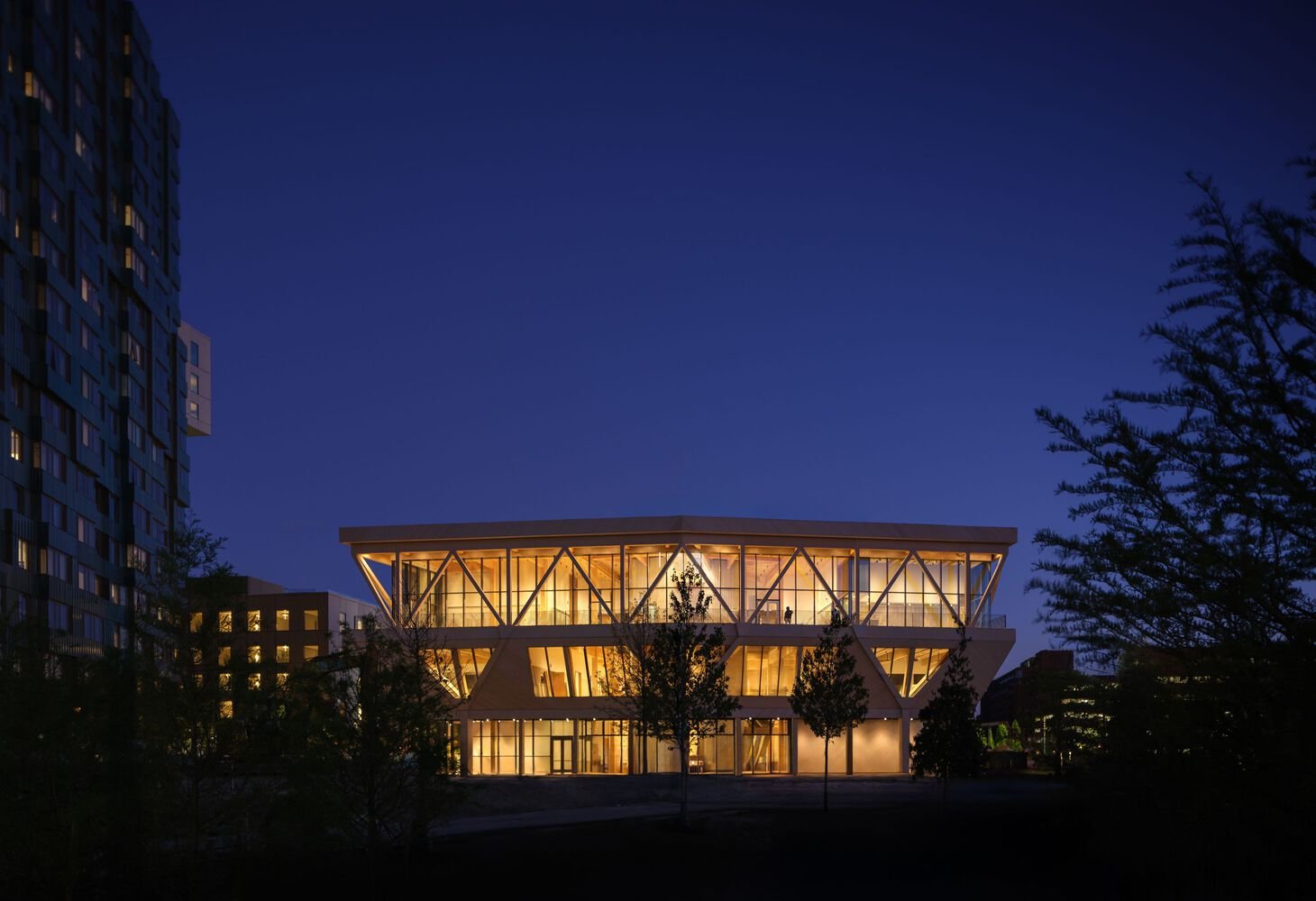
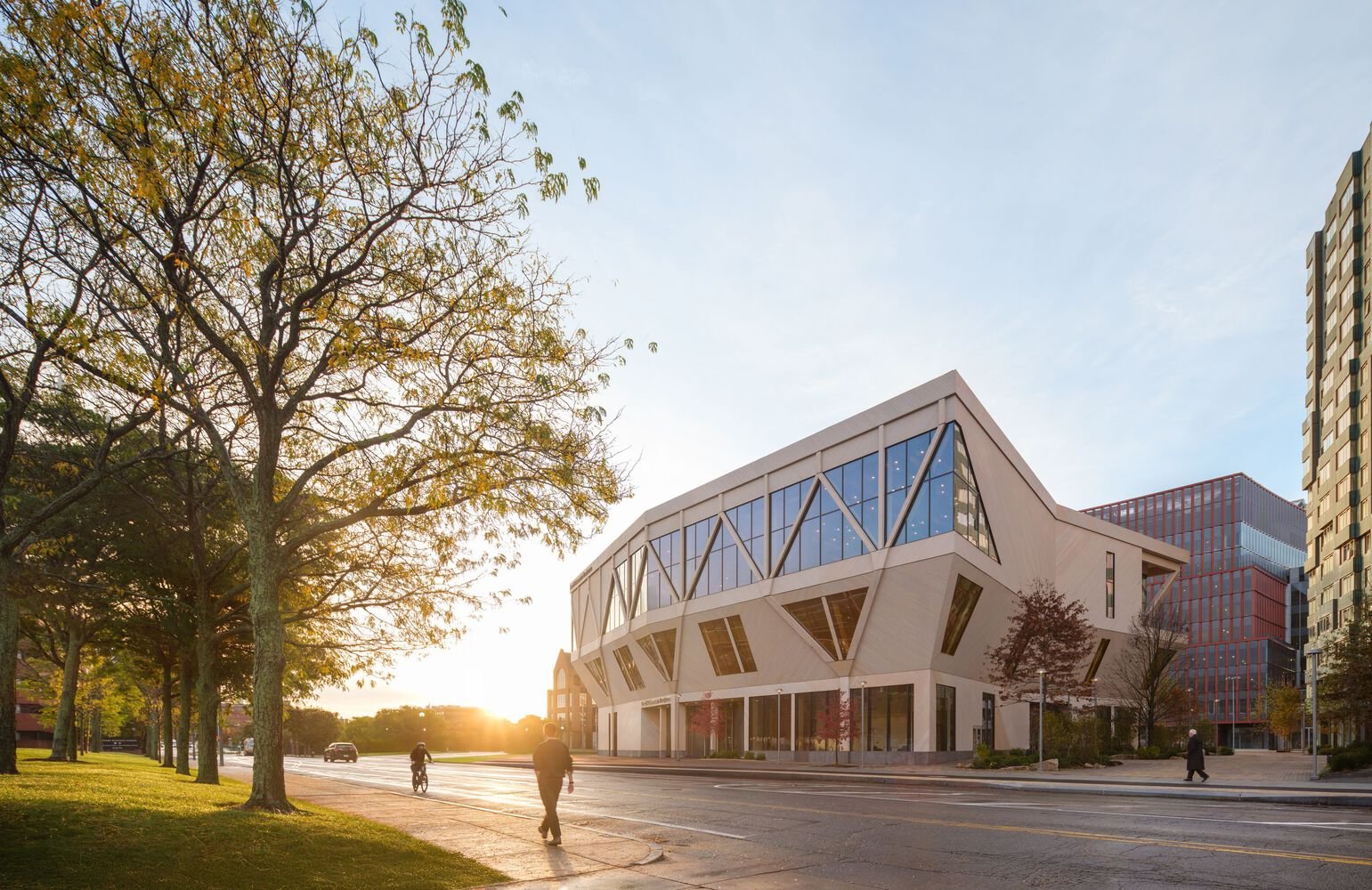
Studio Gang, the international architecture and urban design firm led by Jeanne Gang, completed the David Rubenstein Treehouse at Harvard University. Establishing Harvard’s first university-wide hub for convening, the building anchors the new Enterprise Research Campus (ERC) in Allston, which is dedicated to fostering innovation and collaboration. The David Rubenstein Treehouse is also the first mass timber building on Harvard’s campus, setting a model for holistically sustainable buildings in Boston and institutions worldwide.
Conference facilities are often insular buildings that feel disconnected from their surroundings. The David Rubenstein Treehouse establishes a very different kind of hub for convening at Harvard University: a welcoming destination that energizes conversation and collaboration, and embraces its outdoor environment and surrounding neighborhood. With its expressive structure of mass timber and innovative low-carbon concrete, both firsts for Harvard’s campus, the Rubenstein Treehouse visibly models a more sustainable and healthier way of building.
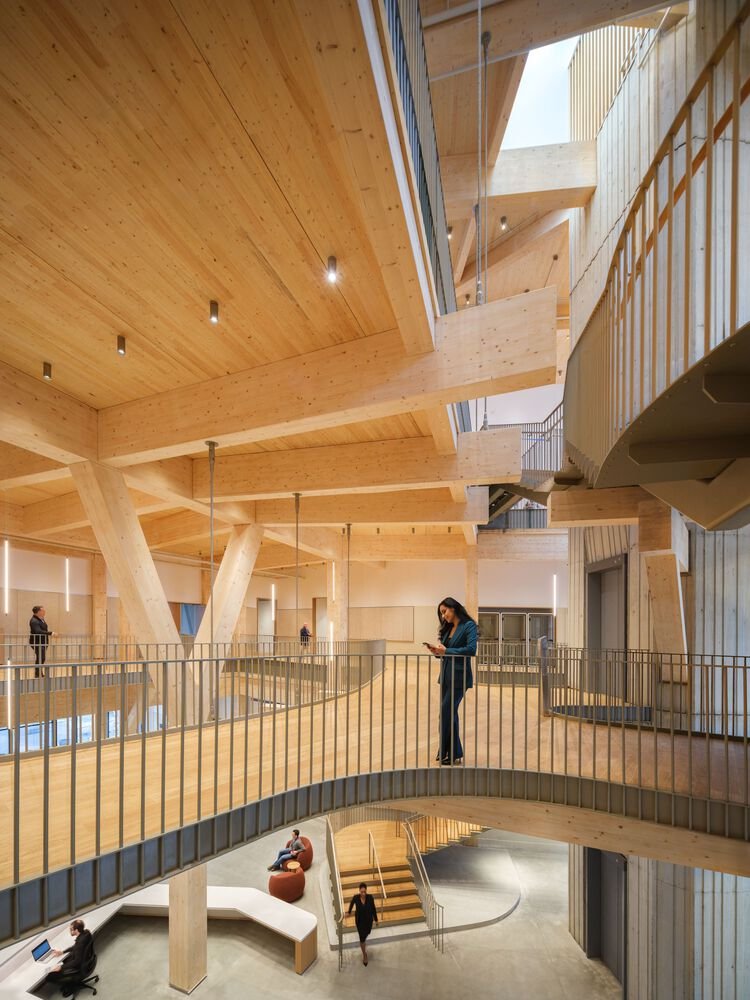
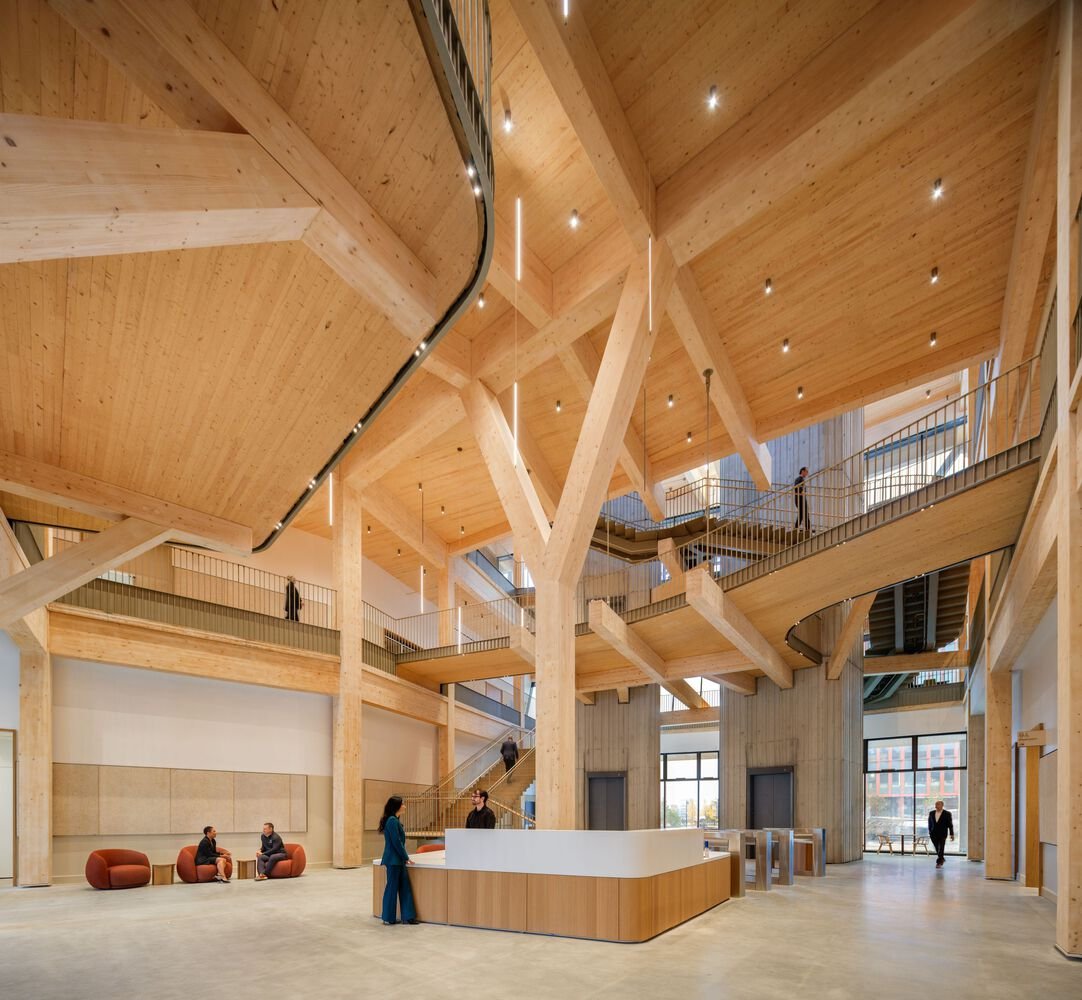
Part of the first phase of Harvard’s Enterprise Research Campus, the 55,000 square foot building provides dedicated event space and meeting amenities for Harvard affiliates, the community, academia, and industry and business leaders from around the globe. The design’s carved form opens up a variety of shaded outdoor gathering areas on multiple sides to extend the campus’ public realm. Three ground level entrances connect to a double-height atrium, welcoming visitors and allowing them to seamlessly flow through the building to the surrounding campus. The atrium spills outward onto two covered porches (loggia) that can be enjoyed throughout the year.
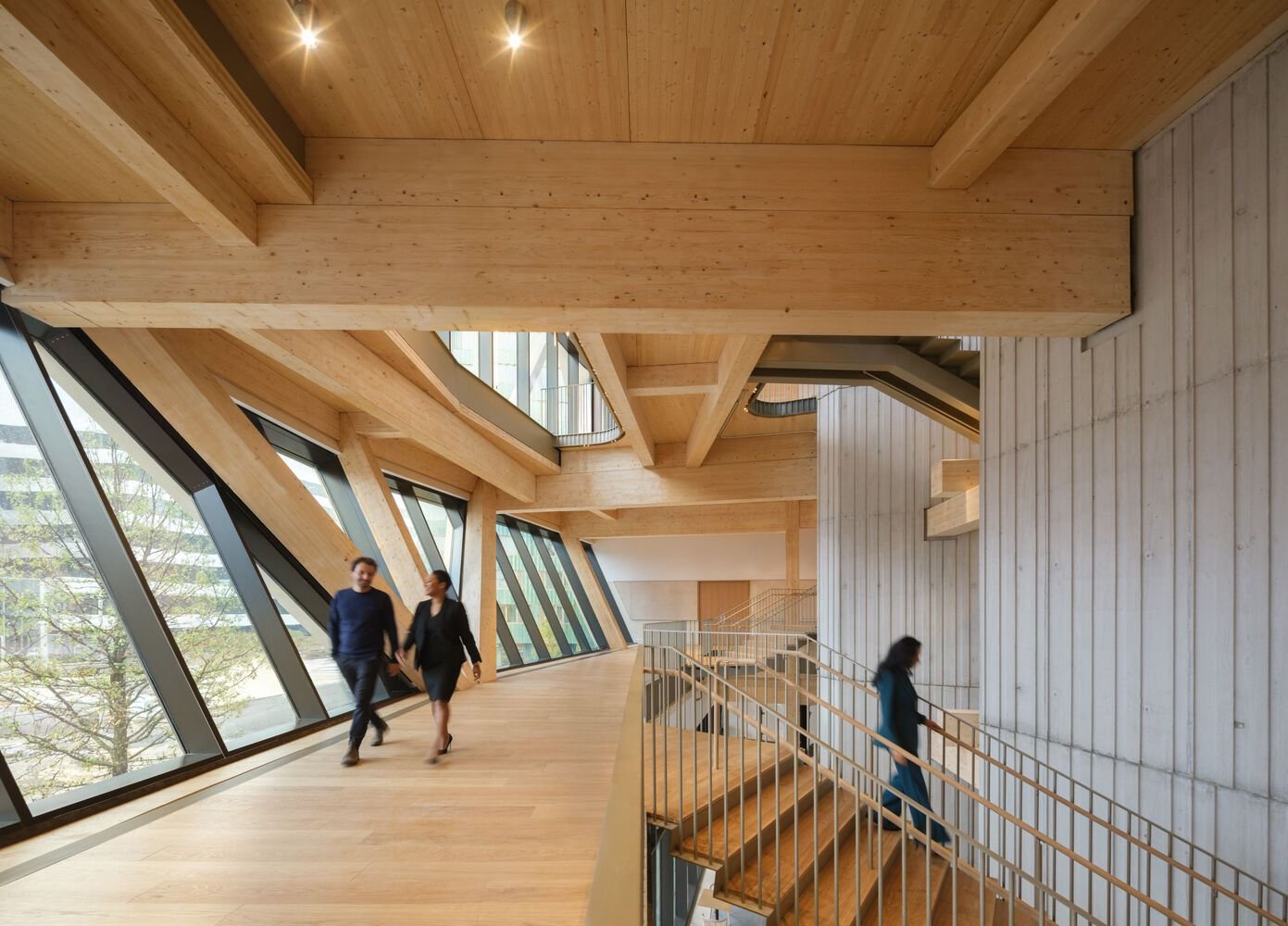
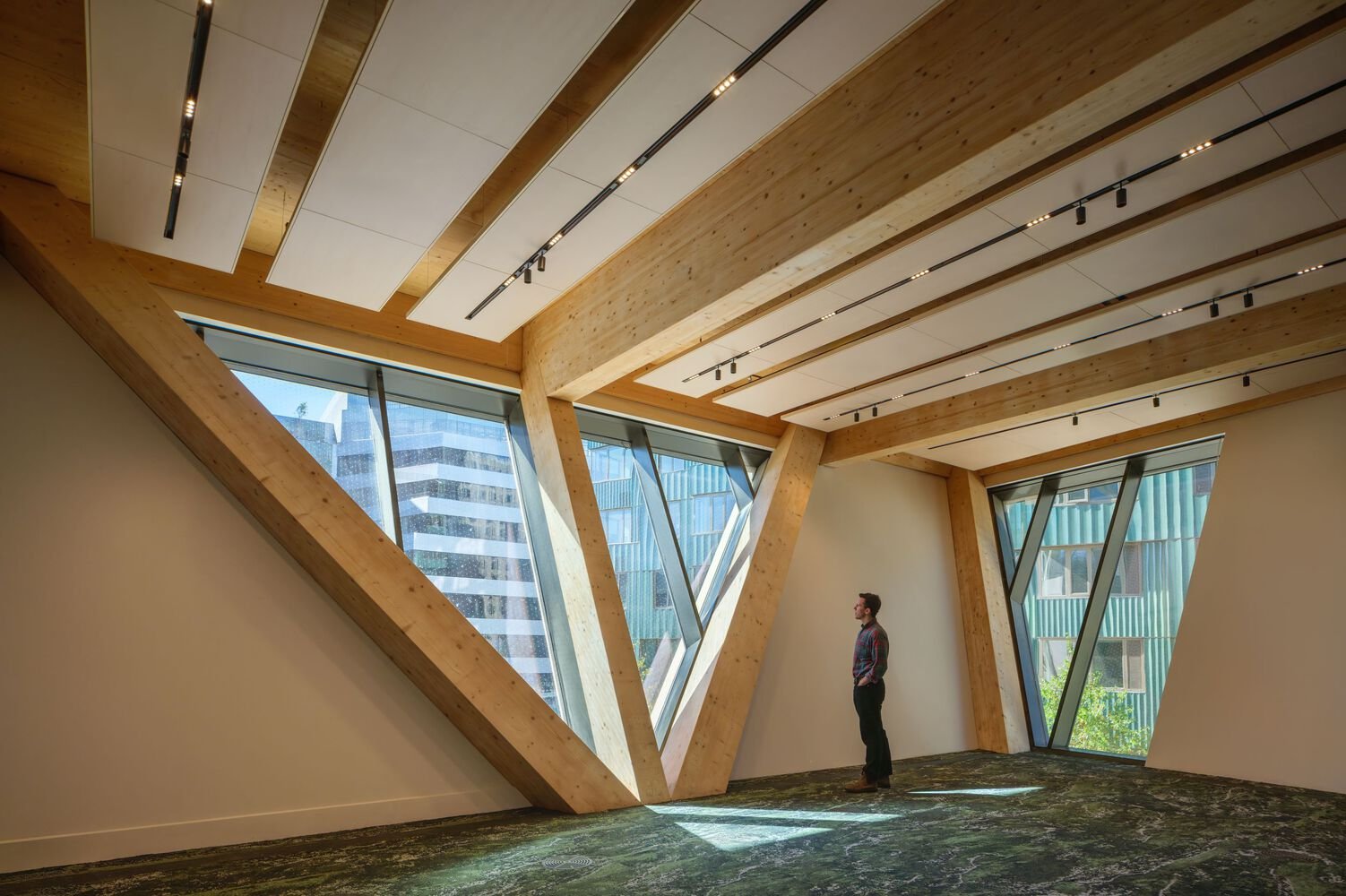
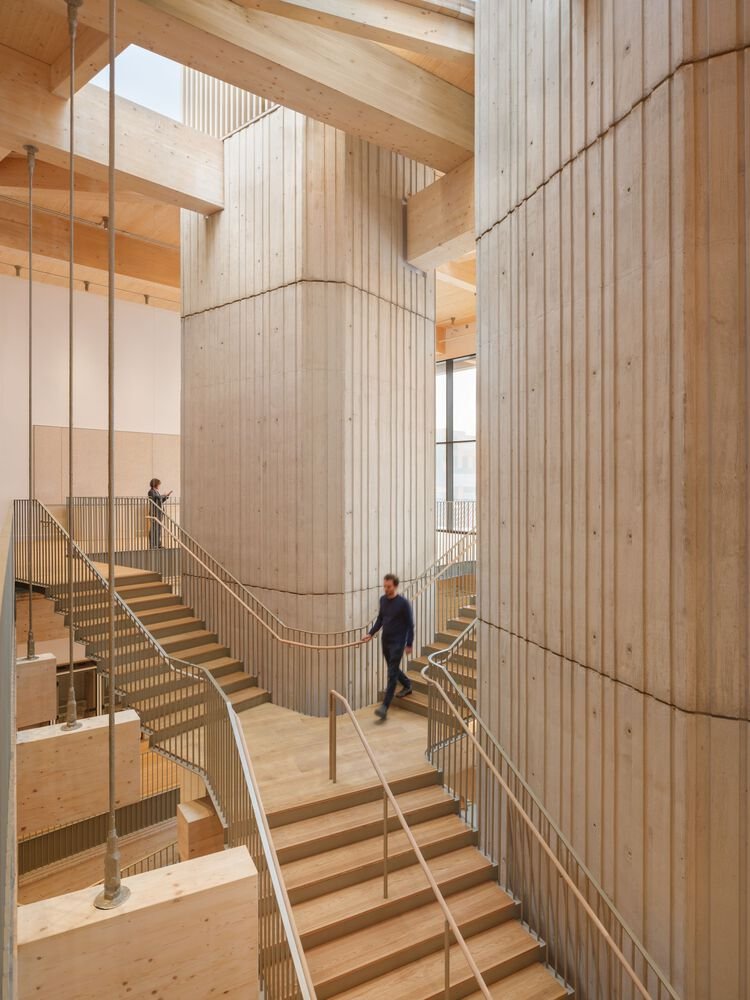
The building’s two upper floors support meetings and events. Evoking the wonder and excitement of climbing up into a treehouse, a central stair – lit by skylights from above – wraps around two free-standing elevators, immersing guests in the natural warmth of the building’s mass timber structure. Branching outward like a tree to support the main conference space, the Canopy Hall, the building’s columns frame great views of the surrounding treetops and the campus and city beyond. Additional spaces that encourage informal convening and interaction are designed into every floor.
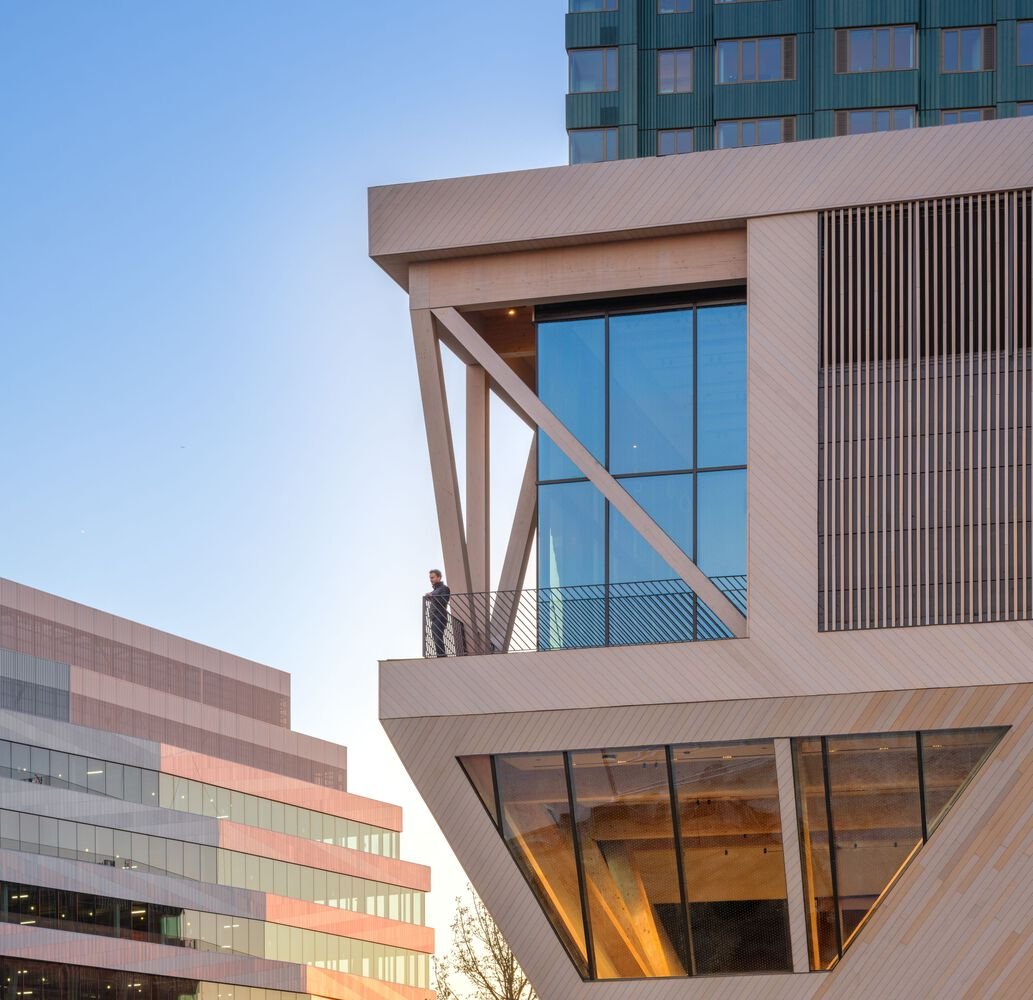
The building’s exposed mass timber structure creates its distinct architectural identity and reinforces it as a destination for innovation. The natural warmth of the mass timber, together with the façade’s transparency, emits a welcoming glow at night. On the façade, canted timber columns branch outward like a tree to support a cantilevered upper floor. Each face of the building is strategically inflected to embrace its outdoor environment and the surrounding neighborhood. The north and south inflect outward to draw people towards the building’s multiple entrances, while the east and west inflect inward to expand pedestrian corridors. Informal spaces that encourage convening and interaction are designed into every floor, such as the level-two ‘perch’ overlooking the atrium, and the level-three pre-function area that connects to a long, open-air terrace – giving visitors the feeling of being ‘up in the canopy’.