An ambitious country homestead, grounded in sustainability, sculpted for life on the land
A vibrant yet gentle new addition to a historic rural homestead, Merriwa Farmhouse is a highly considered response to place, climate, and family life
October 1, 2025
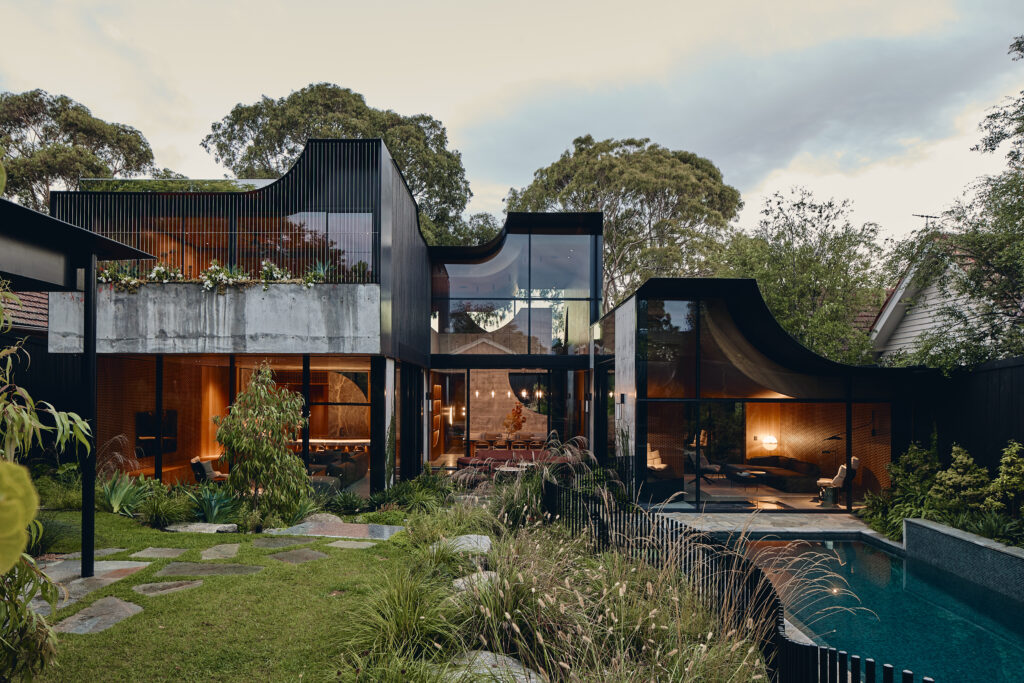
This project comprises a new building, entirely separate from the original house, accessed via a glazed bridge over a new swimming pool. This daily journey marks the transition from sleeping quarters to the living heart of the home. Designed for a farming family in the Upper Hunter region of New South Wales, the addition provides a robust yet refined sanctuary within a landscape defined by harsh summers, drought cycles, and sweeping rural views. Even the red dust that occasionally moves through the area was considered in the tone of the render finish, grounding the new building in its environment and reducing the visual impact of weathering over time.
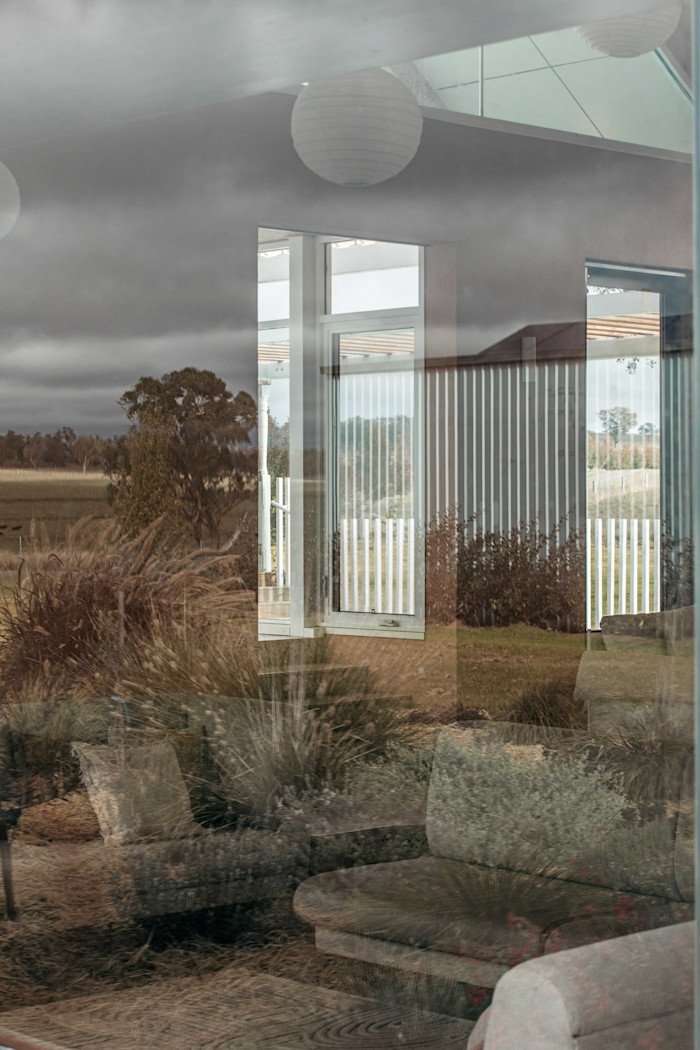
The significance of the drought was extremely apparent during the design phase, inspiring the integration of a large glass downpipe that lets the family see and celebrate every precious drop of rain as it’s captured and collected for their daily needs. The new addition draws on vernacular traditions from arid climates and is organized around a protected courtyard. This transitional outdoor space is naturally cooled by the pool, which becomes a central visual and spatial focus. It can be accessed from both the old and new wings of the house, and the experience of swimming beneath the glazed bridge reinforces a playful connection between the built form, water and landscape, giving the bridge a sense of lightness and the architecture a feeling of gently hovering in place.
The building is shaped by sustainability at every level for this essentially off-grid home. Passive solar principles informed the siting and orientation, with deep verandas providing shade in summer and large areas of north-facing glazing drawing in winter sunlight. A concrete slab delivers thermal mass, stabilizing interior temperatures and reducing reliance on mechanical cooling. Operable windows and carefully positioned openings promote cross ventilation, while a double-sided fireplace and ceiling fans provide year-round thermal comfort with minimal energy use. The home is powered by solar photovoltaic panels, collects rainwater for all daily needs and utilizes on-site waste processing facilities.
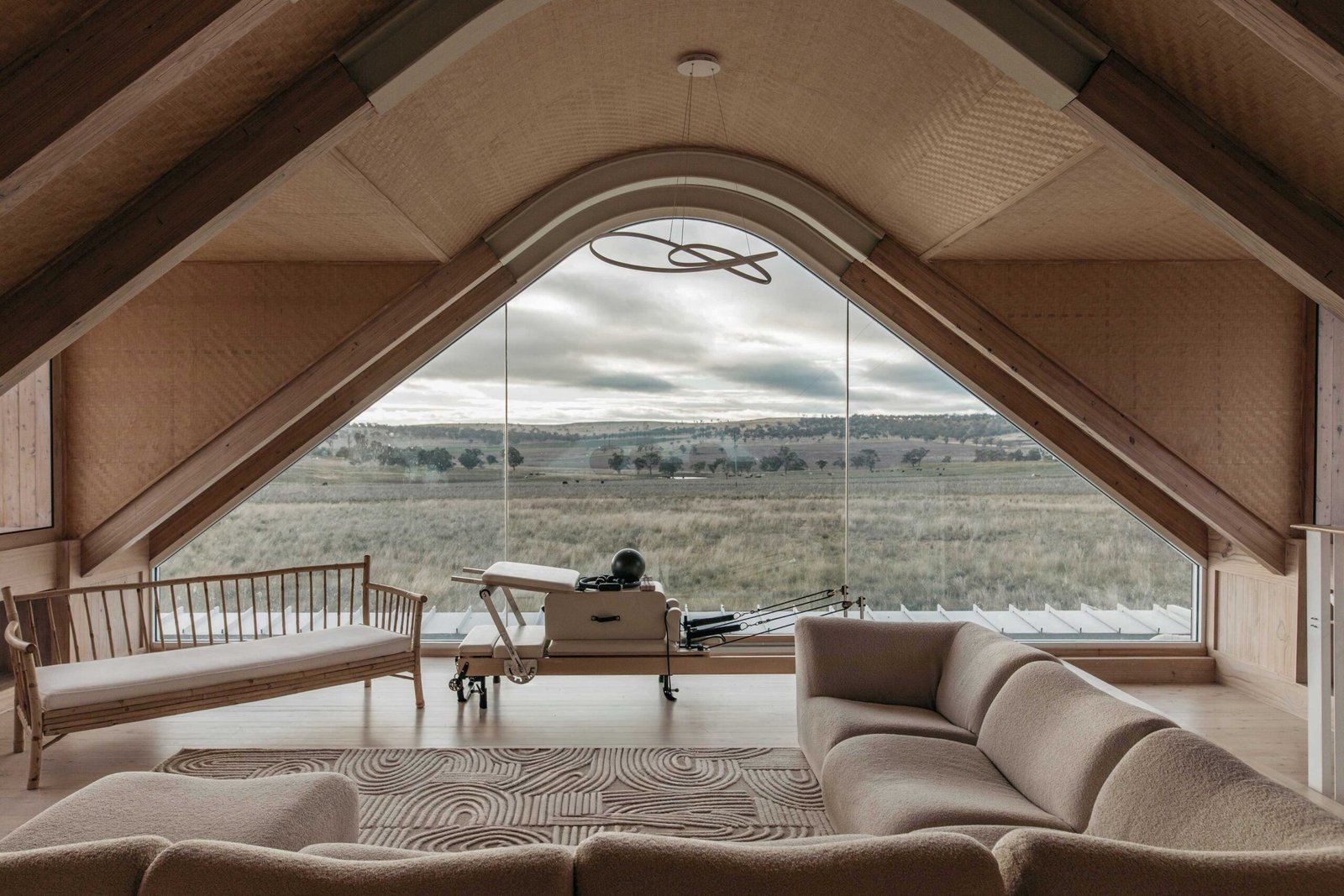
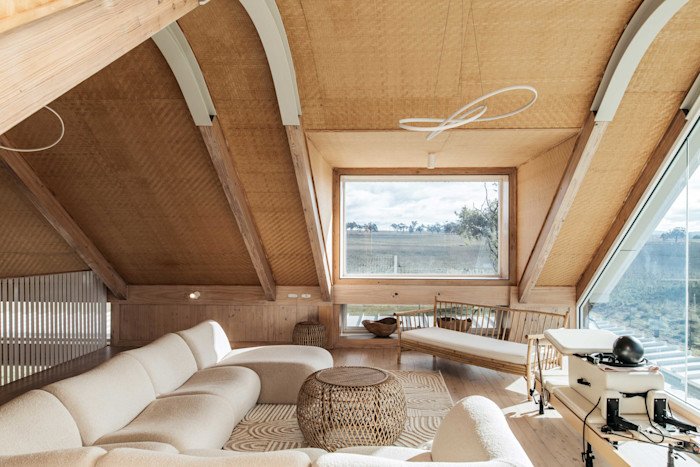
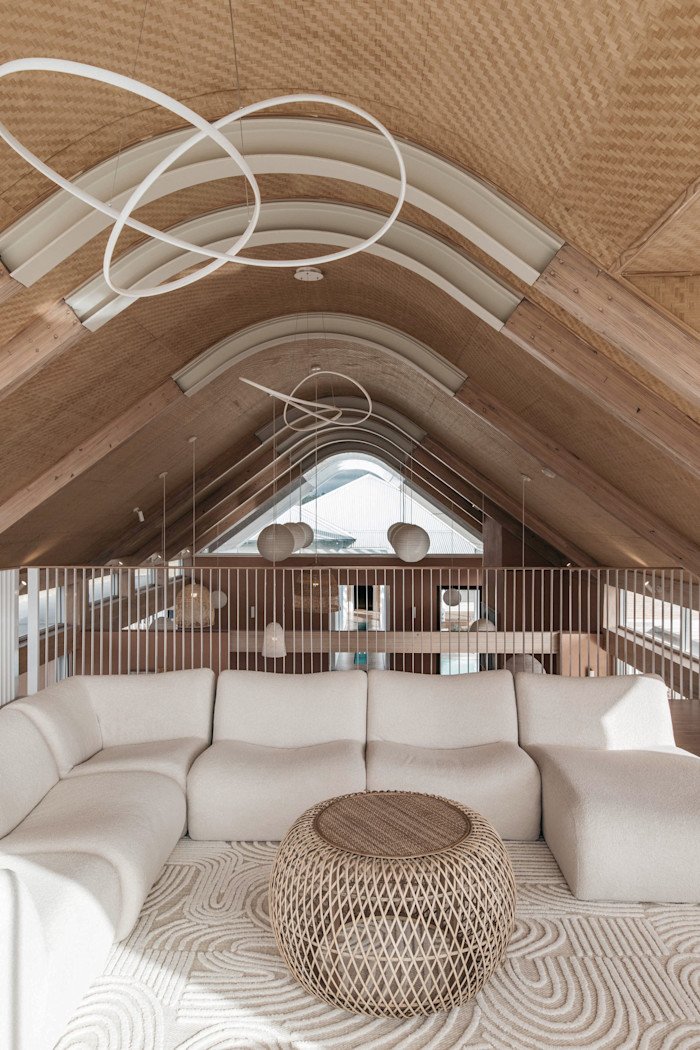
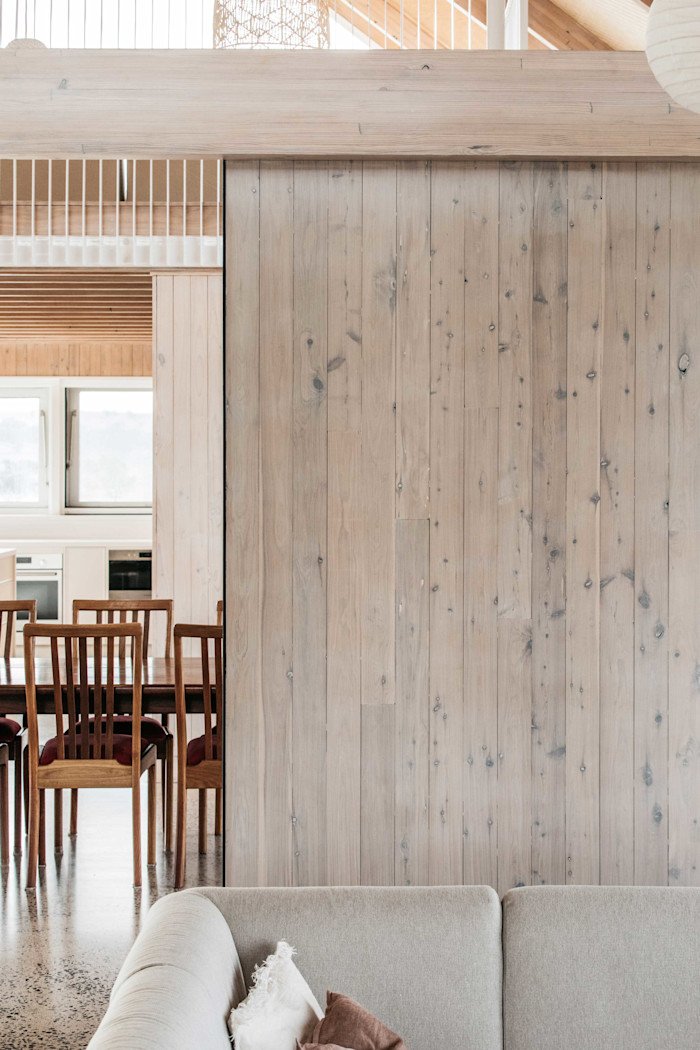
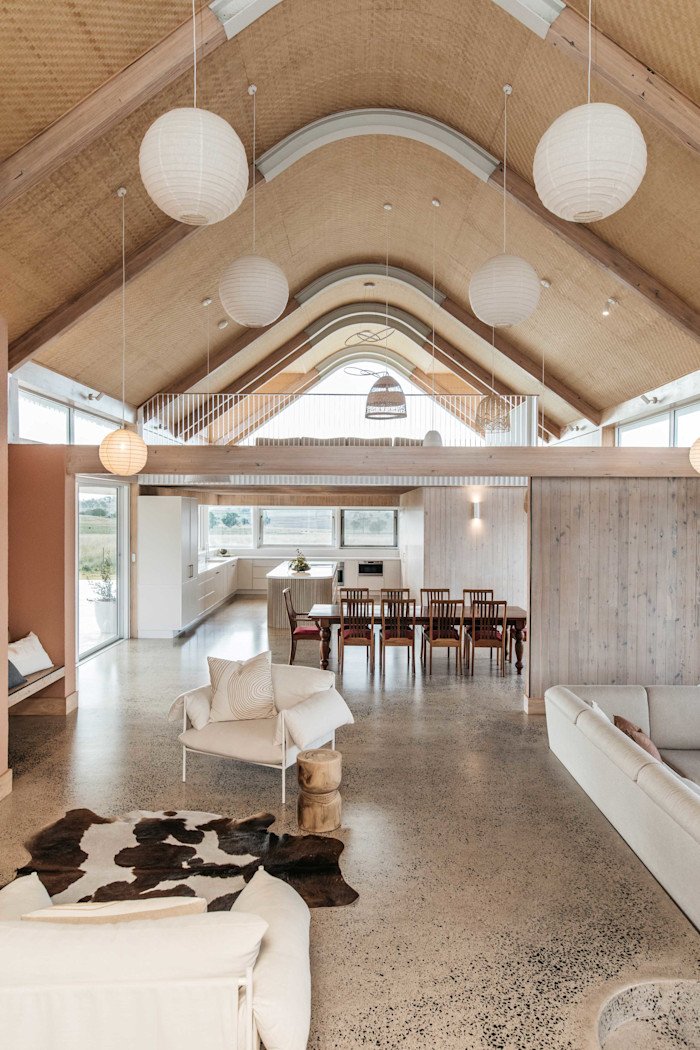
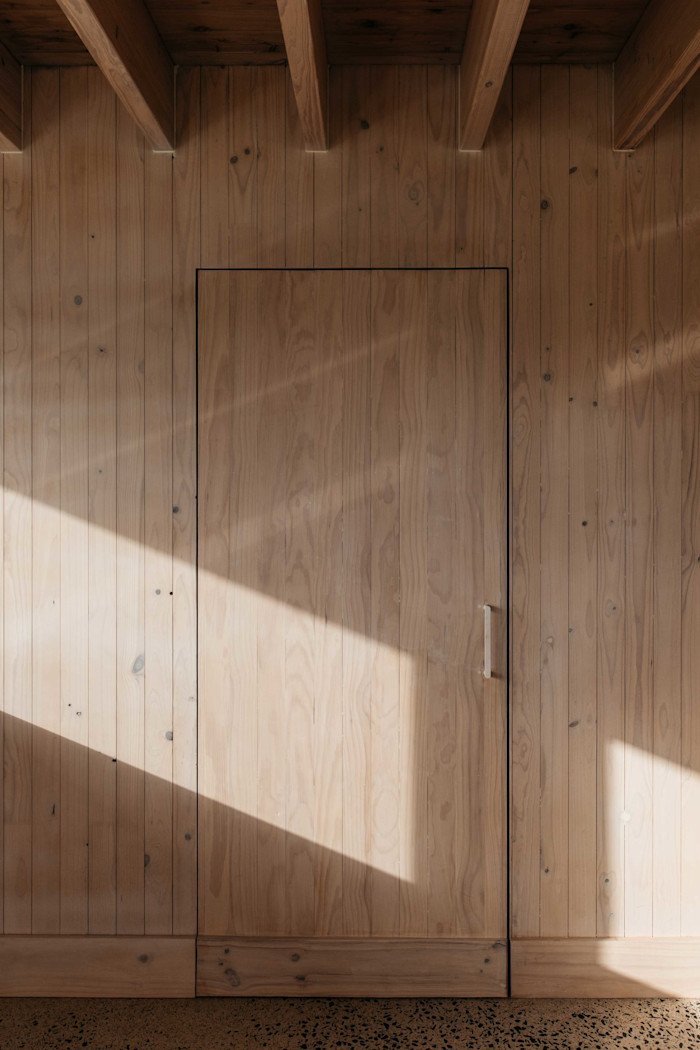
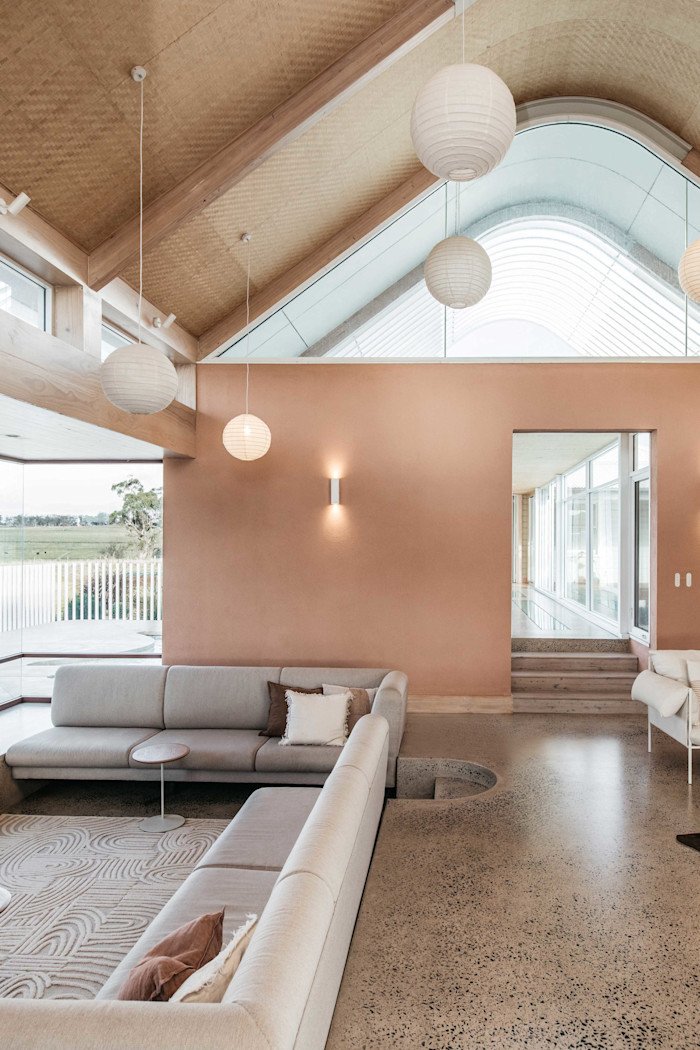
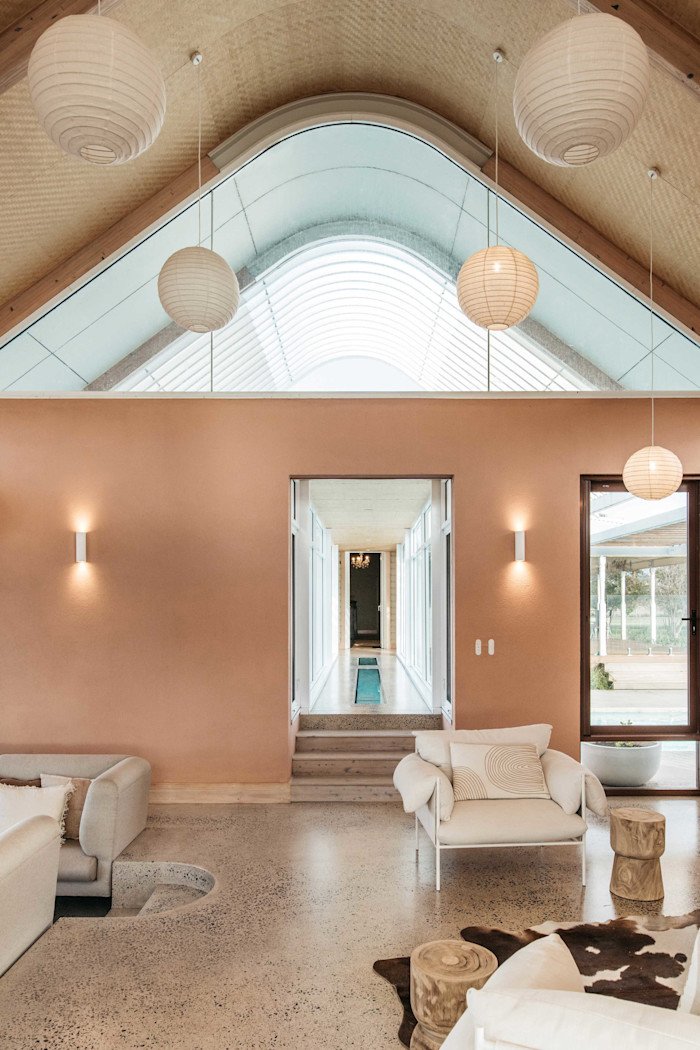
Natural, low-embodied-energy materials form the core of the building. Exposed cross-laminated timber (CLT) walls and ceilings are celebrated for both their structural integrity and natural warmth. The curved Colorbond roof references nearby sheds and barns, while the internal lining of woven bamboo introduces texture and a personal memory of the client’s childhood home. Other materials include timber flooring, lime-rendered walls, glulam and rolled steel rafters, and hand-finished concrete. Each was selected for its durability, expressive quality, and connection to the surrounding landscape.
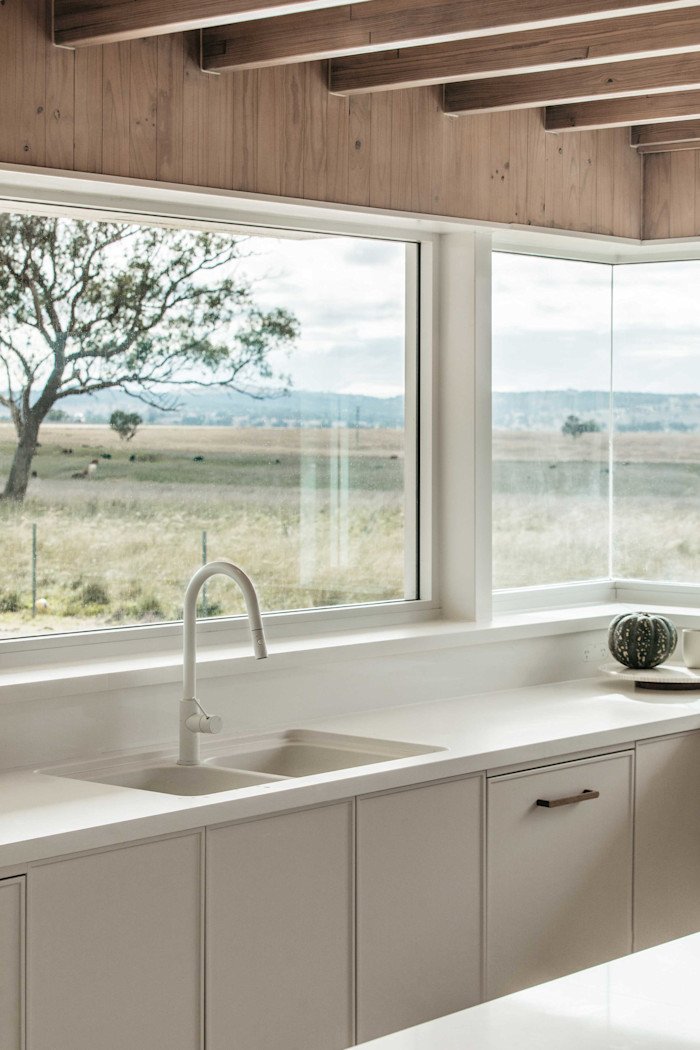
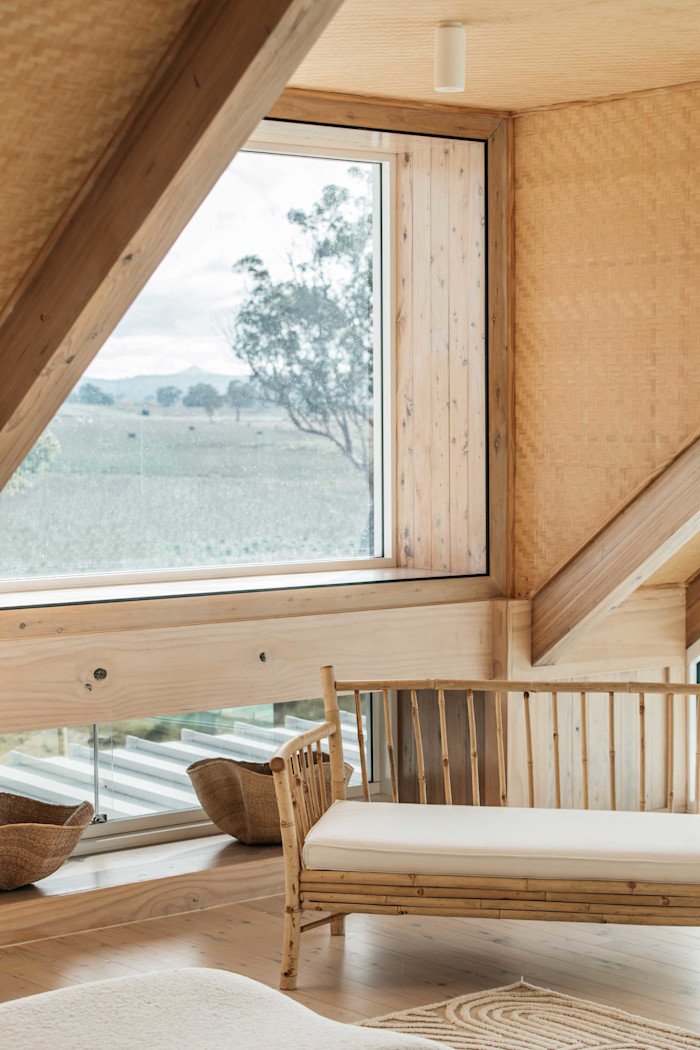
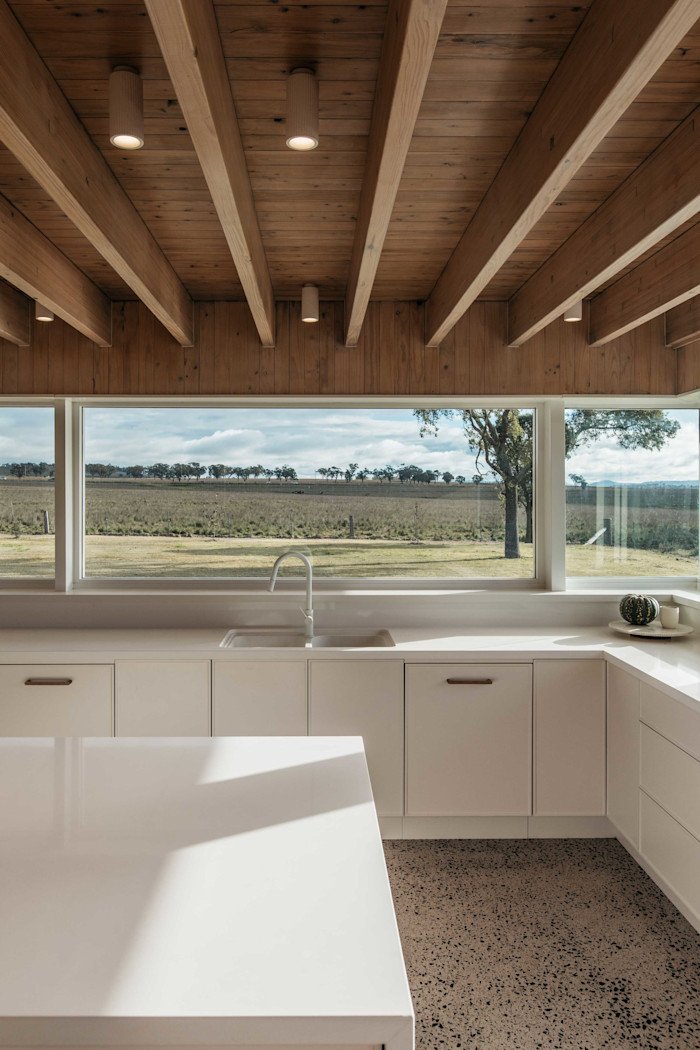
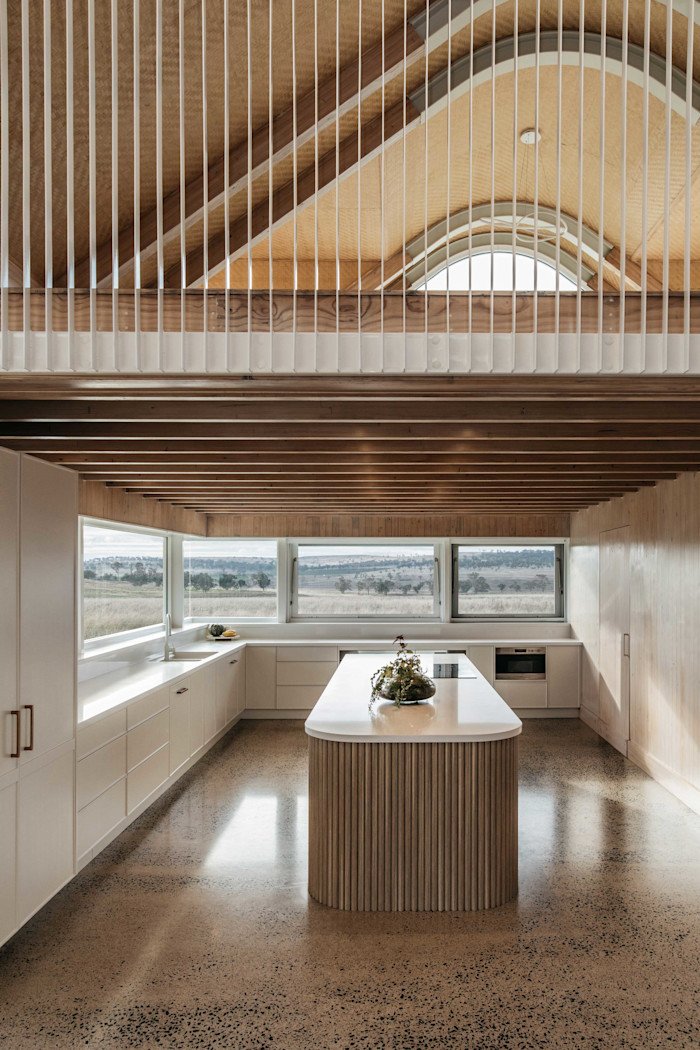
Set low and linearly on the site, the building reads as an extension of the existing homestead, sitting comfortably within the landscape. The mezzanine level offers a lifted perspective across the paddocks and hills, with views of livestock and the wide, open countryside. Large picture windows and dormers frame these views and create places of rest, quiet observation, and reconnection with the land. Designed to grow and adapt with the family, Merriwa Farmhouse presents a sustainable and enduring alternative to the generic rural home.
The interiors of Merriwa Farmhouse reflect the same values that shaped the architecture: sustainability, durability, material honesty and emotional resonance. Every decision inside was made with the daily rhythms of rural life in mind from early mornings and shared meals to quiet moments of retreat and long evenings watching the weather roll in. Designed for a farming family in rural NSW during the height of a drought, Merriwa Farmhouse is a robust yet refined new addition to a historic homestead. Drawing on arid-climate vernaculars such as the Mexican courtyard house, the new building centers around a protected outdoor space that encourages gathering, cooling and quiet retreat.
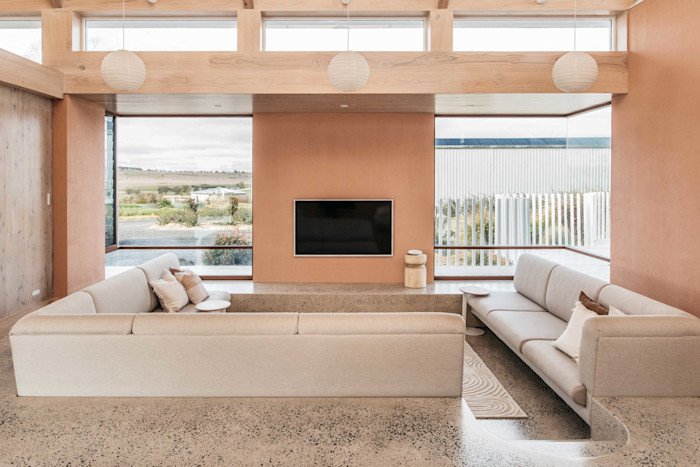
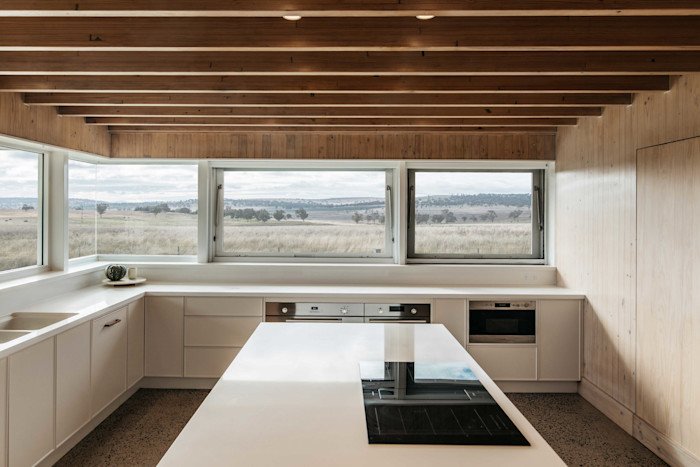
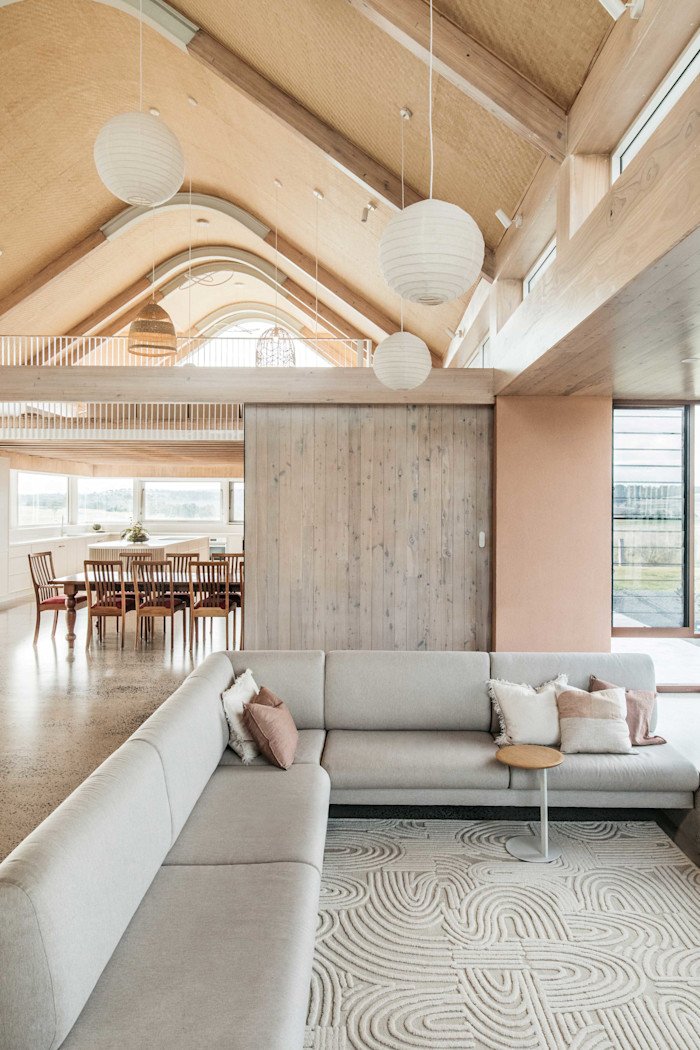
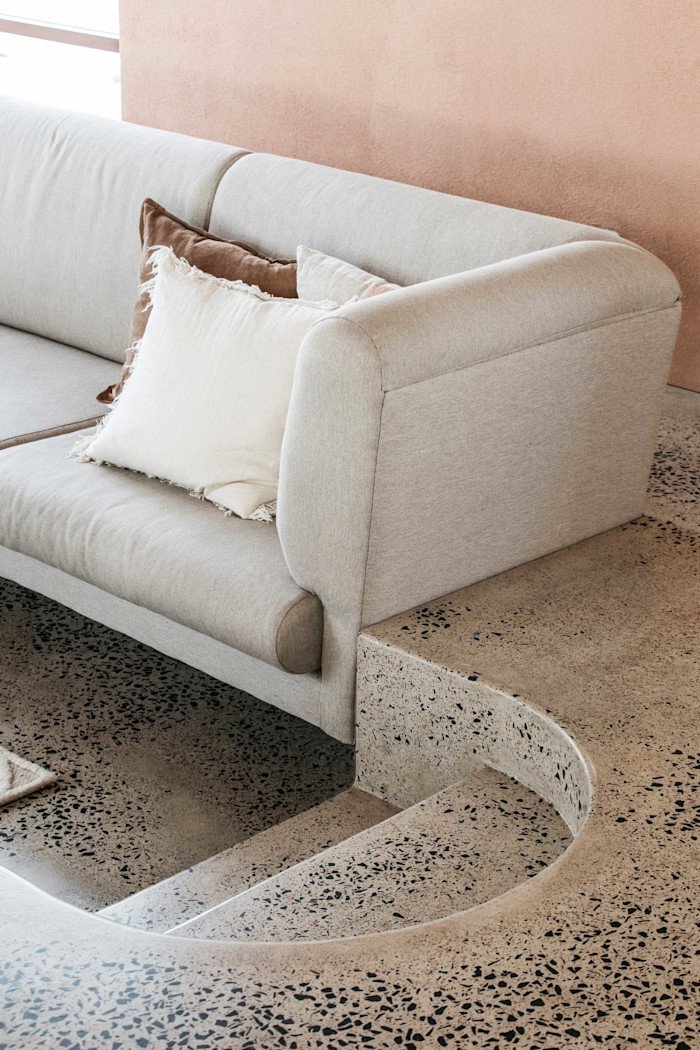
The project celebrates an honest material palette and a spatial arrangement shaped by function, family life and climate. The existing homestead becomes the sleeping quarters – smaller, darker rooms carefully restored and detailed for rest and recovery. A glazed bridge over the pool connects to the bespoke modern addition, which houses the living, kitchen, dining and play areas. The central axis through the site defines this clear architectural transition between old and new. The curved roof form is lined internally with plywood and woven bamboo matting, integrating natural materials with a textured tactile warmth. Cross-laminated timber (CLT) walls and ceilings are left exposed for their warmth and structural clarity complemented by glulam and rolled steel rafters. A concrete floor provides thermal mass helping regulate temperature throughout.
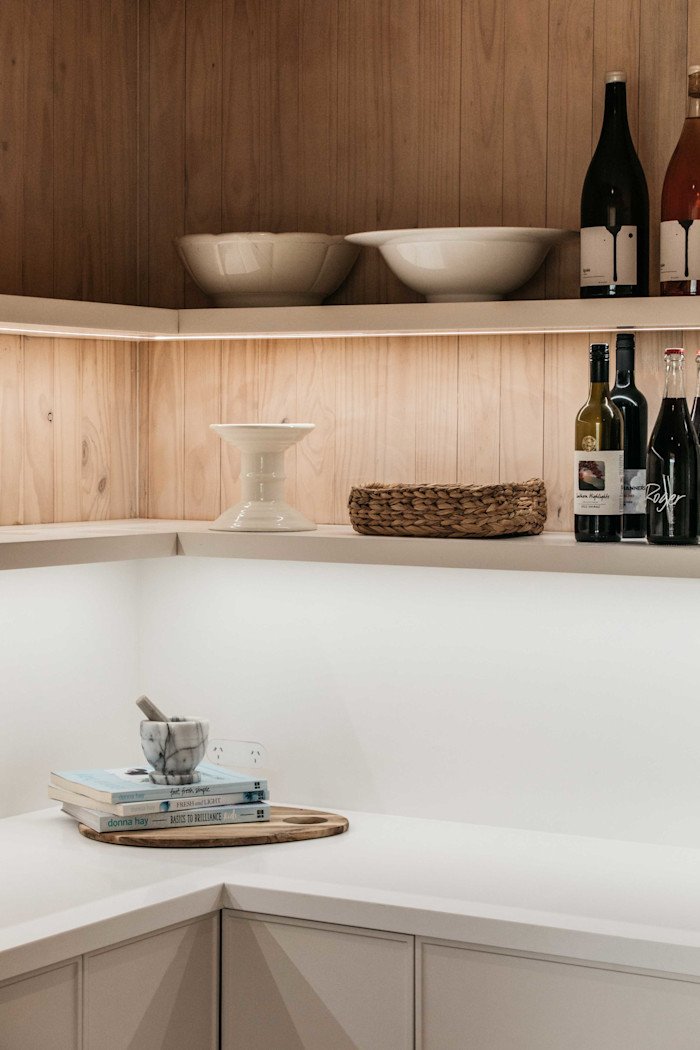
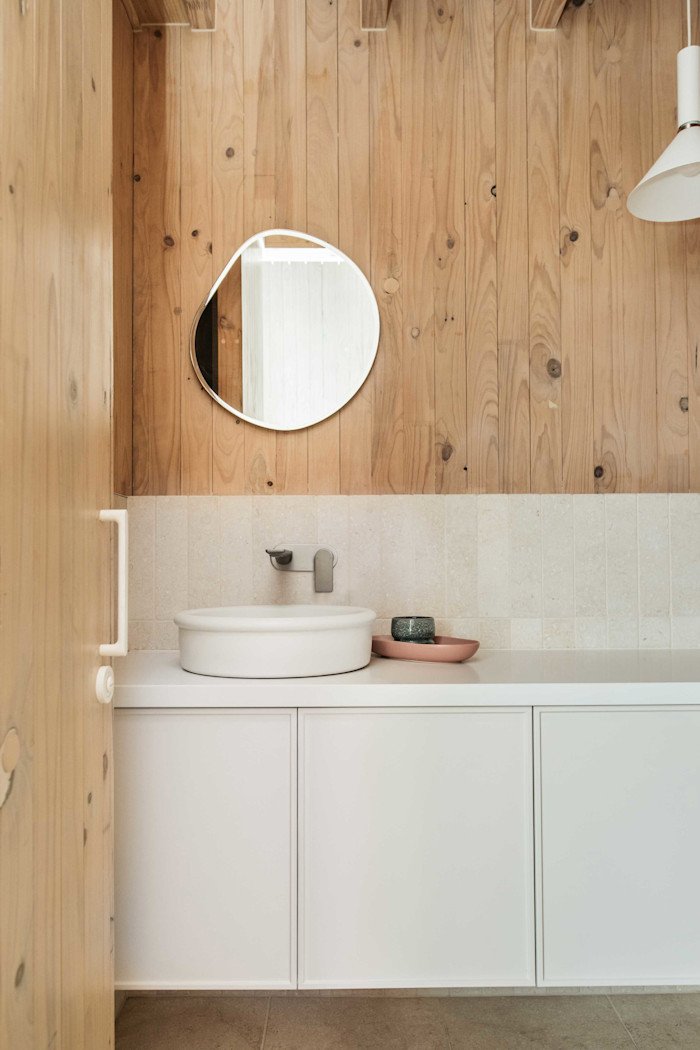
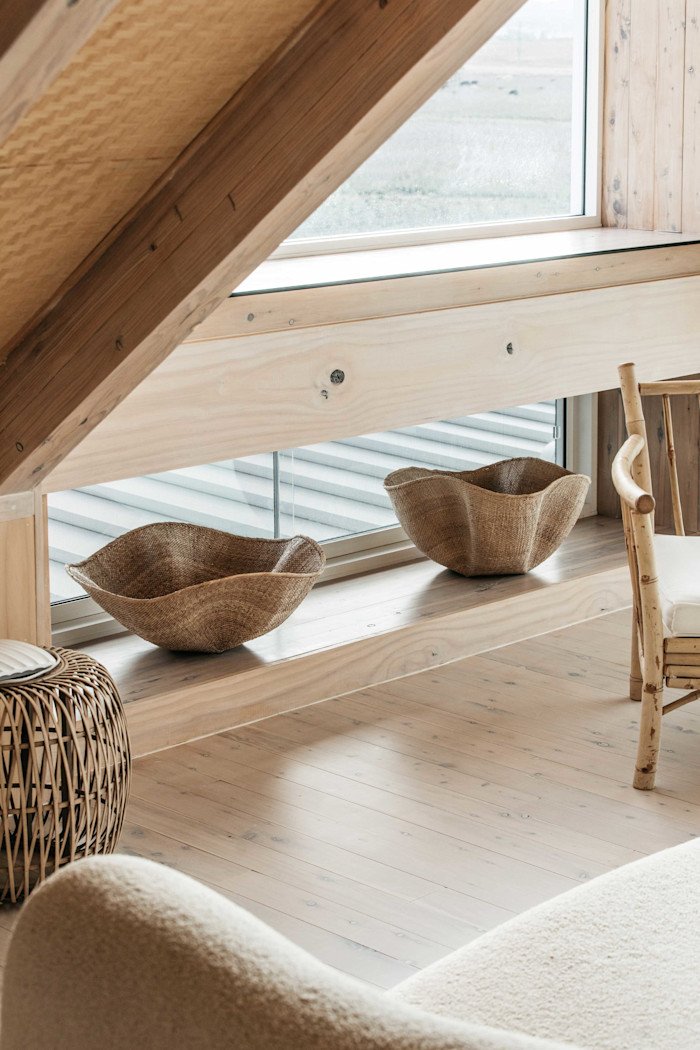
Strategically placed within the expansive new volume, the mezzanine captures sweeping views of the surrounding undulating landscape while creating a series of lower, more intimate spaces beneath. These include the kitchen, pantry and powder room. A sunken lounge deepens the sense of spatial layering and intimacy. Wide verandas offer shaded outdoor spaces for gathering and movement. Deep window reveals frame long views and foster a sense of intimacy embracing those standing or sitting within them and softly shaping light and shade throughout the home. Together, these elements ground the house in its setting offering a sanctuary thoughtfully shaped by climate, context and a deep commitment to considered design.