A Cabinet of Curiosities carefully blends design and master craftsmanship

Piece pushes boundaries of both design and craft by reinterpreting traditional fine woodworking methods into a new cabinet typology

April 15, 2026

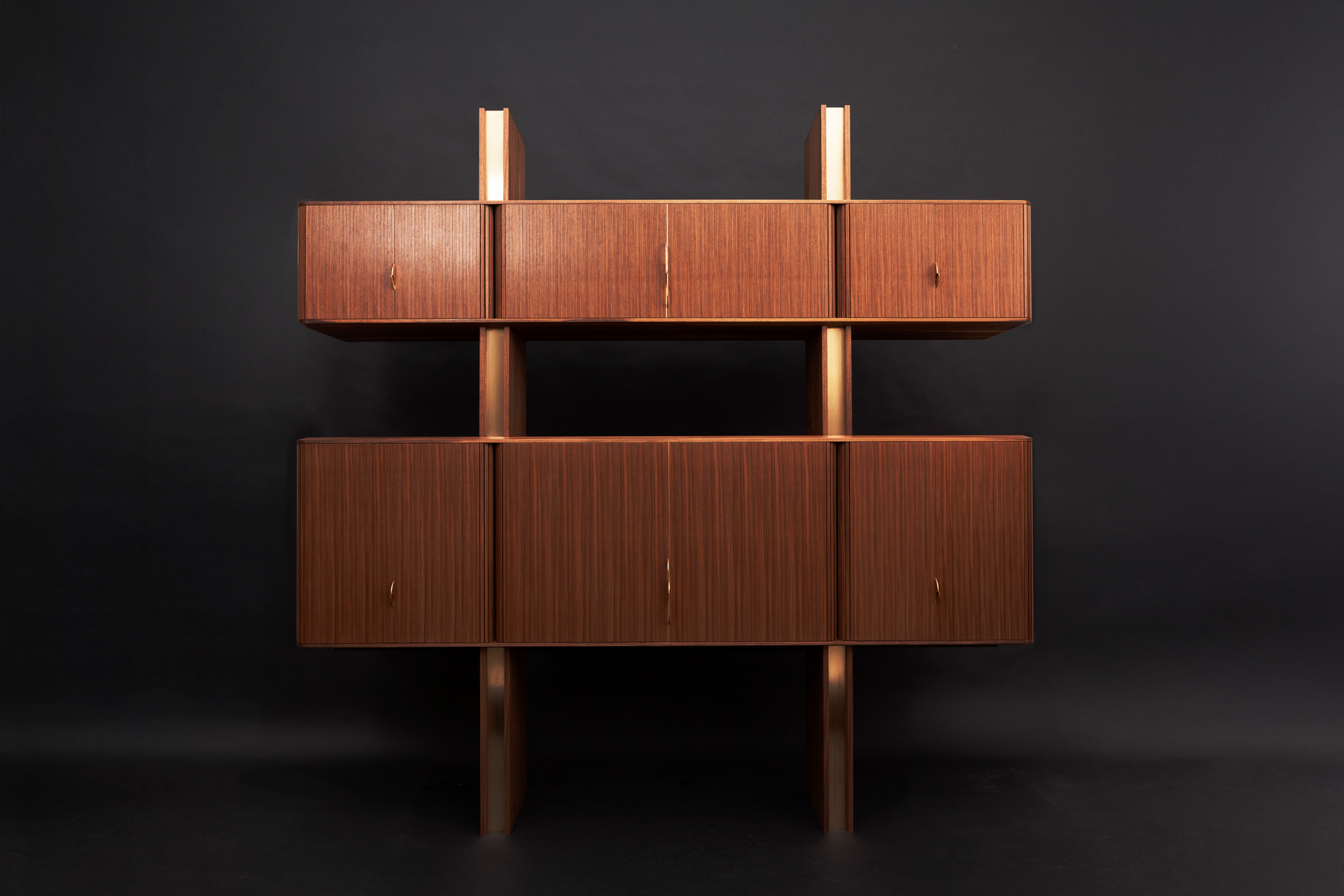
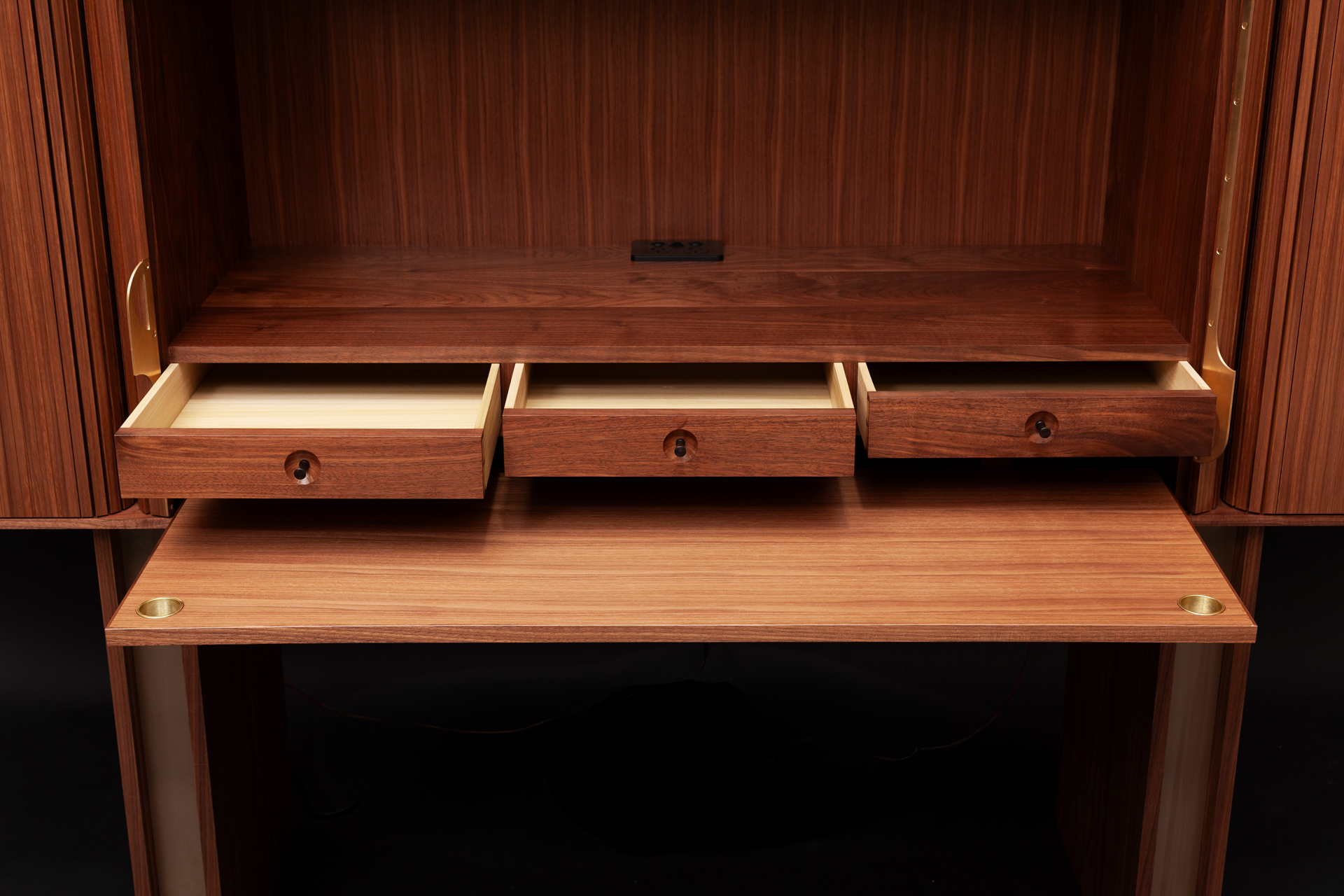
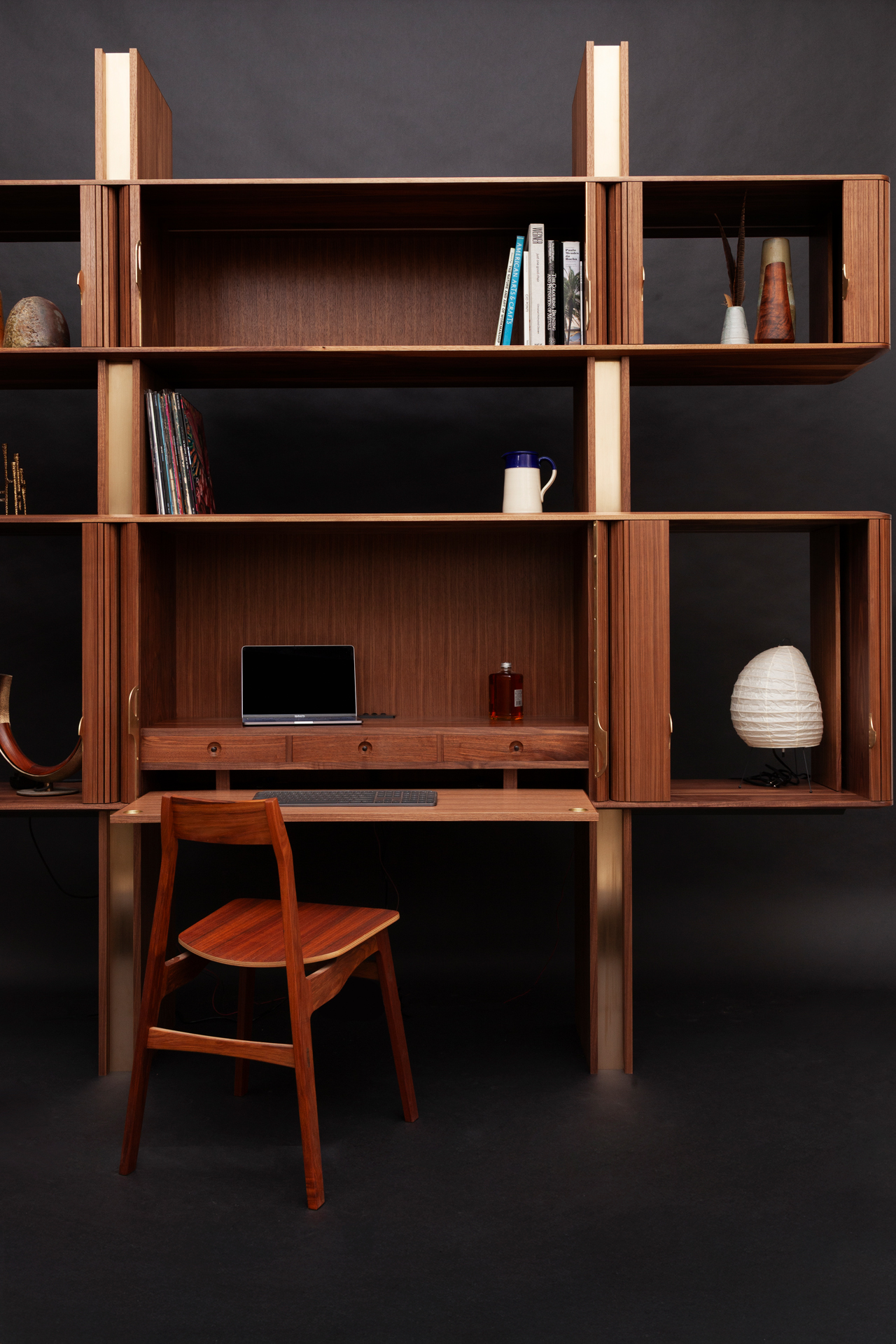
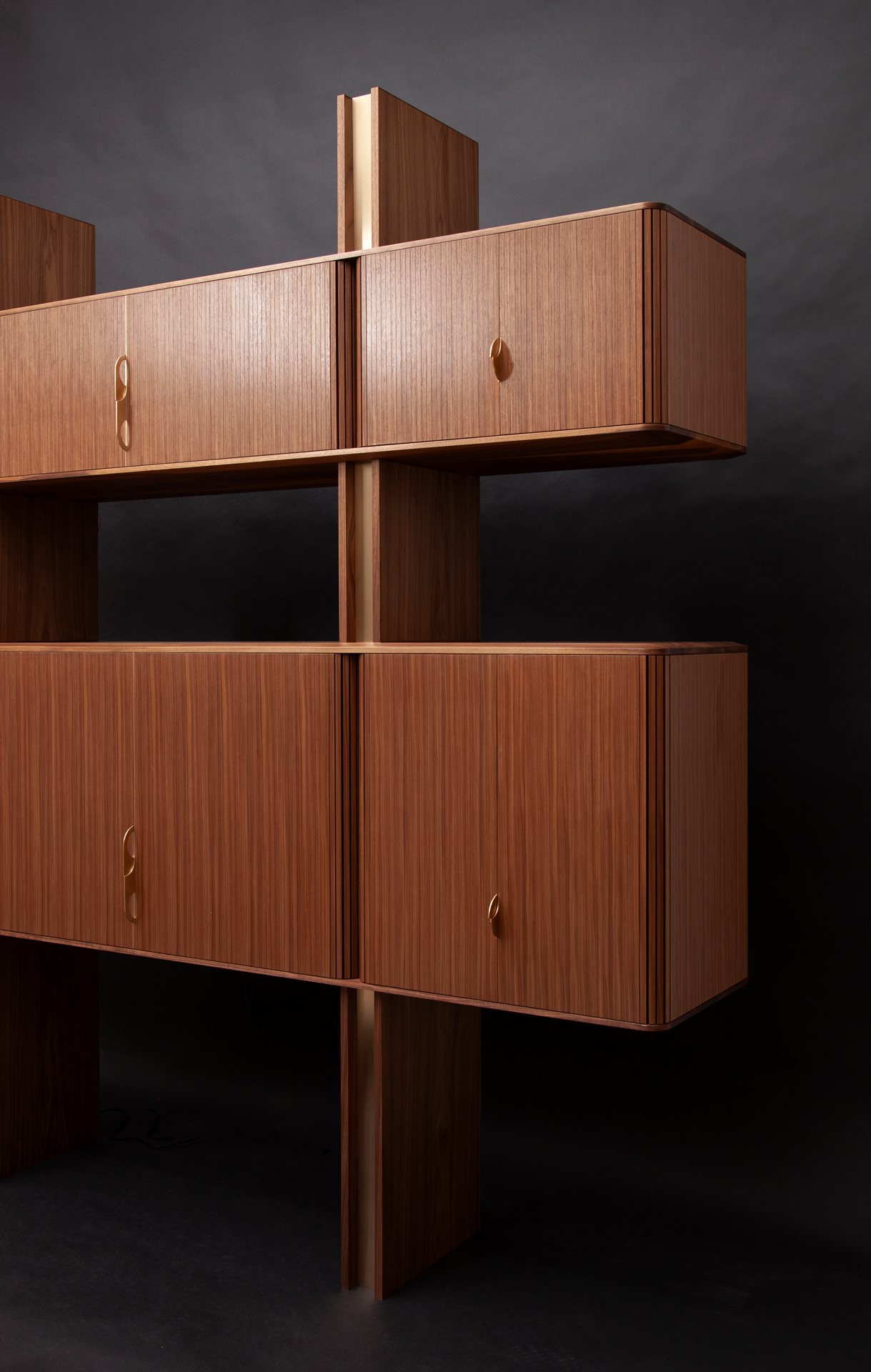
A Cabinet of Curiosities is a bespoke piece that was commissioned to sit in an apartment interior originally designed by Adam Markowitz Design in 2019. In the 5 years since, where a glazed wall once had views over East Melbourne, there is now an office tower. An apartment designed originally for living, now post-covid, used partially for working. The clients are collectors, and wanted a multi-faceted piece that would allow them to display their collection of curiosities; screen the new neighboring apartment building; and act as a work from home station, which could be closed off when not in use to enforce work/life separation.

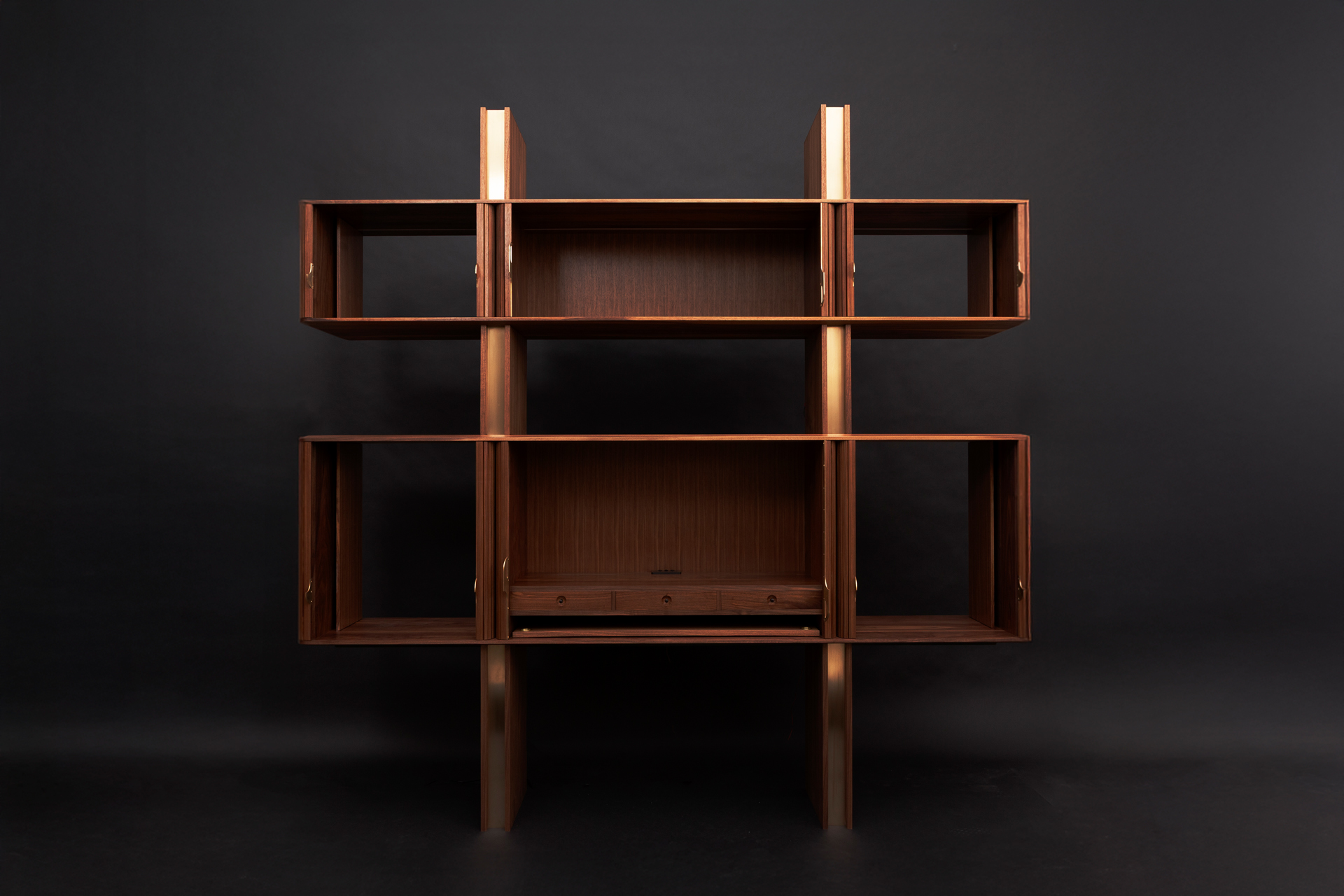
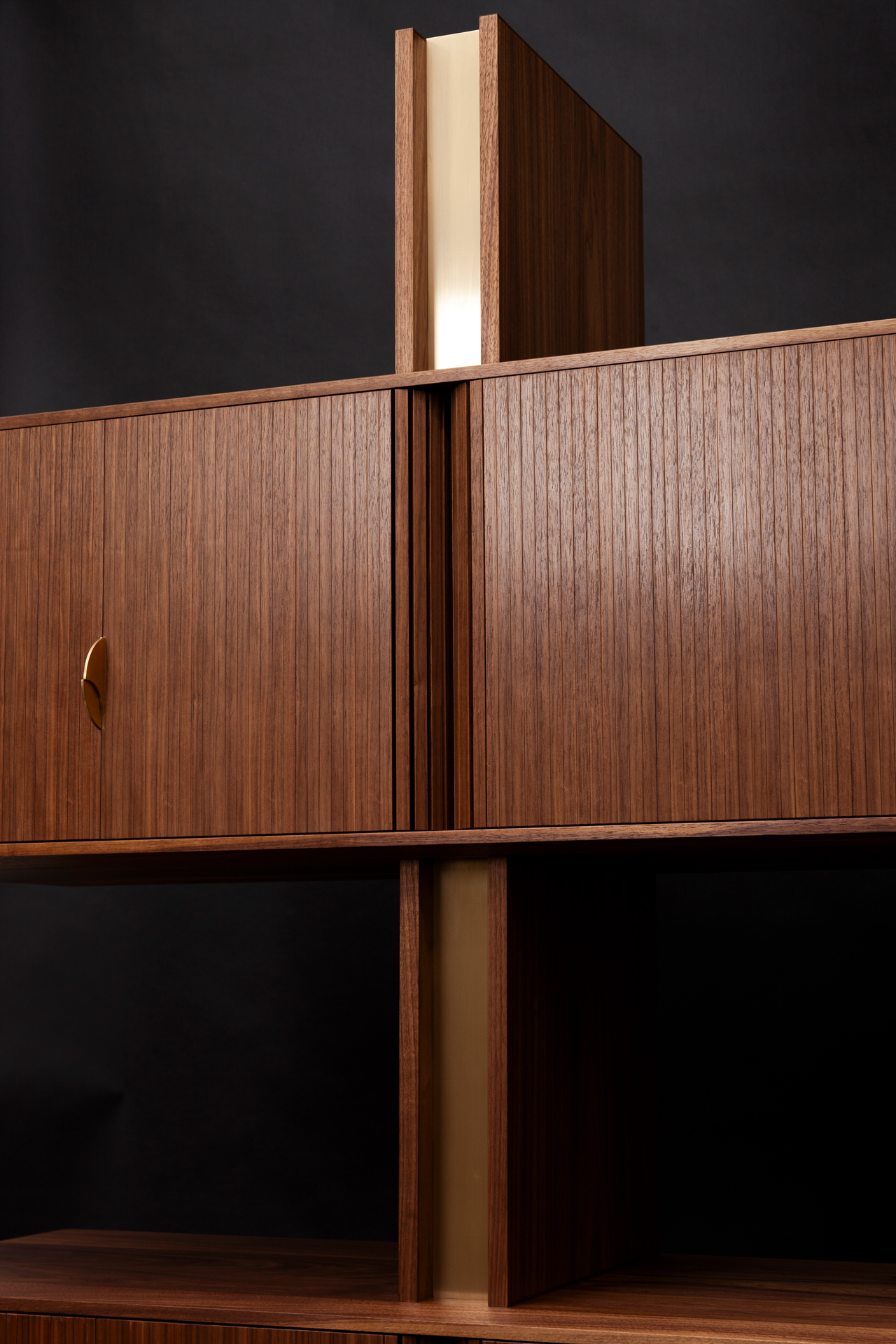
The design sought to achieve this without completely blocking the light from the window beyond. The result is a dynamic piece that can at once be made solid and barrier-like, but then through the use of tambour doors, quickly adjusted to appear light and transparent. Tambour doors slide away, seemingly to nowhere, leaving a completely porous, light permeable object.

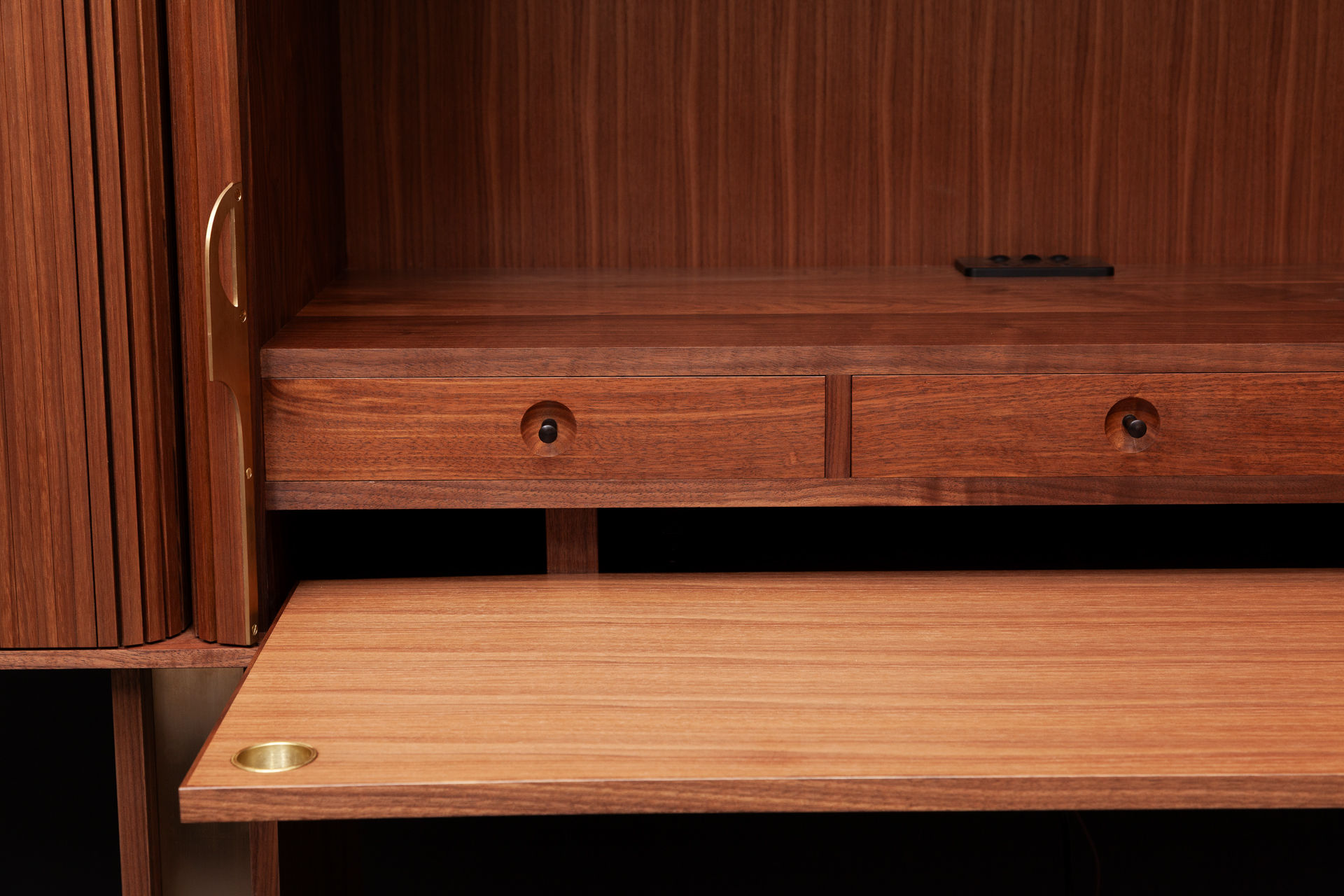
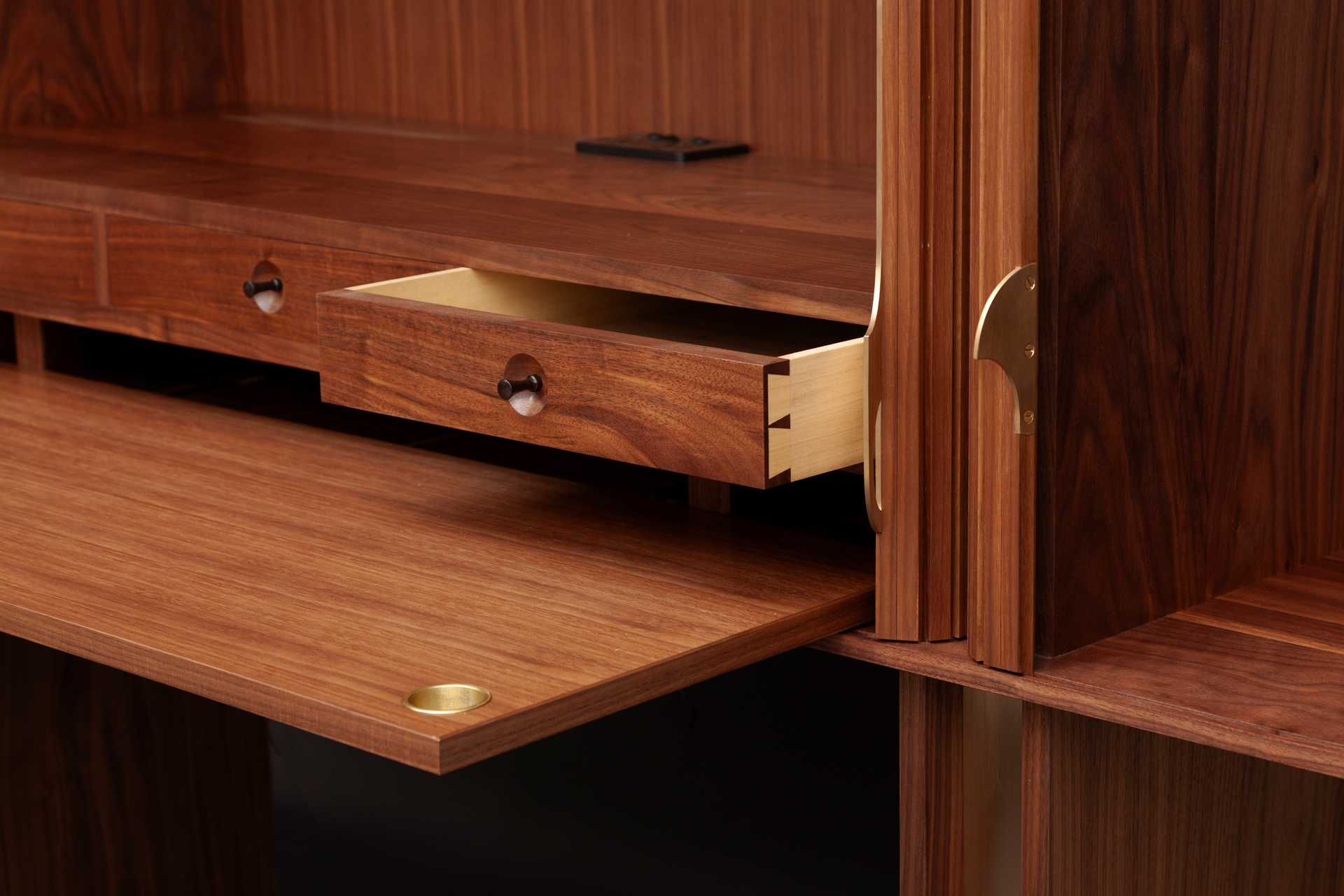
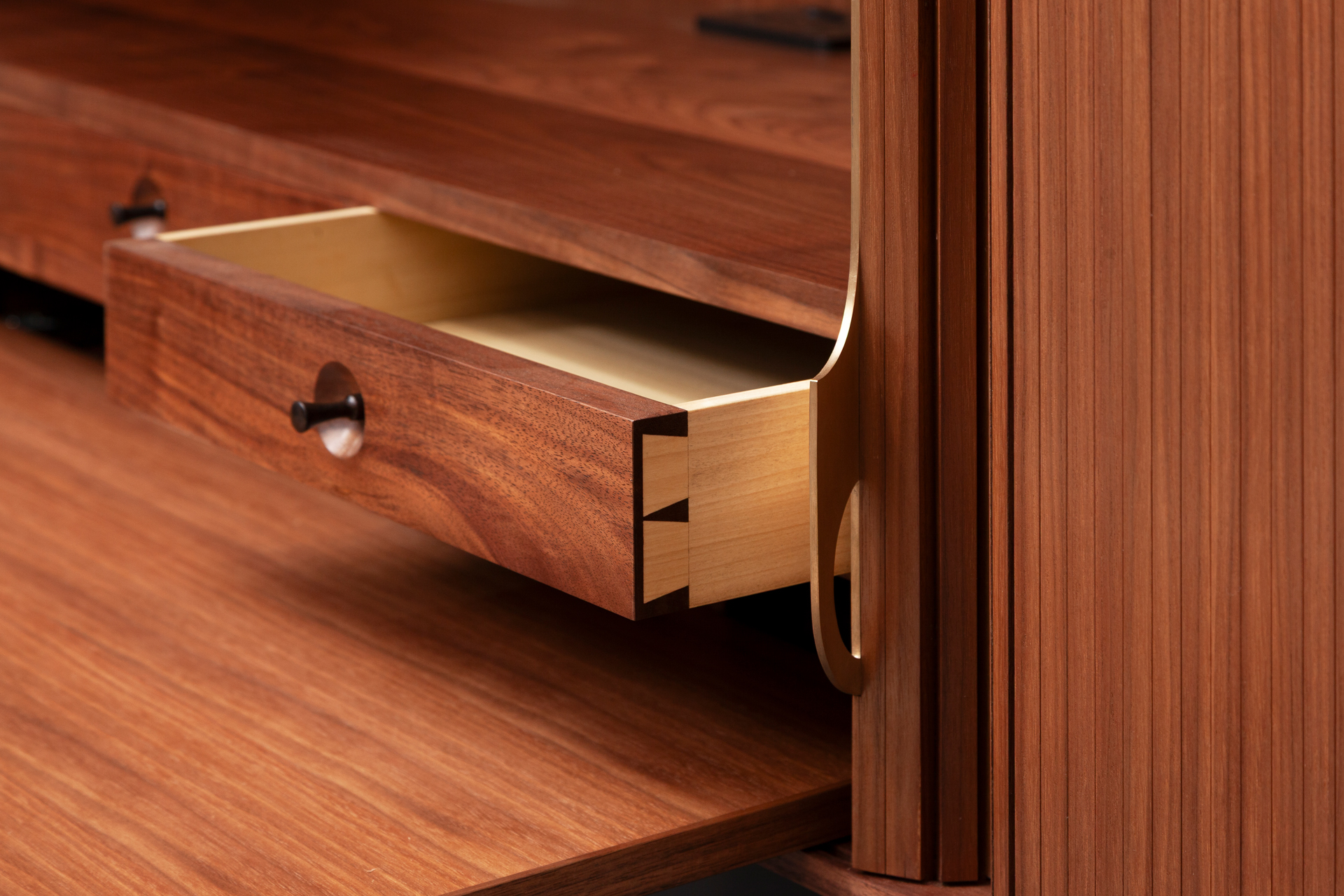
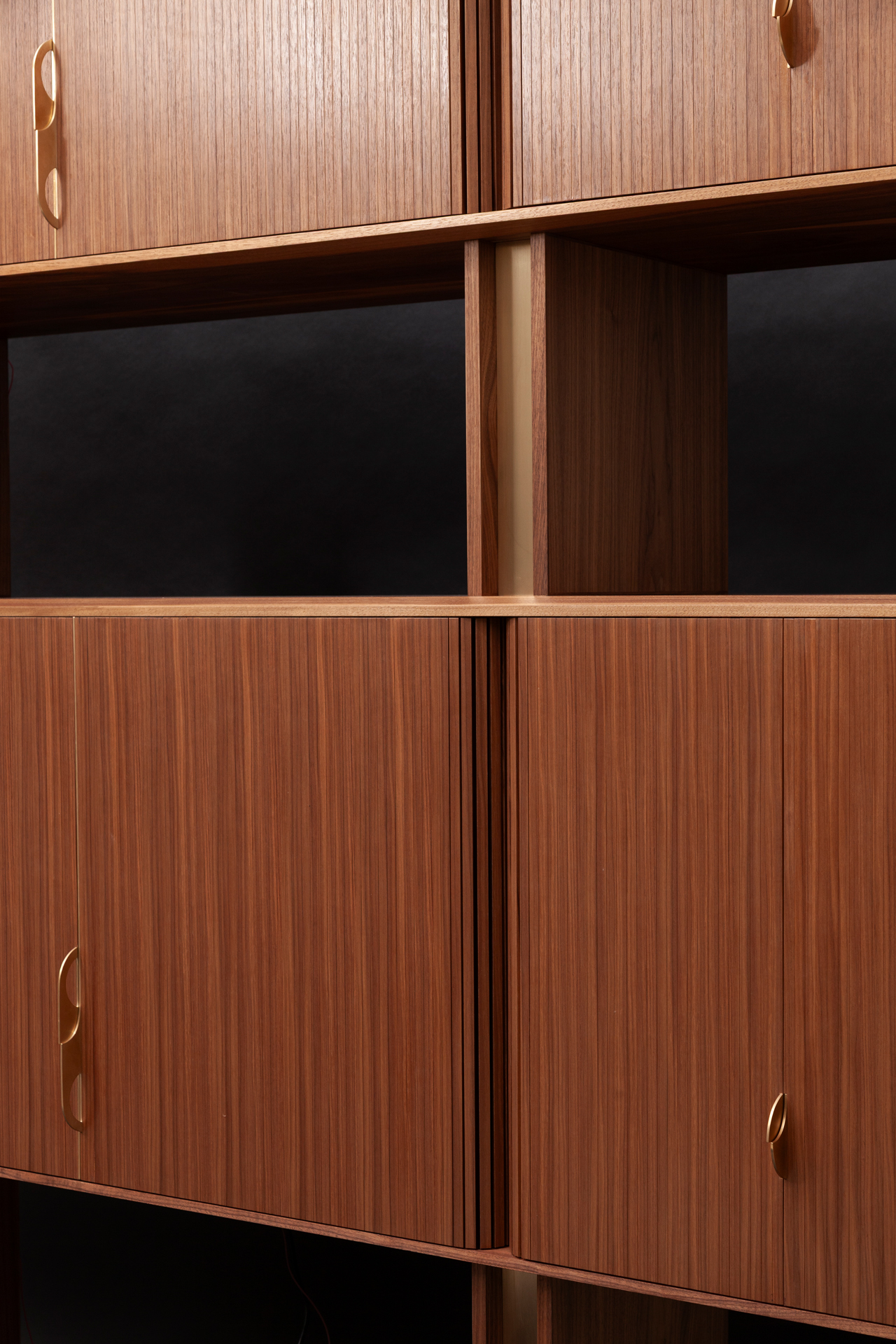
Designed by Adam Markowitz and crafted meticulously by Simeon Dux, the piece has been made to masterful levels of craftsmanship, with hand-cut dovetails, piston-fit drawers, continuous grain quartersawn veneer tambour doors, hand-turned 10,000 year old ancient redgum drawer pulls, handmade custom brass pulls, alongside custom-made and integrated power, lighting and hardware.

According to Markowitz, this is a one-off piece made by a master craftsman using traditional techniques to an ‘heirloom’ / ‘museum-quality’ standard – the use of traditional techniques mean that the piece will last far longer than it would take to regrow the tree used to produce the timber – the definition of renewable and sustainable. Data from the American Hardwood Export Council (AHEC) shows that it would take 13.09 seconds to replace 1m3 of Walnut – so it would probably take less than a second to replace the timber required to build this piece.

Building pieces in this small, bespoke fine craft manner is both socially, culturally and environmentally sustainable; the piece has been made within 20km of its destination, by a small scale craftsman using a small amount of materials, all of which have been treated with the respect that will mean that the object will survive and be treasured beyond the lives of its current owners.


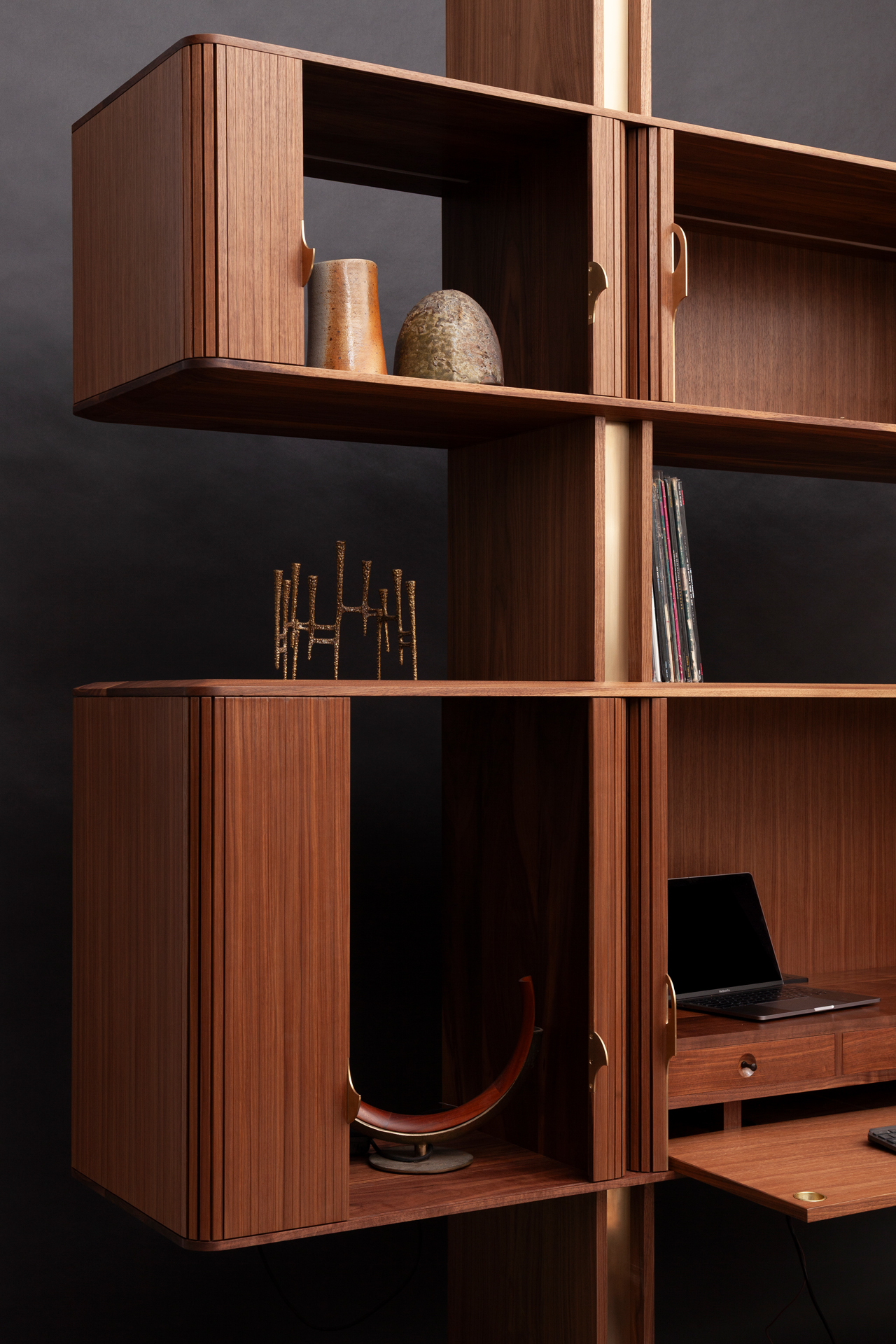
This piece’s layered design allows for numerous ‘display platforms’ for a constantly and dynamically changing stage to showcase the various curiosities the clients have collected in their travels (from pop-culture pieces to beautiful venetian glassware). A significant challenge was the requirement that the whole piece be disassemblable to fit in a small elevator for installation. Each of the platforms therefore are independent of the other.

This was incredibly structurally challenging, as the nature of tambour doors means that even minor deflections of a few mm would cause binding – and these tambours are cantilevering out into space. This required technical solutions of both craft and design working in unison to triangulate forces and conceal hidden structure. This is in essence the story of what makes the piece unique – a careful blend of design and master craftsmanship.

Walnut and brass were chosen due to their link to the existing interior palette which feature both of these materials, as well as a repeated fluted motif. The tambour doors are made from solid walnut, but are covered with a layer of quartersawn veneer. This is a process which involves pressing the veneer onto the tambour door staves, and then slicing each stave open with a knife, to create a perfect grain match to the door faces (cutting the timber on a saw would typically lose a few mm for each sawcut and create a ‘pixelated’ effect). This requires an intense amount of skill and precision. From a design perspective, while this technique might have encouraged the use of a bolder veneer pattern, a quiet, straight-grained (quartersawn) slipmatch veneer was chosen to keep the door faces softly spoken and not dominating the space, allowing the curiosities to be the focus – not the cabinet.

“The Cabinet of Curiosities pushes boundaries of both design and craft by reinterpreting traditional fine woodworking methods into a new cabinet typology that uniquely responds to a complex, multifaceted design brief and the particular demands of an existing architectural space. The result is a piece that achieves a calm and considered design unity despite this multi-faceted brief, in a manner that remains reverential of the wisdom and skill embedded in traditional craft techniques while creating an innovative, forward thinking and progressive piece of master cabinetry,” concluded Adam Markowitz.

Read next

Type To Search

Images © Charlie White