Lagomar Lake Pavillion and Bar: Floating hypberbolic pavilion ingeniously merges high-tech design with local low-tech materials
Flexible space dissolves its boundaries with the water, embodying sustainability as a cultural conviction
April 1, 2026
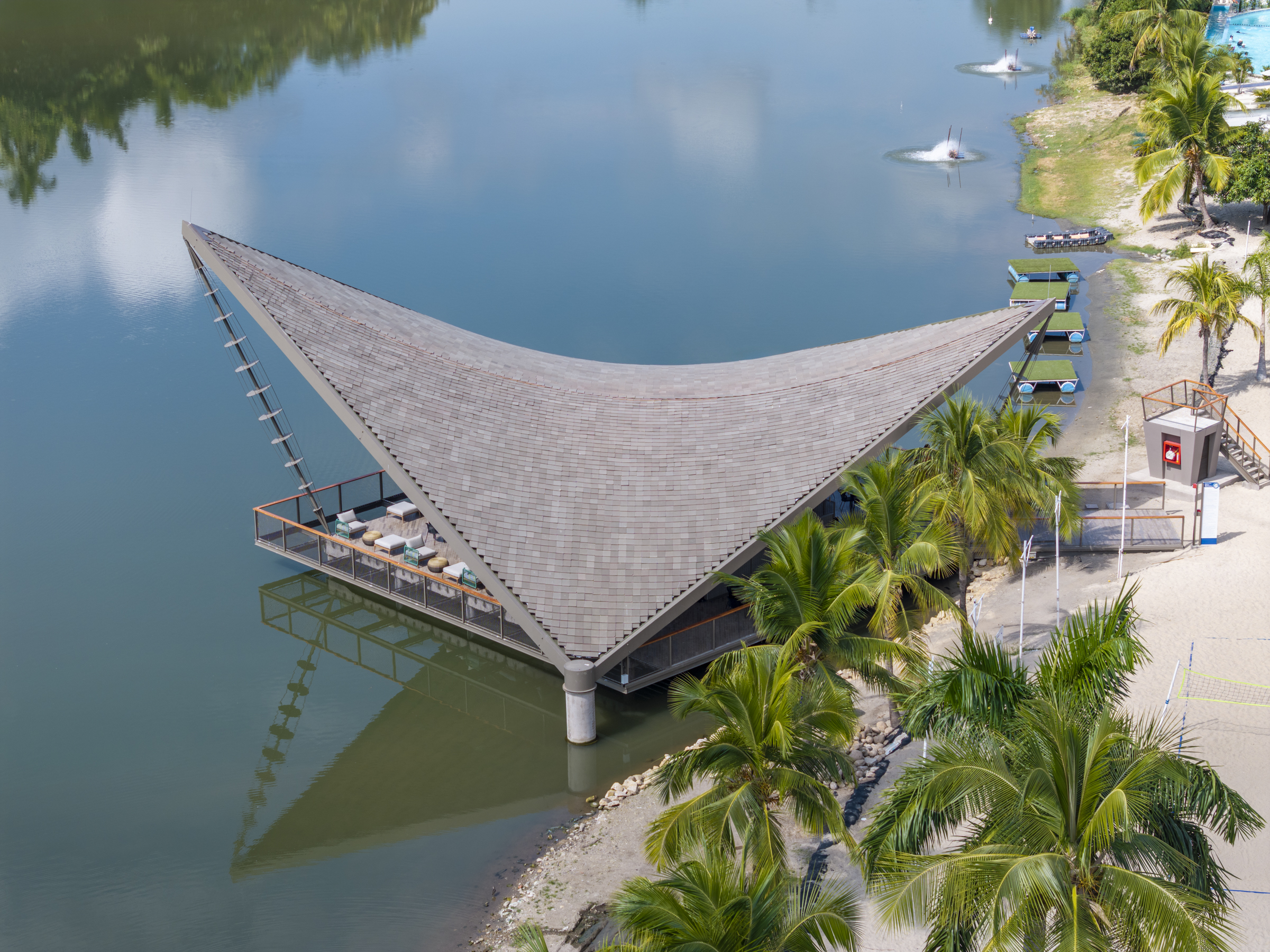
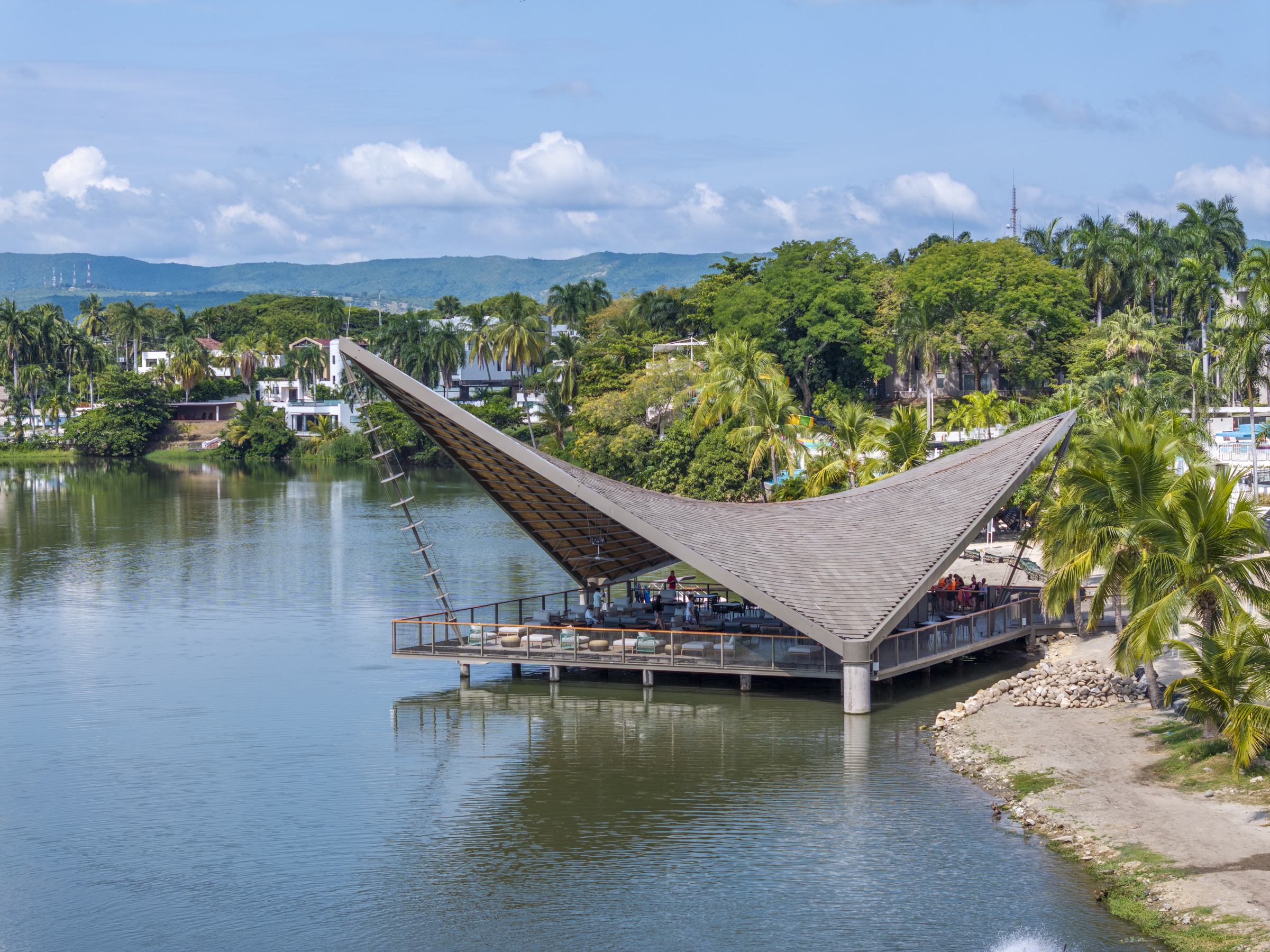
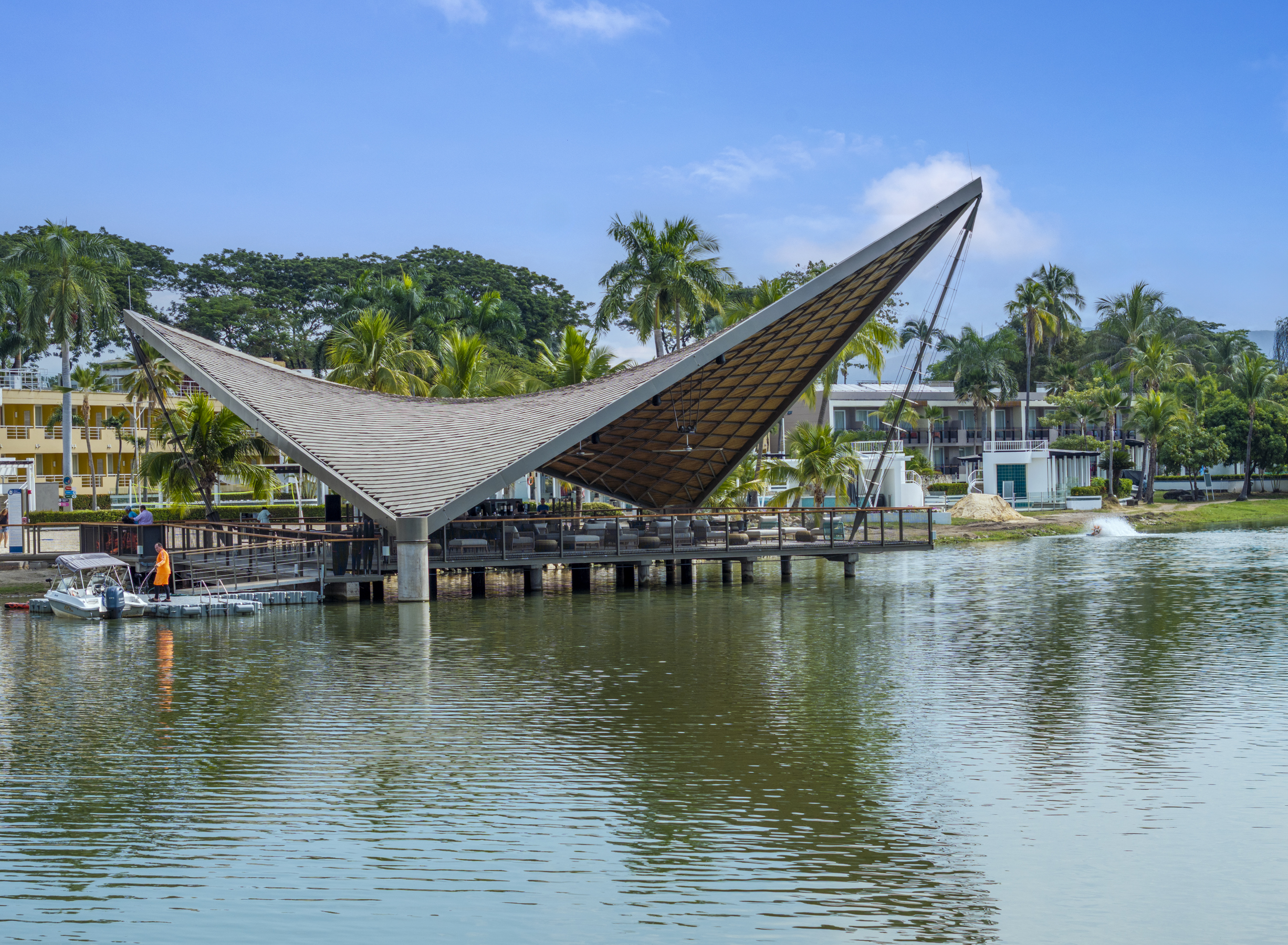
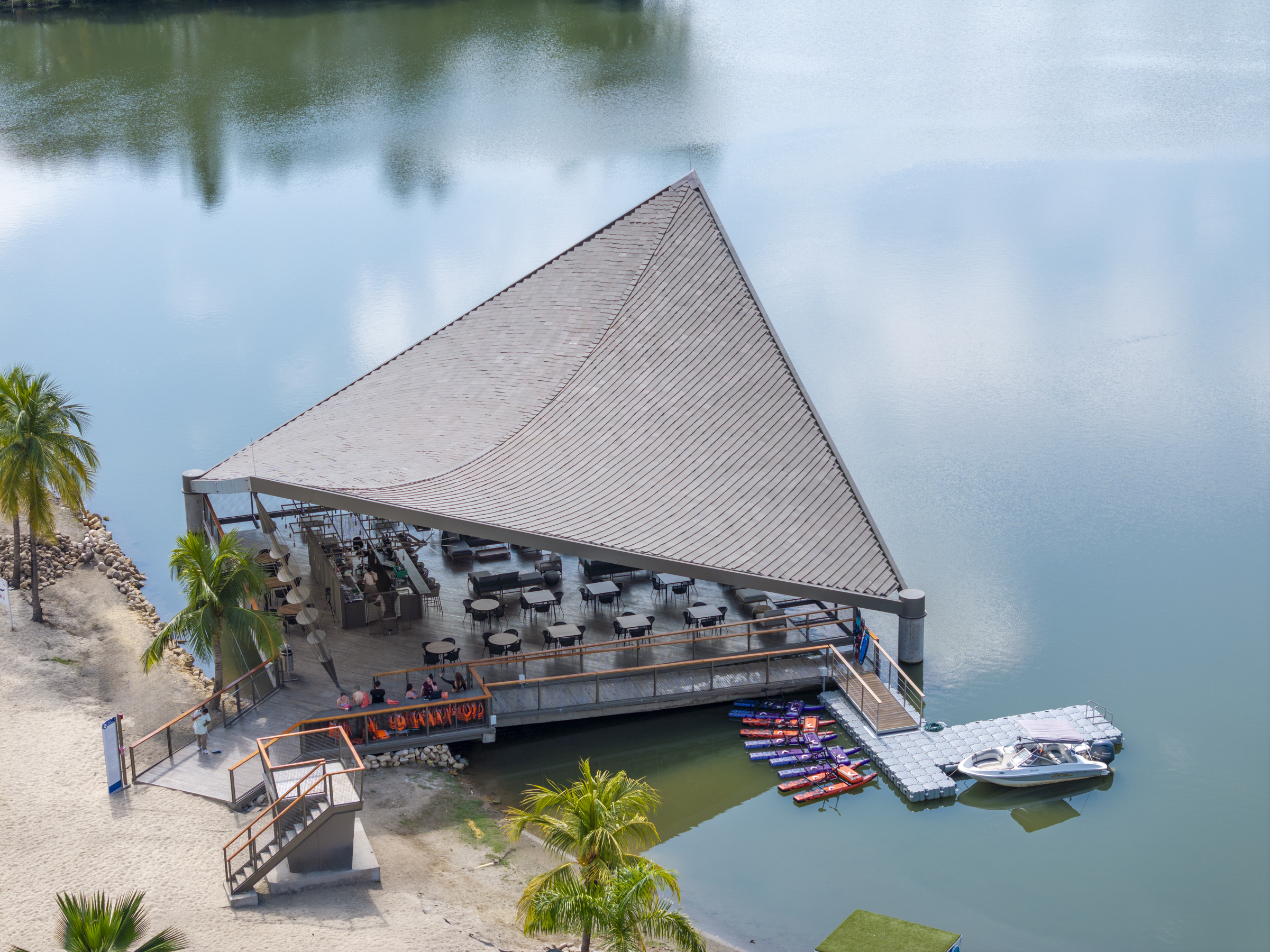
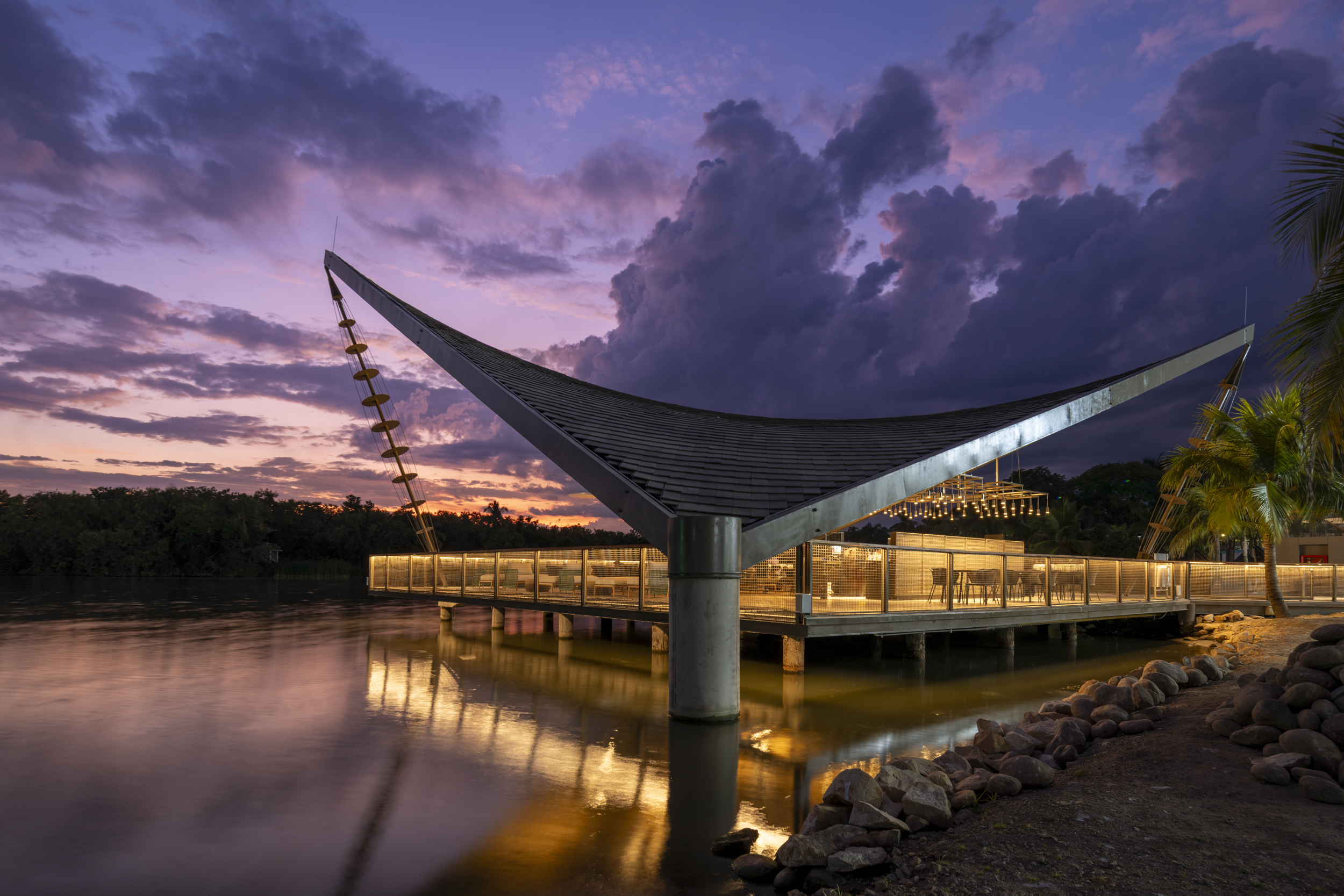
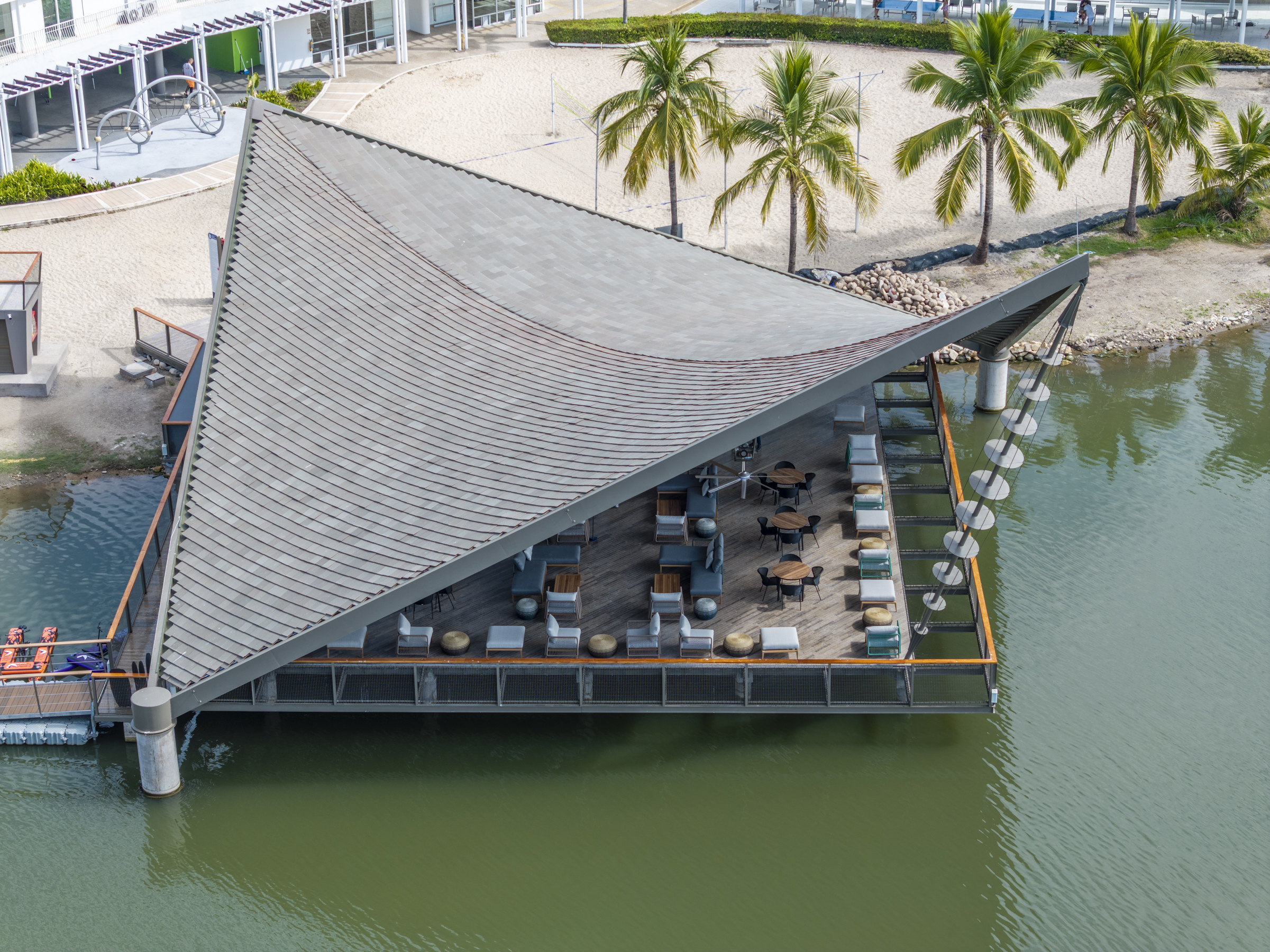
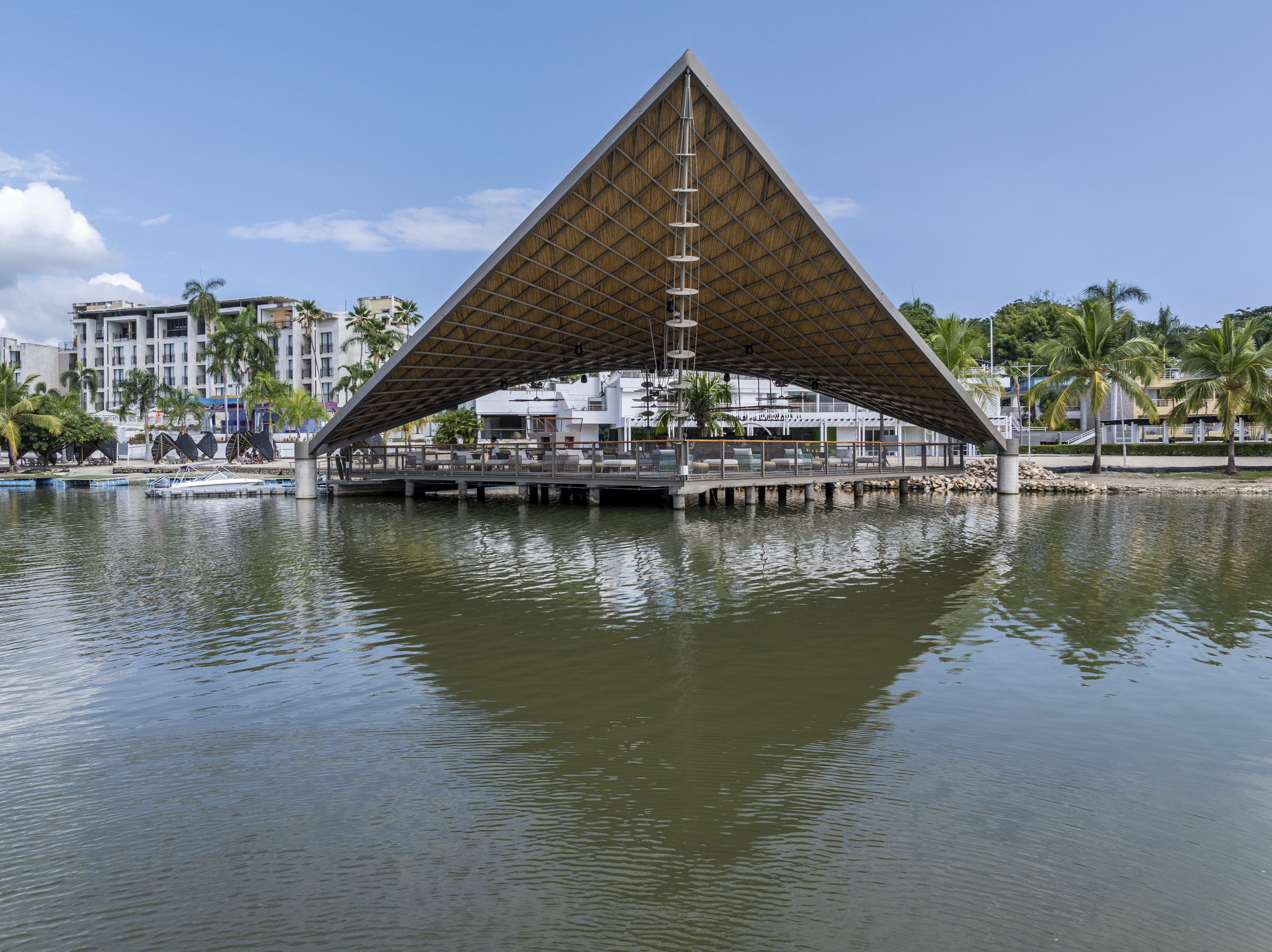
A dock for the hotel’s water sports becomes the architectural pretext for a floating pavilion for a bar-restaurant in Girardot, Cundinamarca, Colombia. Based in New York and Bogotá, Obreval designed the Lagomar Lake Pavillion and Bar as a flexible space, that accommodates everyday use as well as private events and small concerts. The project is conceived as a deliberate exploration of the productive tension between high-tech and low-tech architecture. The result is a flexible space that dissolves its boundaries with the water, embodying sustainability as a cultural conviction.
Its structure proposes a precise dialogue between industrialized, metallic construction – rooted in digital modeling, calculation, and simulation – and an architecture grounded in local techniques, where bamboo, clay tiles, and the knowledge of the local builder on site play a central role. According to the architects, this apparent contradiction lies at the core of their vision of contemporary Latin American architecture: an architecture capable of proposing new spatial and material approaches through a local lens, understanding sustainability not as a technical add-on but as a cultural conviction, and producing an image that honors the past without falling into nostalgic imitation.
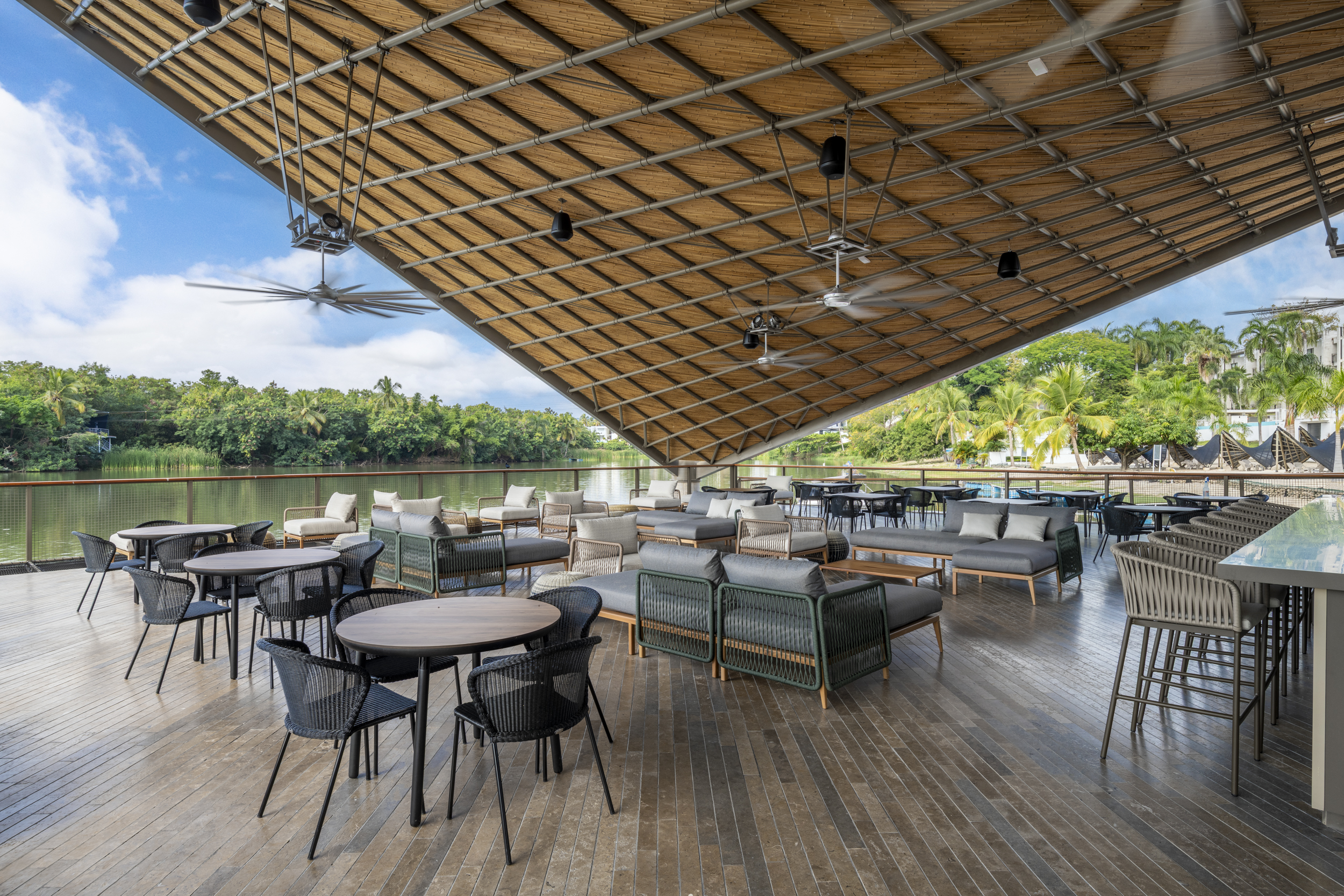
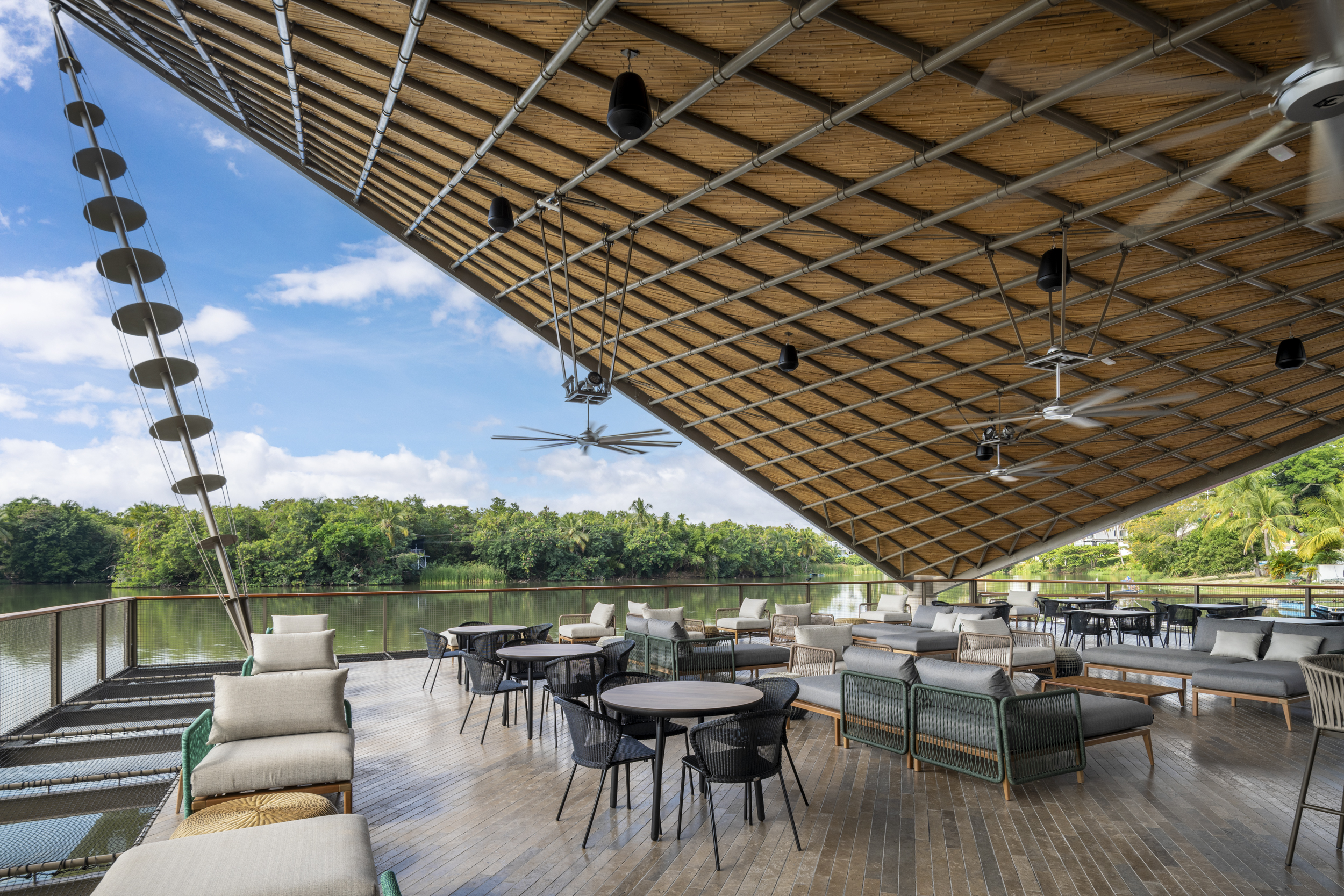
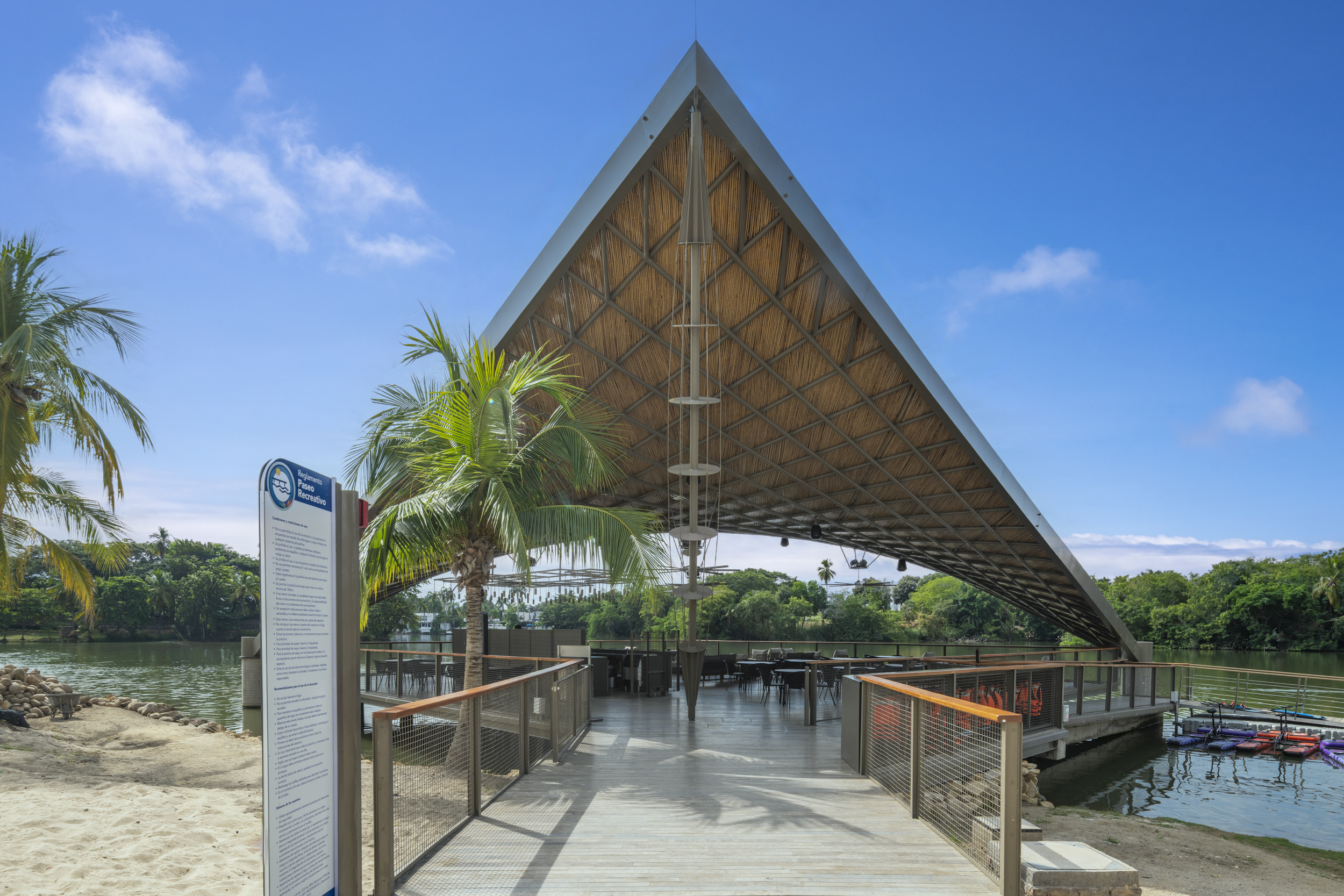
Steel IPES beams are combined with standard welded wire meshes, reinforcing the coexistence of industrial detailing with the everyday materials of construction practice. This structural logic is further developed through the idea of weaving. The hyperbolic geometry – composed of straight lines capable of generating curves – connects two distinct worlds: a Cartesian one, defined by straight beams and orthogonal directions, and a topological one, governed by 45-degree diagonals, where the physical properties of bamboo allow for controlled curvature.
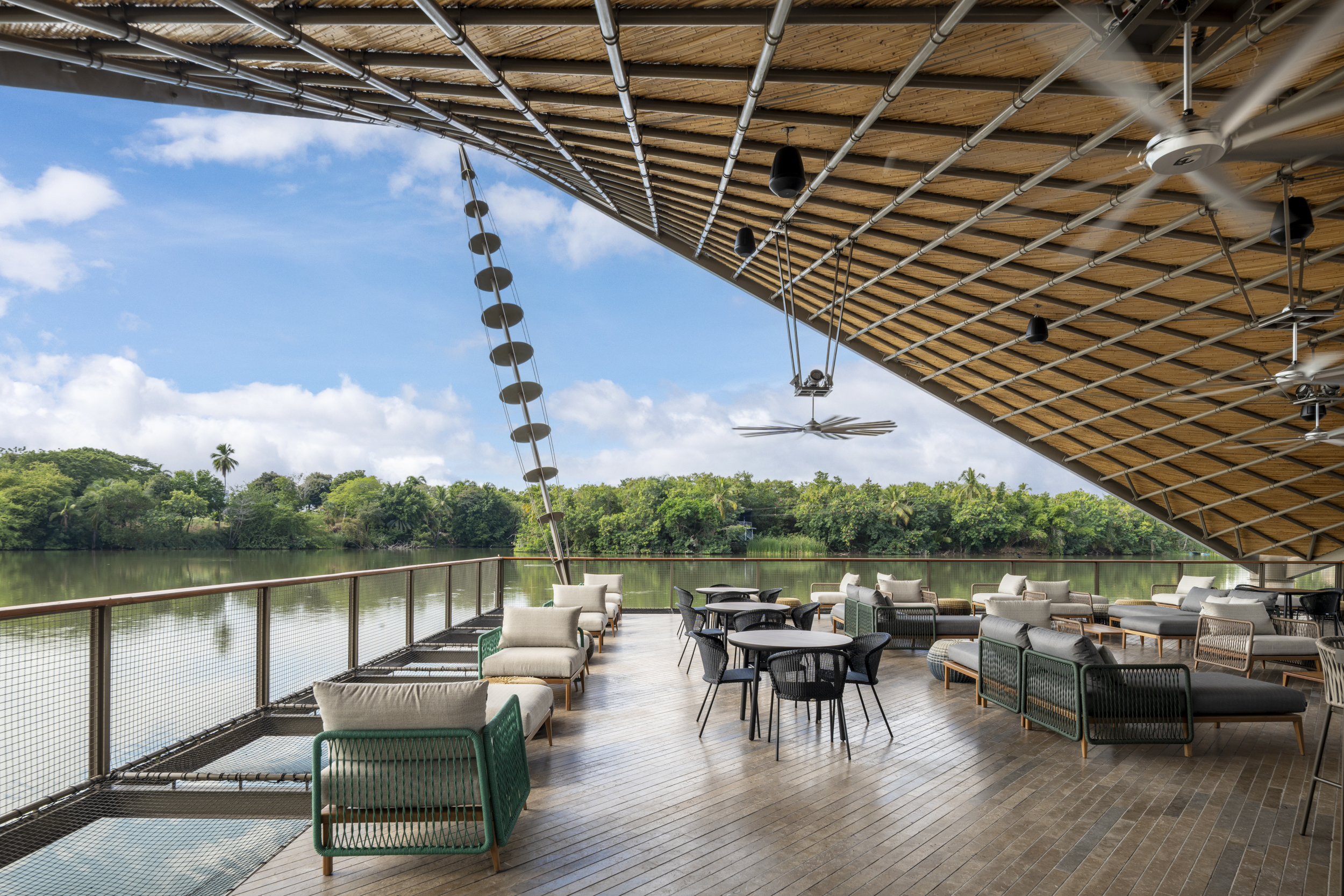
The notion of weaving extends into the furniture. Rattan tables and textile-woven chair backs introduce layers of texture and warmth, strengthening the relationship between structure, body, and use. From a sustainability perspective, the project is based on primary gestures. A strict north-south orientation places environmental performance at the center of the design, allowing the hyperbolic paraboloid to respond naturally to intense sunlight while maintaining clear, uninterrupted views toward the lake. Finally, the connection to water is achieved through dematerialization. Catamaran nets define a transparent edge that dissolves the boundary between the bar and the lake, creating a direct, open, and lightweight space – ideal for sunbathing, resting, and contemplation.
In the Lagomar Lake Pavilion and Bar, bamboo is not treated as a nostalgic material but as a contemporary structural partner. Its natural capacity to bend allows straight structural elements to generate complex hyperbolic geometries, creating a dialogue between digital precision and local craft. The project explores how timber and bamboo can expand the possibilities of lightweight architecture while remaining deeply rooted in regional building culture. For Obreval, sustainability begins with cultural intelligence. By combining engineered steel with locally sourced bamboo and clay tiles, the project reduces material intensity while engaging local knowledge and construction techniques. As such, the structure is lightweight, climatically responsive, and designed to work with the environment rather than against it – using orientation, shade, and natural ventilation as primary architectural tools.