The Shore Road project by Russian For Fish transforms a redundant room within a compact Hackney home into a light-filled, multi-functional workspace. Previously dominated by a spiral stair and heavy boxing that concealed the ceiling, the space had little practical use and was largely given over to circulation. A process of careful investigation revealed that the apparent floor depth above was in fact an empty void, unlocking an unexpected opportunity to reclaim height.
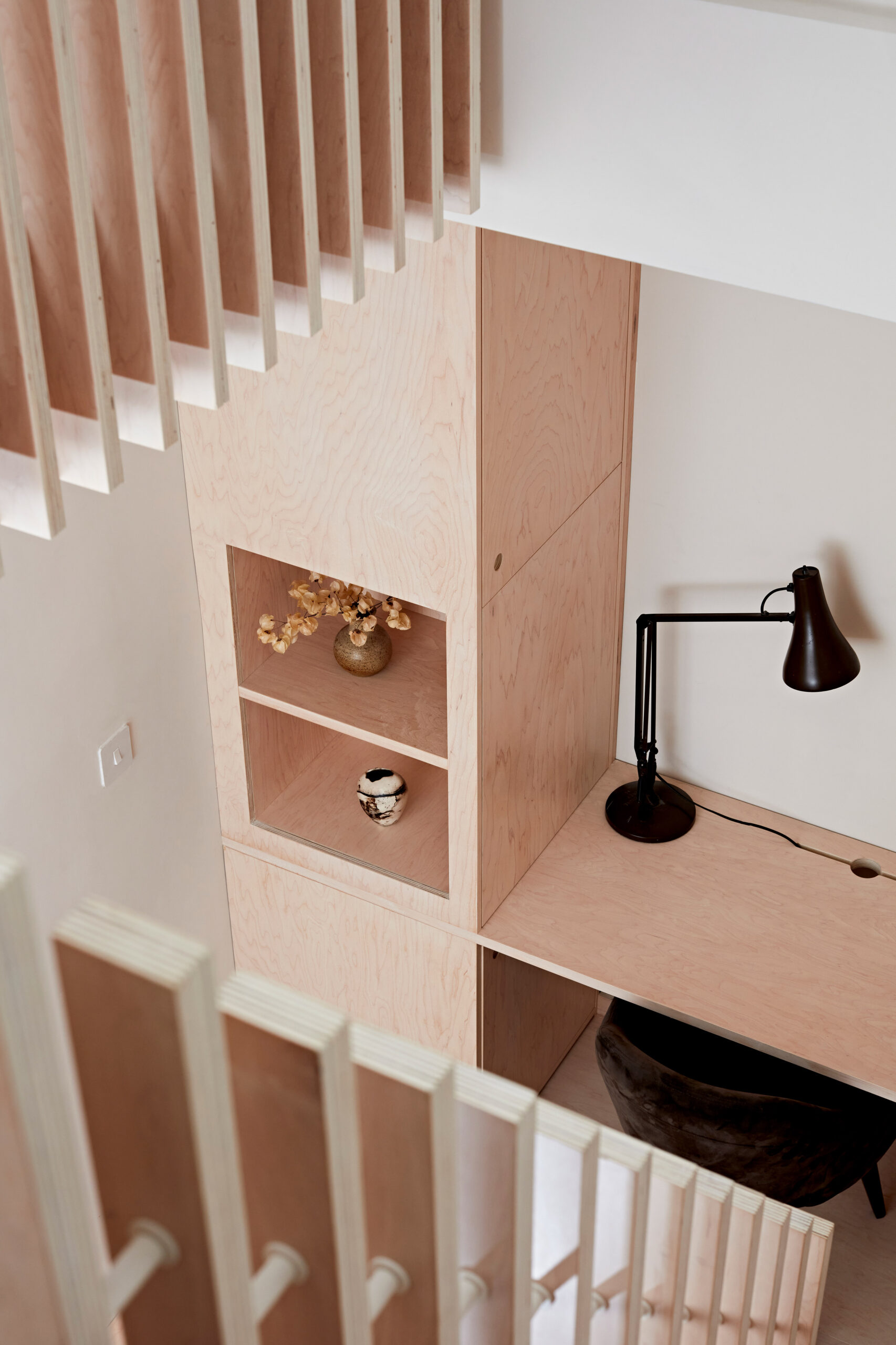
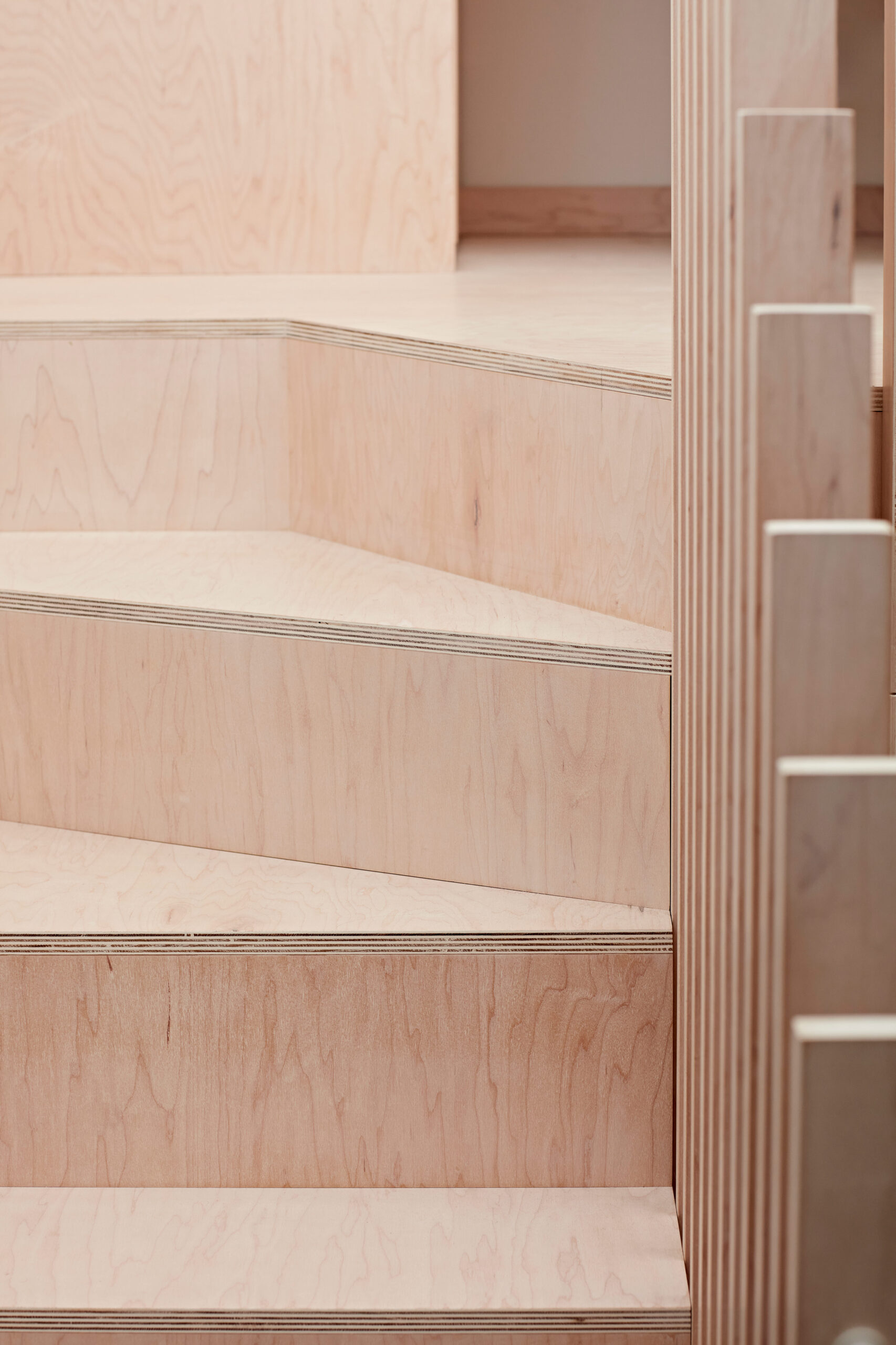
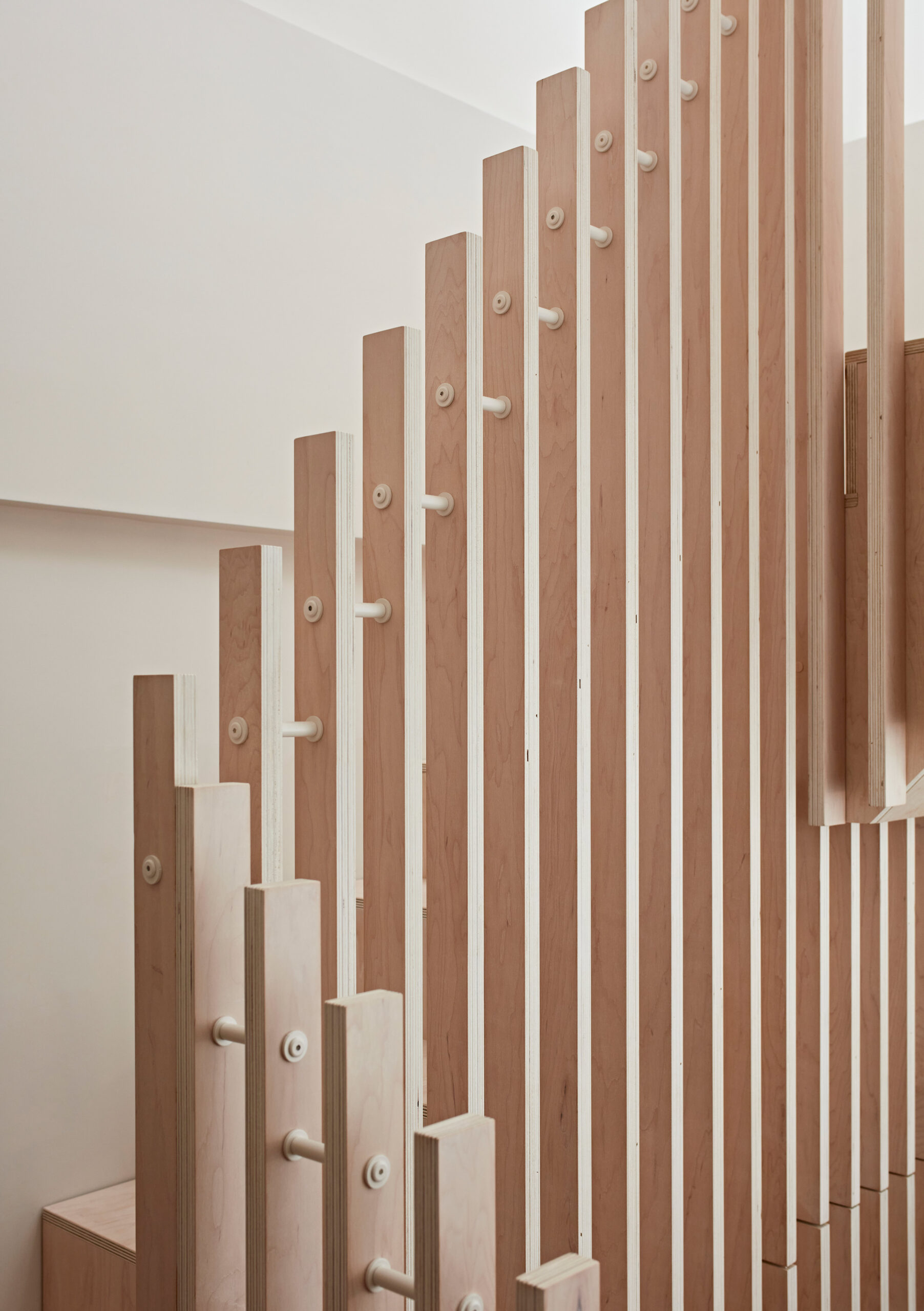
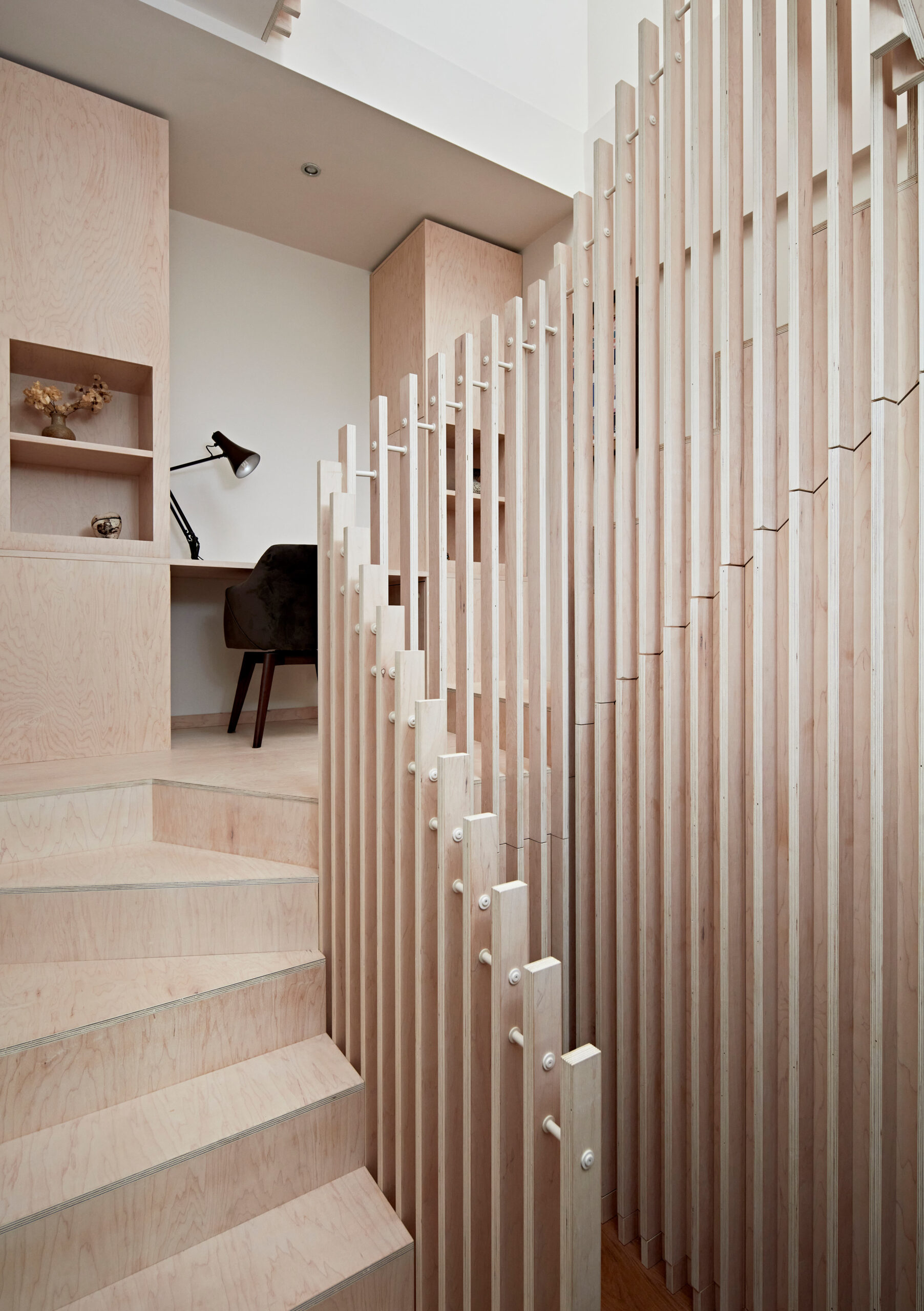
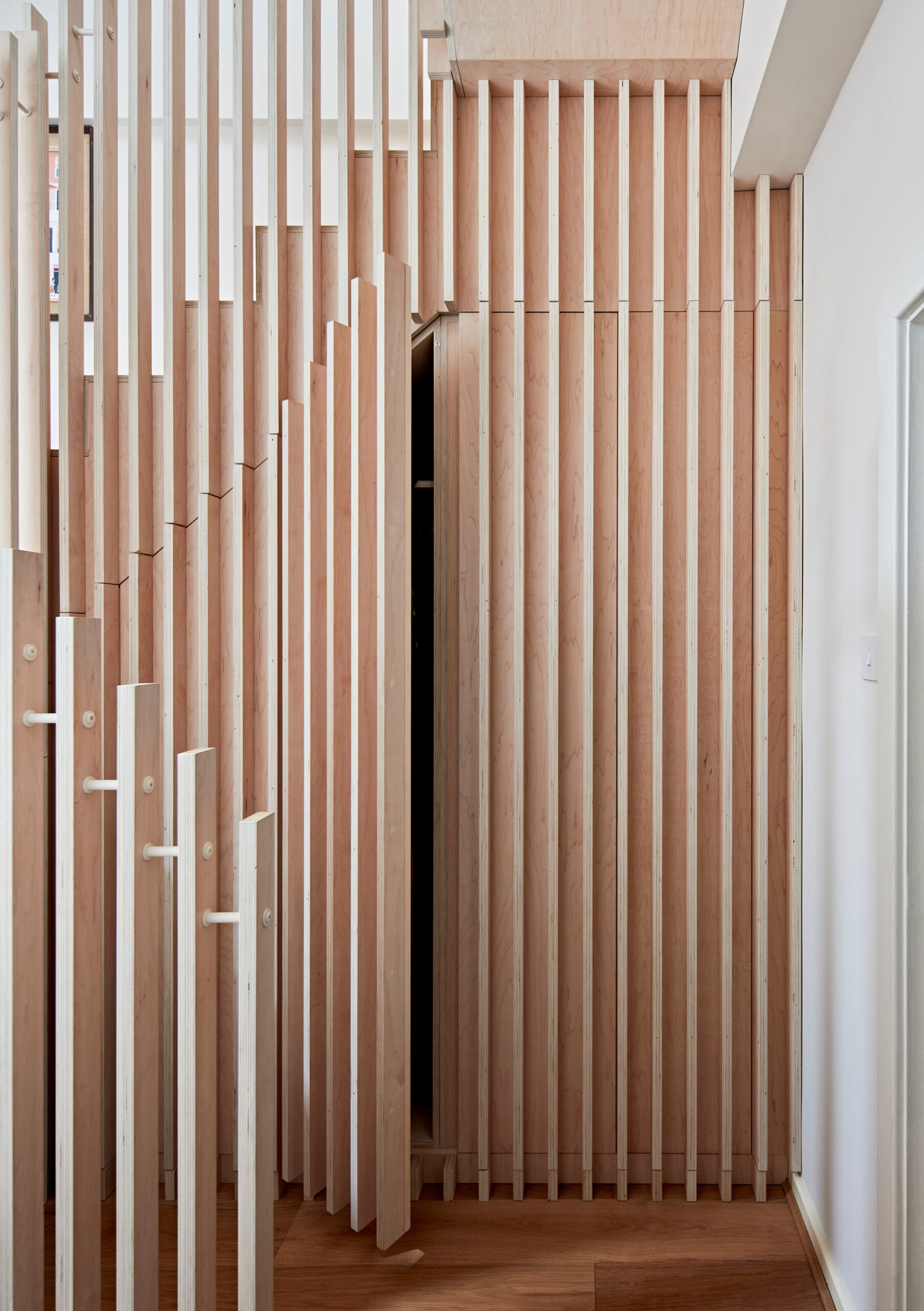
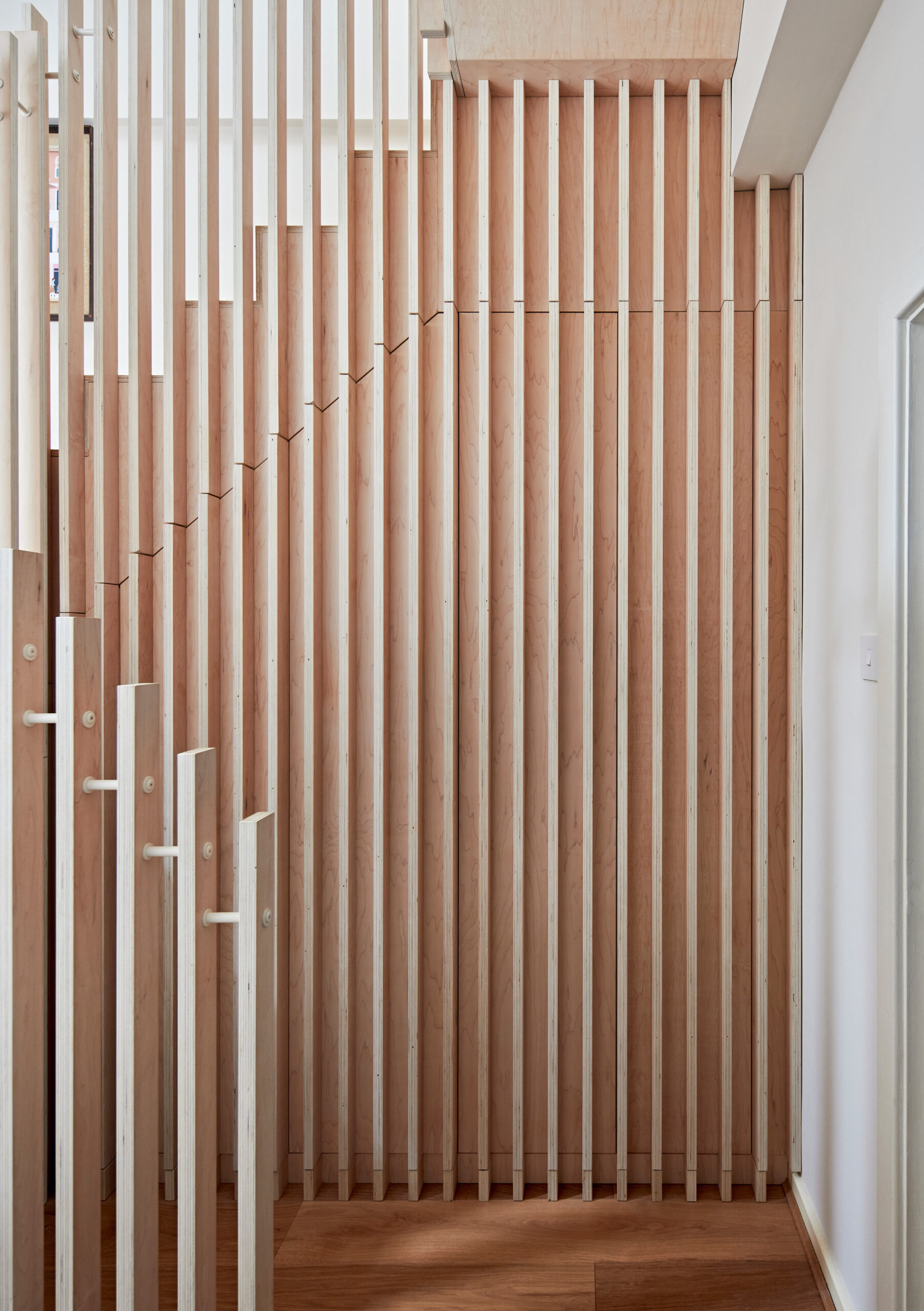
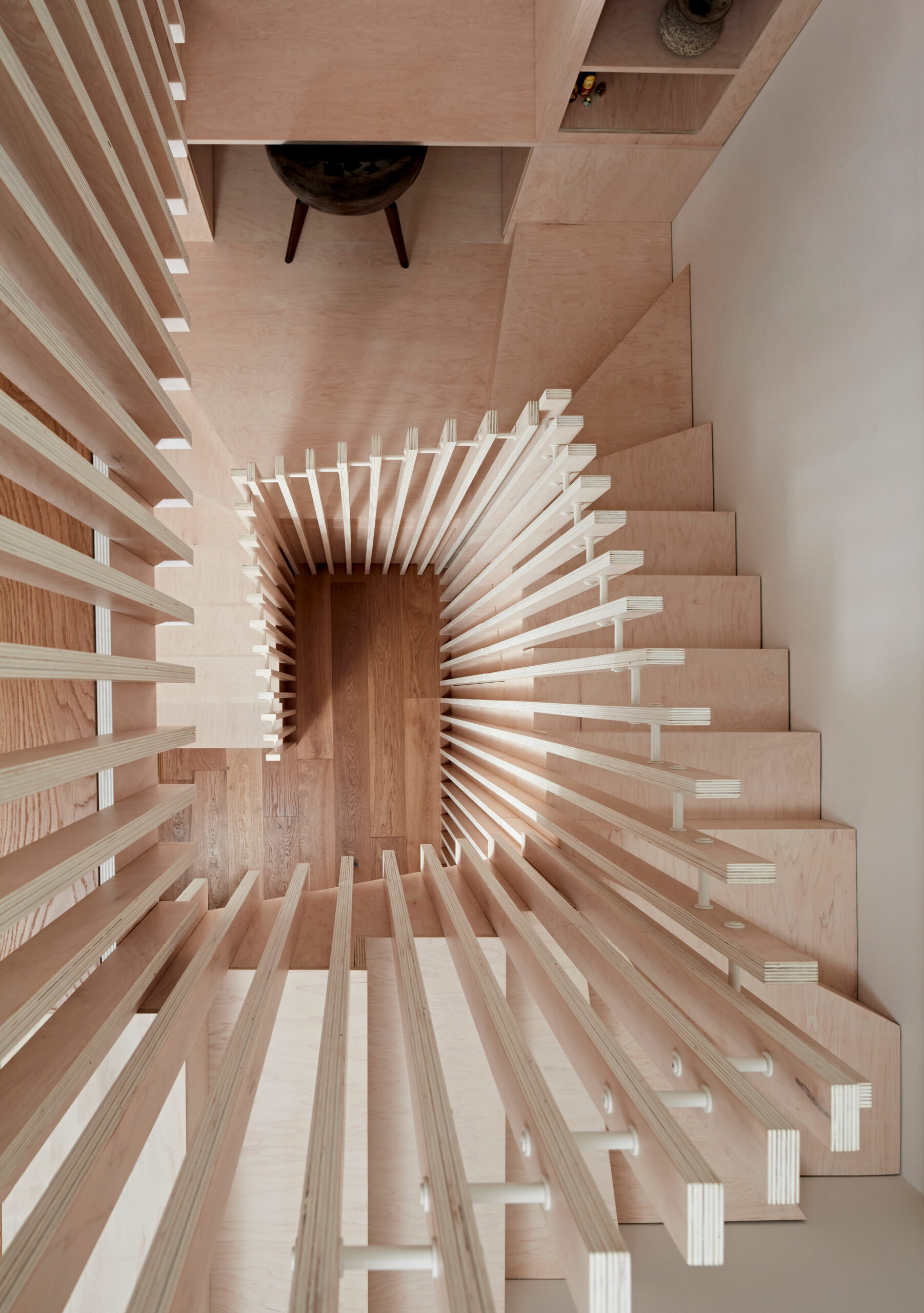
Rather than introducing multiple competing elements, the design focuses on a single, integrated intervention. A new stair wraps the perimeter of the room, conceived not just as circulation but as a piece of inhabitable furniture. Crafted from maple-faced plywood in collaboration with furniture maker Jack Alexander, it incorporates storage, wardrobes and seating within its depth, allowing the rest of the room to remain open and uncluttered.
According to the architects, the stair becomes the organizing device – less a piece of circulation, more a piece of furniture. It thickens and wraps the edge of the room, incorporating deep storage, wardrobes and seating within its depth. This allows the rest of the space to remain open and legible, avoiding the sense of clutter that often accompanies compact living.
By revealing the full height of the space, a mezzanine level is introduced above, creating a dedicated study area set apart from the rest of the home. For the client, who had previously worked from the kitchen table, this offers a clear and valuable distinction between living and working. The approach was to do as much as possible with as little as possible – using one carefully crafted intervention to bring together storage, workspace and movement.
Plywood was chosen for both its practical and expressive qualities, but its use is also closely tied to the collaborative process with furniture maker Jack Alexander. Working together from an early stage, the project was approached less as a conventional architectural insertion and more as a piece of inhabitable furniture – where structure, storage and movement are resolved as one.
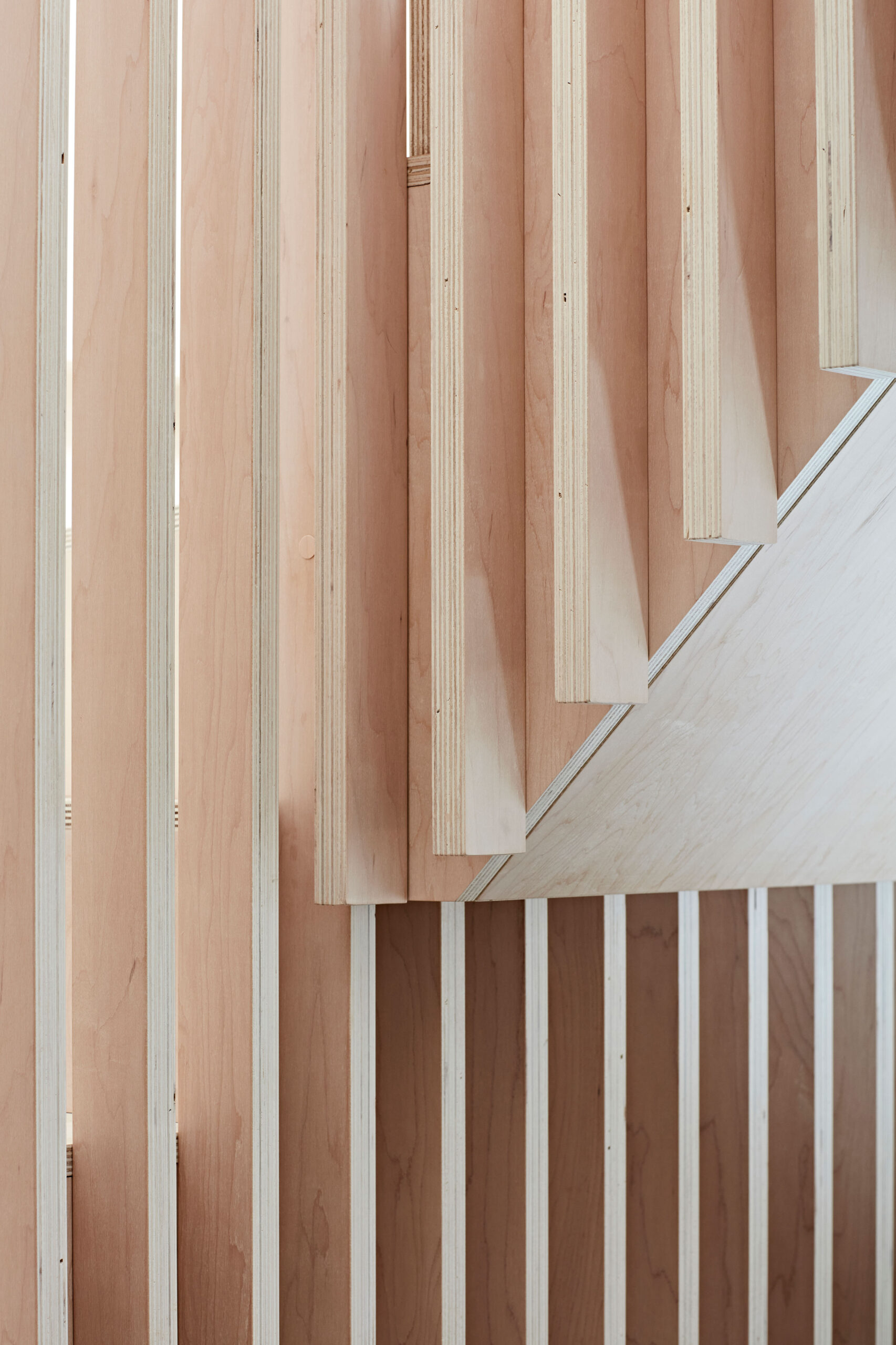
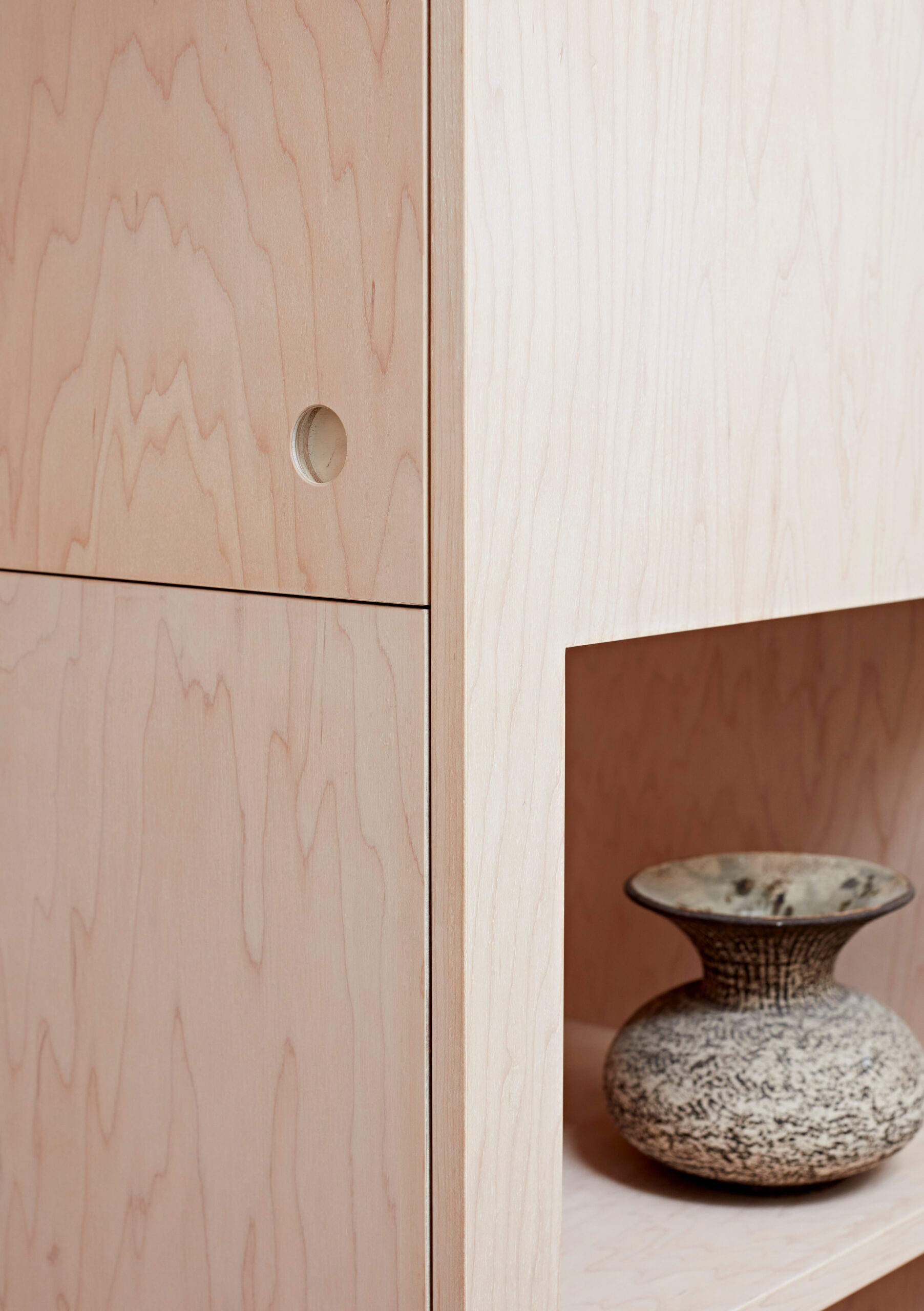
Maple-faced plywood offered the necessary strength and stability for the stair, while its layered edges and consistent tone allowed the element to read as both precise and sculptural. Its light color helps reflect natural light through the space, maintaining a sense of openness despite the density of the intervention. The ambition was to create a continuous language, where the stair, balustrade and storage are seamlessly integrated.
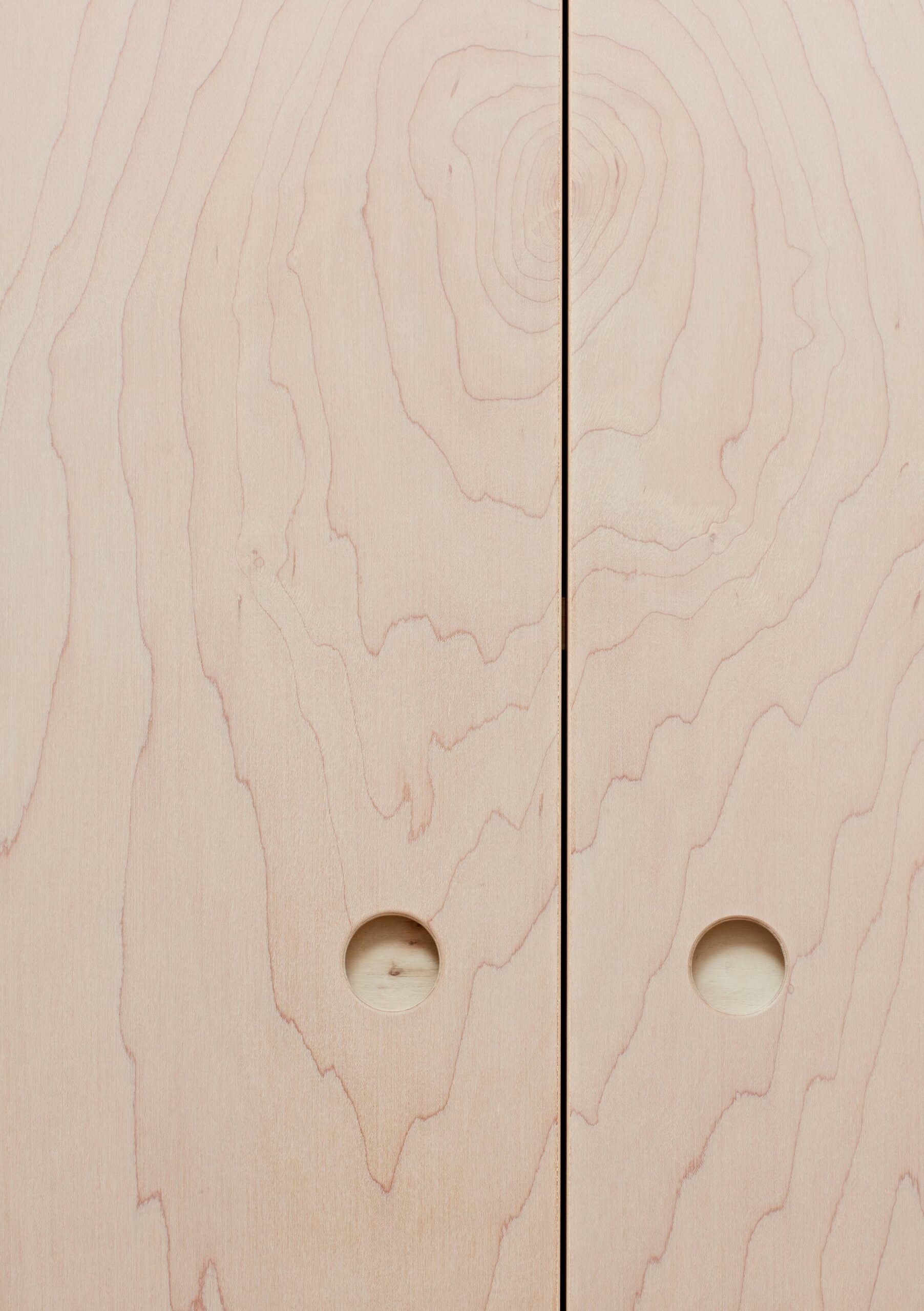
The plywood fins run from the balustrade down into the wardrobe doors below, doubling as handles. Achieving this required a high level of coordination and craft. By working closely with Jack, key elements were developed through 1:1 prototyping in the workshop, allowing details to be tested, adjusted and refined before installation. This iterative process ensured that the final piece is not only visually coherent, but also comfortable and intuitive to use.
The collaboration between Russian For Fish and Jack Alexander was very direct and hands-on, shaped by the fact that they share a workshop environment. This meant the project evolved through an ongoing conversation between drawing and making, rather than a linear design process. From the beginning, it was clear that the intervention would sit somewhere between architecture and furniture. Russian For Fish focused on the spatial strategy – unlocking the height of the room and organizing it through a single, integrated move – while Jack brought a detailed understanding of material, craft and how the body moves through space.
Given the compact footprint, the stair needed to do a lot: it had to work as circulation, storage and enclosure all at once. Resolving this came through testing and refining ideas at full scale. Elements were mocked up in the workshop, adjusted, and then reworked, allowing details to be resolved through making rather than relying solely on drawings.
Owing to the proximity between workshop and studio, decisions could be made quickly and intuitively, with constant feedback between design intent and fabrication. The result is a piece that feels carefully tuned – where the spatial idea and the craft of making are closely aligned, and where each element has been considered in relation to how it will actually be used. The overall outcome result is a precise yet generous intervention that does more with less, transforming a forgotten space into one that supports everyday life.