Forever objects designed by 6 Australian architects
Curated by David Clark, KEEP explores longevity, craftsmanship and material integrity as an antidote to disposable culture
October 3, 2025
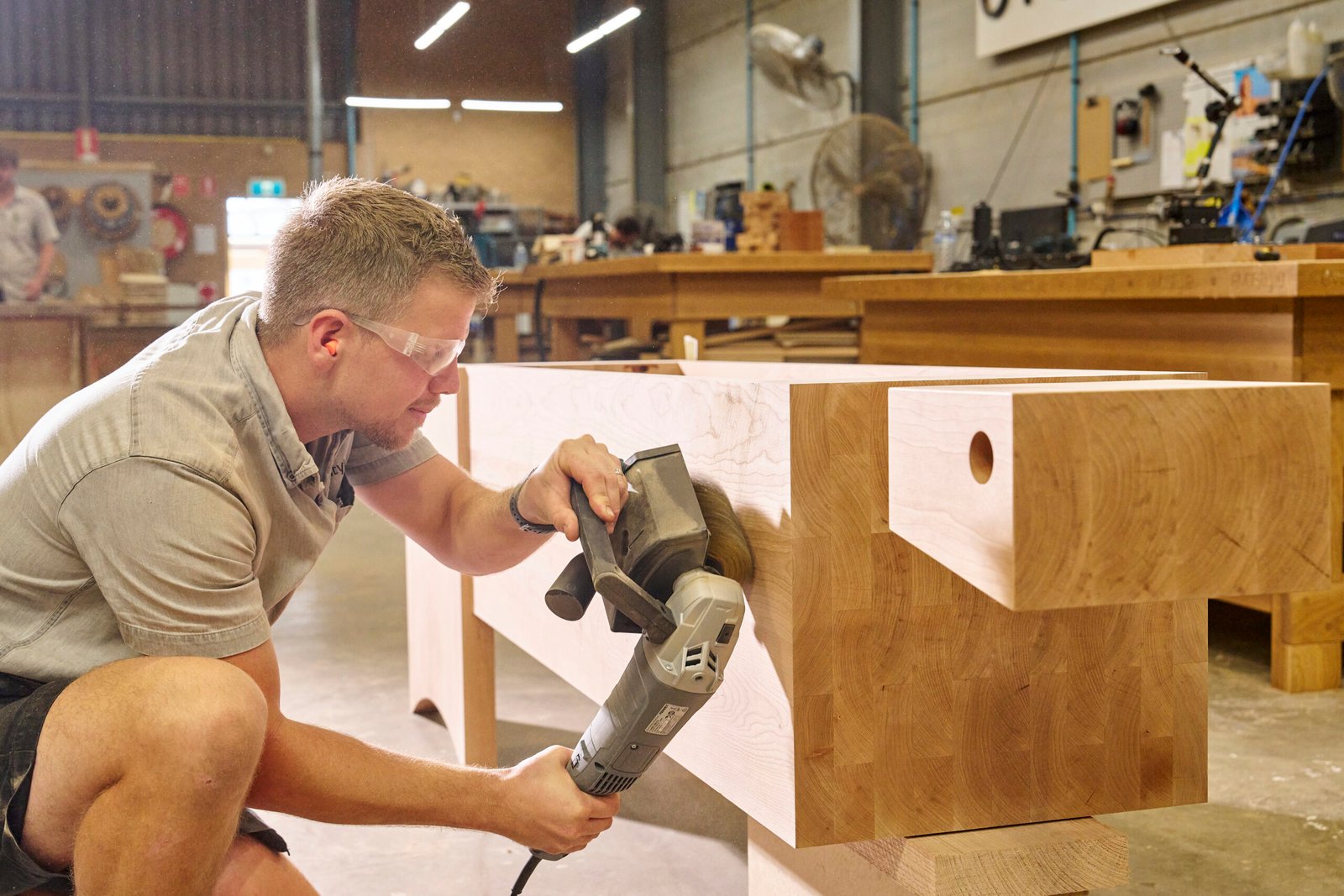
Six acclaimed Australian architects were challenged to design new furniture pieces that embody permanence by the American Hardwood Export Council (AHEC), the leading international trade association for the American hardwood industry. AHEC’s latest design collaboration in Australia – ‘KEEP’ – opened on September 18, 2025 at Cult Sydney Showroom and was on display until October 4, 2025. Curated by David Clark, KEEP explores longevity, craftsmanship and material integrity as an antidote to disposable culture.
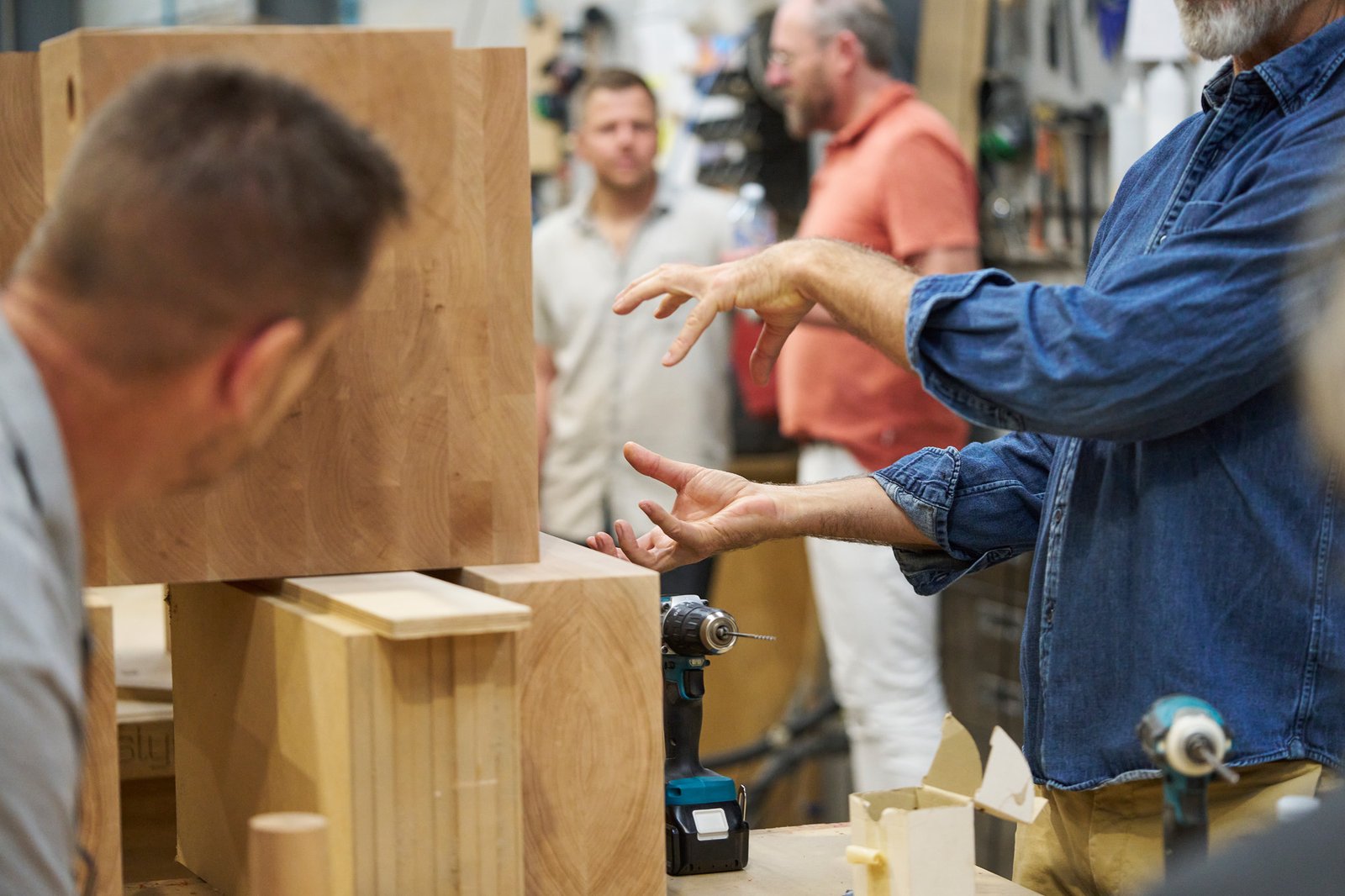
The designs, which have been crafted from American red oak, cherry and maple, timbers chosen for their beauty, resilience, and environmental integrity, underline the importance of good material in the creation of fine furniture. The resulting pieces are diverse in form and function, yet united by a shared commitment to longevity, craftsmanship and material honesty. According to Clark, the exhibition aims to counter notions of careless consumption, material disposability, overly complicated supply chains, and the prevalence of waste in contemporary culture.
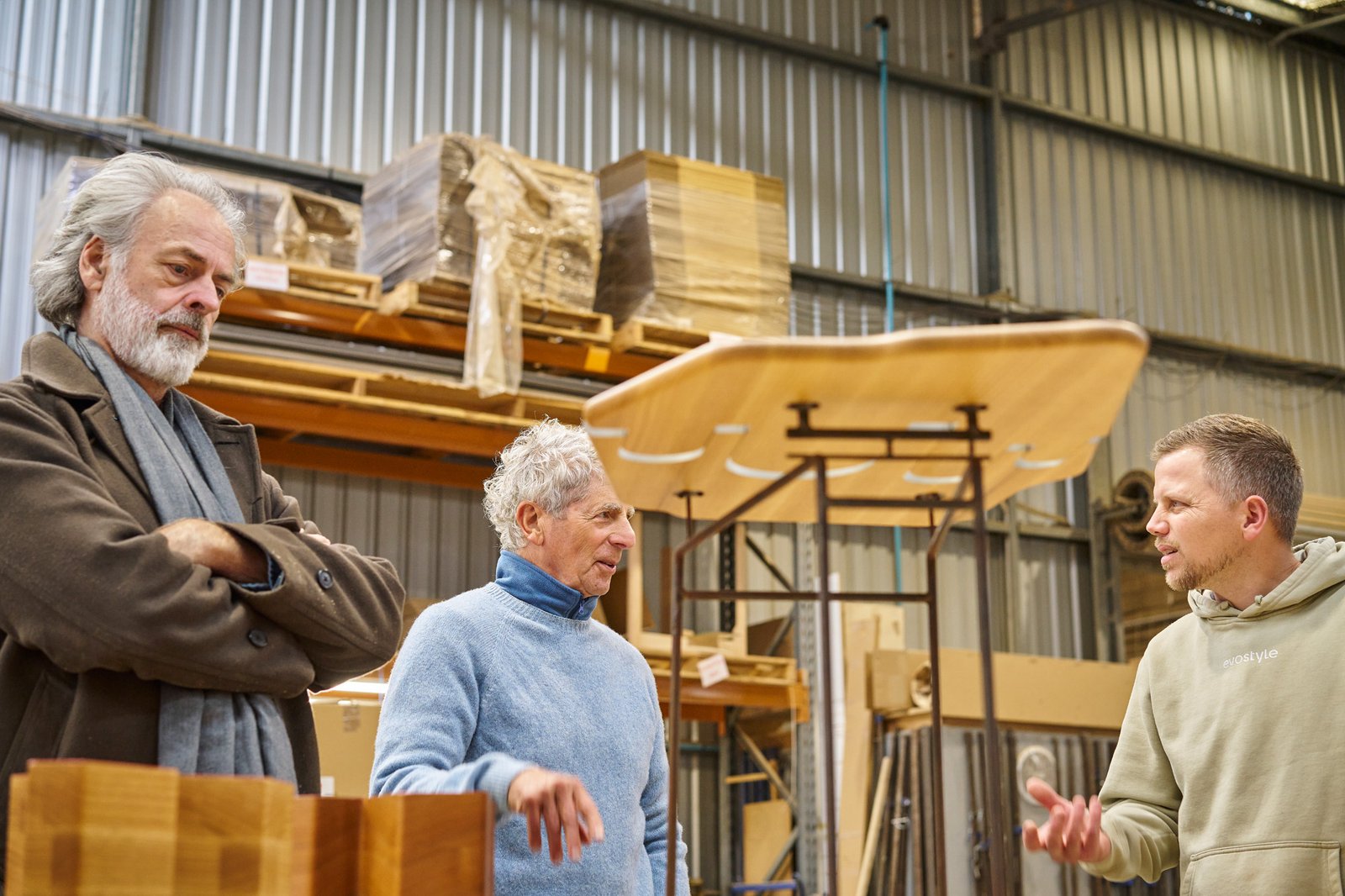
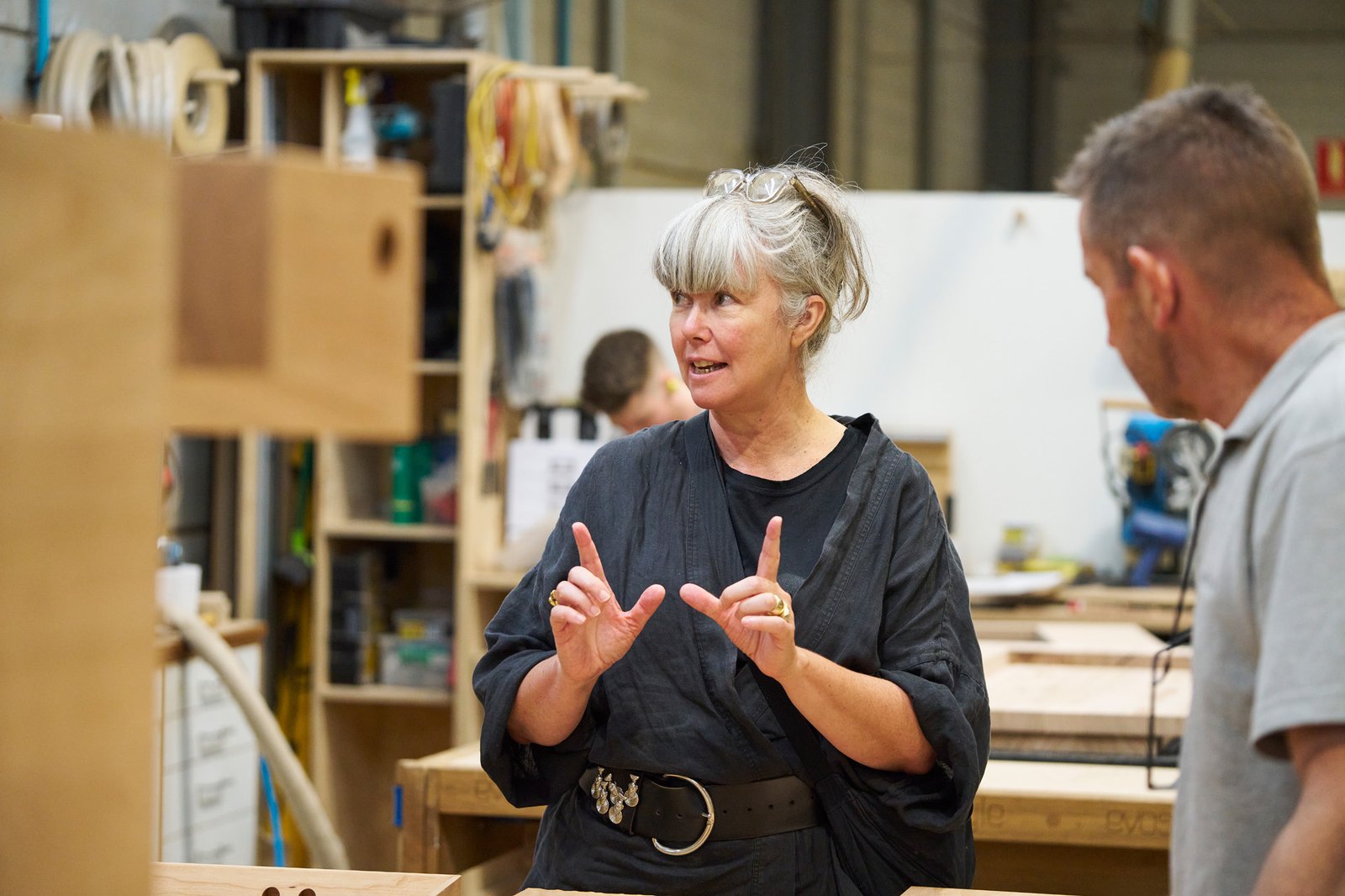
“Historically, and in other places, it is more commonplace for architects to design furniture, for their own projects or for companies by commission. In the nascent Australian furniture industry, it is less so. I thought it would be interesting to see what prominent and successful architects might design outside their usual focus, and perhaps, in the process and conversation, what they might bring to the texture and layers of the Australian design ecosystem,” said Clark.
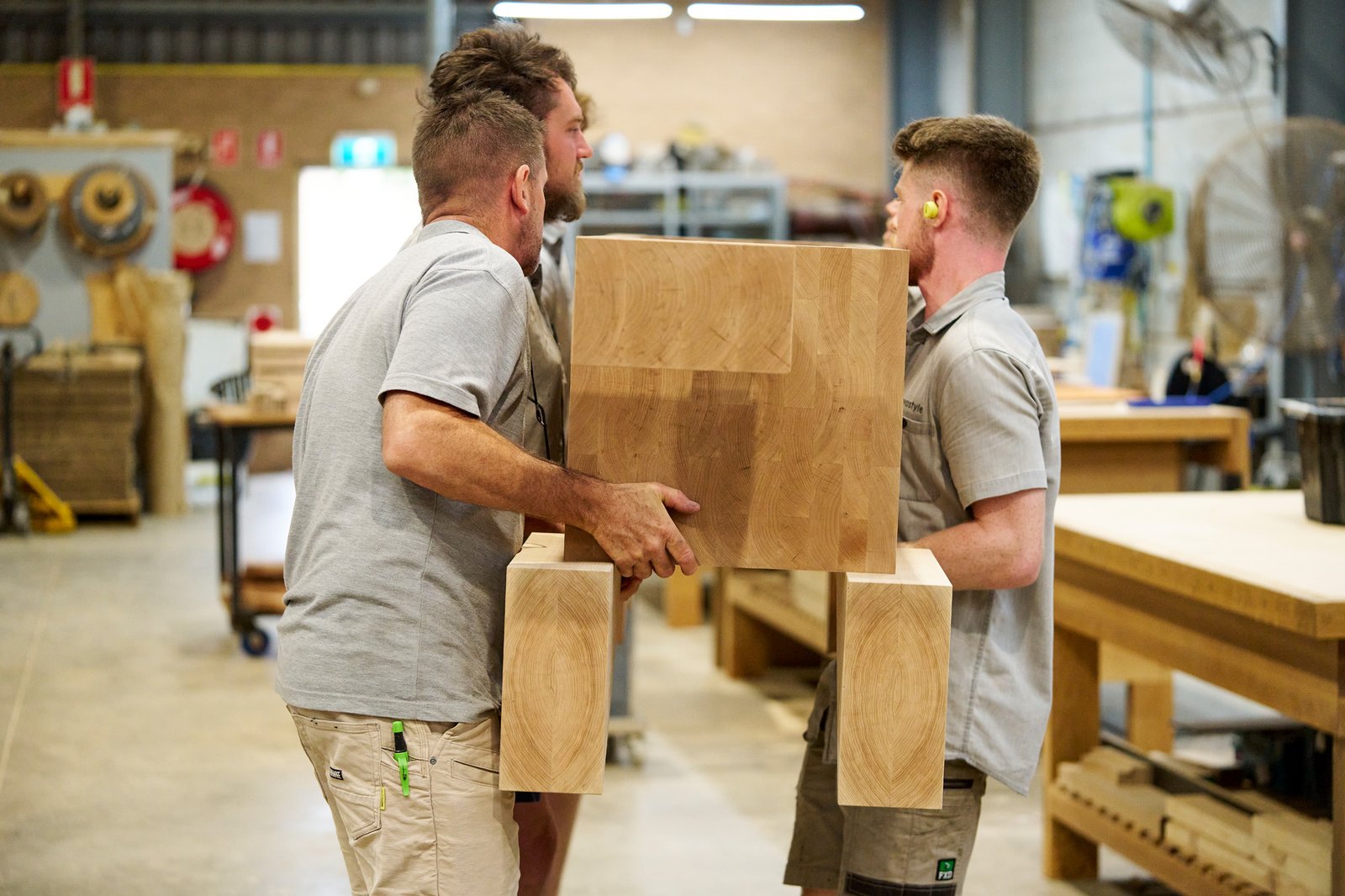
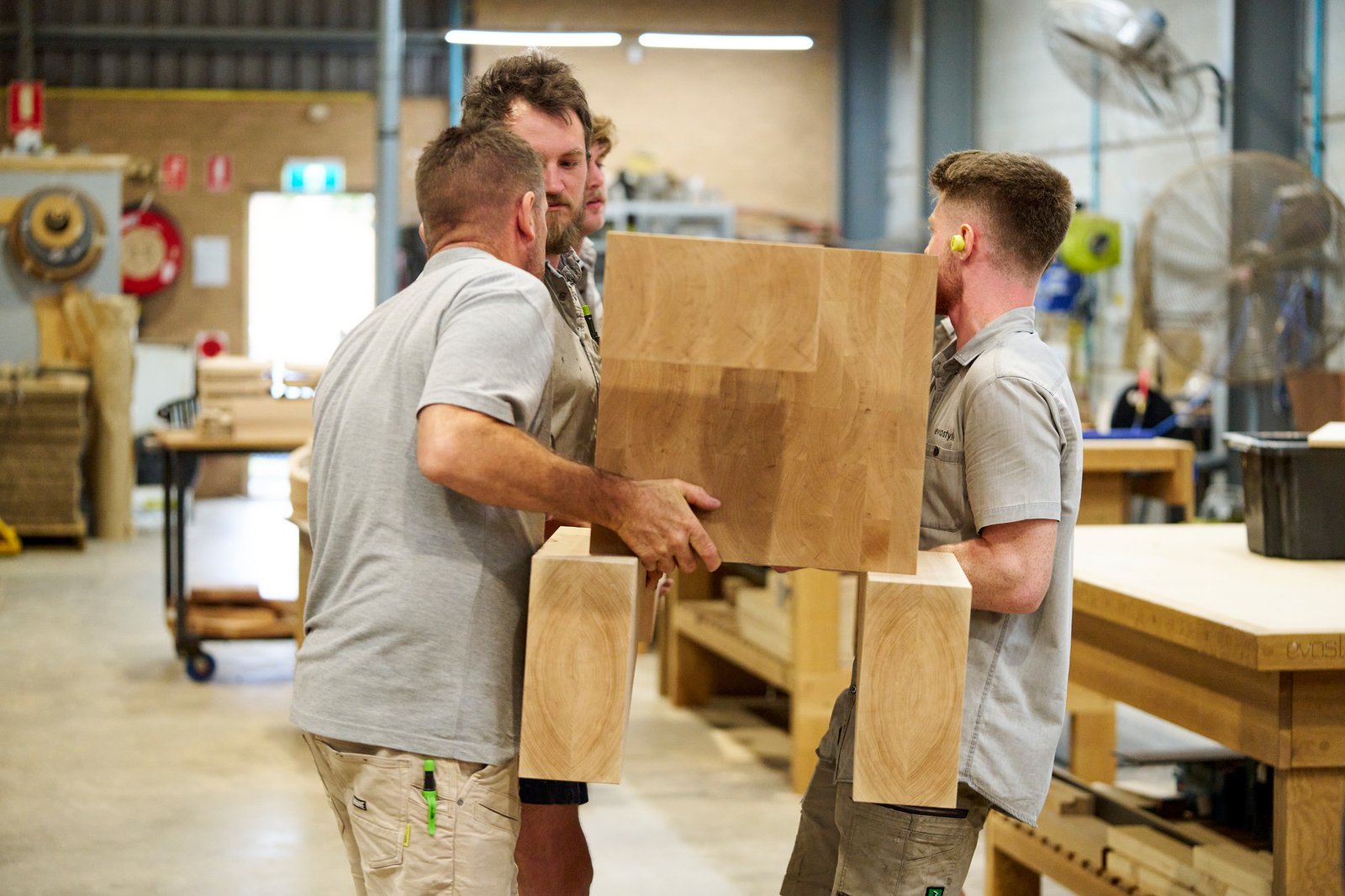
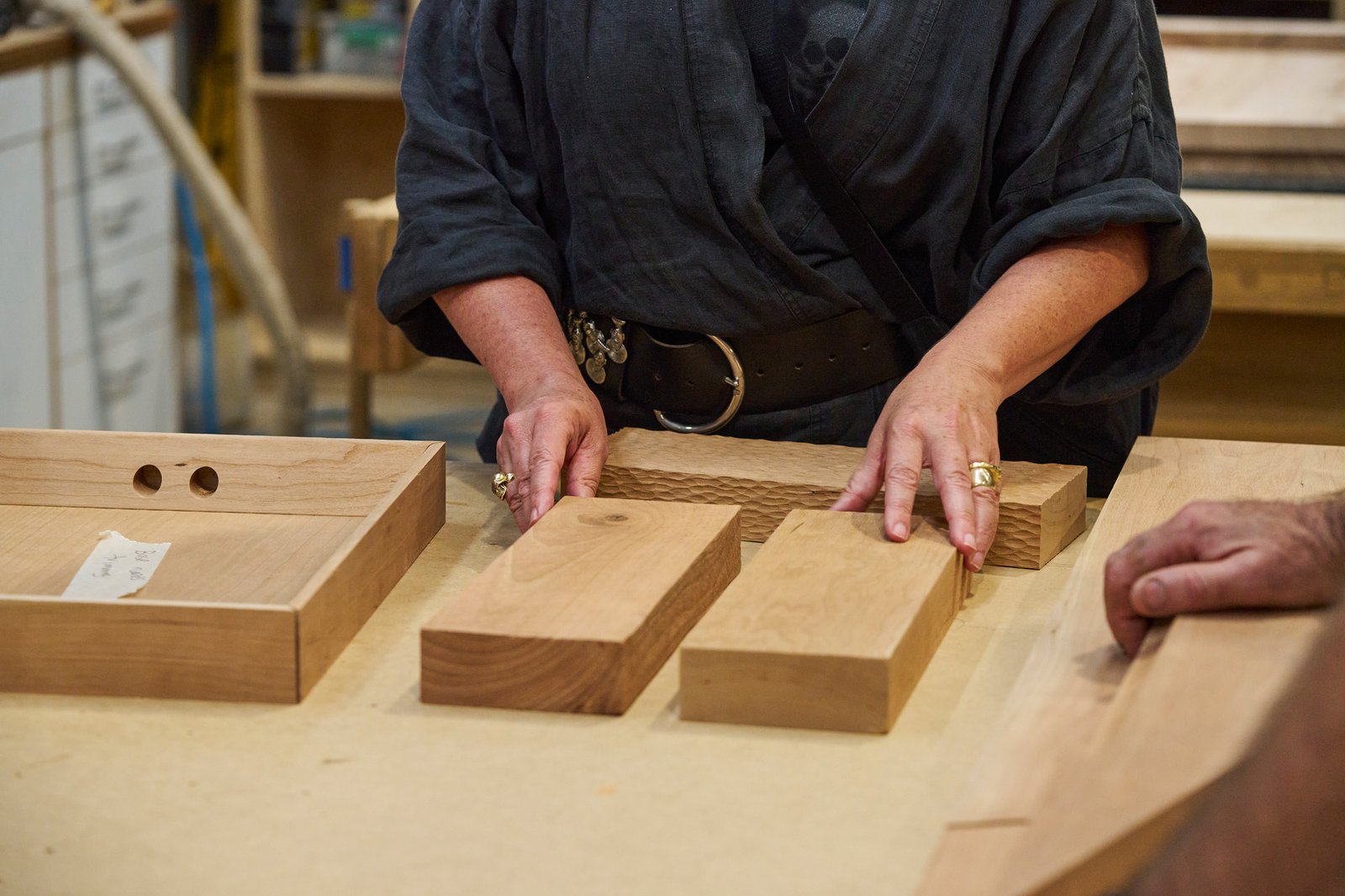
Kennedy Nolan – ‘David’ Console Approaching the brief for this project, Rachel and Patrick discussed what they sometimes like to do in their architecture. As a way of making an object or a building that people have a connection to and a human interaction with, they will anthropomorphise or zoomorphise the thing, making the form or memory of a creature. This console has a distinctly animal quality about it, with a head, tail, and flank, all rendered in different finishes to the timber – scraped, gouged, laminated or coated. The interior is stained in reds and pinks, like insides. The piece will ultimately serve its purpose in the studio’s conference room, holding glassware and ceramics.
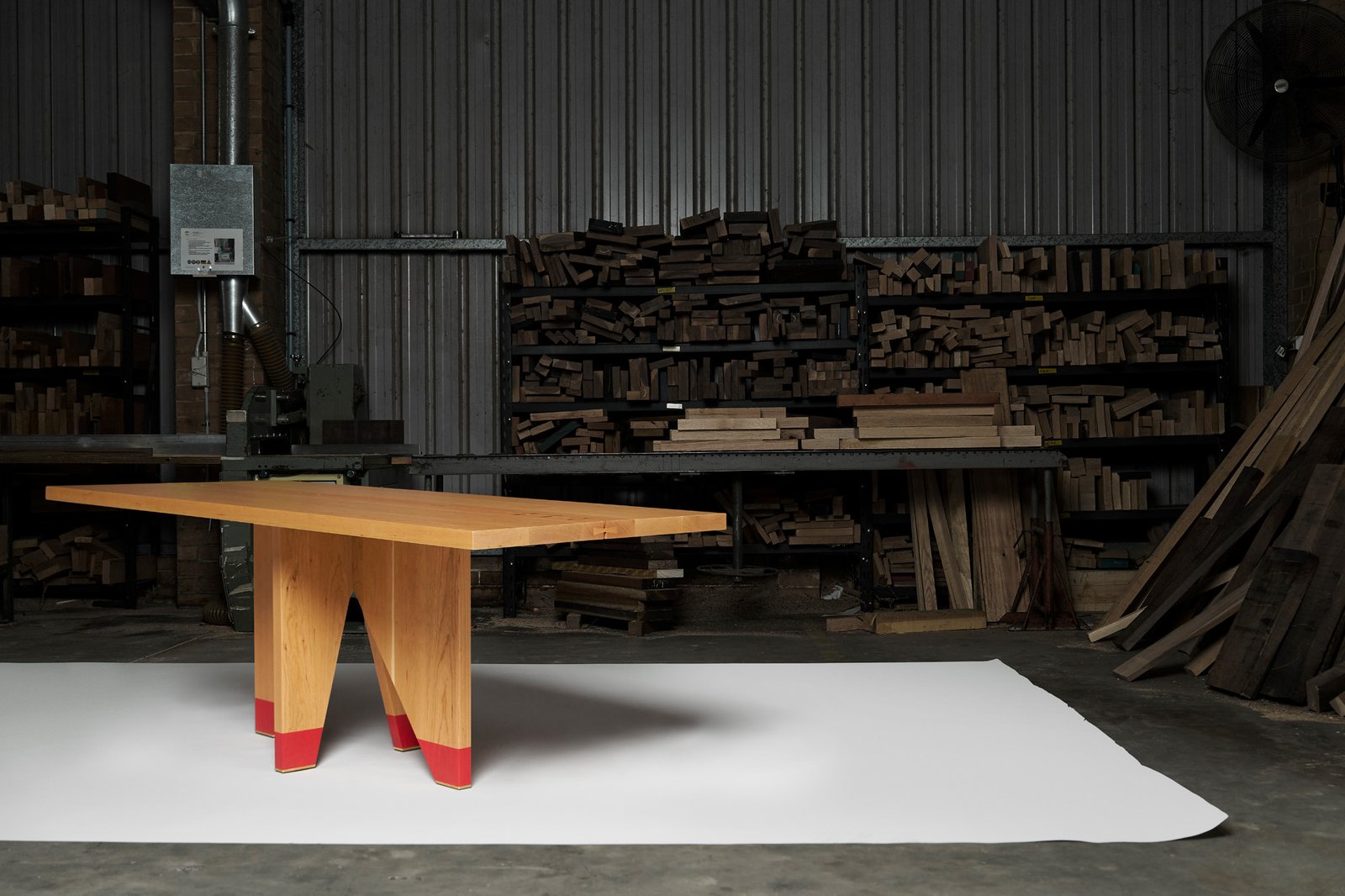
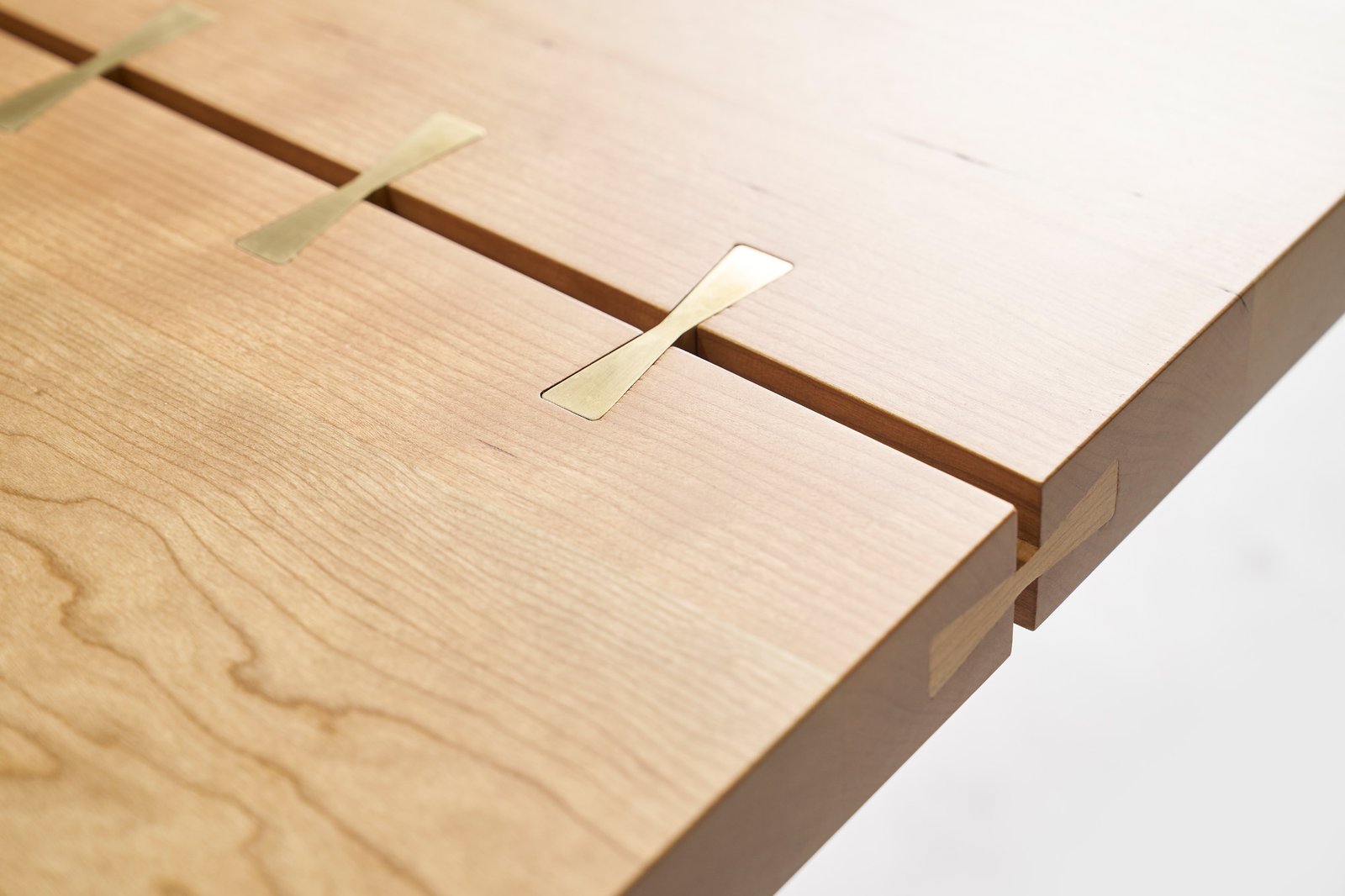
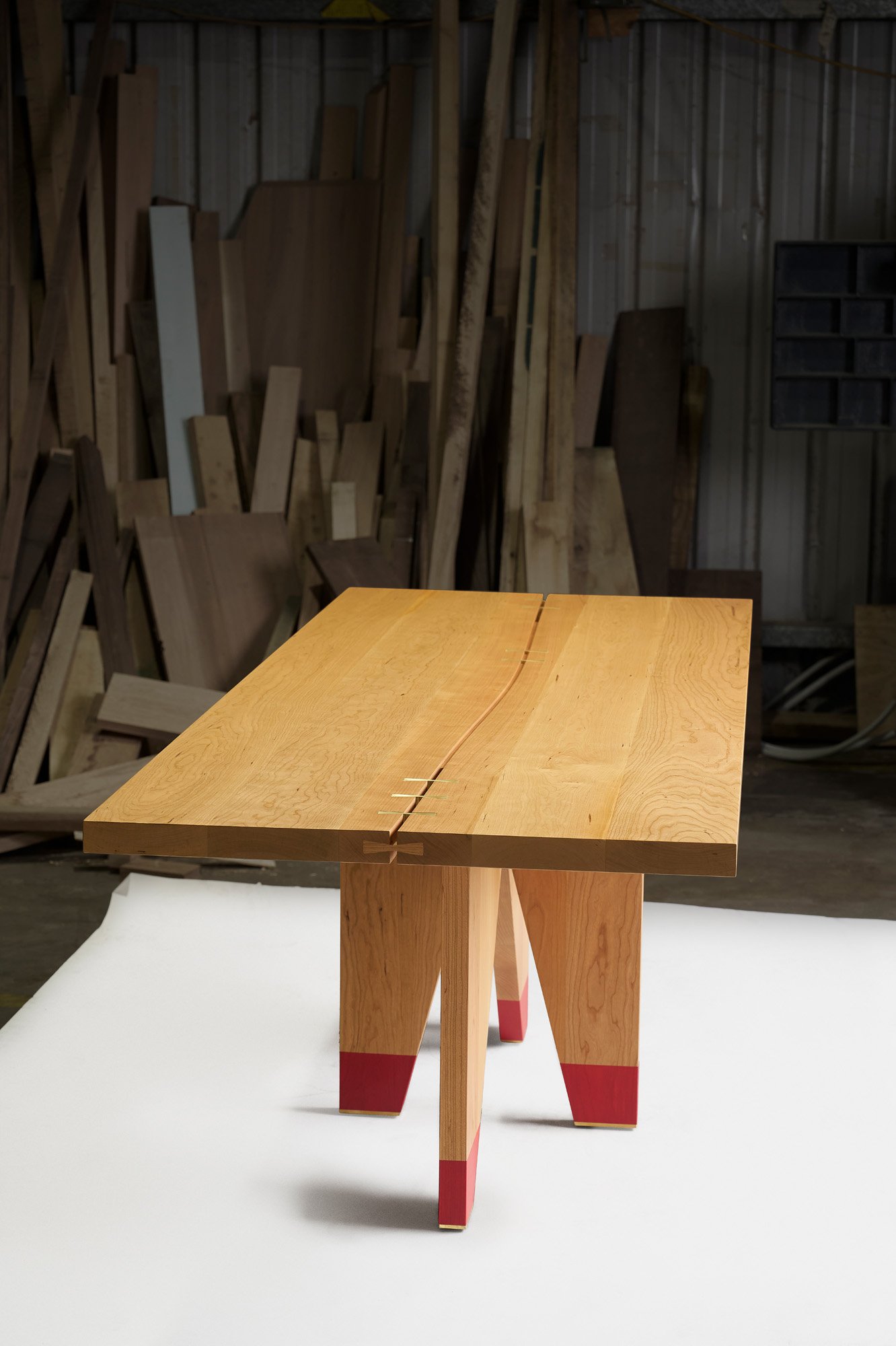
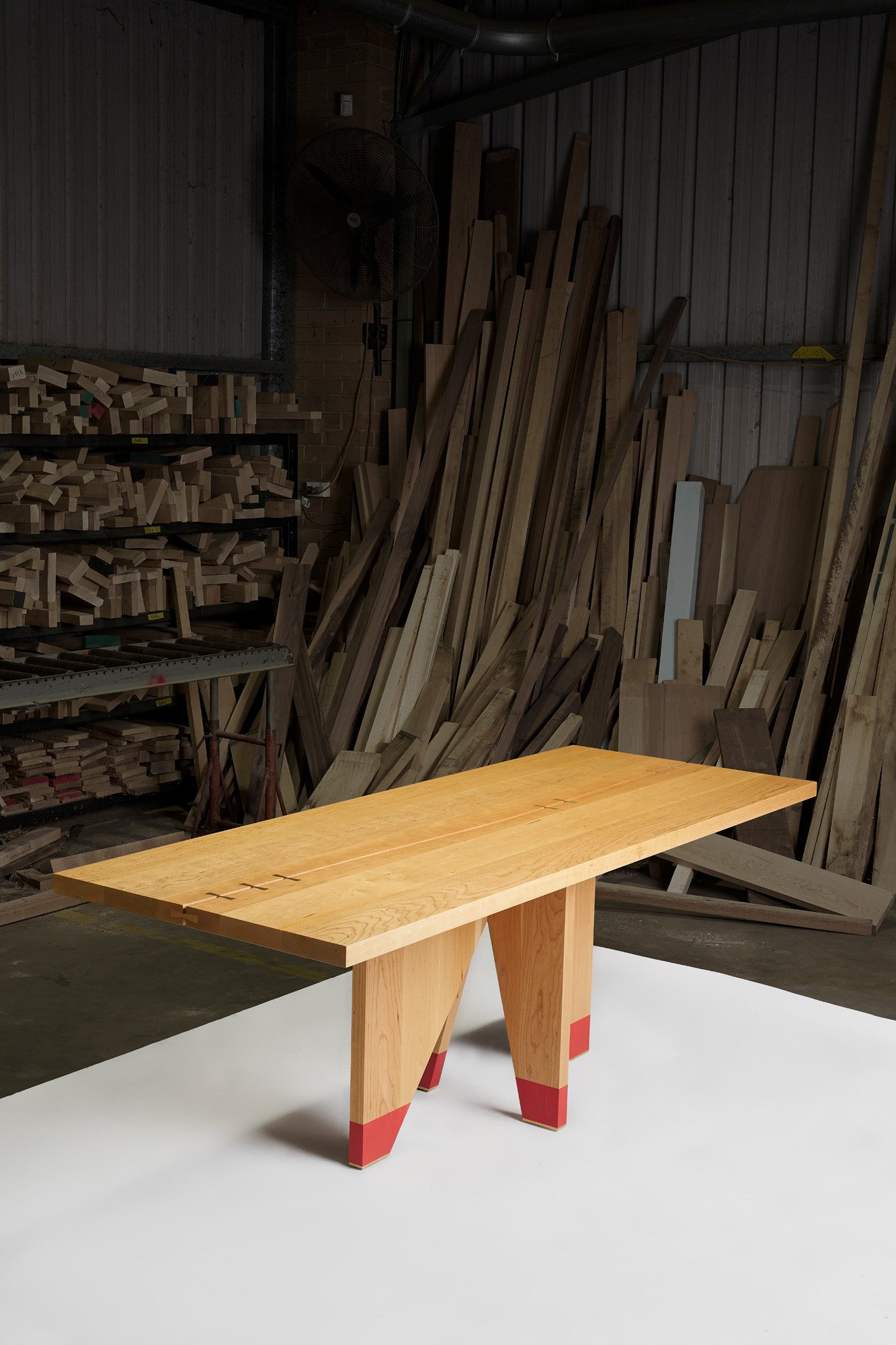
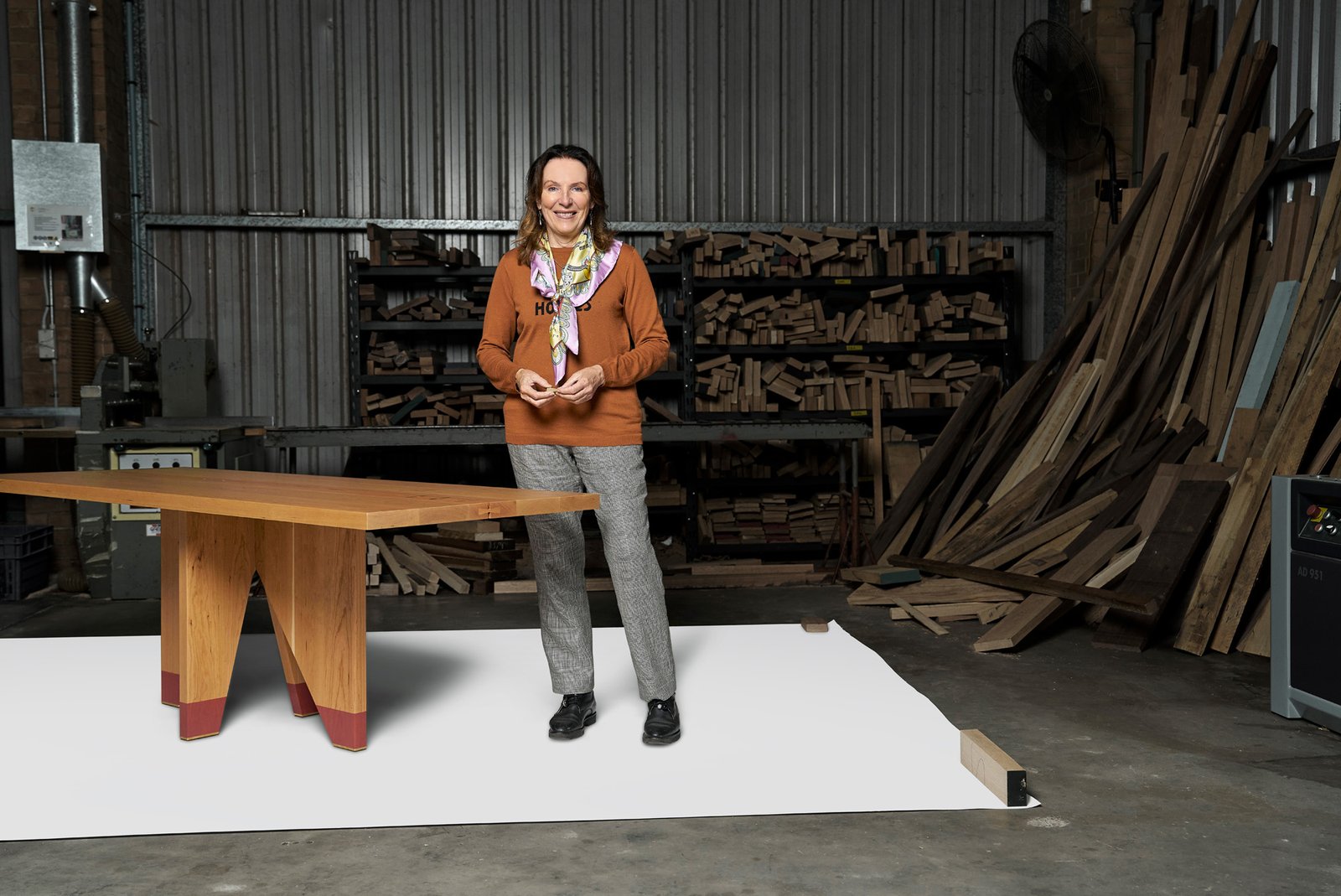
Virginia Kerridge – ‘Pax’ Table Virginia Kerridge’s table is an interpretation of a traditional woodworking technique that uses butterfly joints to connect two pieces of split timber. In this case, brass joints span across a recessed groove that follows the natural line of the grain in a central section of timber. Cuts at either end are ‘held’ by butterflies on the vertical edge, in this case finished in timber. Butterfly, or bow tie joints date back to ancient times. In contemporary furniture making, they were a feature of the Japanese American master, George Nakashima.
This table is designed to be removed from its slotted base, which also comes apart to be flat packed and more easily transported. The feet of the angular legs are stained a deep red, with brass strips at the very base occasionally capturing glimmers of light. Pax is the name of Virginia’s dog, and refers to the ‘X’ table base, and peace, for a place where people come together.
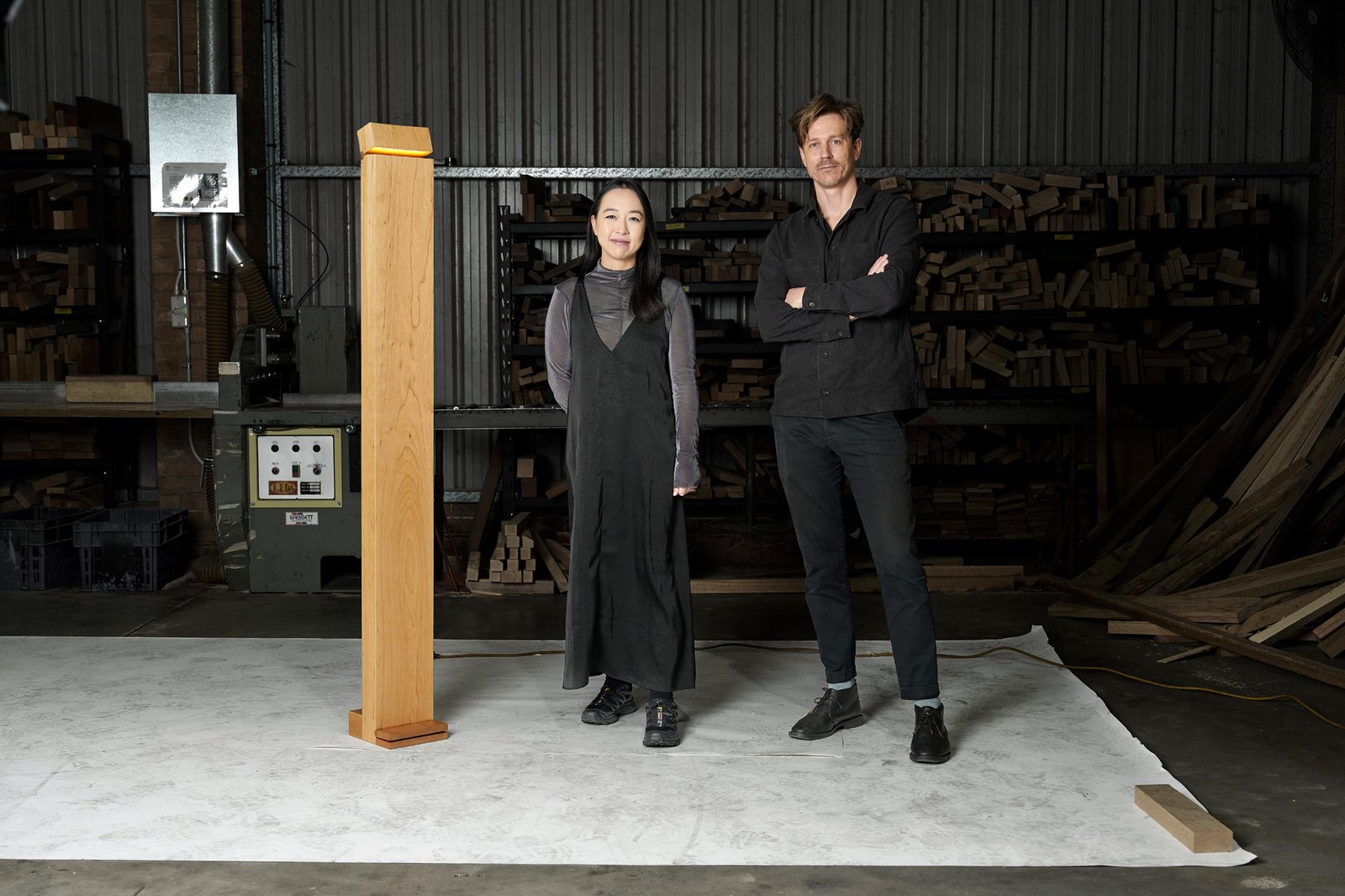
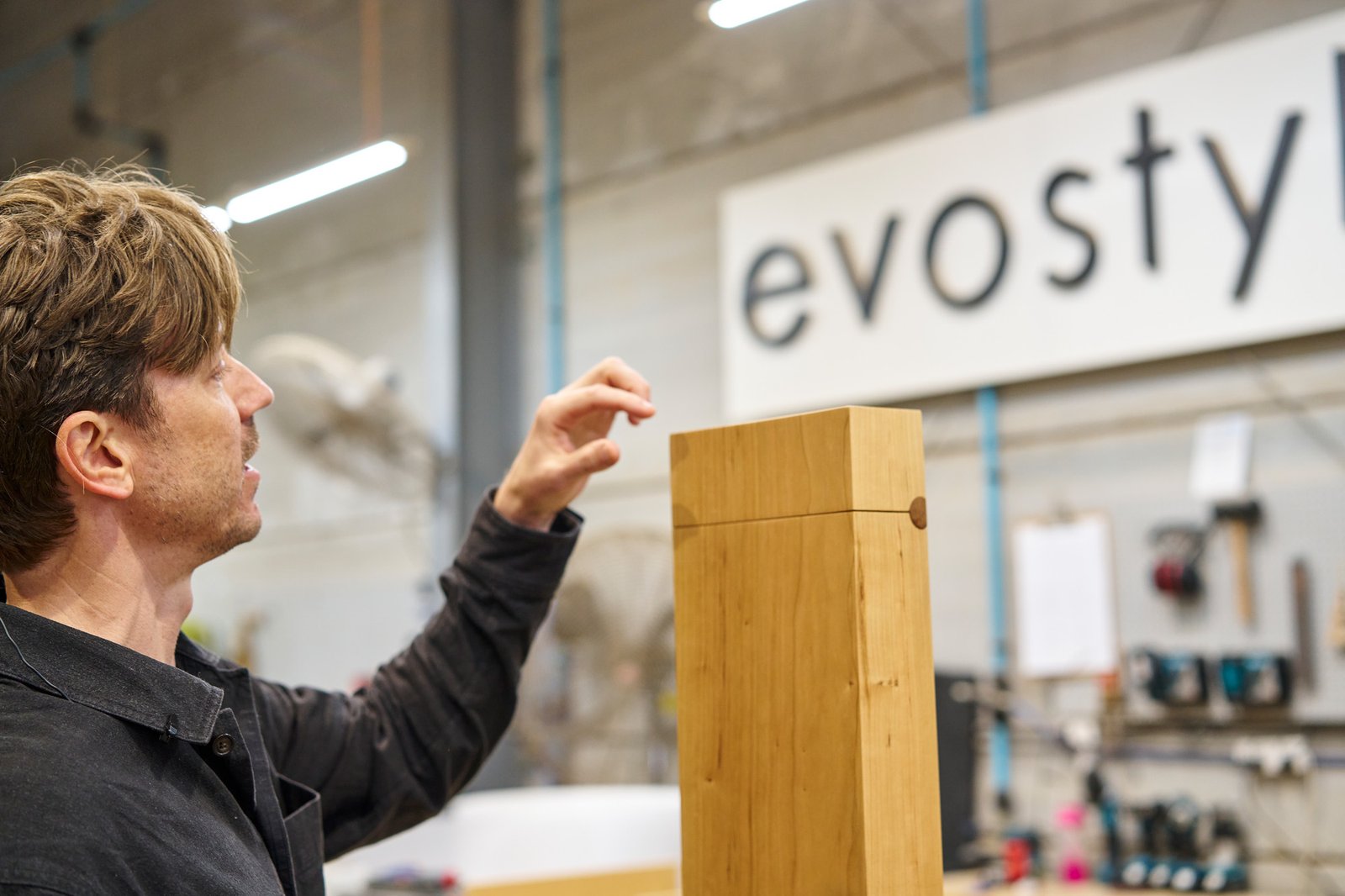
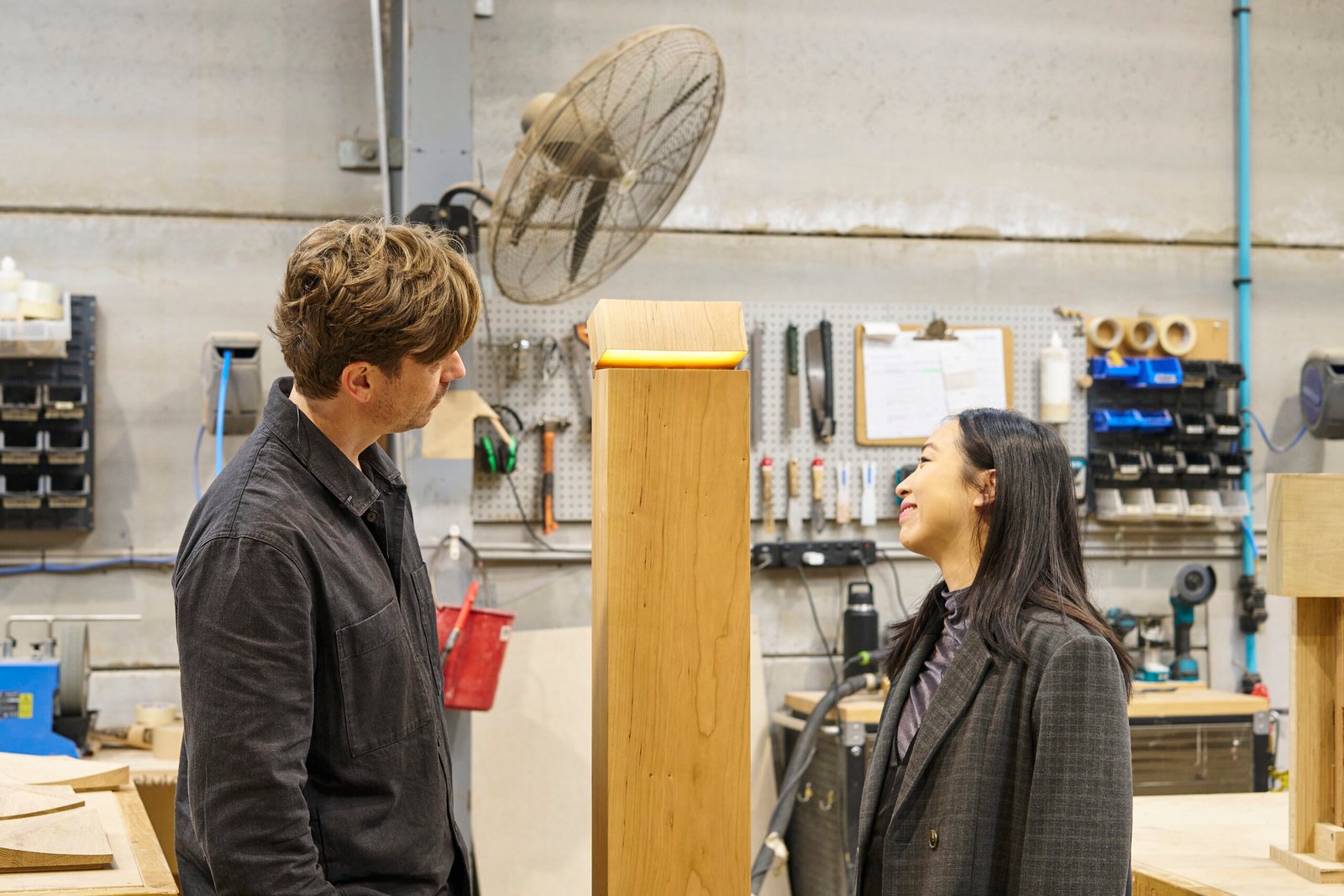
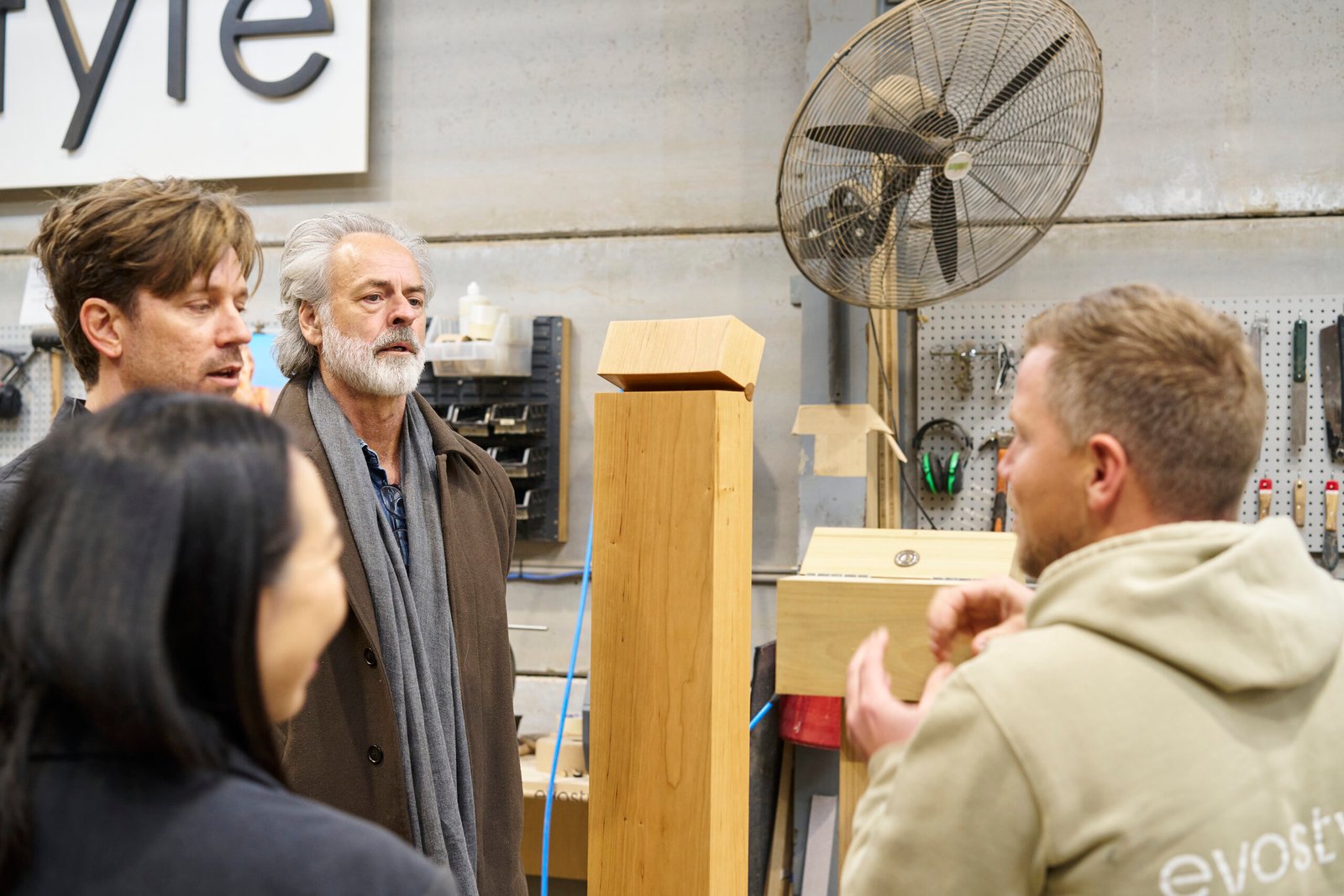
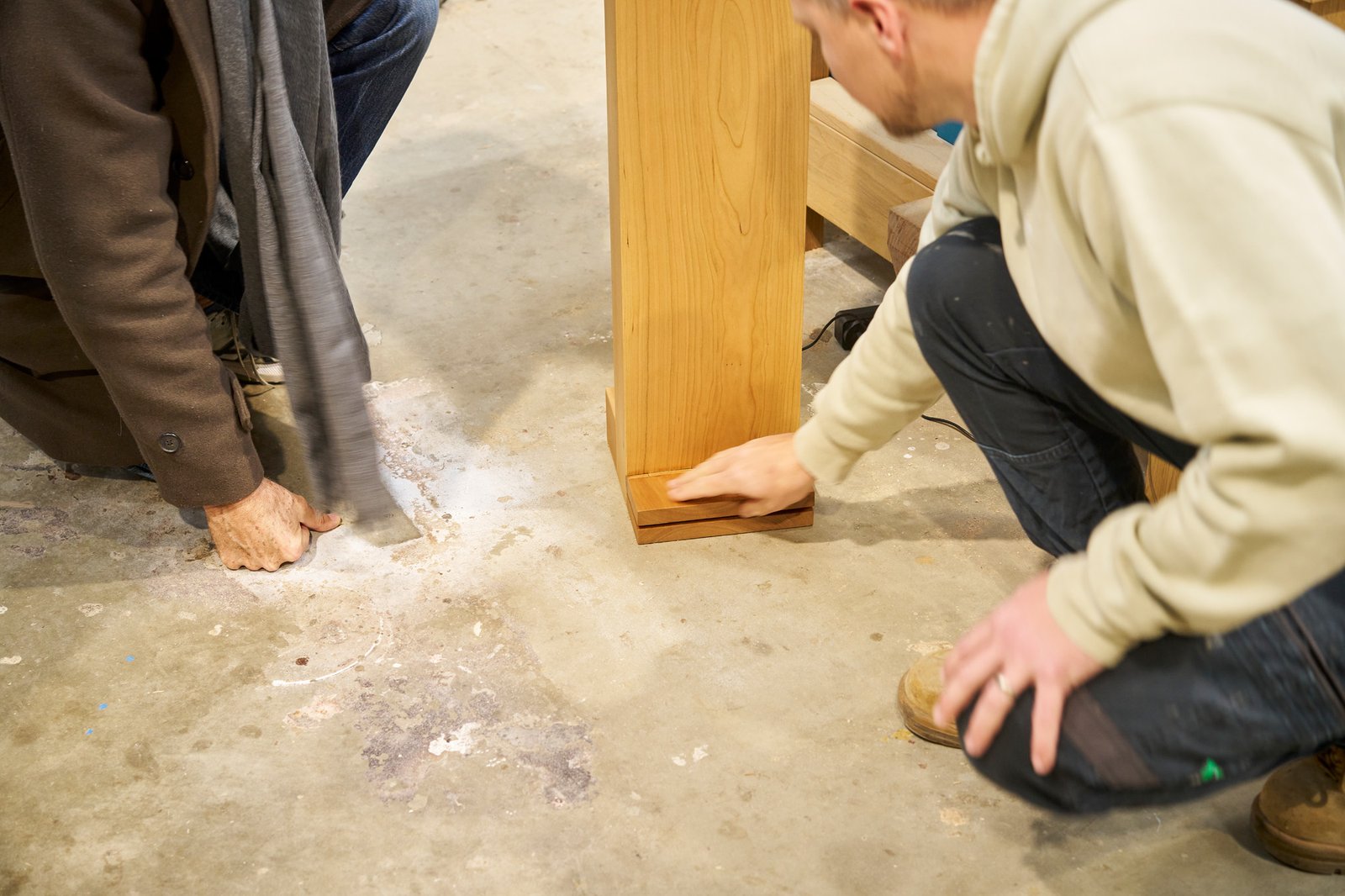
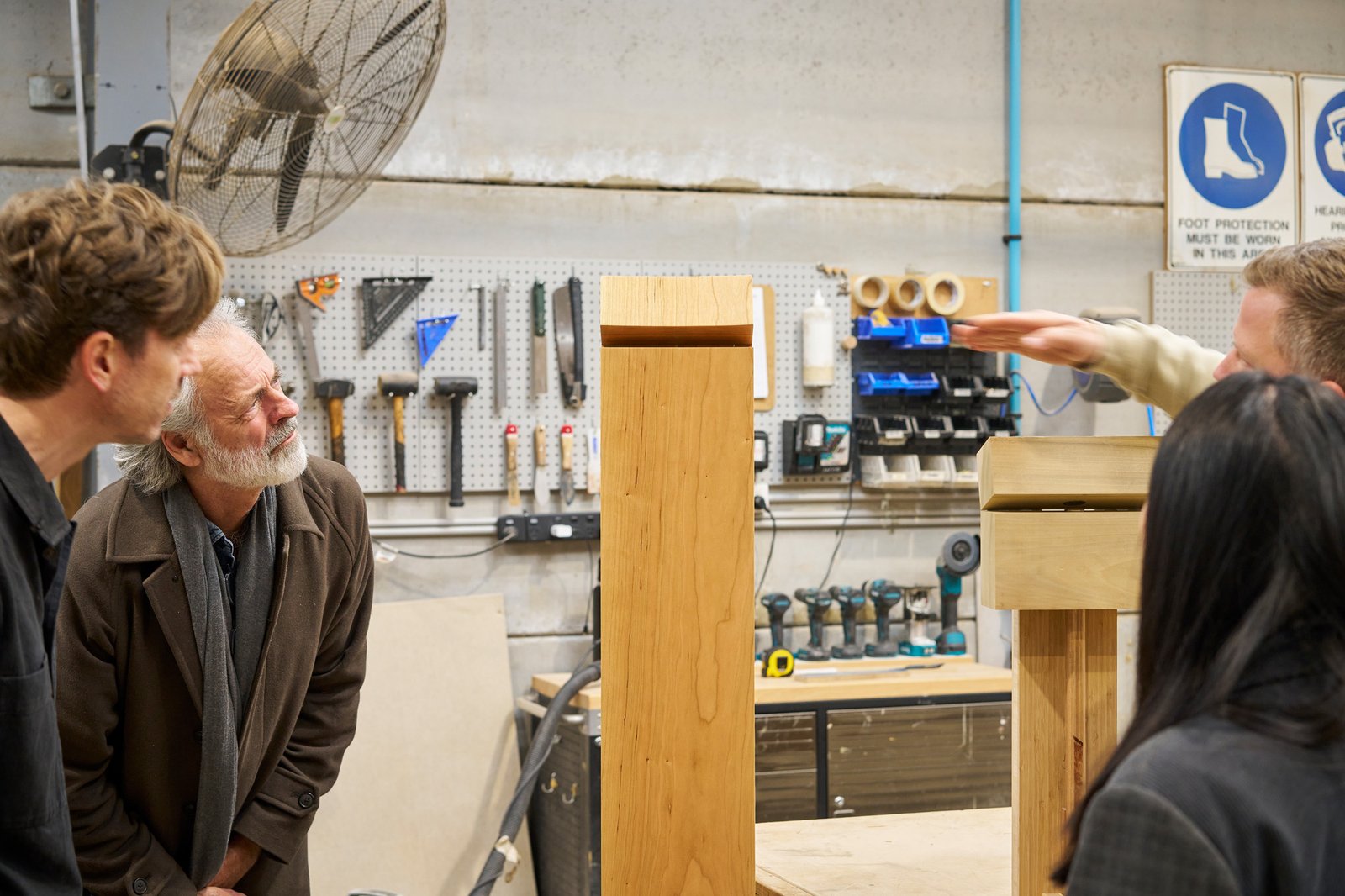
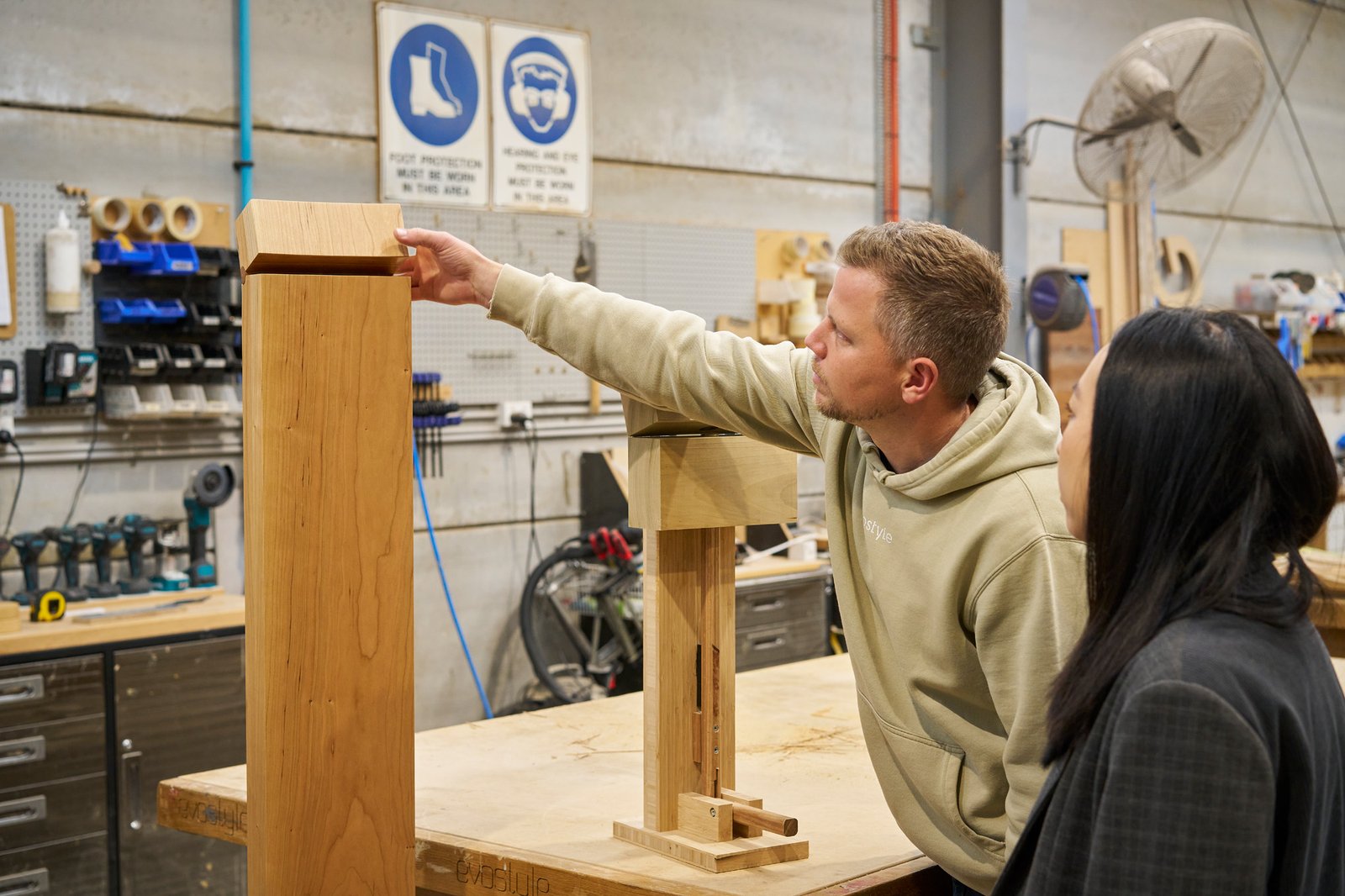
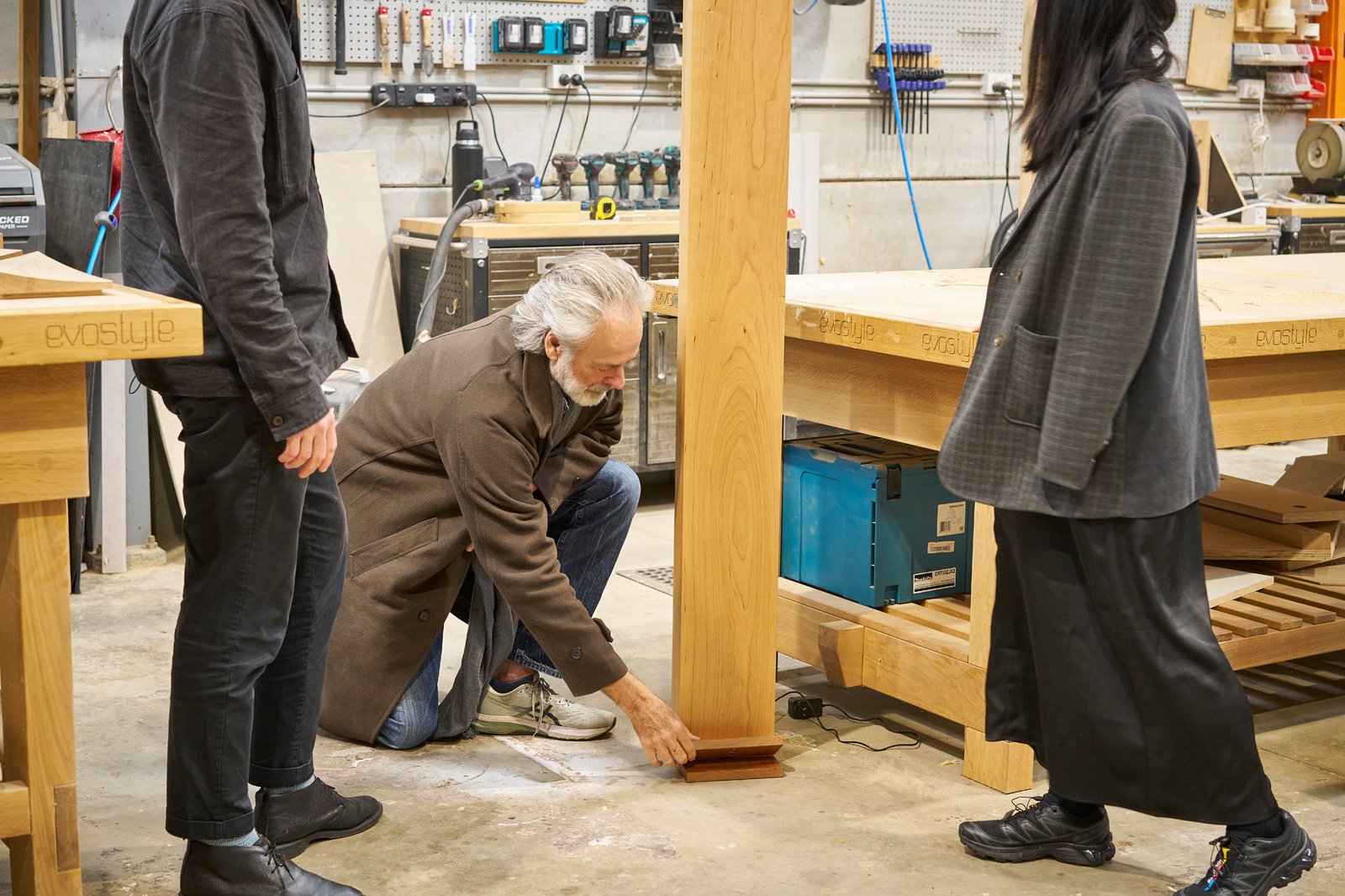
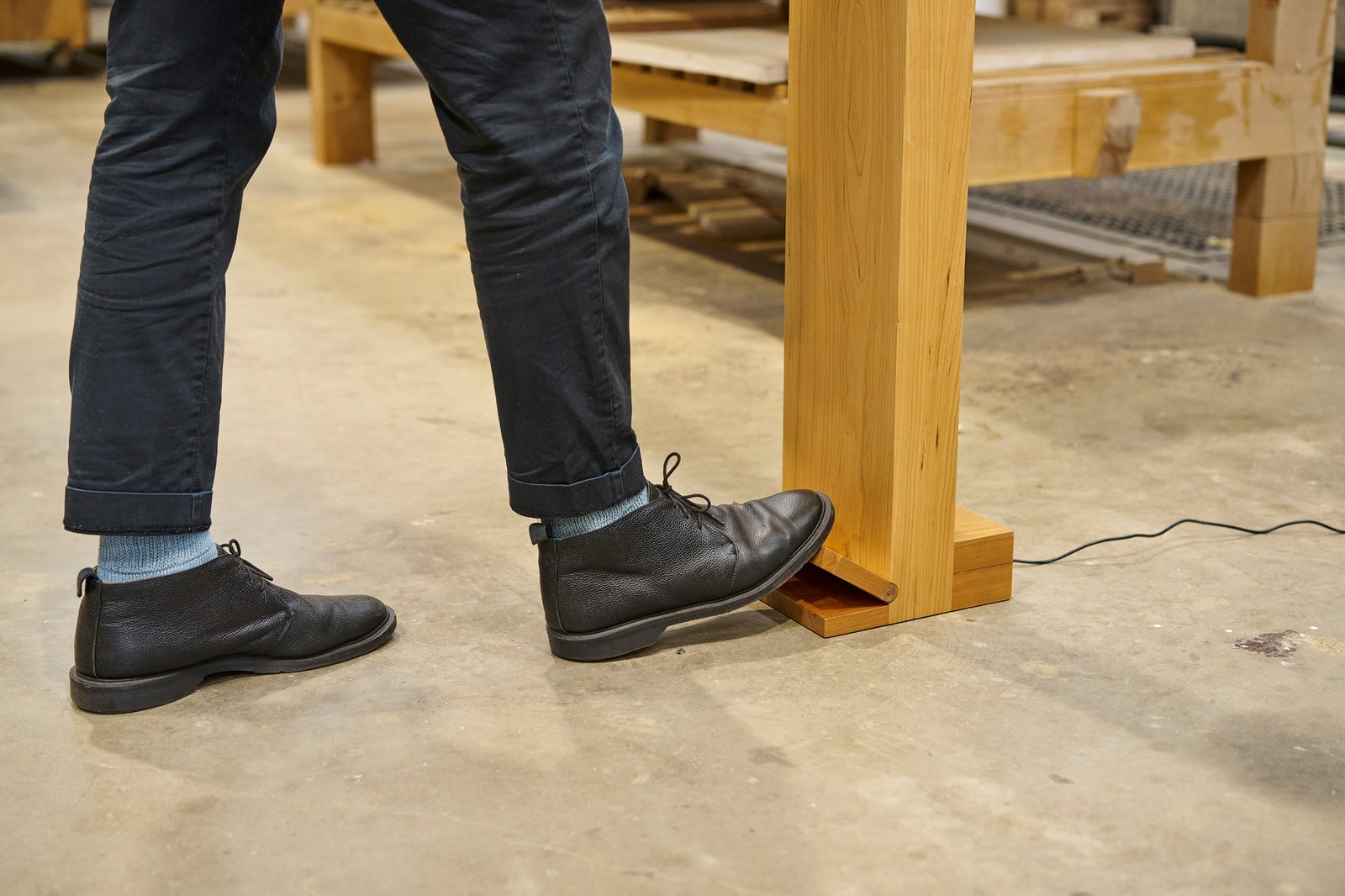
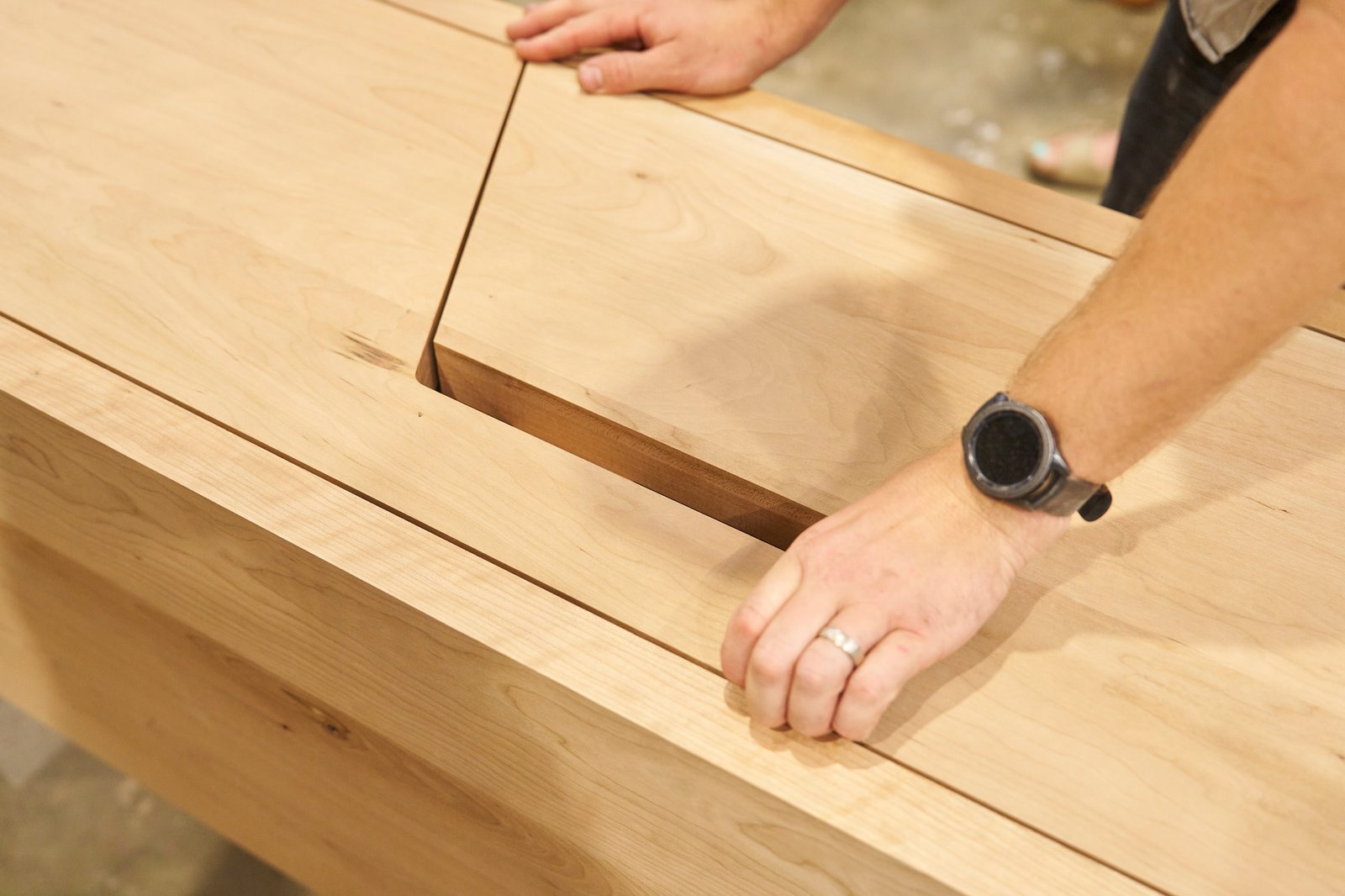
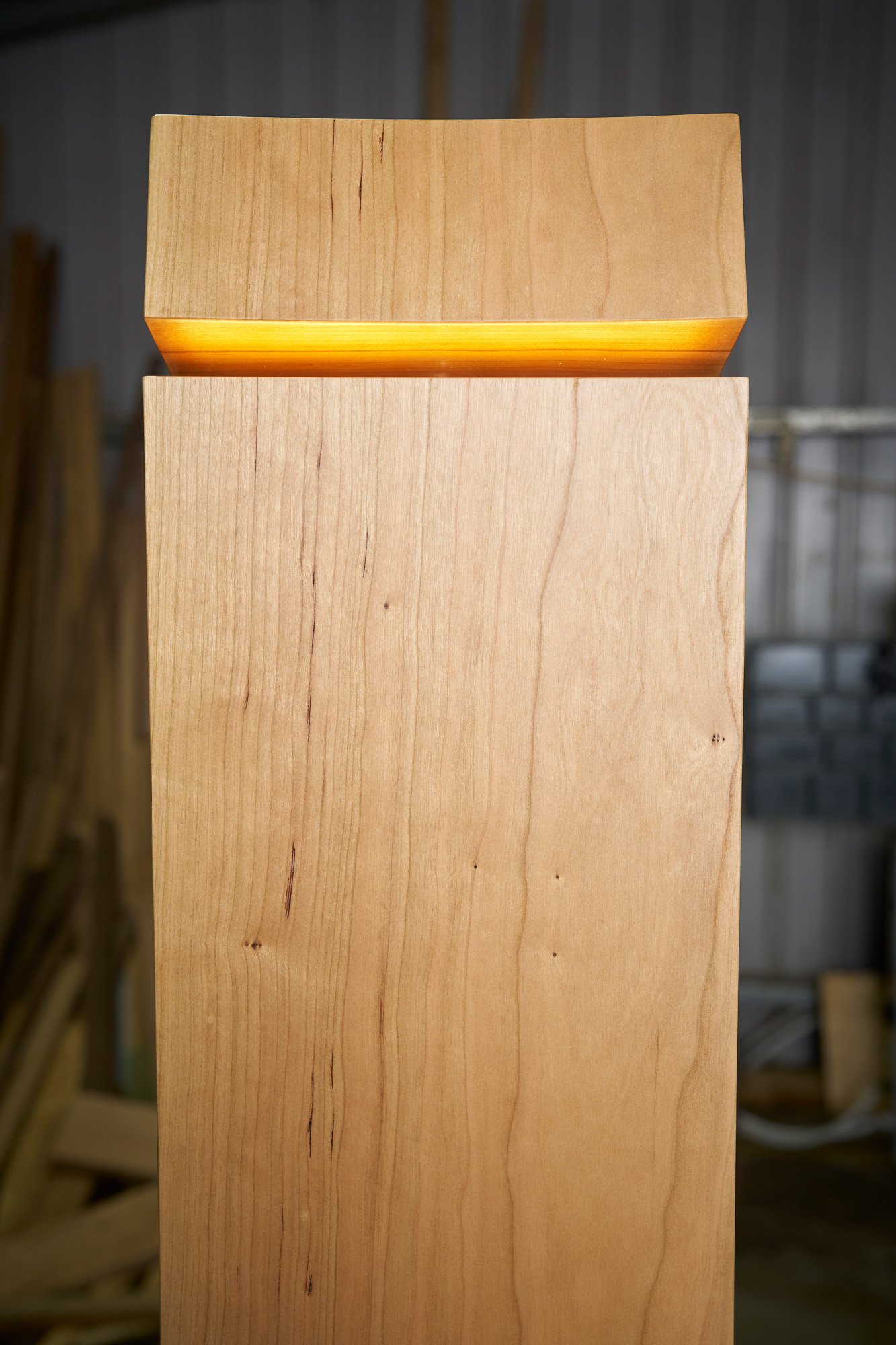
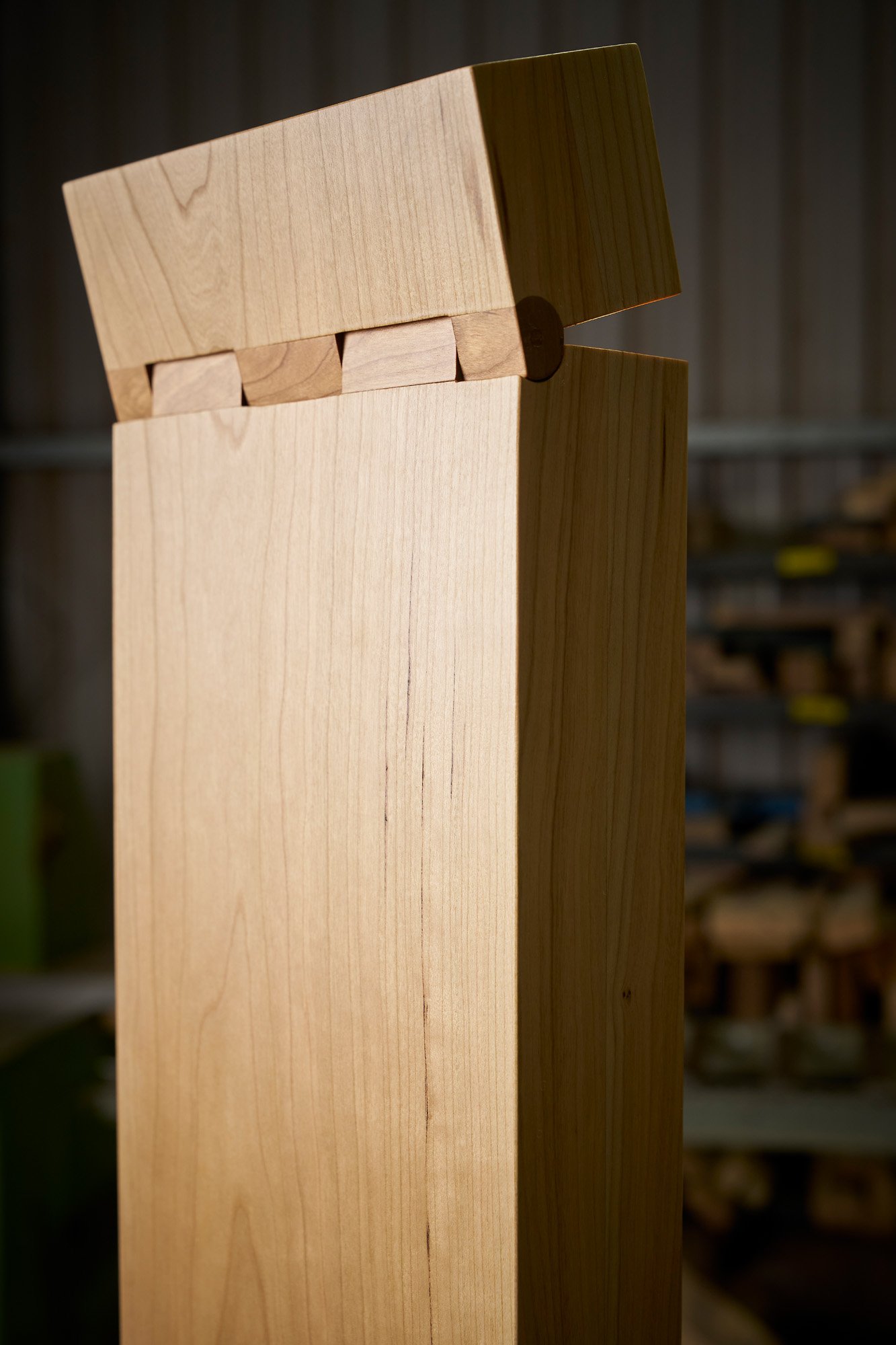
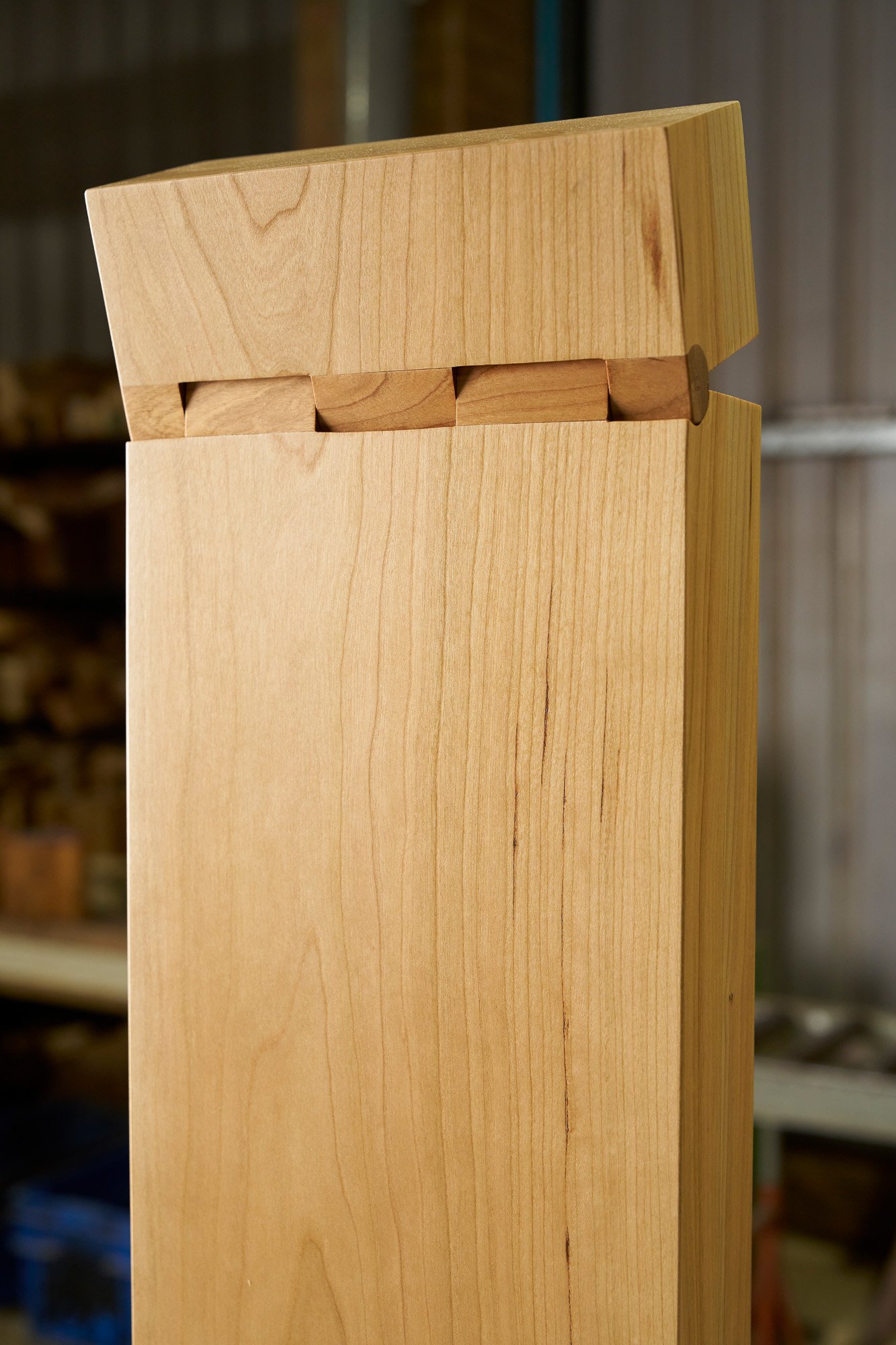
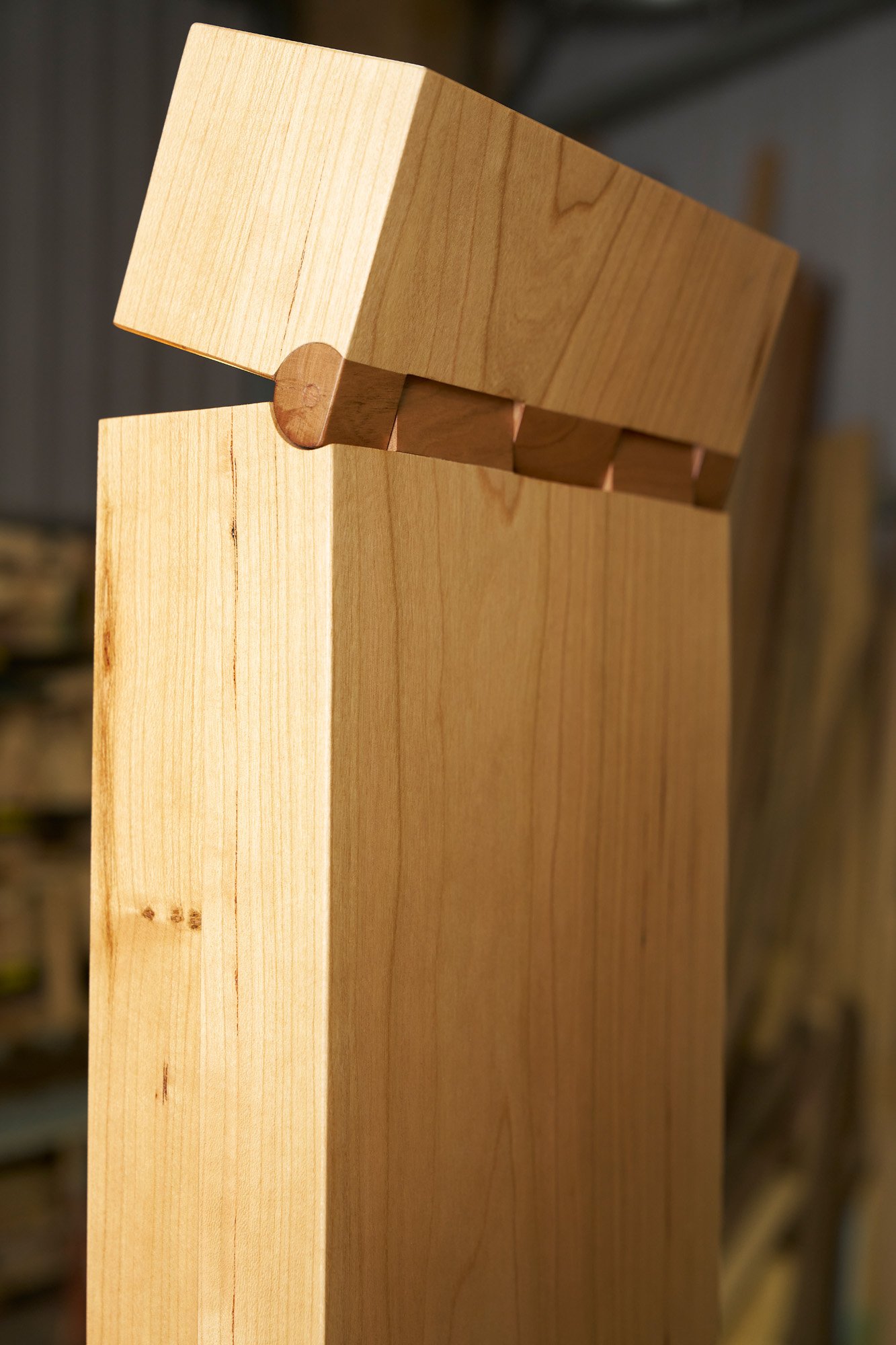
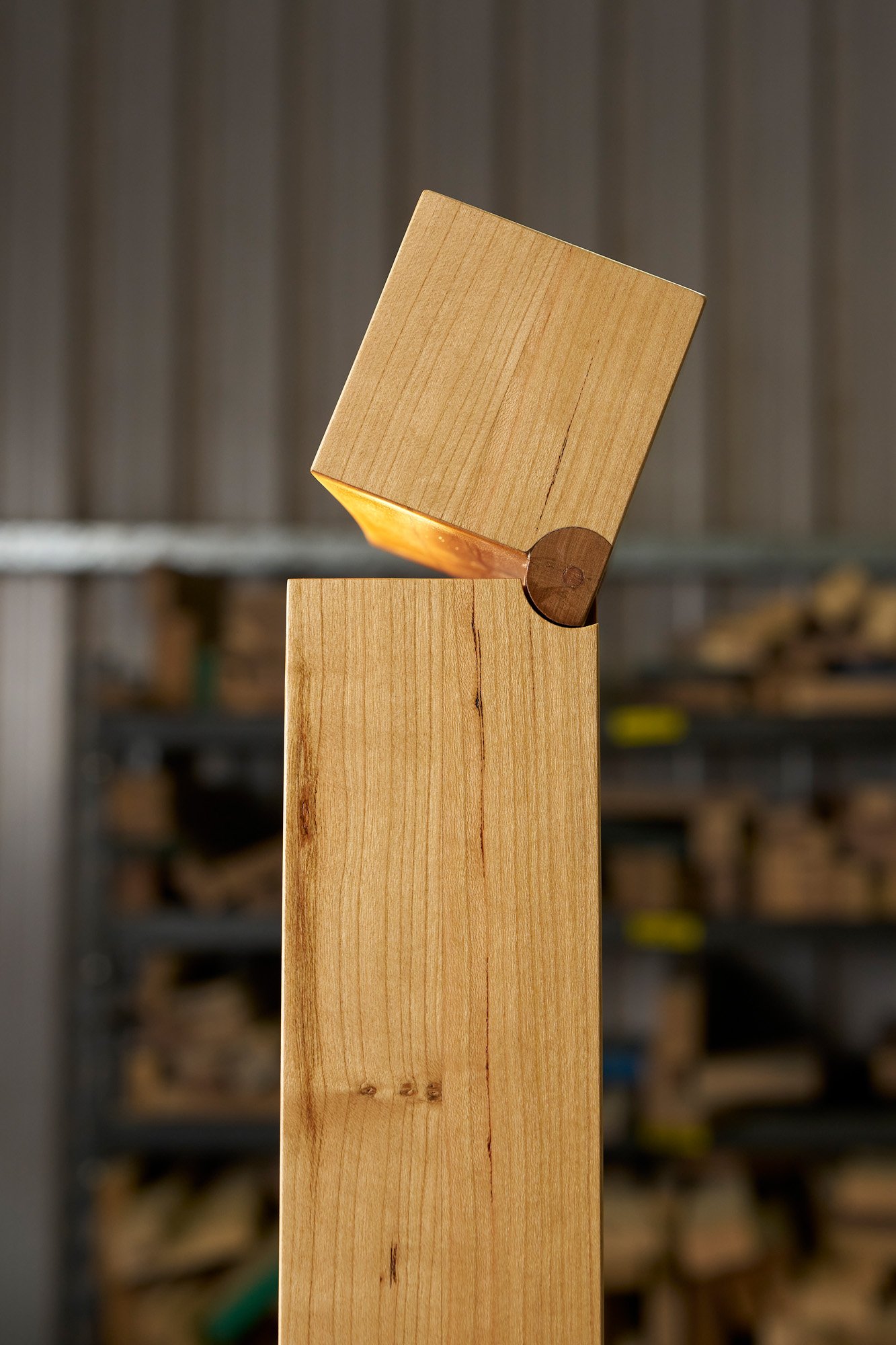
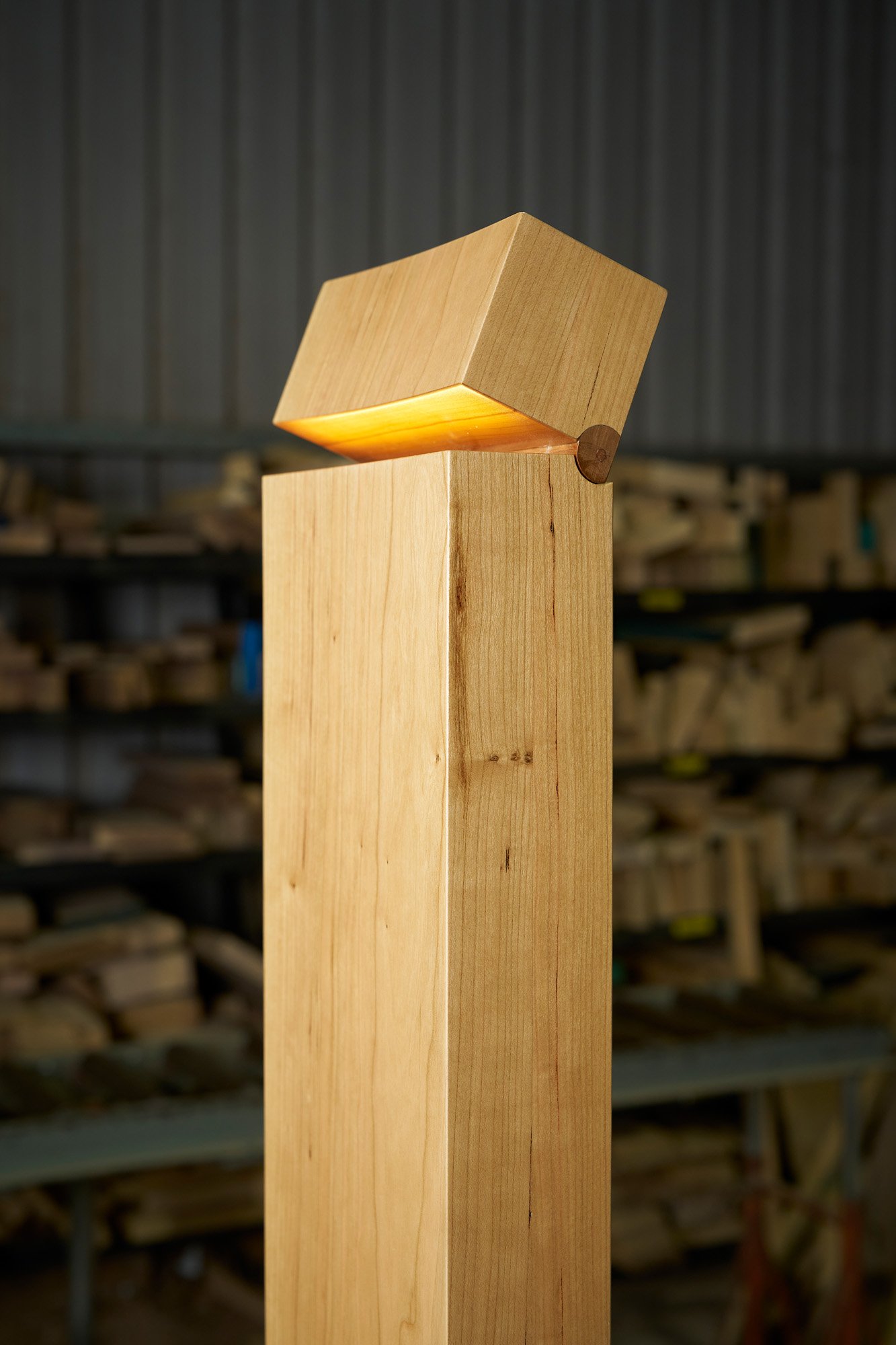
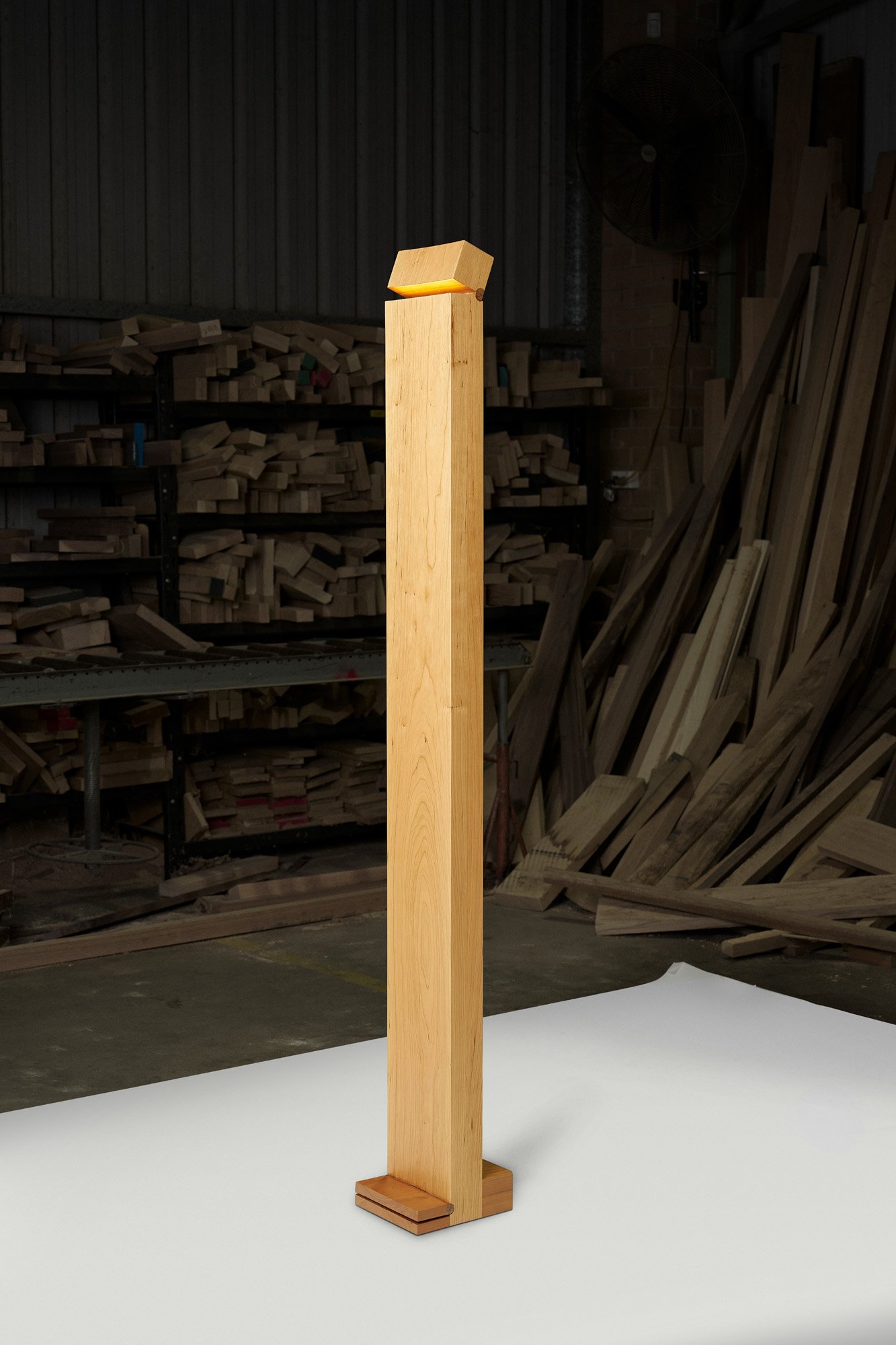
Lineburg Wang – ‘Pedal’ Lamp Lynn and Michael were interested in making something that looked, at first, like a block of timber, but that upon closer inspection revealed itself in more detail. They were interested in a moveable piece – in balance and counterbalance and operability. In the end, the idea came from the daily use of the foot pedal mechanism of a pedestal bin.
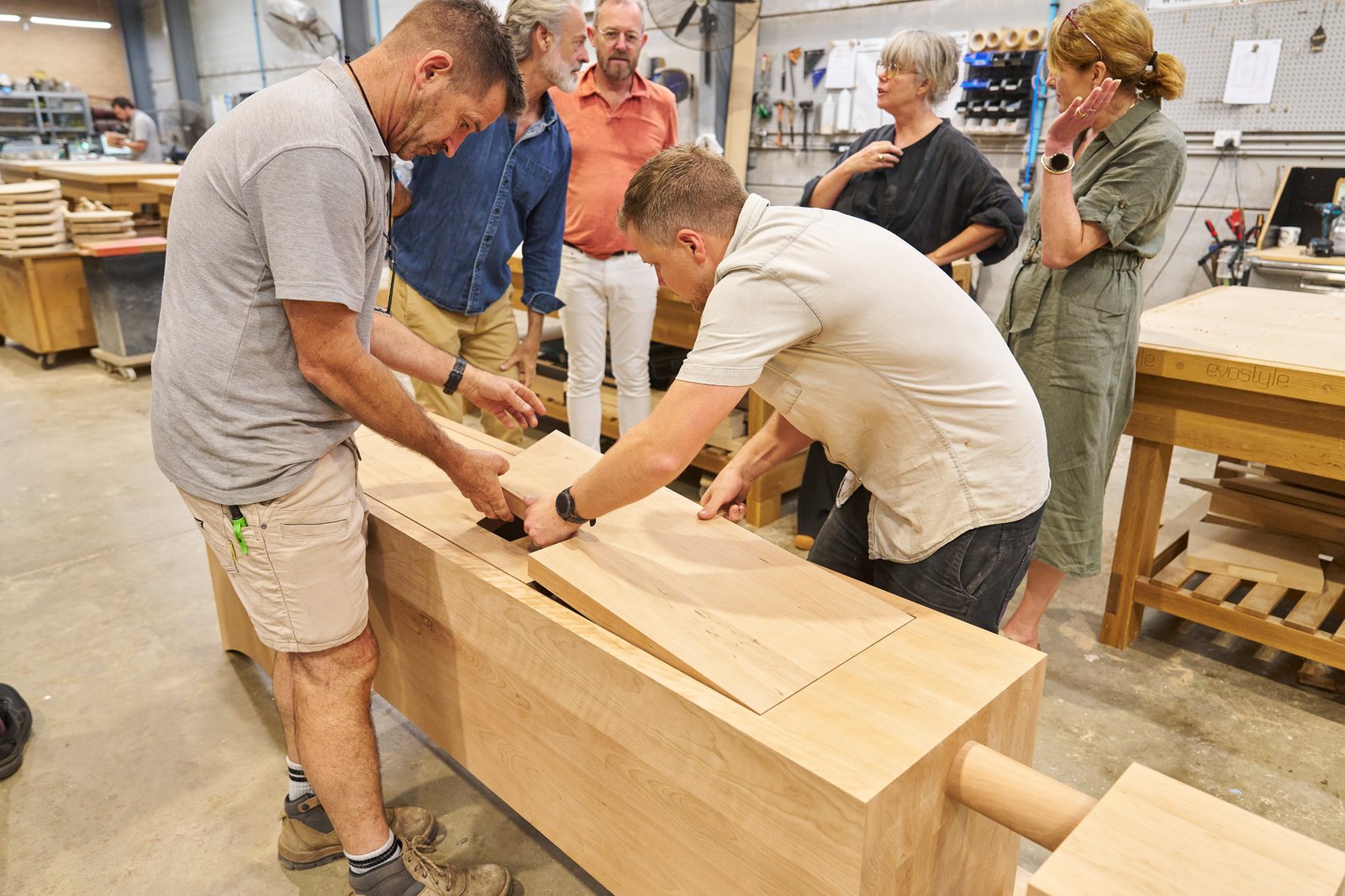
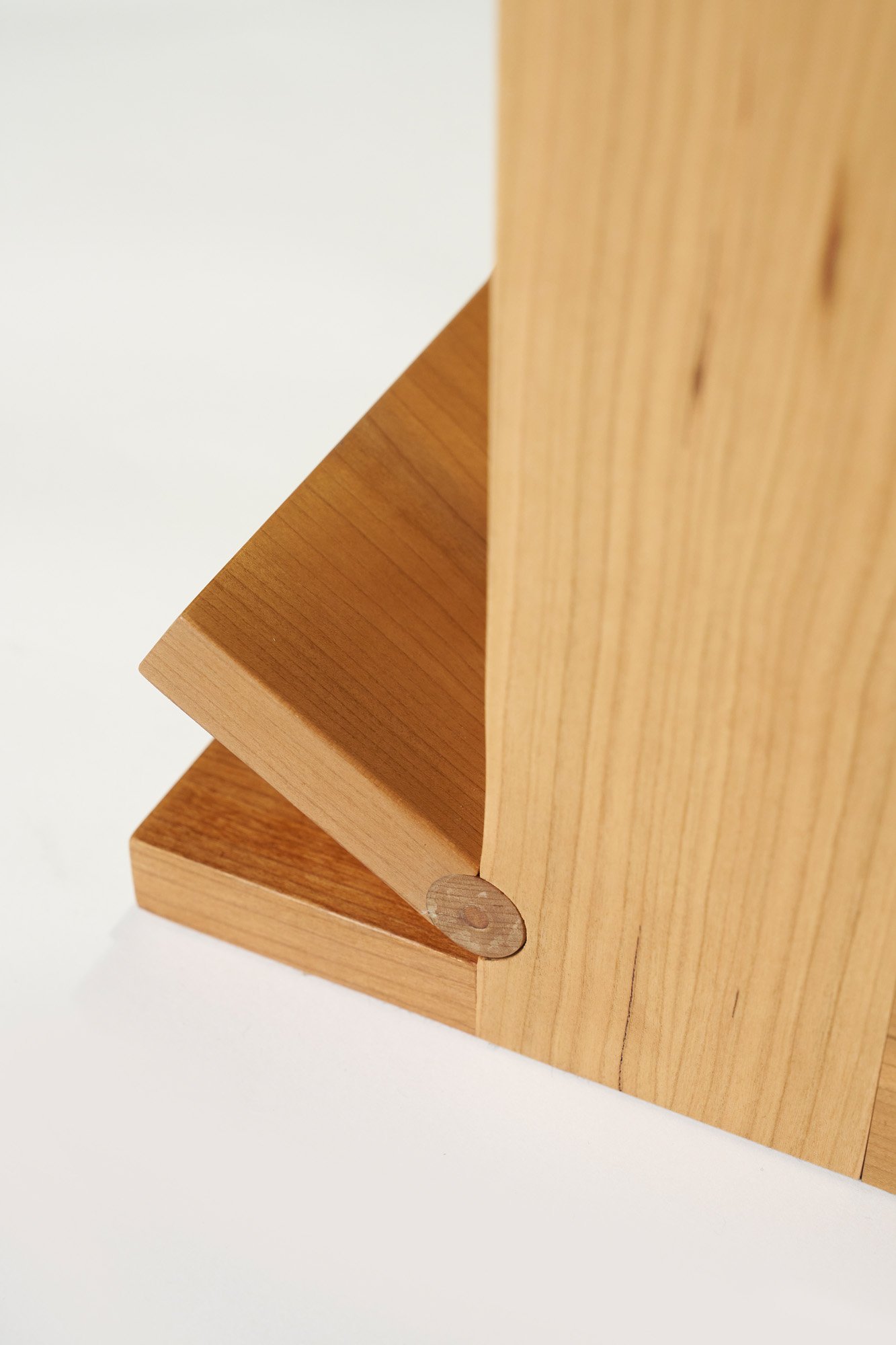
Pressing the pedal opens a ‘block’ of timber at the top and turns on a hidden light source. The mechanisms of movement and opening are all hidden and embedded internally. The hinges are beautifully constructed out of timber. A subtle curve to the face of the light is only noticeable up close and revealed in shadows when the lid is open. The interior face of the lid has a high gloss finish to be as reflective as possible, enhancing the glow of light from the top of the timber monolith.
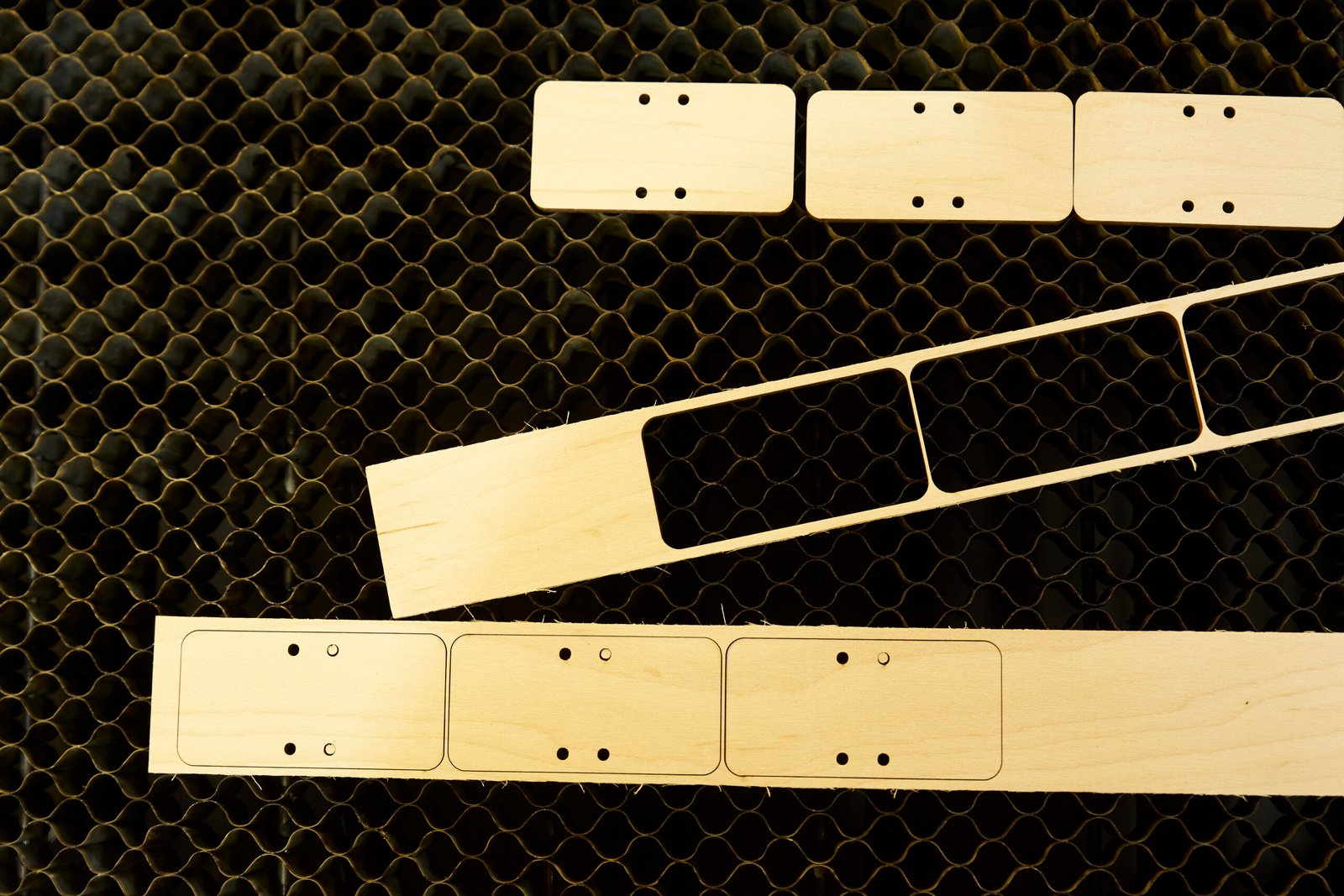
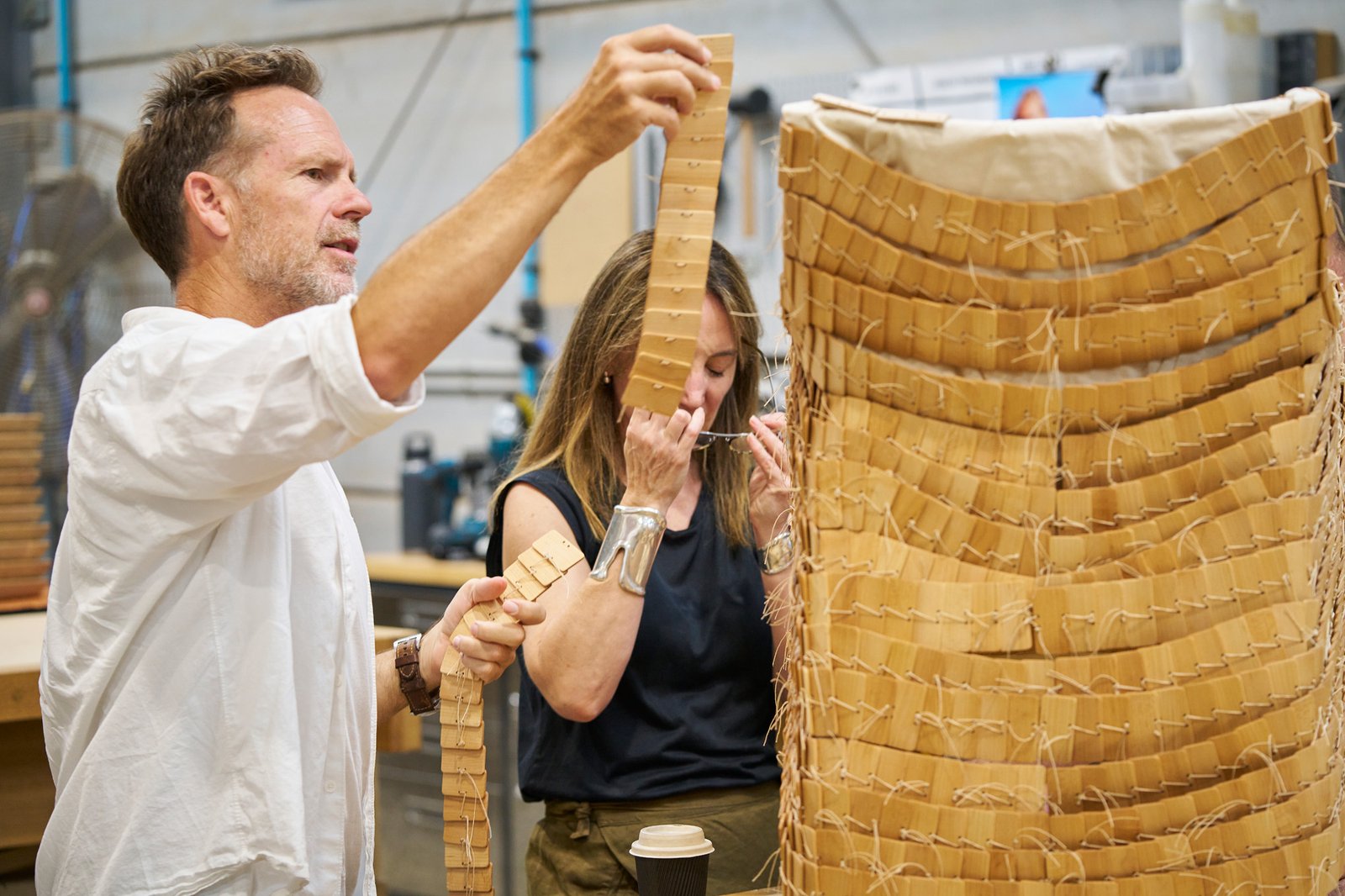
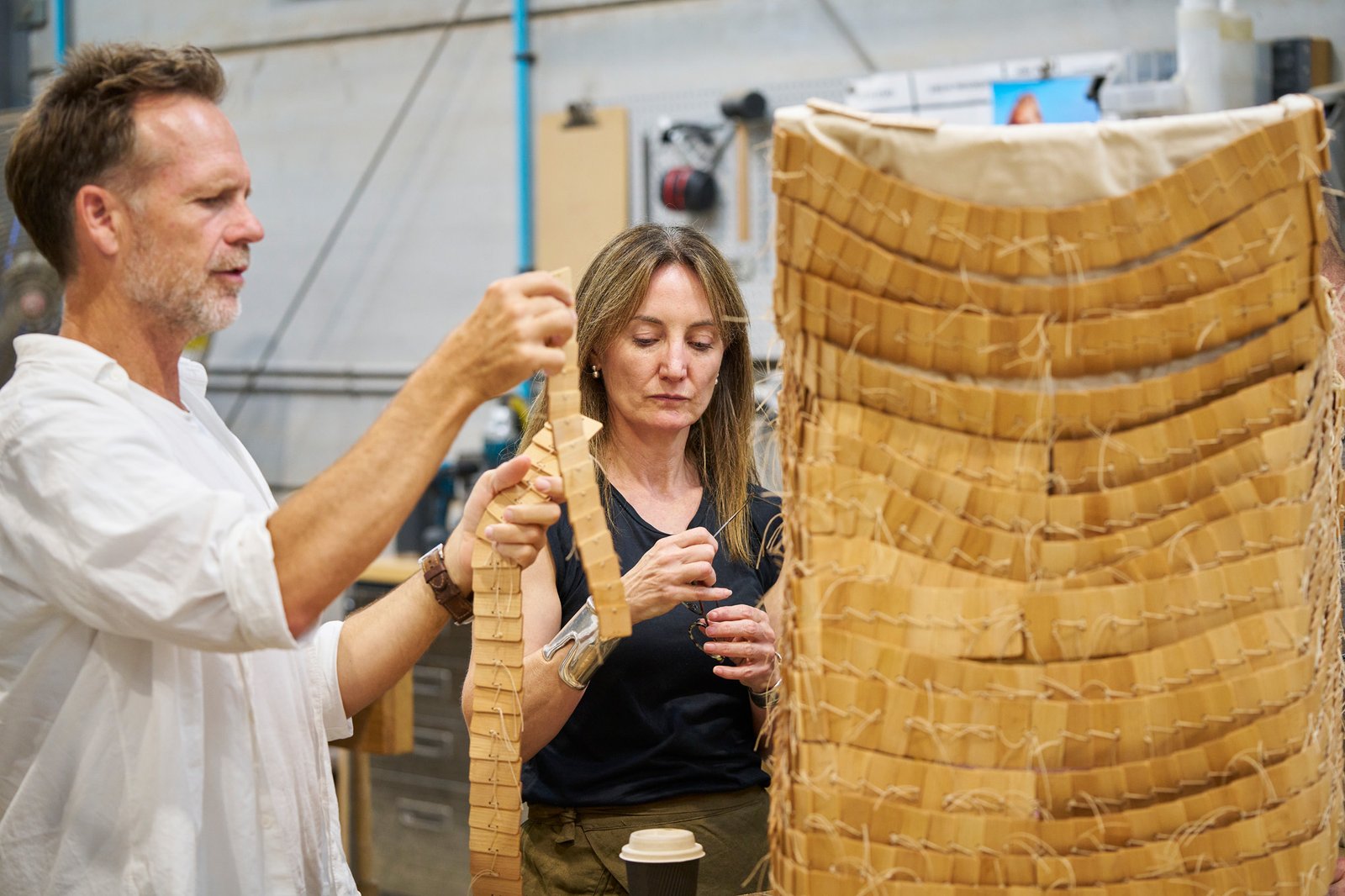
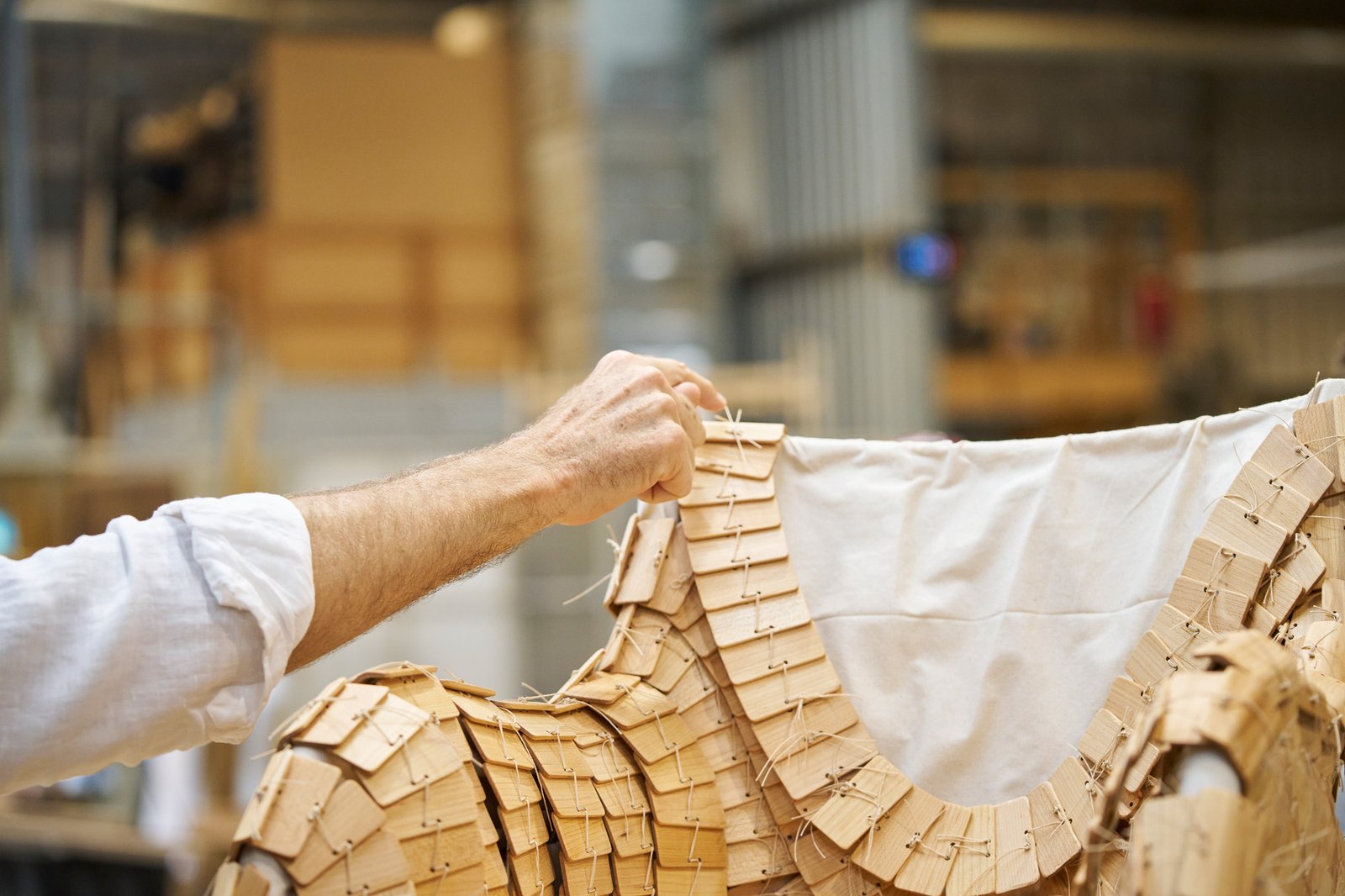
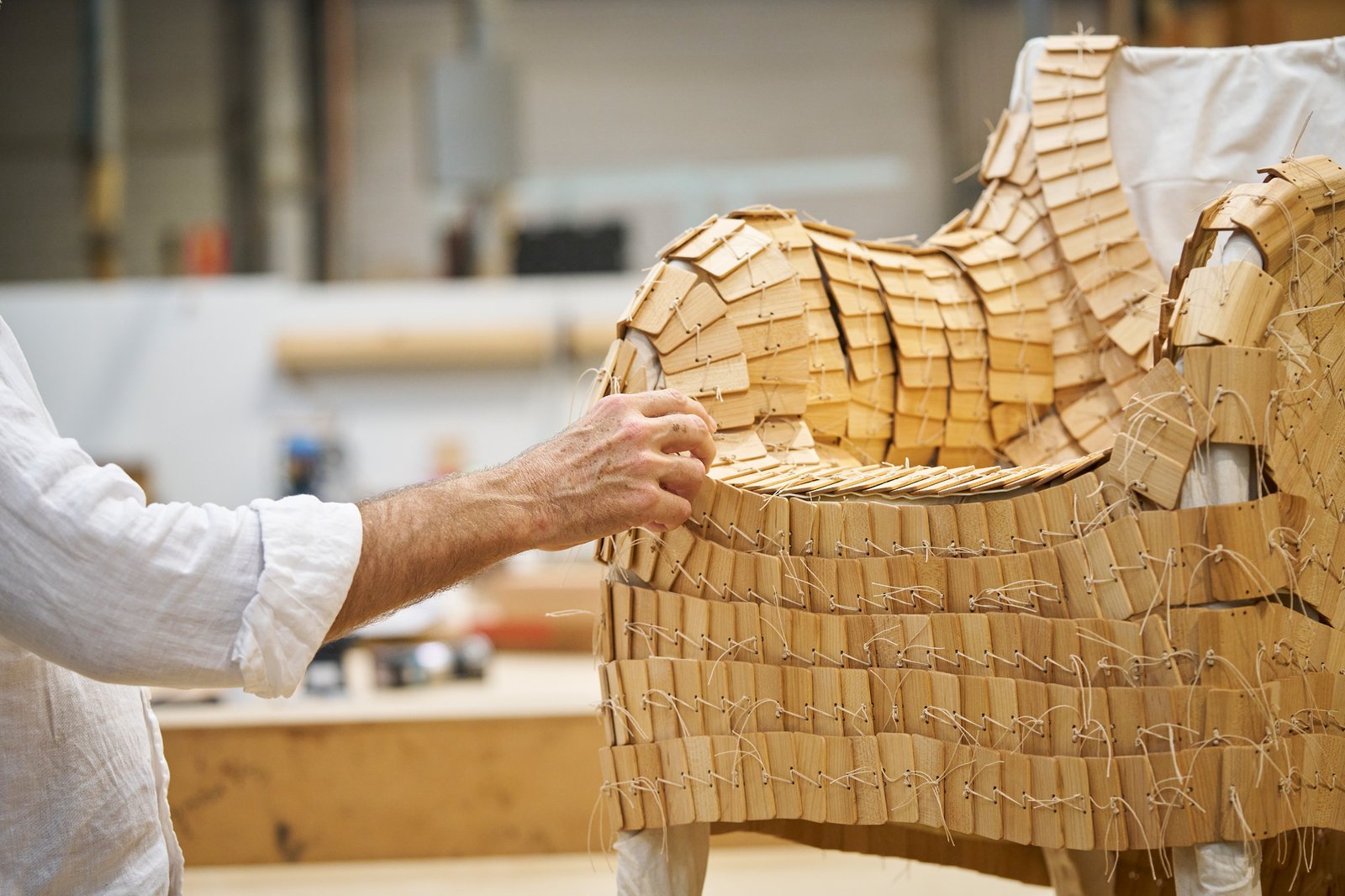
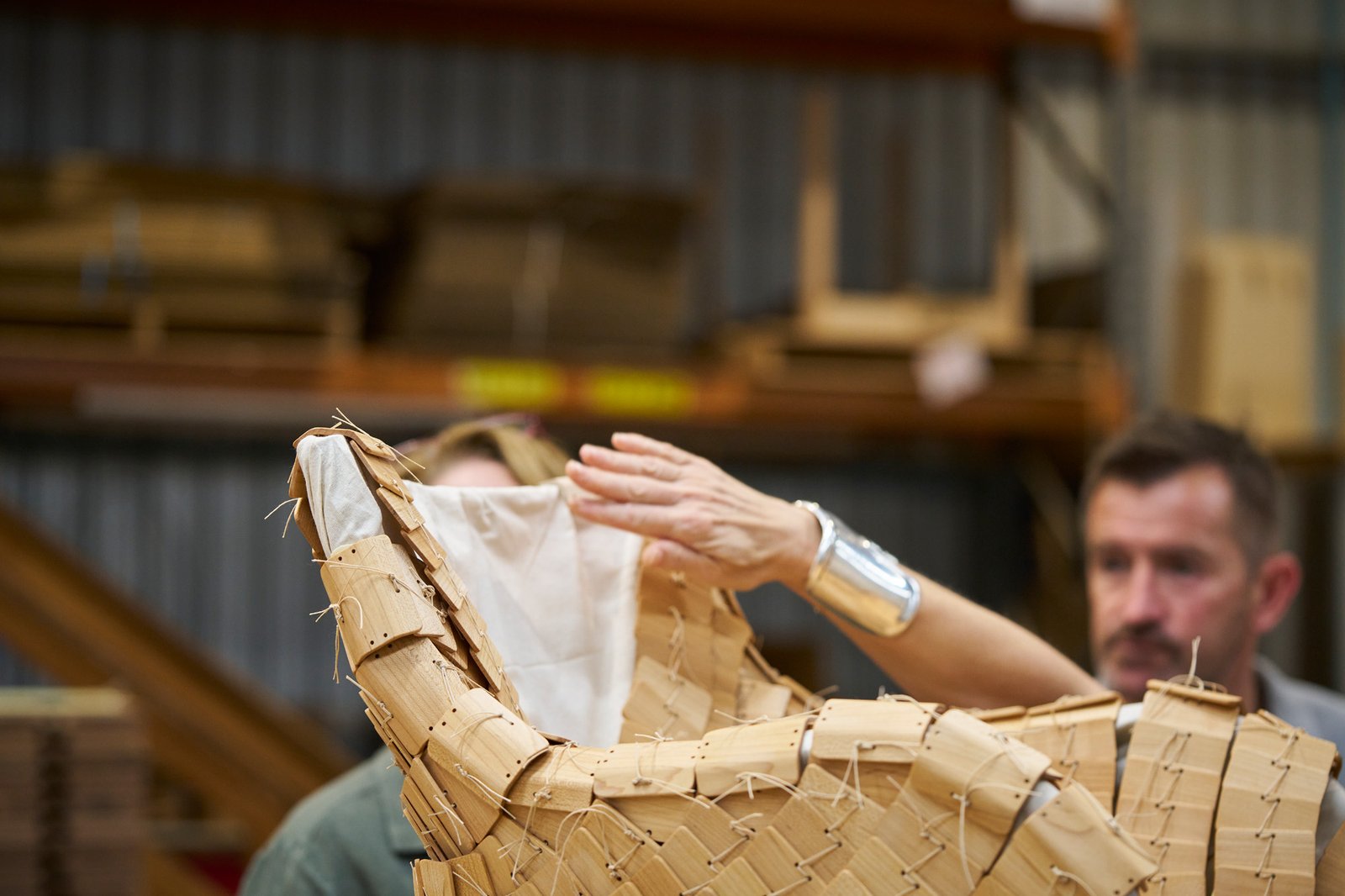
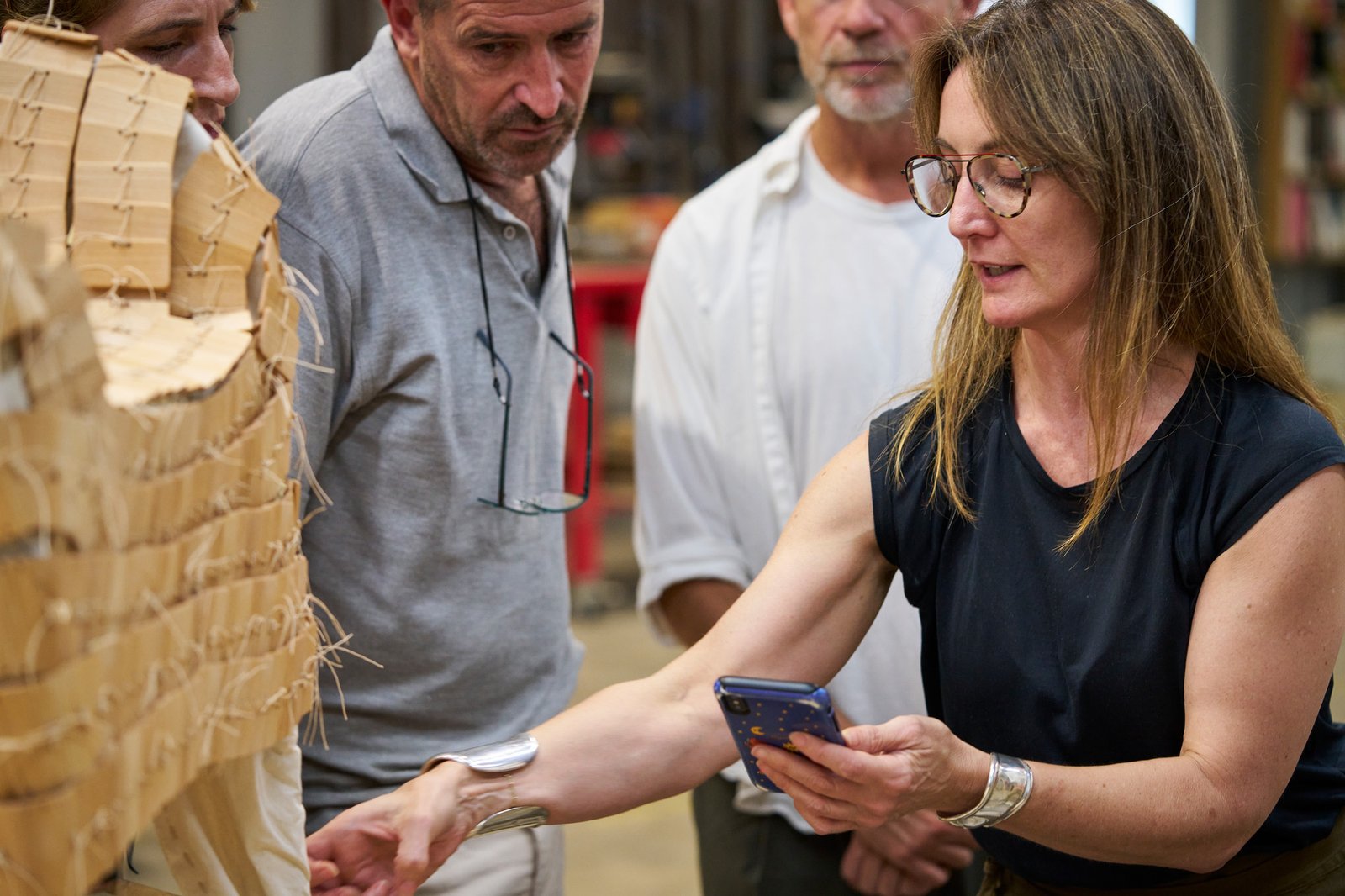
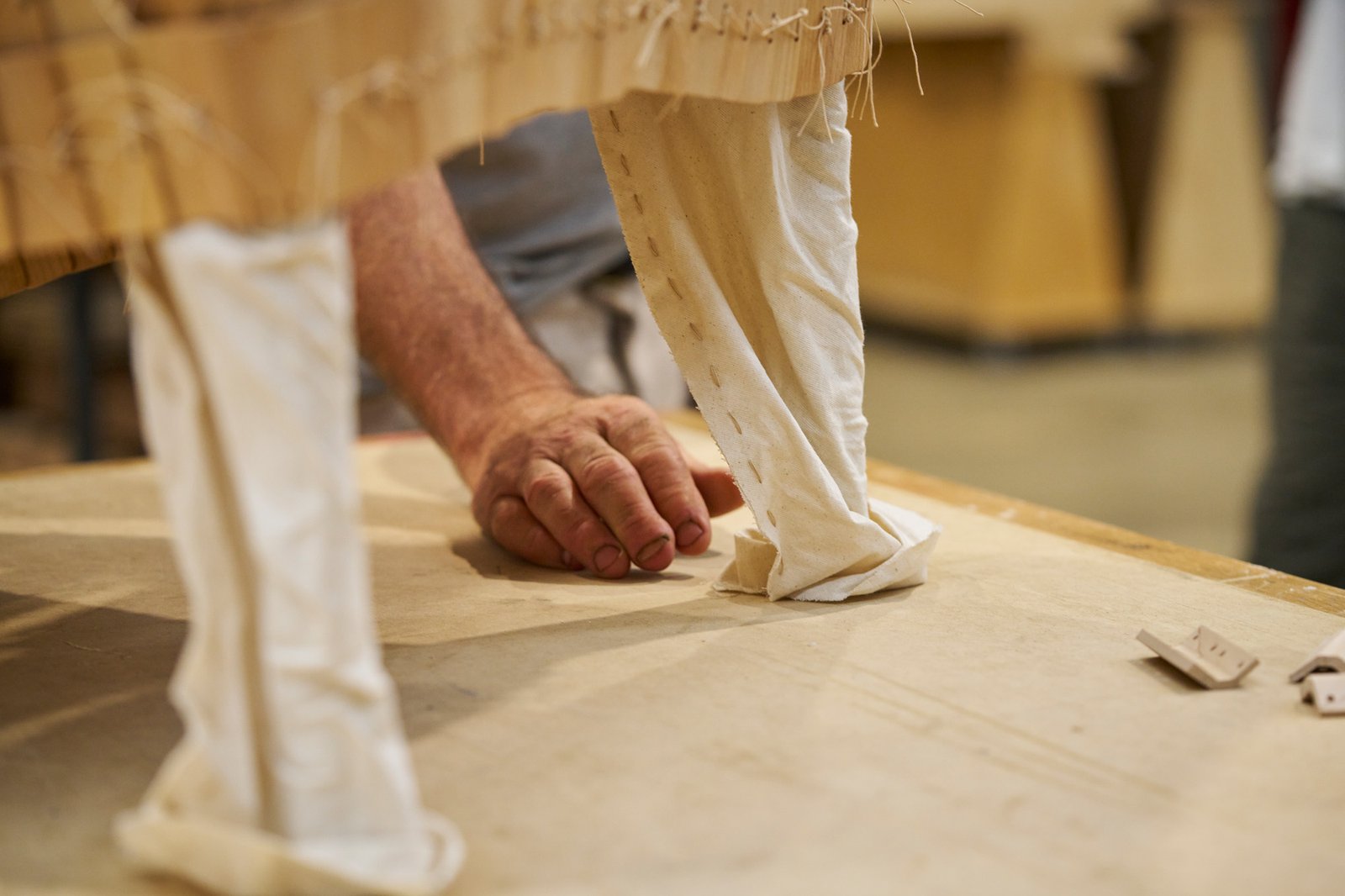
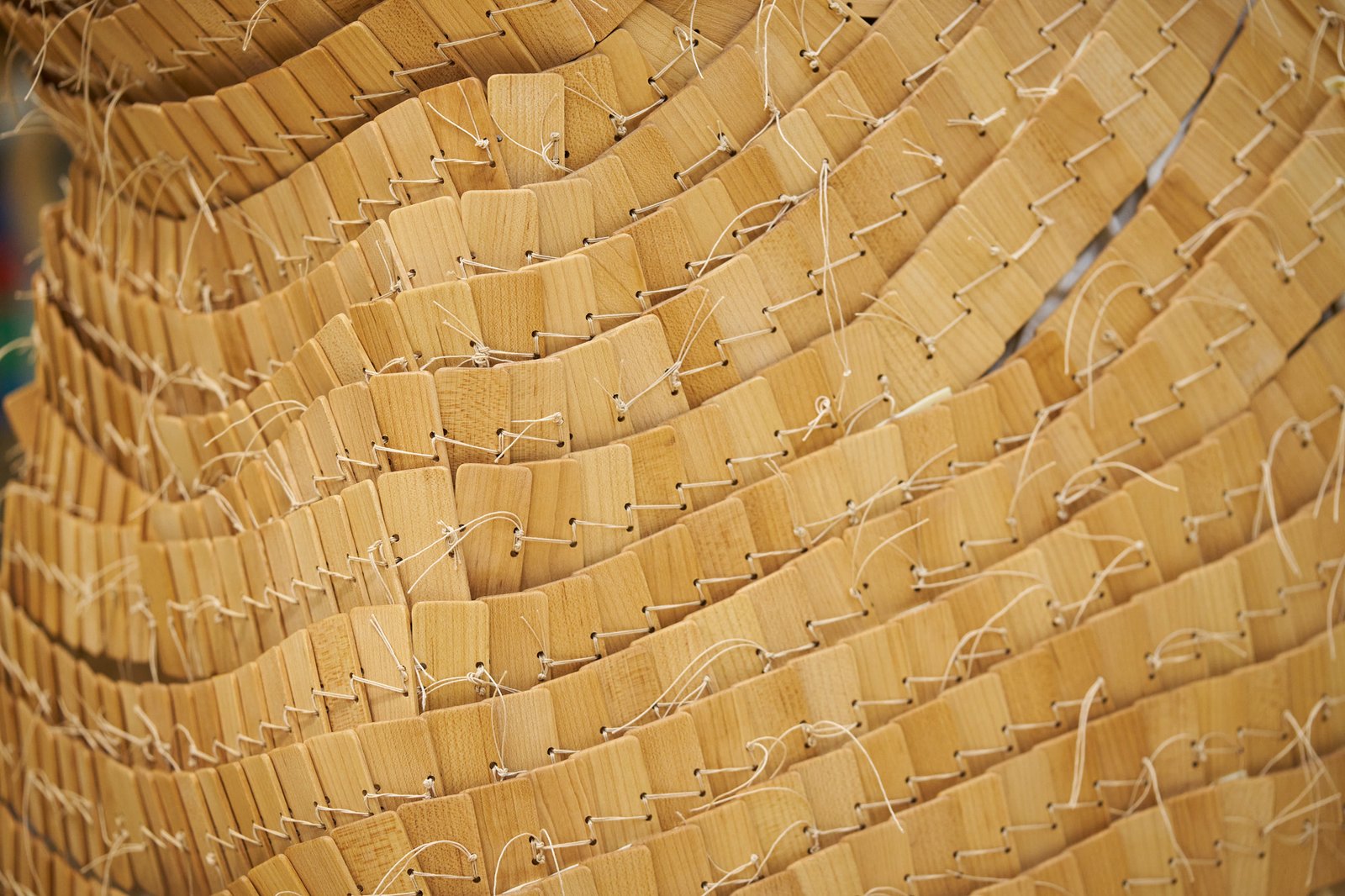
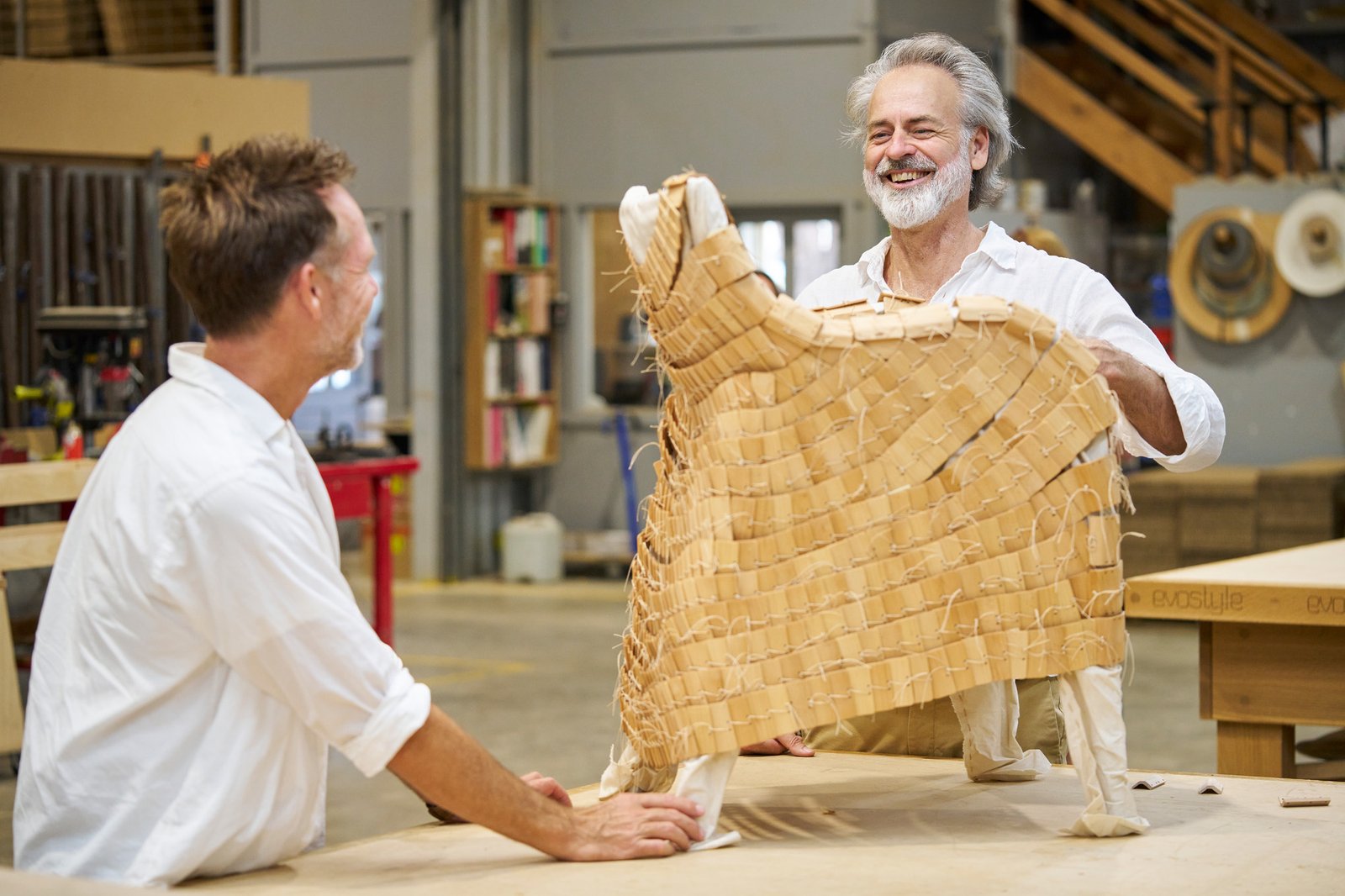
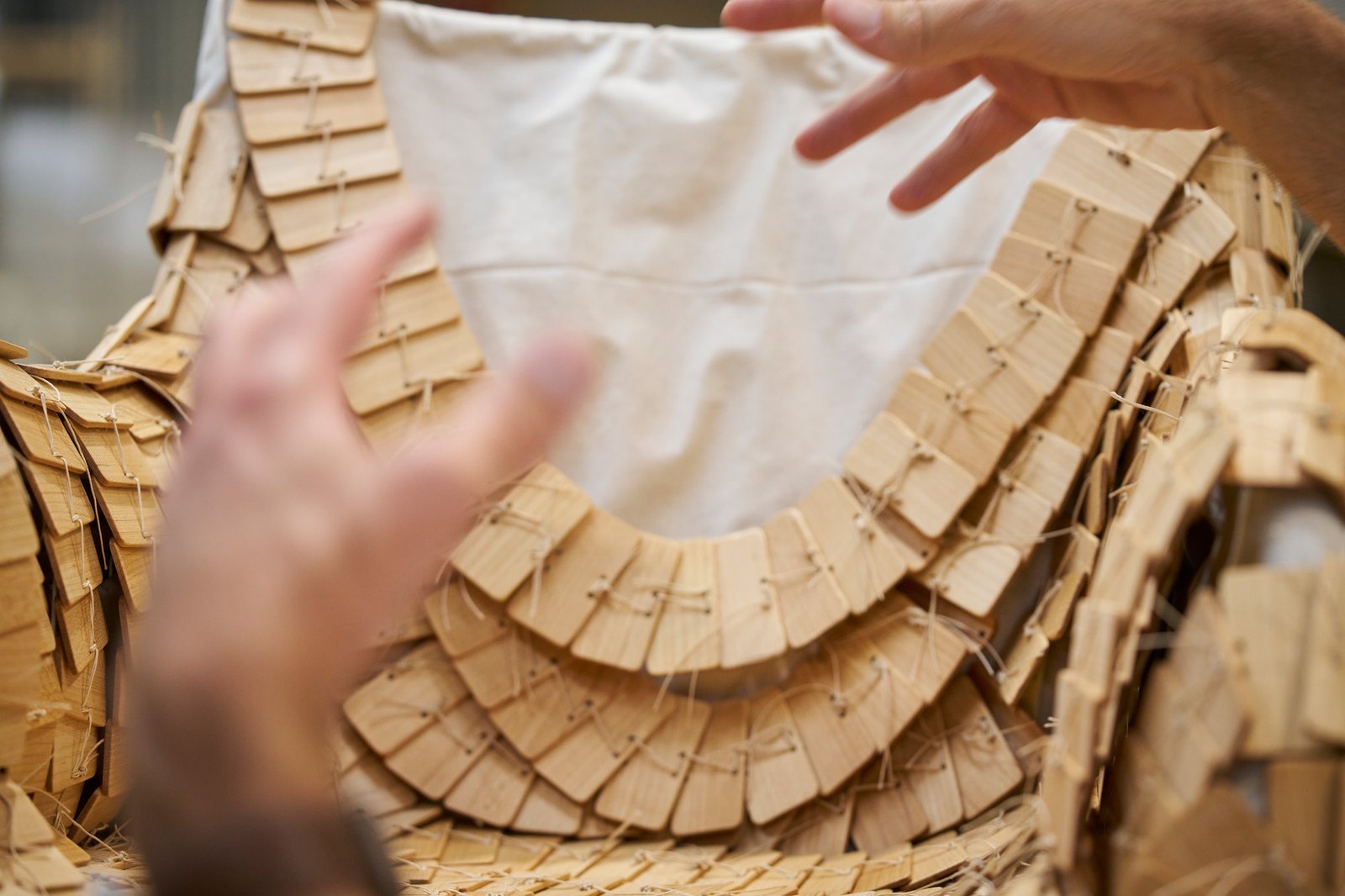
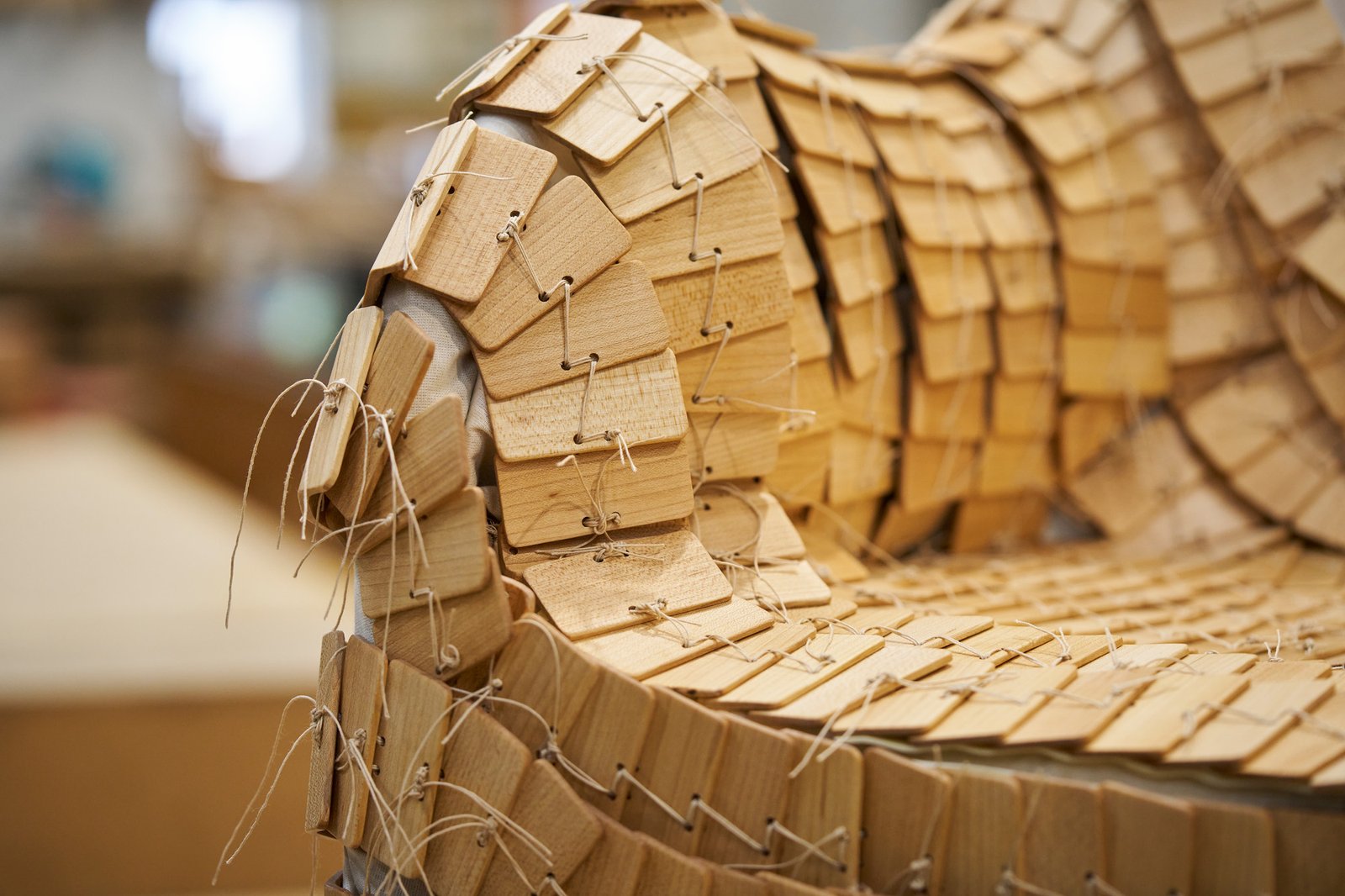
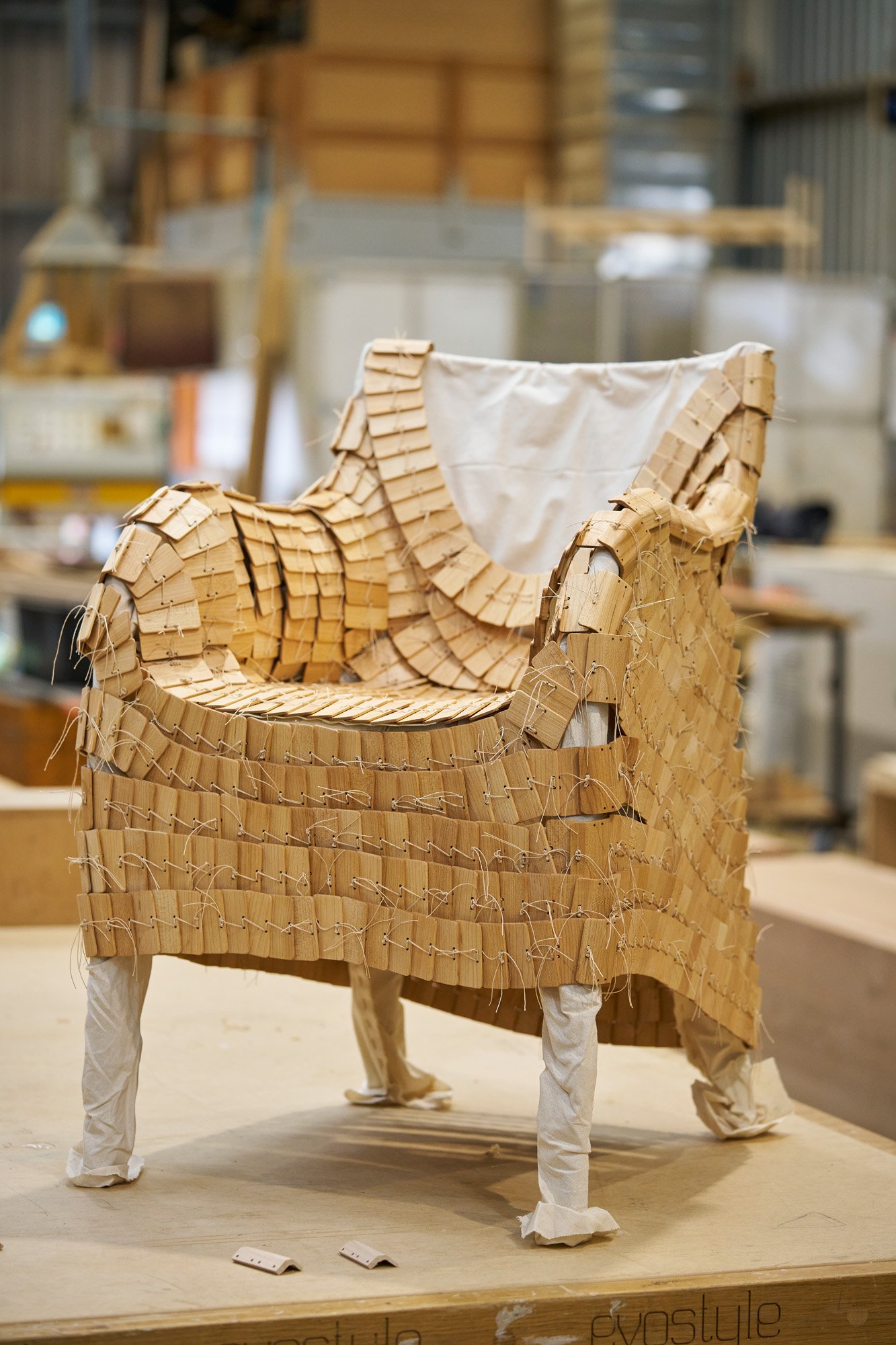
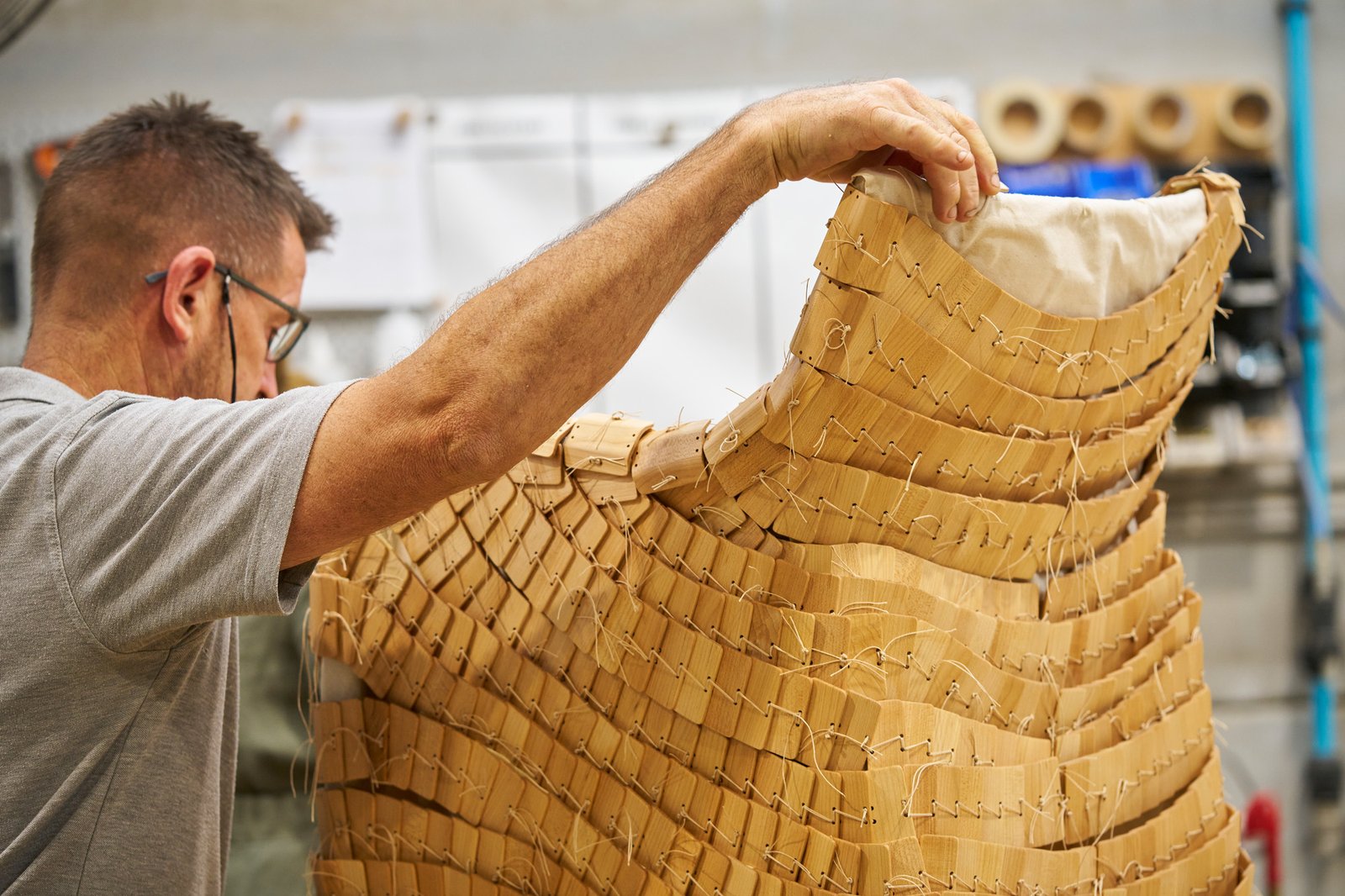
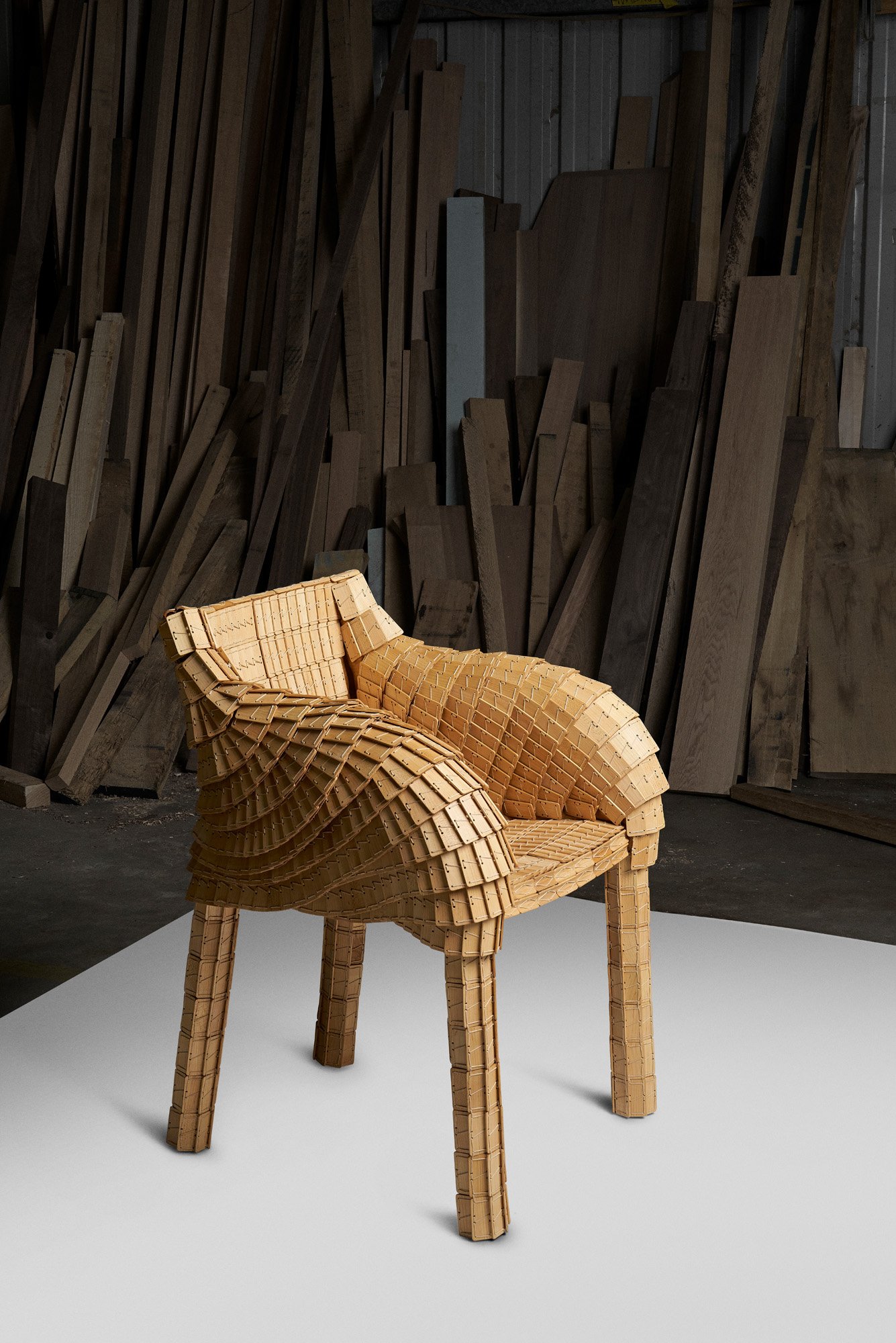
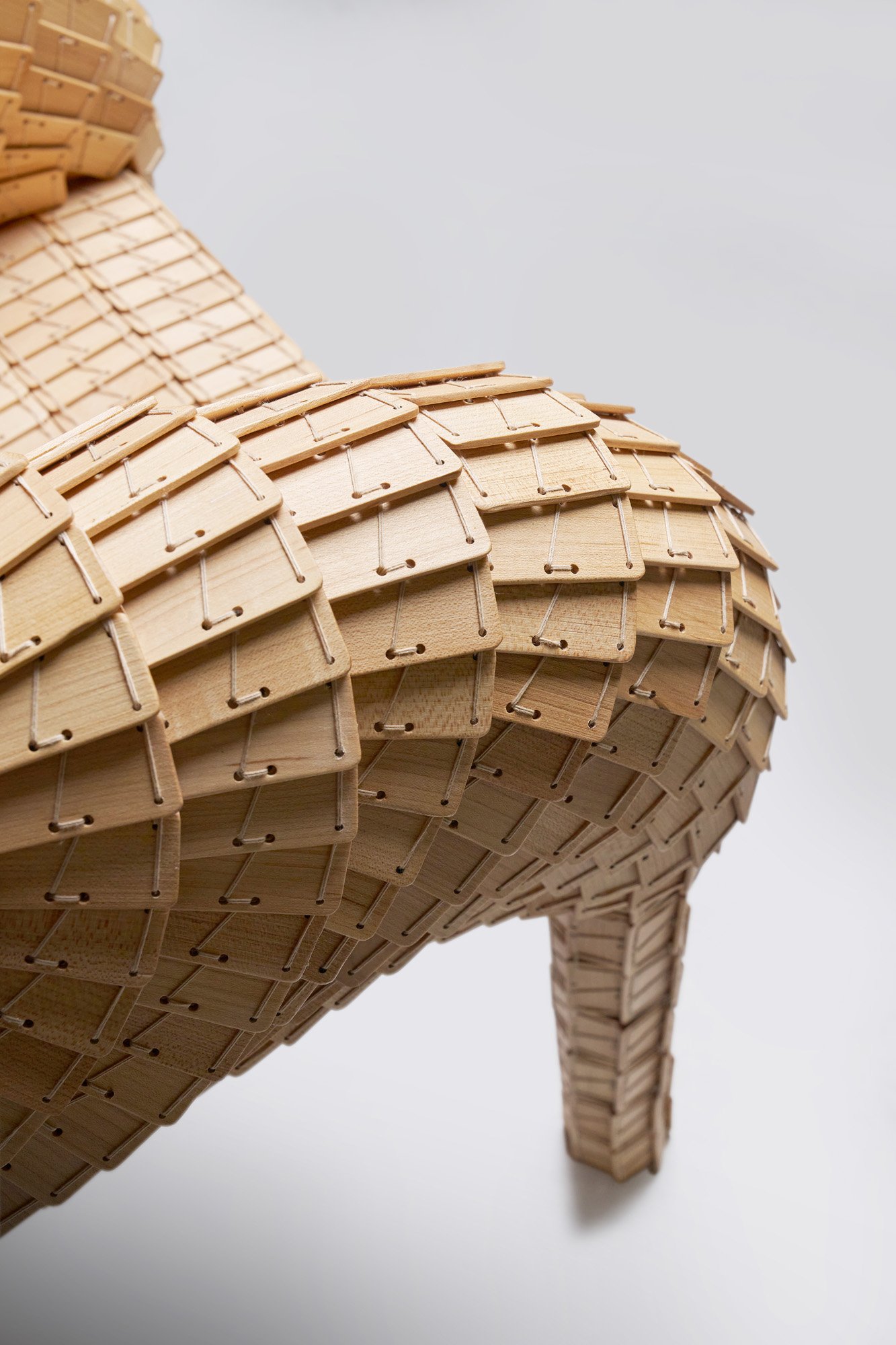
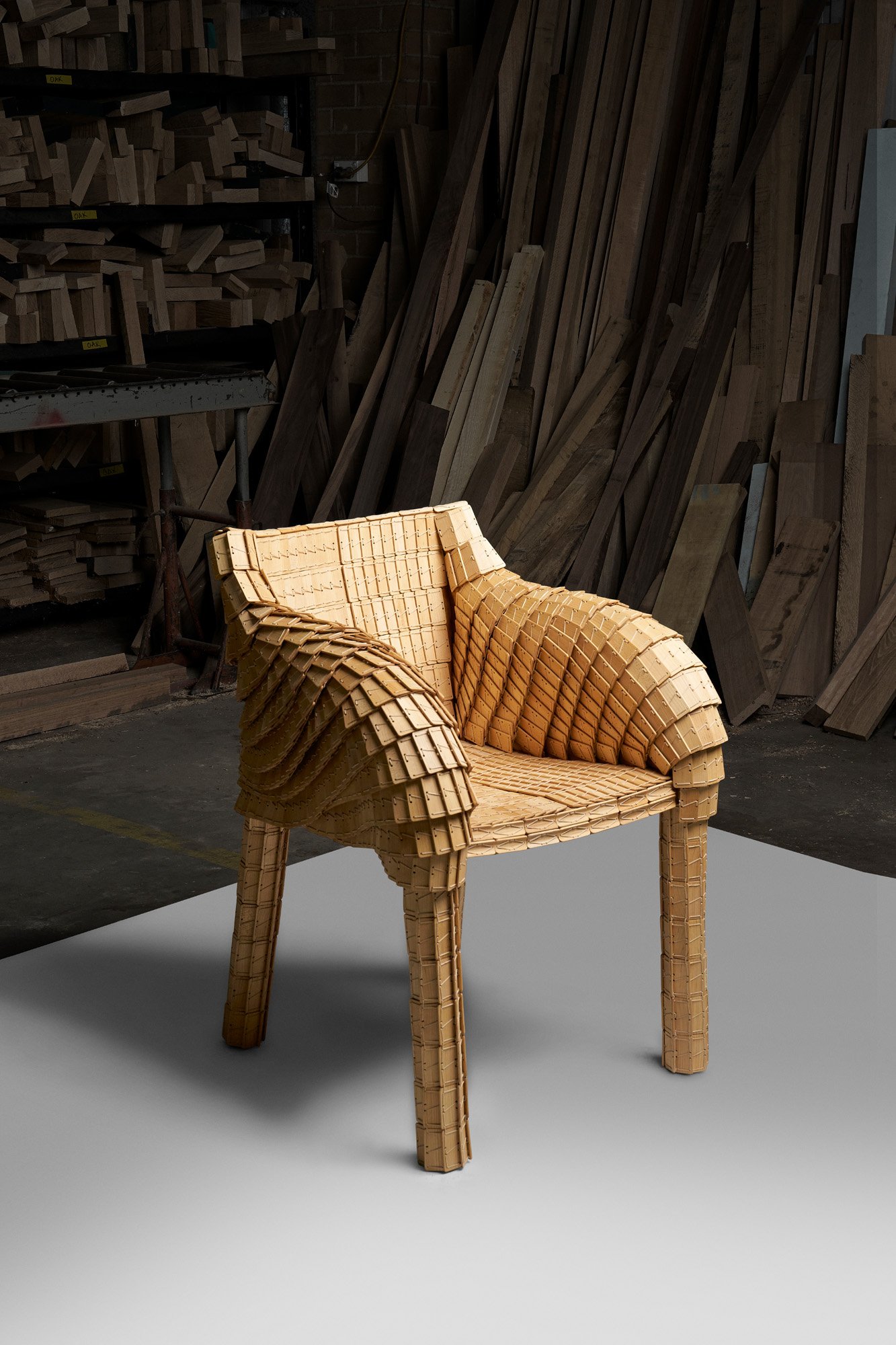
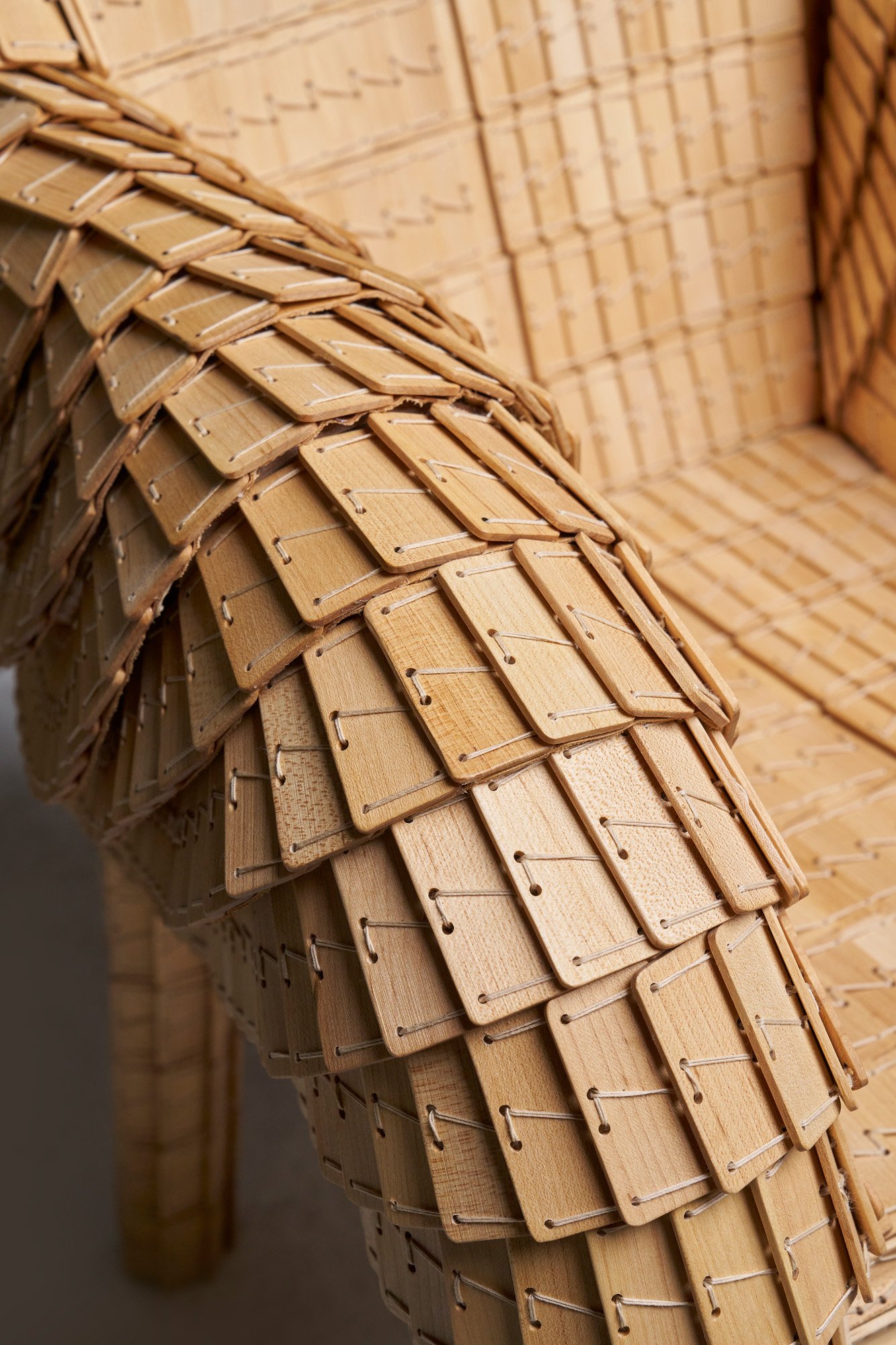
Richards Stanisich (with Meg Ashforth) – ‘Lamella’ Chair A Lamella is a small, thin, plate-like structure usually referenced in biology. It can also be used as a reference to armor. Kirsten and Jonathan’s inspiration for this chair cited Japanese medieval armor, and it was conceived as a covering over an existing found or discarded chair, in this case a non-descript 1980’s metal-framed chair with curvilinear arms.
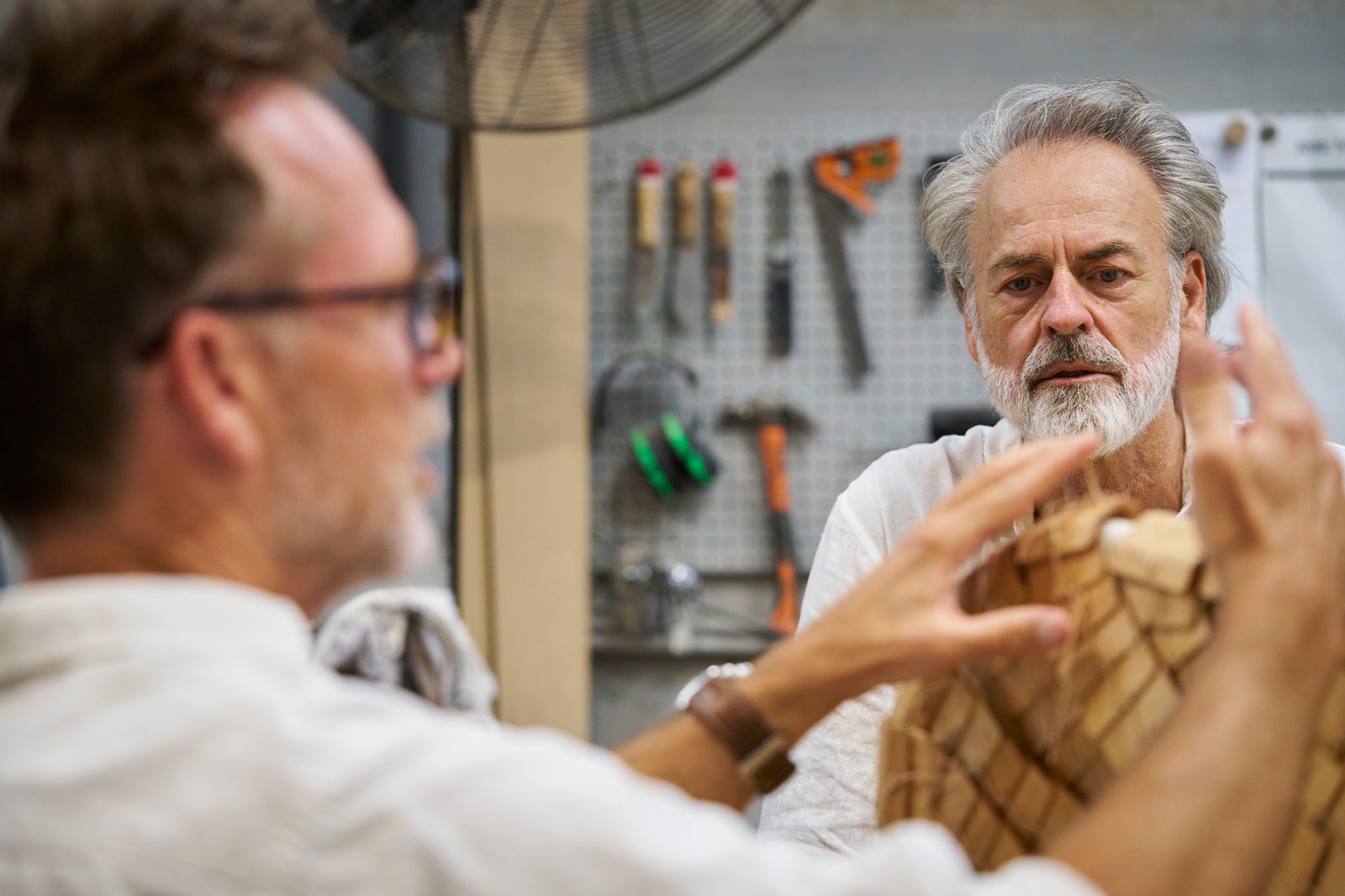
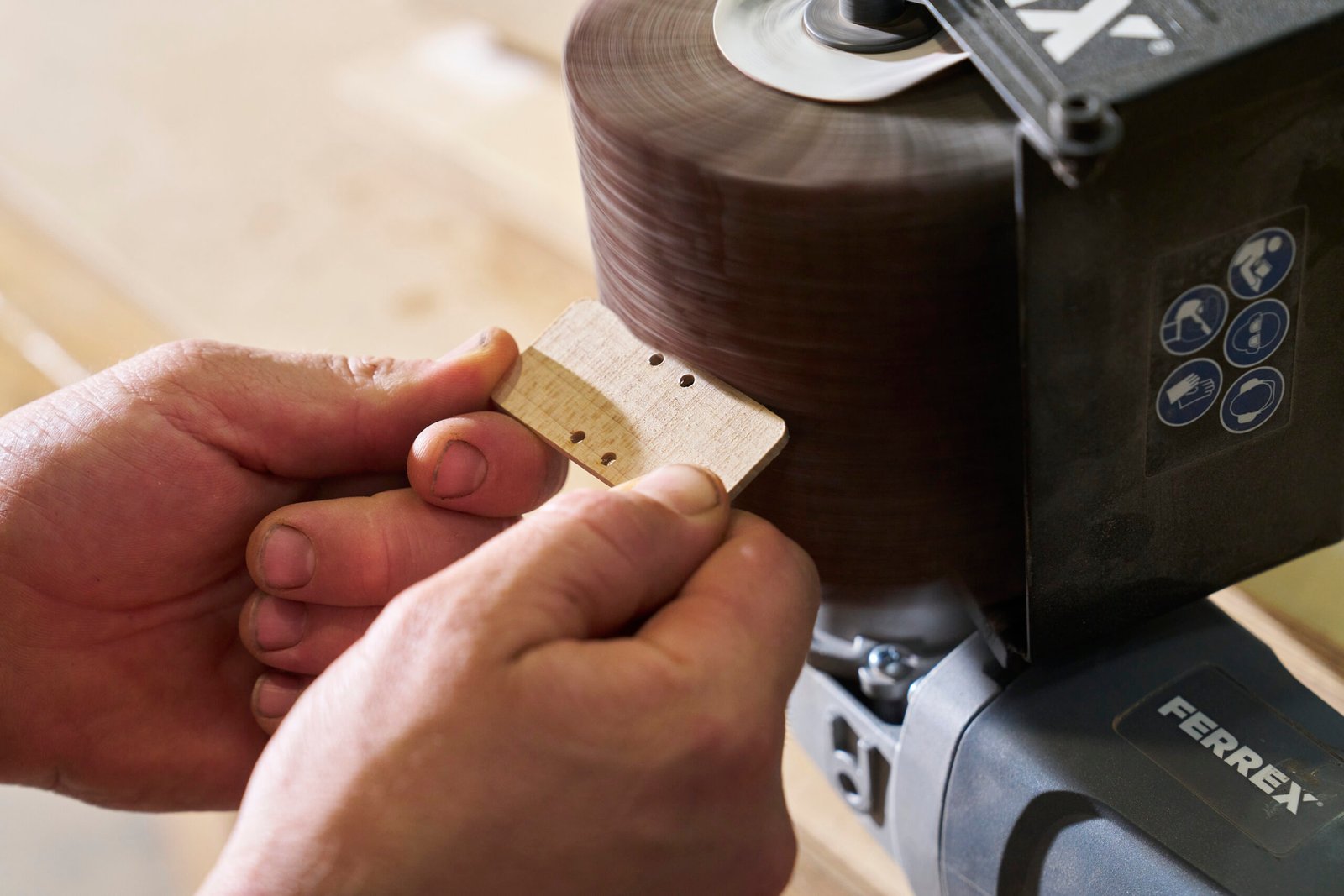
Hundreds of timber tiles were painstakingly hand-sewn together, taken apart and reapplied in a time-consuming and complicated exploration of the best way to drape them. A chance encounter with Meg Ashforth, a prominent costume designer on films such as Mad Max: Fury Road, who also has an interest in Japanese historical armor, led to a collaboration, a further six weeks of hand sewing and making, and a piece of furniture that encompasses design, craft, and art.
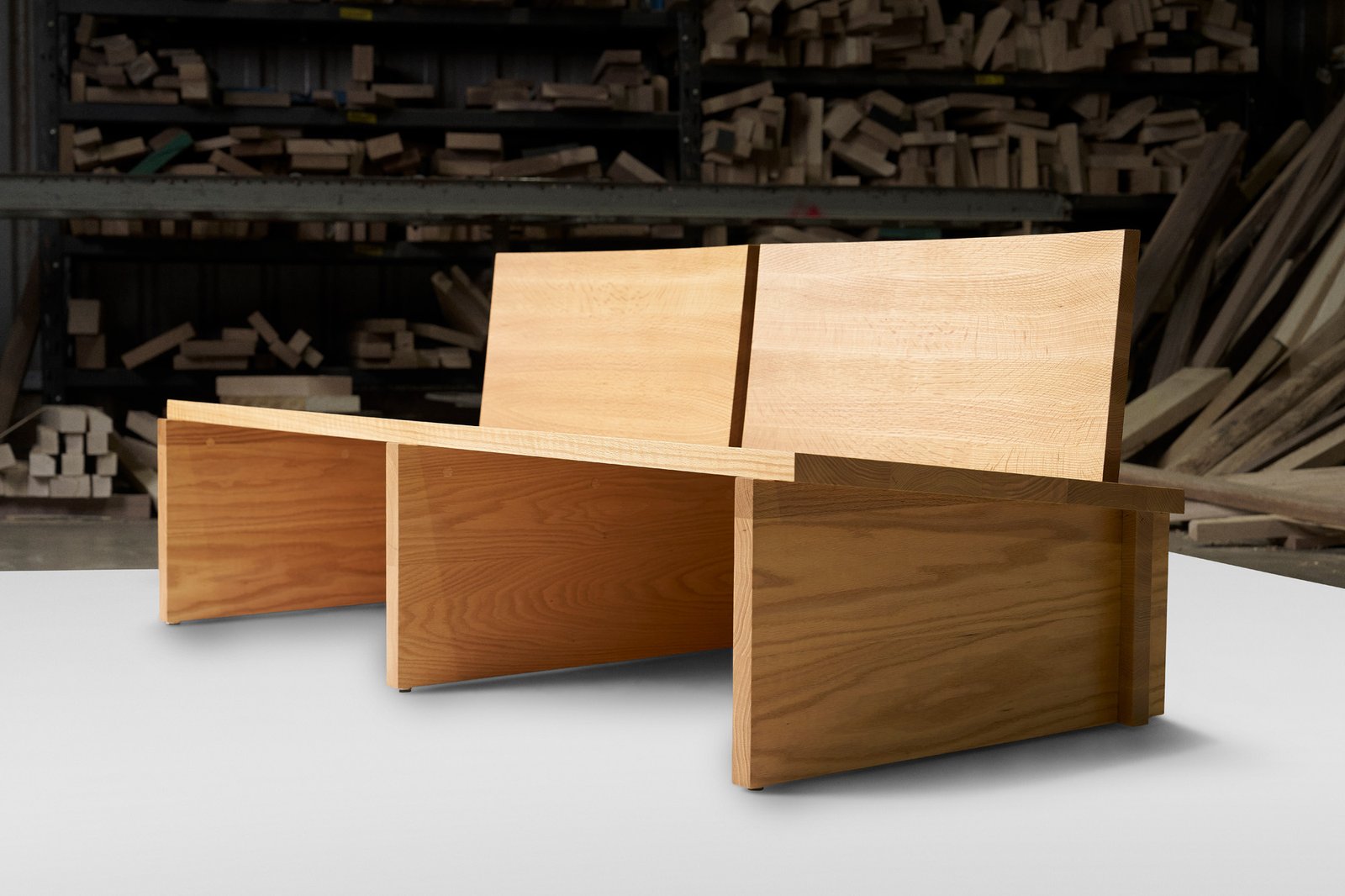
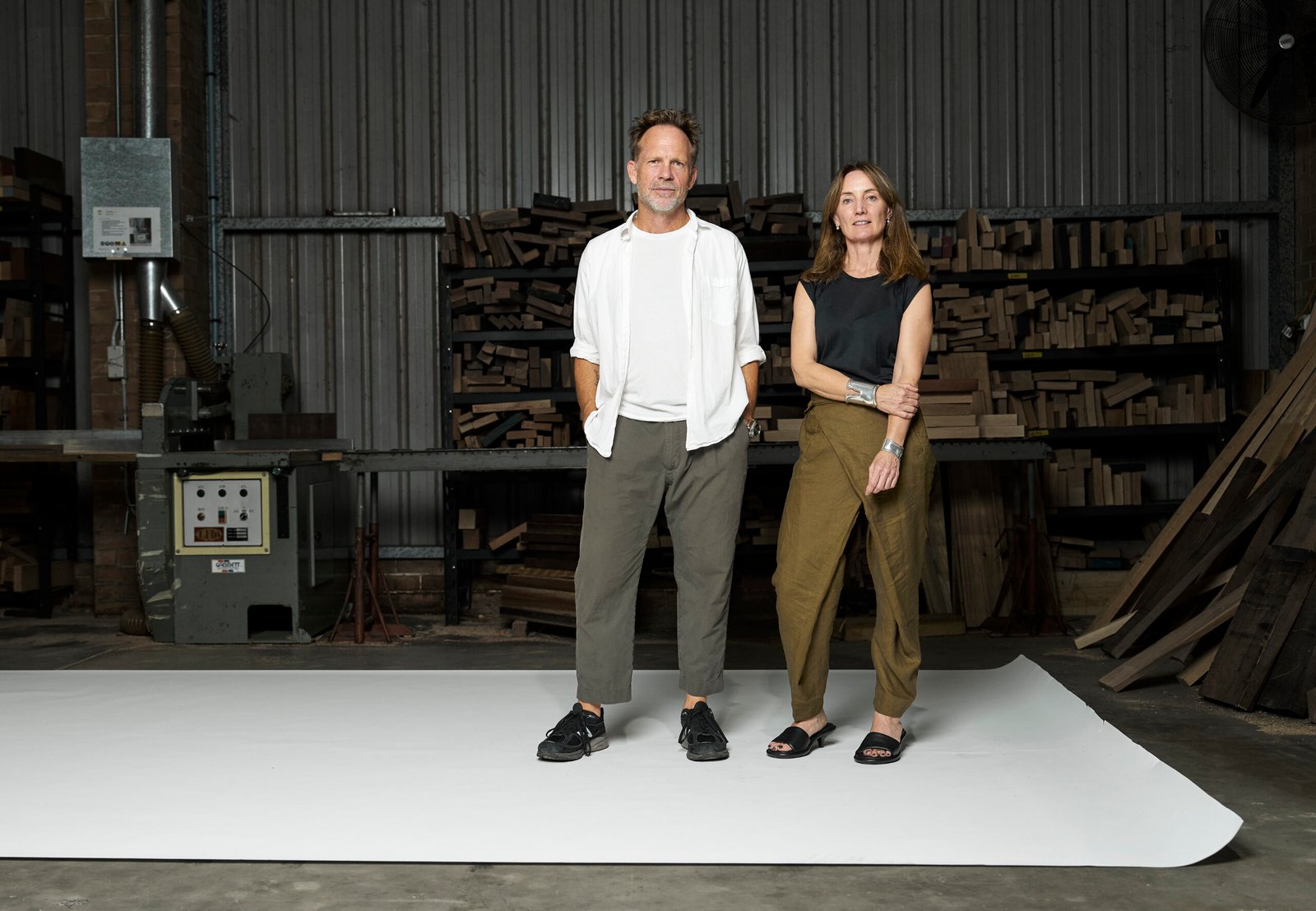
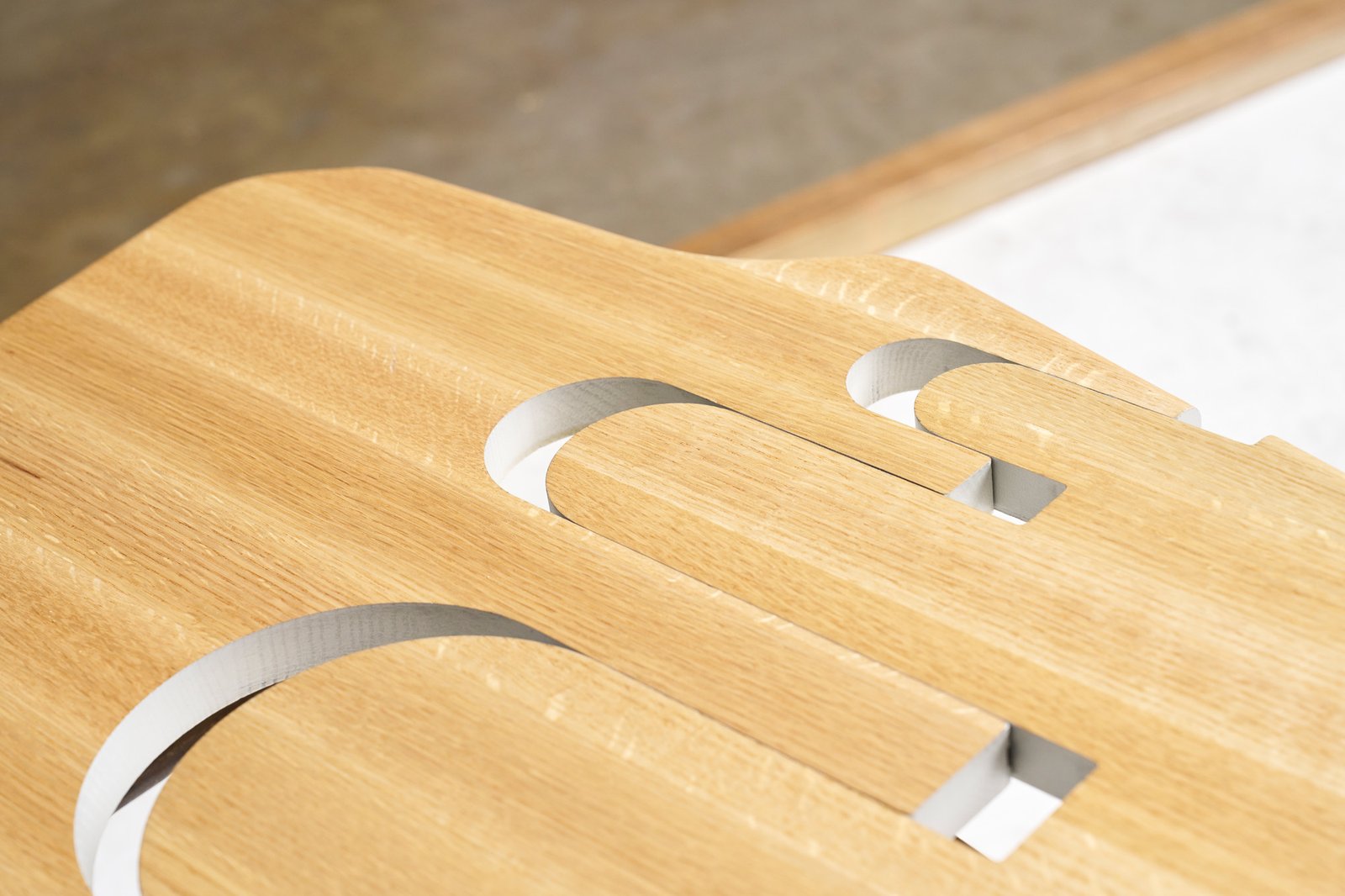
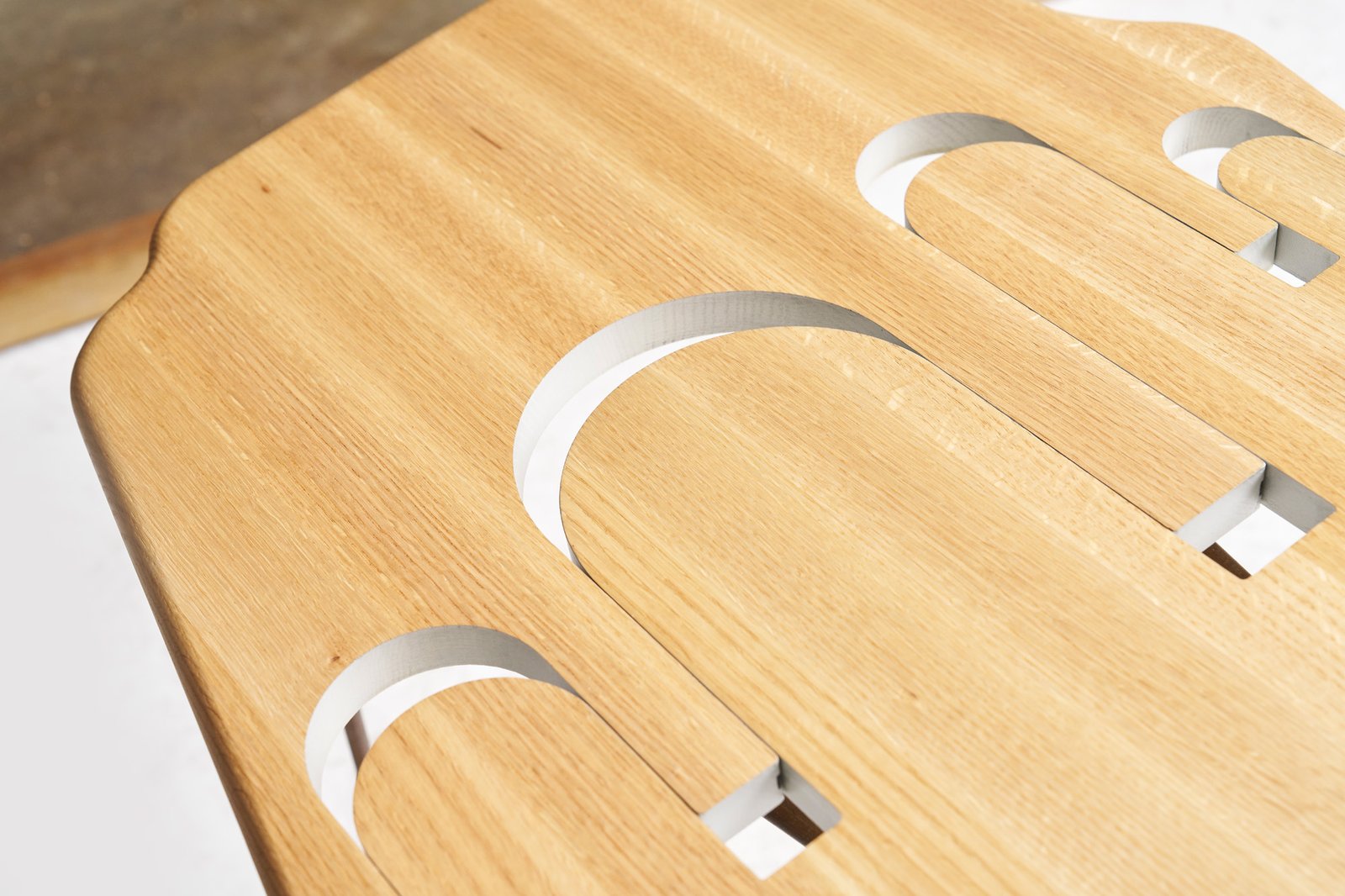
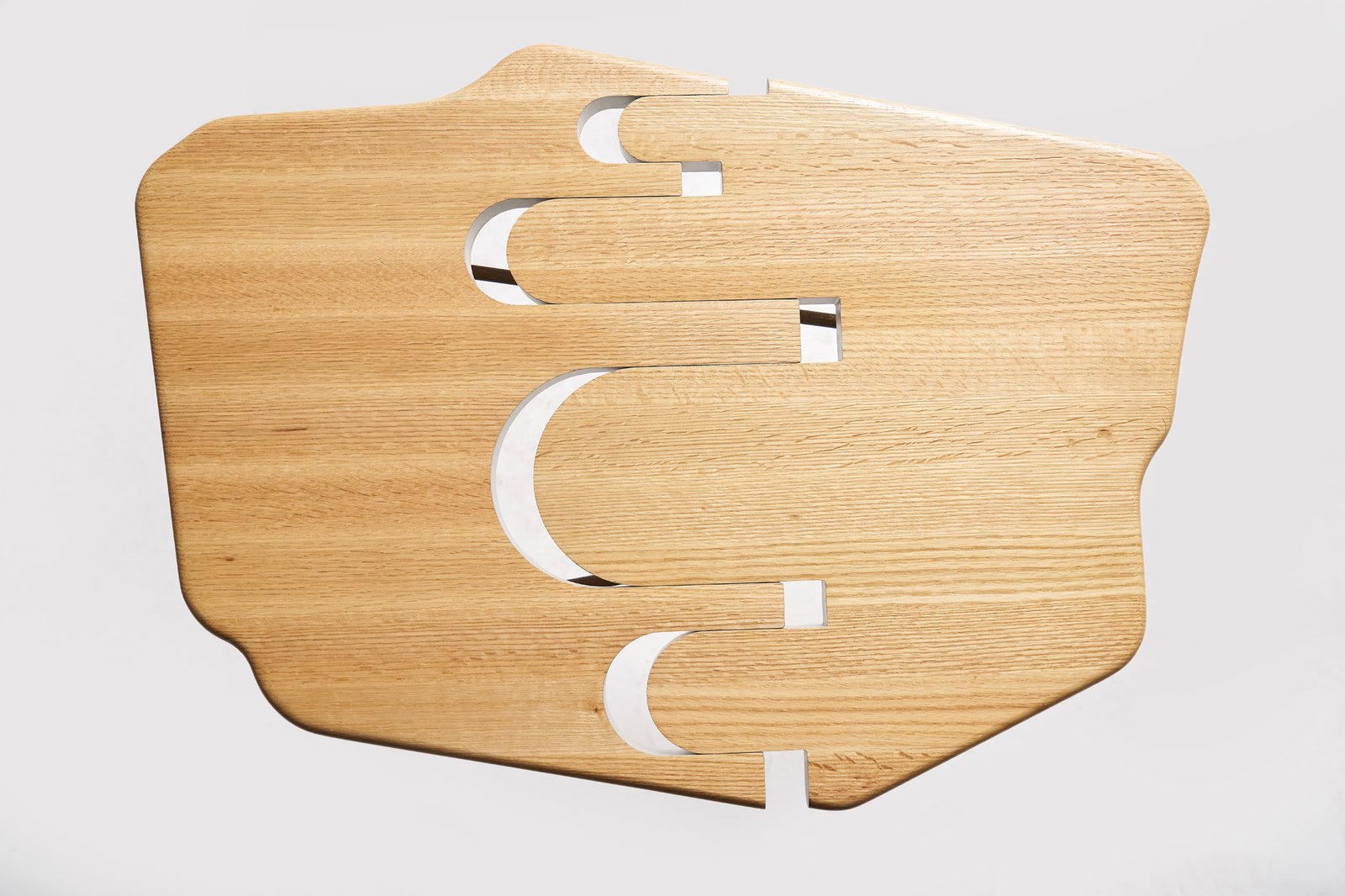
Edition Office – ‘Twin’ Bench The Edition Office studio had designed some furniture pieces for a renovation project to a house in rural Victoria by Melbourne modernist architect, Paul Couch. The house was oriented around four water tanks, and the pieces were to sit within these re-purposed spaces. This bench is an extension of that series, designed as a seat for two that allows plenty of space for each. Aaron and Kim also admired a set of late 20th century photographs by German duo Bernd and Hilla Becher, who were highly influential photographers of industrial architecture.
Interested in the structural language of timber water tanks, the pair moved away from creating form out of plastic materials, and investigated the process of assembly, in particular the aesthetic expression that comes from holding a curve against a straight piece of structure, and how joints might ‘slip past each other’. The back of this bench expresses that most clearly.
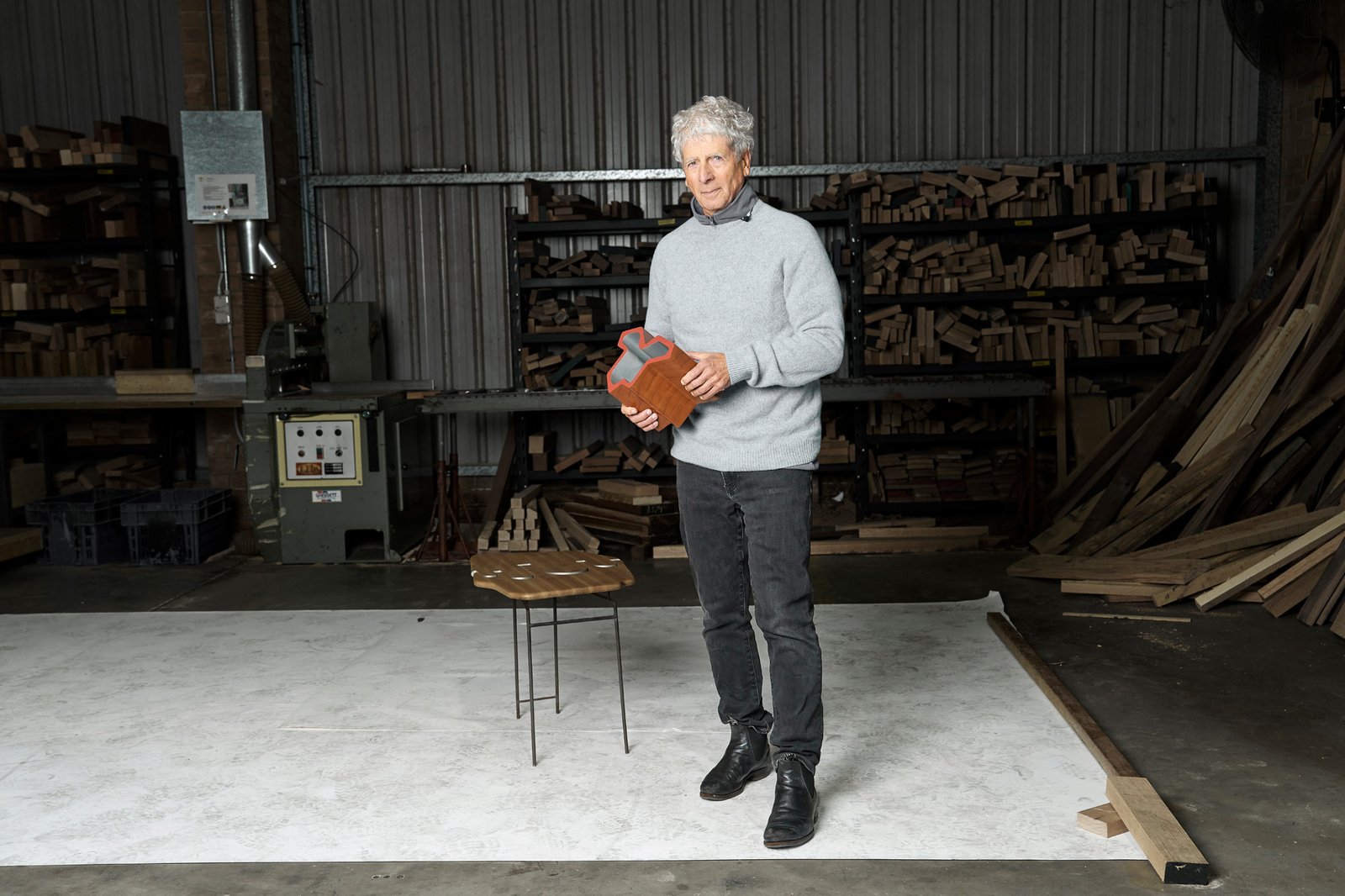
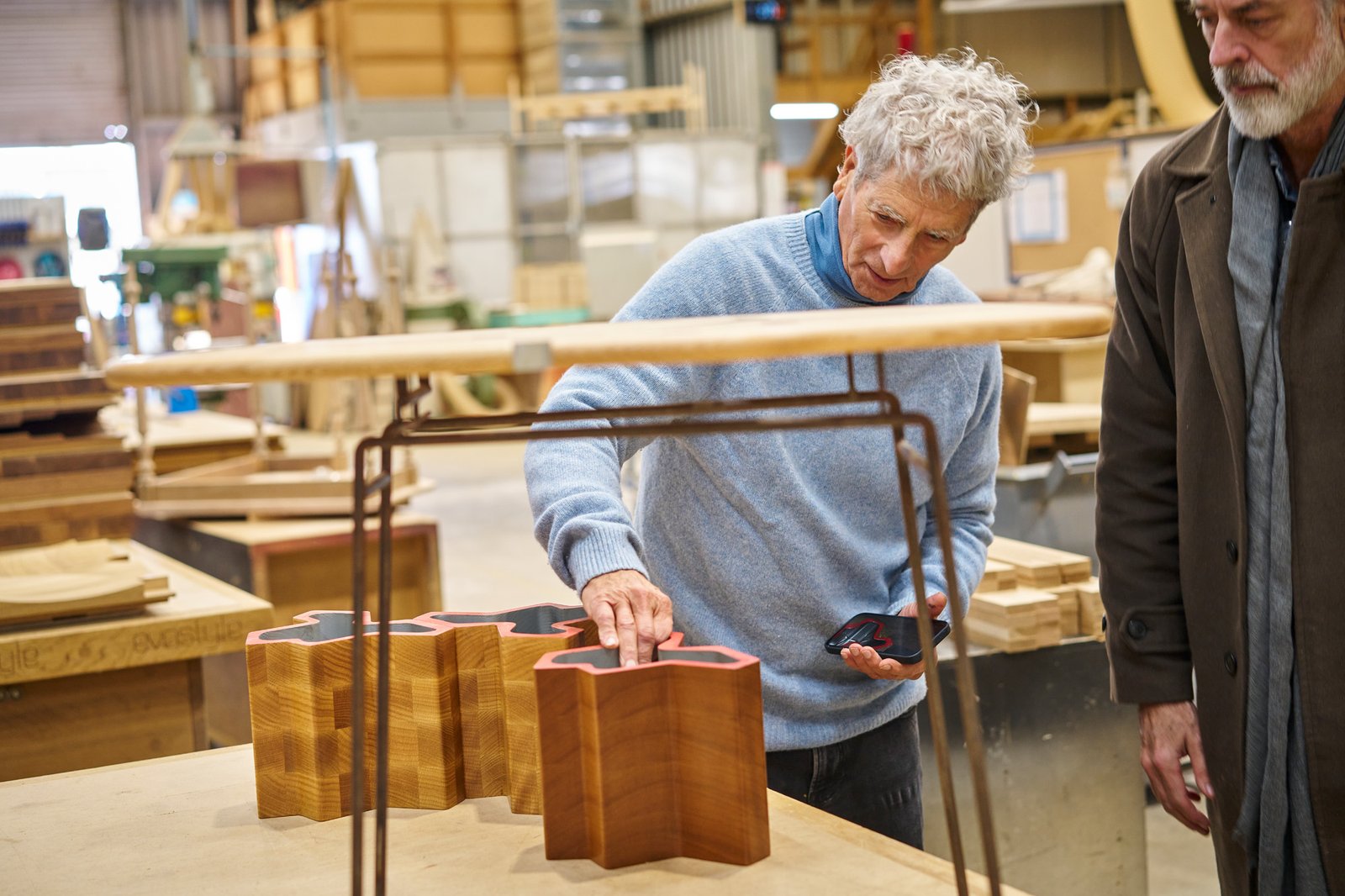
Neil Durbach – ‘Small Slide’ Table and ‘Einstein’s Hat’ Vase
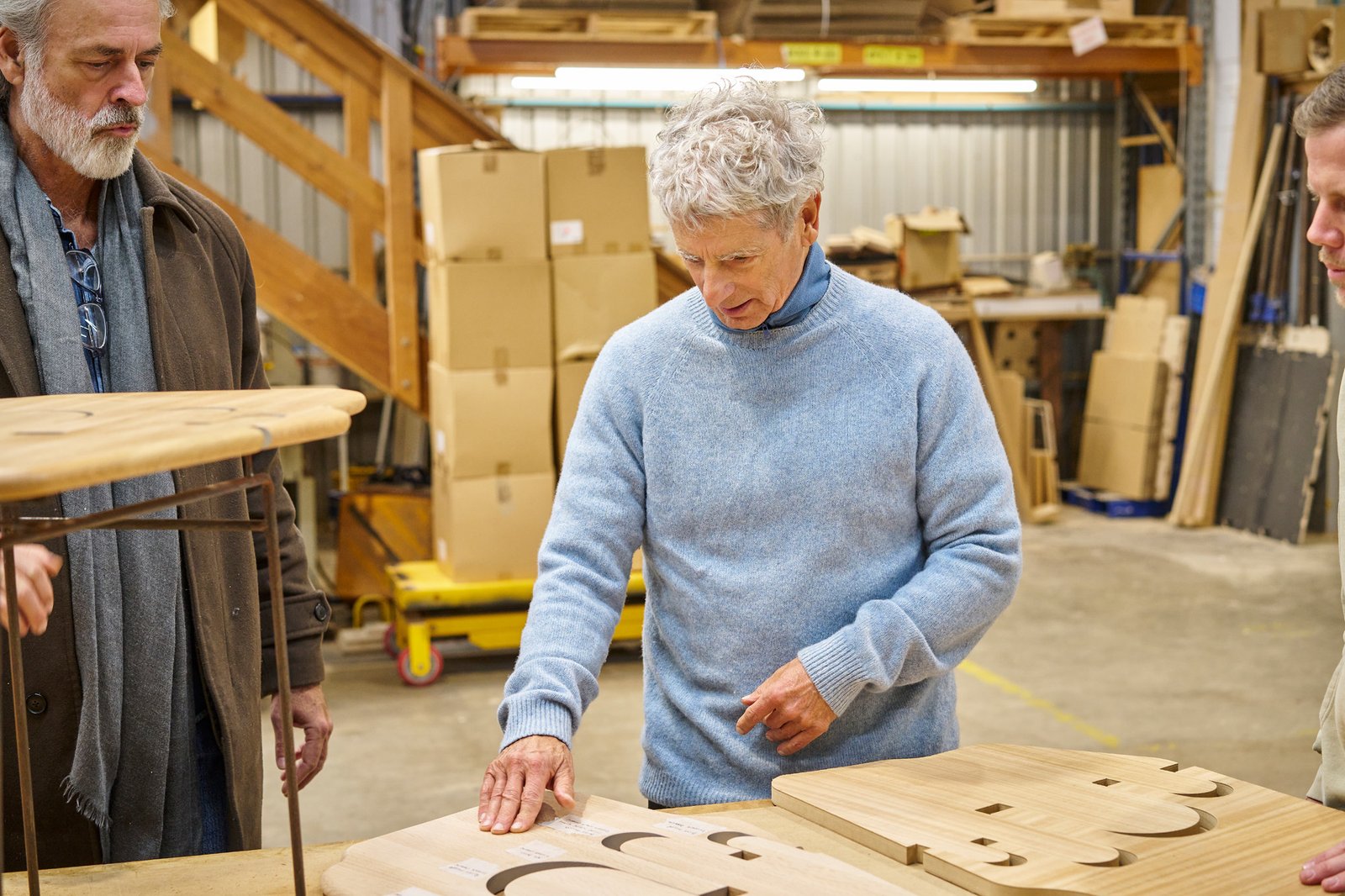
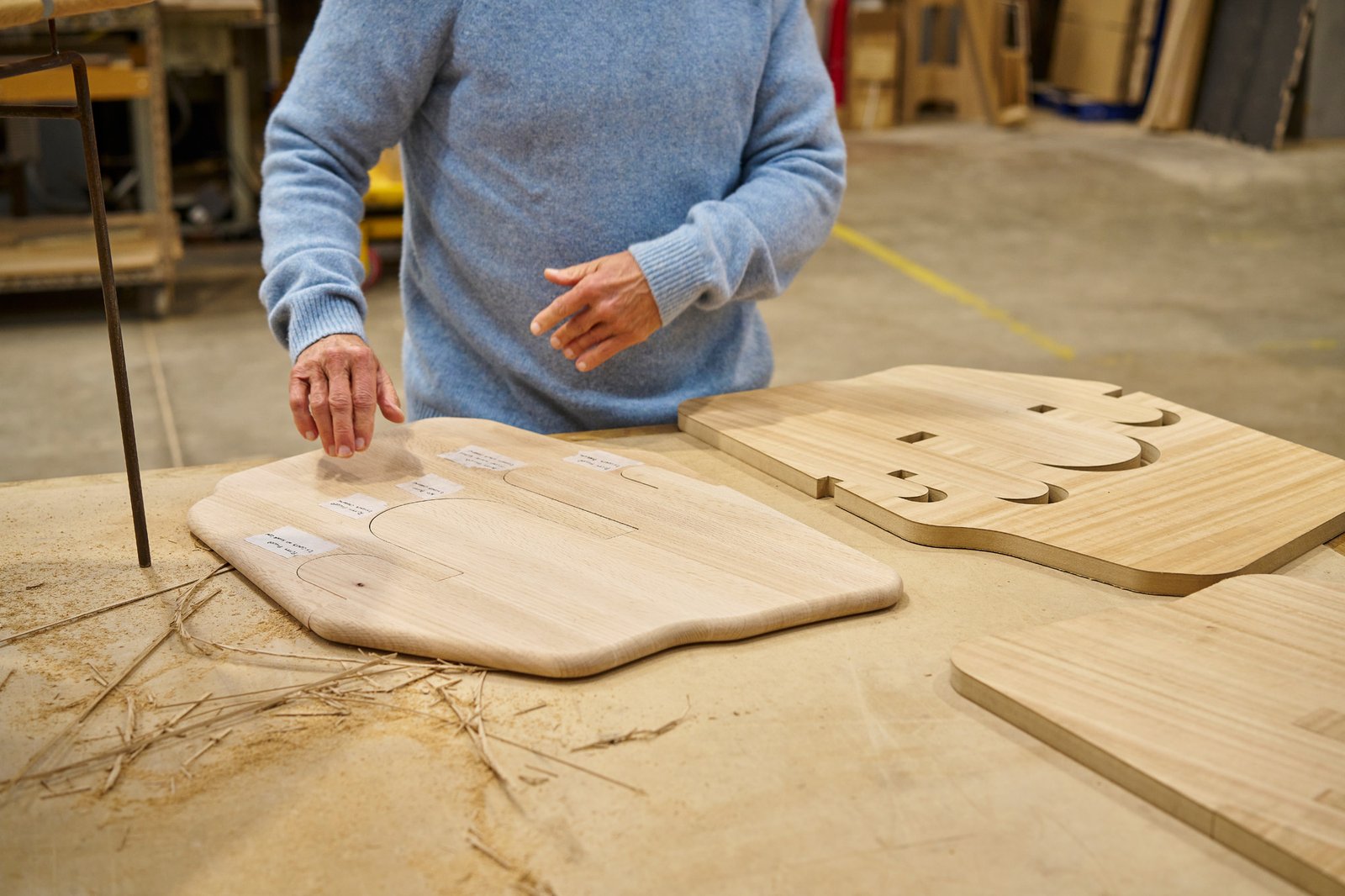
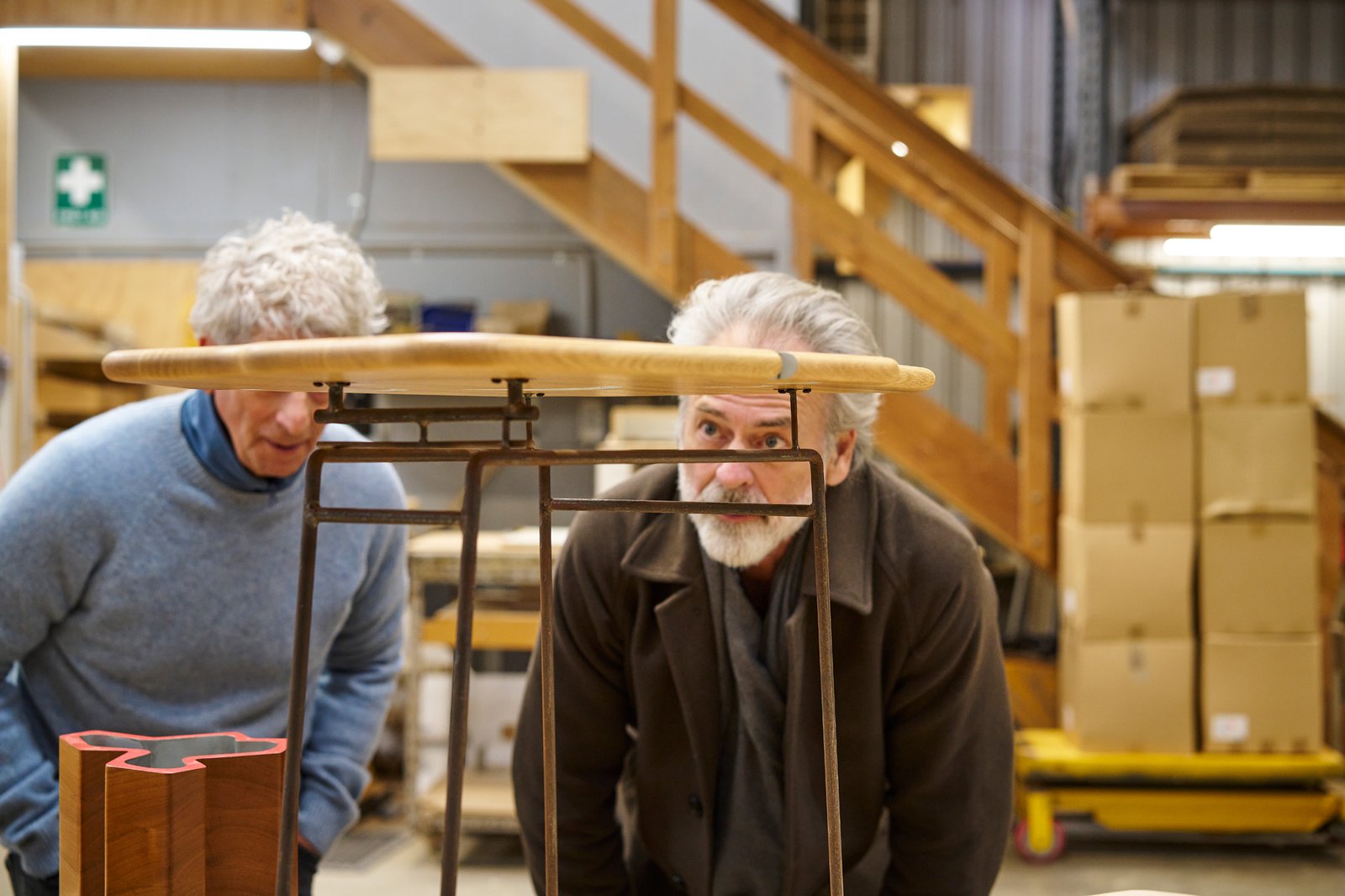
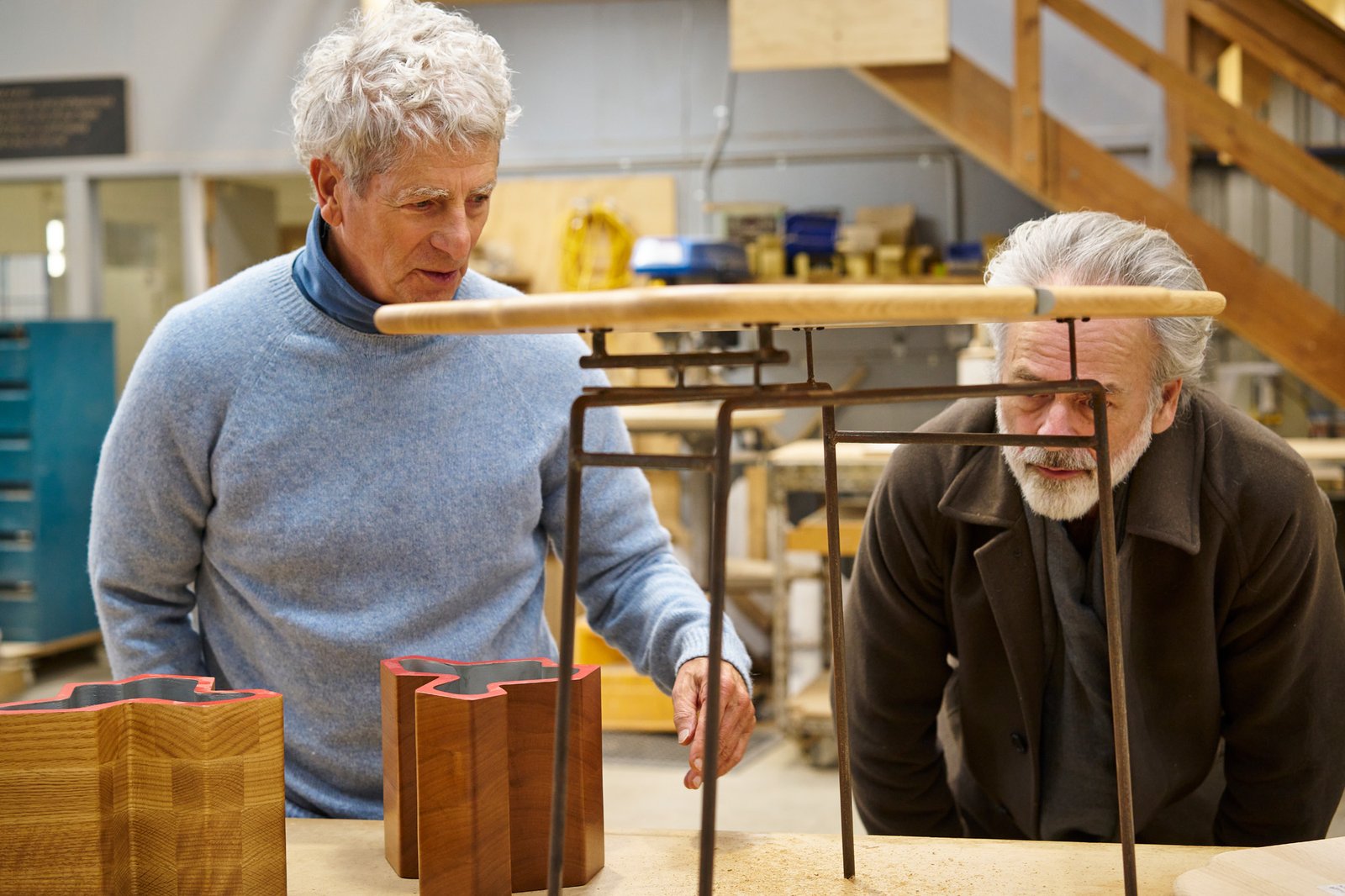
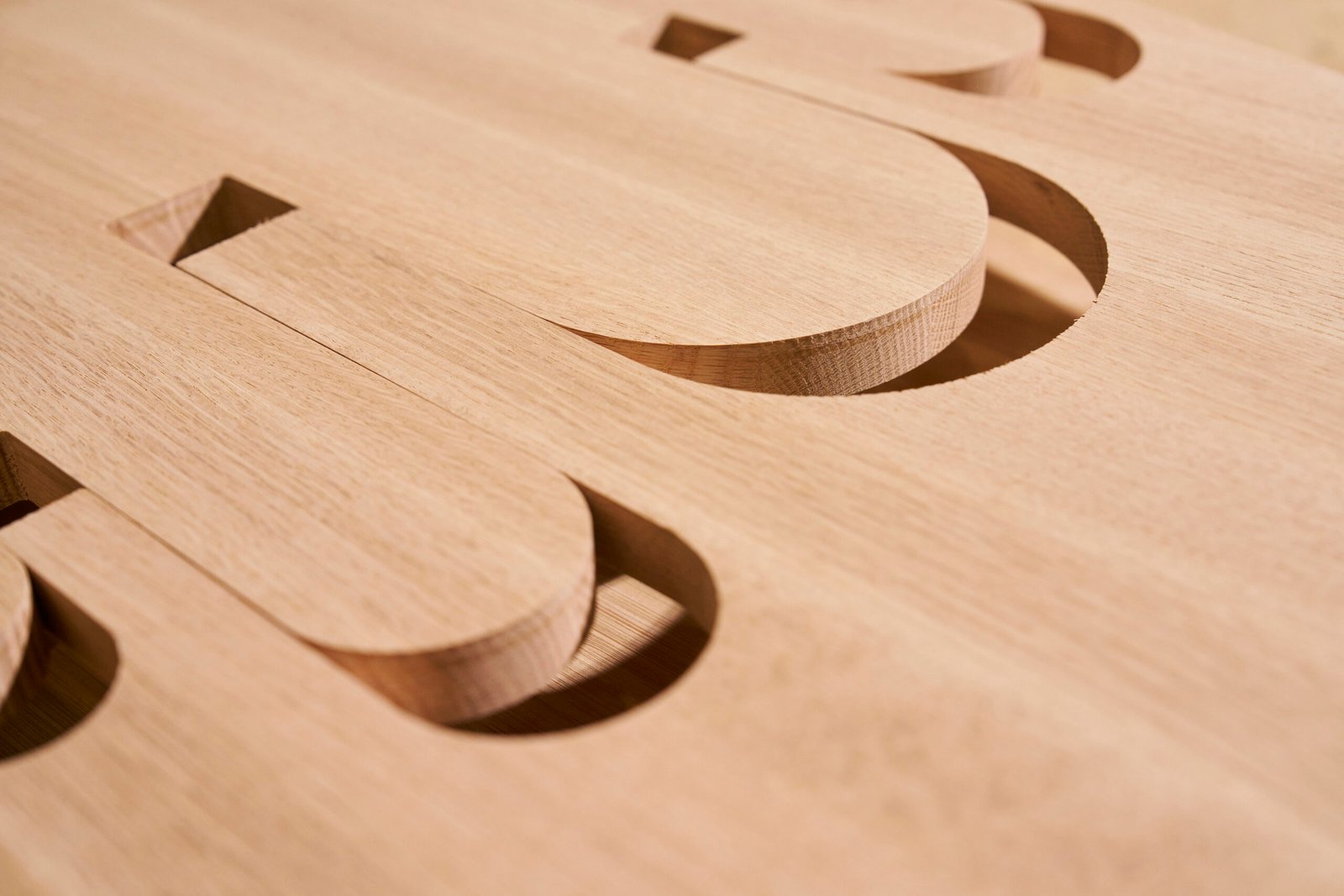
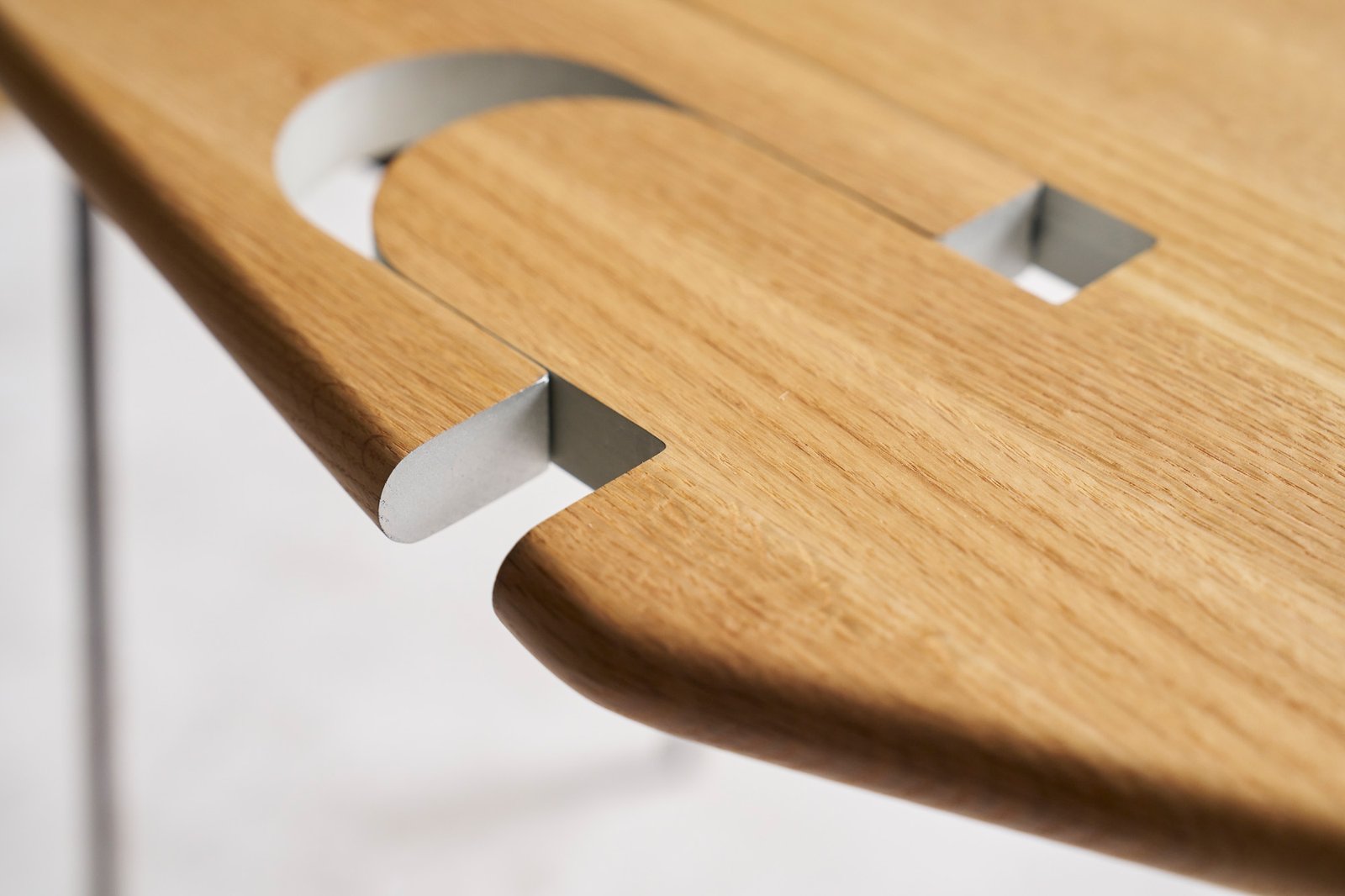
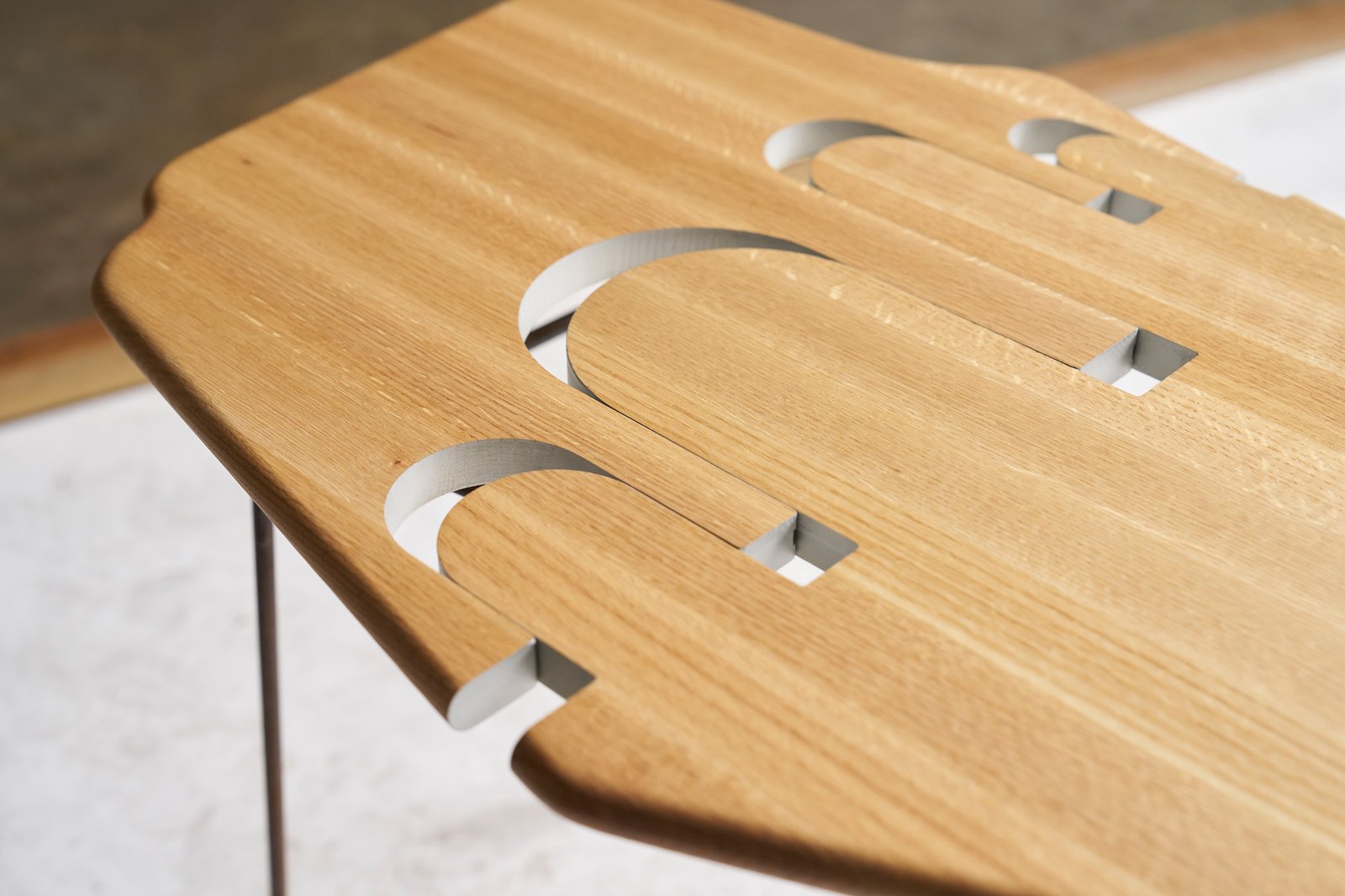
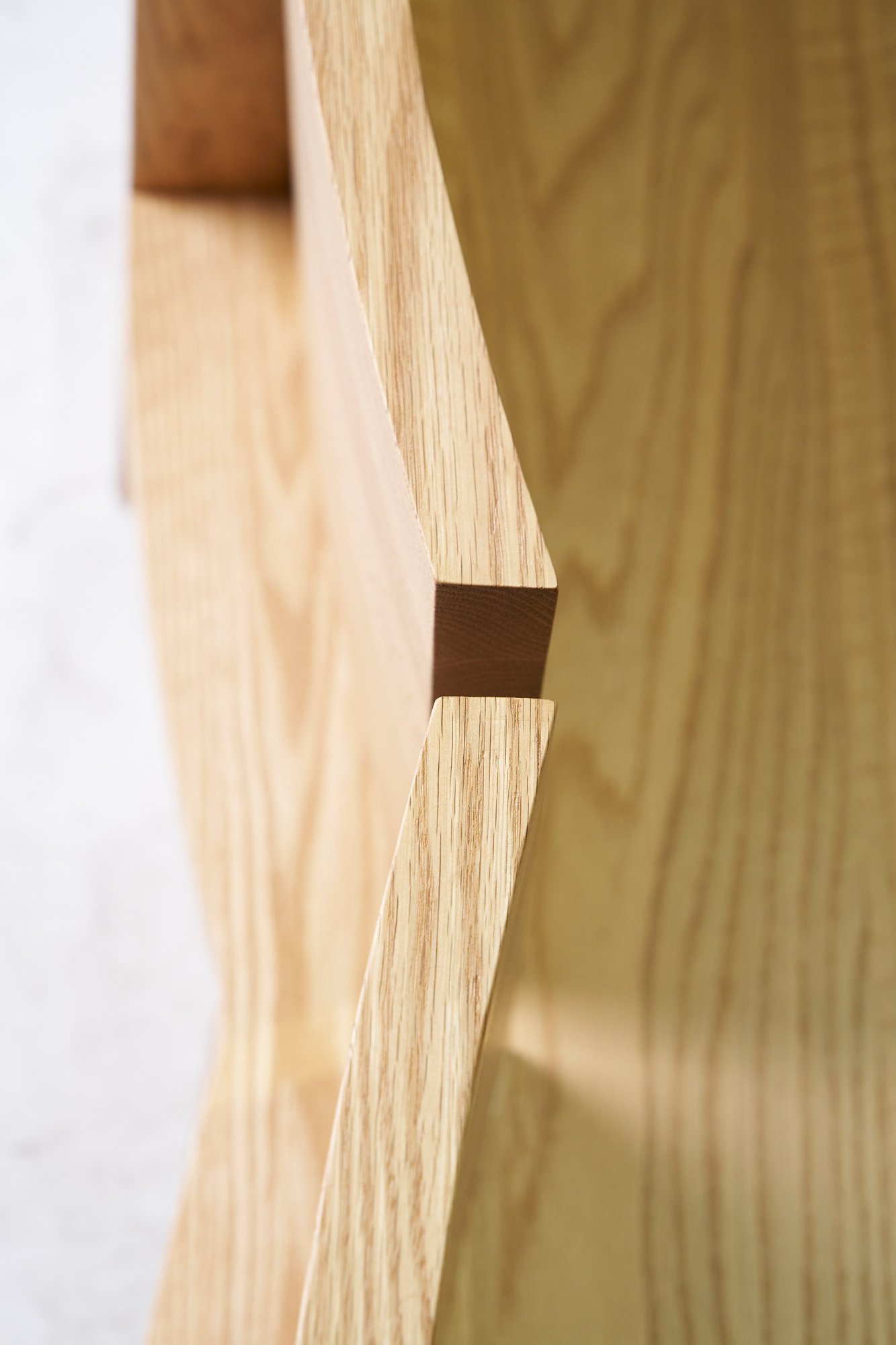
The side table is a developmental prototype of a side table Neil had worked on before. It is a diminutive, and curious interpretation of a more conventional sliding table. In this case, the slide is just a few centimeters, enough to reveal a metallic finish in the separation, and cast ‘shadows that seem to be like smiles’. The plan shape is conceived as being a more geometric version of a cross-section of a tree.
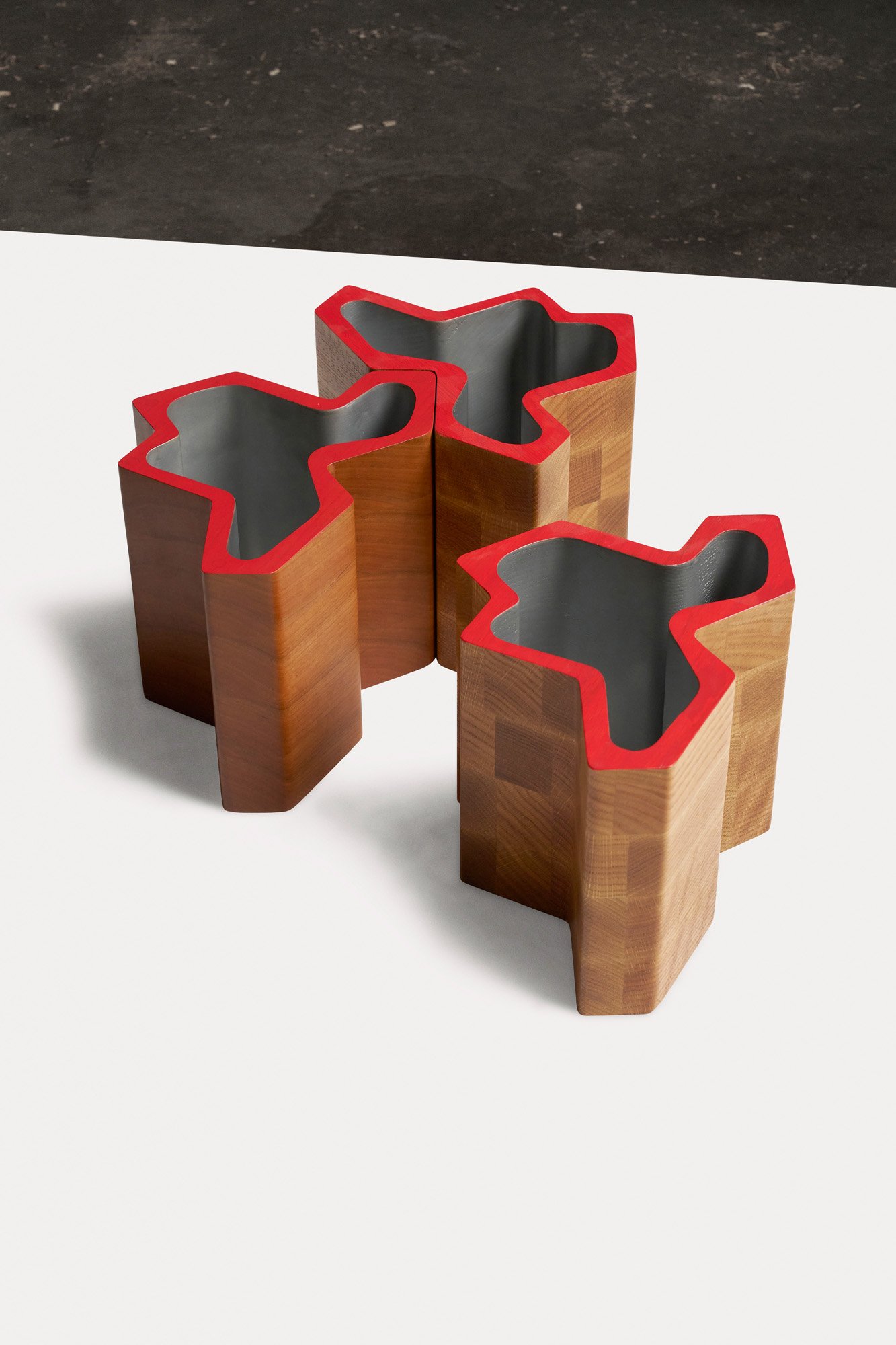
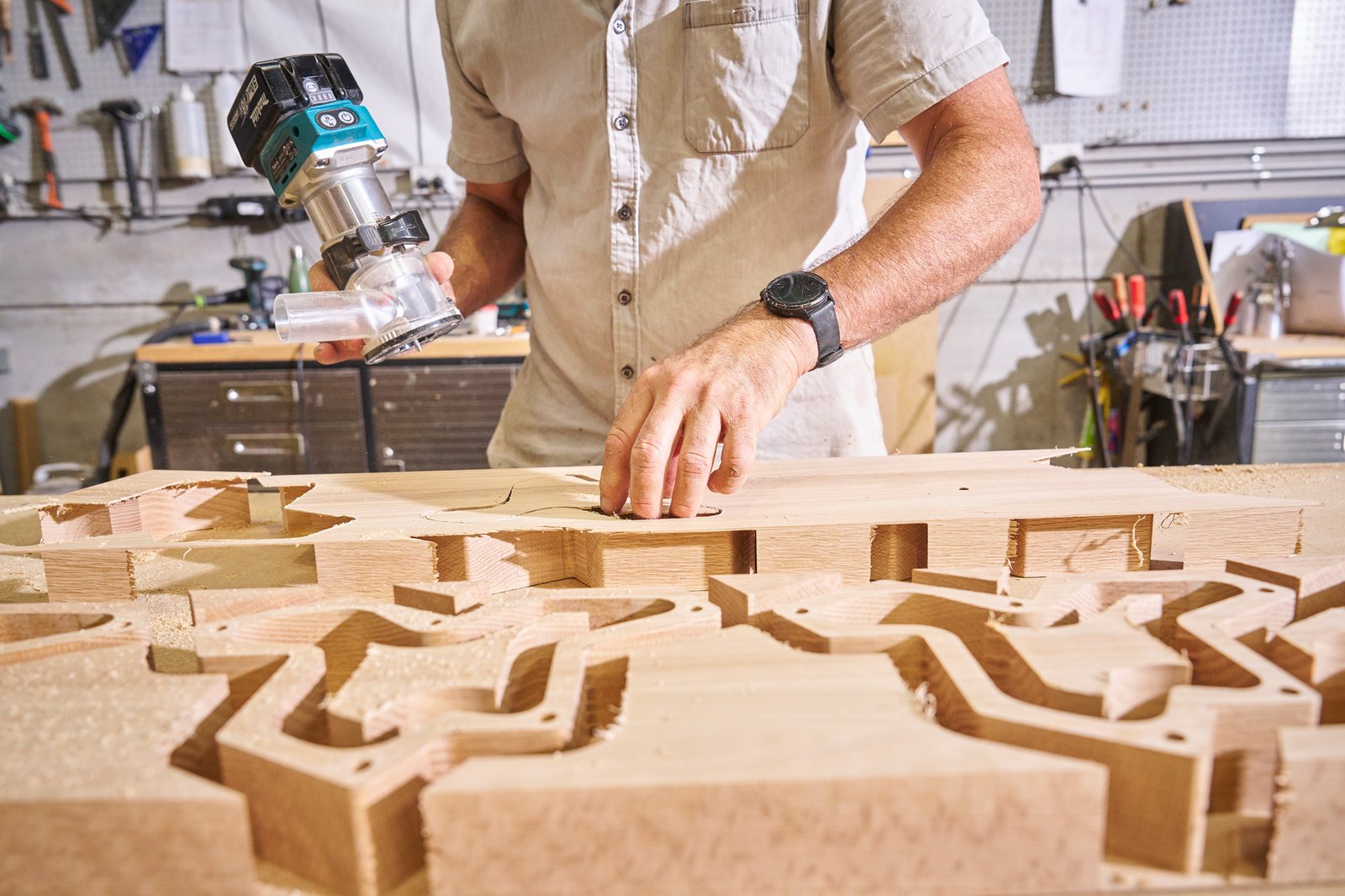
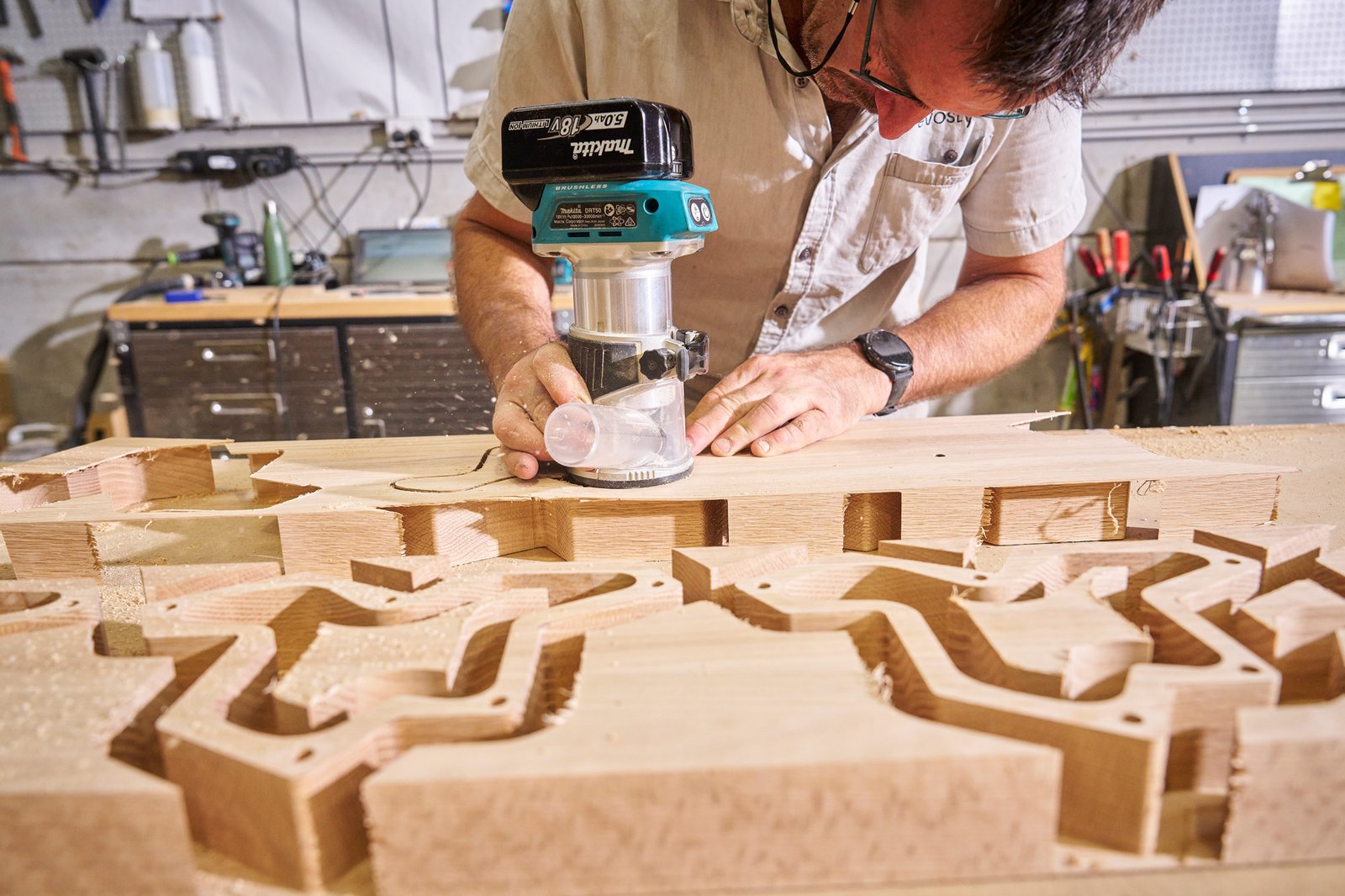
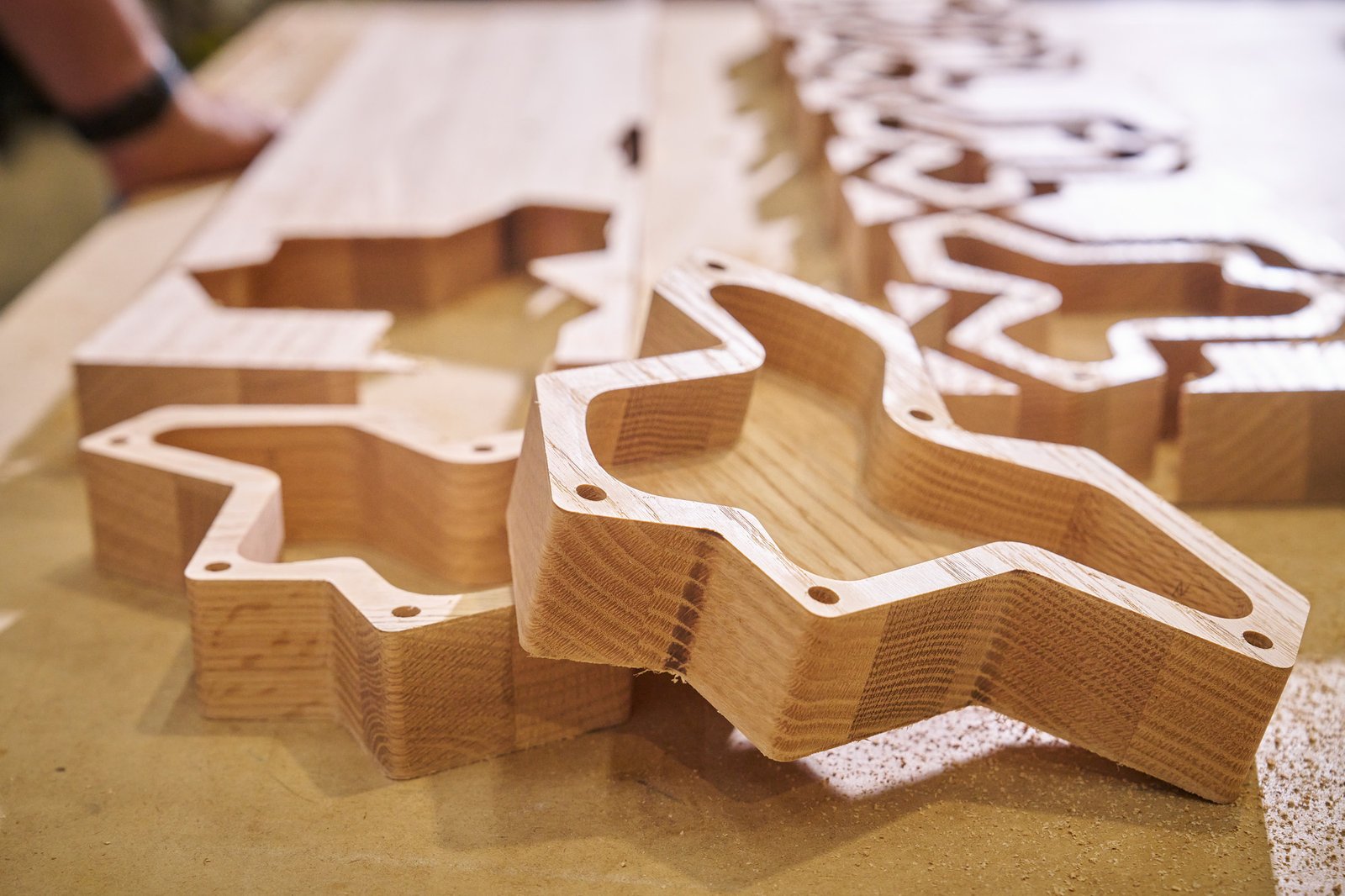
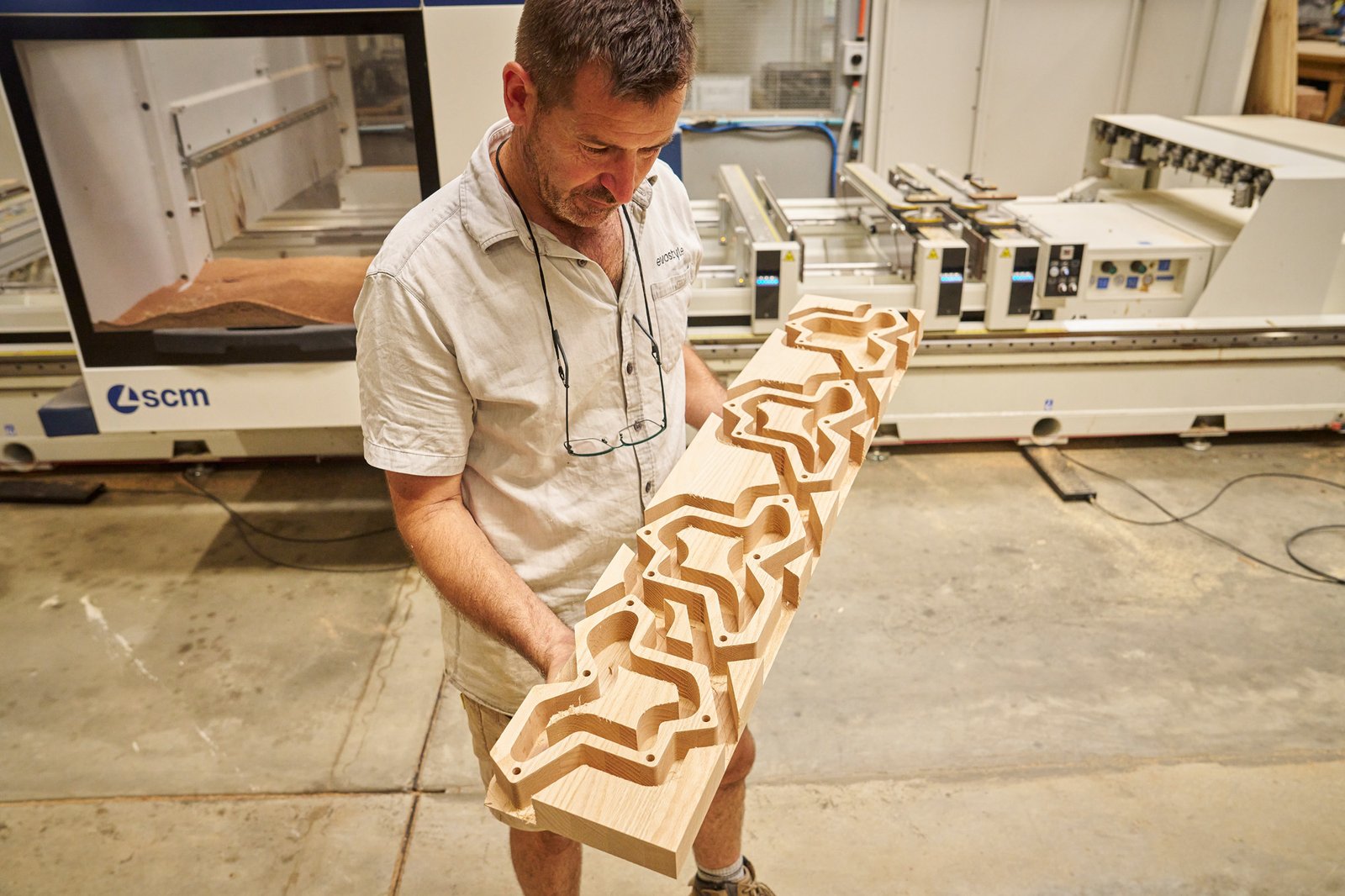
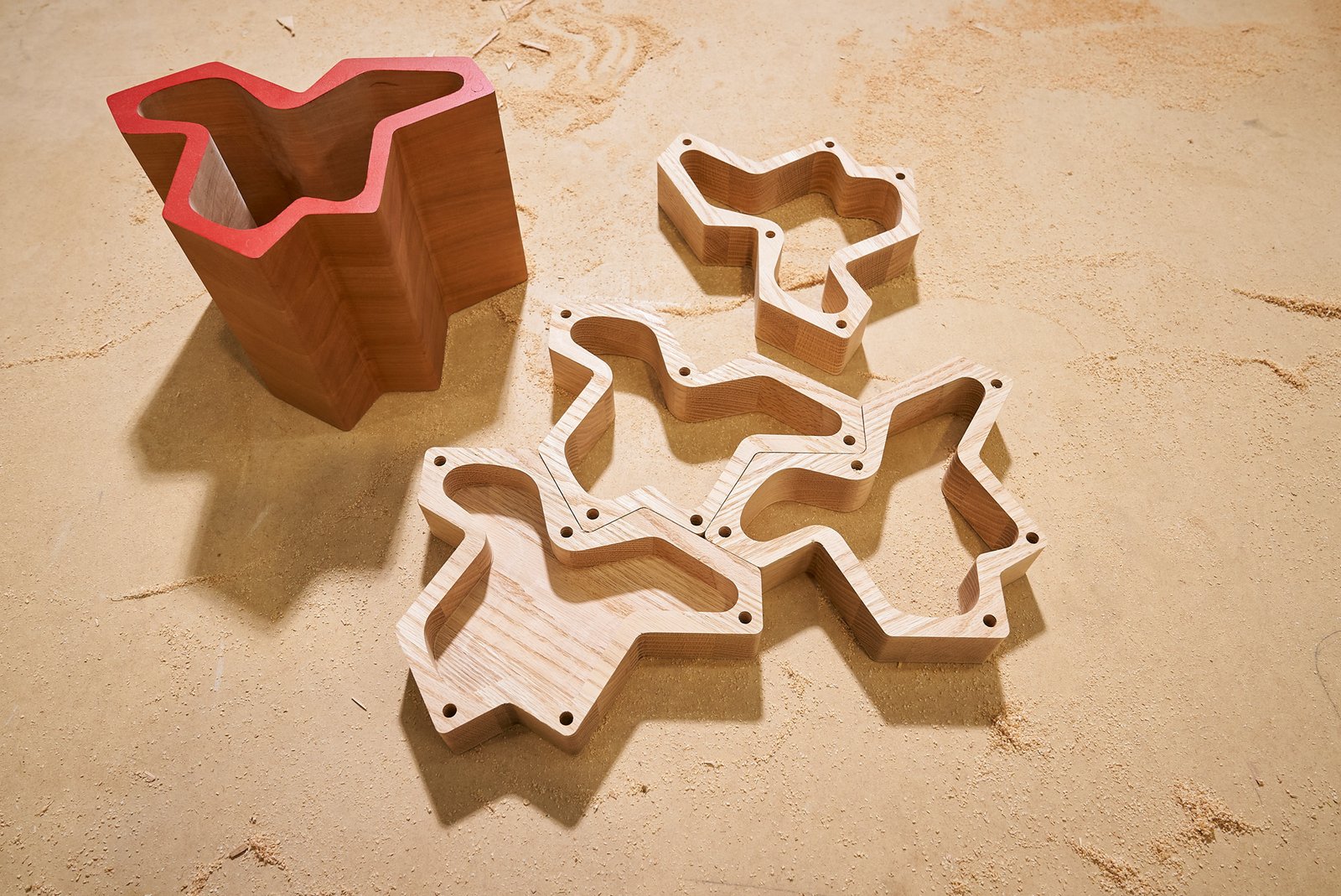
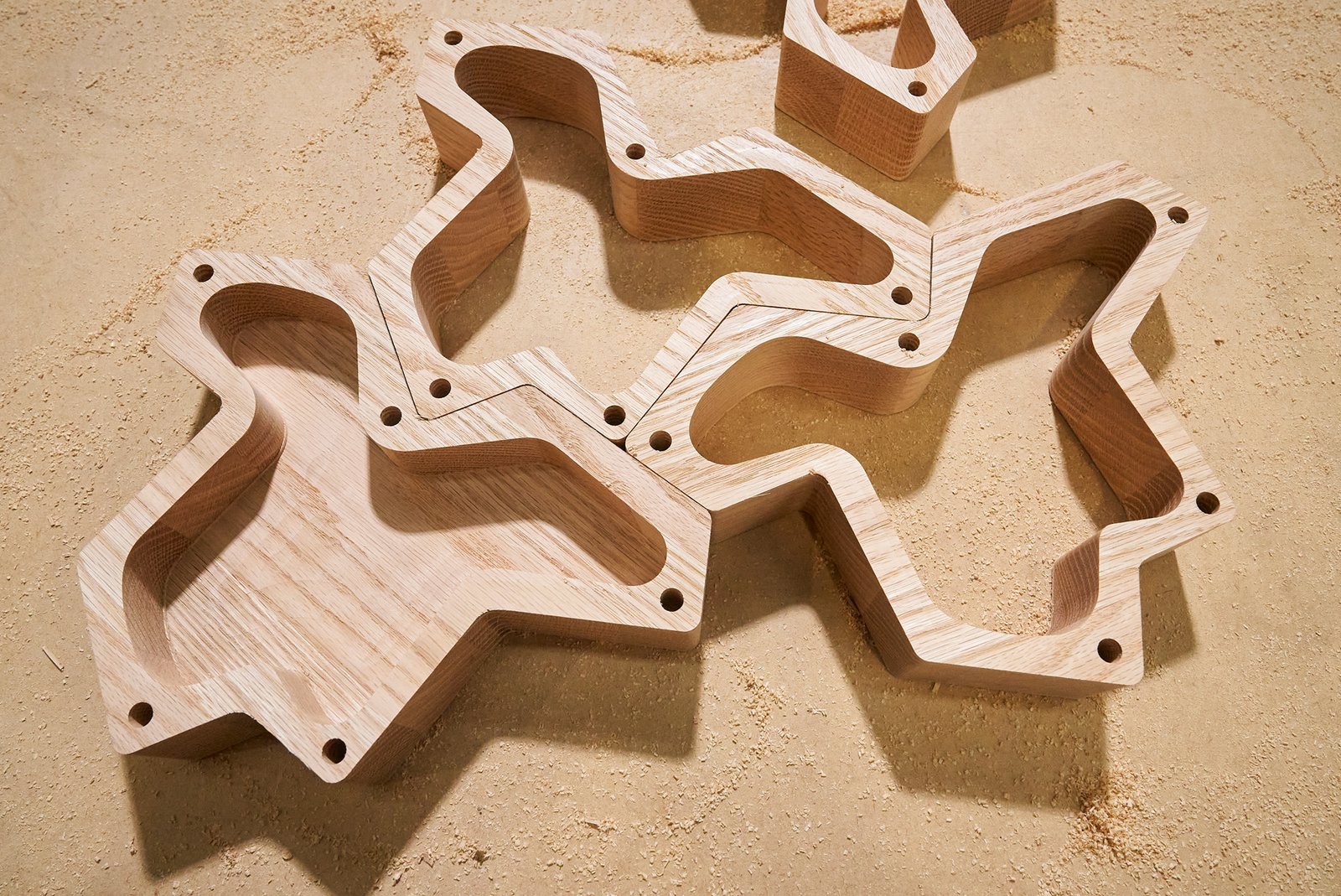
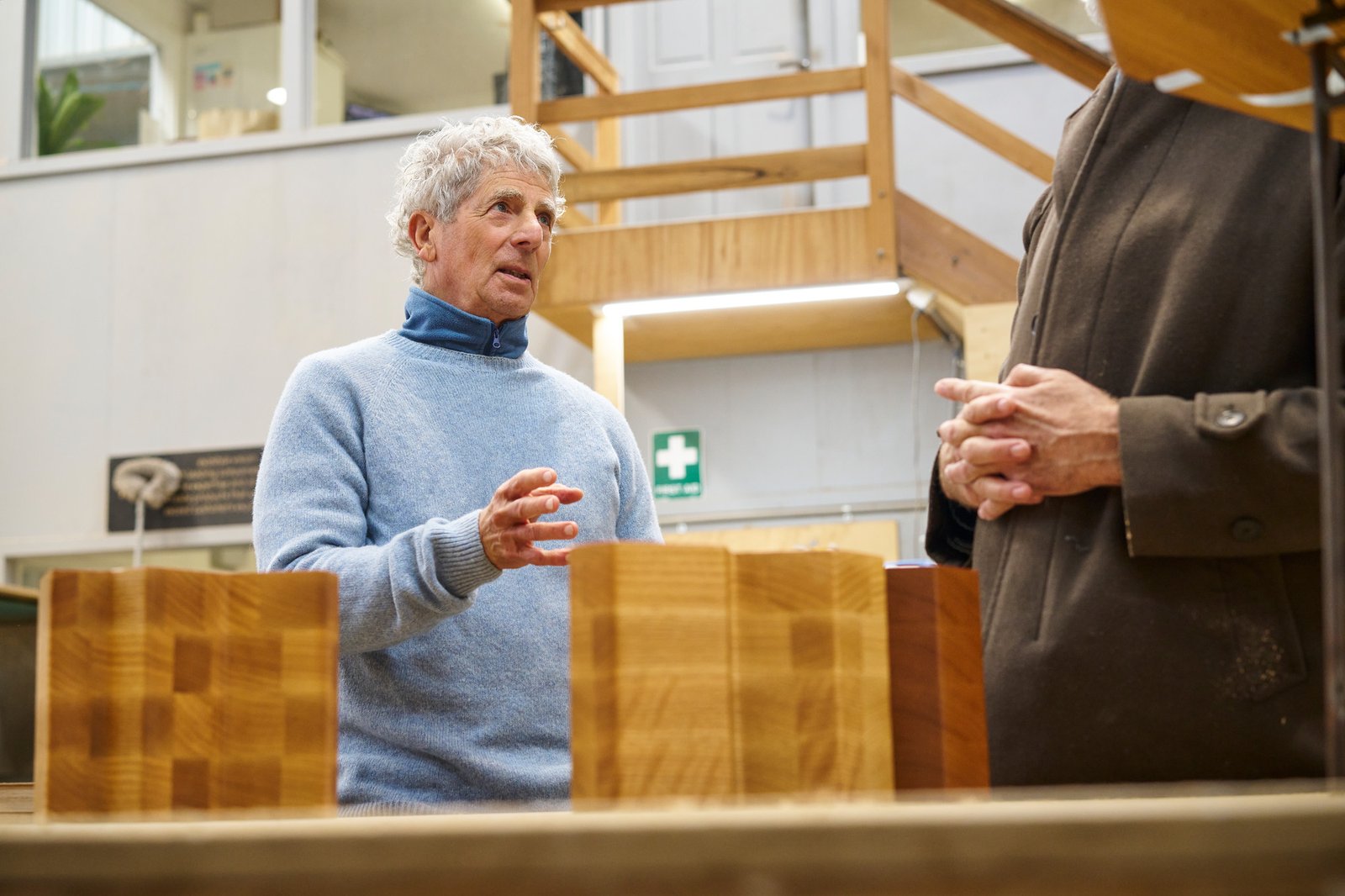
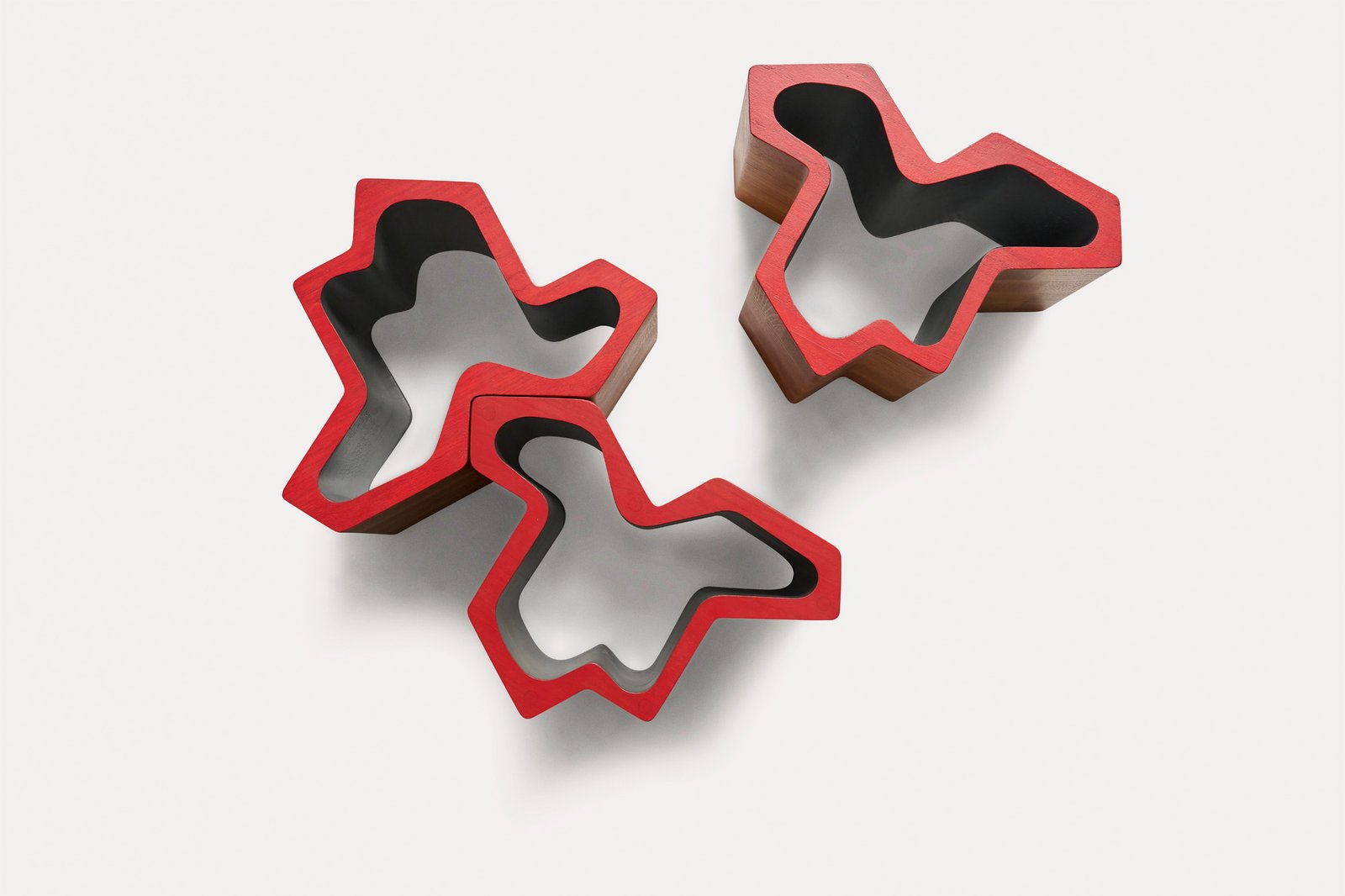
For the vase, Neil referred to the classic Aalto Vase which he collects obsessively. The 13-sided outline for this vase is a shape provided by geometry that was discovered by a group of mathematicians in 2022/23. It is an ’aperiodic tiling’, a shape that can be put together without ever repeating the overall pattern. The internal line of the vase is looser. This is a prototypical experiment in timber, a material that is not conducive to holding water. The interior, still developing, is ultimately to be a highly reflective metallic.
The Materials At the heart of KEEP is the use of three American hardwoods – American red oak (Quercus rubra): abundant and versatile, with strength and distinctive grain; American hard maple (Acer saccharum): creamy white, exceptionally durable, and capable of a refined finish; and American cherry (Prunus serotina): warm-toned, easy to work, and deepens in color with age. All three are sustainably grown in the vast hardwood forests of the United States, where growth outpaces harvest. Independent life-cycle assessment confirms that American hardwoods store more carbon than is released during their processing and transport from the hardwood forests in the USA to the shores of Australia.
“KEEP is a reminder that the things we choose to live with can carry meaning and memory. These works are made to endure, not just in use, but in the stories they can hold. We are thrilled to have been able to introduce the architects to three of the most beautiful species of American hardwood to realize their designs. These three species represent a significant percentage of the available hardwood growing stock and it is important that the Australian design community is able to learn about them and experiment with them,” concluded Roderick Wiles, AHEC Regional Director.