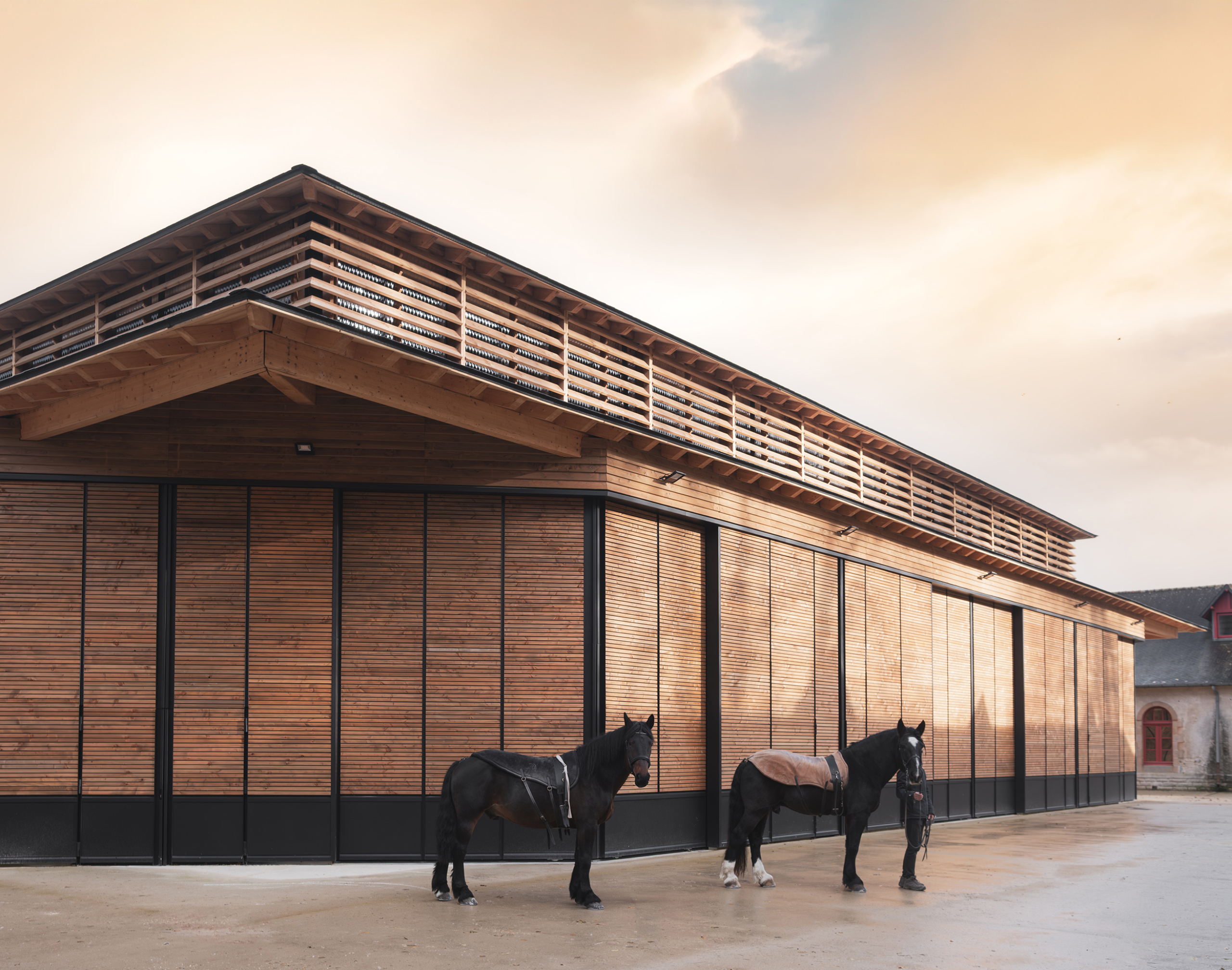
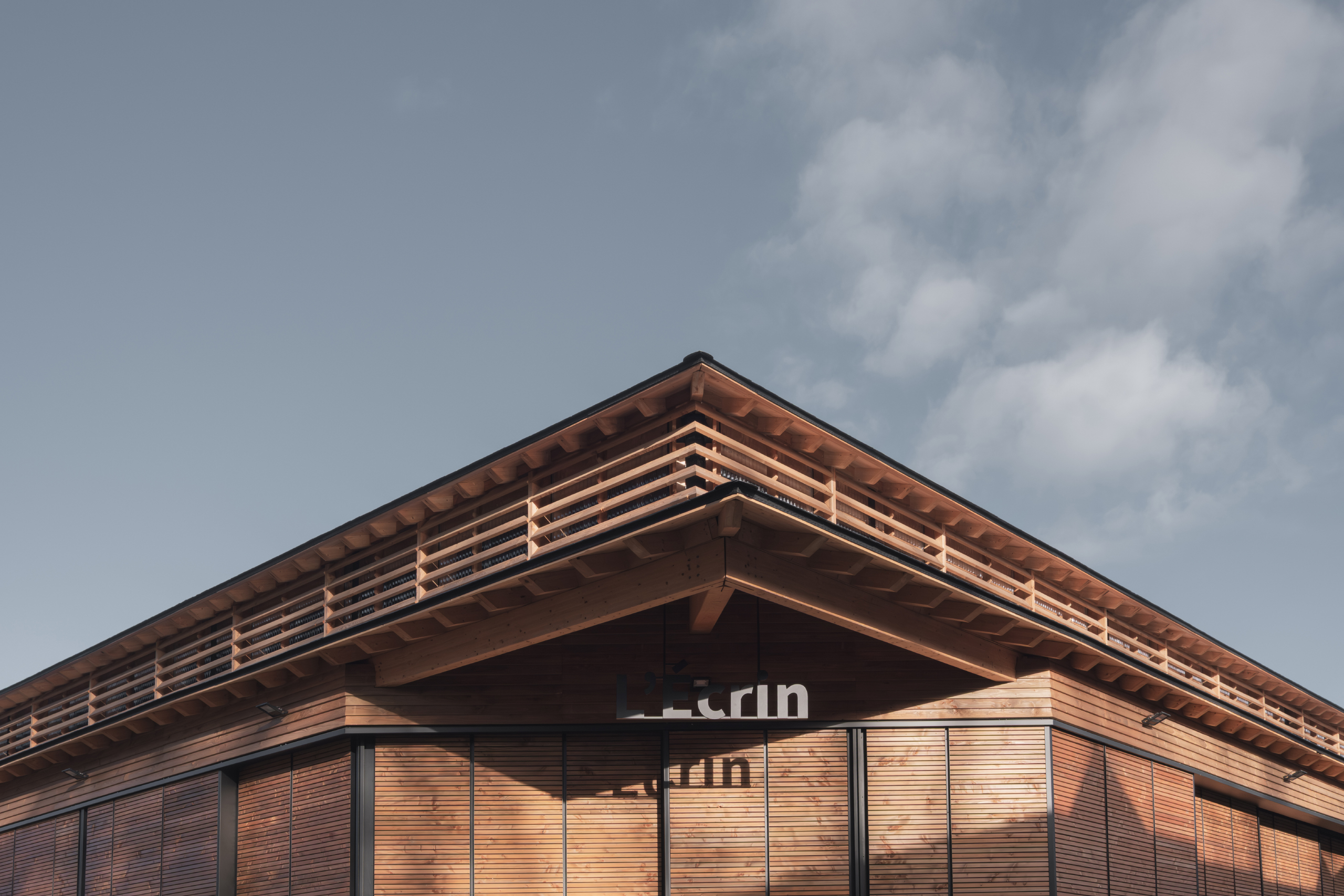
French architecture studio K Architectures, led by Karine Herman and Jérôme Sigwalt, has designed the new equestrian performance hall for the Haras National de Hennebont, in the Morbihan department, located in the historic courtyard of La Cour du Puits. The center is one of five equestrian centers in the French region of Brittany, in northwestern France.
An Architecture of Resonance
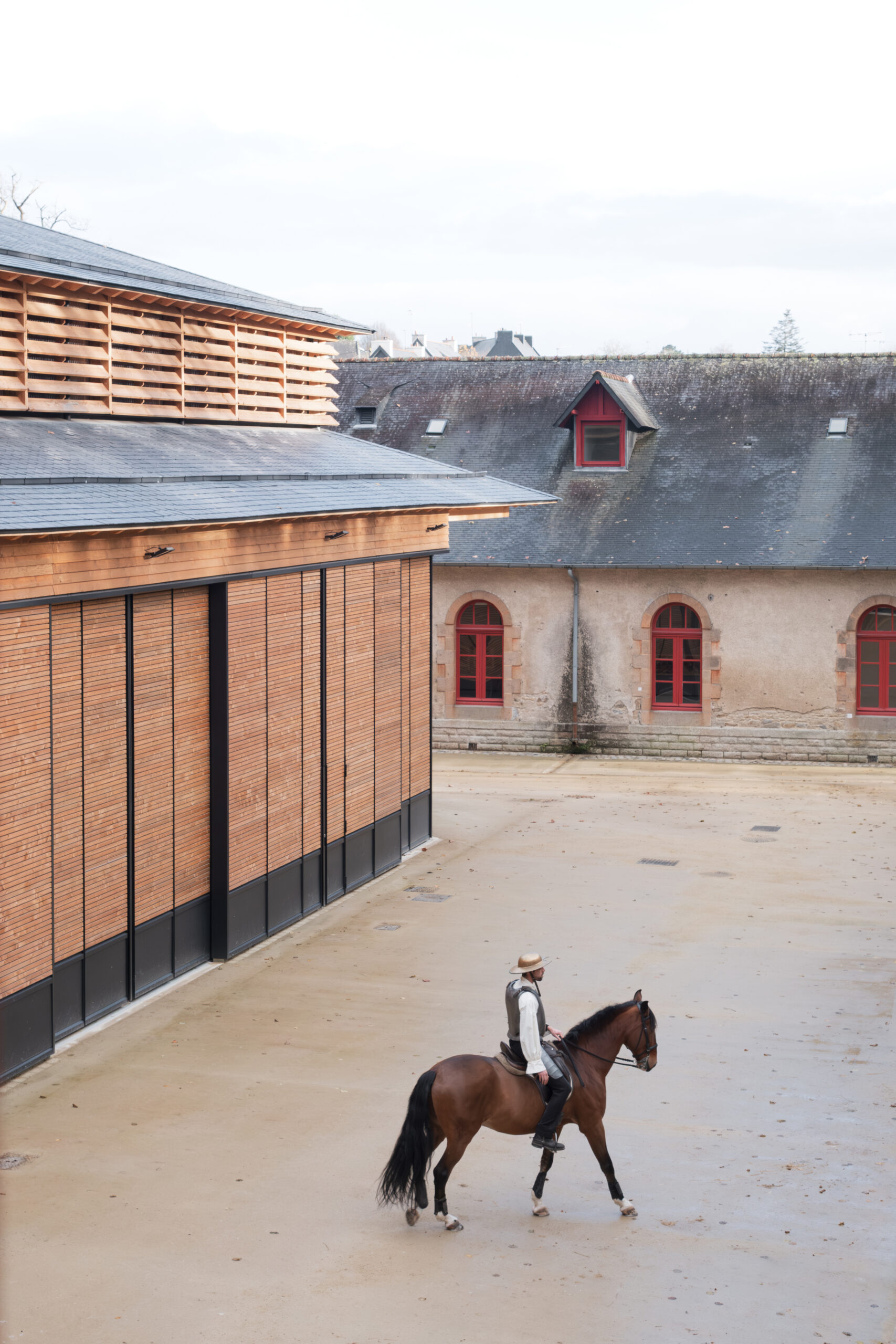
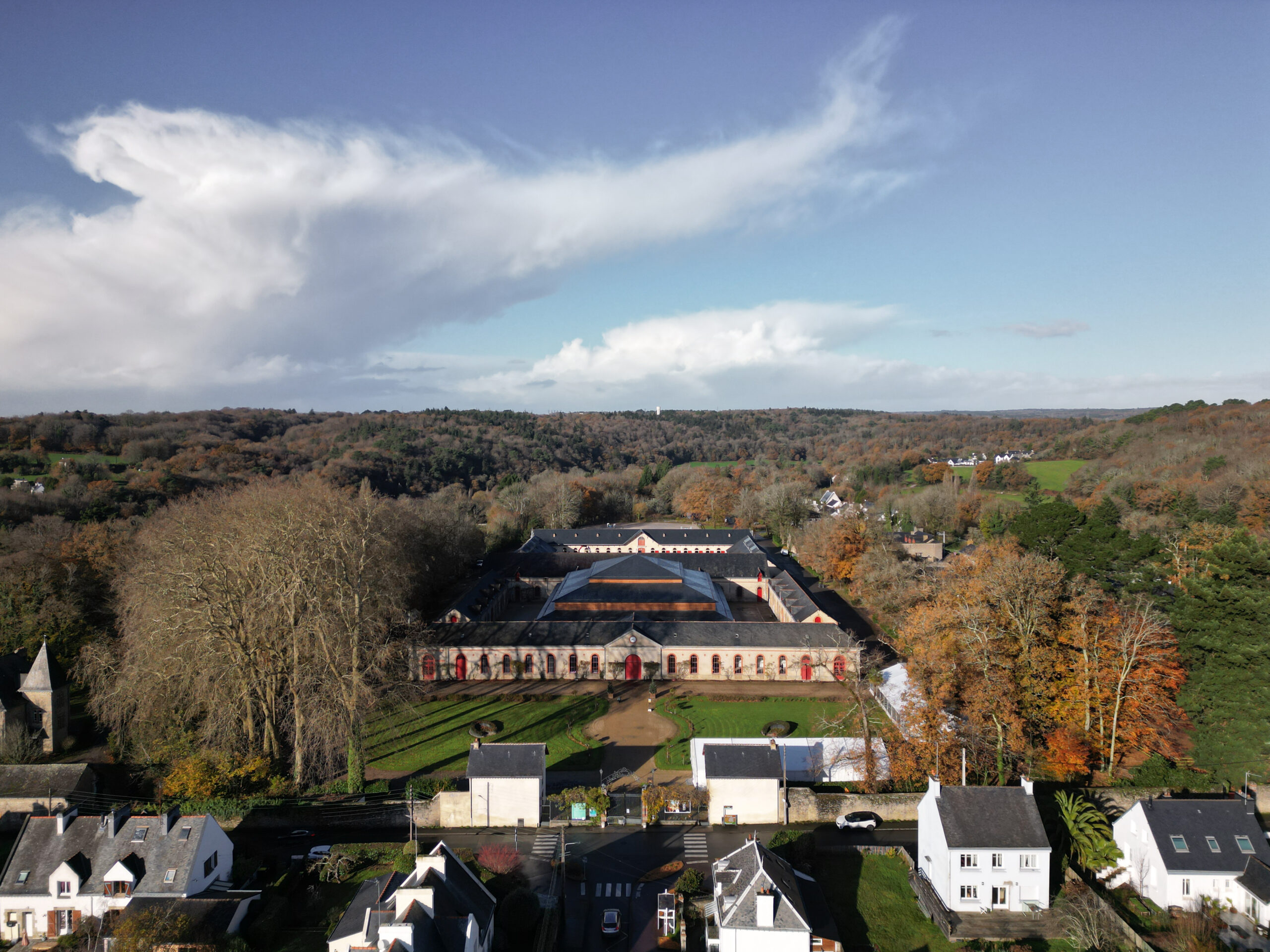
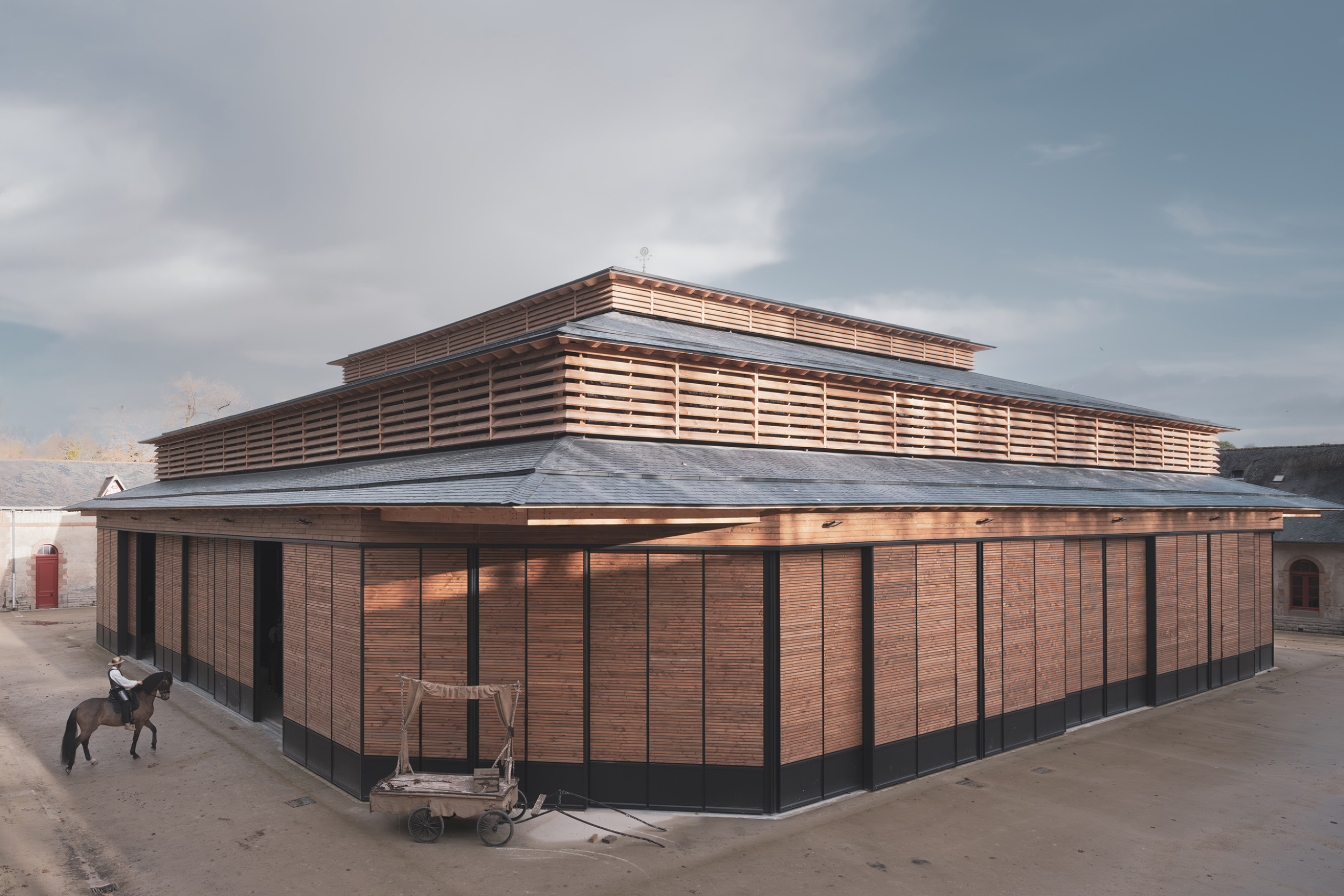
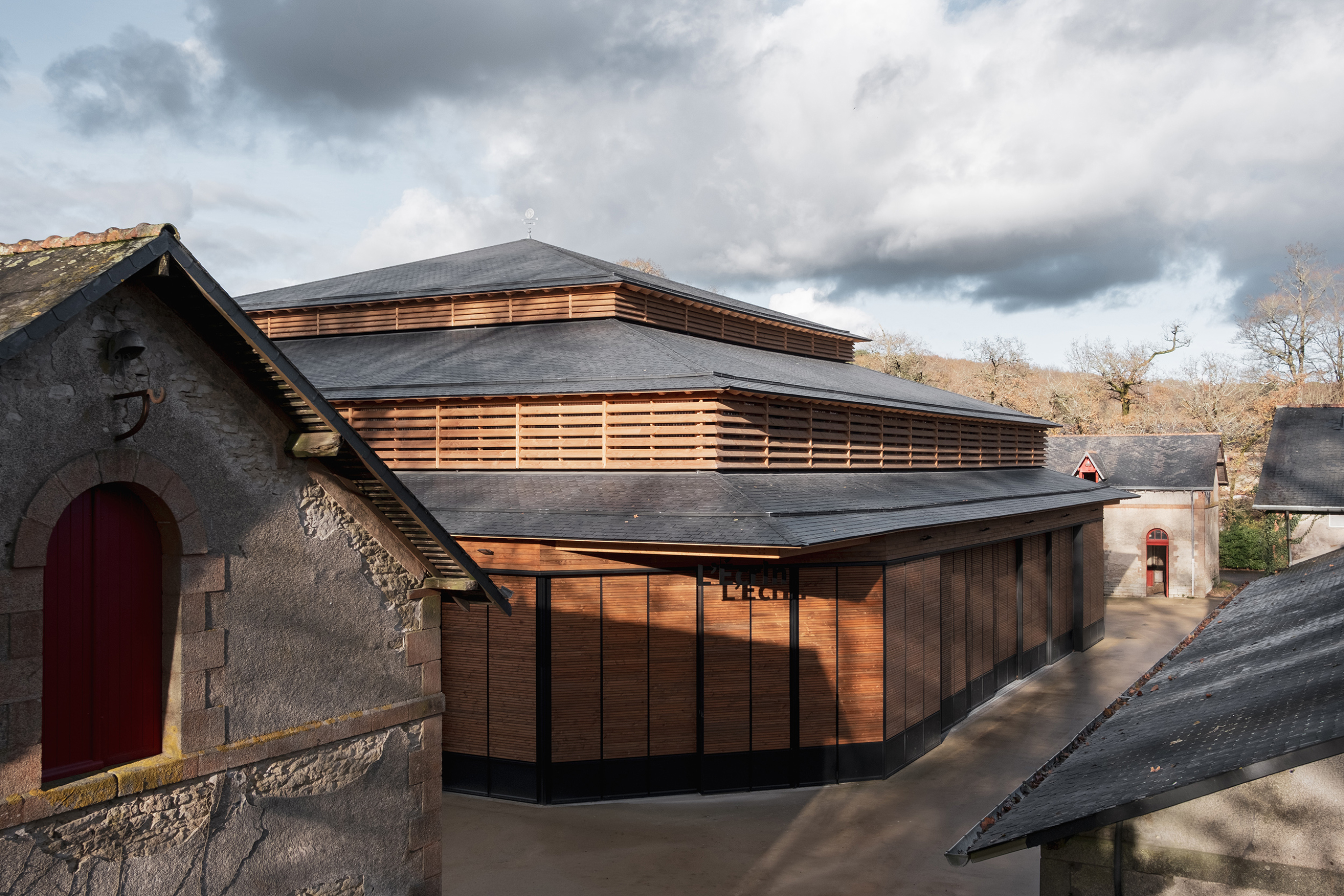
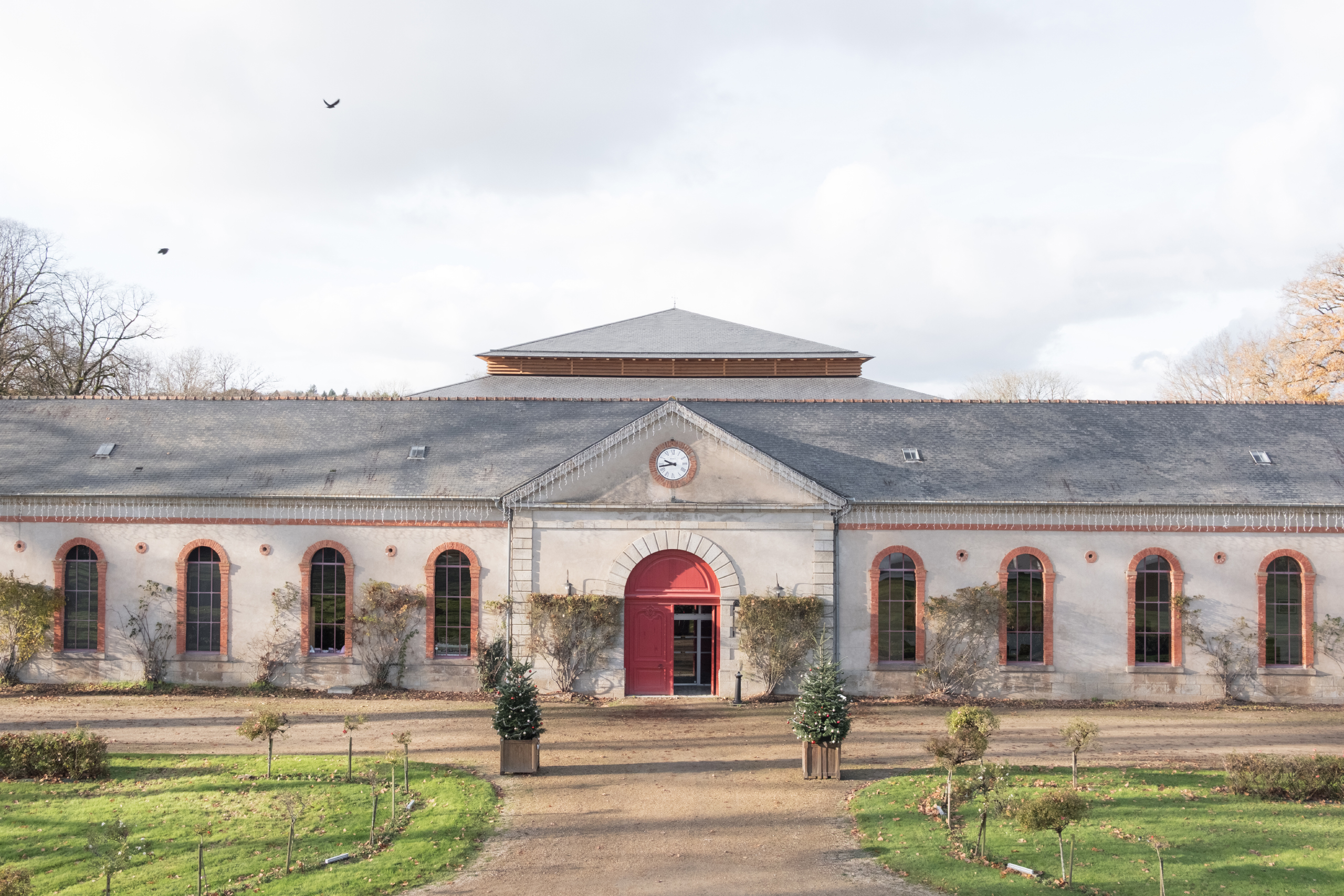
The new equestrian performance hall is situated within the Cour du Puits, one of the two historic courtyards of the National Stud (Haras National). Rising seventeen meters high, the edifice boldly redefines the site’s skyline. Its lofty silhouette soars above the Napoleonic stables, echoing the vast slate roofs of these secular longères. In this history steeped, almost sacred context, the architects eschewed the anachronistic contemporary gesture and ‘summoned a classical vernacular to resonate with the soul of the place’.
This stylistic quest draws roots from a plurality of archetypes: one discerns the shadow of the first sedentary circuses – those vanished timber stables – as well as the picturesque silhouettes of 17th-century market halls, from Questembert to Plouescat. Yet it is Victor Baltard who, across the centuries, won the duel of influences. The Marché Secrétan, one of his most finely crafted works, inhabited our early sketches until it dominated the project’s genesis.
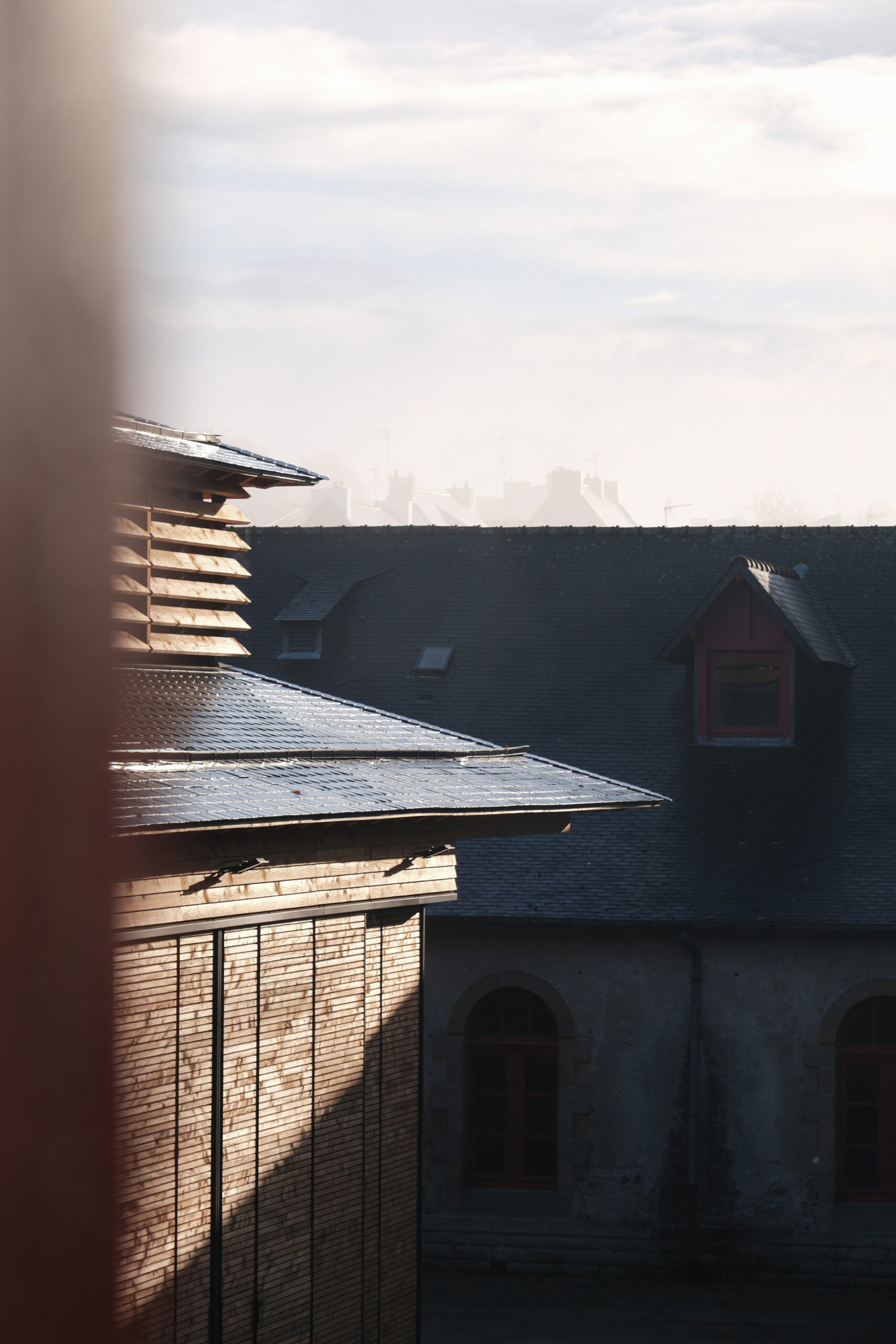
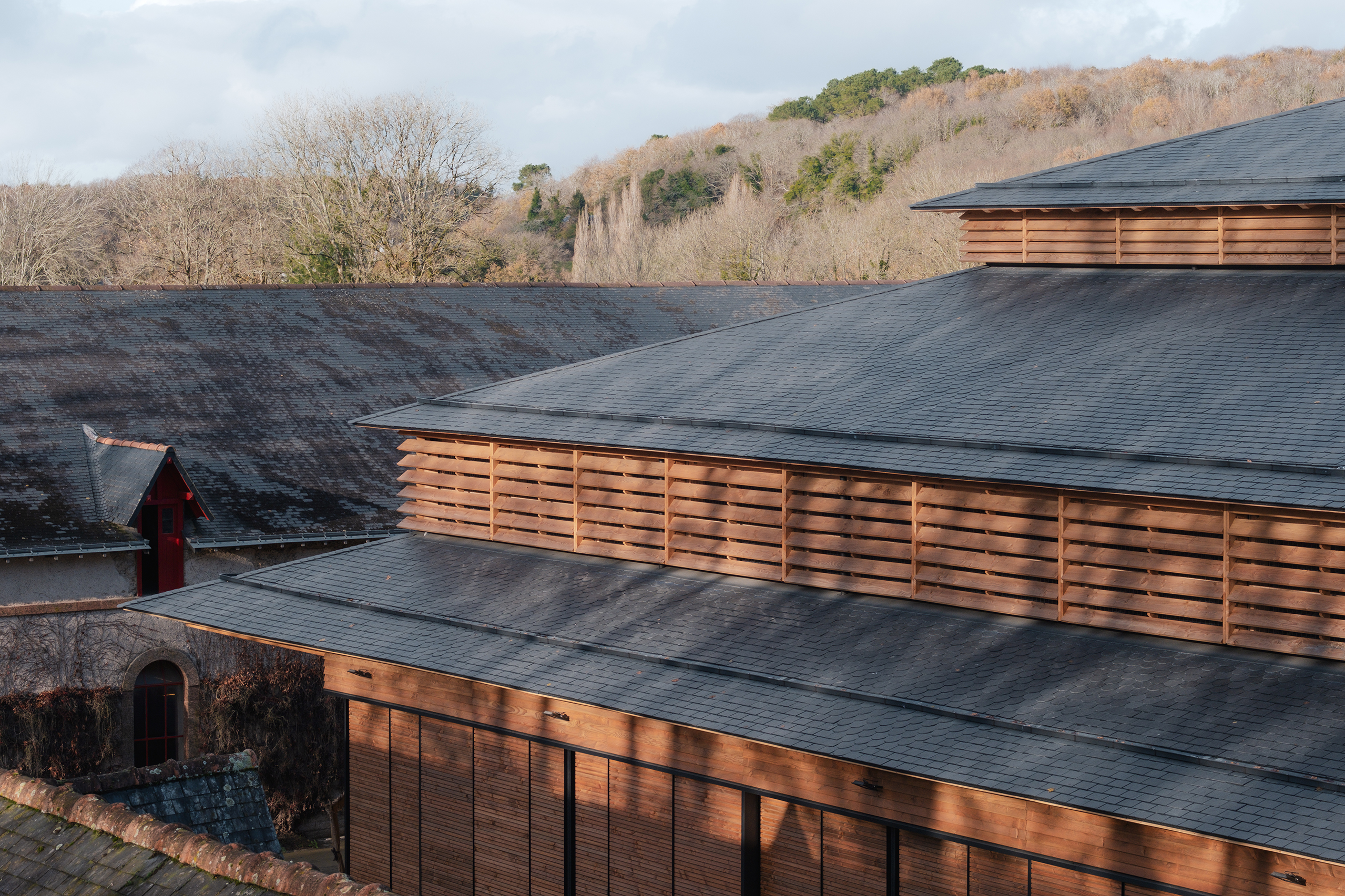
The building reinterprets the principle of successive clerestories, originally designed to magnify the nave, enhance natural ventilation, and diffuse zenithal light into the heart of the structure. By perpetuating this principle, the project dilates the volume beneath the arches and fragments the overall massing. According to the architects, this was a choice that punctuates the roofline to dissipate its mass within the landscape.
Temporal Dialogue and Circassian Lexicon
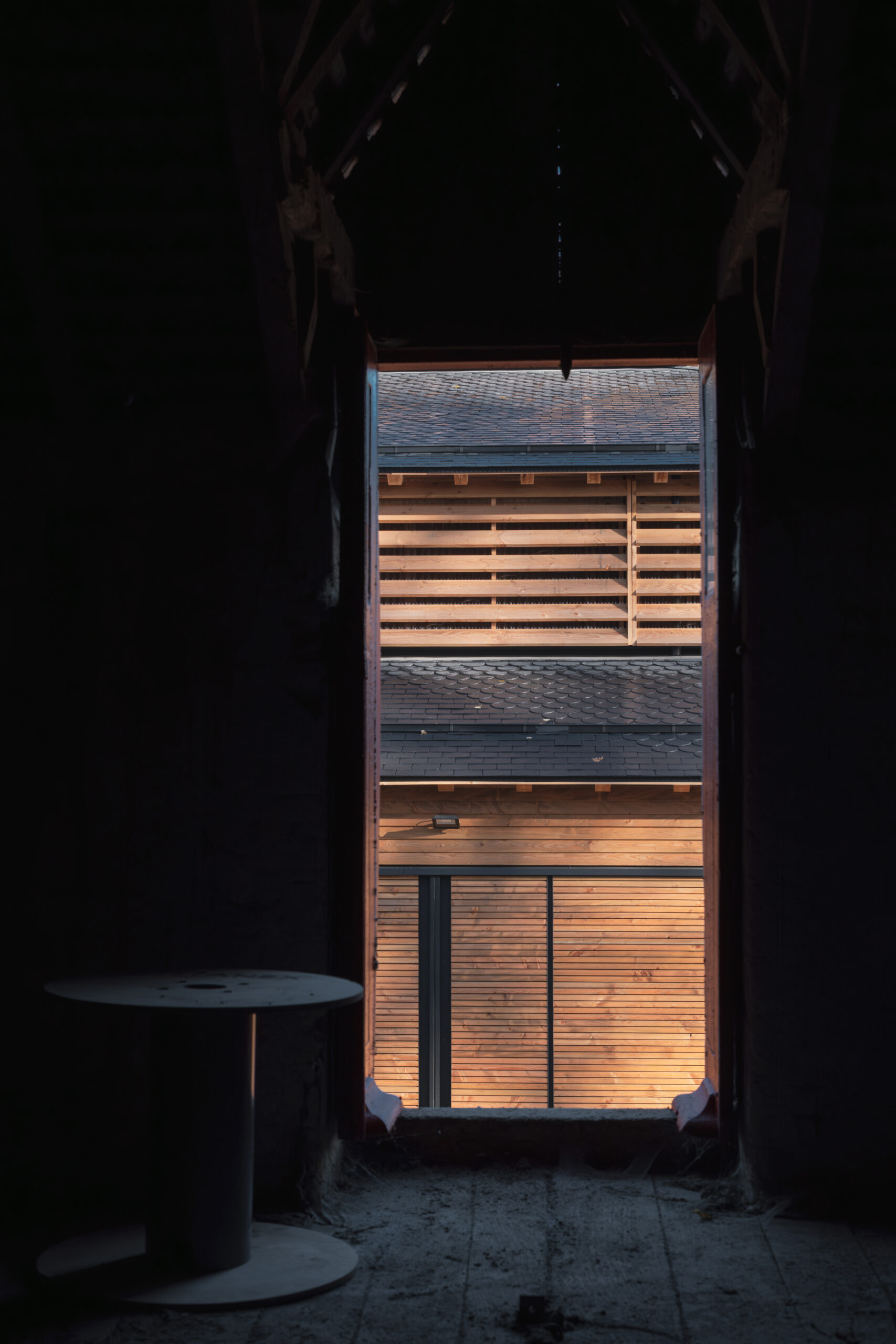
The building’s skin engages in a temporal dialogue through delicately nuanced materiality. The roof planes are clad in rectangular slates – vestiges of Napoleonic architecture – interleaved with rounded slates of a more contemporary design. The molding of the slopes becomes an architectural reinterpretation of the Circassian graphic lexicon. Through this play of triangulation, the roof sheds its rigidity to evoke a sense of fantasy.
Perpetuating the Architecture of the Ephemeral
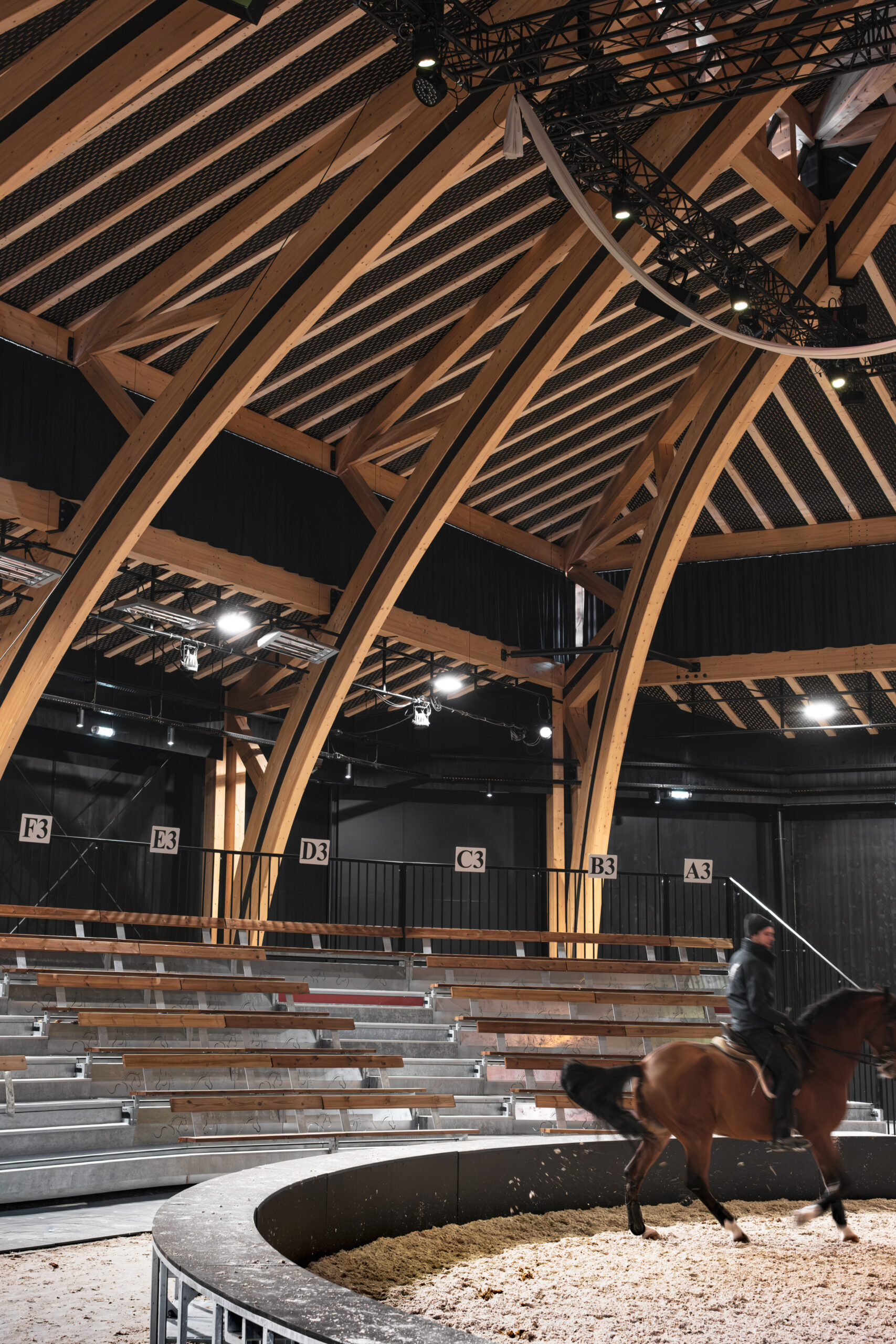
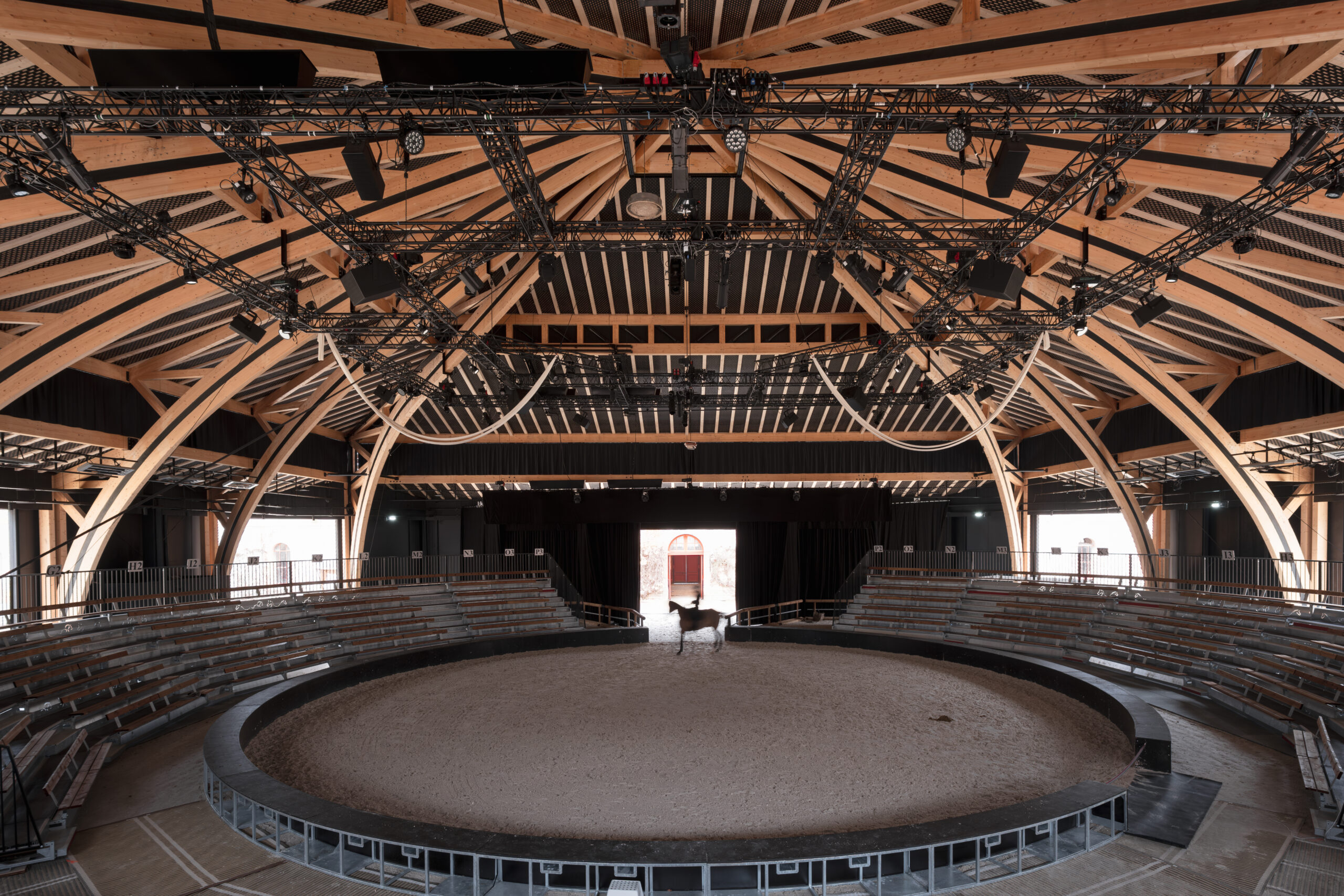
Inside, the timber frame unfolds into a spectacular vault, creating an interior landscape whose structural power evokes the majesty of the Questembert hall. The project’s archetype draws strength from the duality of early circus buildings: it borrows the stable form of 19th- century sedentary circuses while inheriting the constructive intelligence of ‘semi-stable’ structures. The latter, designed for itinerancy, prioritized prefabrication and rapid assembly. The constructive system is developed on a modular basis of three templates duplicated fourfold: precision-machined structural elements, assembled on-site, ensuring a fluid execution and a controlled construction footprint.
The structural strategy was dictated by a radical intent: to entirely liberate the hall – and two of its four facades -from any load-bearing points. This feat relies on a system of arches initiating a dome, upon which a stepped pyramid is nested. The arches rise in a staggered fashion to support truss beams that span the facades in a single stroke. This absence of intermediate supports allows the arena to open in total transparency. Upon crossing the Cour du Puits from the Écurie d’Honneur, the gaze traverses the hall to offer visitors a panoramic, frontal view of the historic stables, embedding the equestrian spectacle within its heritage jewel box.
Scenography of Shadow and Light
The enchantment of the site extends beyond its exterior silhouette into the intimacy of the interior volume. The guiding principle was to design a structure that is discreet on the facade but ‘mirifique’ (wondrous) beneath the vault. Under the dimmed lights of the scenography, the arched timber frame plunges the audience into a festive, fairground atmosphere. To magnify this wooden ‘skeleton’, all secondary works and technical systems adopt a dark, matte tone. This chiaroscuro treatment allows the envelope to recede, highlighting the staged structure, whose light-streaked curves provide the intimate ambiance required for artistic encounters.
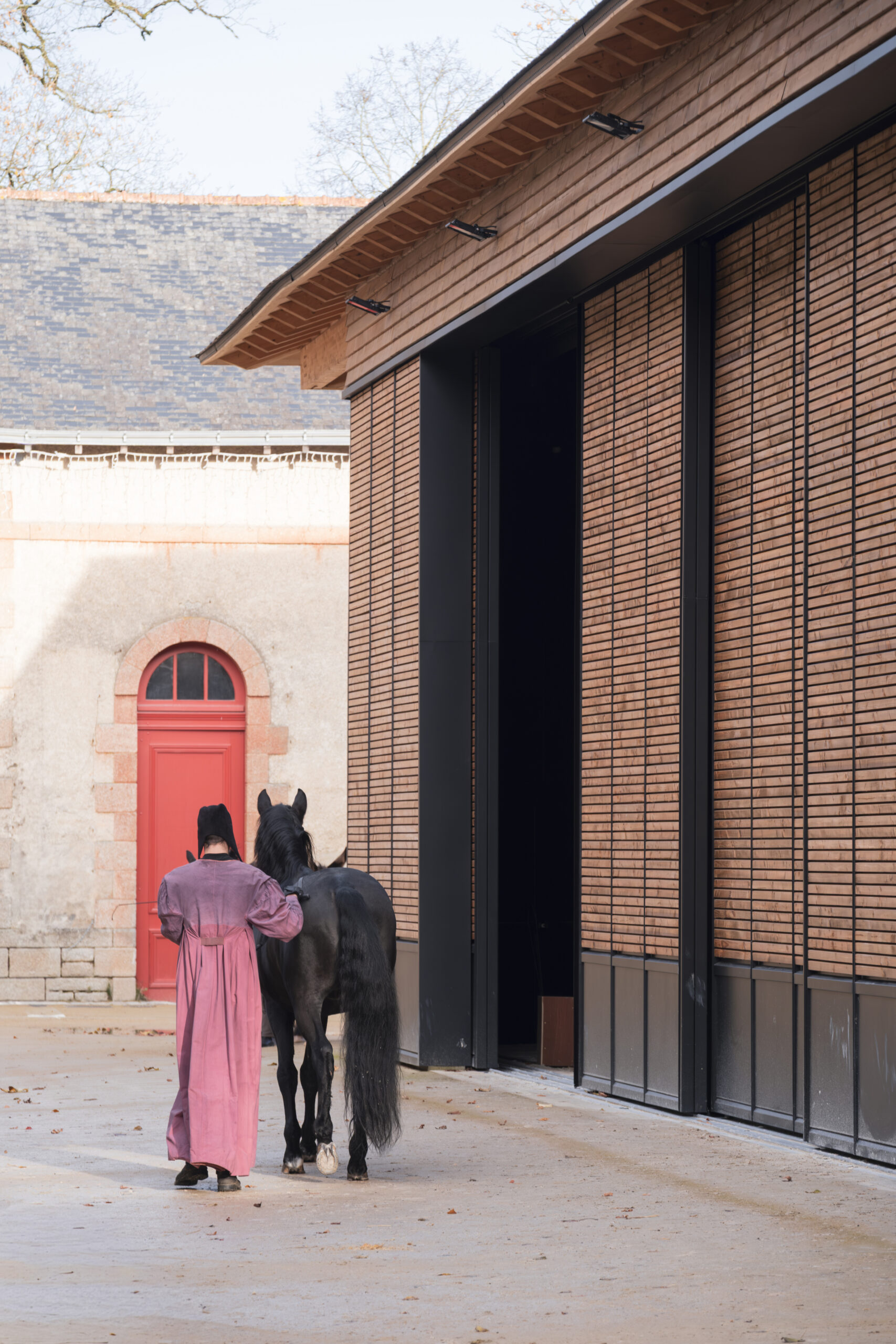
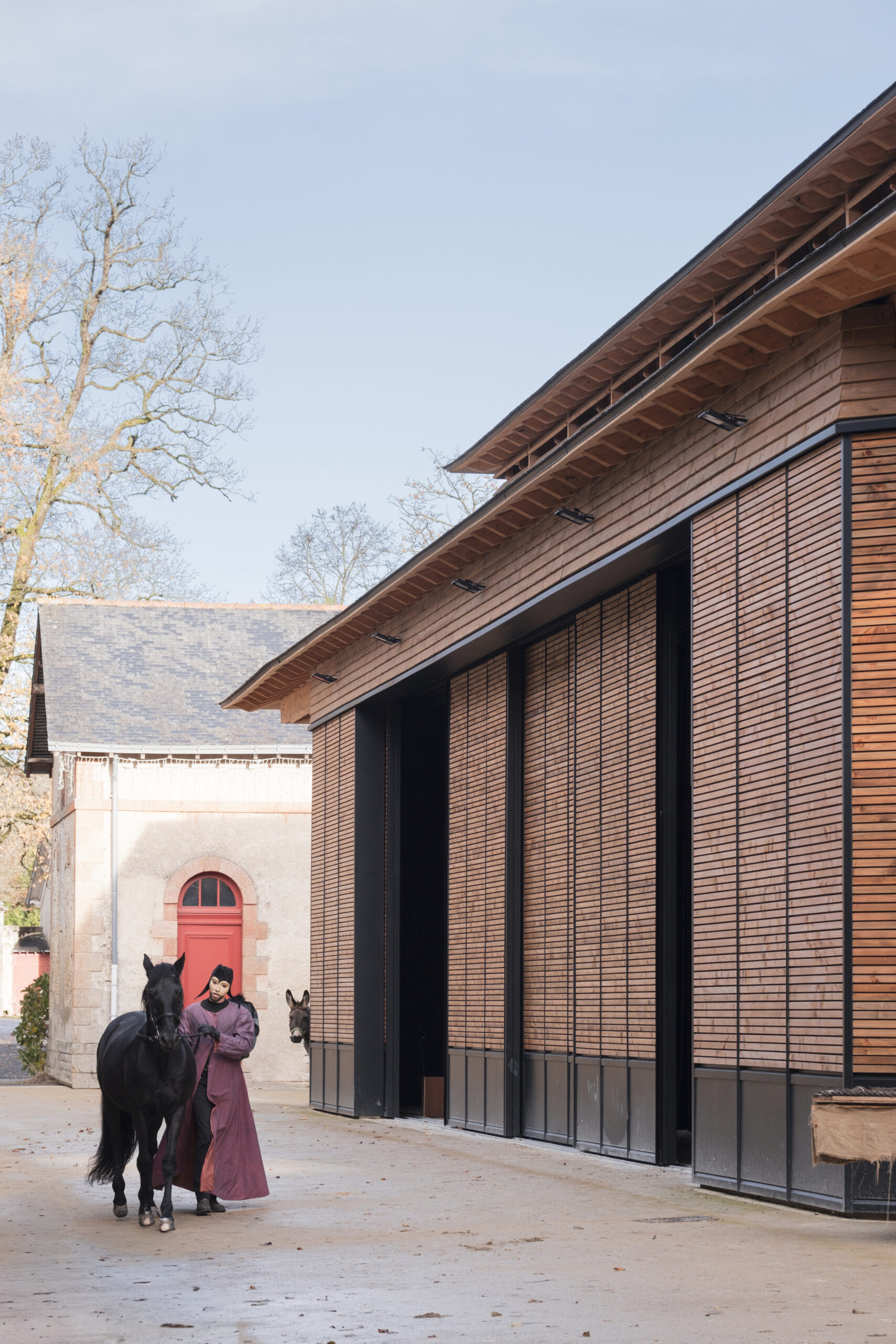
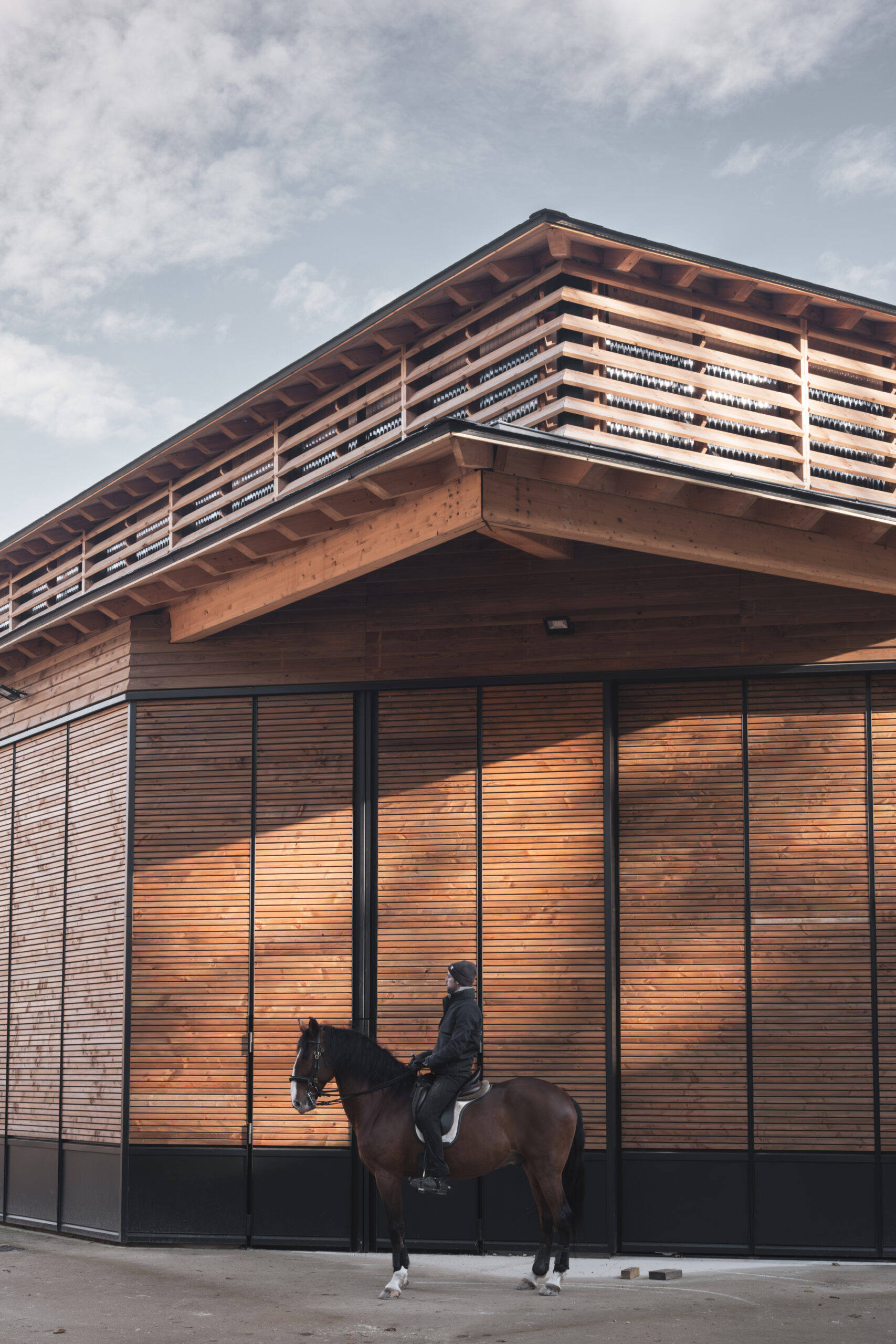
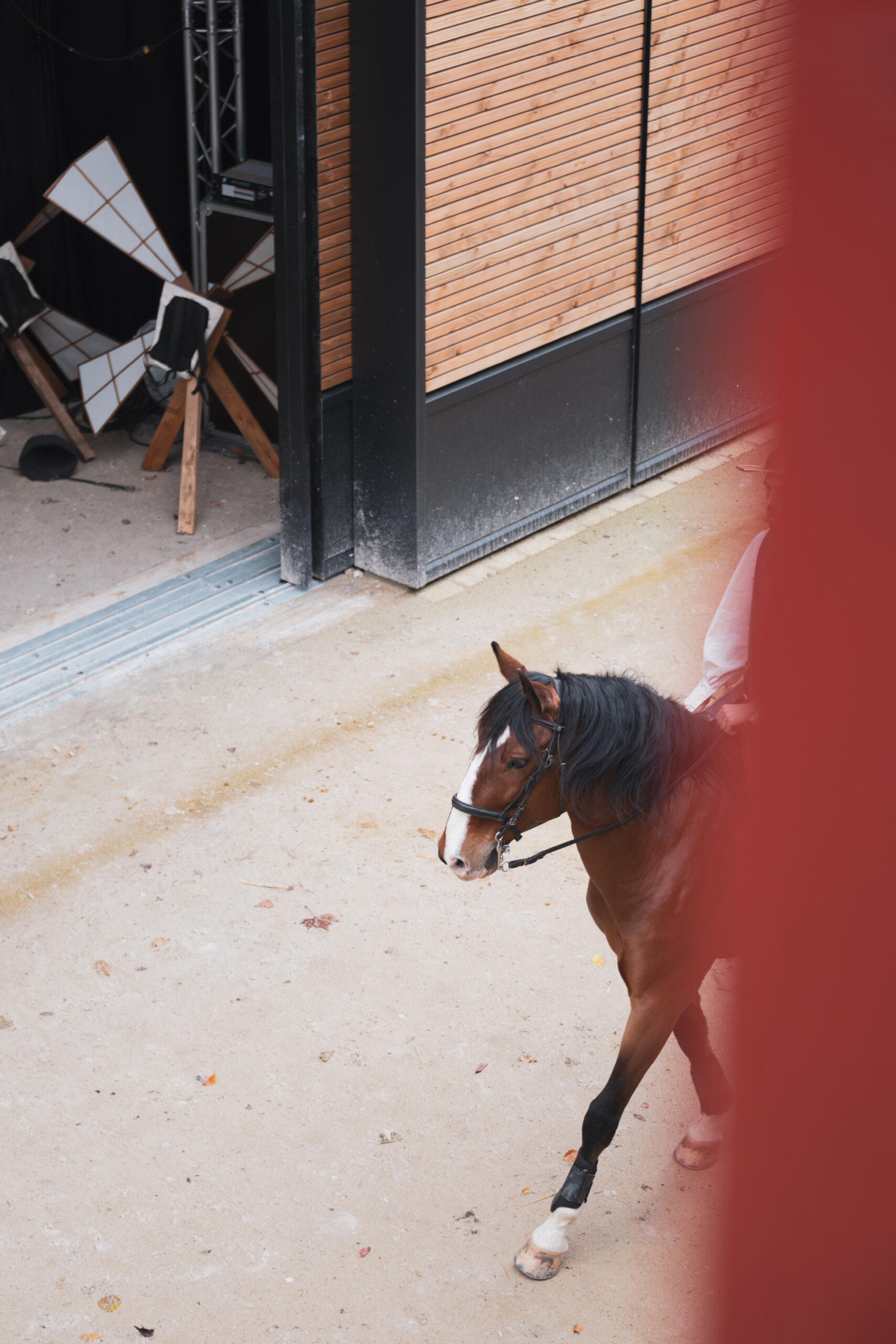
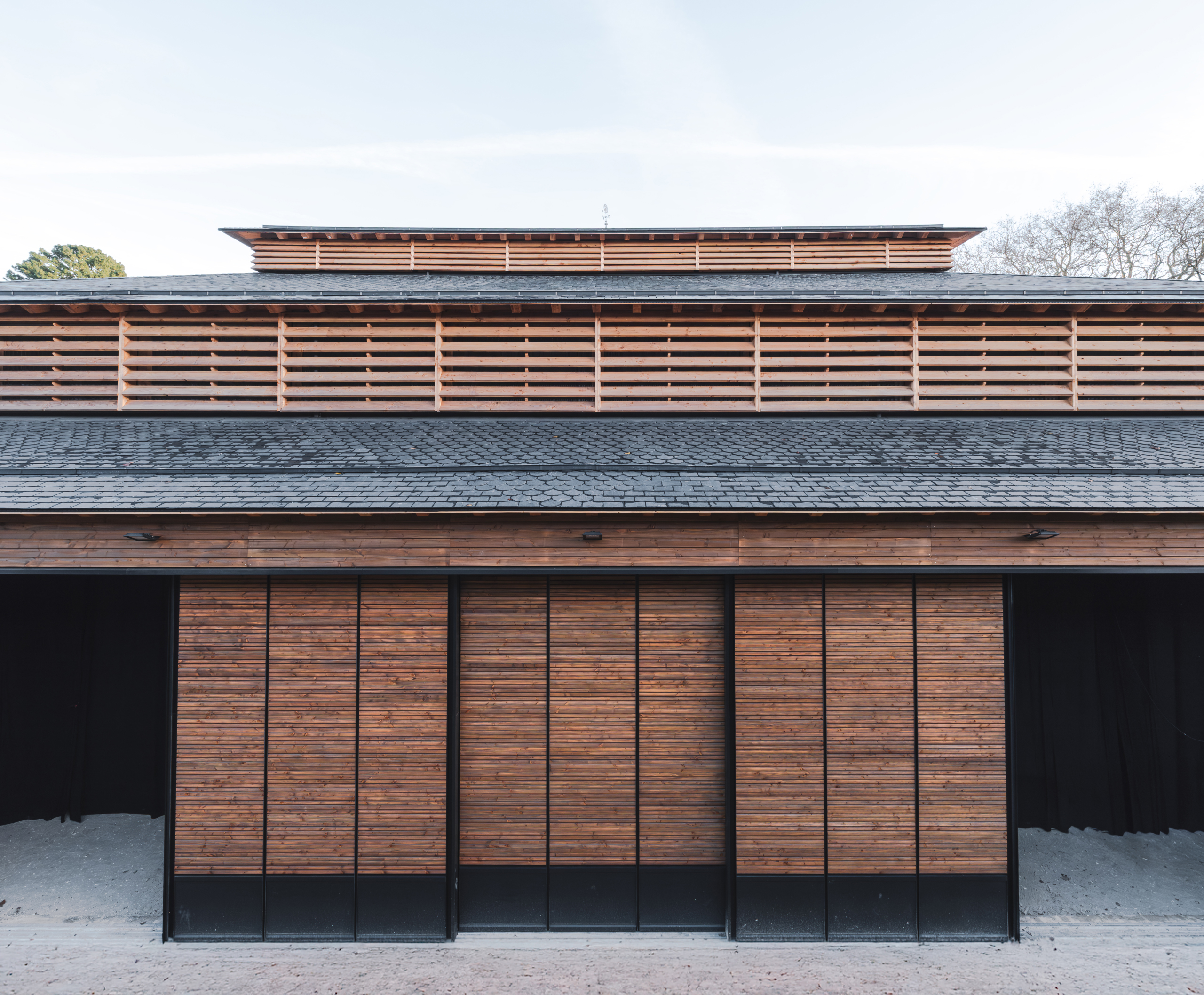
Finally, the flexibility of the venue is expressed through its retractable facade. Between performances, entire sections of the wall slide away behind slender fixed piers, abolishing the boundary between the ring and the Stud, returning the hall to its environment as a simple pavilion open to history.
Envelope of Timber and Light: Between Utility and Permanence
The facades encircling the Cour du Puits deploy a timber cladding with a rigorous grid, offering the interior the image of a warm, protective heart. The cladding, composed of horizontally crenelated wood panels, establishes a graphic dialogue with the lightness of the louvers that close the roof tiers.