Earth | Tree: Architecture between Ground and Canopy
Installation is built on a dialogue between materials that define much of the built environment: wood and brick
April 20, 2026
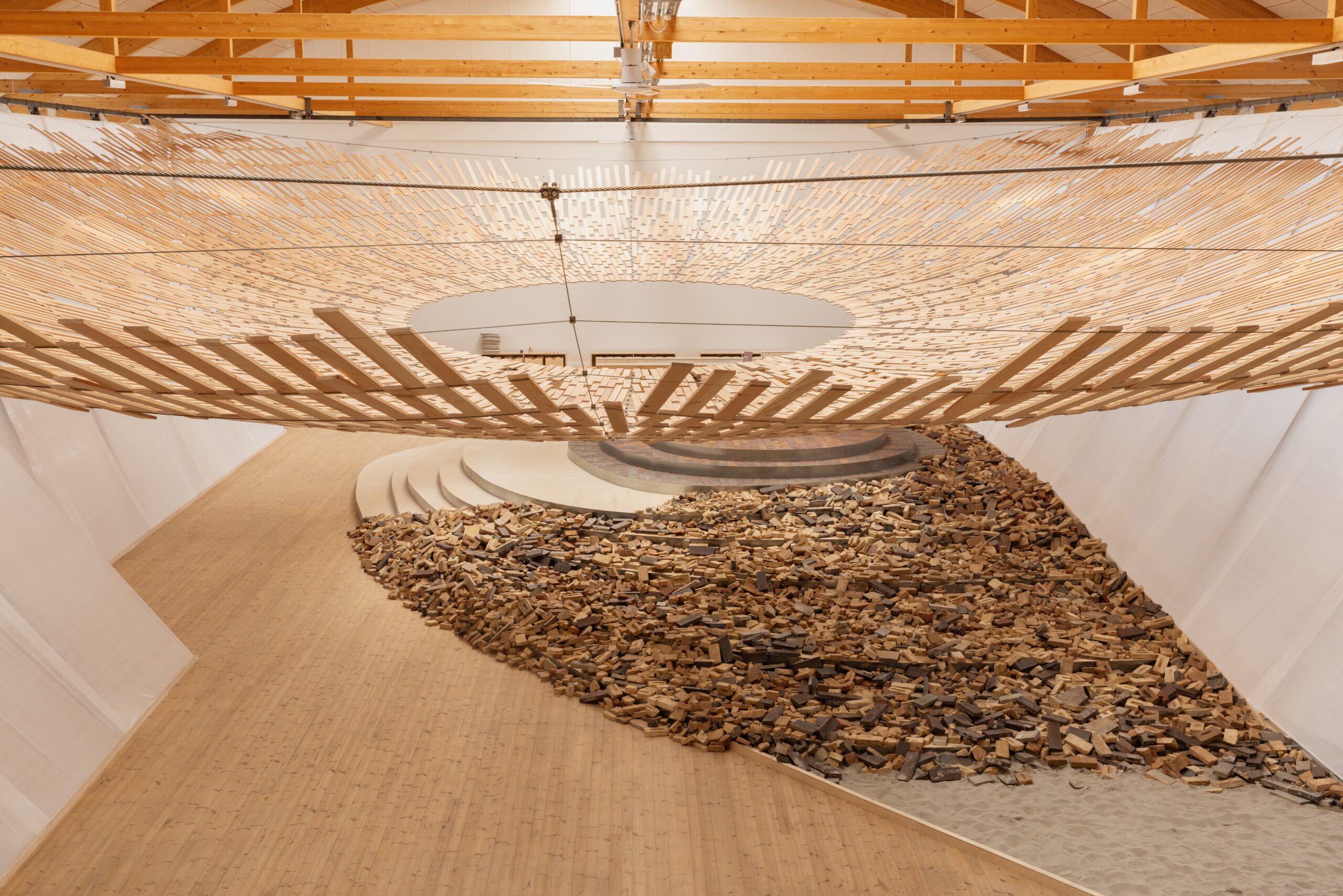
There is a Japanese concept that describes sunlight filtering through tree leaves: Komorebi. Our bodies recognize this feeling. Komorebi moments occur when we stand amidst the trees in a forest, offering us comfort and inspiration. This feeling is brought to Copenhagen’s city center by renowned Japanese architect Kengo Kuma & Associates (KKAA). Earth | Tree is a spatial and material exploration of architecture itself, unfolding between ground and canopy, weight and lightness, permanence and change.
The installation is rooted in one of humanity’s most fundamental impulses: the need to seek shelter. Not as an abstract idea, but as a bodily memory – the feeling of standing beneath a large tree, sheltered from the outside world and the rumination of everyday life. At the Danish art center, Copenhagen Contemporary, a former industrial hall is transformed into an immersive environment shaped by elemental forces.
Materials with memory Kengo Kuma is known for his sensory approach to materials and works from a philosophy of ‘soft architecture’ – an architecture that emerges in dialogue with the physical space, nature and people. The installation is built on a dialogue between materials that define much of the built environment: wood and brick. This is realized through close collaboration with Danish partners whose contributions are integral to the project’s architectural language.
In Earth | Tree, wood and brick have been chosen for their tactile and historical dimensions. The wood brings the scent of the forest into the space. The brick anchors the installation in a millennia-old building tradition. Both materials are culturally rooted in Japanese and Nordic attitudes to nature alike – and it is the meeting between these two traditions that Yuki Ikeguchi, who has led KKAA’s work on the installation, has shaped into a unified expression.
Within the installation, all senses are invited: the scent of wood and earth, the roughness of brick beneath your fingertips, the movement of light across the floor. Architecture is not experienced here primarily through the eyes – but with the entire body. According to Yuki Ikeguchi, VP and partner at KKAA, they ‘just hope that people would be drawn to it, be curious and simply enjoy it’.
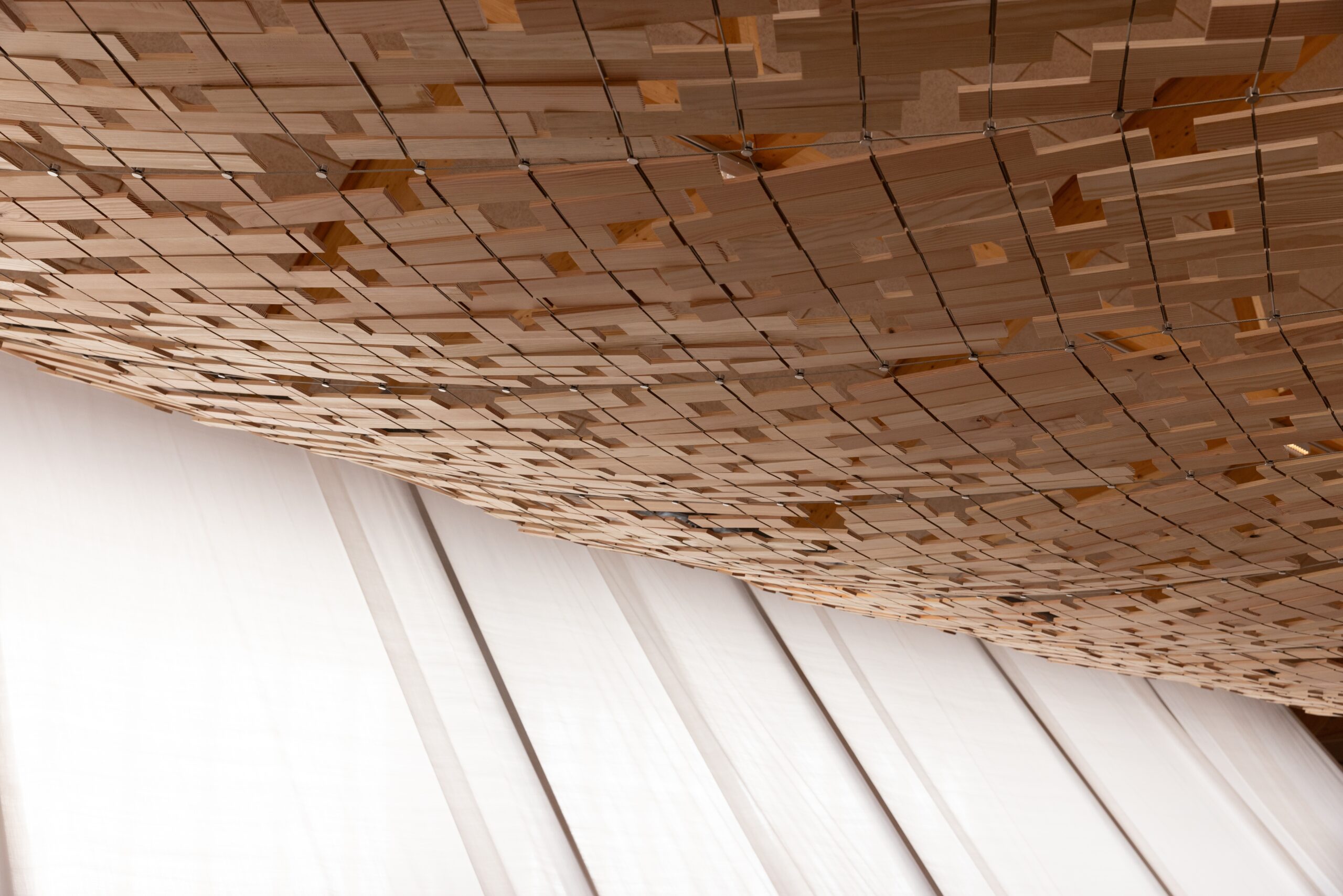
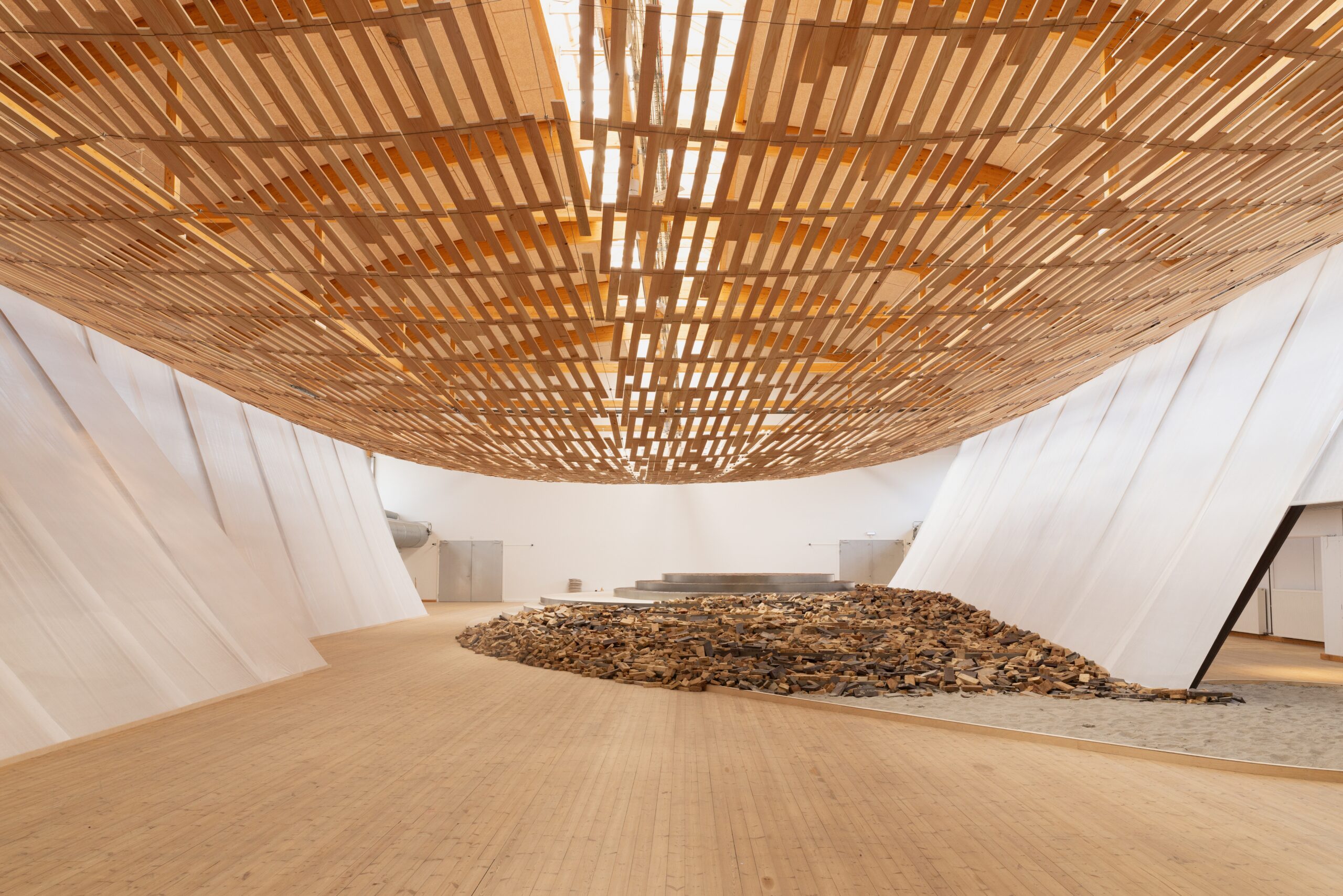
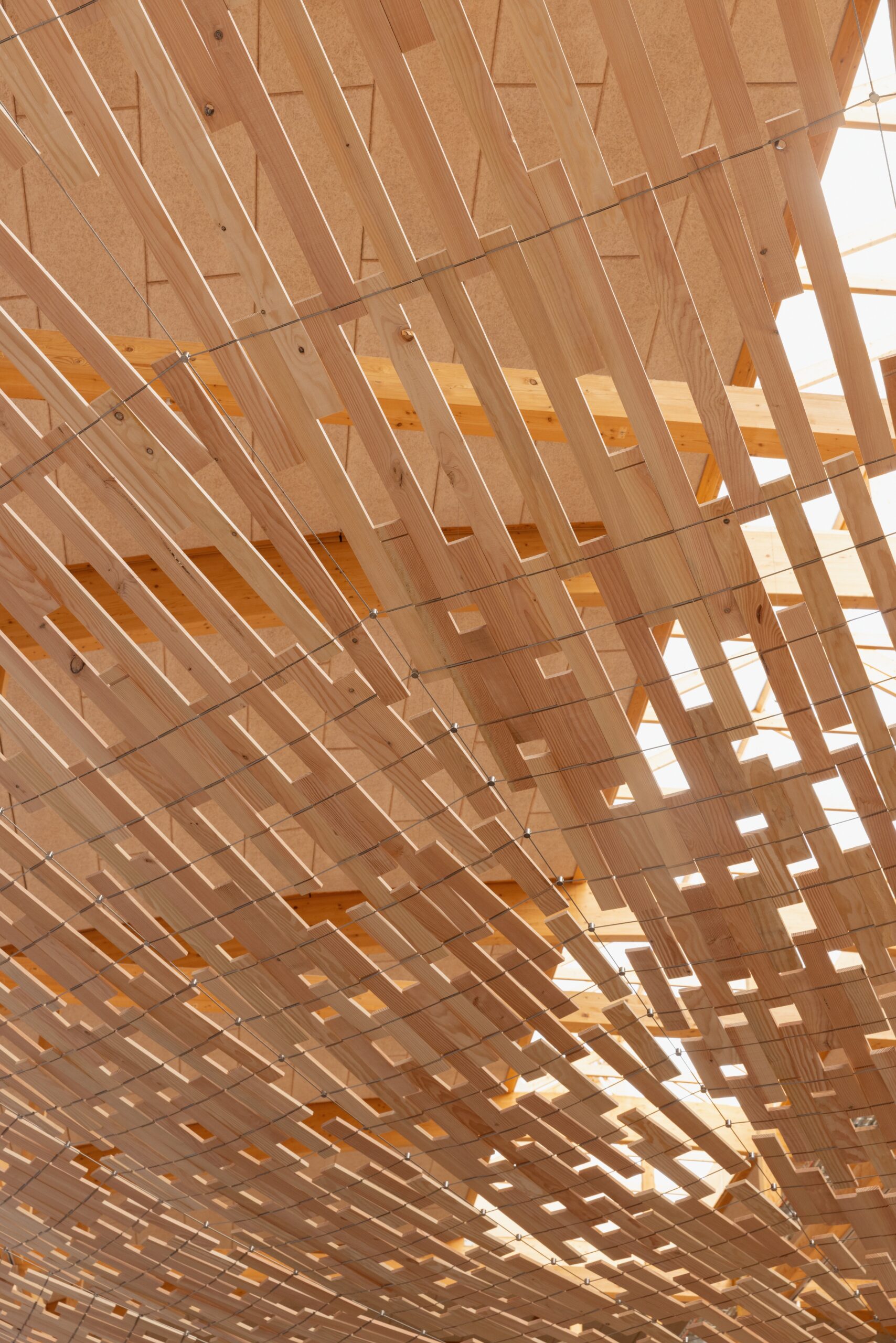
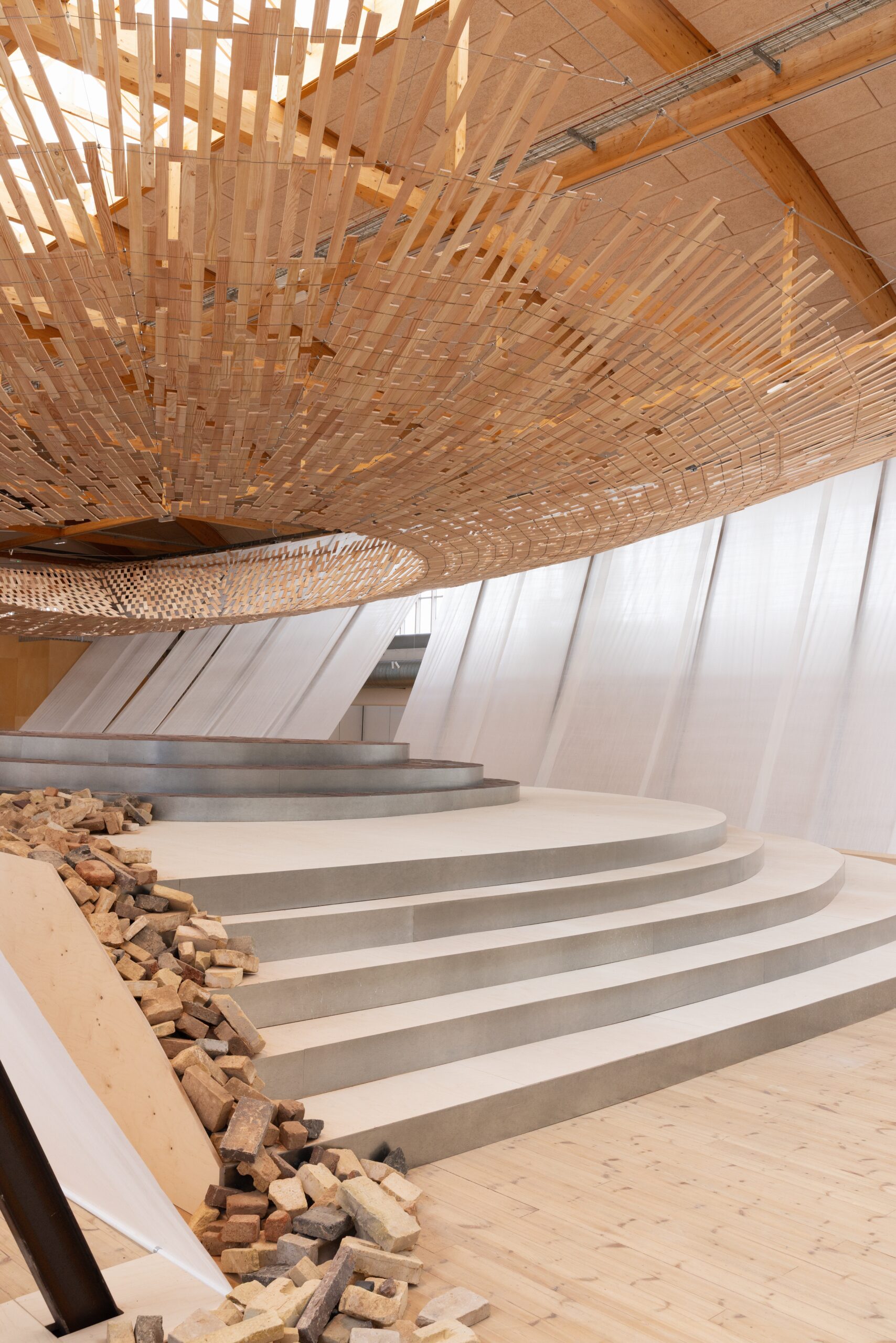
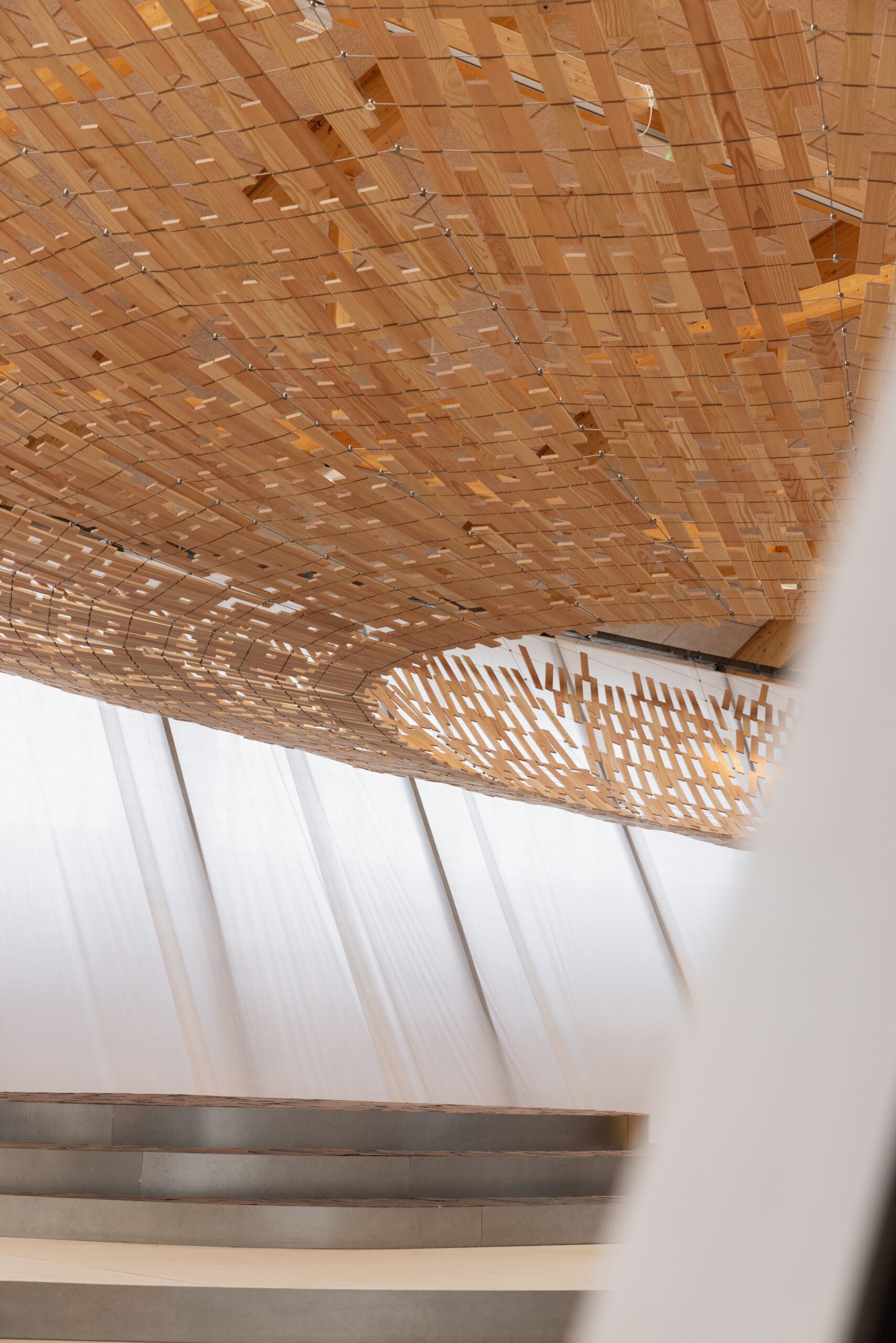
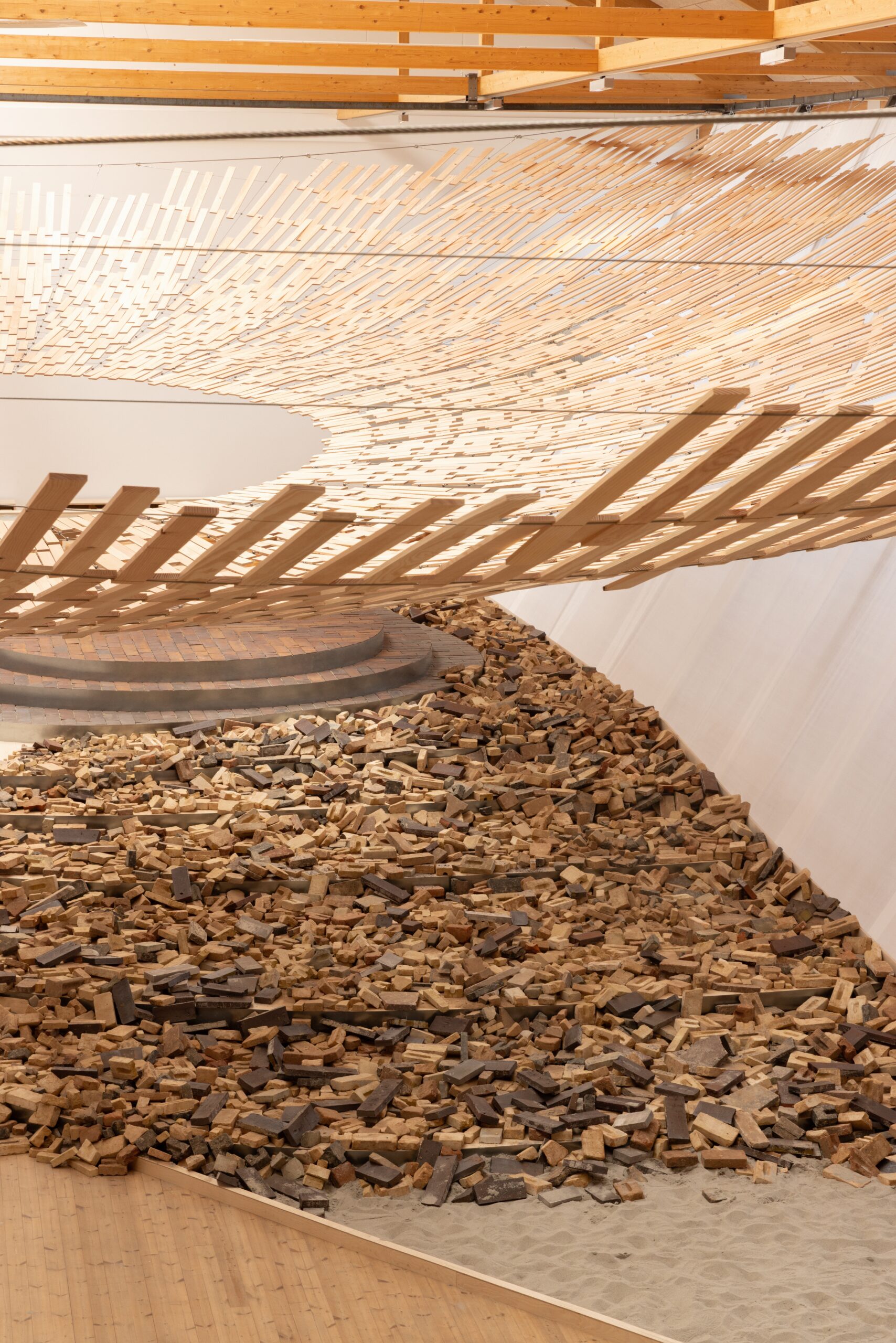
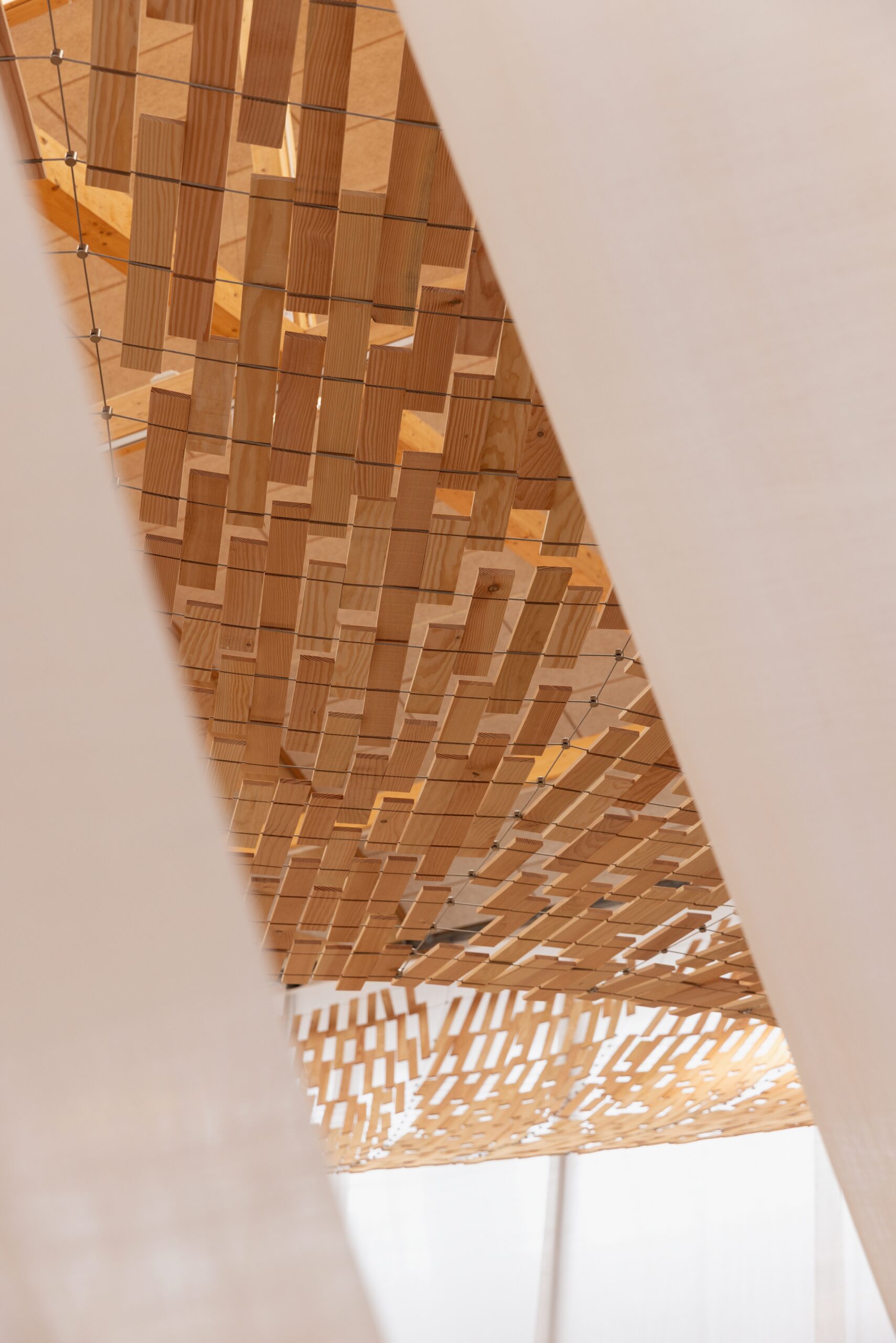
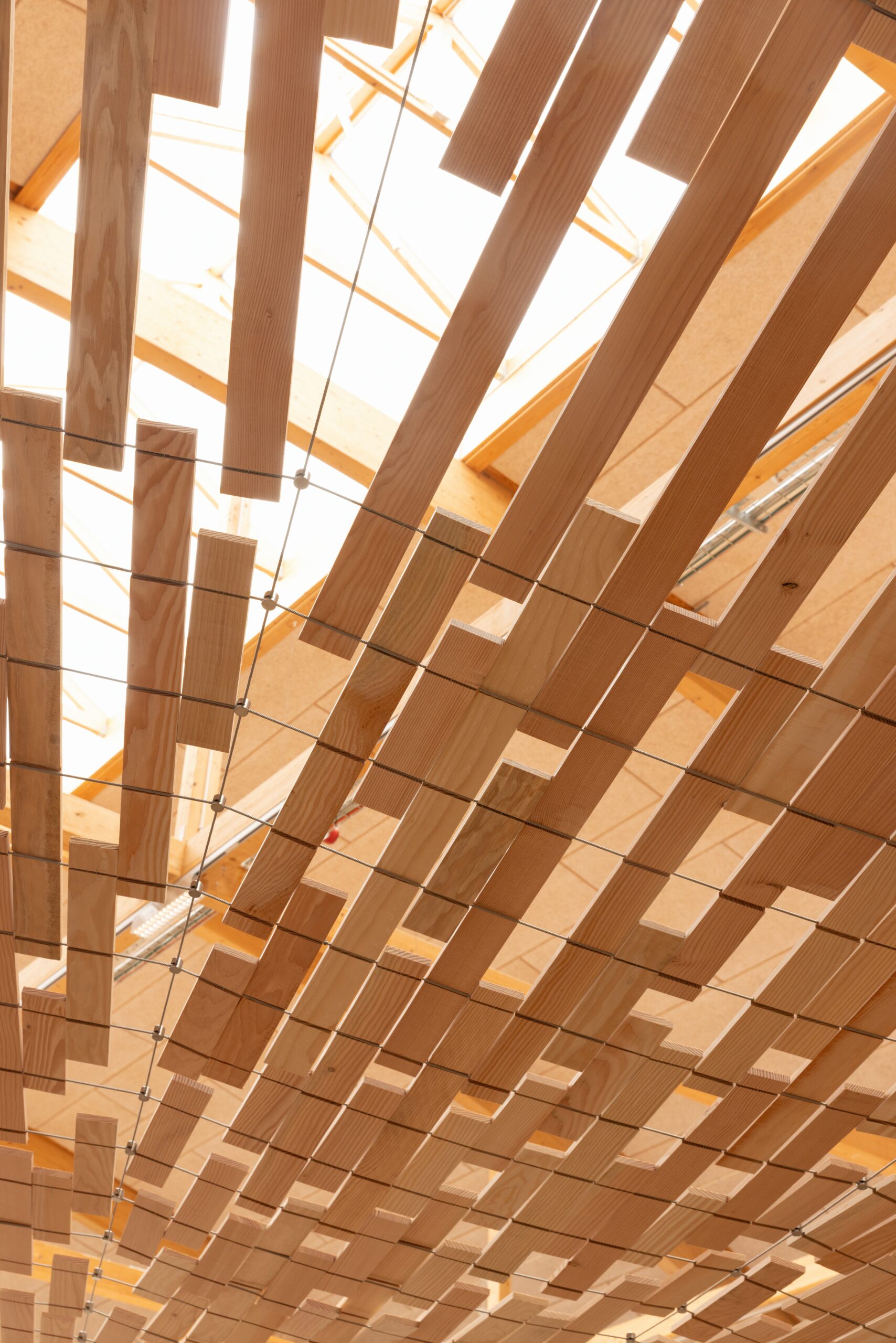
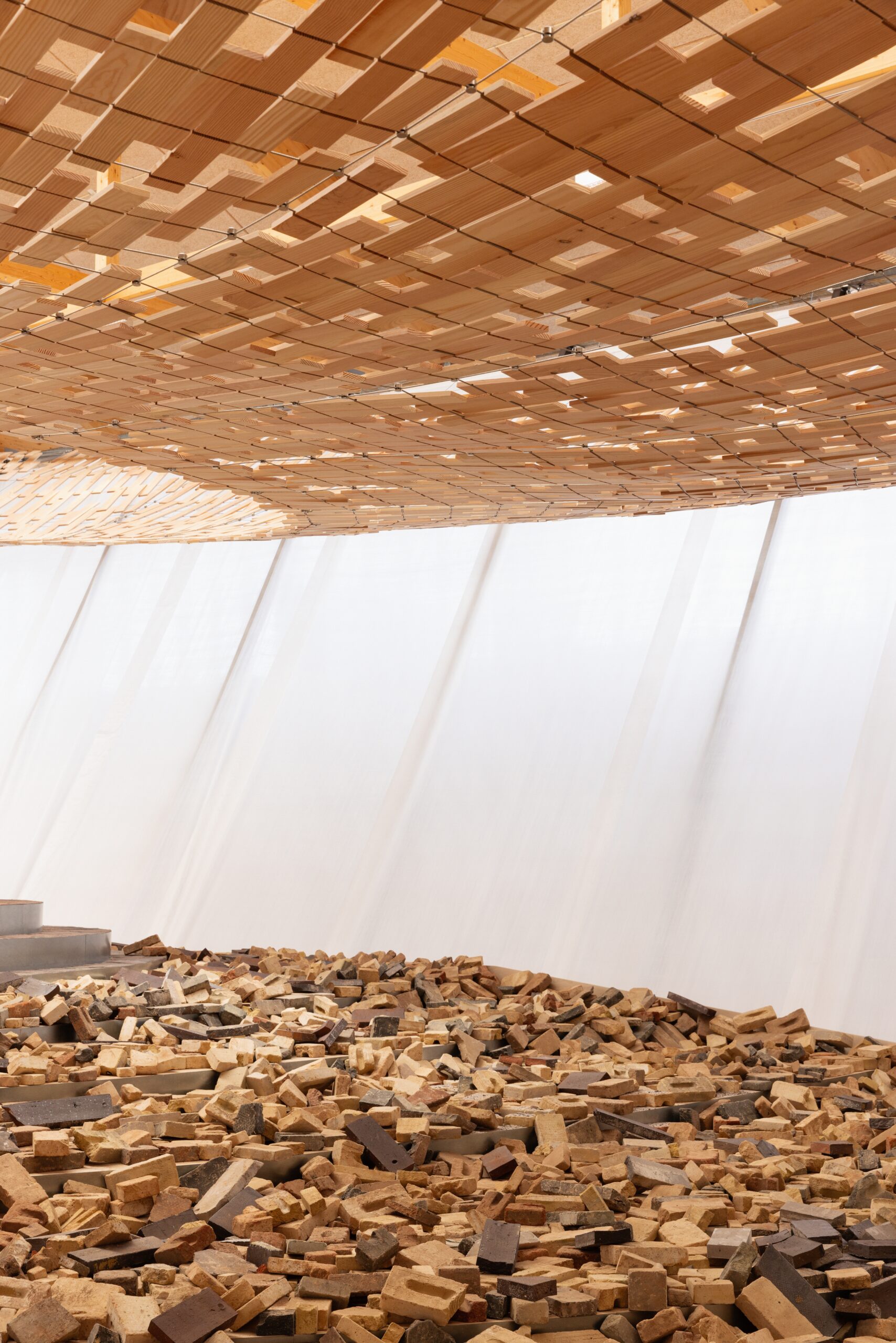
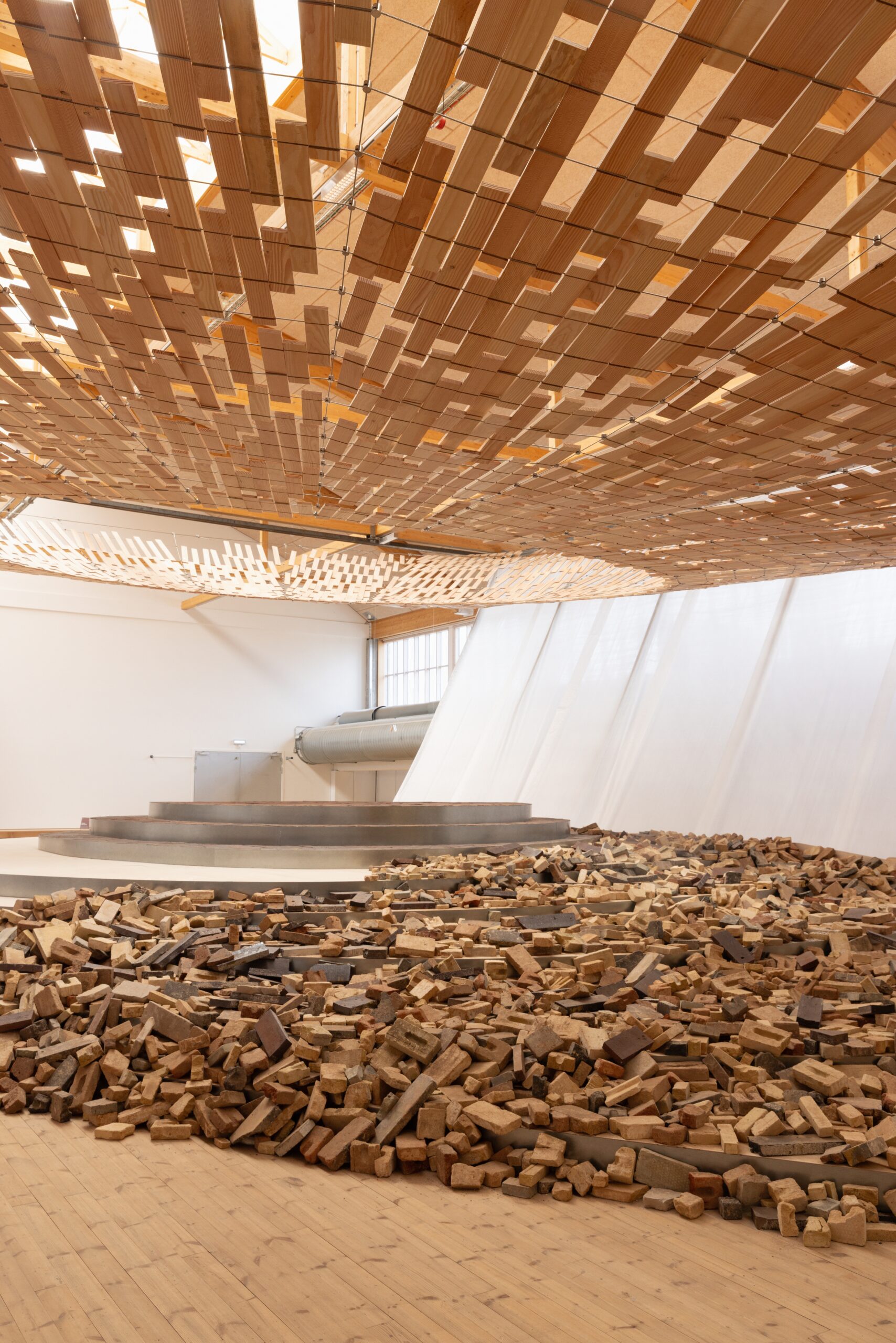
The ‘earth’ is formed by handcrafted stone tiles supplied by Petersen Tegl, whose material expertise lends a tactile, grounded presence to the installation. Above, a suspended structure of Dinesen Douglas creates a porous canopy, filtering light in ever-changing patterns. This interplay is further refined through light. Developed in collaboration with Anker & Co., the lighting concept plays a decisive role in shaping the spatial experience.
The lighting is calibrated to follow the rhythm of the day, shifting from sunrise to sunset. This dynamic approach gives the installation its natural atmosphere, reinforcing the concept of Komorebi. The light acts as an architectural material, activating the wood, enhancing the depth of the brick landscape, and continuously transforming the perception of space.
Rather than reconstructing nature, the installation translates its essence into spatial experience. According to Ikeguchi, it’s not the intention to imitate or simulate natural phenomena. It’s more about appealing to our sensitivity and inspiration, to create sensory architectural moments that connect to the sensations we experience in nature.
This approach is central to the architectural thinking behind Earth | Tree. The installation is meant to be experienced with the entire body. Visitors move through a carefully composed landscape, ascending a terrain of brick, passing beneath a suspended wooden canopy, and encountering shifting conditions of light, scale, and perspective shaped in temporal lighting design.
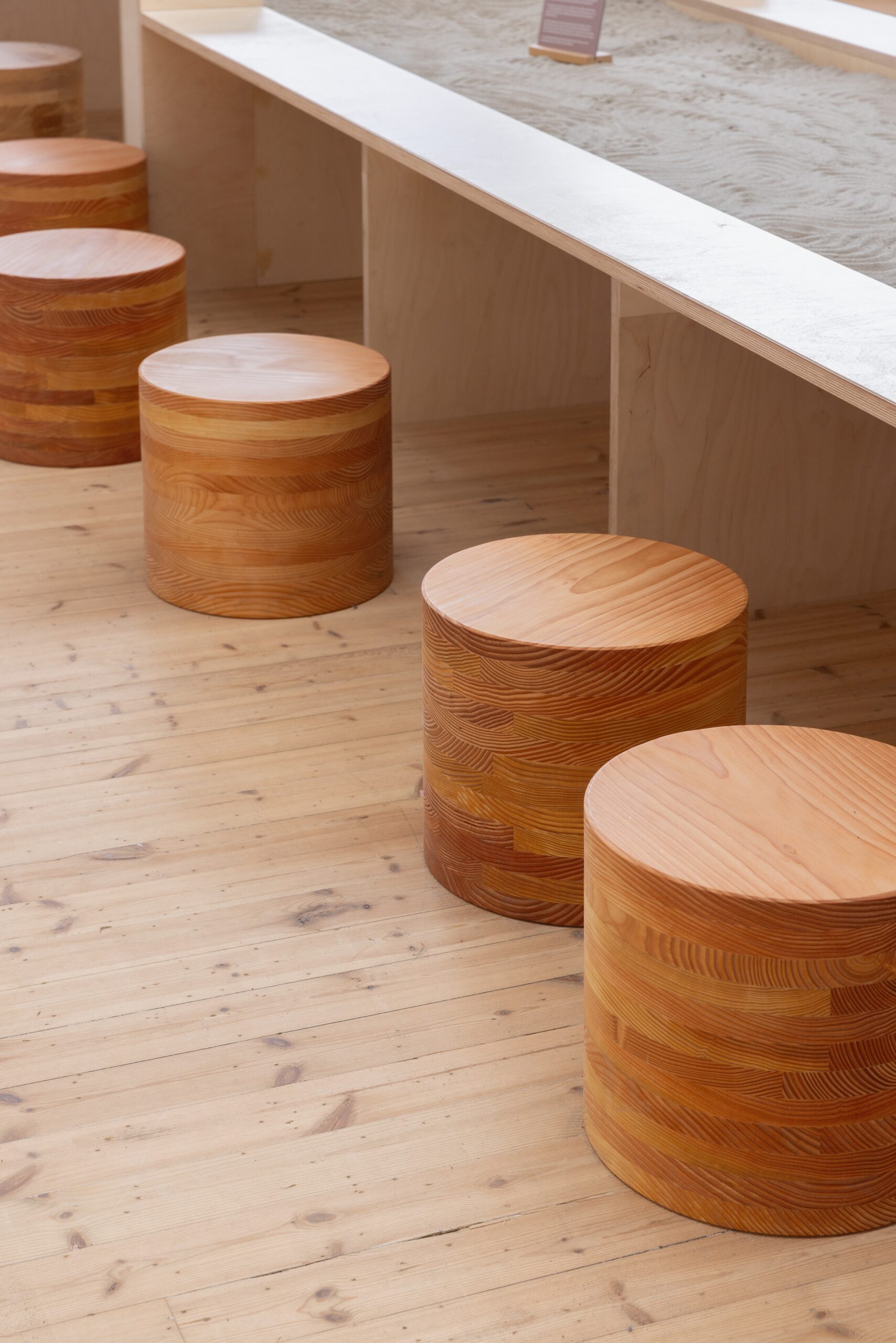
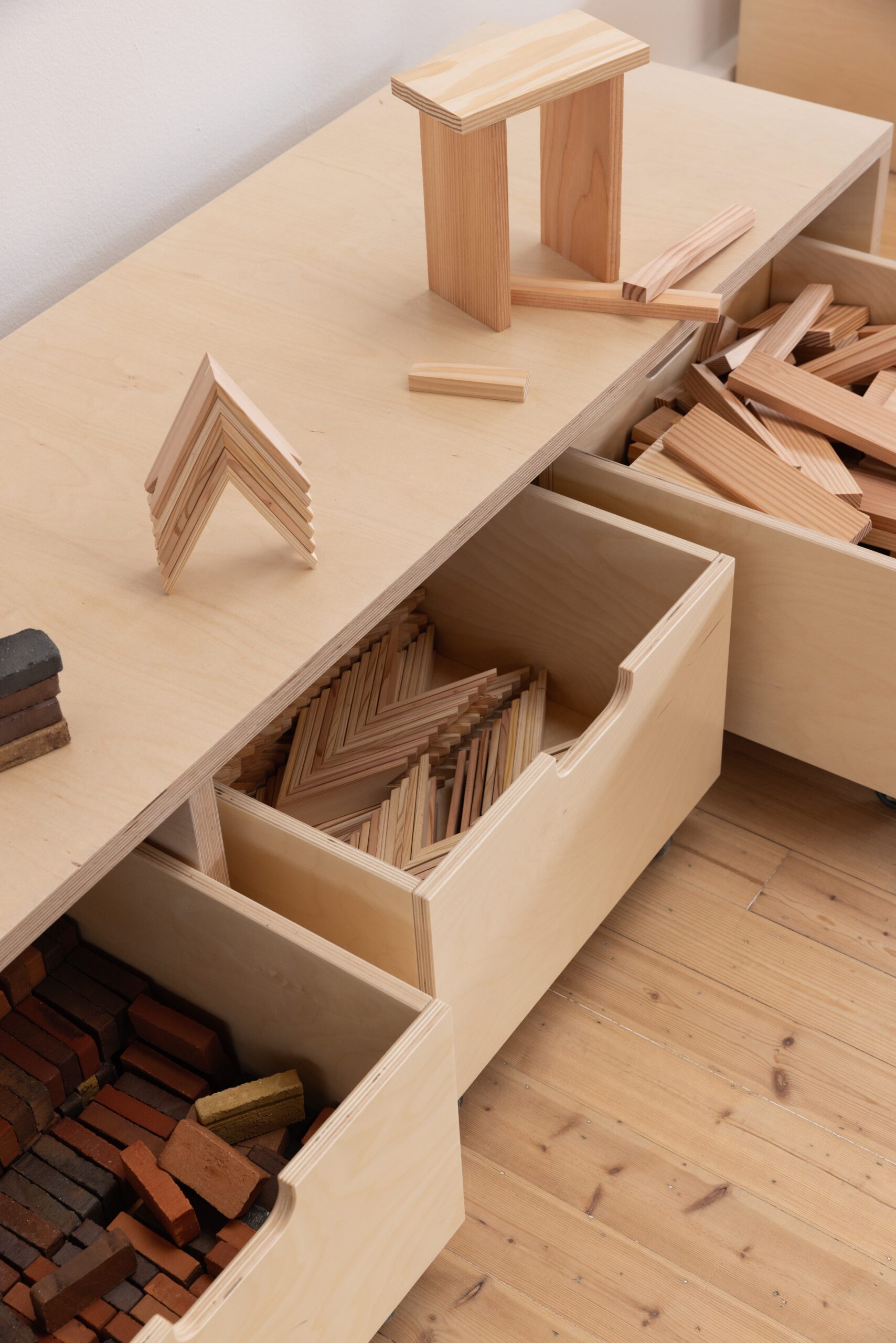
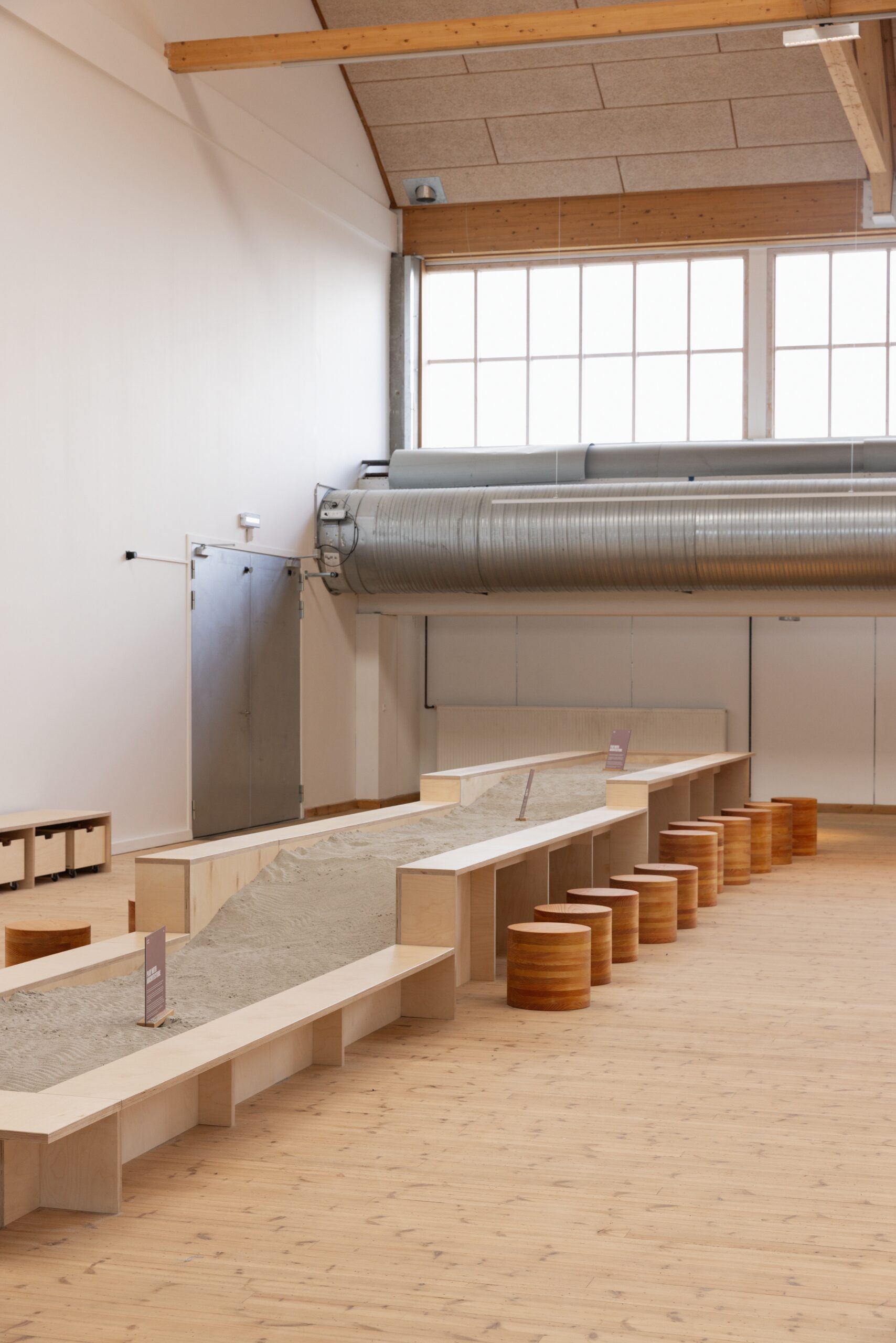
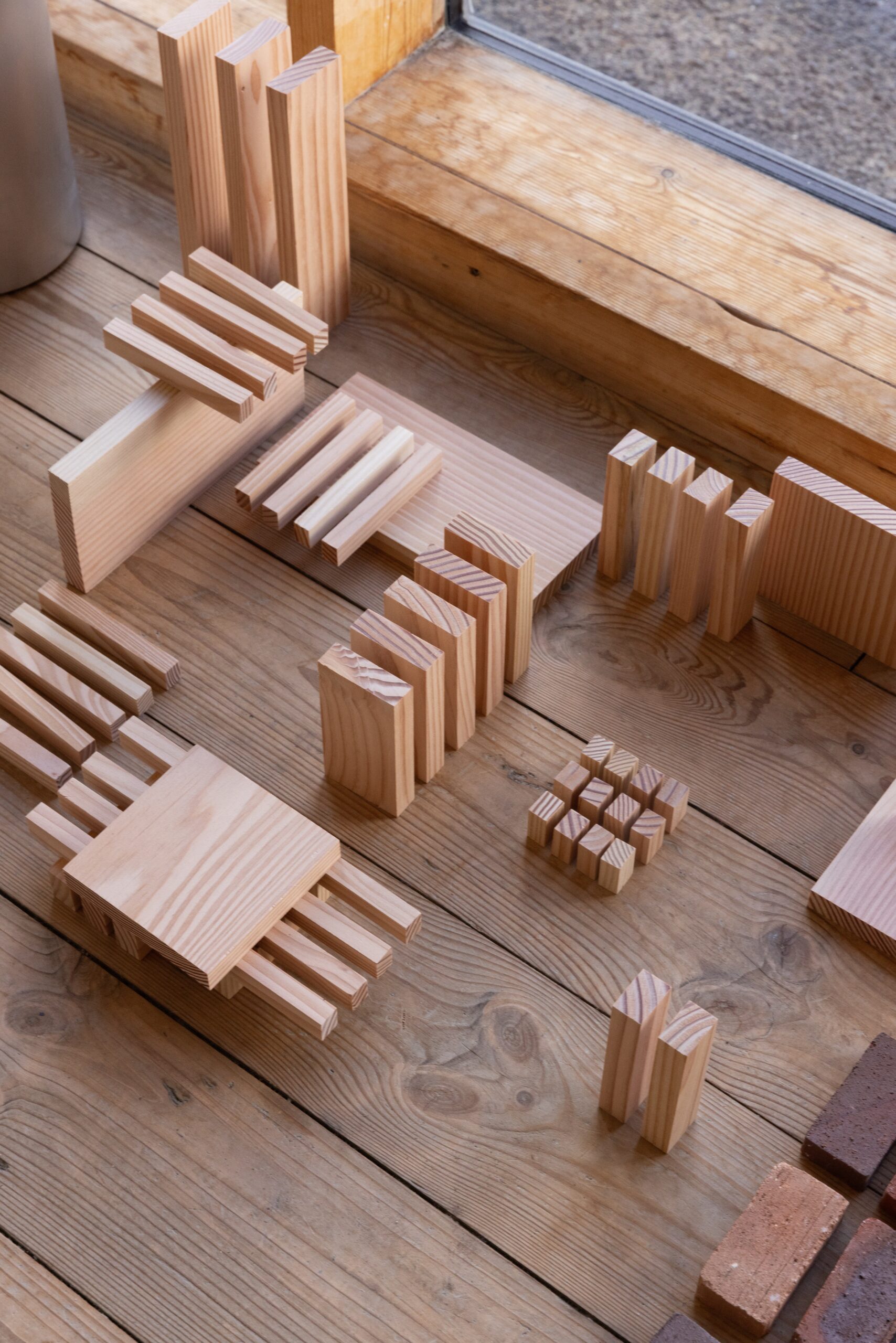
A central point of Earth | Tree is that creativity is not reserved for architects. In the exhibition’s workshop zone, visitors can set things in motion themselves: shape landscapes in sand, build with Tsumiki – the Japanese wooden blocks that Kengo Kuma designed for play, inspired by his own childhood – and experiment with Danish-produced wooden blocks and miniature bricks.
According to the architects, this is not a children’s activity alongside the exhibition. It is the heart of the exhibition. Because Earth | Tree is about the fact that all people – regardless of background or experience – have the capacity to shape their surroundings. All it takes is materials, time and the courage to begin.
At its core, the project reflects a shared philosophy between Dinesen and Kengo Kuma, developed over years of collaboration. Both are rooted in a profound respect for natural materials and their inherent qualities. Wood, for Dinesen, begins in the forest. Each tree is selected and refined to reveal its unique character. In Kuma’s architecture, wood becomes a means of softening space, creating permeability and dissolving the boundary between interior and exterior.
This perspective is reflected in the project’s responsible use of materials. The wooden elements are leftover Dinesen Douglas offcuts, repurposed for the installation, while Petersen Tegl’s discarded bricks demonstrate durability, anchoring the work both physically and culturally. Together, these contributions articulate a balance between opposing forces: the heaviness of earth and the lightness of canopy, the permanence of brick and the adaptability of wood, the stillness of structure and the movement of light.