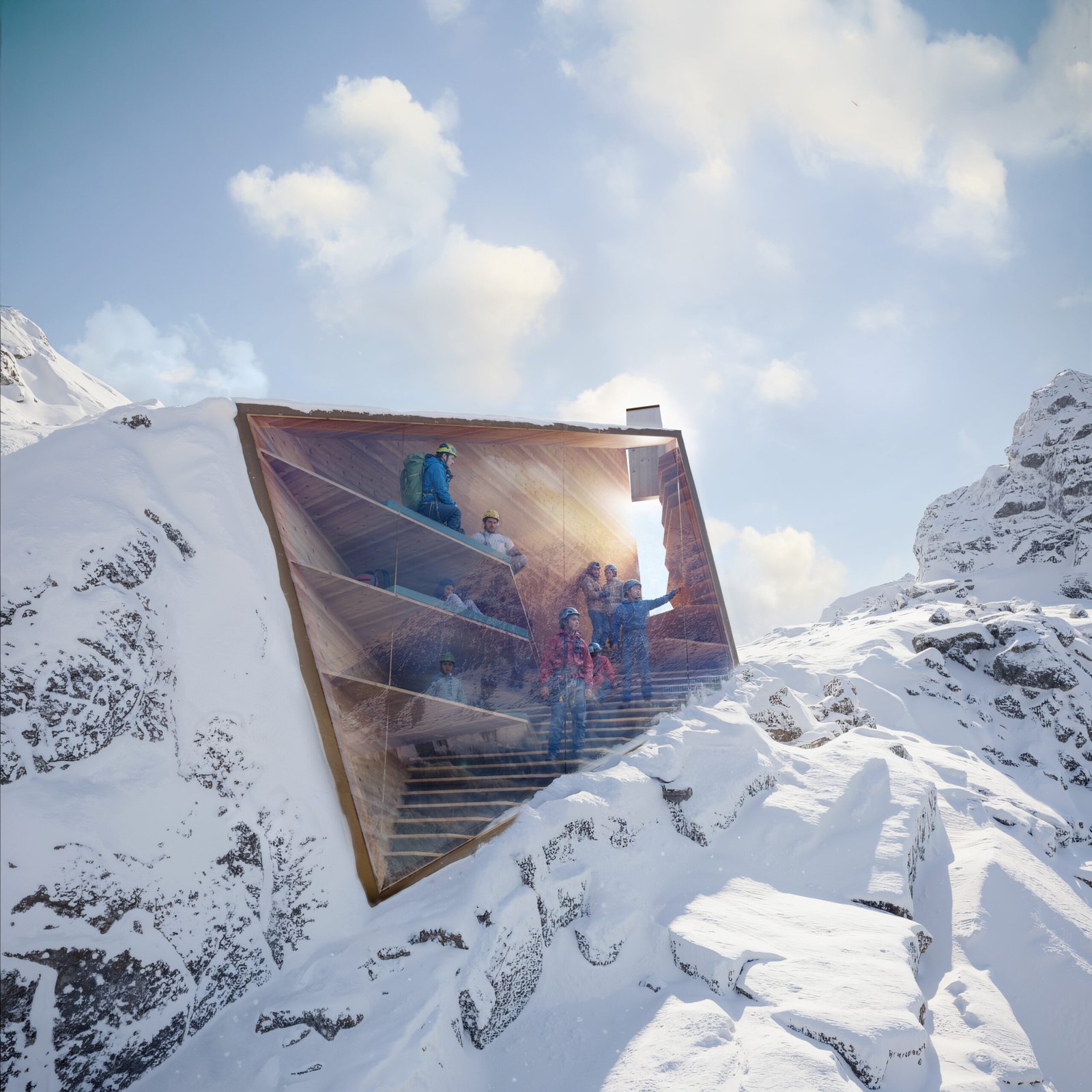
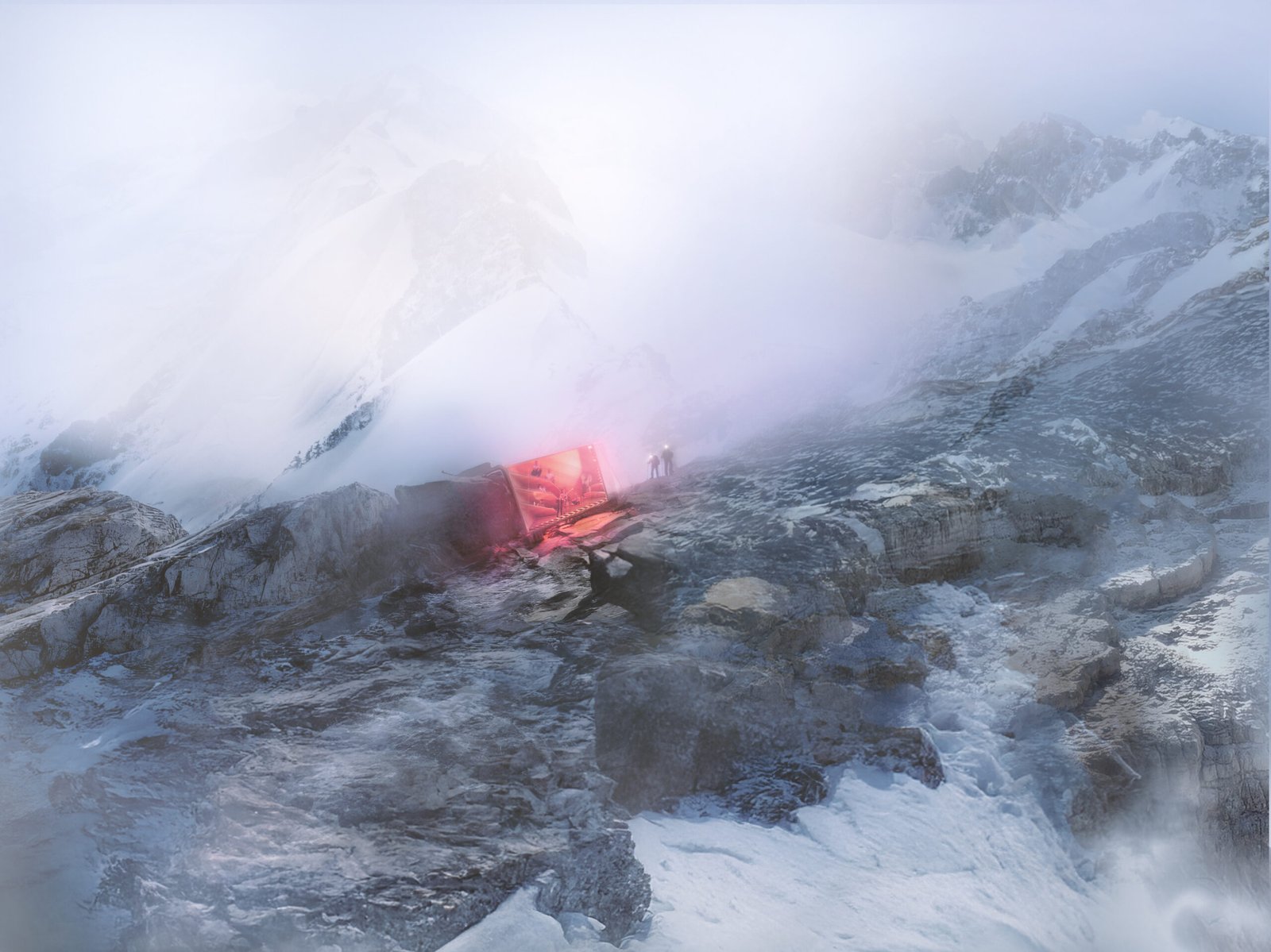
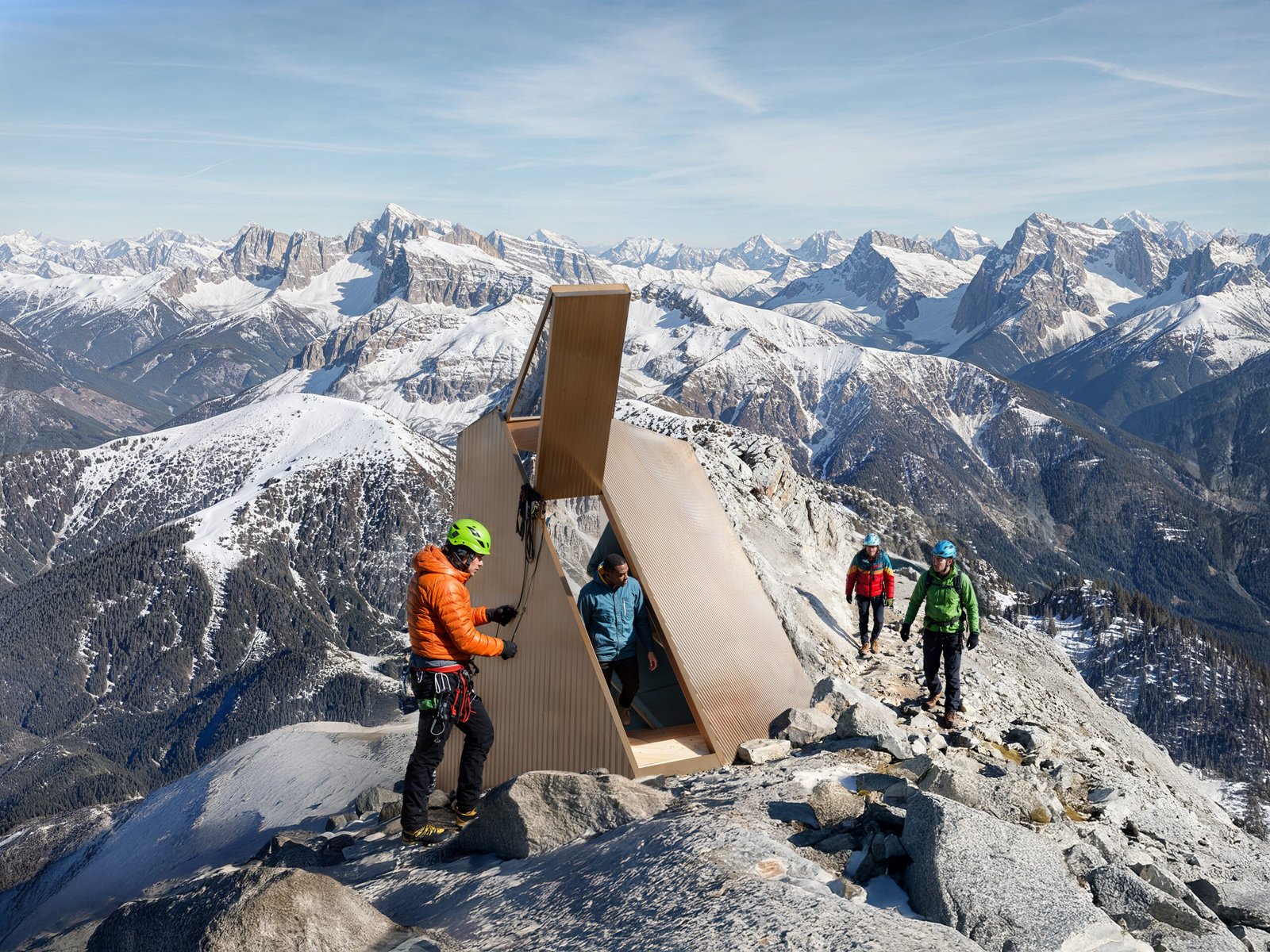
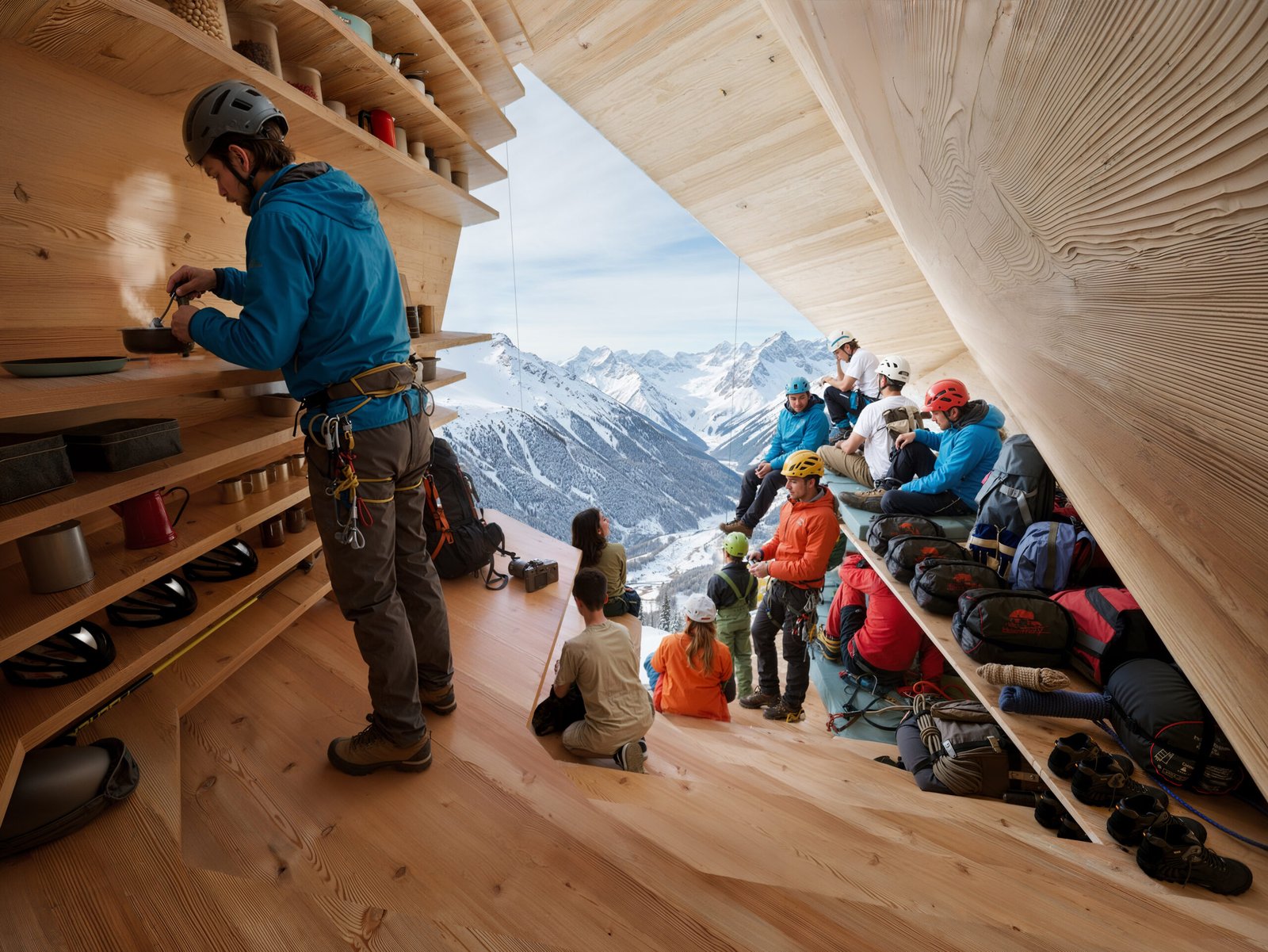
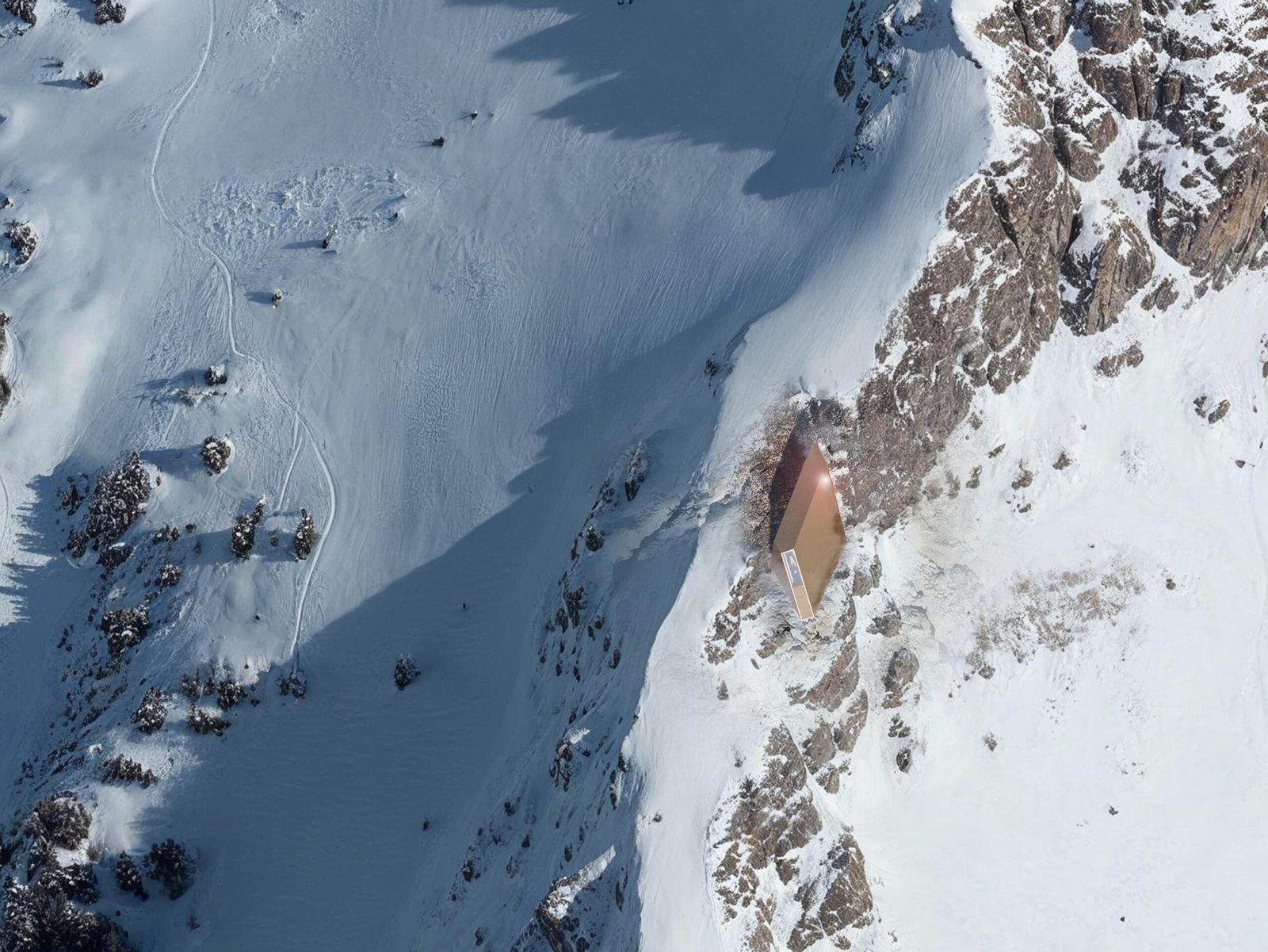
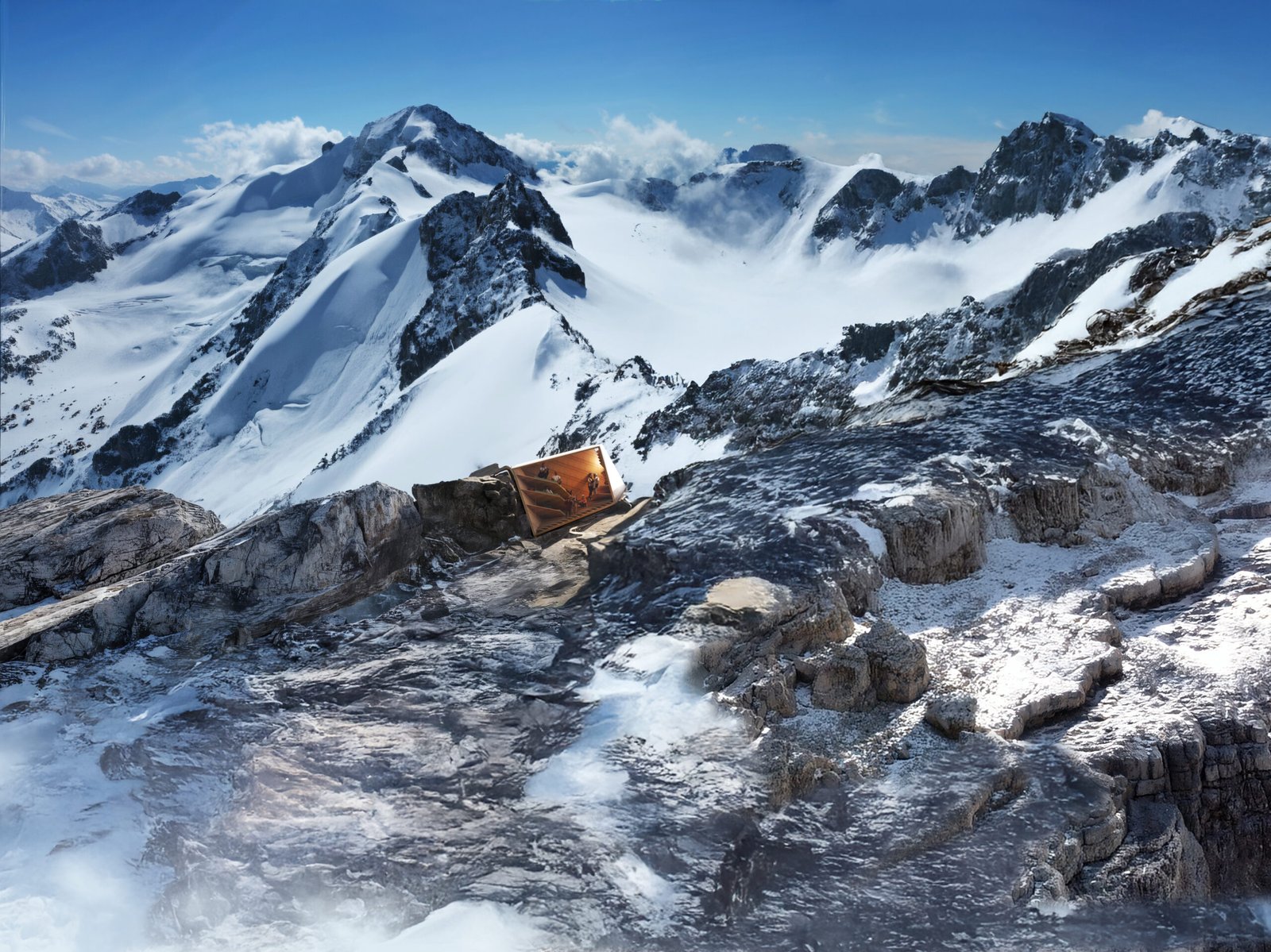
The bivouac will have a dual existence. Initially, it will be showcased as a temporary pavilion coinciding with the 2026 Winter Olympics, to celebrate alpine culture. After the event, it will be airlifted by helicopter to its final permanent site at high altitude, where it will continue to serve climbers for generations to come. This two-phase lifecycle embodies the deeper principles of circular design, with the structure bridging urban culture and mountain heritage in a sustainable, lasting way.
“Unfortunately, today bivouacs often look like airships that have landed on our beautiful alpine landscapes. Here we took the opposite approach: a structure that blends as much as possible with the surroundings,” said Carlo Ratti, professor at MIT and the Politecnico di Milano, co-founder of CRA, and director of the Biennale Architettura 2025. “Great 20th-century Italian architect Gio Ponti once said that architecture is ‘like a crystal’. We took that literally in this design, using digital fabrication to design a bivouac as if it were part of the natural rock formations that shape the Alps.”
“For the Salone, the bivouac by CRA-Carlo Ratti Associati conveys a vision of design we share: one capable of blending landscape, innovation, and respect. It speaks of a future in which architecture does not impose itself but adapts, observes, and enters into dialogue with the environment, highlighting our material of choice – wood – as an emblem of conversation with nature. It is a gesture that turns research into a form of harmony with the natural world and that, in its journey from our Milan to the Alps, expresses the principles we share: a circular, responsible design,” stated Maria Porro, President of Salone del Mobile.Milano.
The bivouac is the latest in a series of key projects from CRA that blend the natural and artificial world. Previous works include the studio’s award-winning Olympic torches for the Milano Cortina 2026 games, as well as the recently unveiled AquaPraça in Venice, a centerpiece of the Italian Pavilion at COP30. Through projects like the Alpine bivouac, CRA reaffirms its commitment to creating architecture that works with nature, not against it.