Casa Terramar by Estúdio Pedro Haruf blends street, sea, forest, and shelter in one design
Timber structure allows flexible design, adapting to evolving needs
April 22, 2026
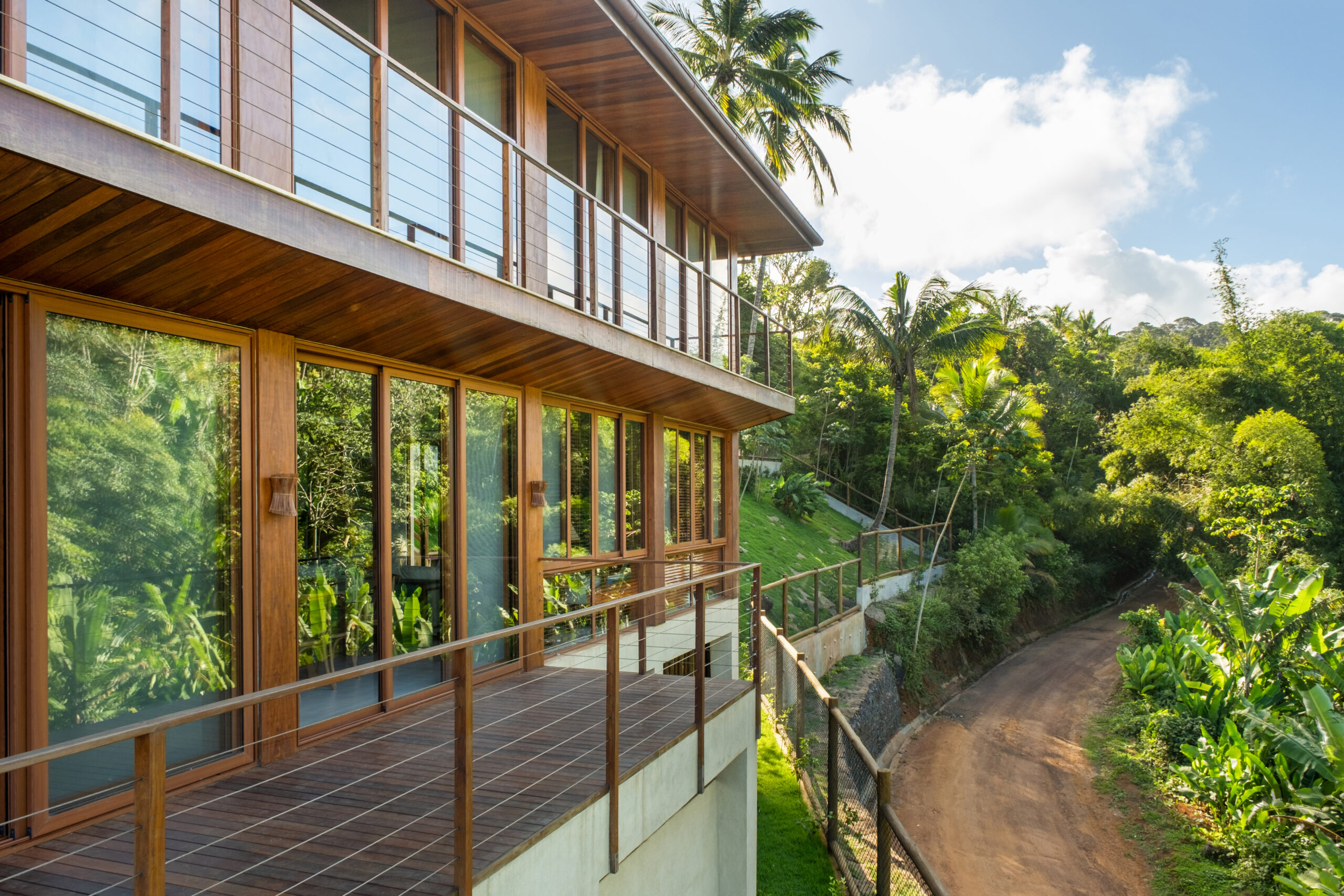
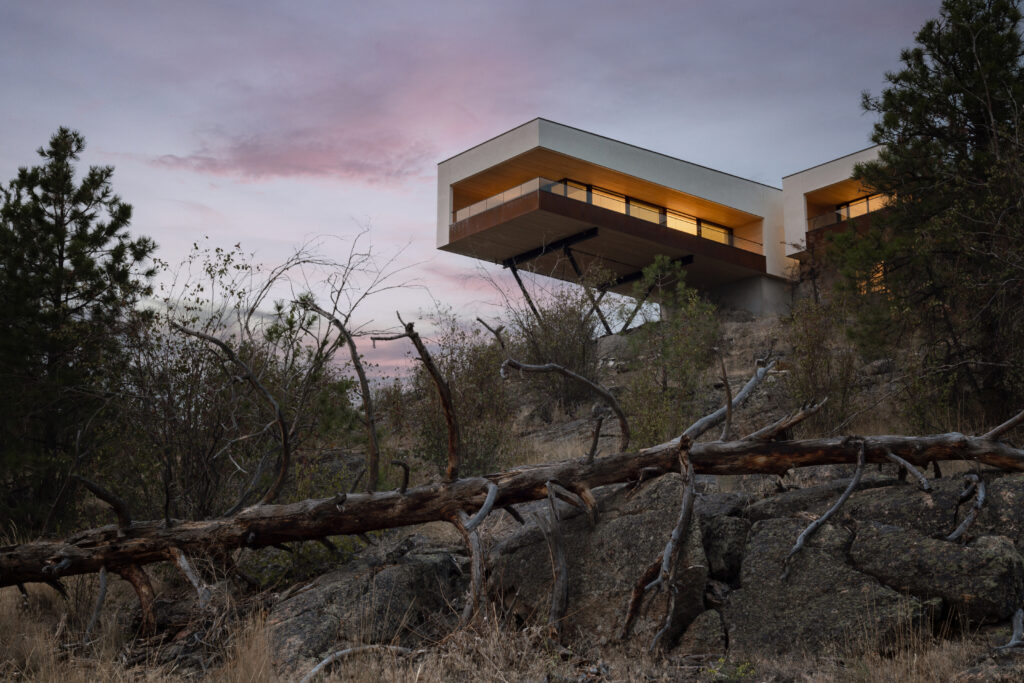
In Itacaré, southern Bahia, where the Atlantic Forest meets the ocean in a landscape of nearly absolute intensity, Casa Terramar is sited with precision. Located in the Vila São José complex, the residence occupies a narrow and challenging hillside site, with a 14-meter elevation change and depth varying between 12 and 20 meters. Only about 40 percent of the lot was effectively buildable due to condominium restrictions and the trapezoidal geometry itself, marked by two 50-meter fronts: an upper one for main access and a lower one facing the street leading to the beach.
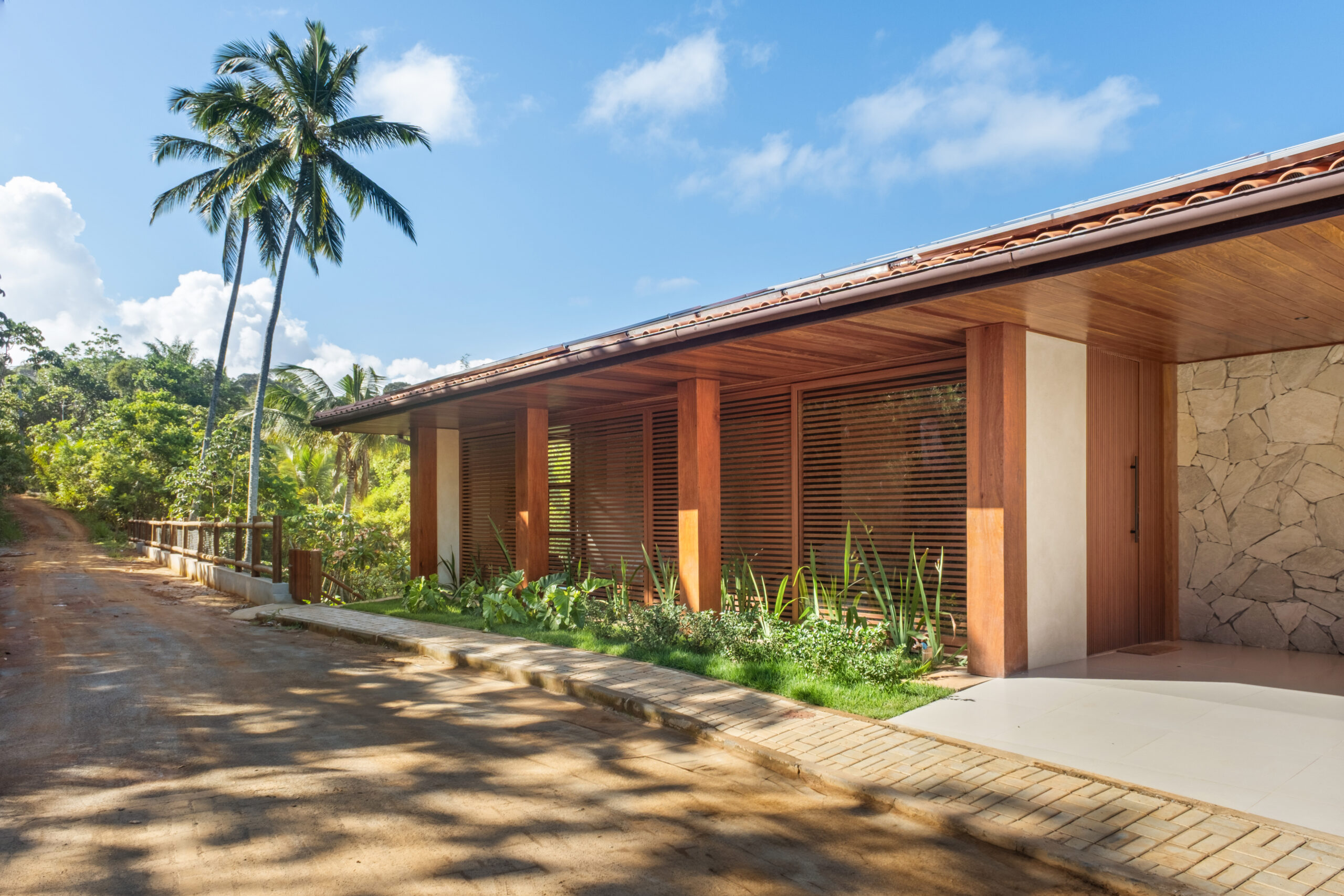
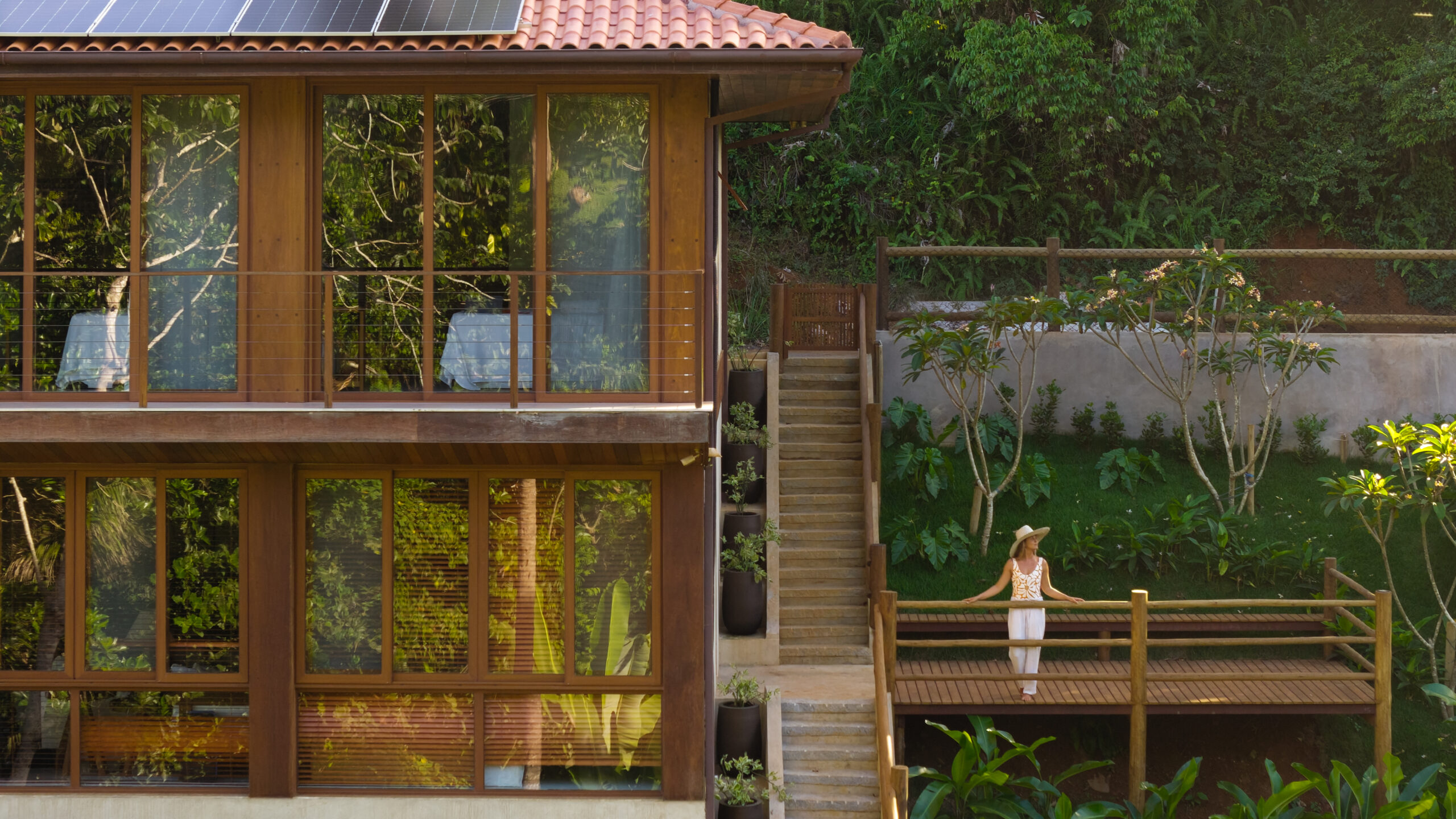
With 450 square meters and four suites, the house was conceived as a summer residence as well as a rental property, requiring a balance between privacy, social interaction, and efficient operation. The strategy was to organize the program in layers that follow the topography. The private floor is located on the highest level, accessed from the upper street. From there, the house presents itself as a single-story volume under a hip roof, an elementary and recognizable form that dialogues with Brazilian construction memory.
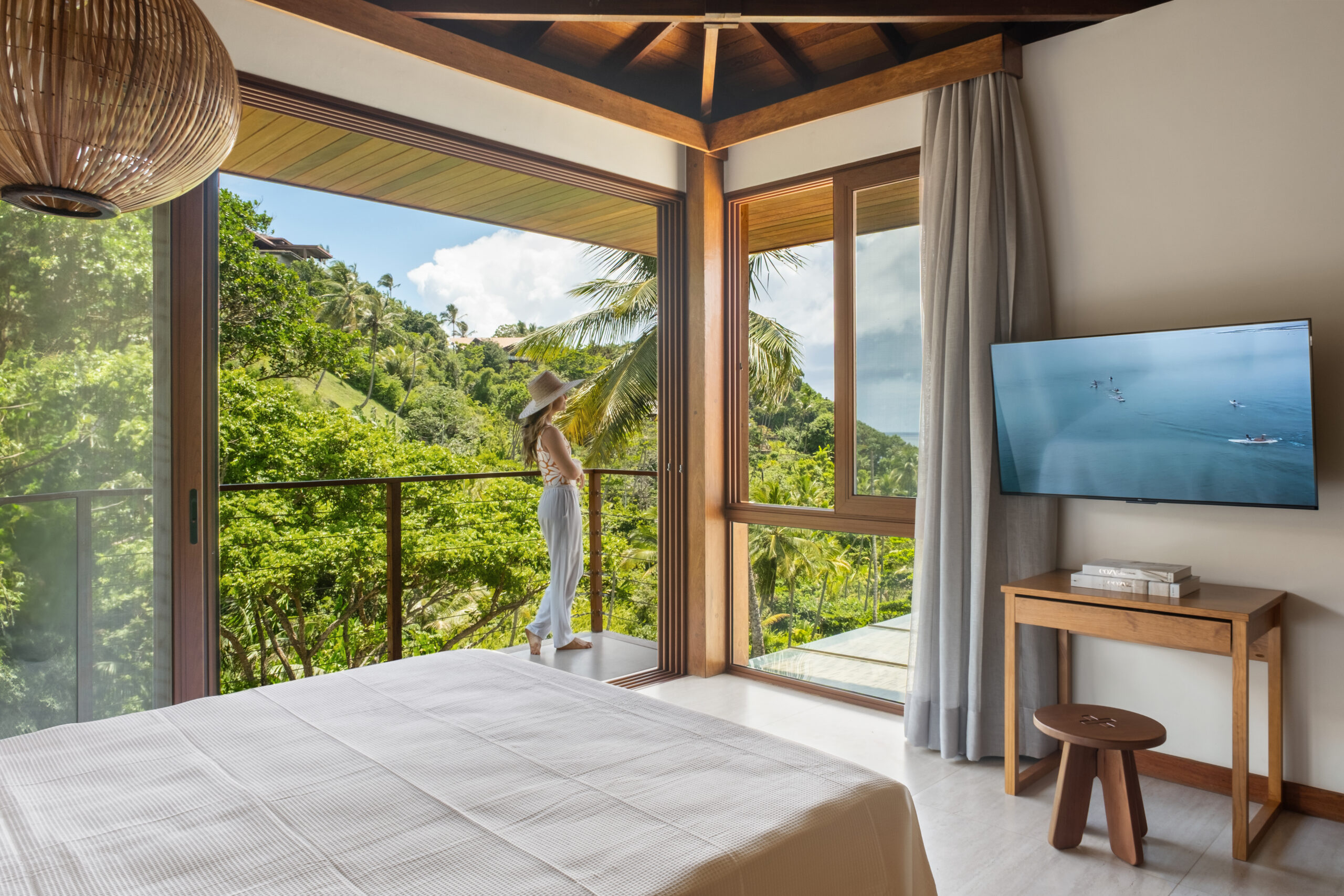
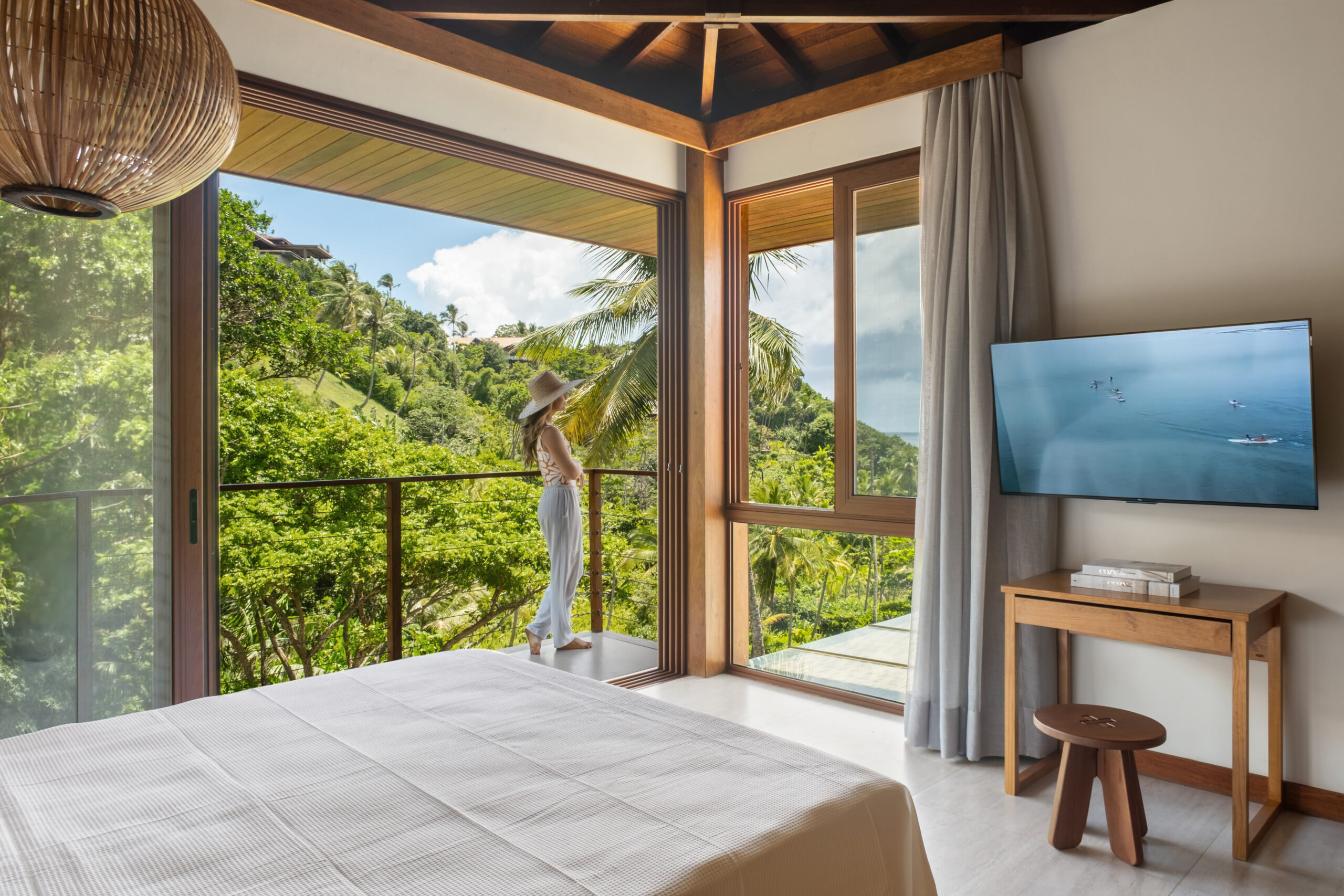
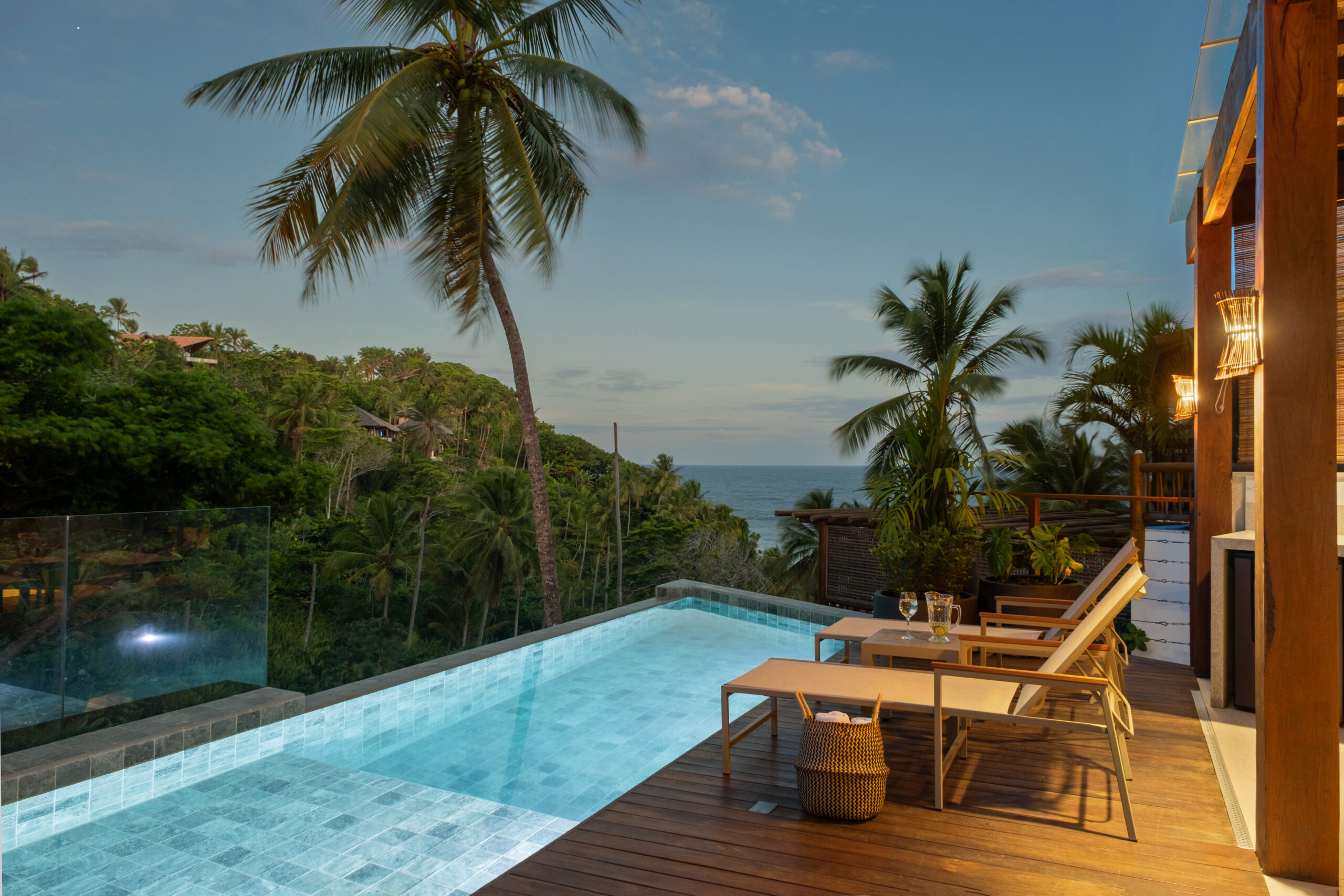
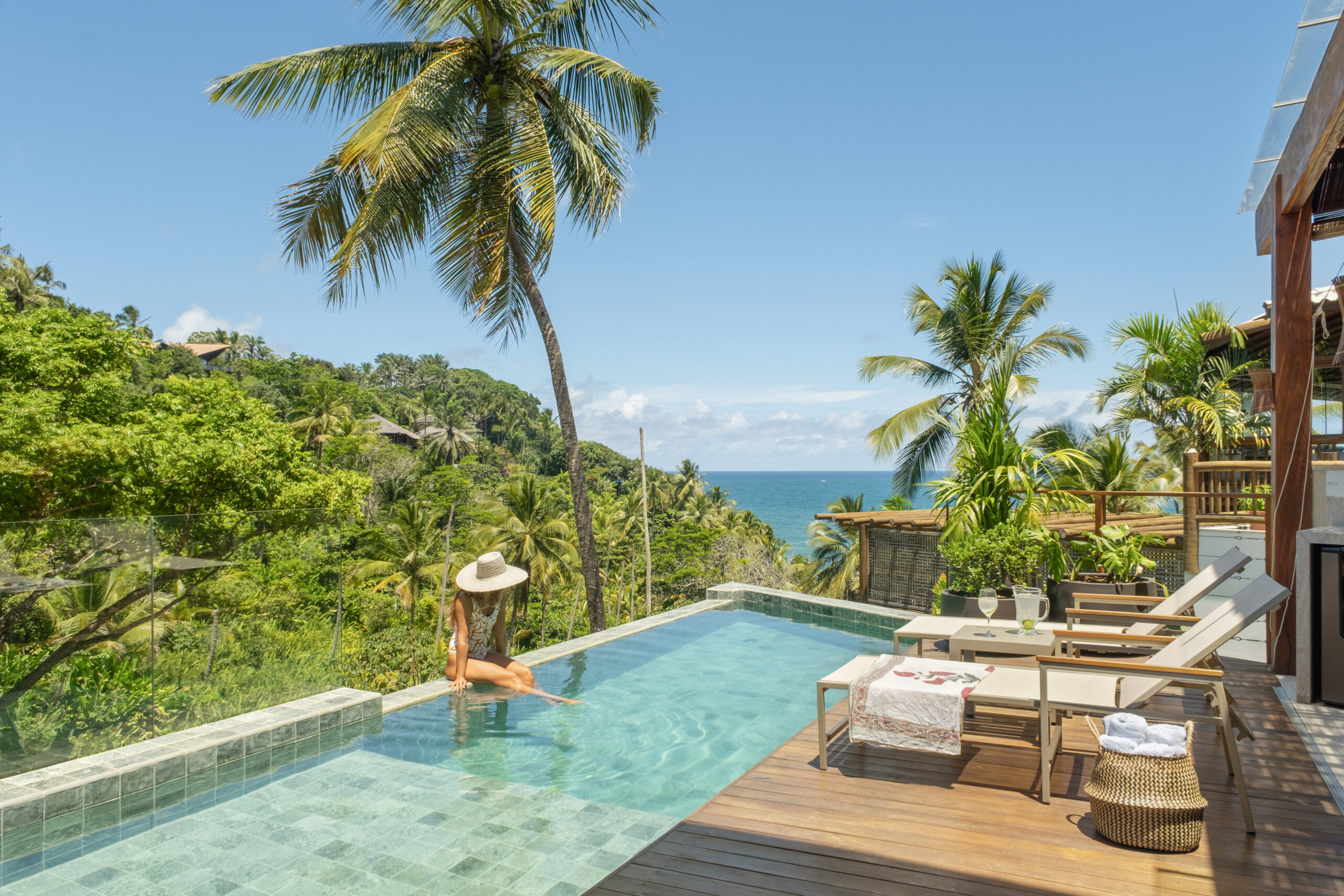
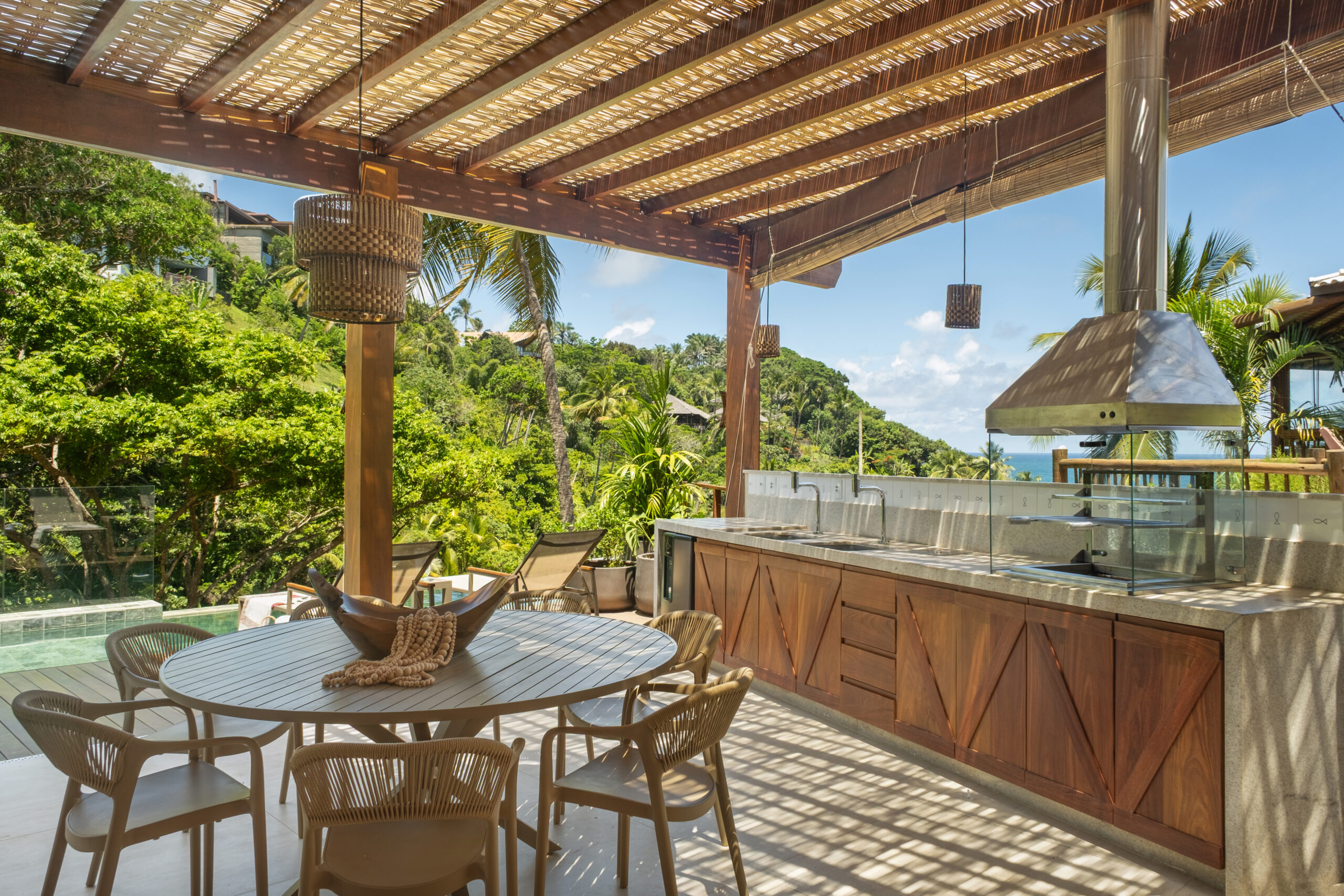
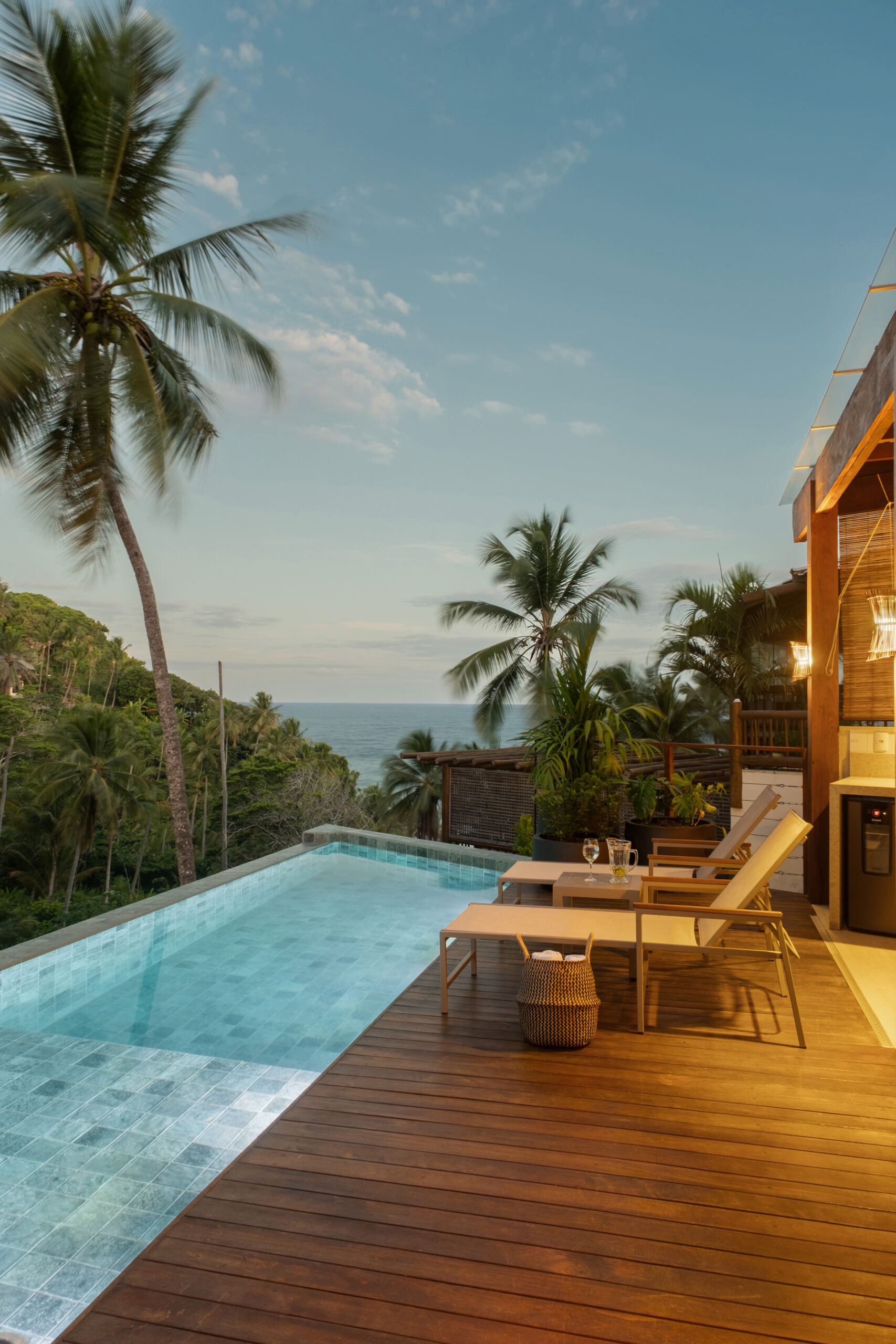
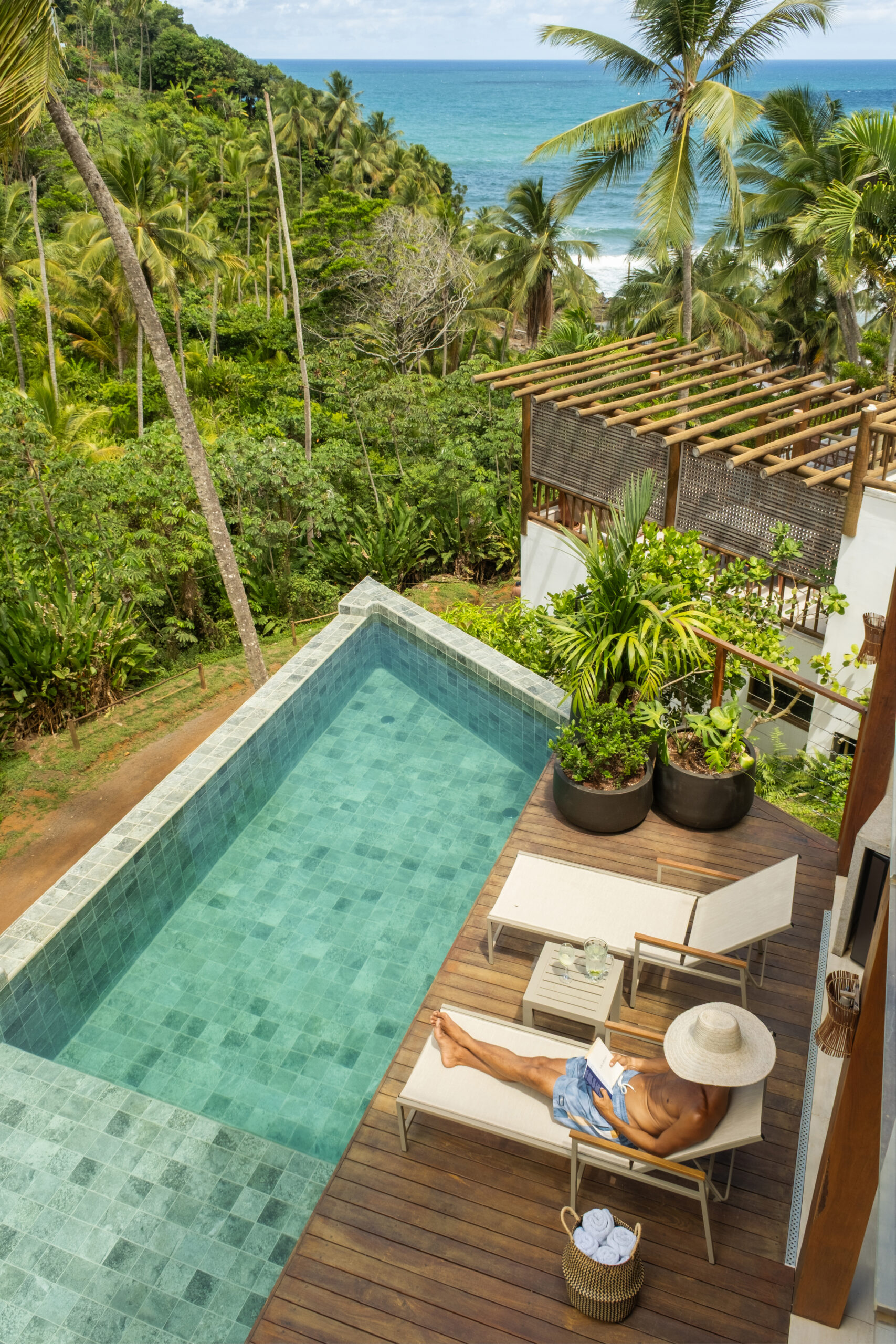
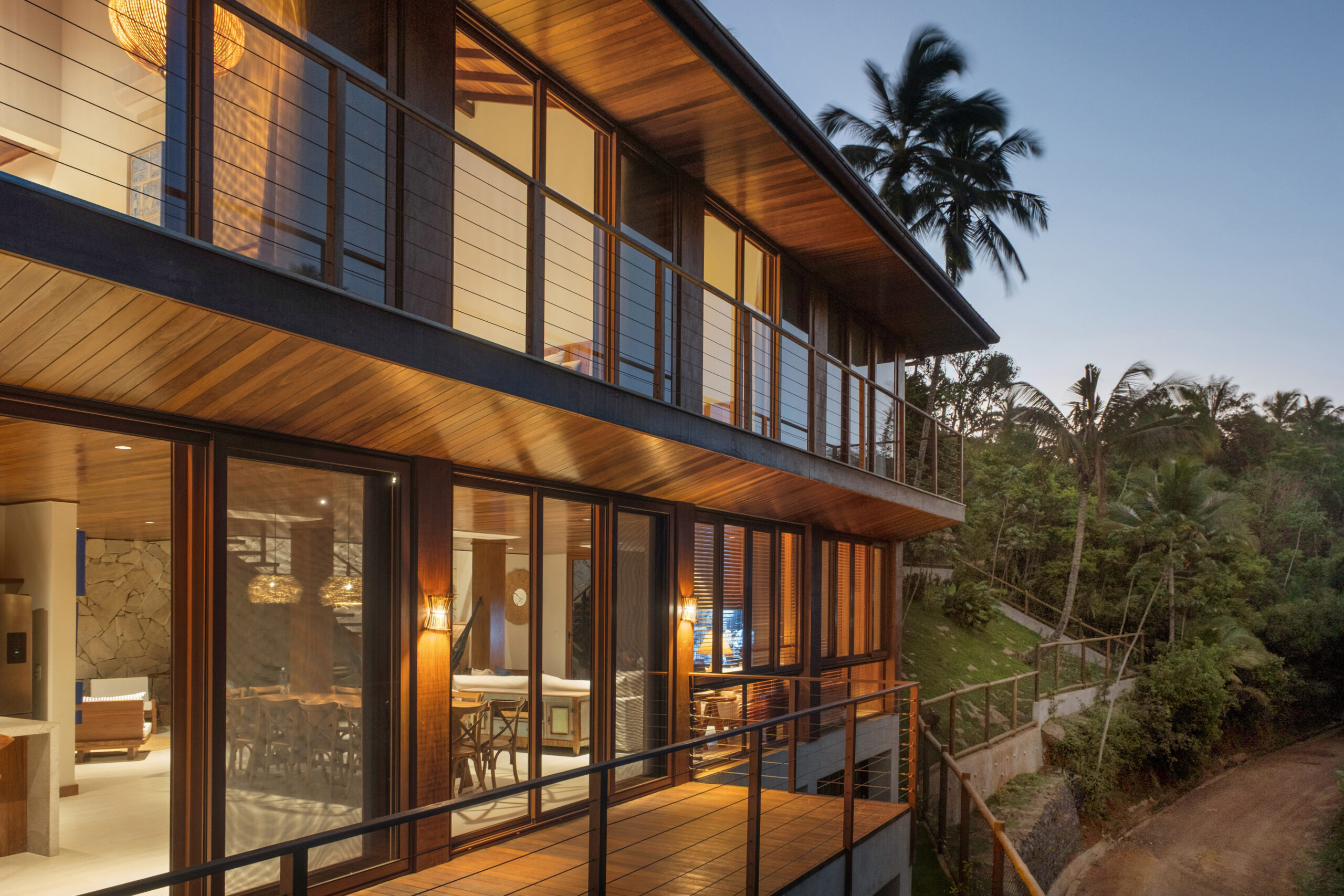
As the terrain descends, the architecture opens up. The social floor connects seamlessly to the landscape through expansive glass planes and a deck leading to the pool positioned at the edge of the lot, acting as a lookout facing the sea. Below, a sauna, beach support, and technical areas resolve the transition between the house and the coast. From the lower street, the reading transforms. The apparently contained volume reveals itself as a three-story construction that imposes itself on the hillside, evidencing the complexity of the site implementation.
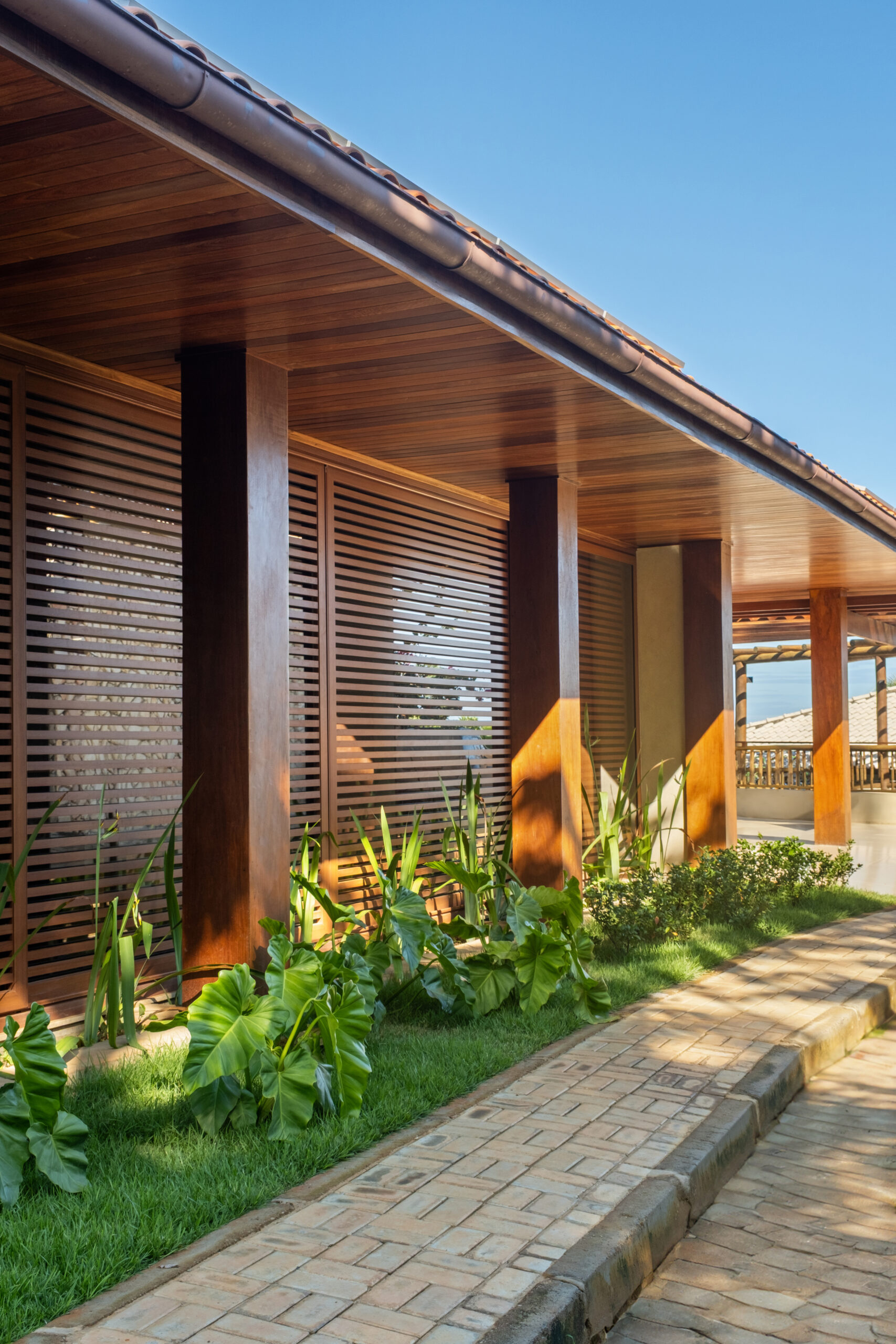
The timber structure defines the rhythm of the house. Well-defined pillars organize the floor plan and create a continuous cadence along the facades. Structural rigor is not exhibitionist; it serves as the project’s backbone. This constructive clarity allowed for adjustments in partitioning and interior design until the final stages of the work without compromising the integrity of the structure or the architectural shell, ensuring flexibility for different modes of use.
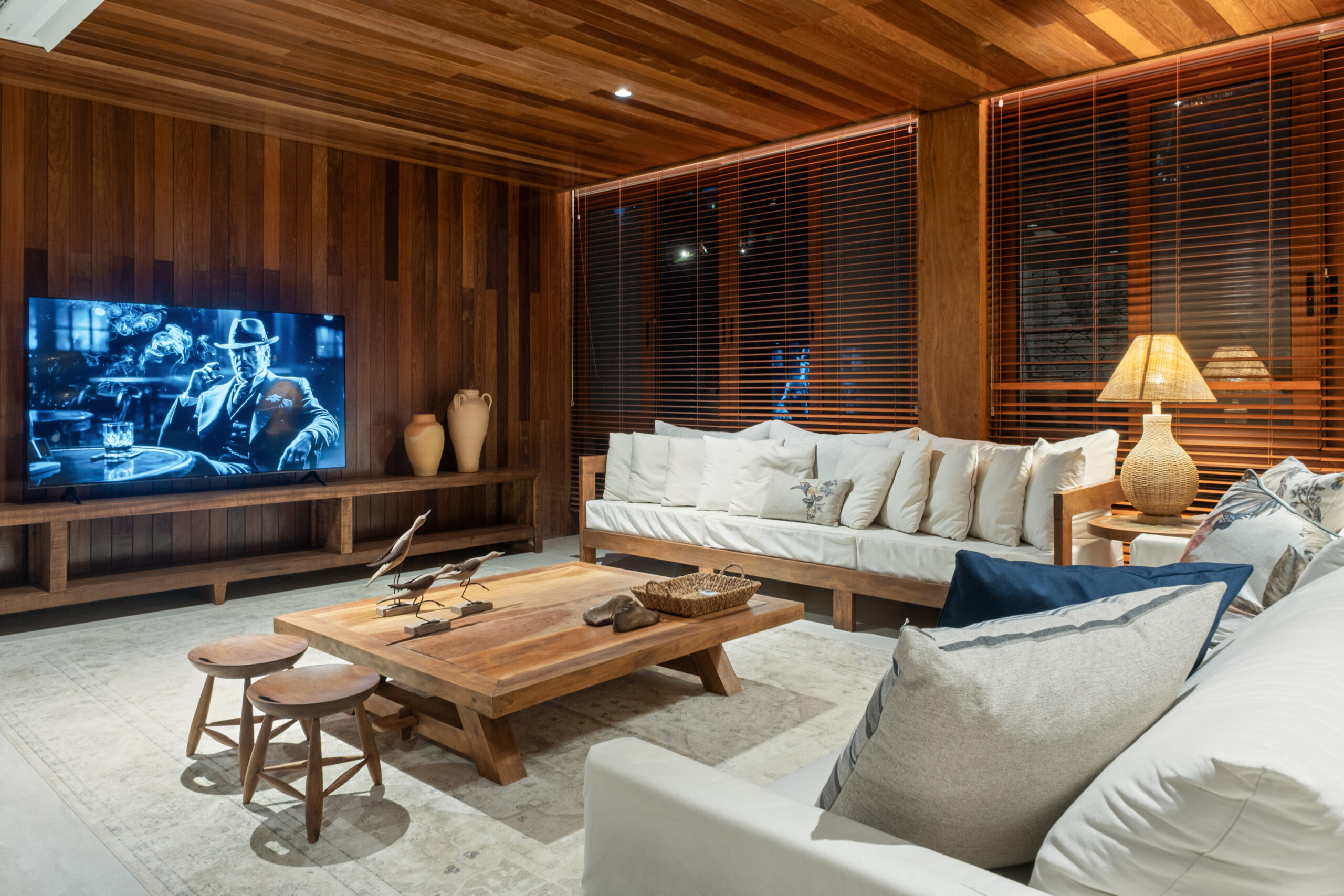
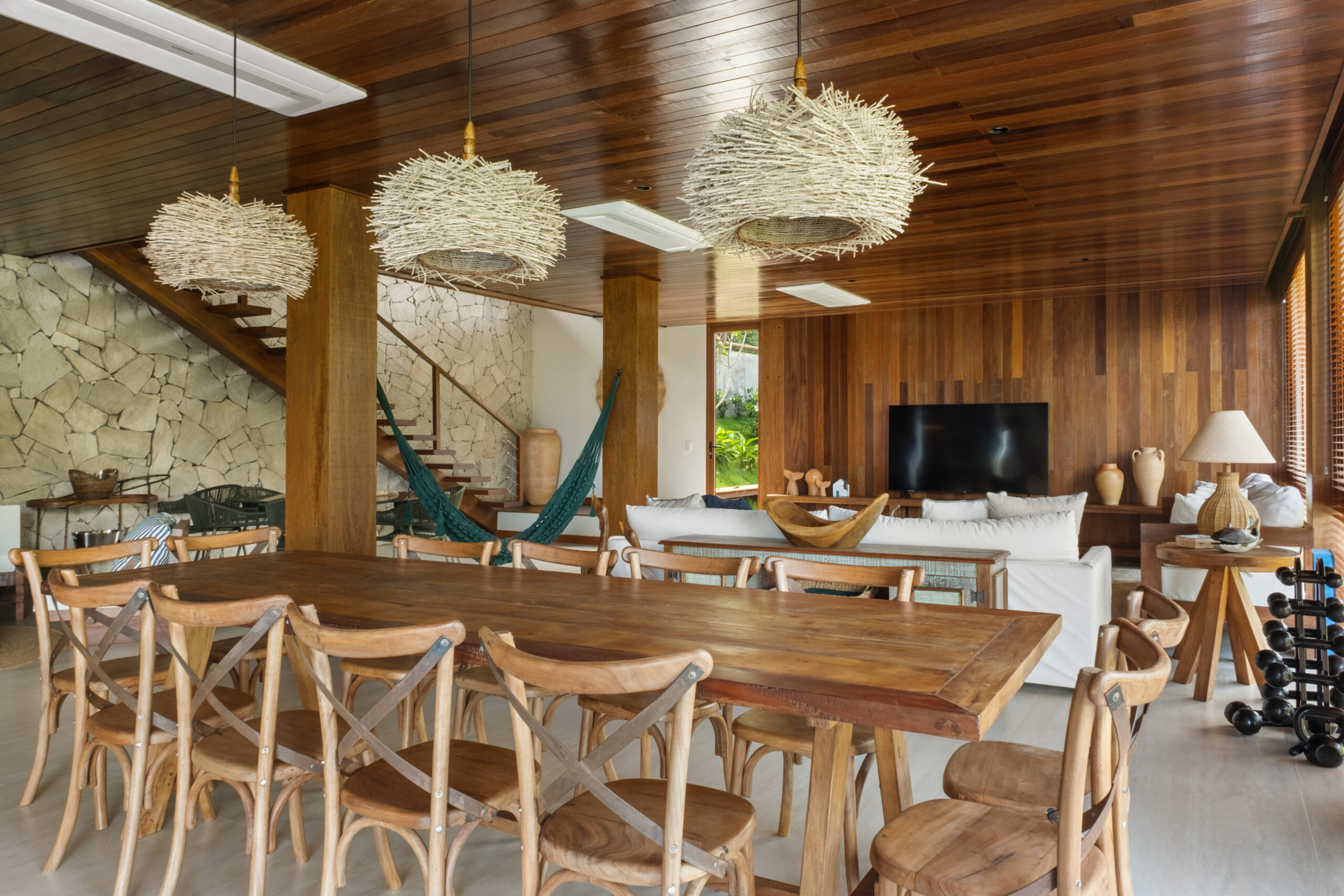
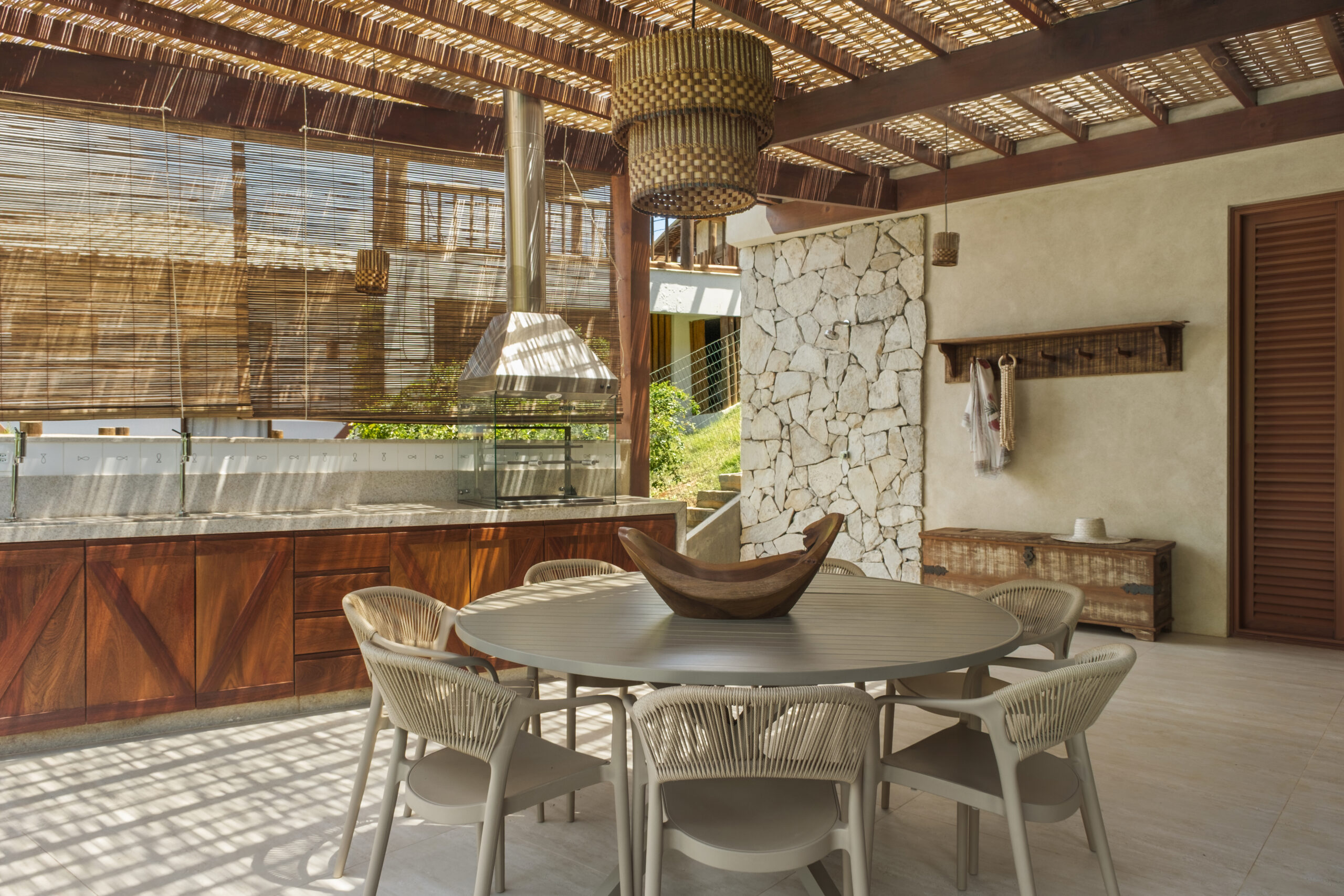
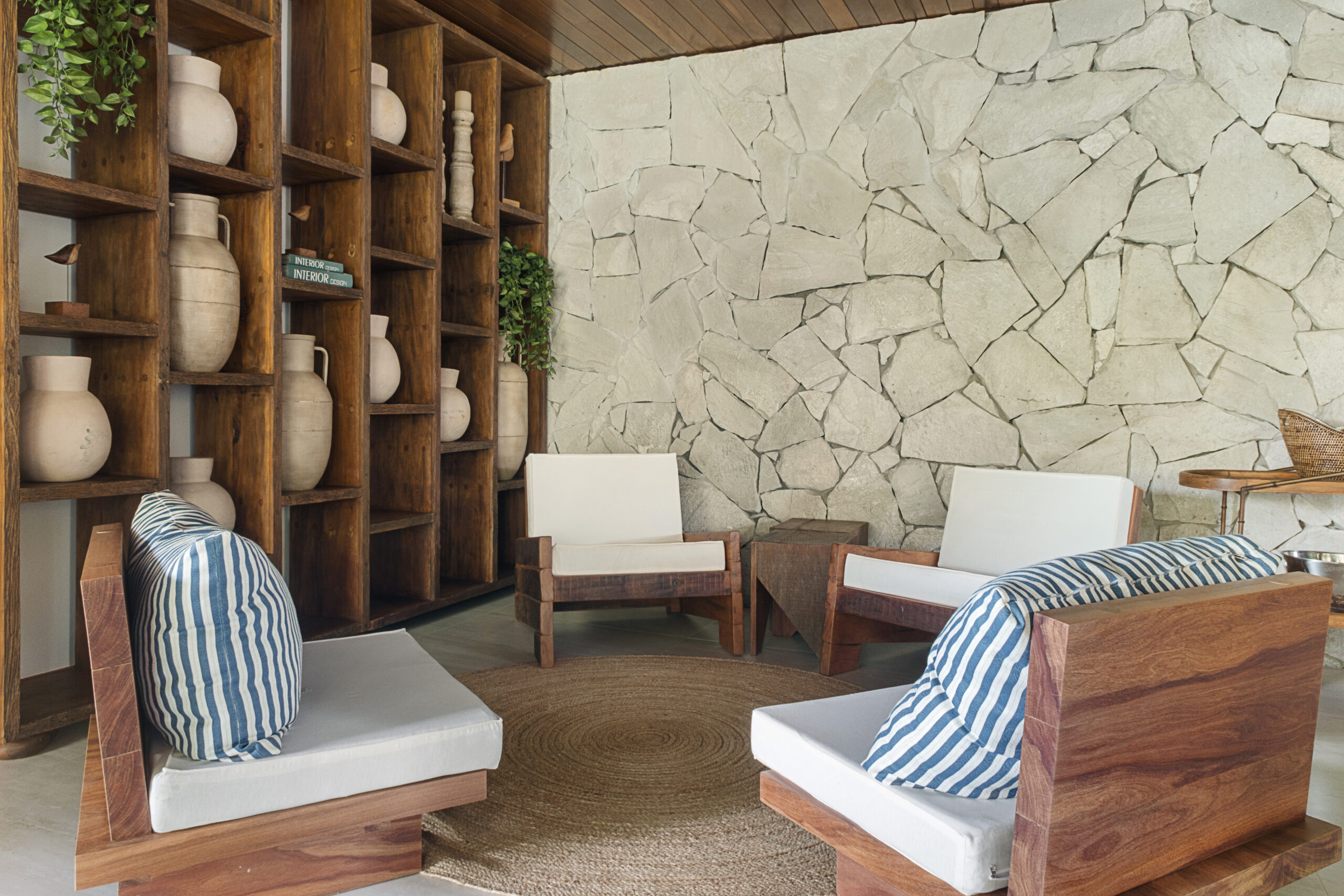
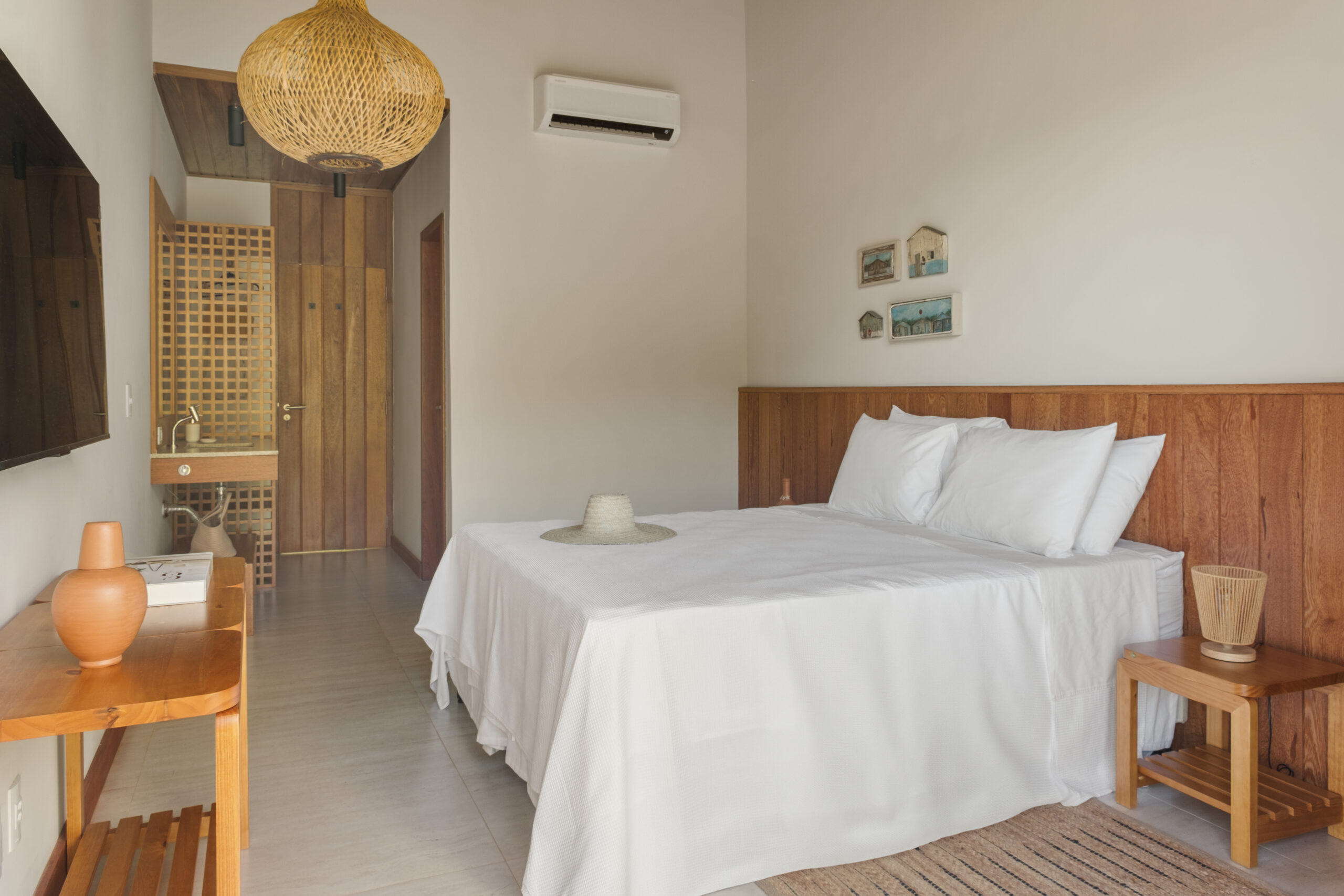
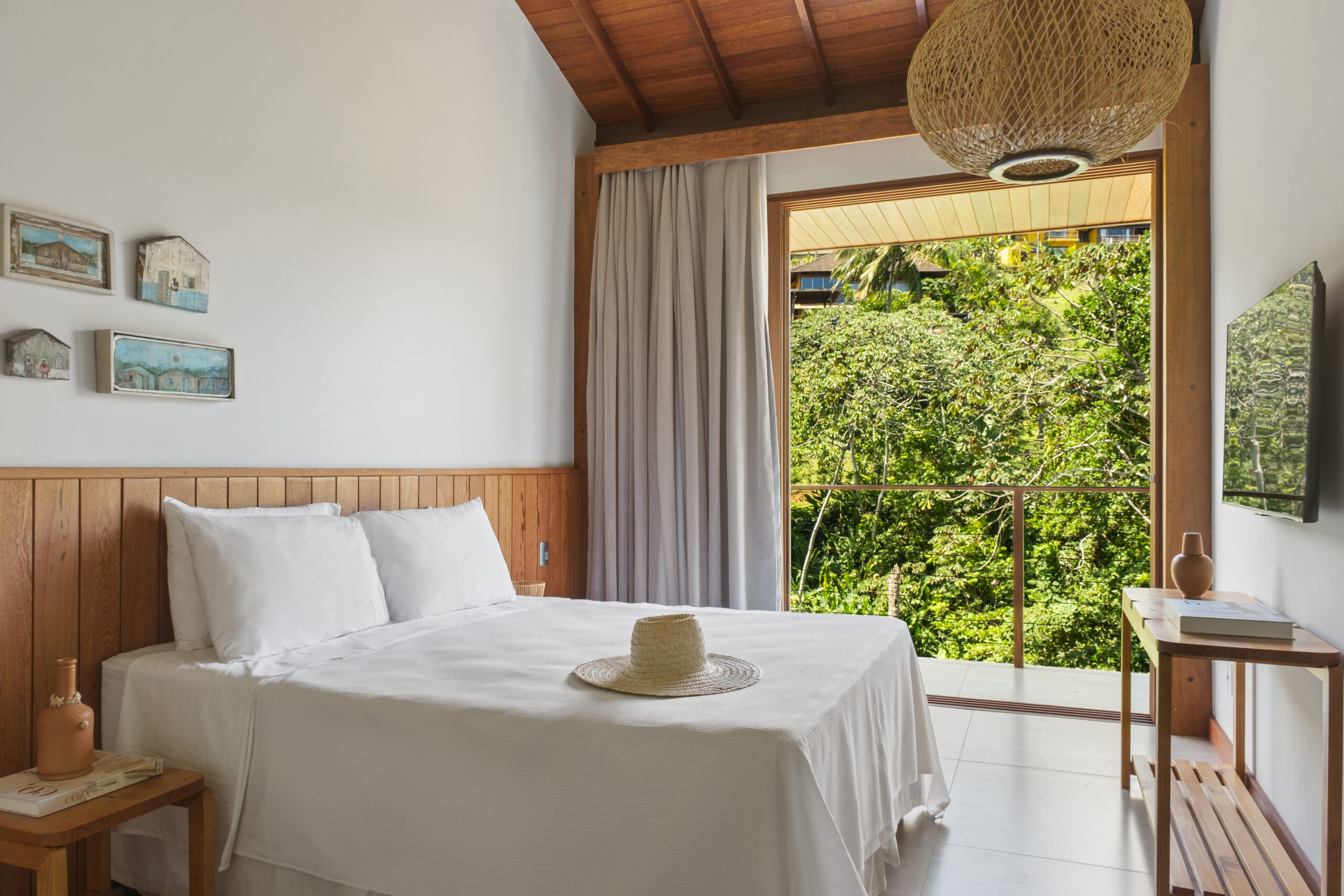
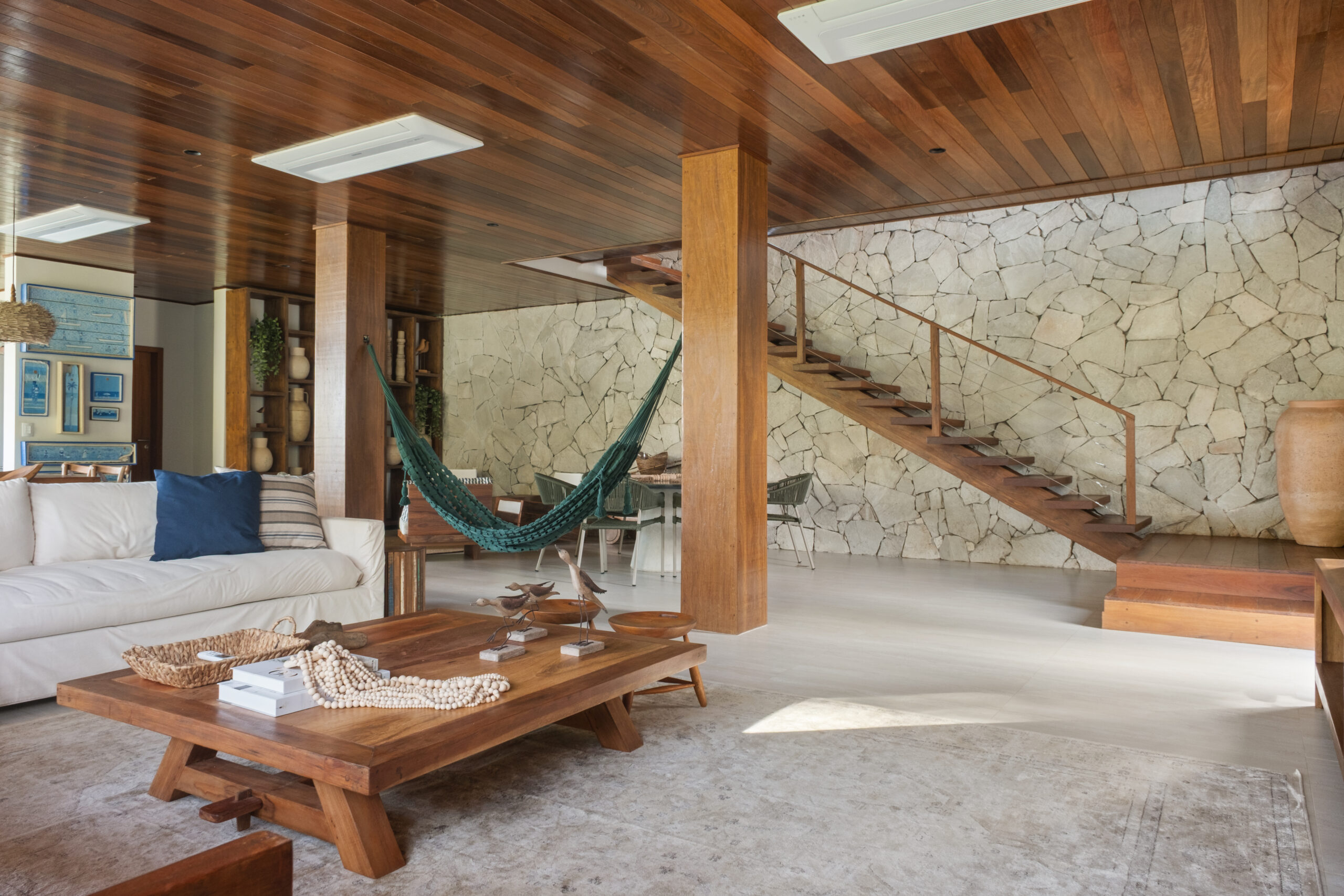
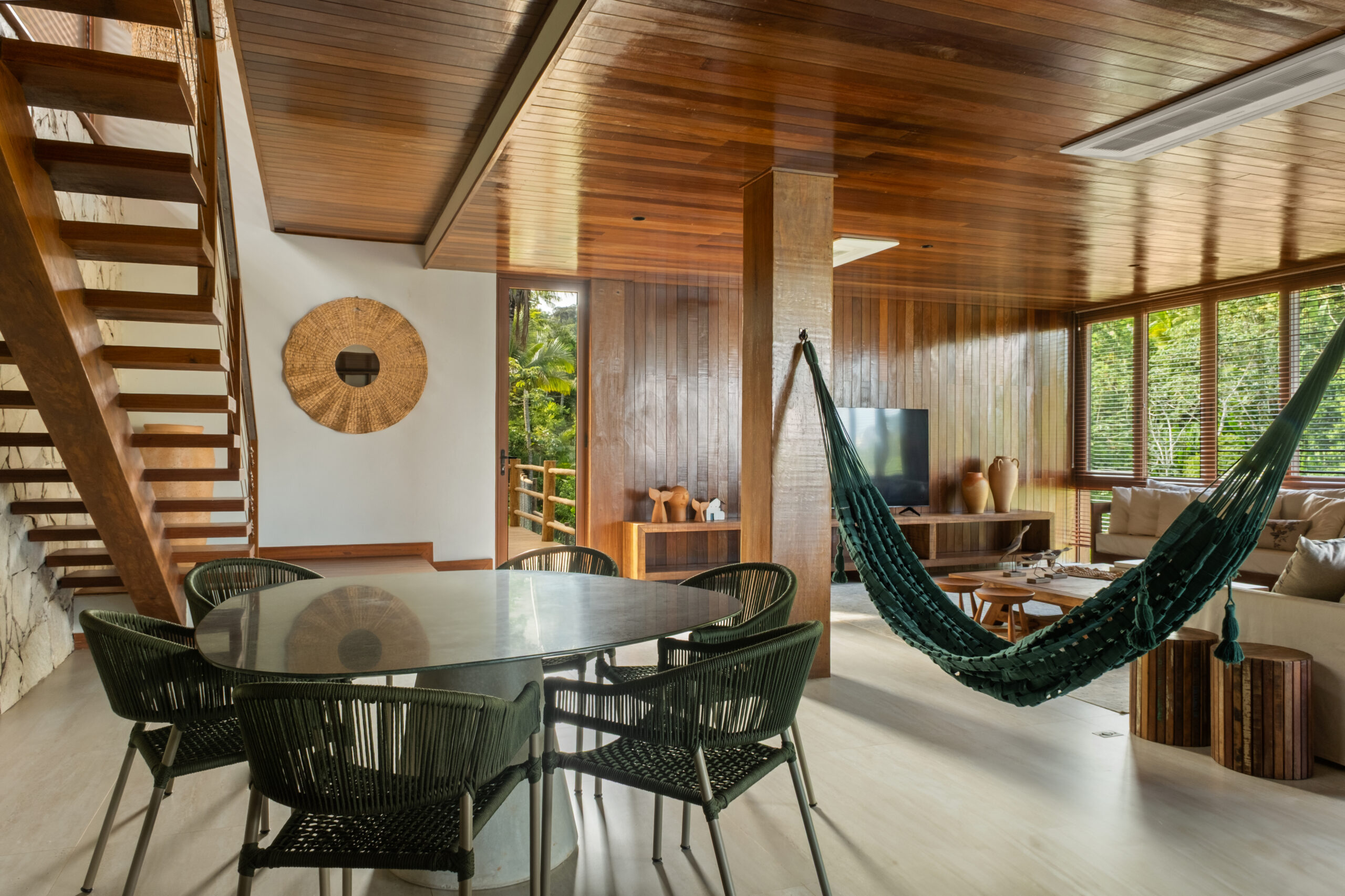
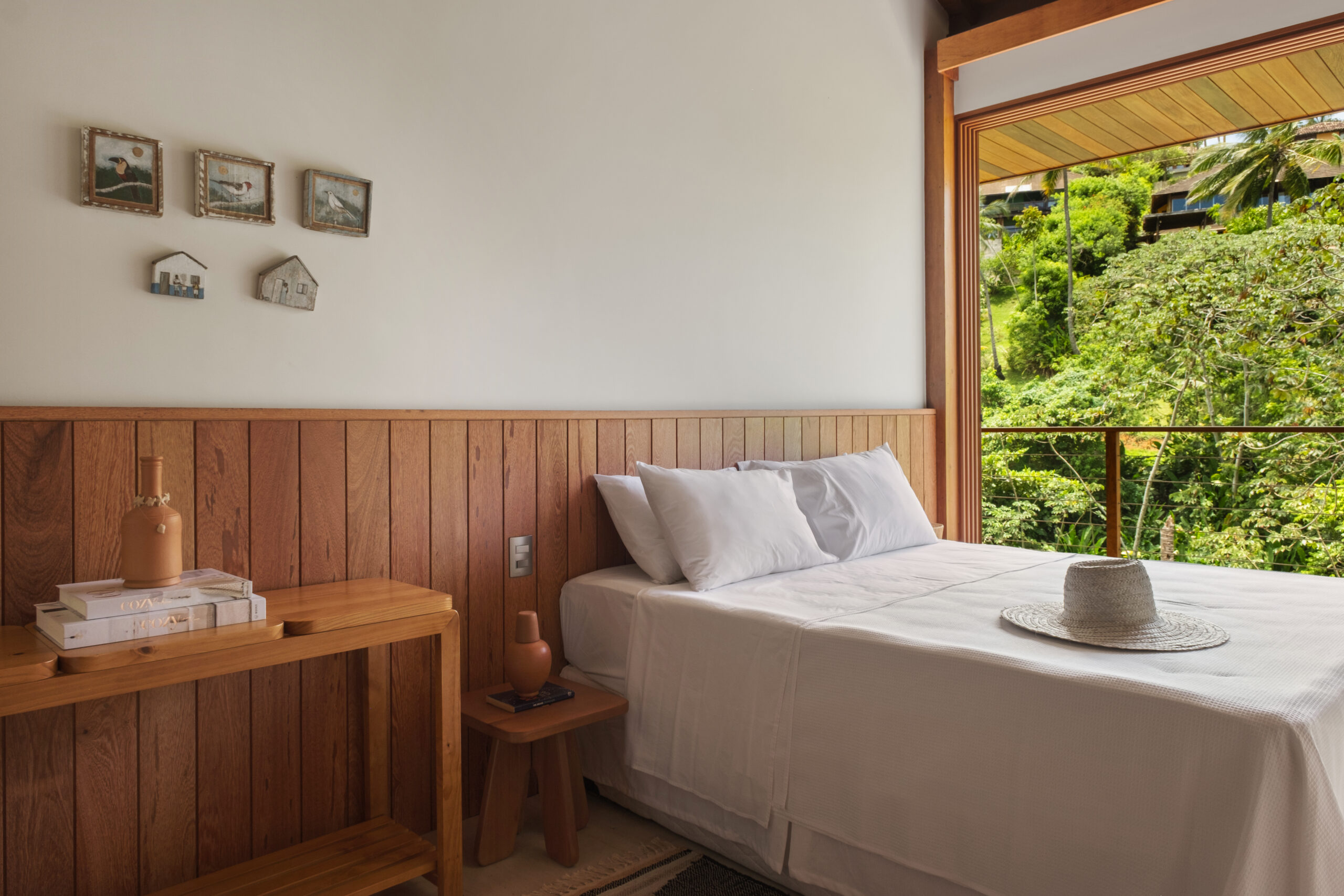
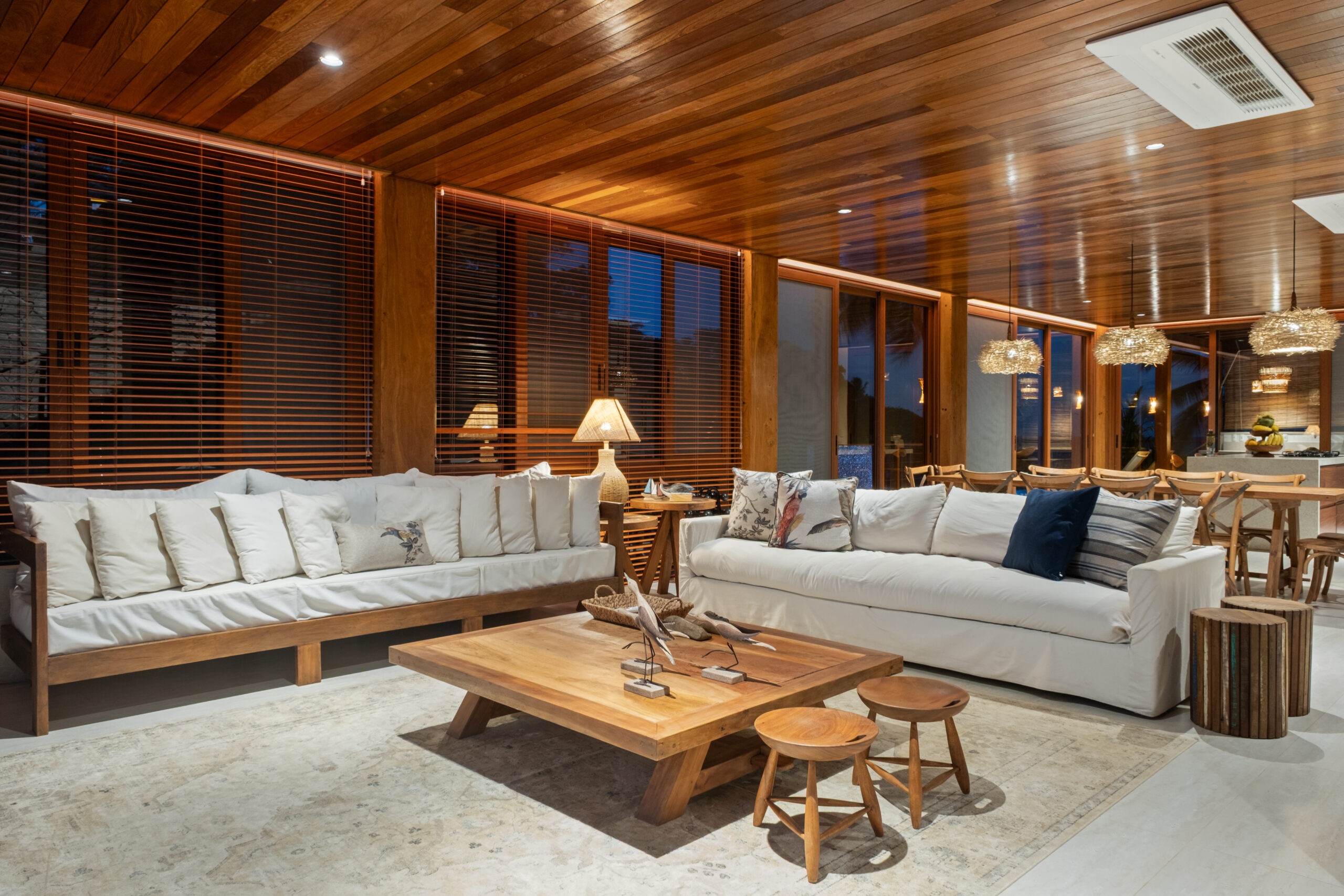
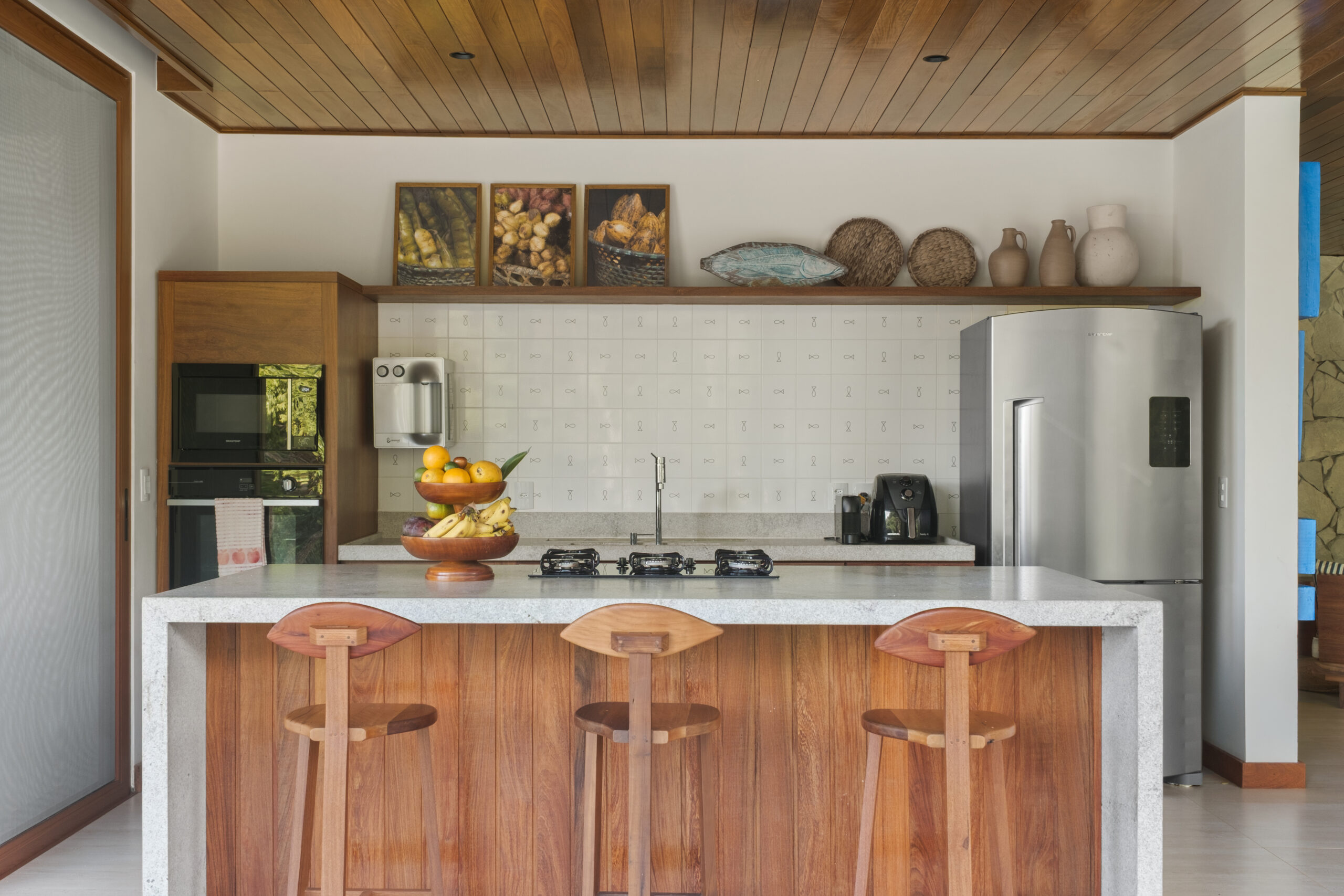
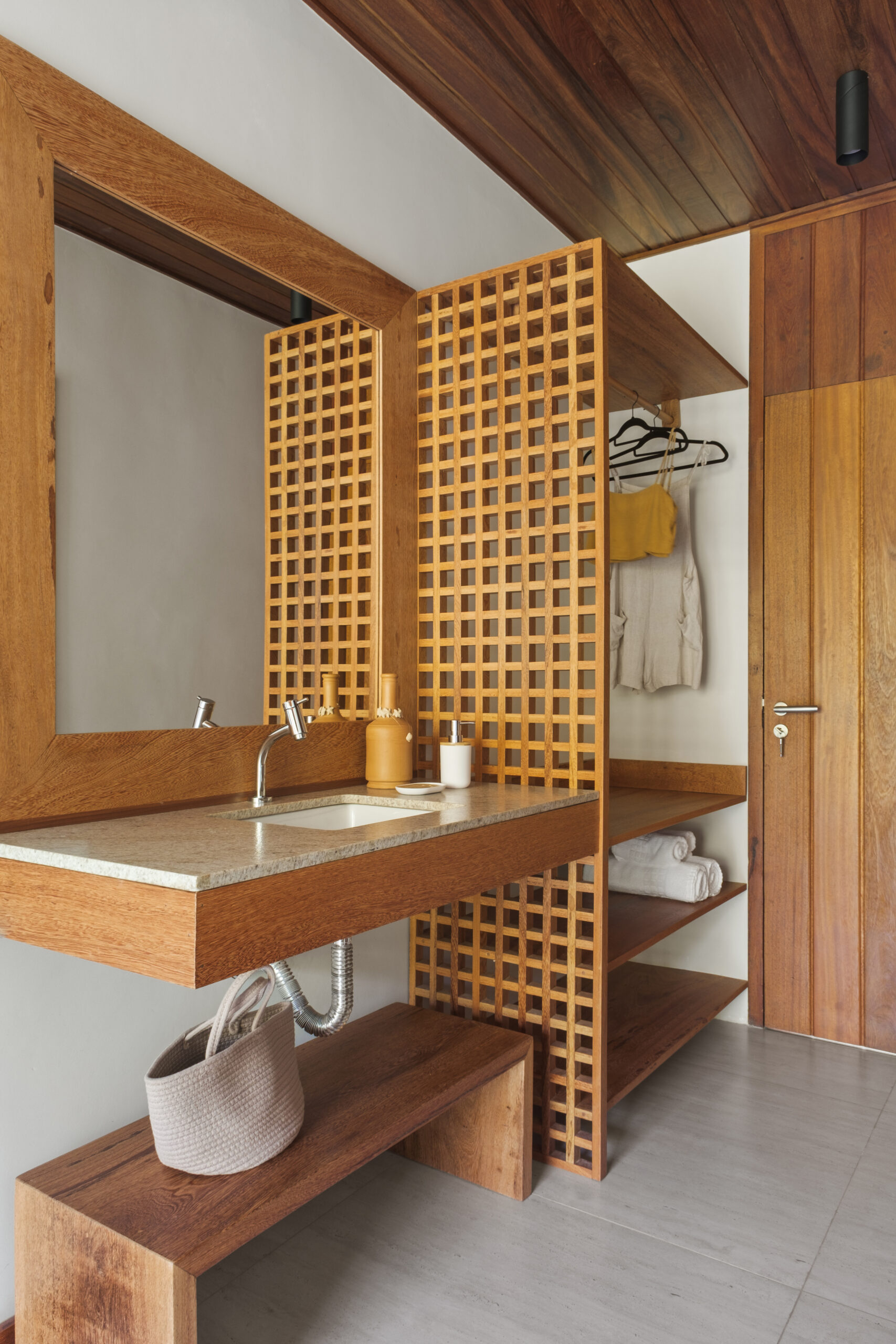
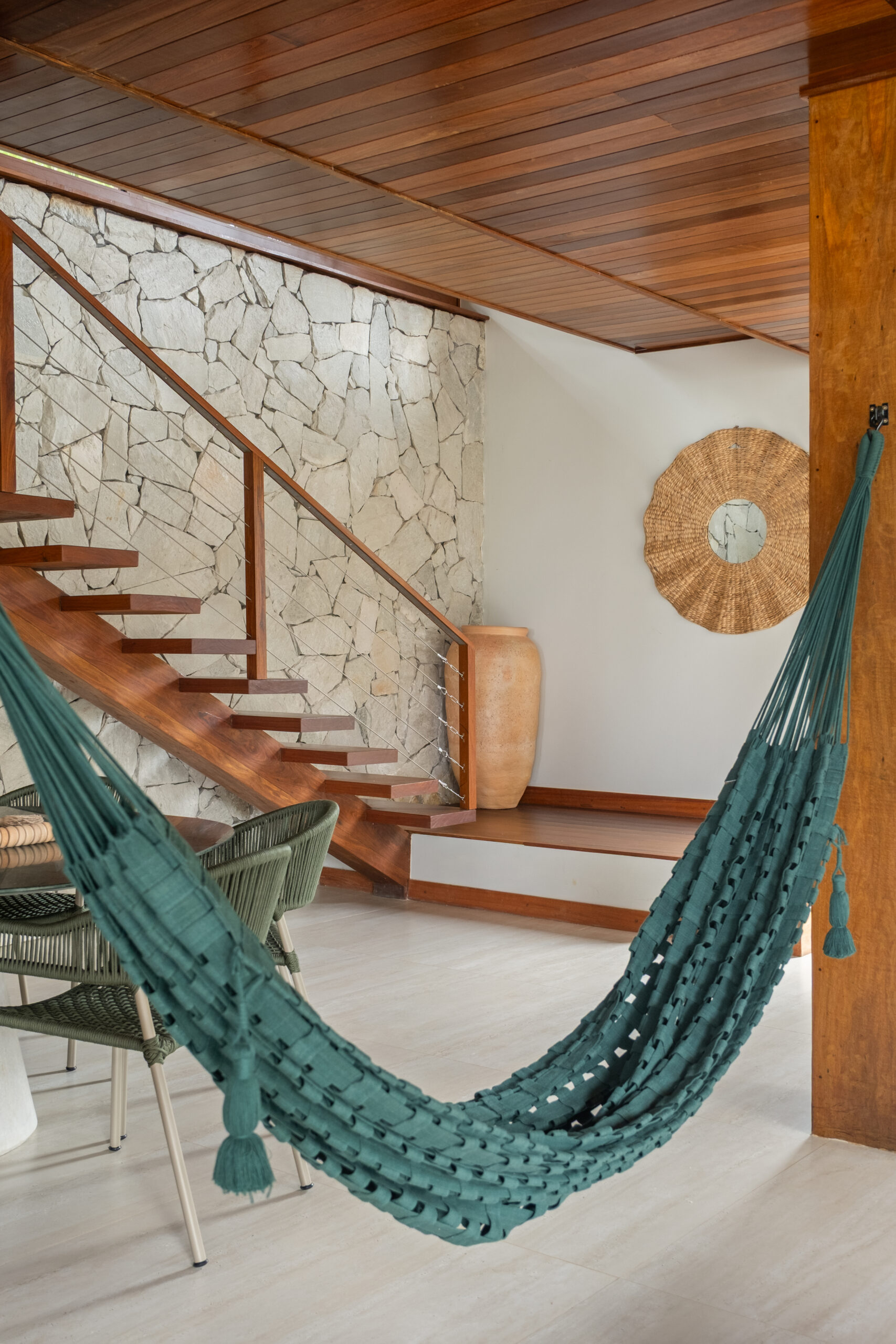
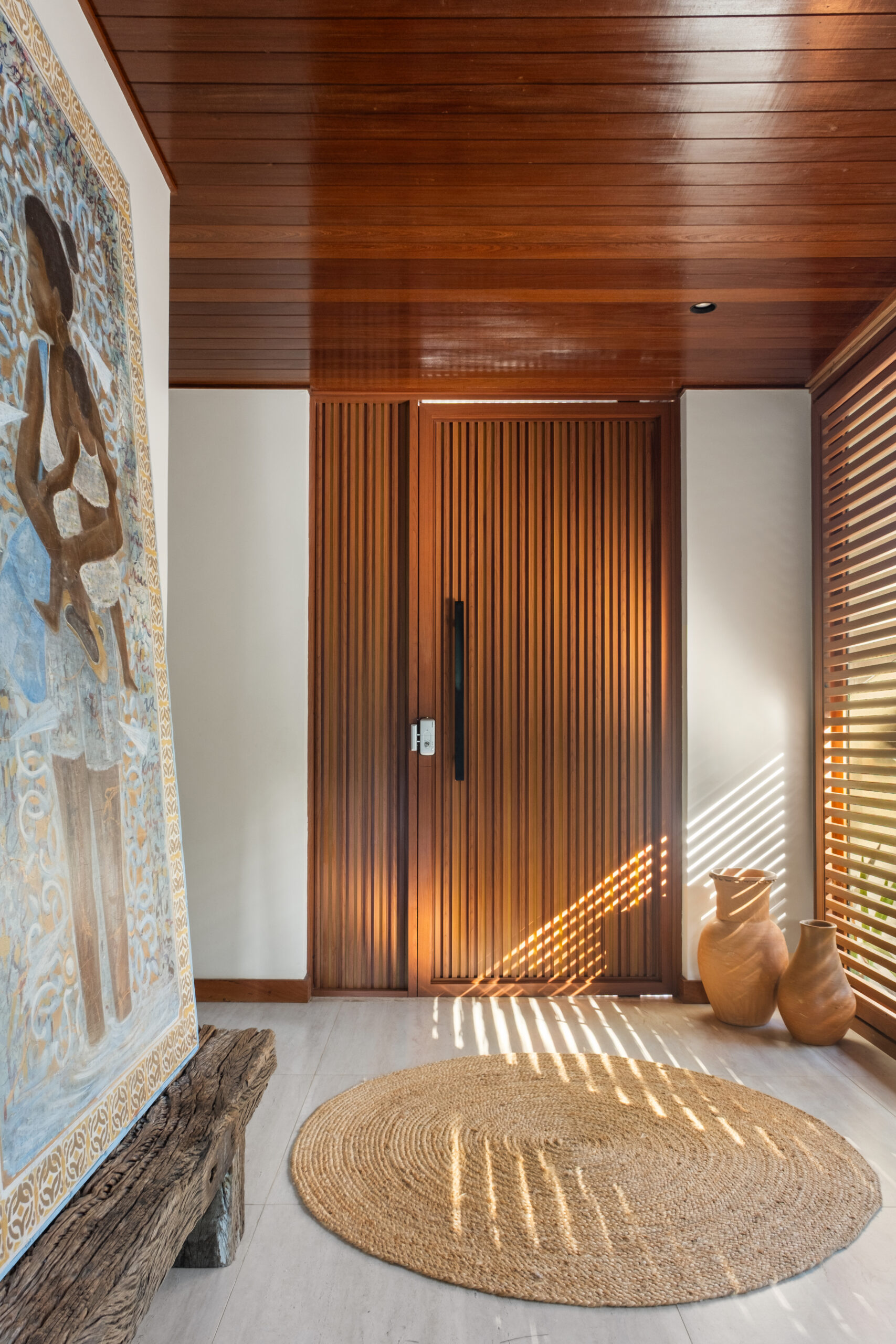
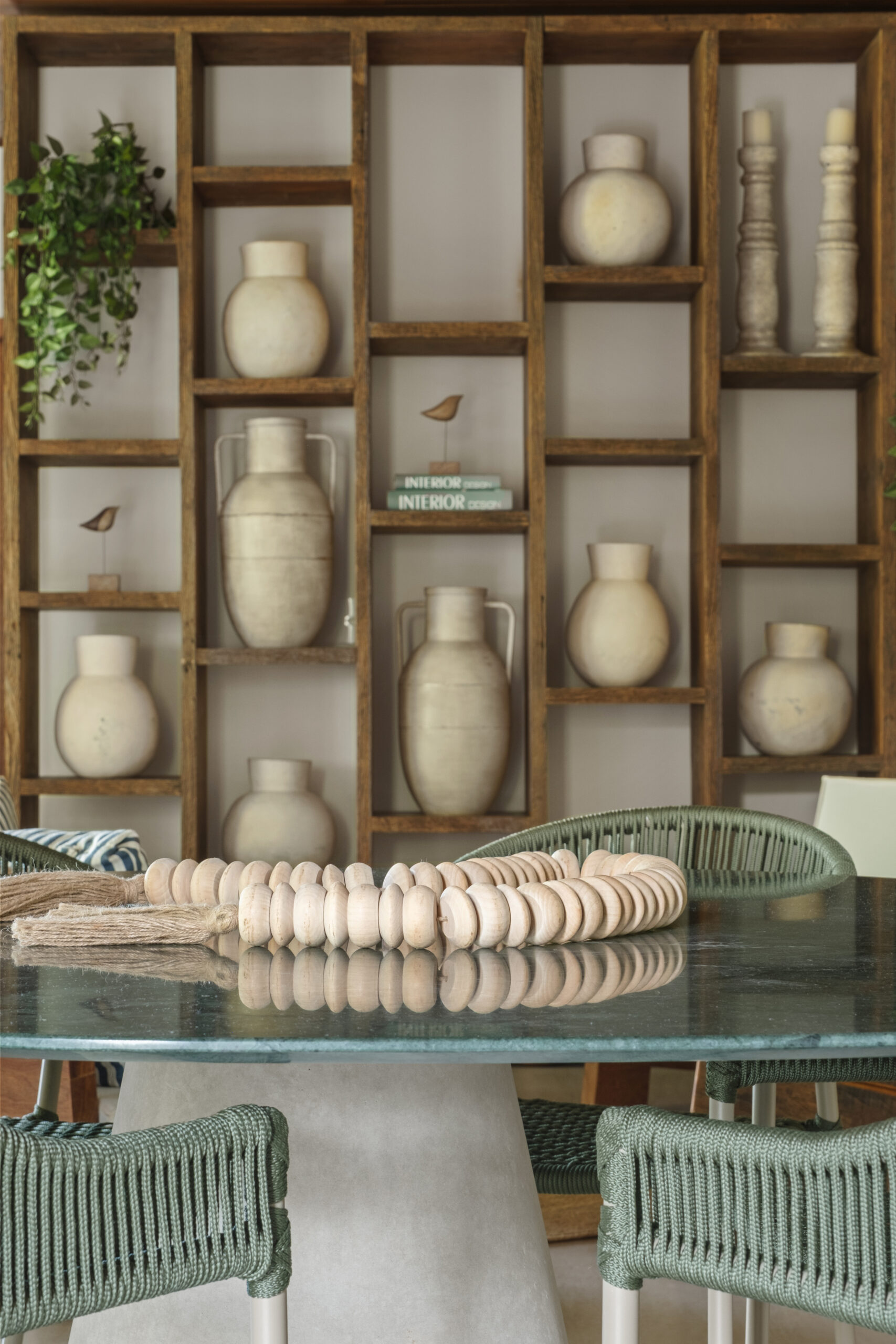
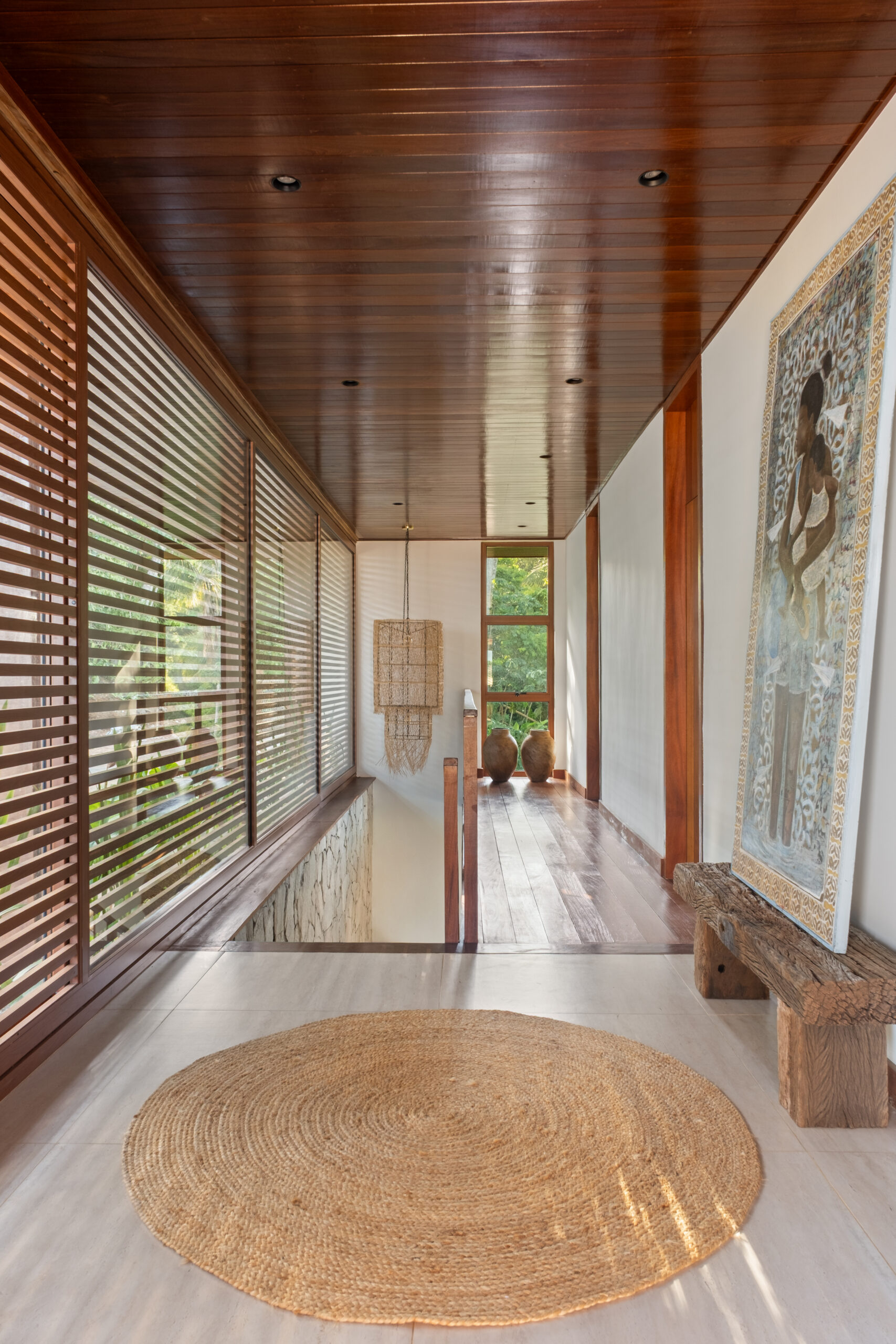
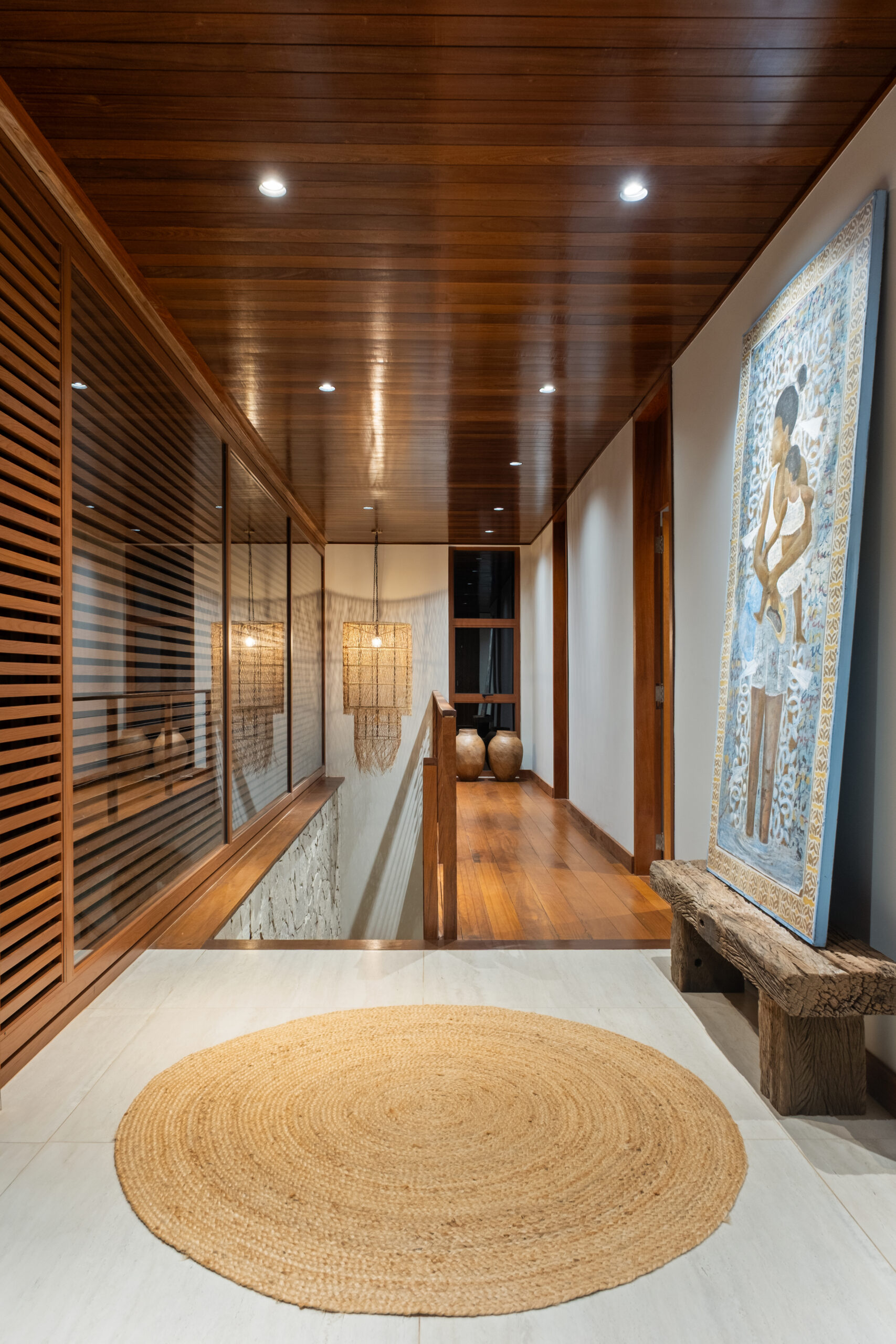
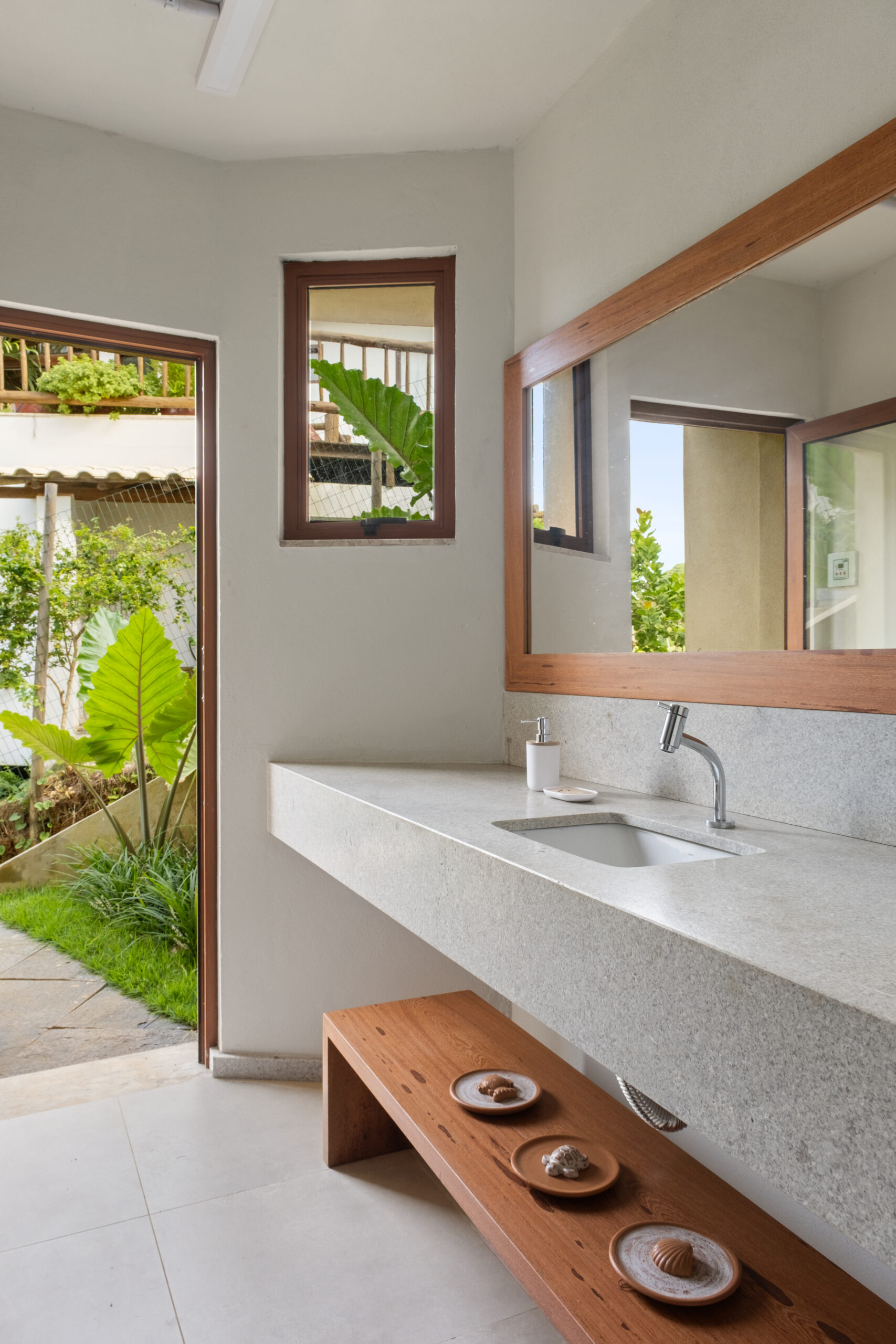
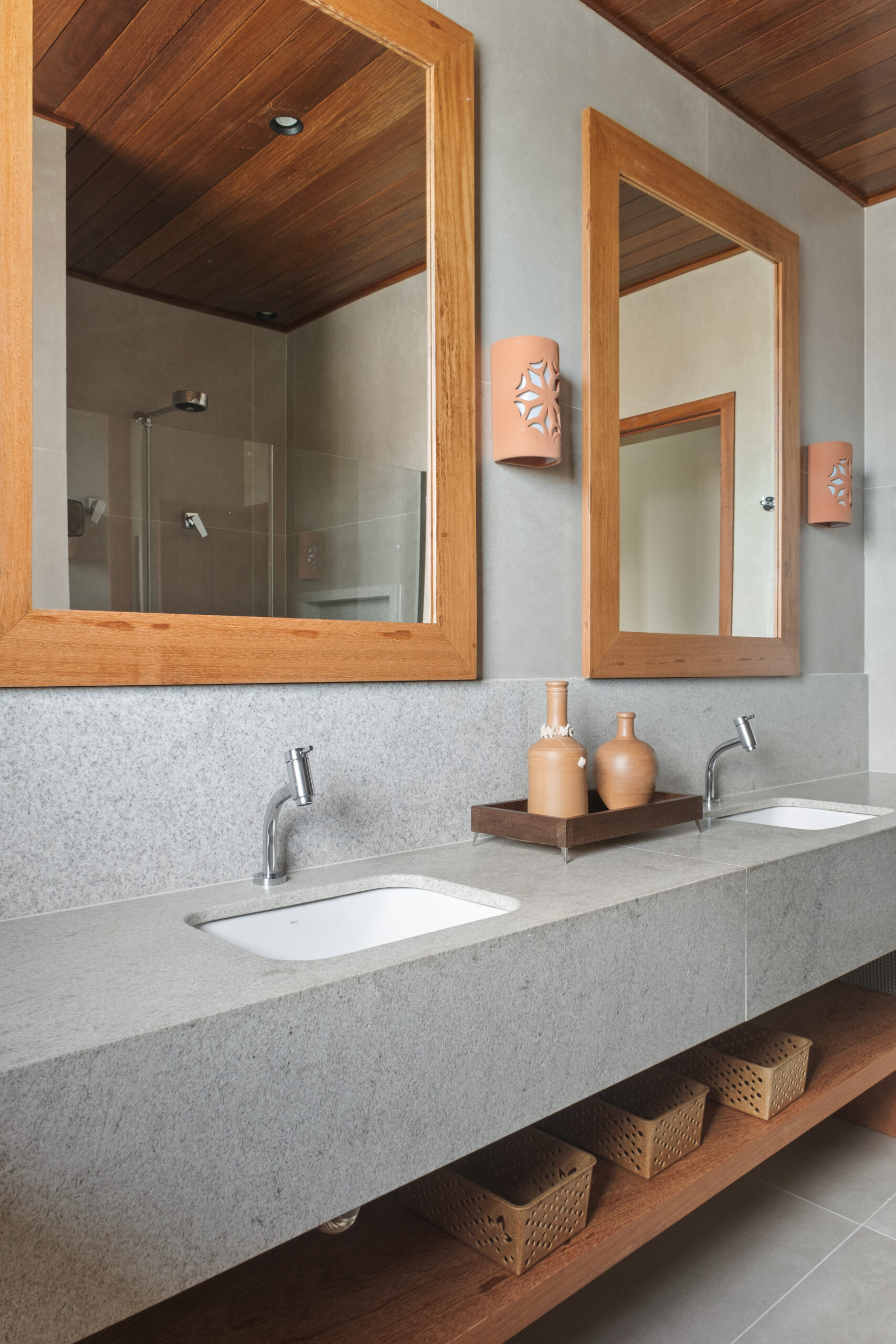
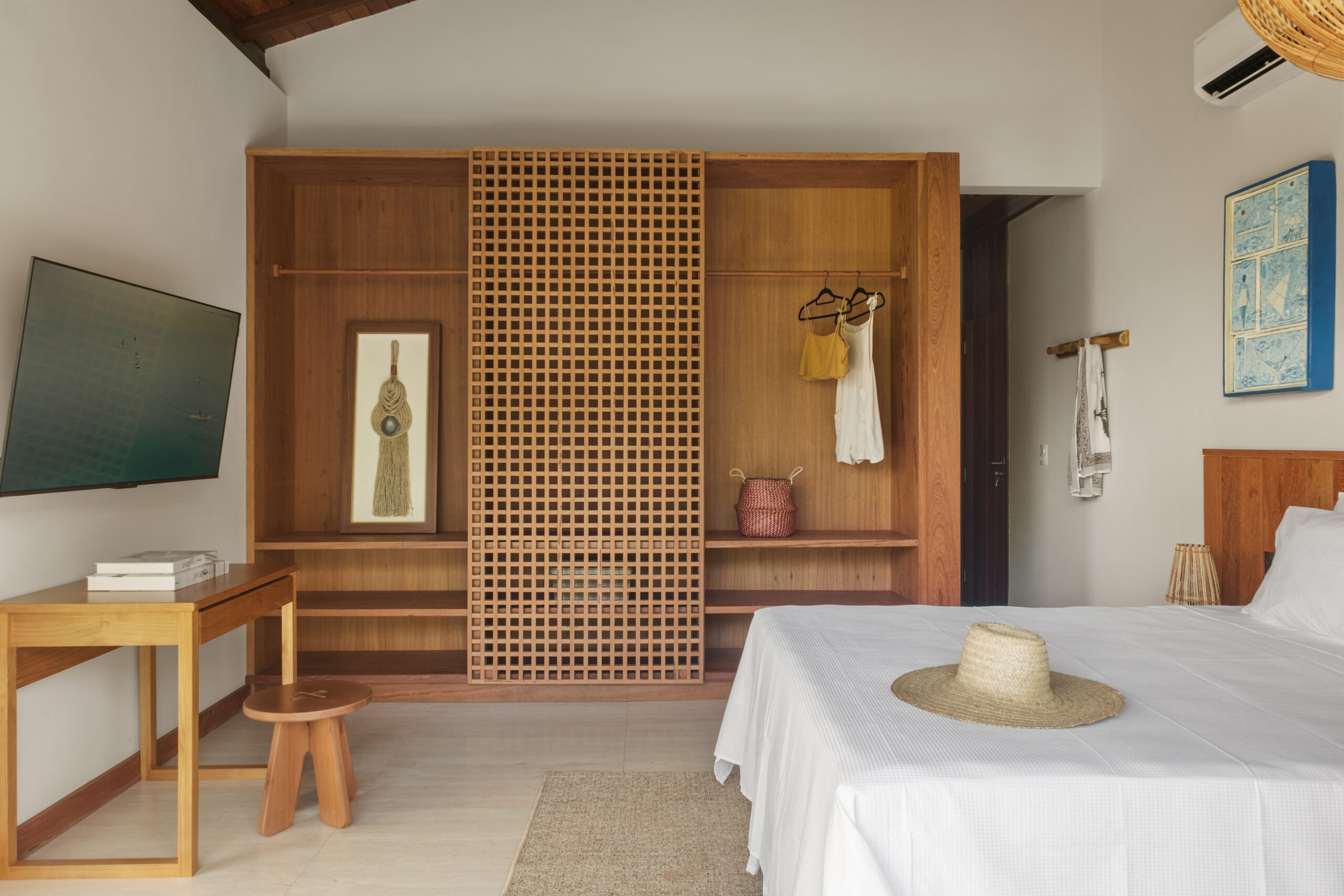
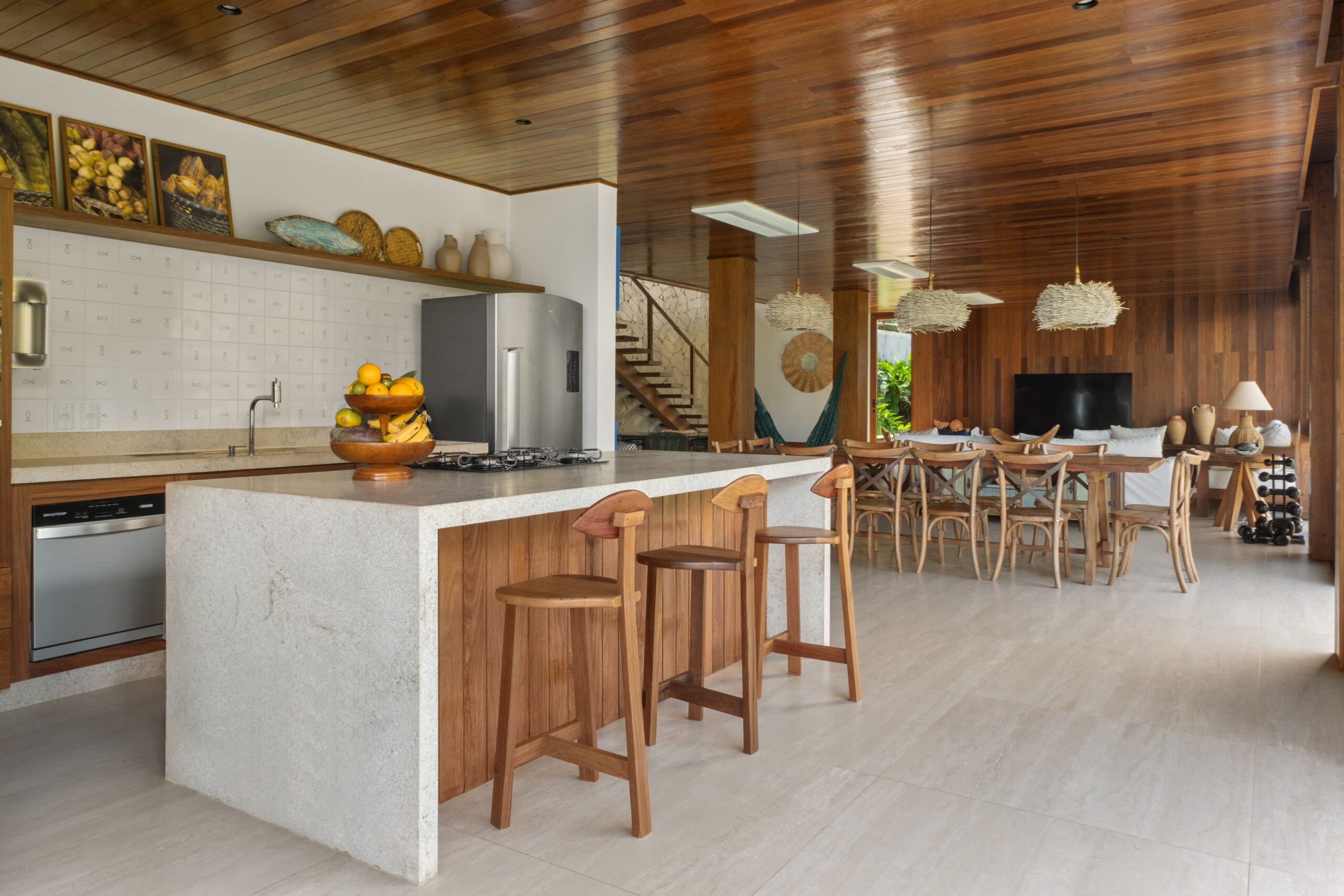
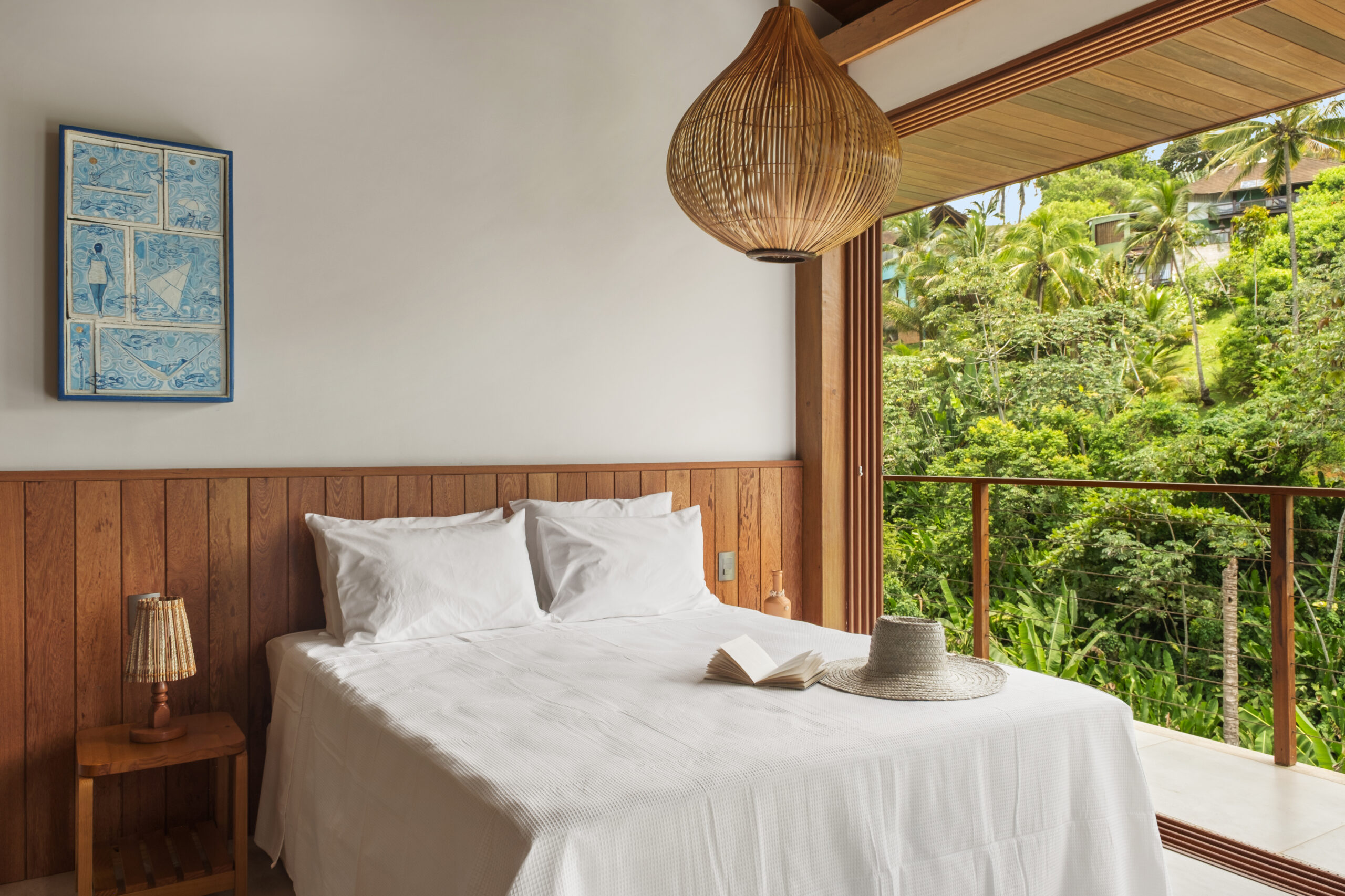
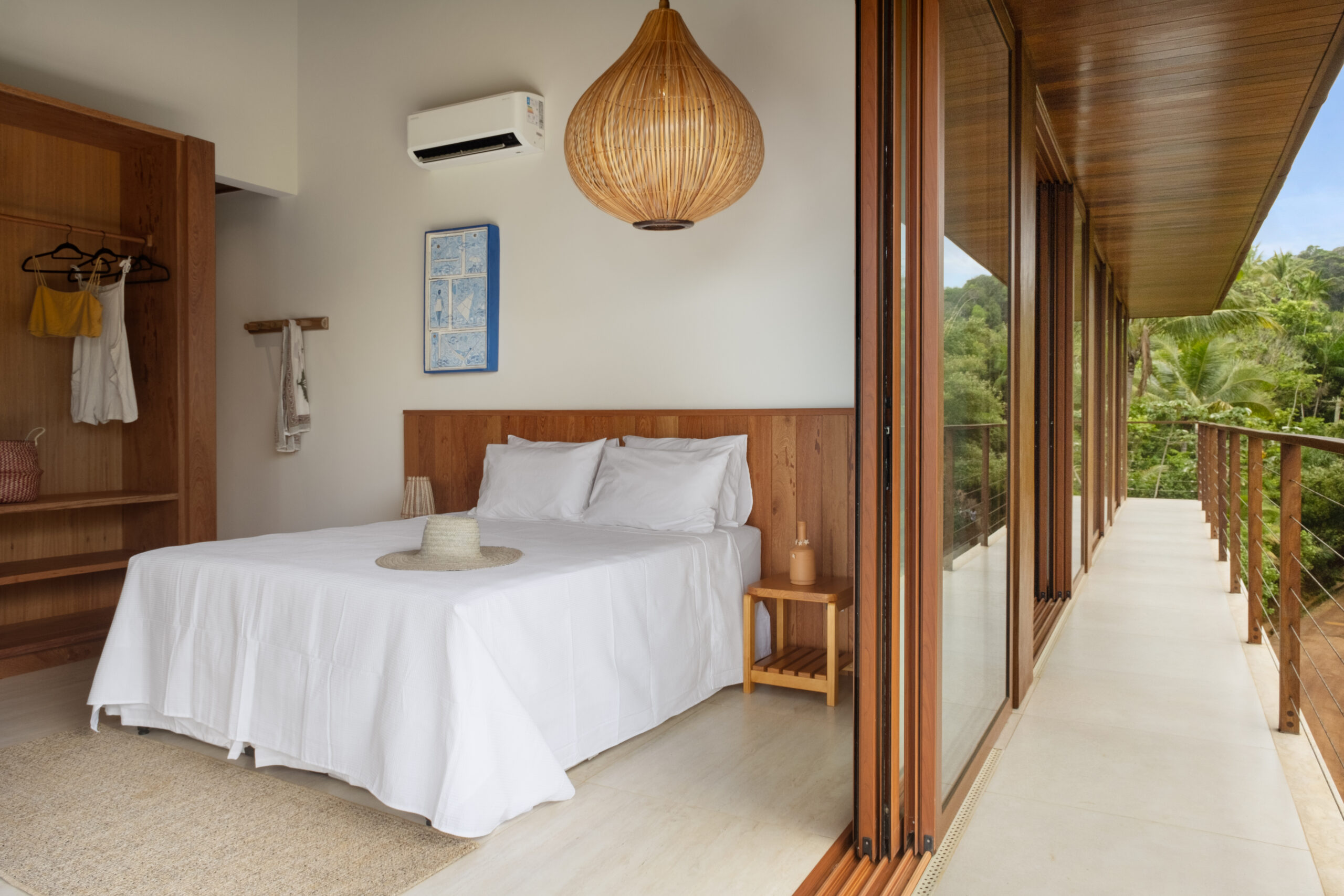
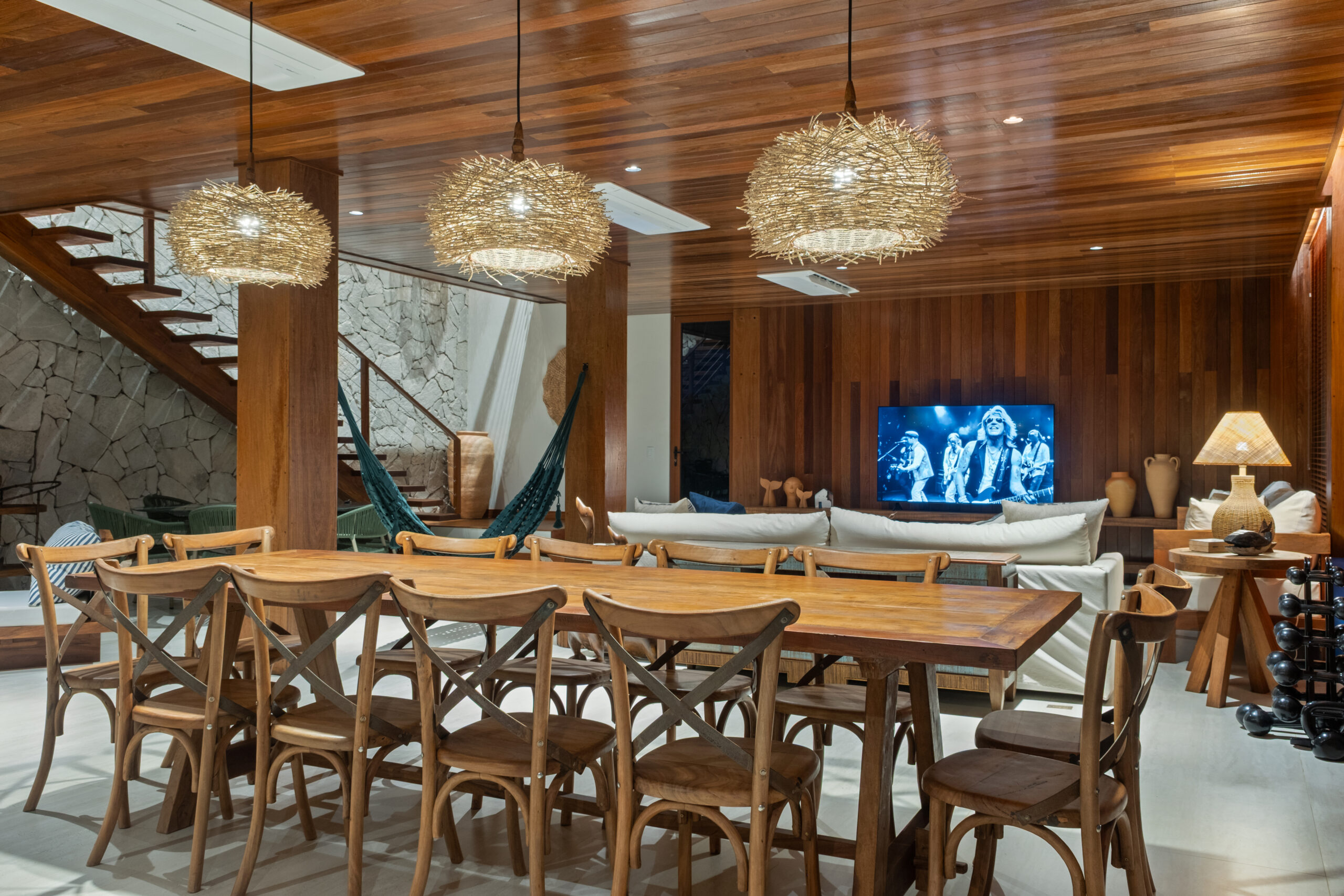
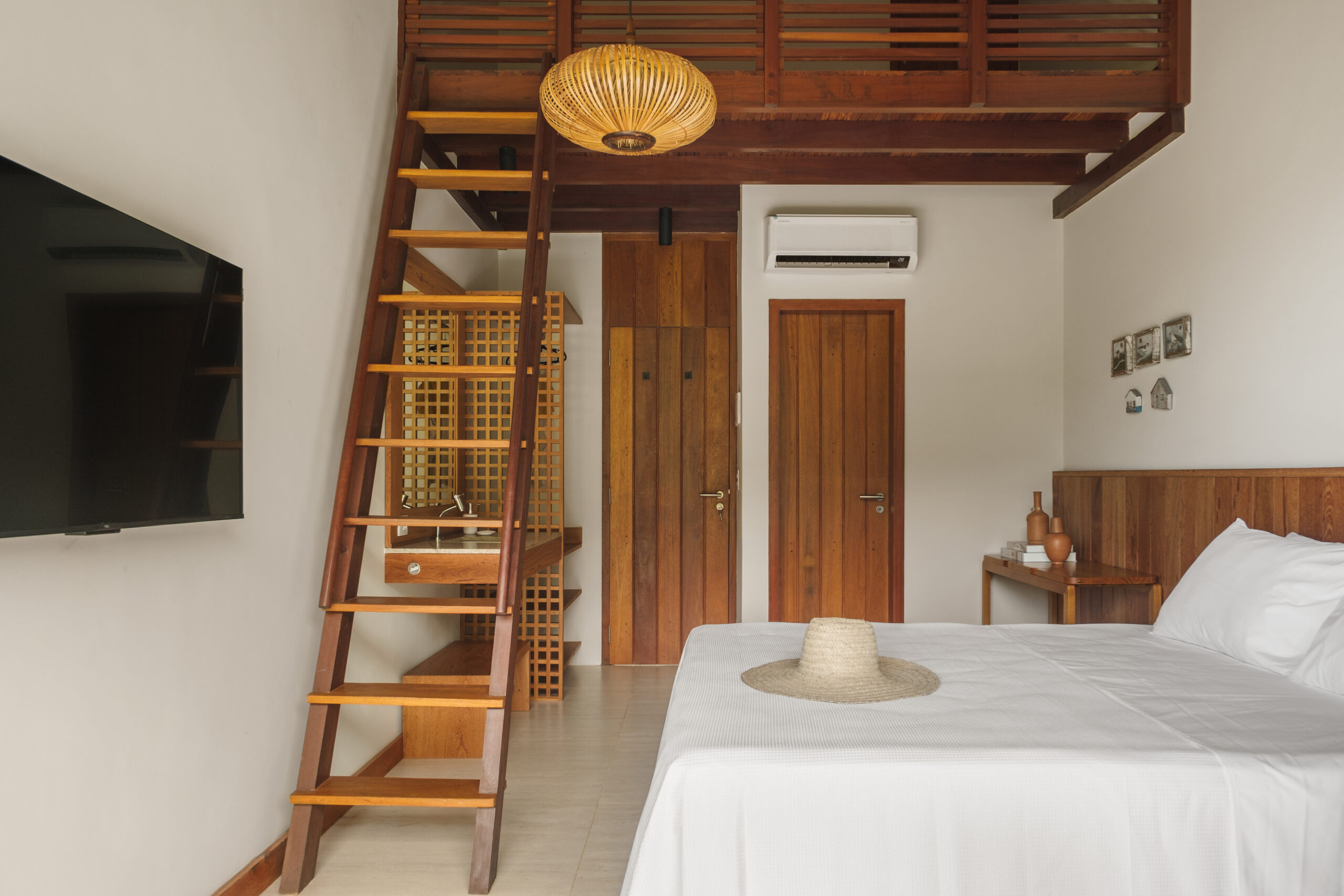
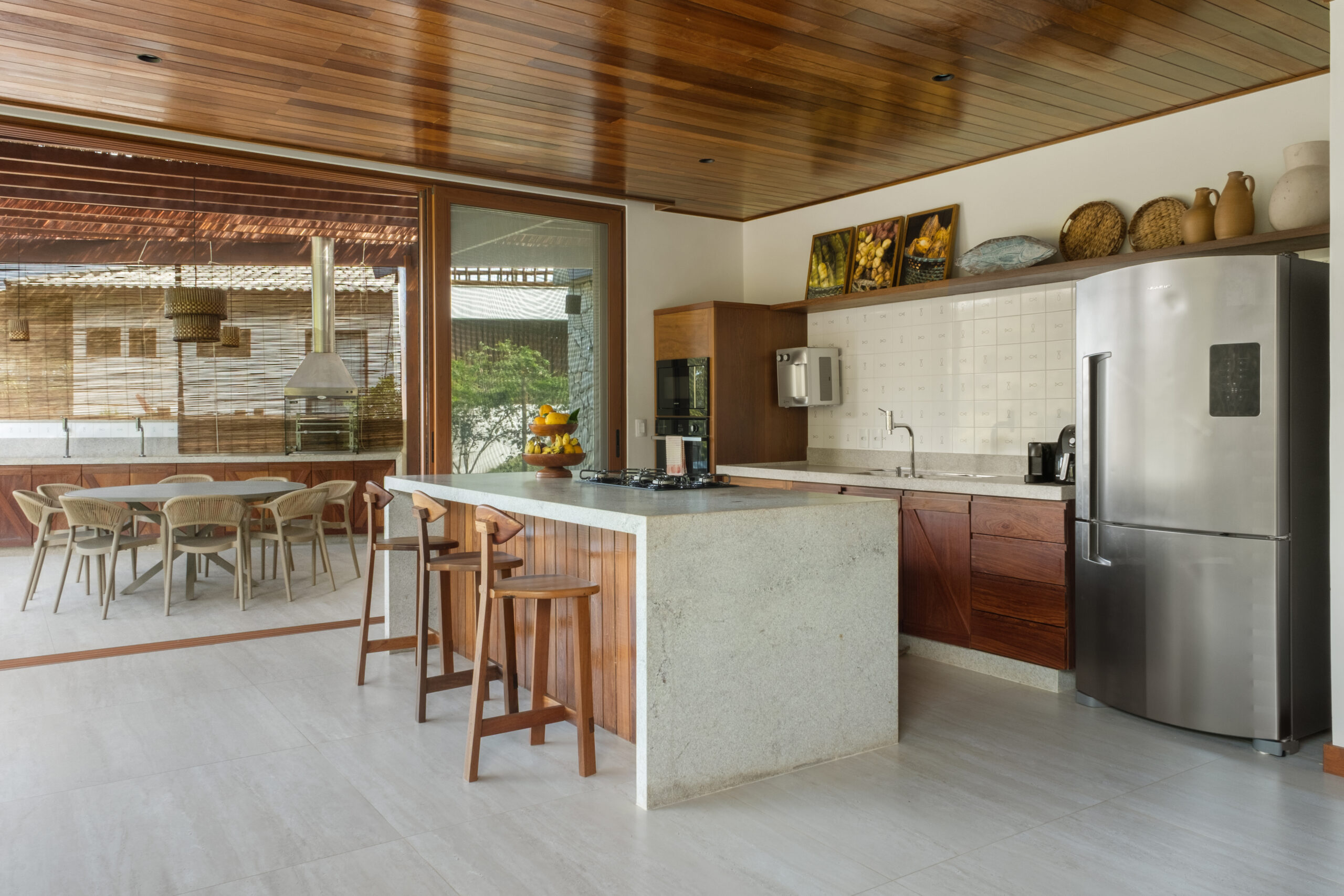
The materiality reinforces the idea of shelter. Wood, glass, and stone establish a sophisticated yet unpretentious atmosphere. Brise-soleils and slatted panels filter light and ventilation, while cross-ventilation and generous shading make the relationship with the climate a fundamental principle of the design. Internally, the house prioritizes gathering. The integrated living area, with a wide table, hammocks, and a light staircase tracing the space’s diagonal, synthesizes the spirit of the project. A place for coexistence, pause, and permanence.
Casa Terramar is an architecture of transition. Between street and sea. Between forest and horizon. Between shelter and landscape. In Itacaré, where nature is always the protagonist, the house chooses the exact measure and transforms the slope into an experience.