KItoNOKO: A community-oriented ‘home’ redefining the office landscape
Two-storey office building has a total floor area of 654 square meters and is constructed using conventional Japanese timber framing
April 8, 2026
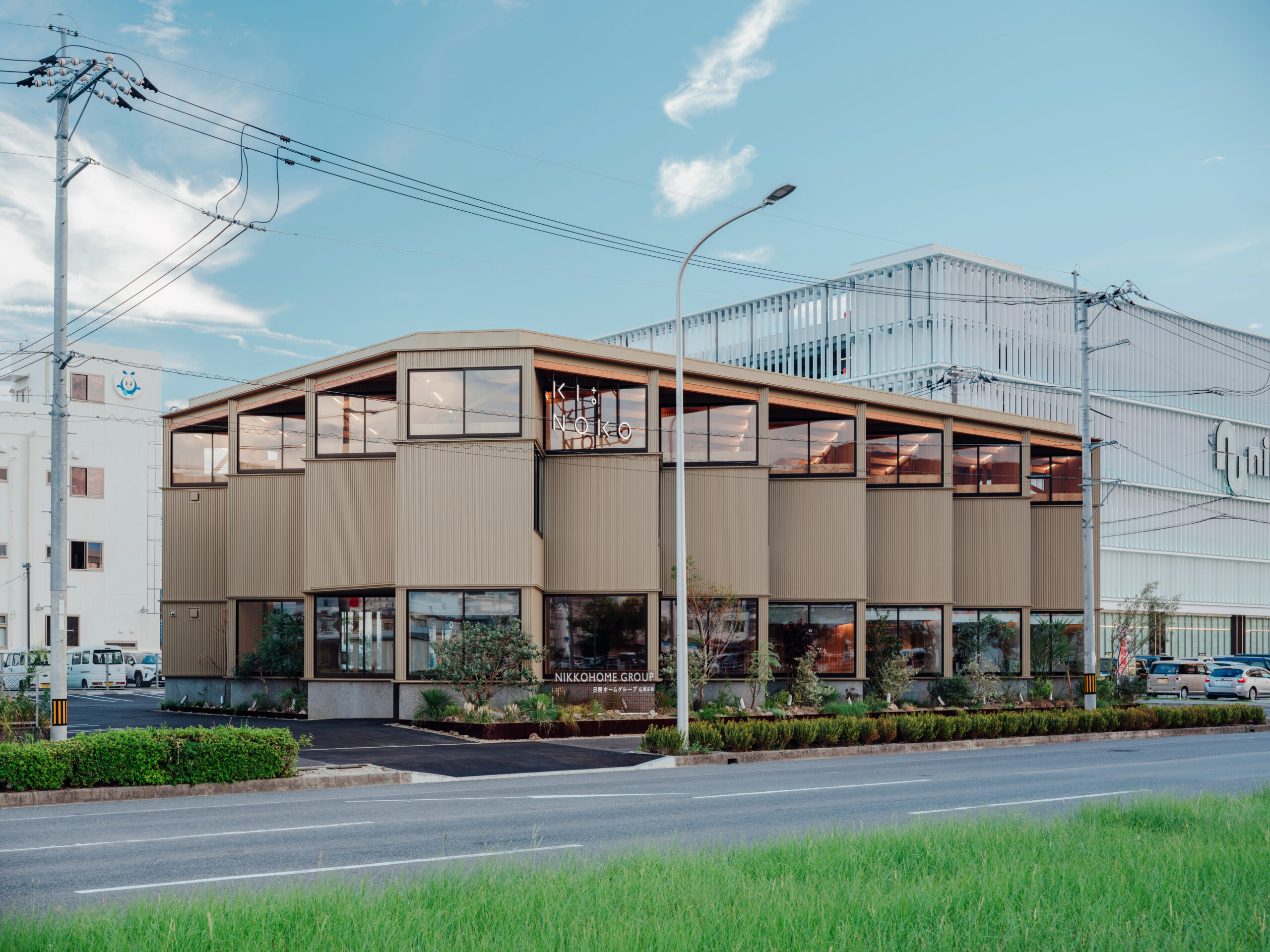
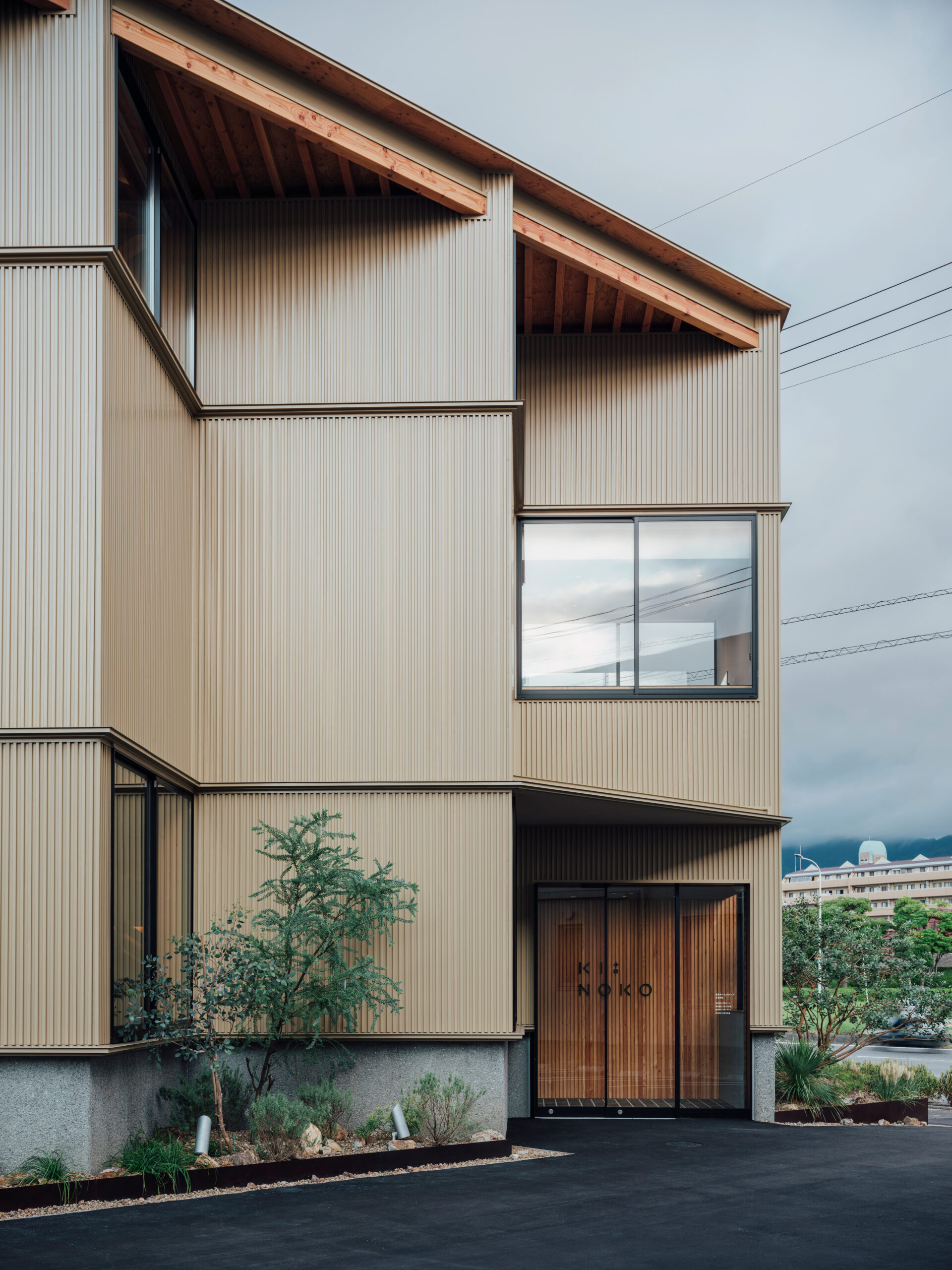
The new Hiroshima branch of the Nikko Home Group, KItoNOKO, was envisioned as an open, welcoming place for everyone: those who have built a home with the company, those considering renovation or land use, and those beginning to imagine a future home. More than a corporate office, it aims to function as a familiar and approachable ‘house’ within the city.
Designed by ure, KItoNOKO explores how timber construction can shape a contemporary workplace while expressing the cultural and material significance of wood in Japanese architecture. The name ‘KItoNOKO’ derives from two Japanese words: ki, meaning wood, and noko, meaning saw. Together they symbolize the act of working with timber – the transformation of a natural material through craftsmanship. This relationship between material and making forms the conceptual foundation of the project
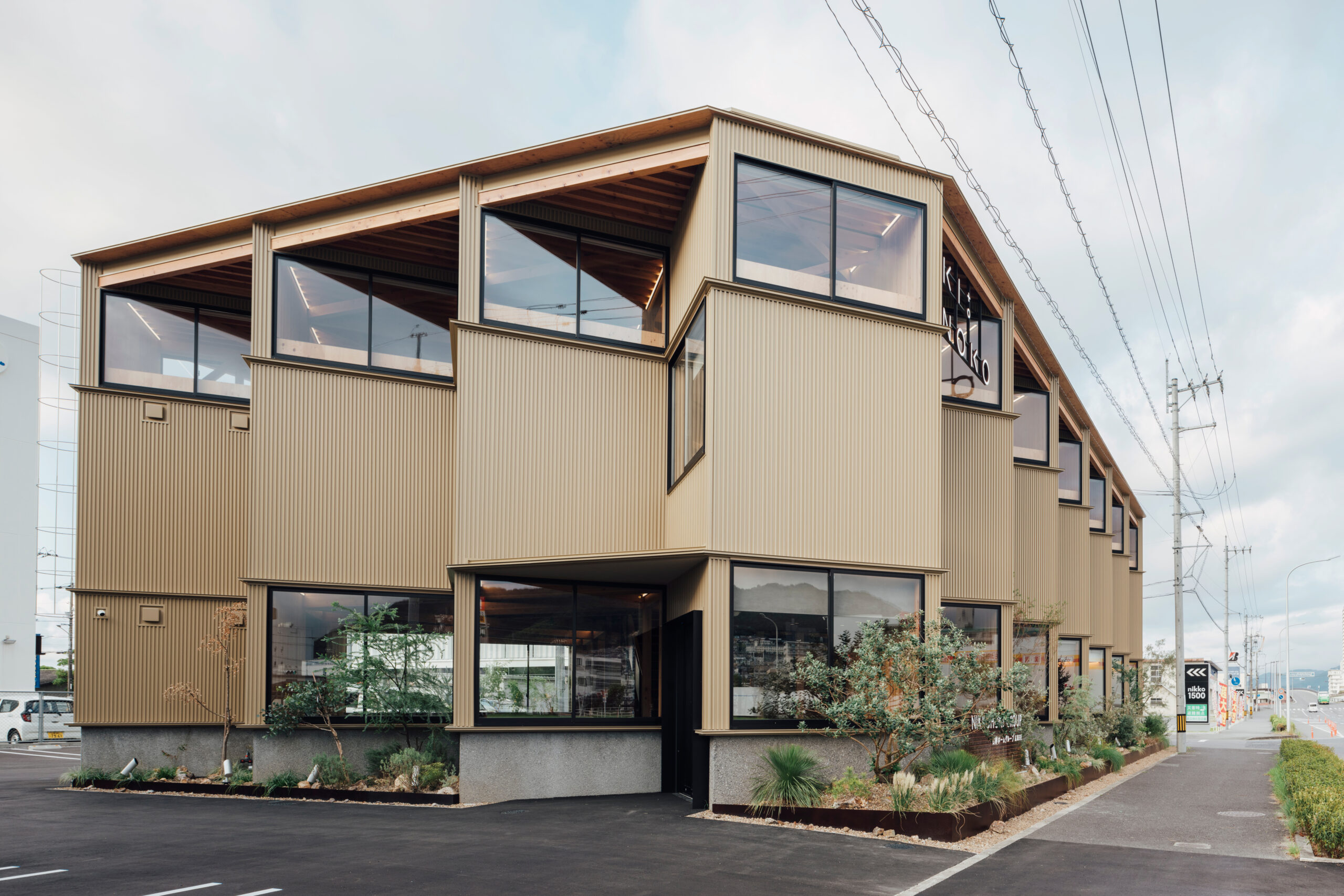
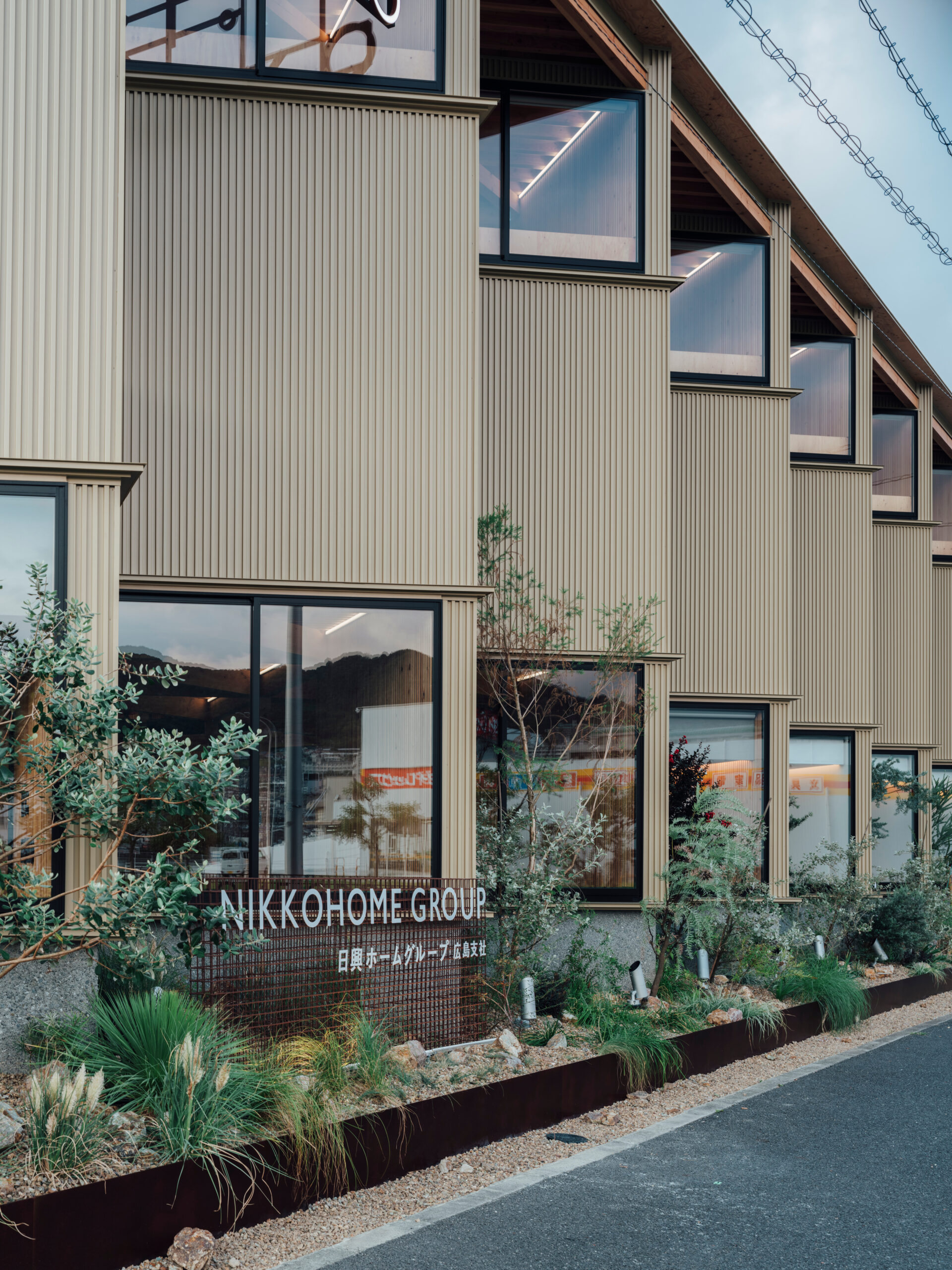
The site sits in Hiroshima’s reclaimed coastal industrial district – an area developed in 1982 and dominated by warehouses, factories, and distribution facilities. With no residential presence and little sign of daily human life, the design began with a simple yet powerful idea: to bring the atmosphere of home into a landscape devoid of it.
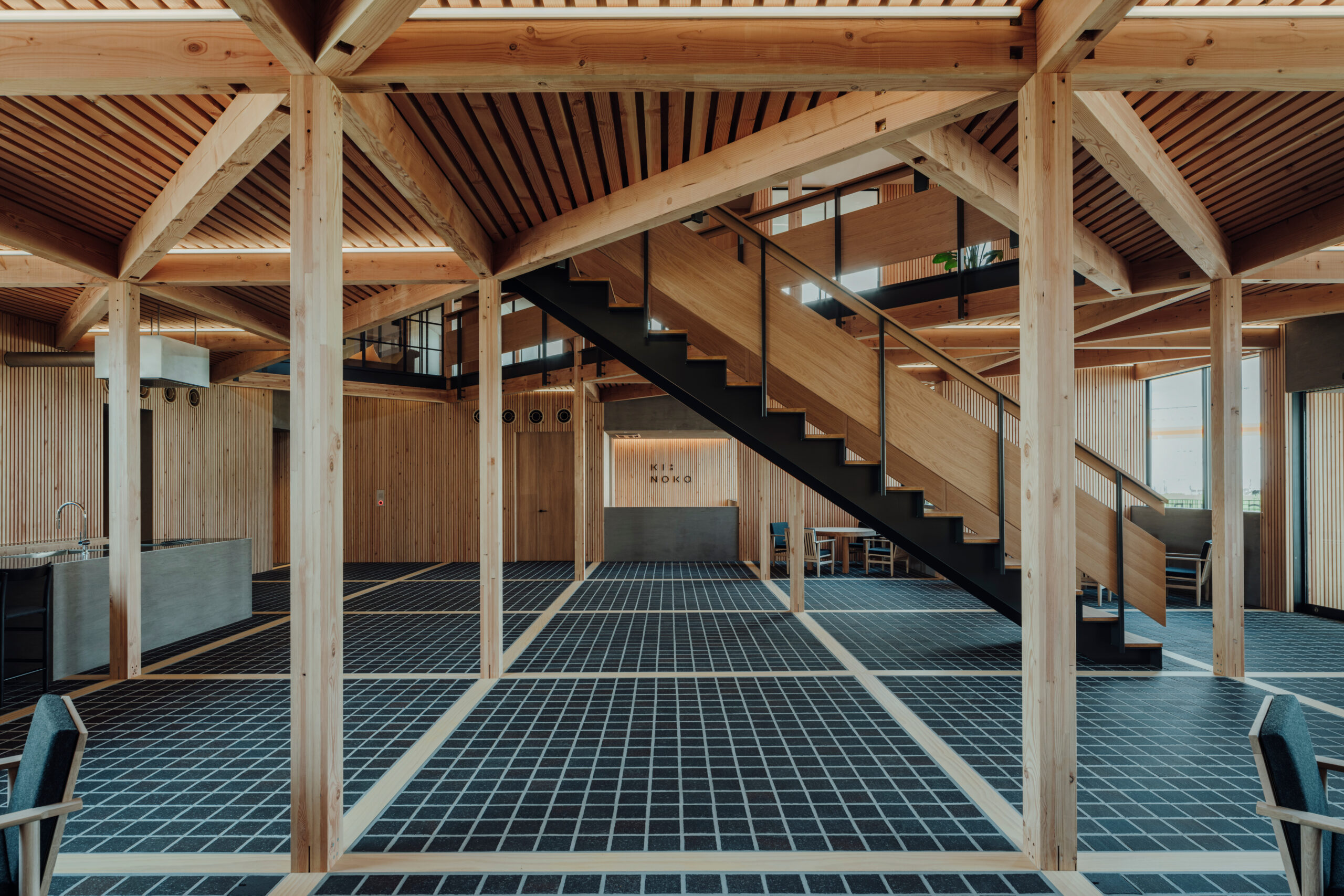
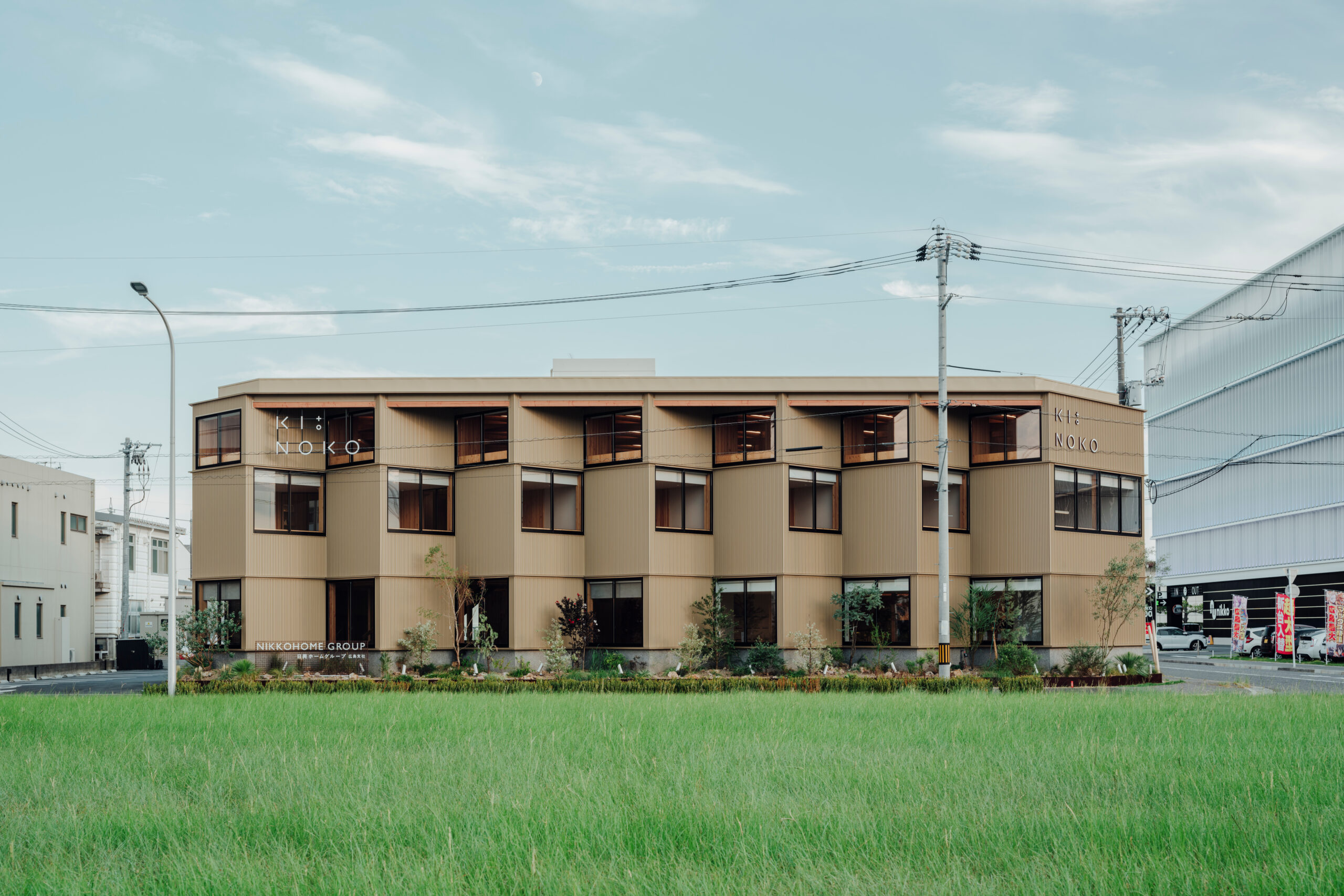
Design concept and spatial strategy KItoNOKO is structured upon a 910 mm timber module, a foundational unit of Japanese wooden housing. Residential scale is embedded throughout: ceiling heights, room proportions, and a 2,730mm × 2,730mm (4.5 tatami) grid evoke the spatial memory of a domestic interior. The goal was to create a building that visitors intuitively experience as an extension of home.
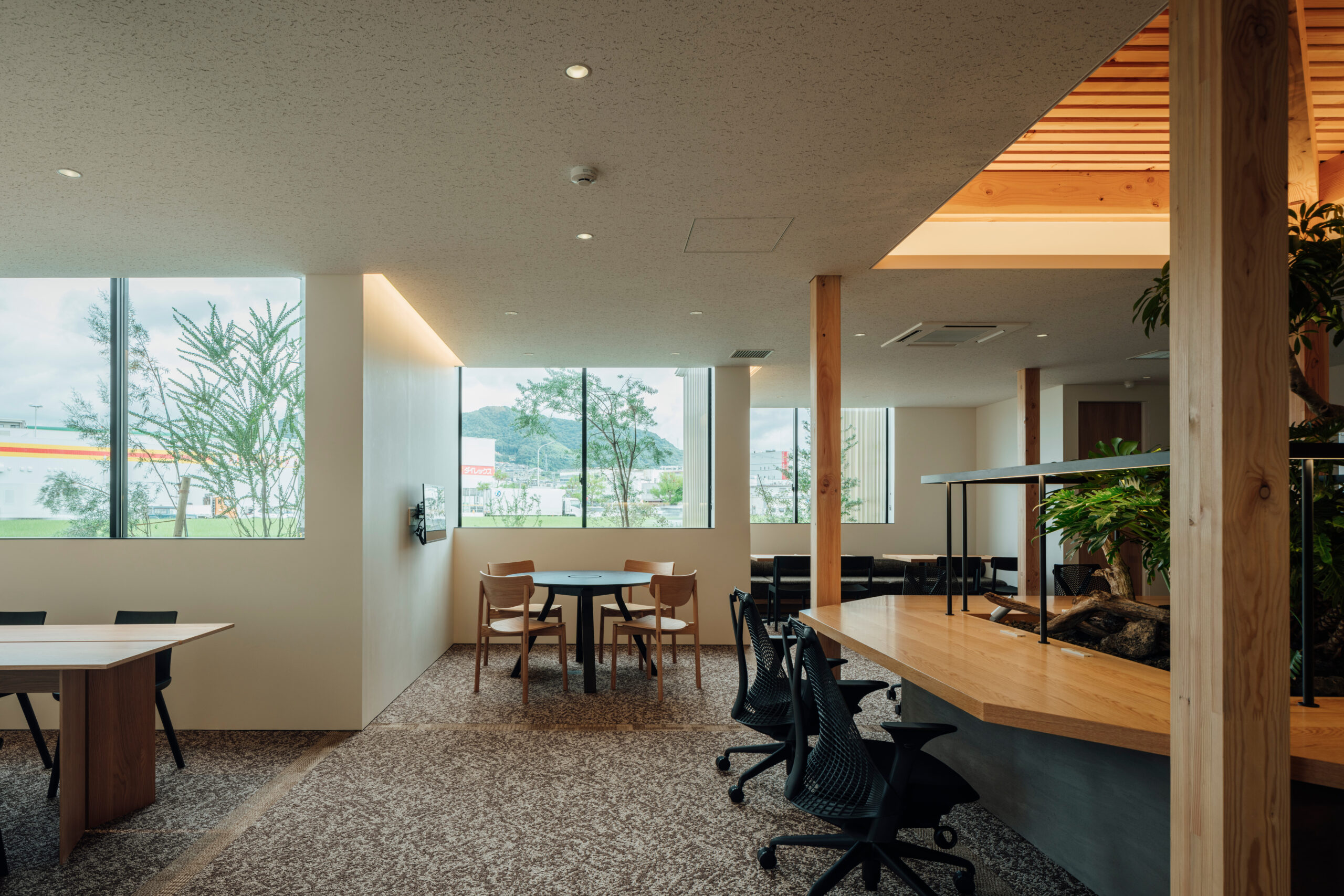
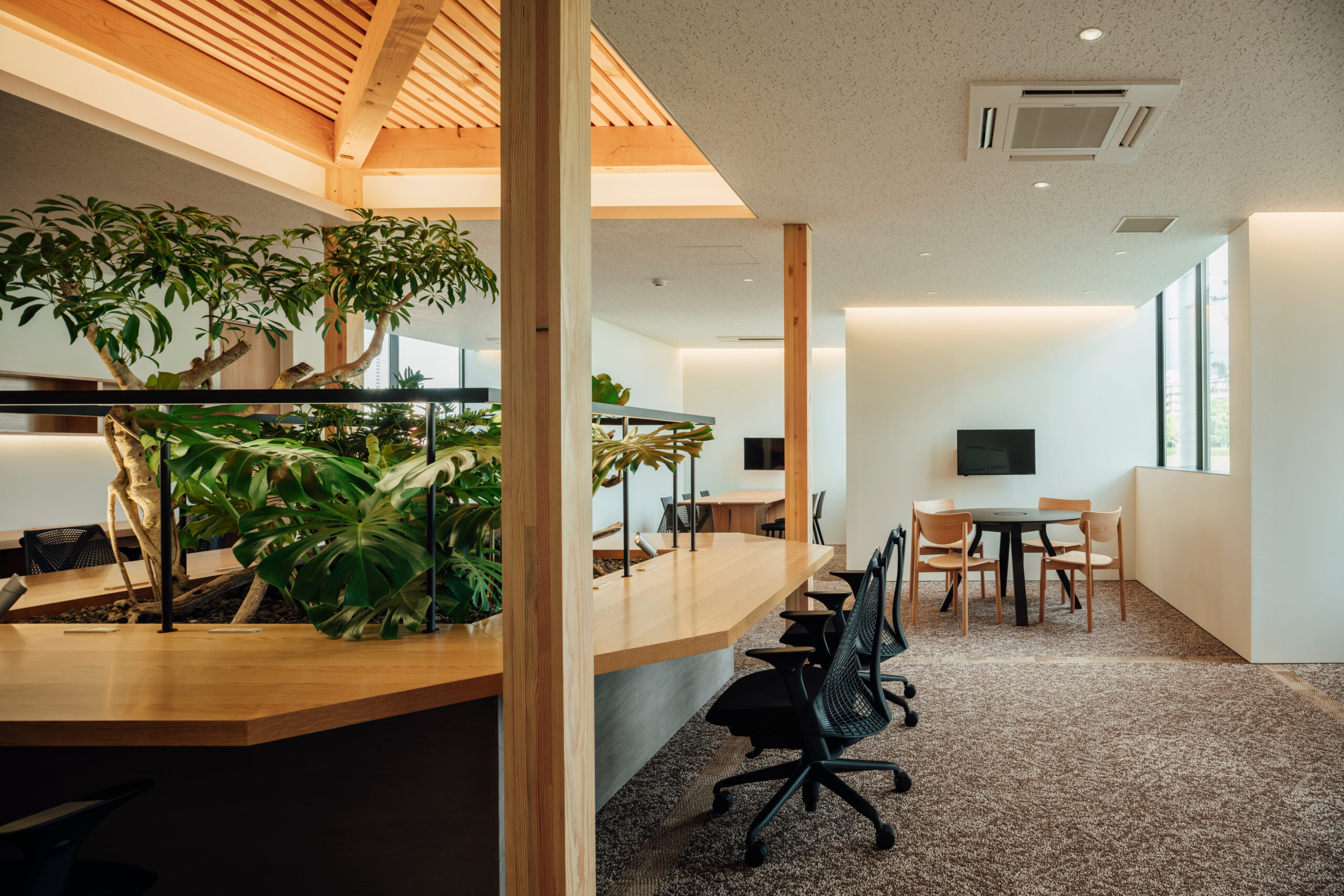
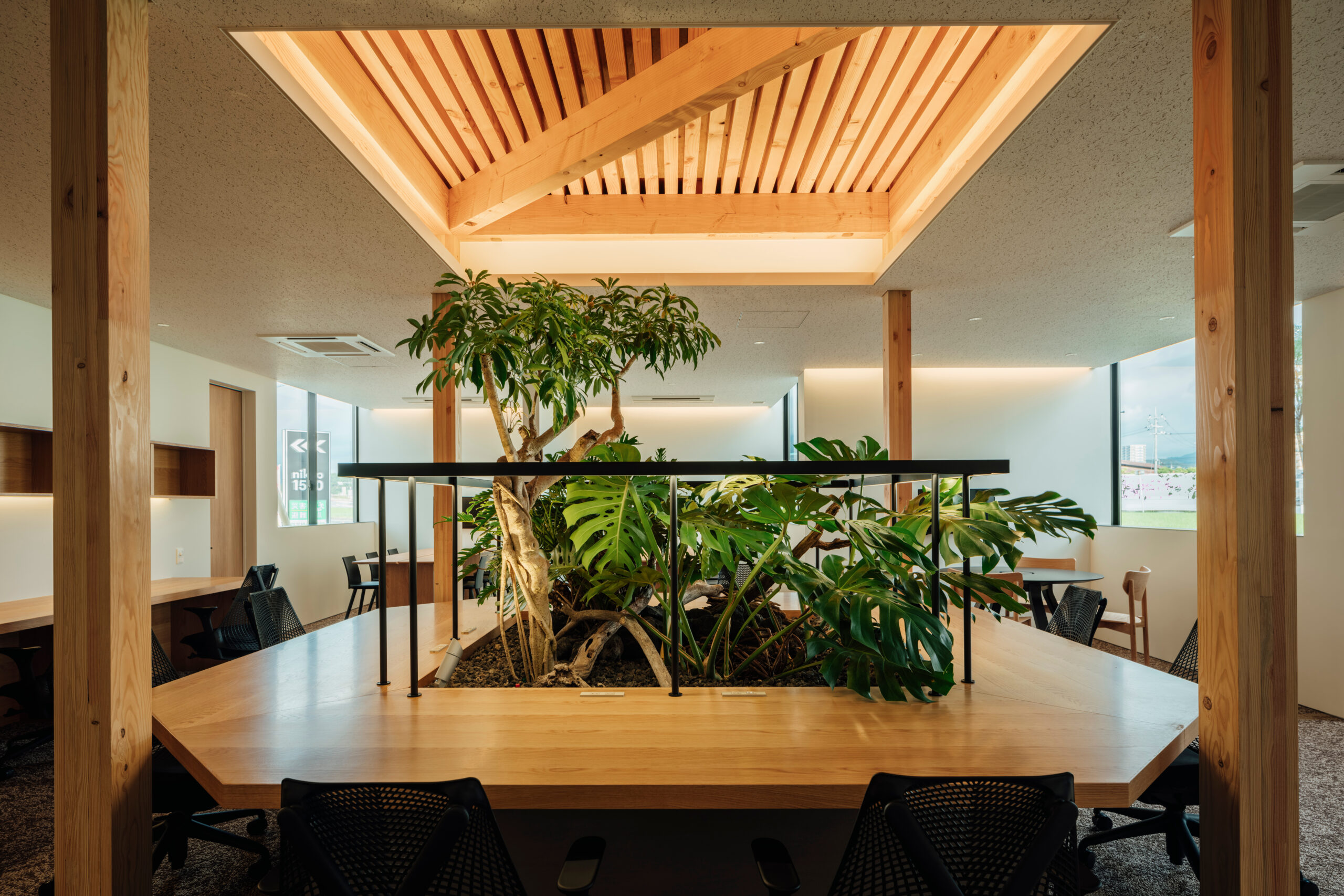
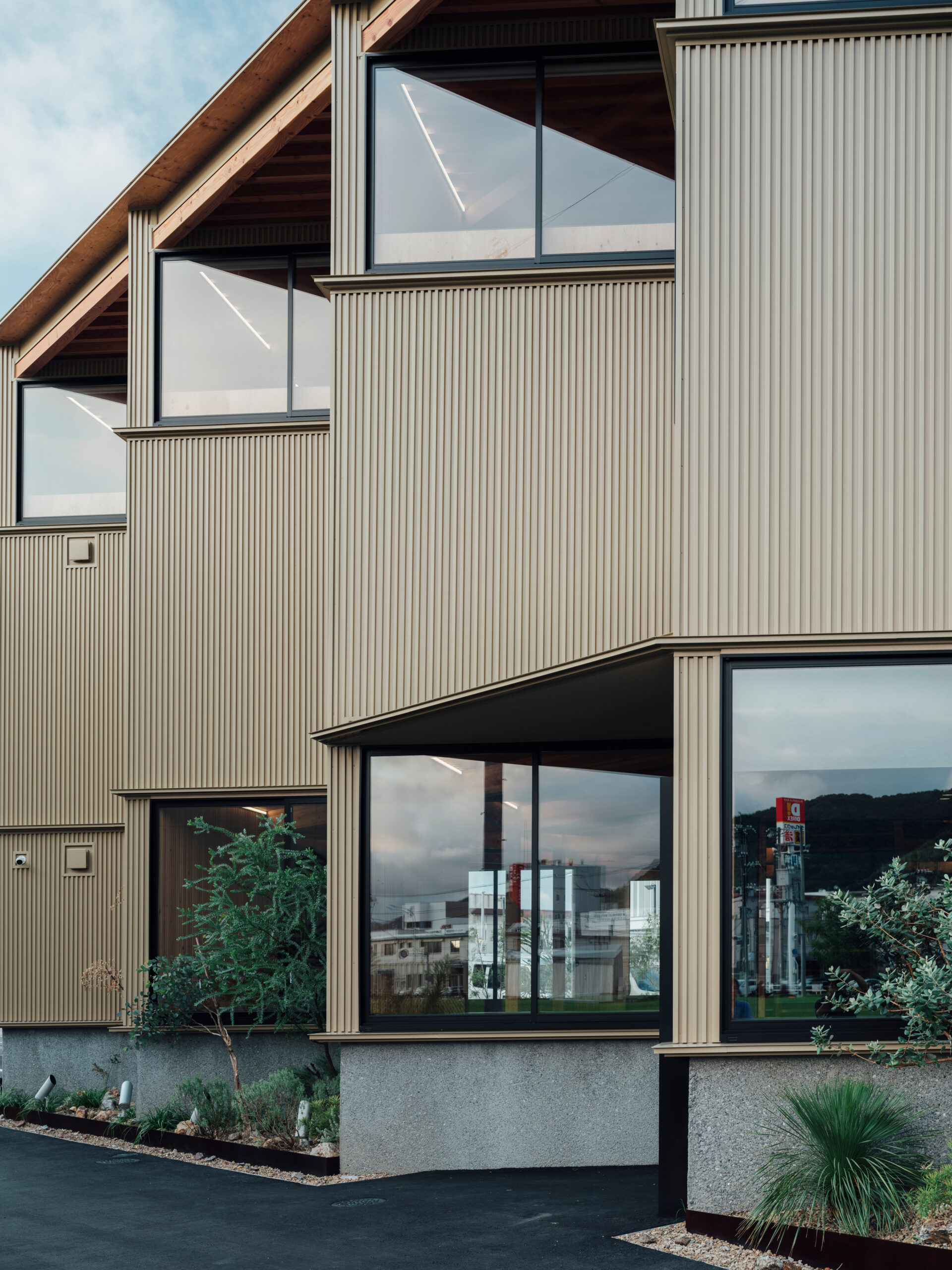
The grid is rotated 45 degrees toward the north road, producing a staggered exterior form. This enhances visibility from the main street and creates triangular pockets between the building and the parking area – spaces filled with planting to soften the industrial surroundings and introduce a gentle natural presence into the reclaimed landscape.
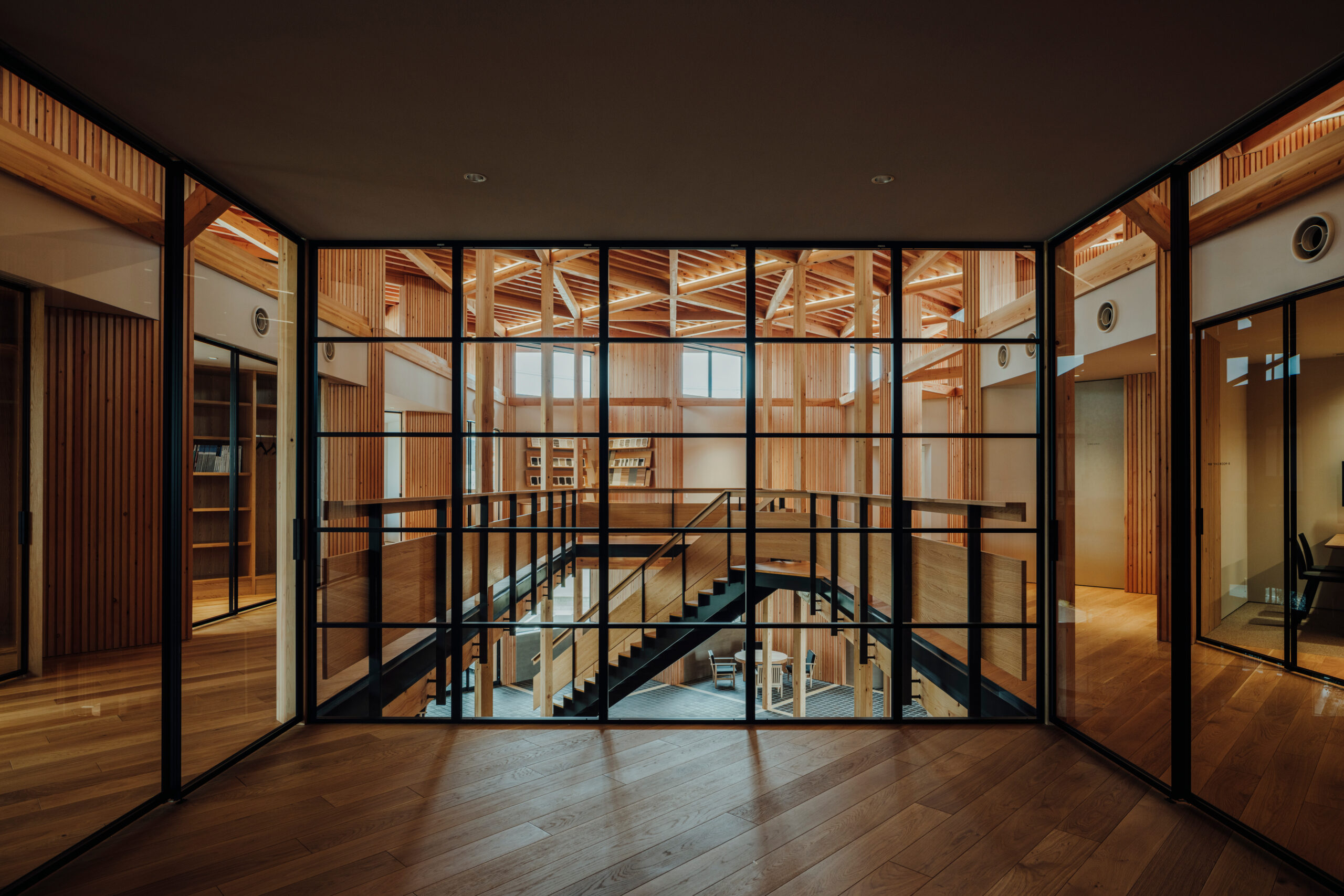
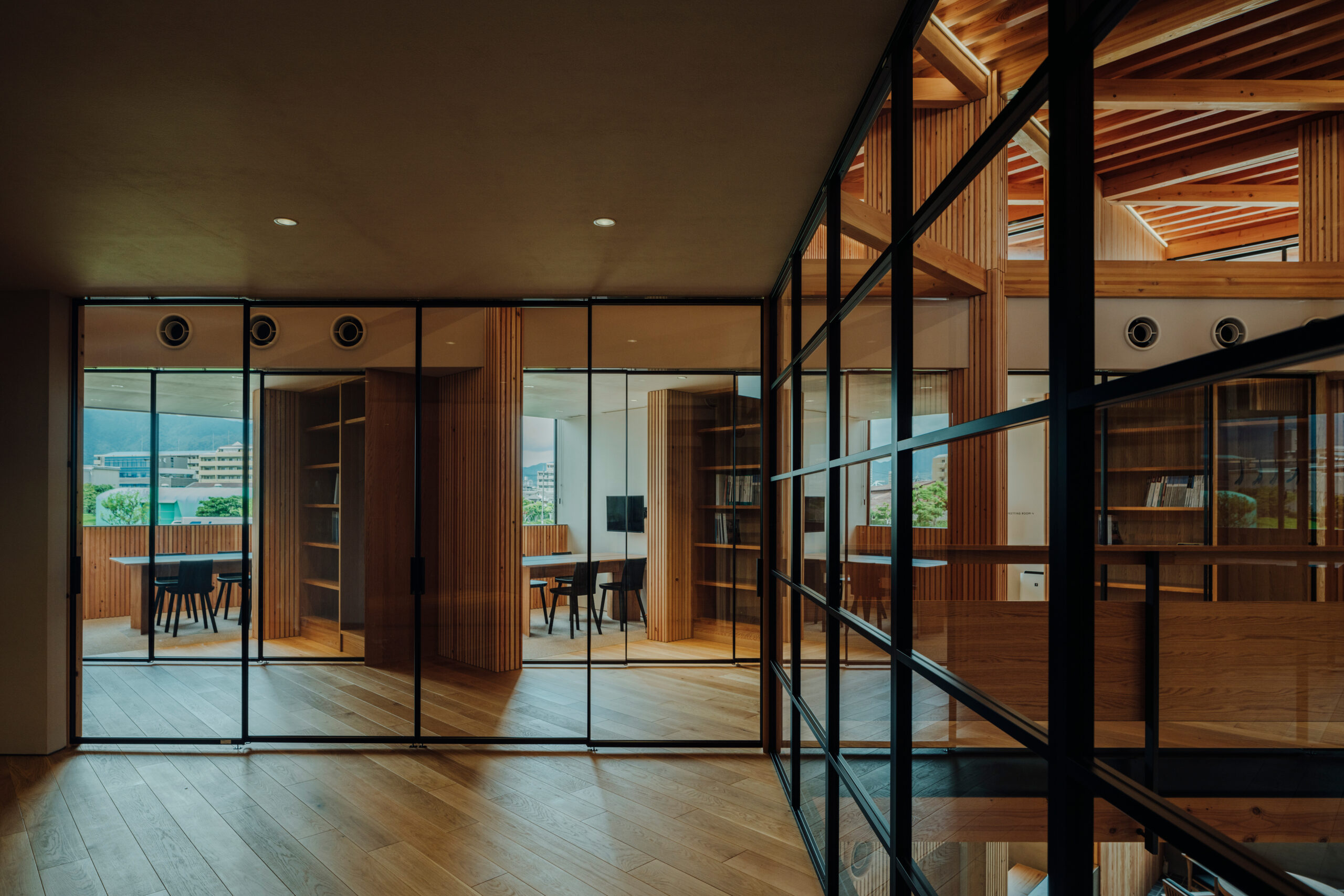
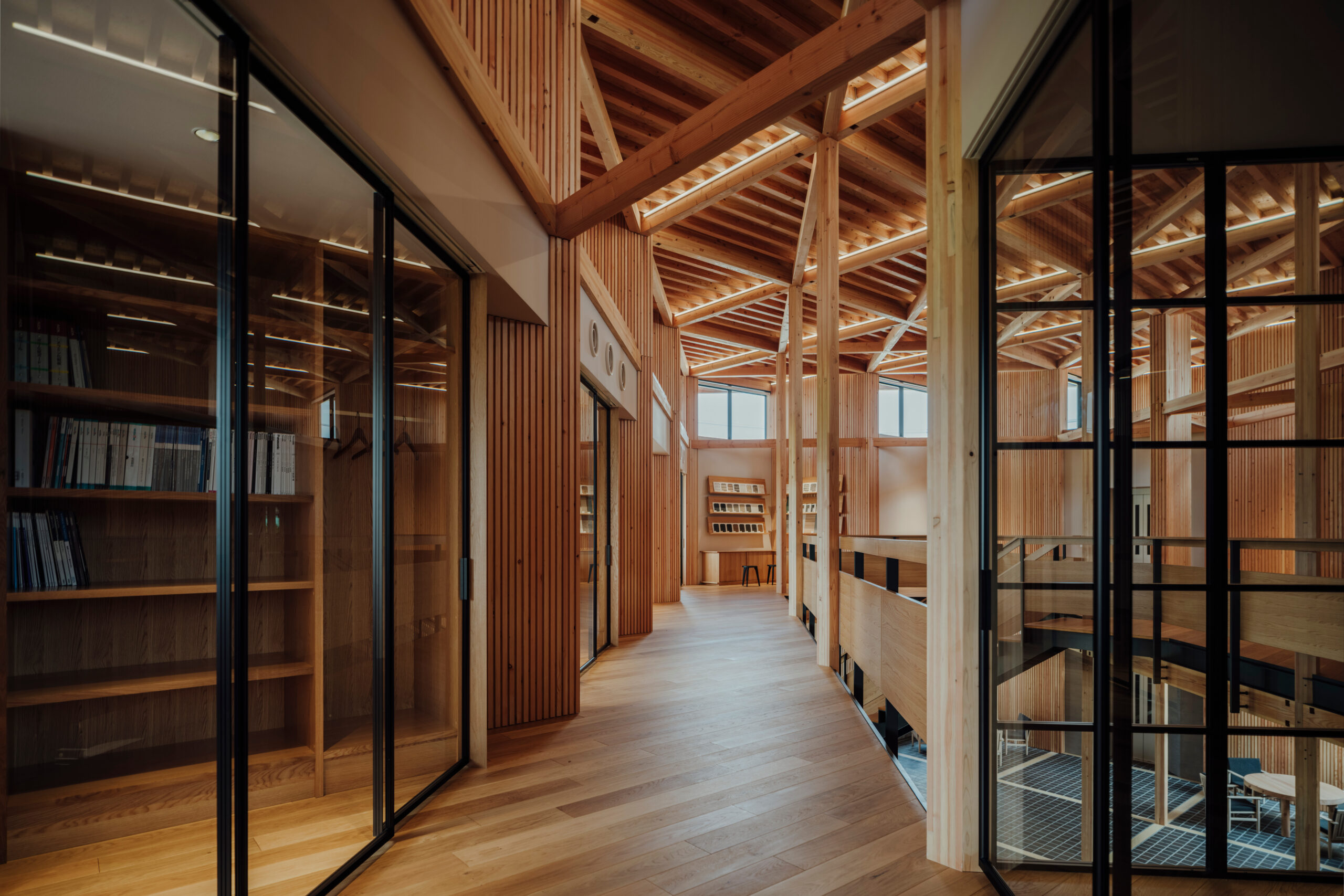
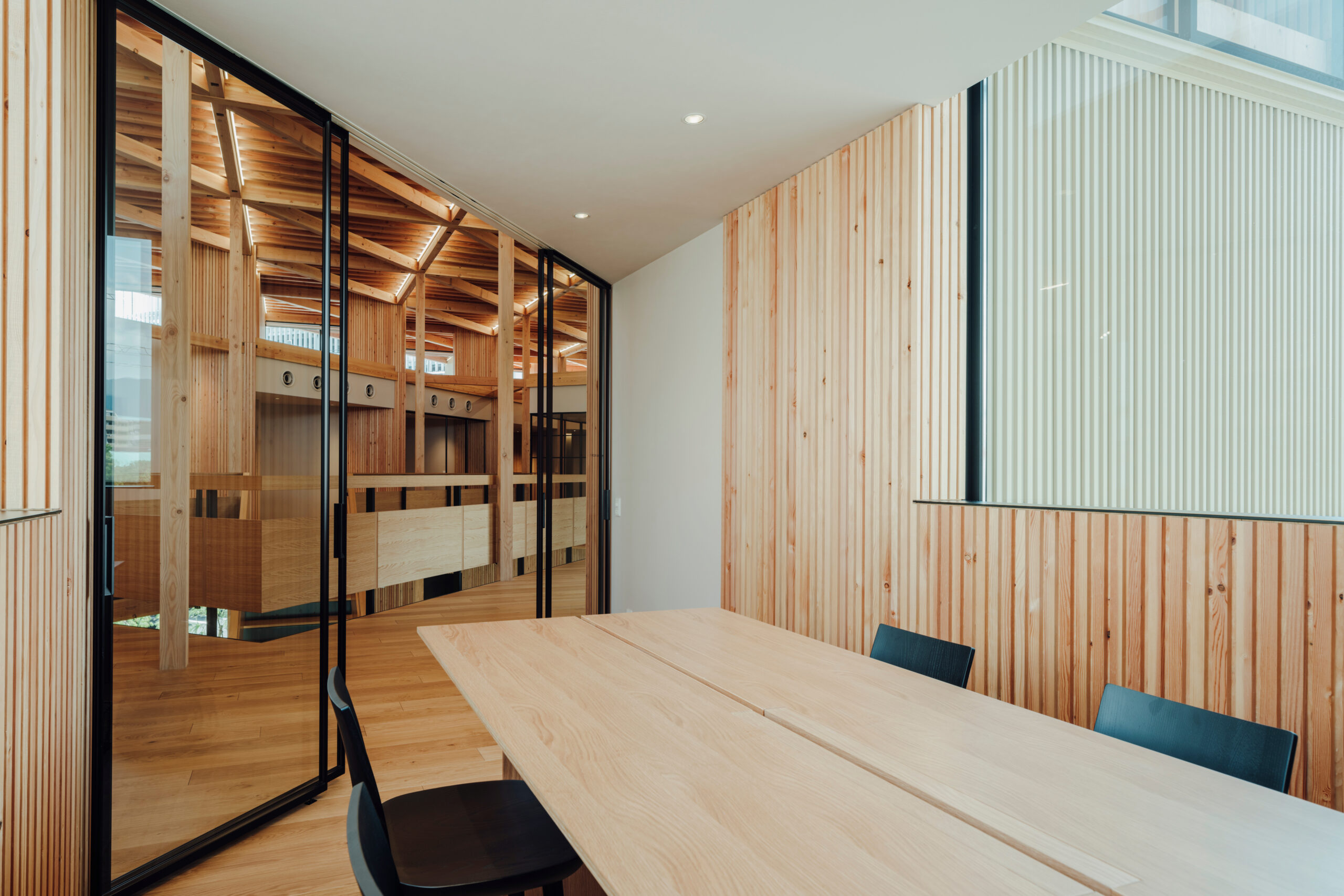
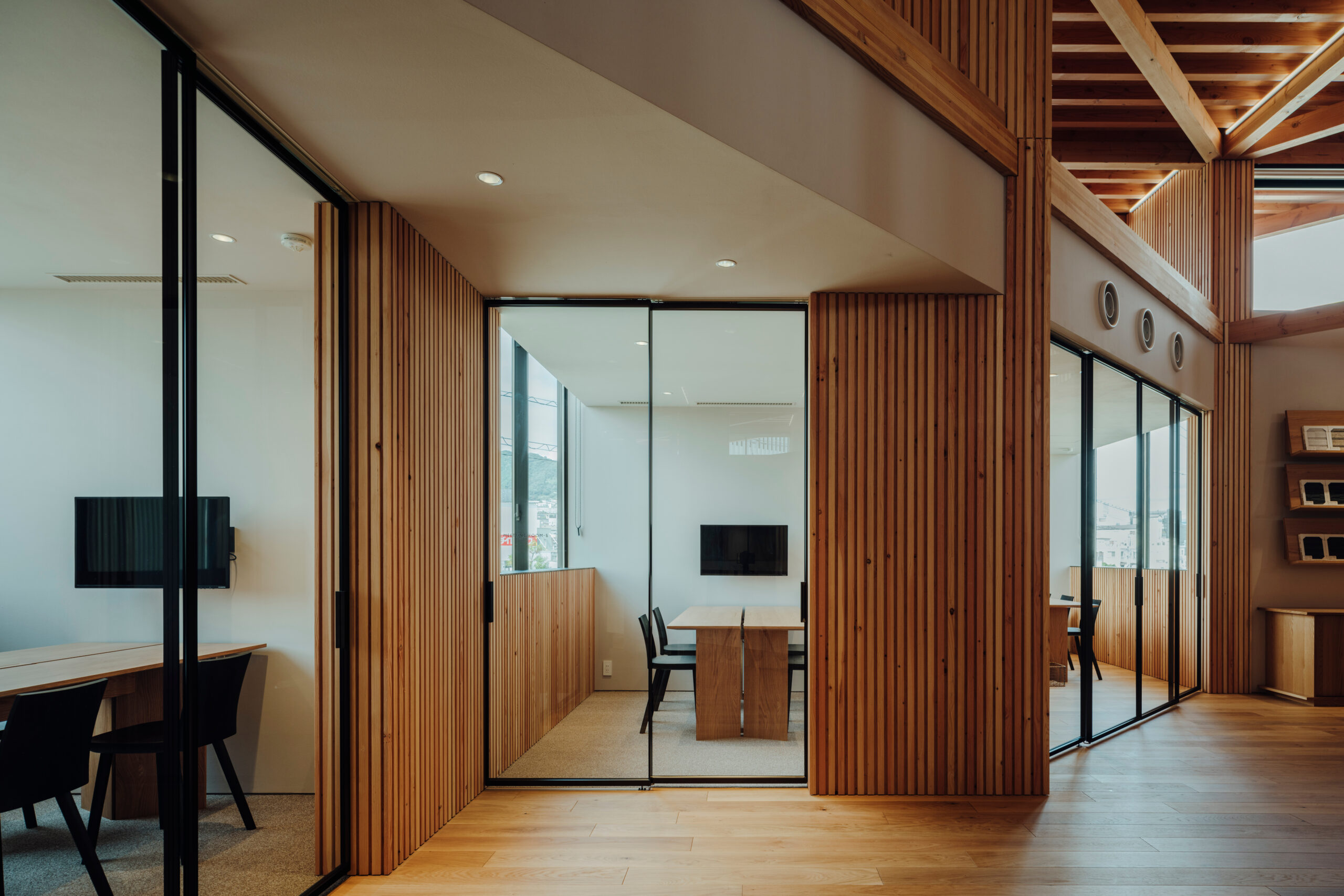
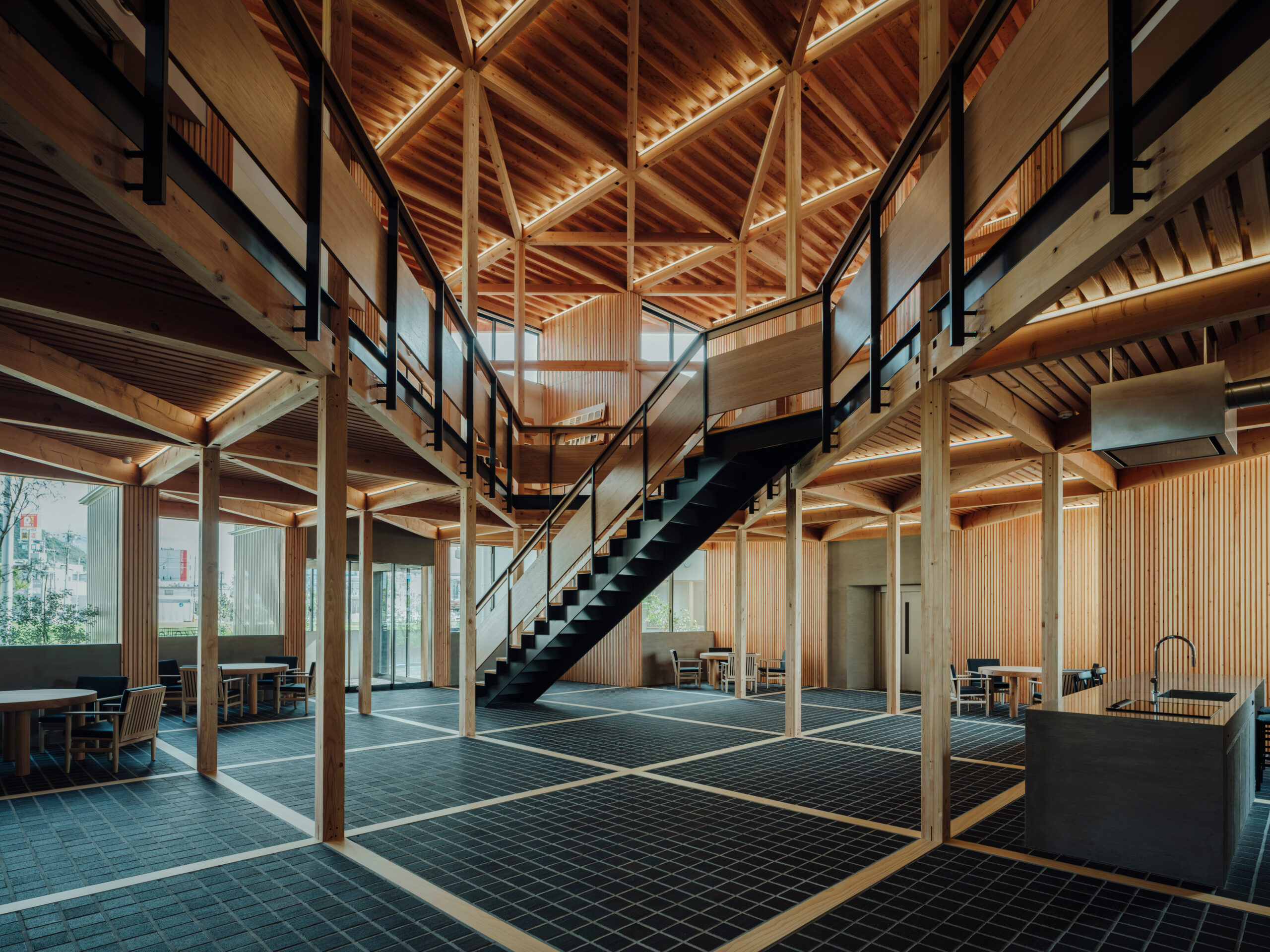
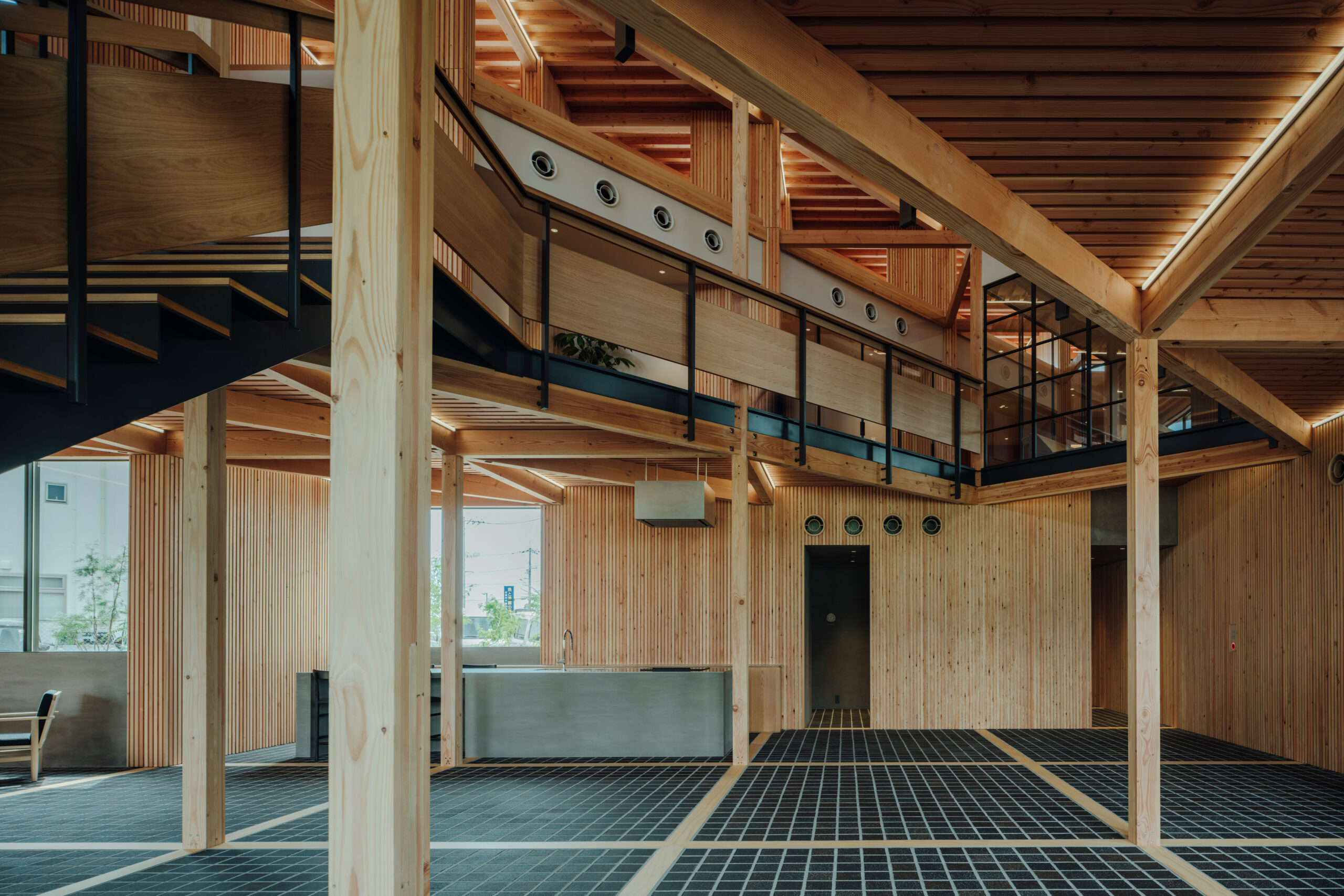
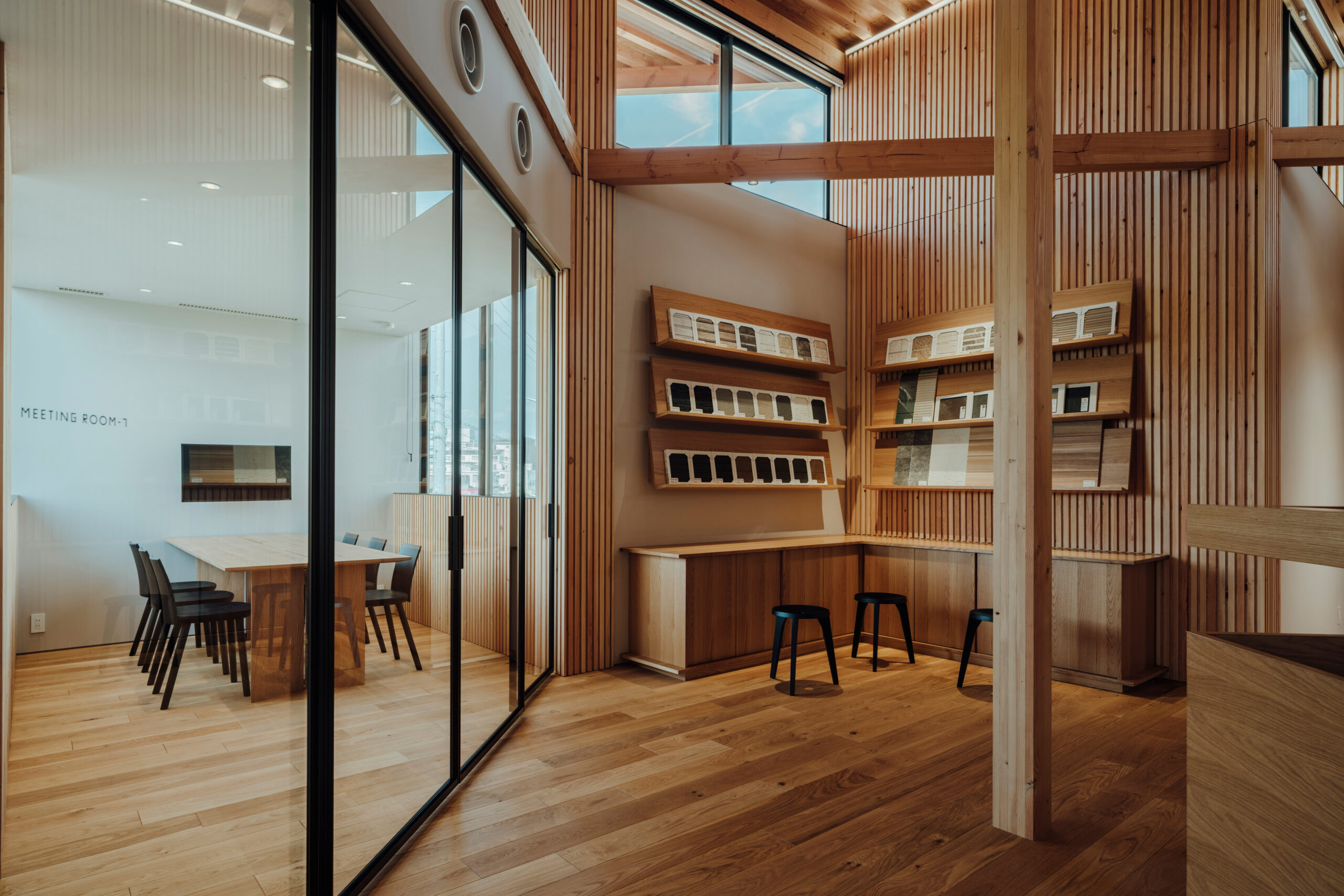
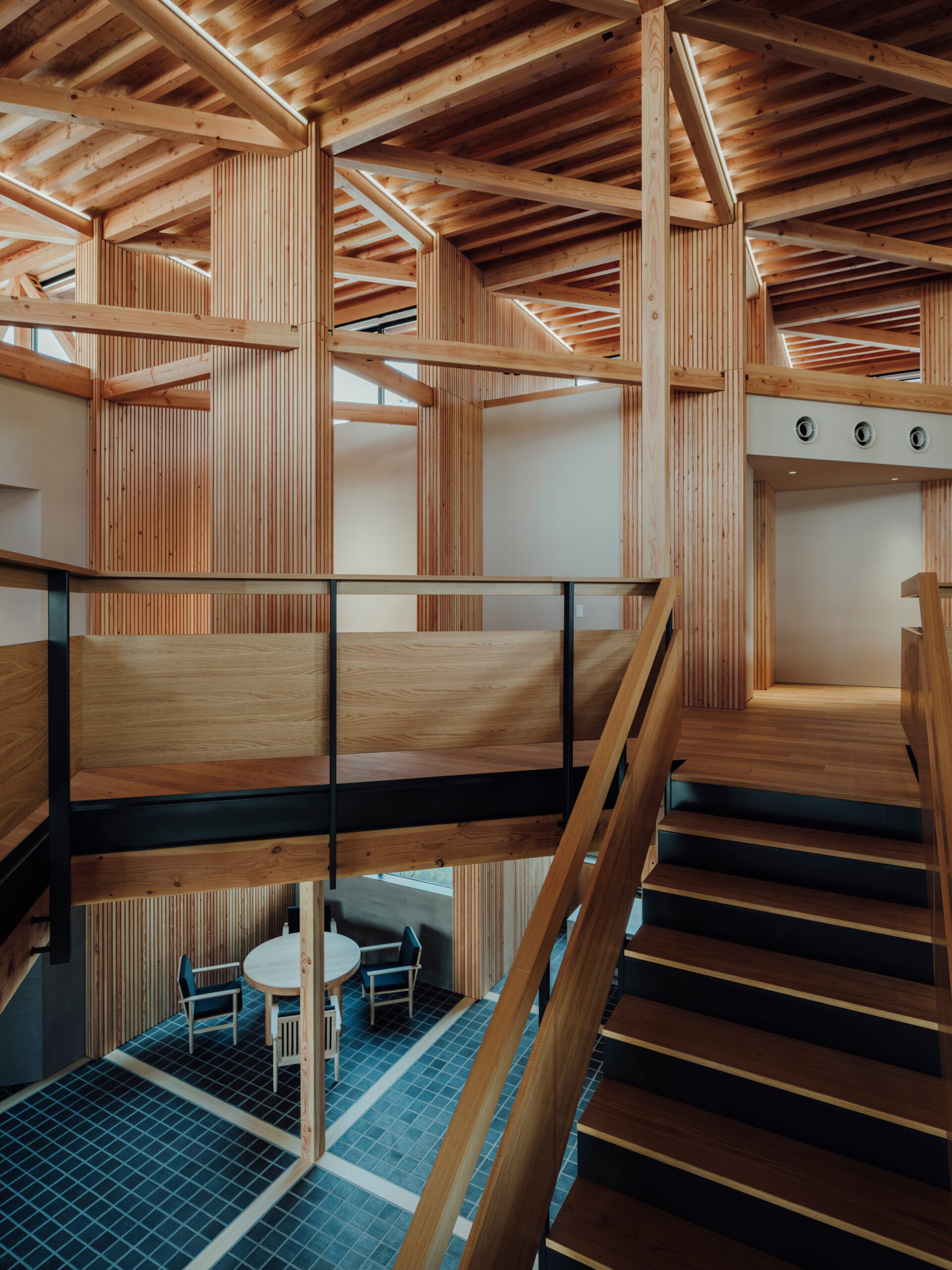
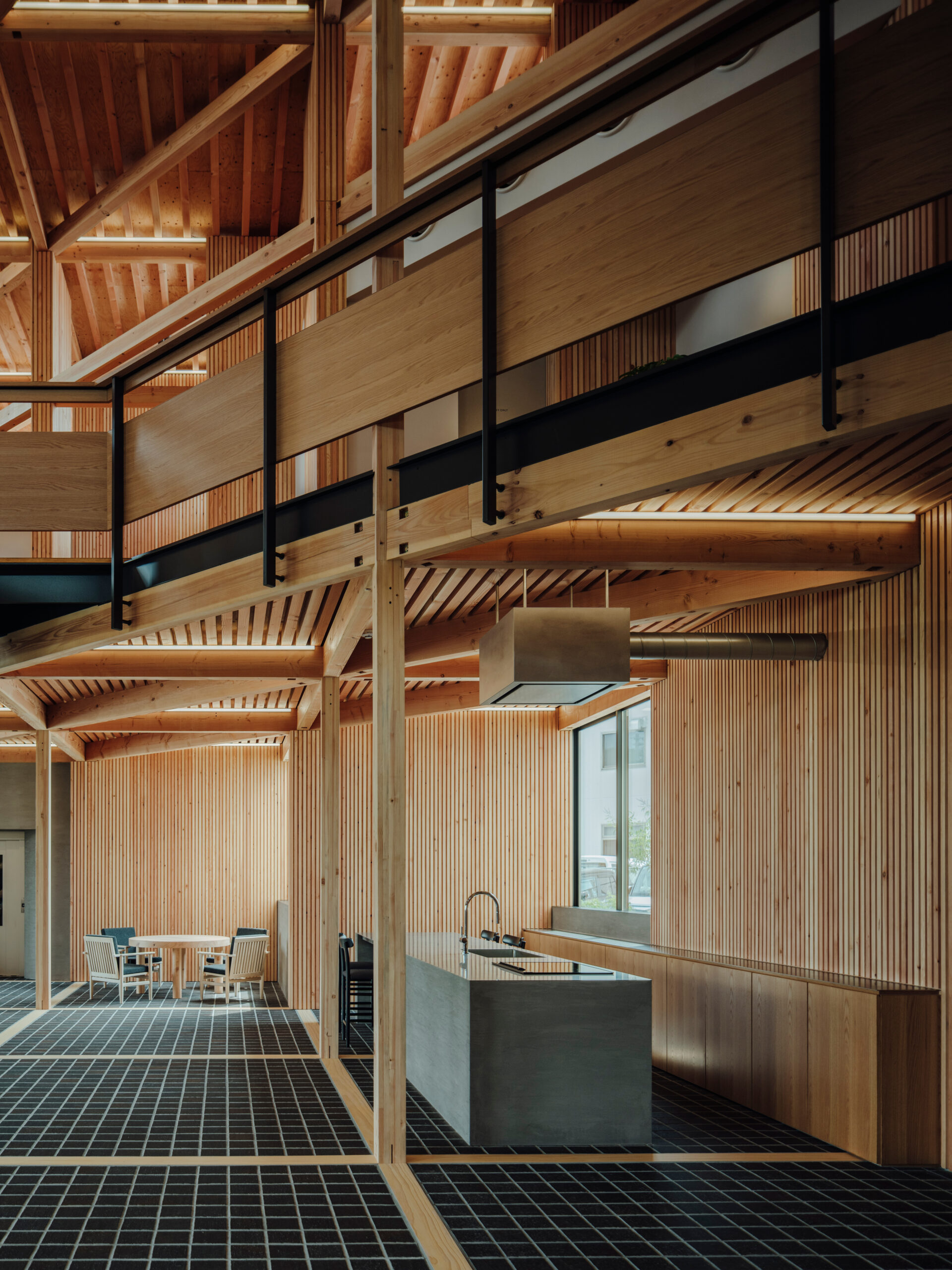
Inside, the first floor hosts a generous entrance hall and workspace, while the second floor houses meeting rooms. A central atrium aligned parallel to the road forms a circulation spine, allowing visitors to move freely around its perimeter. Walking through the angled plan creates a subtle amplification of depth, delivering a surprising sense of richness within a limited span.
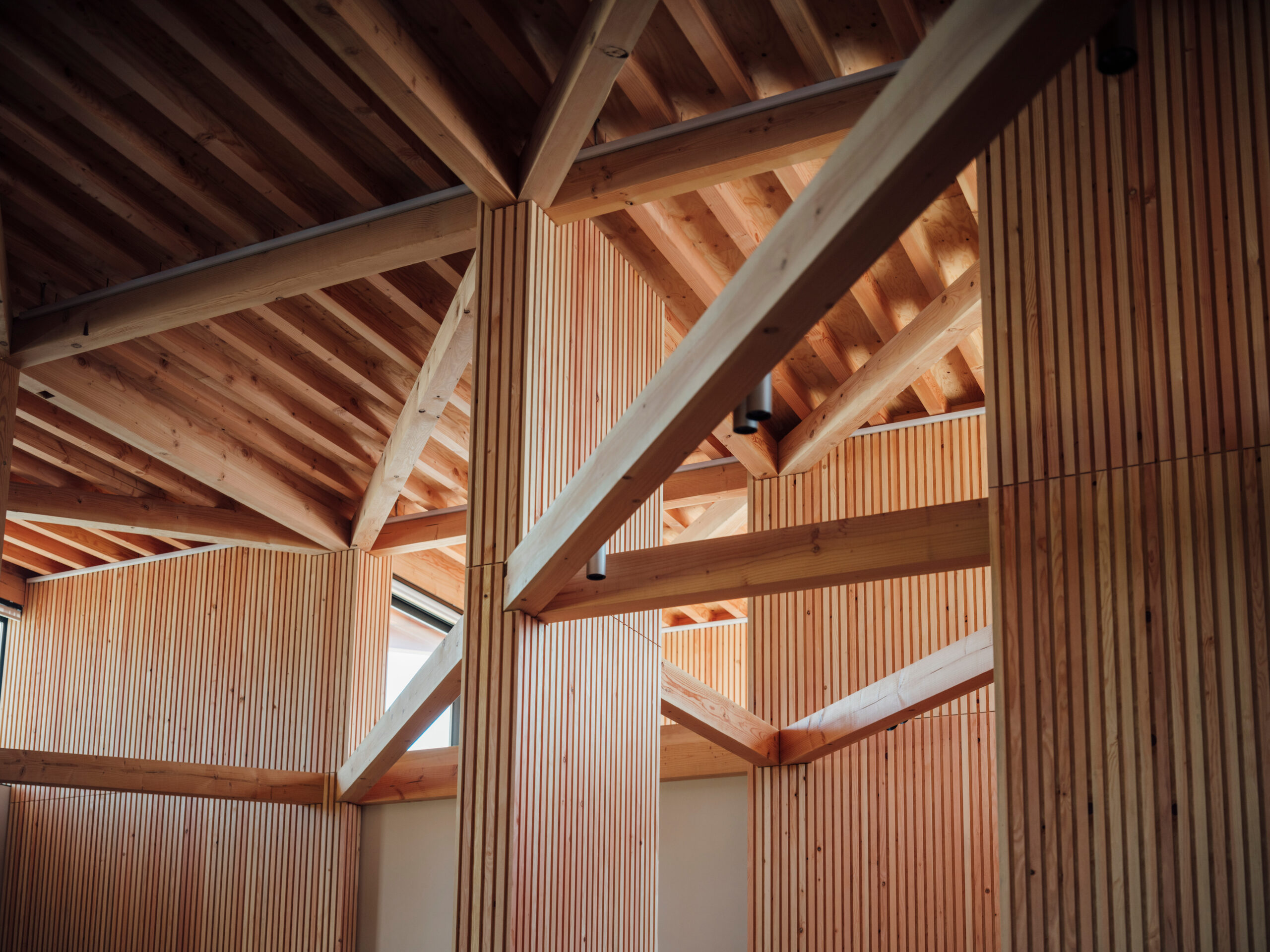
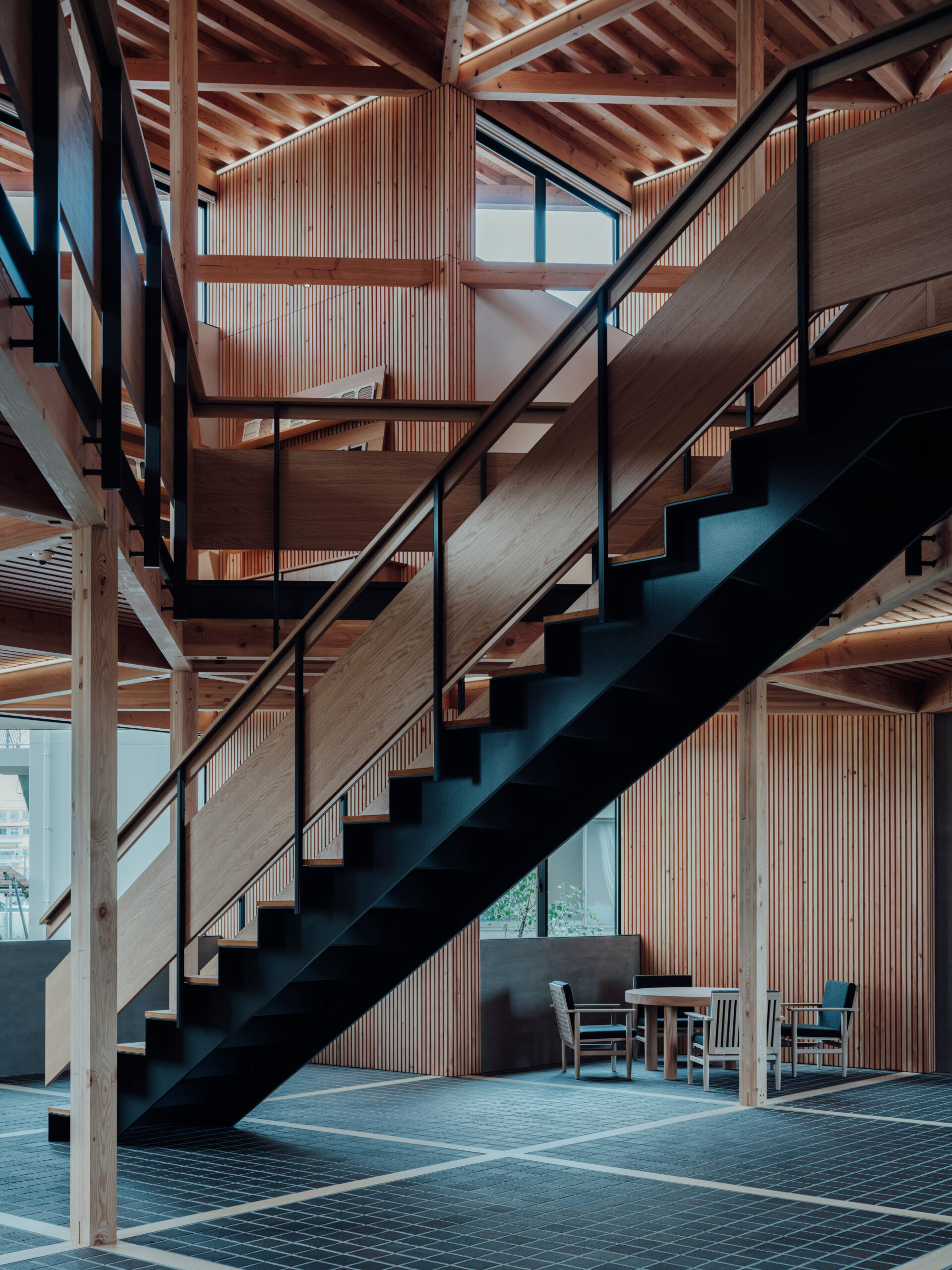
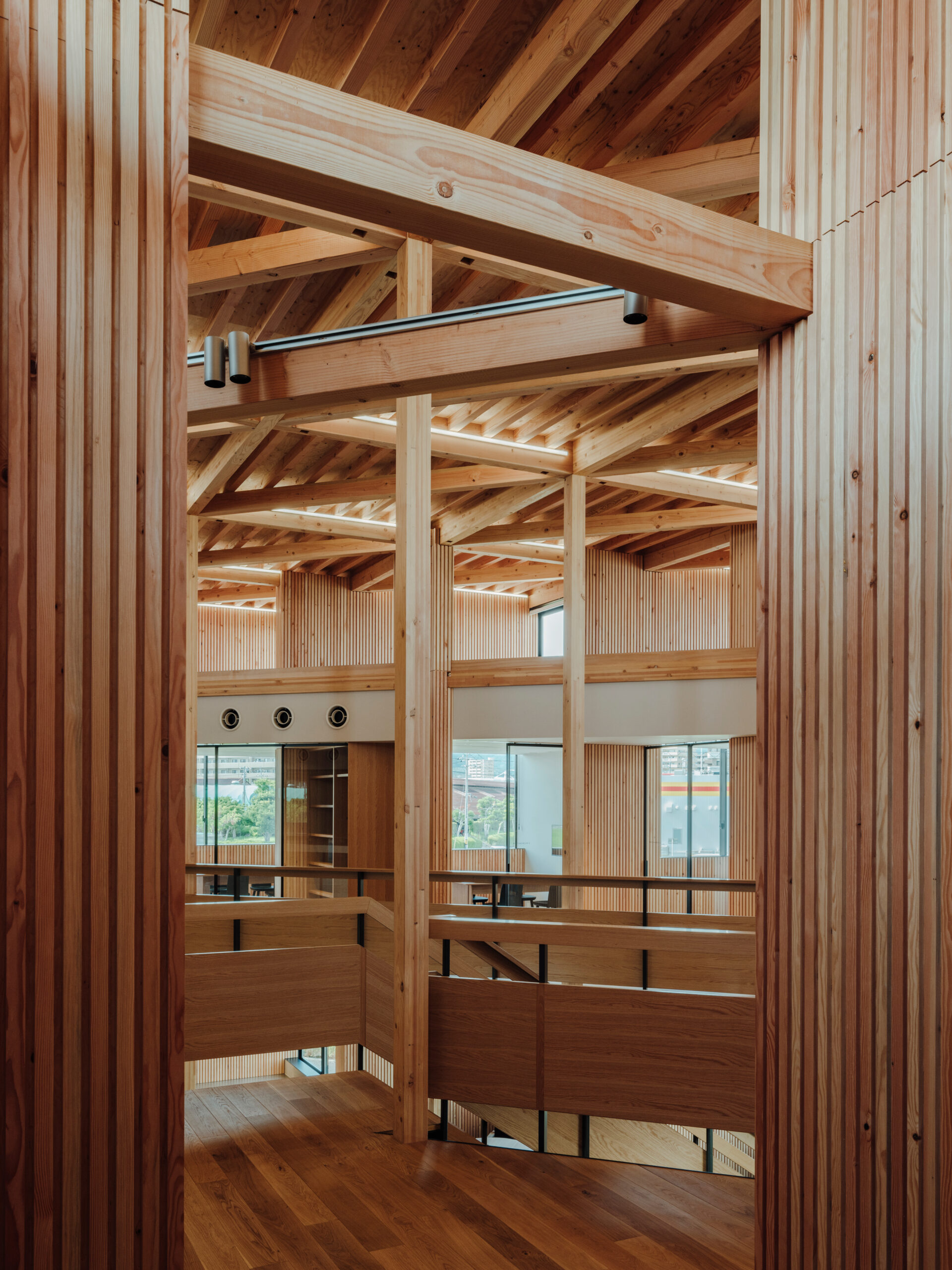
Timber structure and craftsmanship The two-storey office building has a total floor area of 654 square meters and is constructed using conventional Japanese timber framing. Rather than concealing the structure, the design celebrates timber as the primary architectural element. Columns, beams and structural members remain visible throughout the building, allowing occupants to experience the warmth and tactile qualities of wood in their everyday working environment.
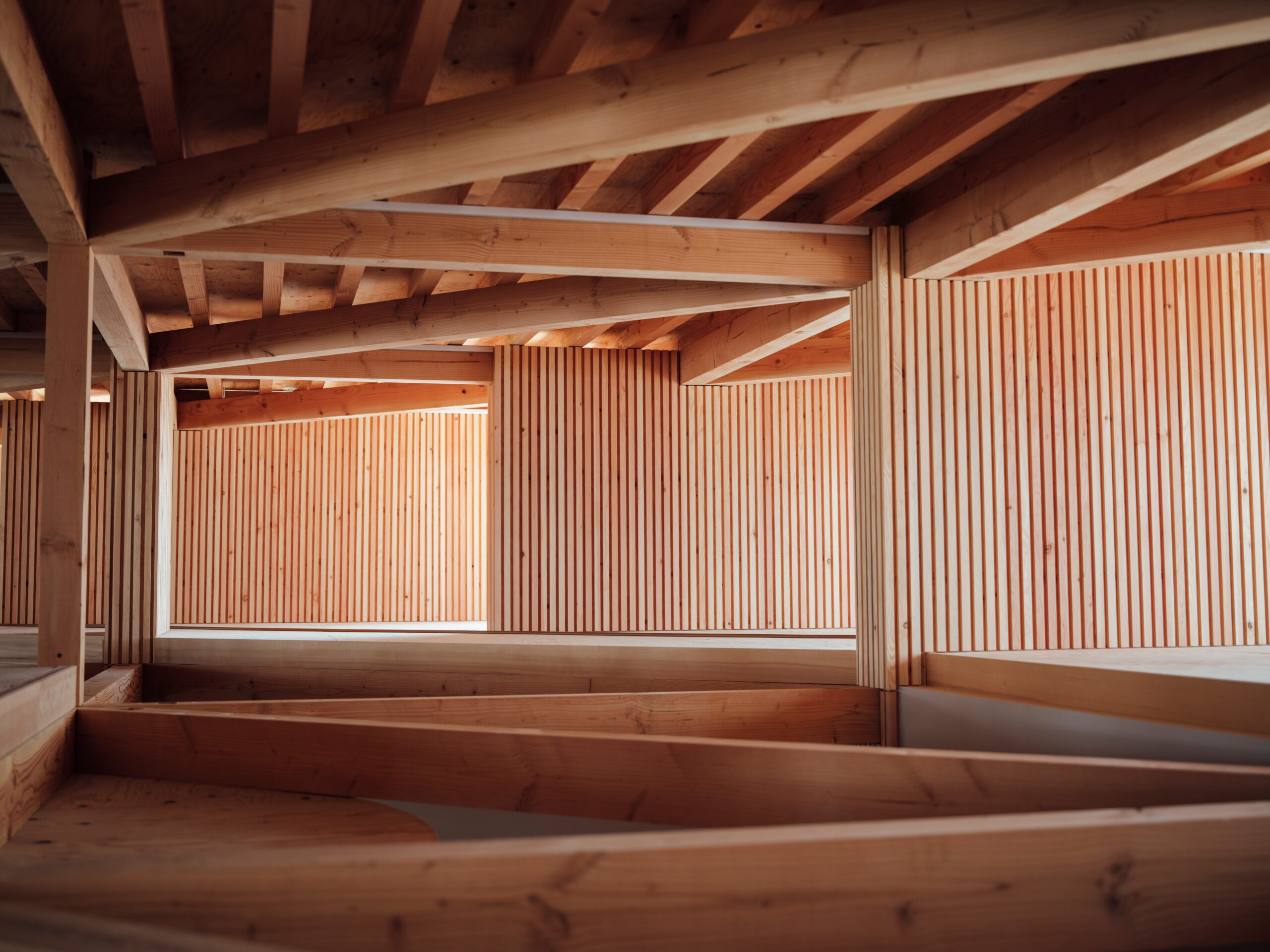
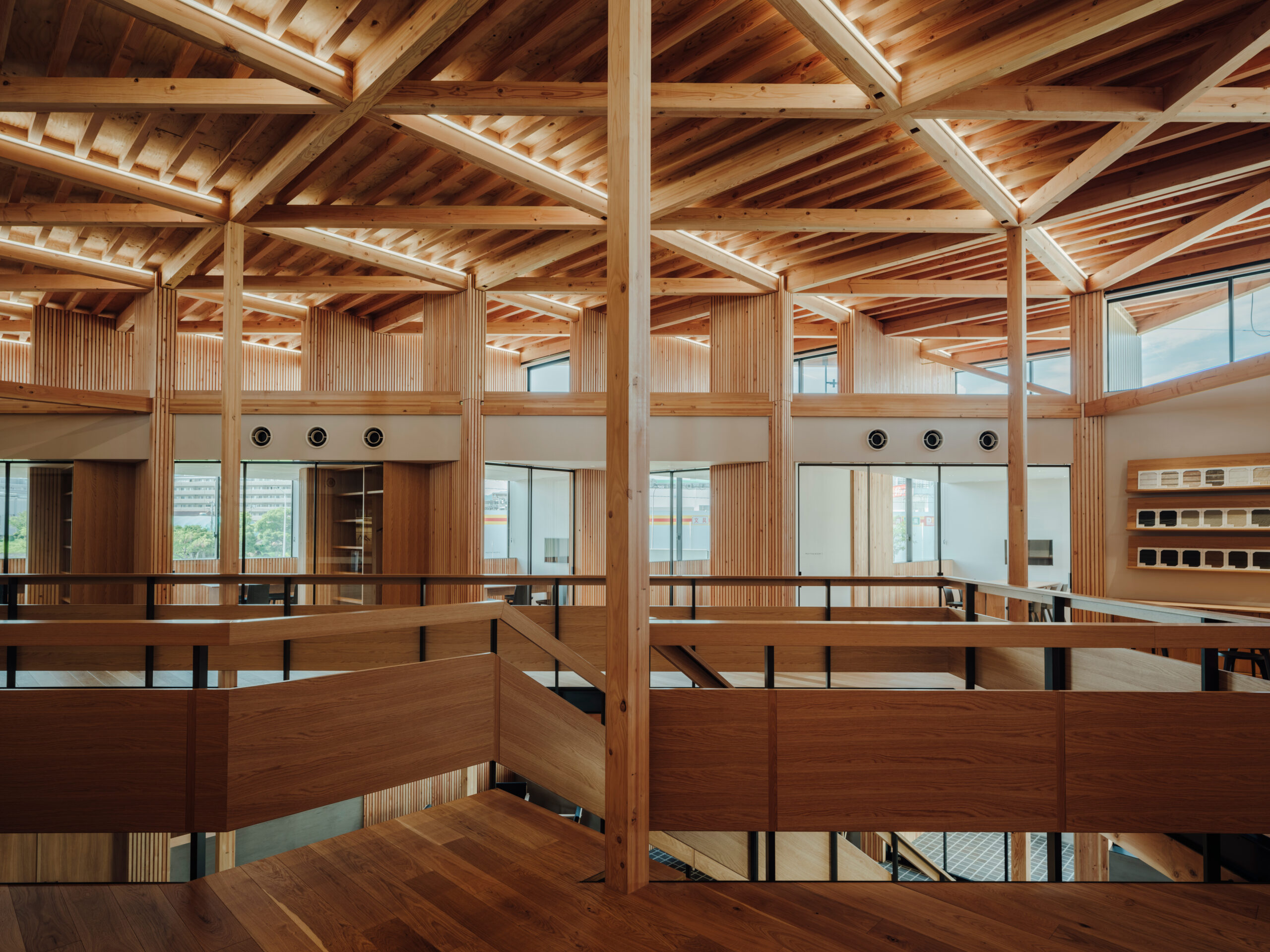
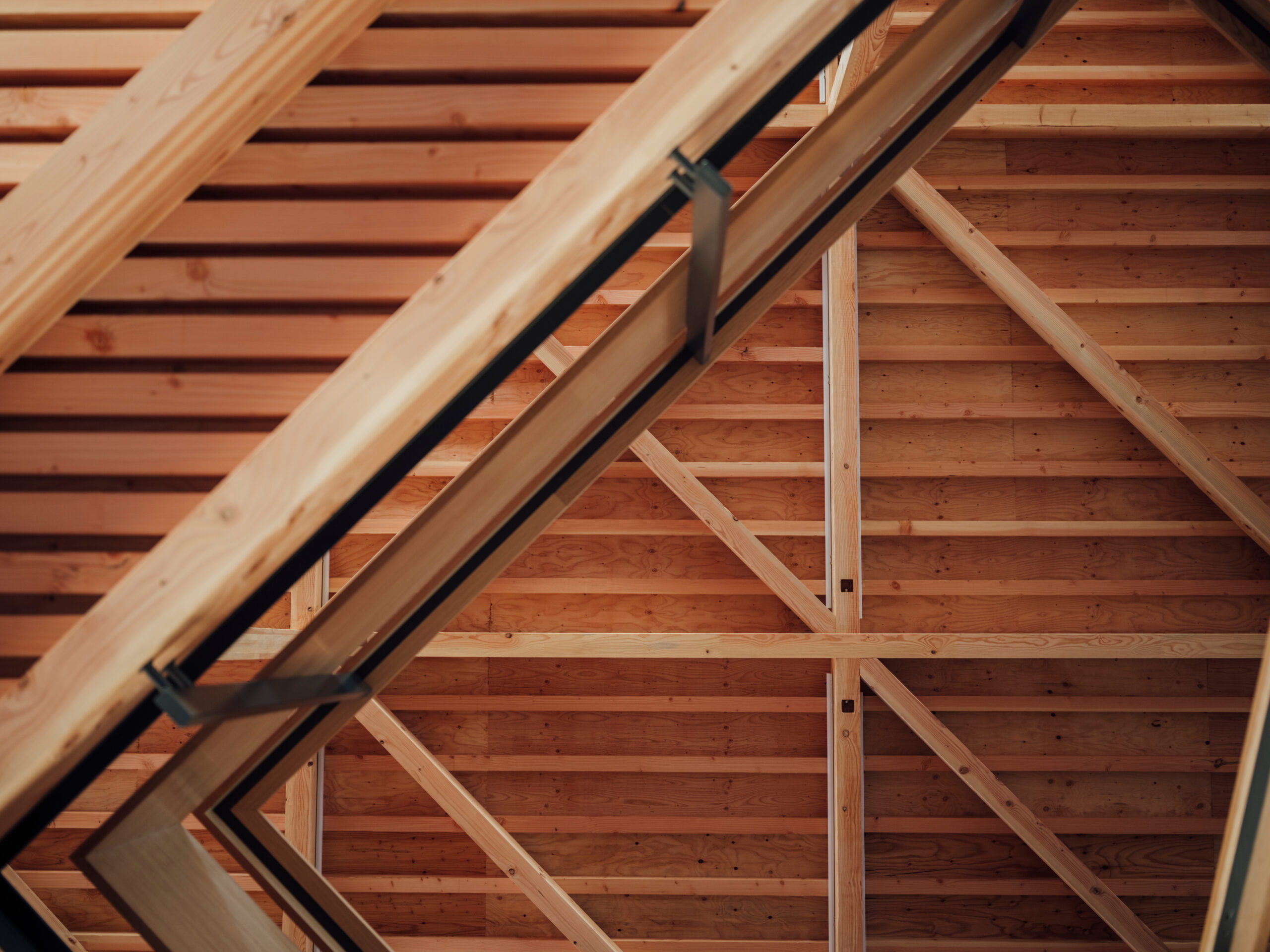
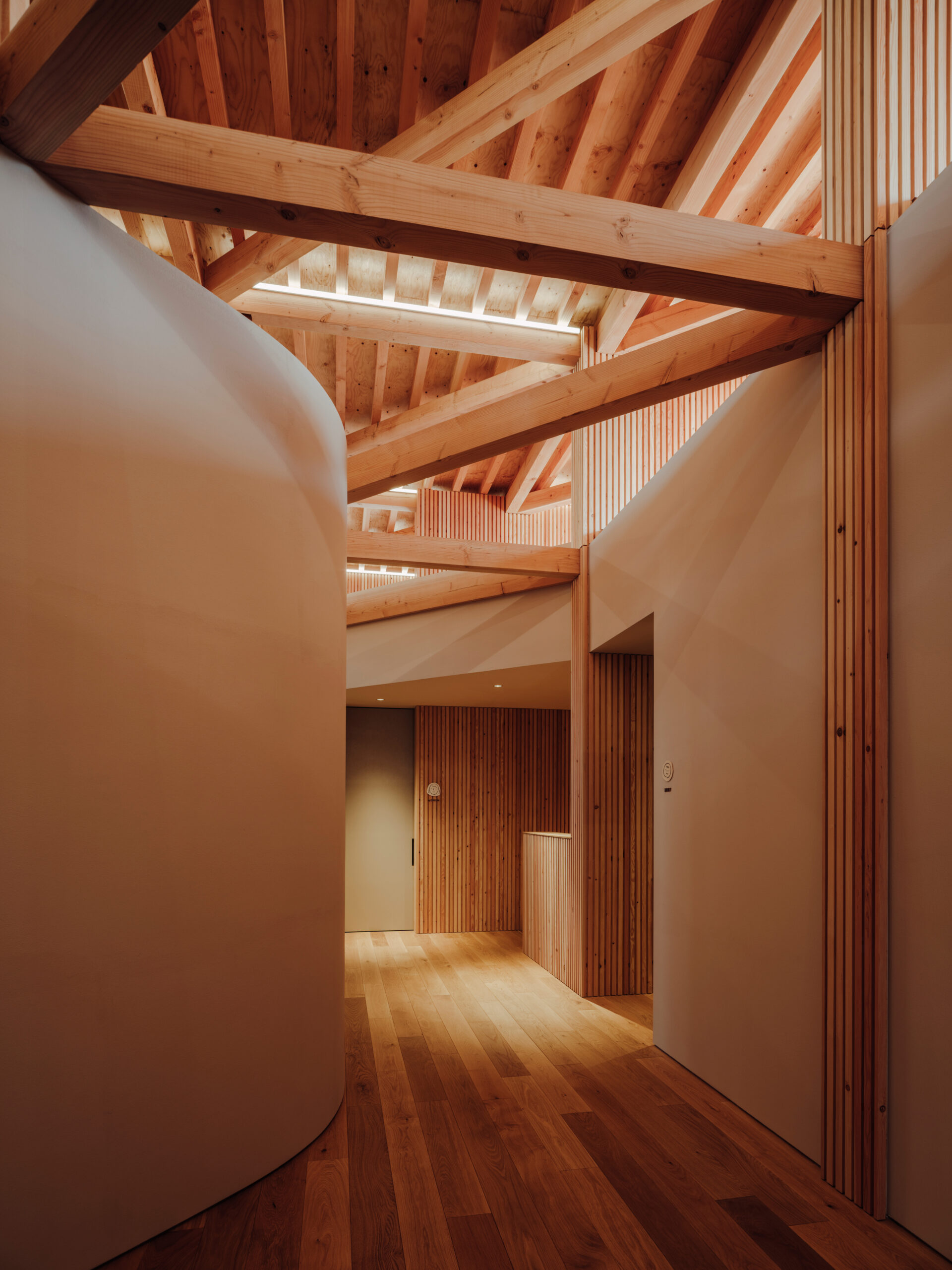
The timber structure is fully exposed. Beams run diagonally across the 2,730mm grid, forming a continuous sequence of triangular frames that secure horizontal rigidity. To cover spans where standard plywood would not suffice, 75×105 rafters are densely arranged beneath the sheathing – at 113.75mm on the second floor and 303mm at the roof and clerestory levels – balancing efficiency with structural clarity.
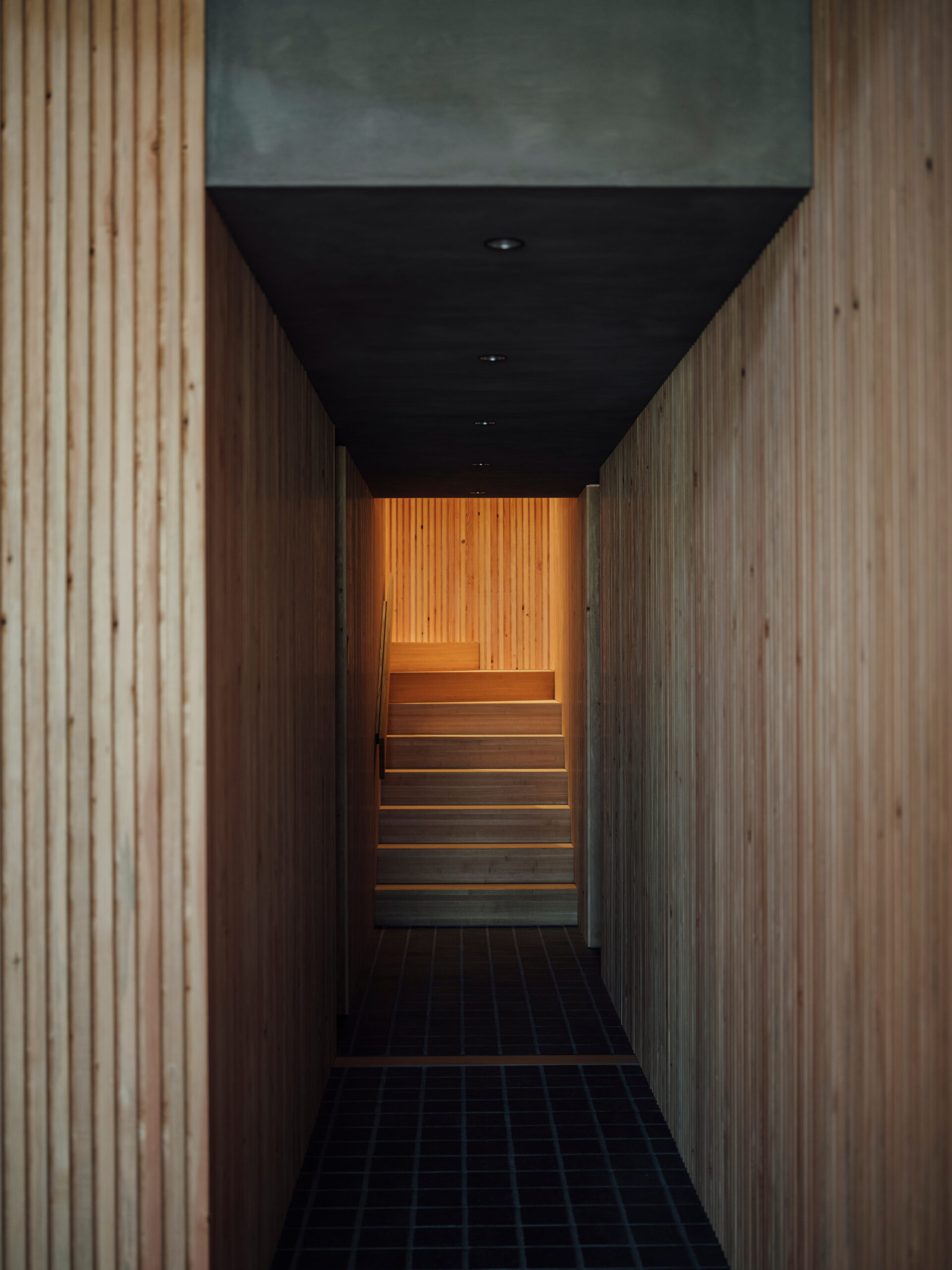
The interior is finished with over 5,000 pieces of 15×30mm wooden slats, modest in material yet elevated through precise, rhythmic installation. Indirect lighting along the beams accentuates the shadows of the rafters, creating a warm and intimate atmosphere. With no surface coatings, the natural scent and texture of the timber fill the space, enhancing the sense of comfort and domesticity.
Timber plays both structural and spatial roles within the building. The exposed wooden framework defines the rhythm of the interior spaces and creates a calm and natural atmosphere for the workplace. By revealing the structure, the building communicates how it is made, expressing a sense of honesty and clarity that reflects traditional Japanese building culture.
The use of timber also contributes to a sustainable architectural approach. Wood is a renewable material with the capacity to store carbon, and its use helps reduce the environmental impact of construction. Through careful design and detailing, the project demonstrates how contemporary offices can benefit from the environmental and experiential qualities of timber architecture.
Large openings and carefully positioned windows allow natural light to penetrate deep into the interior, highlighting the texture and grain of the wooden structure. The resulting spaces are bright yet warm, balancing functionality with a strong sense of material presence.
Environmental planning The first-floor hall incorporates floor heating, allowing warm air to naturally rise through the atrium during winter. Mechanical equipment around the atrium is neatly integrated within the clerestory floor, ensuring the space remains visually calm and uncluttered.
A ‘House for Everyone’ in an industrial landscape KItoNOKO is more than a corporate branch office. It is a place where people gather, spend time, and feel at ease. By overlaying the scale and sensibility of a home onto a rigid industrial zone, the project reimagines what an office can be and introduces a new kind of landscape to the region.
KItoNOKO aims to create a workplace that reconnects people with the material origins of architecture. By foregrounding timber construction and craftsmanship, the building offers a contemporary interpretation of Japan’s long-standing relationship with wood. The project demonstrates how traditional building knowledge can inform modern architecture, producing spaces that are both environmentally conscious and deeply rooted in cultural context.