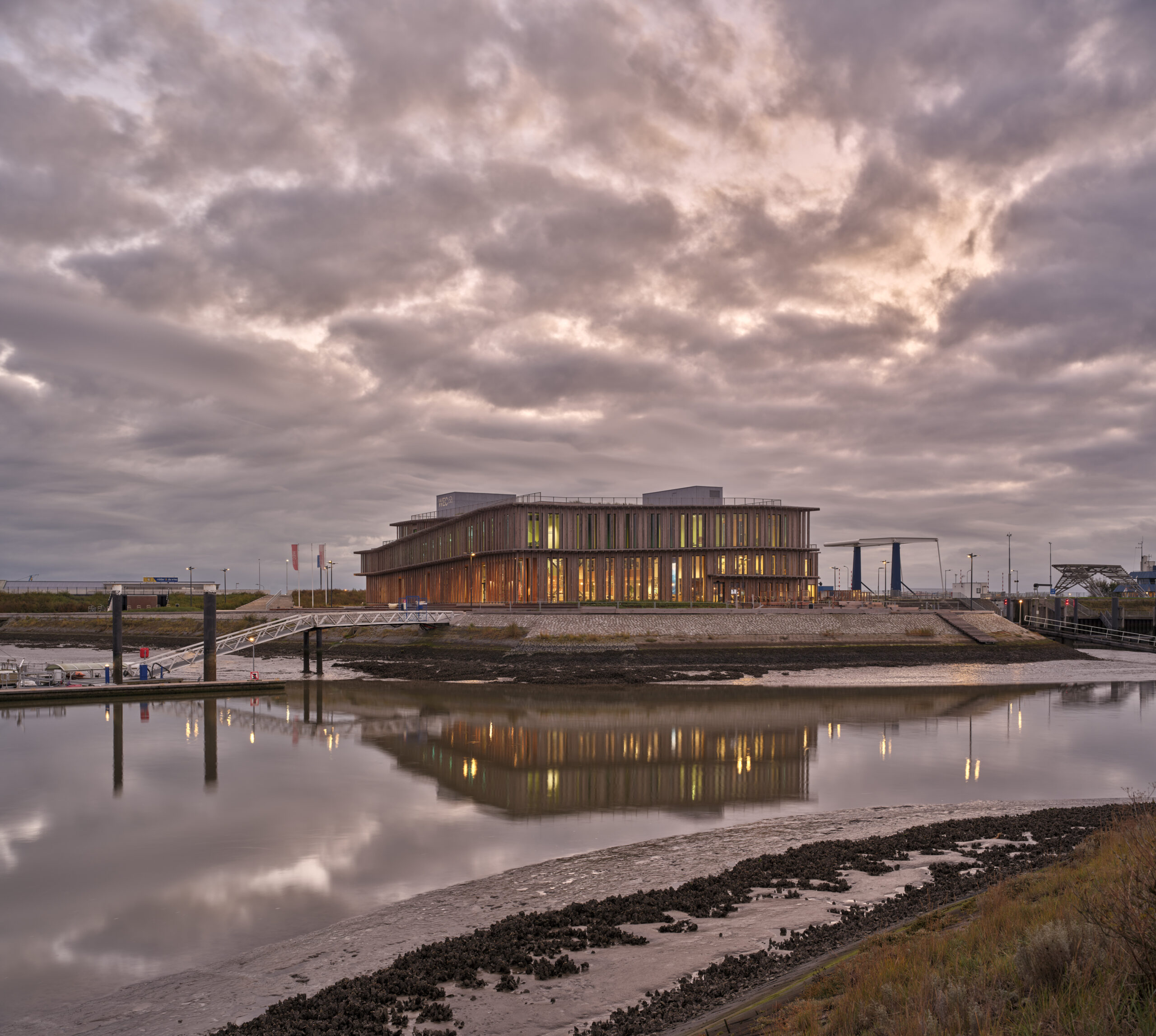
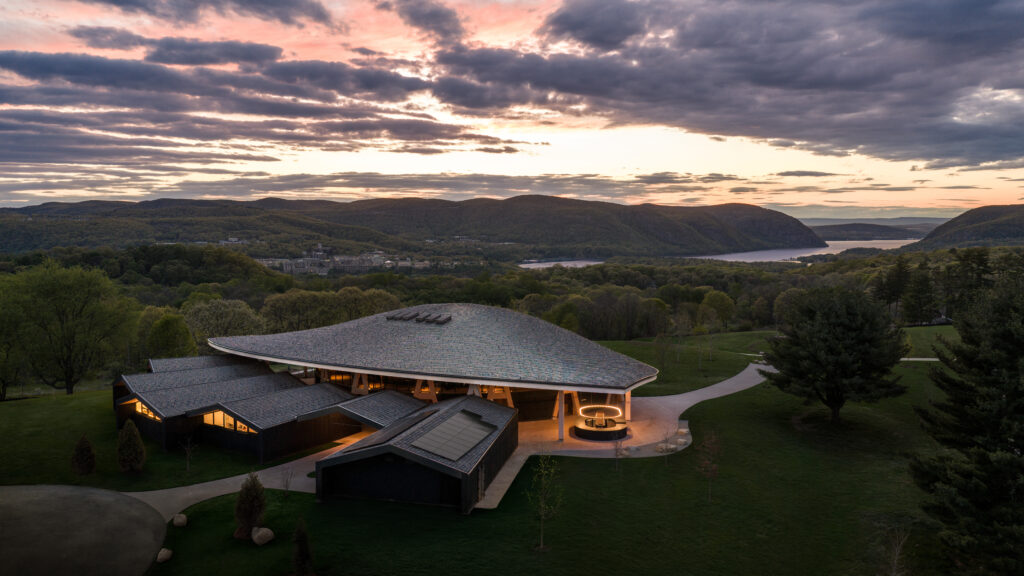
The Dutch seaside village of Lauwersoog is a popular place for fishermen casting their nets and visitors venturing into the UNESCO protected coastal wetlands. Situated between the expansive Wadden Sea and the Lauwersmeer National Park, it creates an intersection between land and sea – between salt water and fresh water, between cultivated landscape and wild nature. Here in the almost endless Dutch landscape is an opportunity to experience a 360-degree view of the flat horizon, dominated by land and water. Created as a spiraling movement upwards and around, the Wadden Sea World Heritage Center gives visitors a unique panoramic experience of the incredible view over both the expansive Wadden Sea, the maritime life in the harbor and the rich grasslands of the national park.
With a seemingly endless panoramic view stretching far over the Dutch landscape and the UNESCO protected Wadden Sea, the Wadden Sea World Heritage Center will complete Dorte Mandrup’s Wadden Sea trilogy. Last in line after the Wadden Sea Center in Denmark and the Trilateral Wadden Sea World Heritage Partnership Center in Germany, this marks the third project in the unique environment of the Wadden Sea. Functioning as both exhibition space and working field station, the new Wadden Sea World Heritage Center in Lauwersoog, Netherlands, aims to foster a deeper, more personal connection to this important ecosystem
Formed 12,000 years ago, the Wadden Sea area is a constantly changing ecosystem and home to more than 10,000 species of plants and animals – from microscopic life to seals and porpoises. It is the largest coherent intertidal sand and mudflat system in the world, extending along the coast of Denmark, Germany, and the Netherlands. And on a global scale, biodiversity is highly reliant on this unique natural world heritage. Designed by Dorte Mandrup, the new Wadden Sea World Heritage Centre in Lauwersoog aims to raise awareness of the dynamics between humans and nature, actively working towards a more balanced relationship.
Ascending from the harbor, the building adds a unique, yet subtle landmark to the Dutch seaside village, located between the expanses of Wadden Sea and the calm, brackish water of the Lauwersmeer. Inspired by the movement of the tide and subtly referencing the historic maritime surroundings, the building is designed as a spiraling movement upwards and around, ensuring a unique 360-degree experience of the surrounding landscape and the harbor. It almost gives you the feeling of being one with the sea.