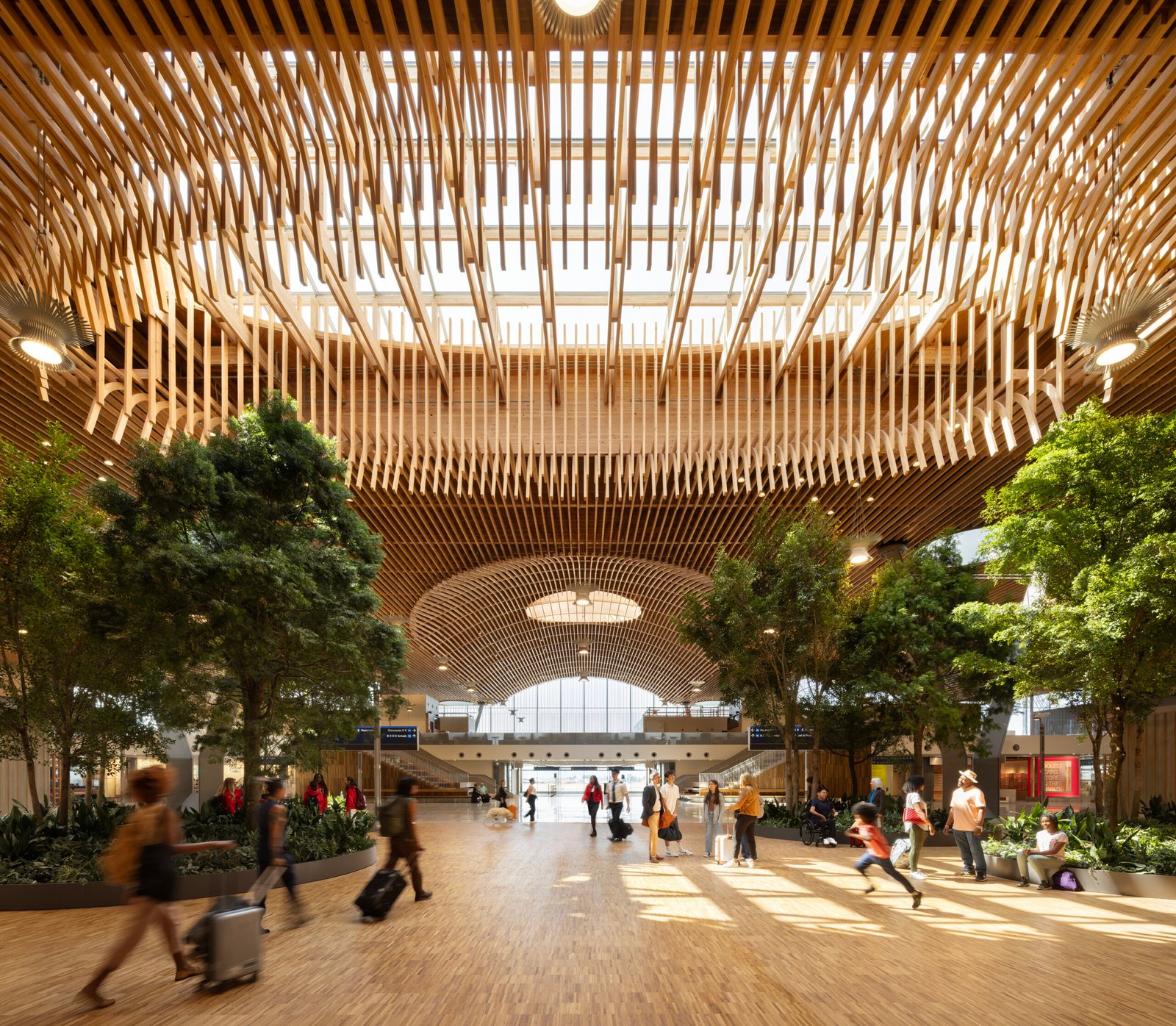
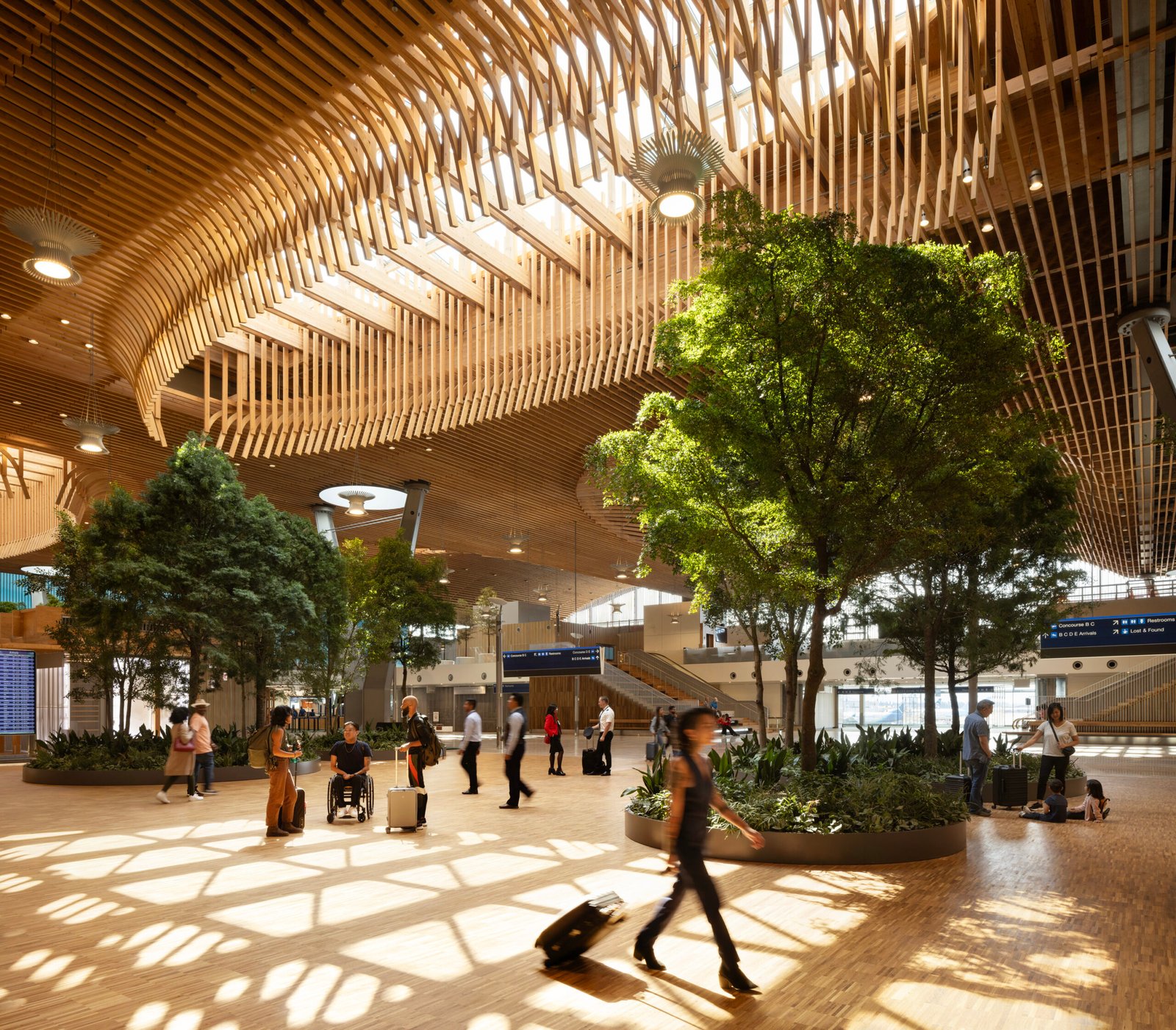
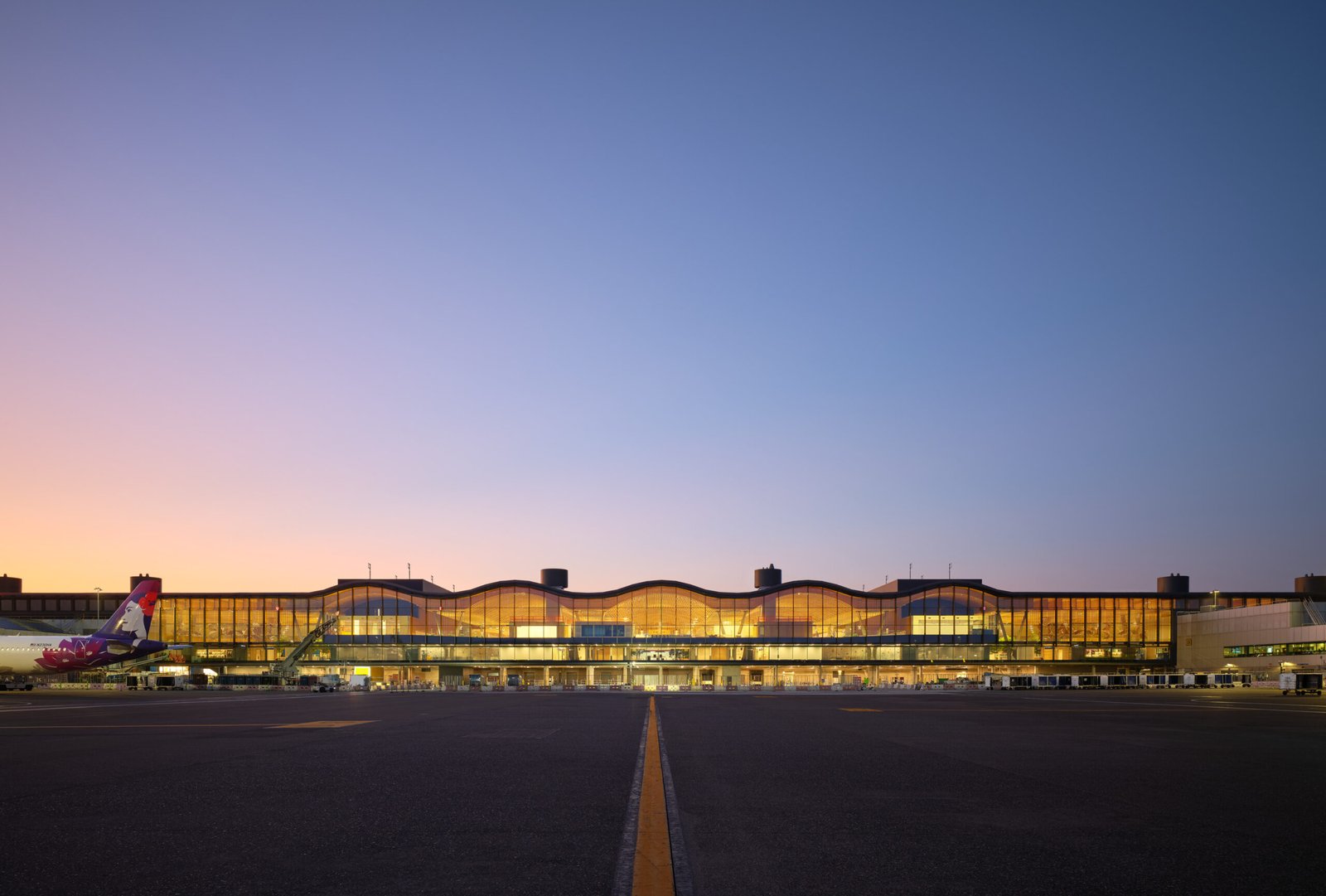
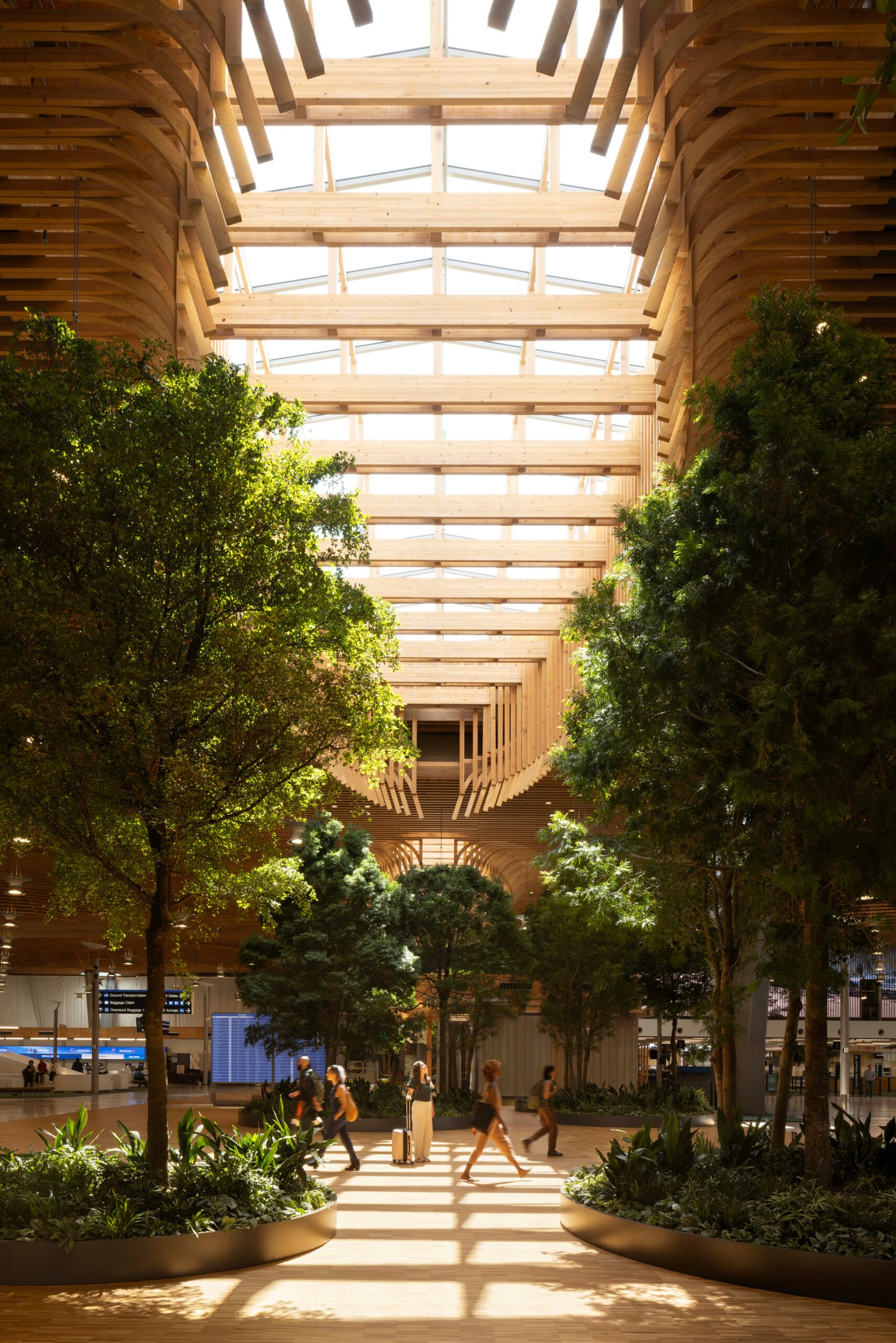
The expansive 9-acre roof is constructed from 3.5 million board feet of Douglas fir, comprised of three different wood products: mass plywood panels for the roof diaphragm, glulam beams, and 3 x 6-foot timbers for the lattice. Individual pieces of wood are visible, making the enormous structure feel handcrafted, yet on a very grand scale. The glulam beam and lattice overstory is a basketweave of arches and scalloped shapes, inspired by traditional weaving techniques indigenous to the region. The long-span beams were designed to without splices; minimizing the need for additional steel connections, reducing cost, and aesthetically highlighting the wood.
The peaks and valleys of the expressive roof design also conceal a myriad of systems within its hybrid structure and contribute to its seamless appearance. Adding to the grandness of the design, 34 massive Y-shaped columns hold the 18-million-lb, 380,000-sq-ft mass timber roof in place. Using timber in the roof helped the airport achieve its sustainability – 125% reduction in embodied carbon from baseline – because wood has a much lower carbon footprint than concrete or steel.
“In a way, Doug Fir is an ideal building material, with its exceptional workability, minimal thermal expansion – just a quarter of steel’s – and remarkable resilience, making it perfect for the construction challenges of a Pacific Northwest winter,” added Schoewe.
Sustainable and Resilient
The decision to reuse much of the existing terminal, along with using wood and optimizing steel and concrete, enabled a 66% reduction in the embodied carbon of the structure compared to building an entirely new terminal. The highly efficient envelope increases energy efficiency, as does the conversion to a ground source system for heating and cooling, eliminating the need to increase the footprint of the existing central utility plant. Given PDX’s location within the Cascadia subduction zone, the new terminal is designed to withstand a magnitude 9 seismic event.
Growing in Place
A key solution to keep the airport operational during construction was to prefabricate the modular roof nearby and then set it into place over the existing terminal. This allowed construction to occur without disrupting airport operations. To avoid disruption to travelers, the new roof was constructed a half-mile away from the current airport roof, then disassembled in 100 x 300 foot modules and re-assembled above the operating terminal in segments over a four-month period.
ZGF designed a flexible infrastructure that would allow for future innovations, evolutions in sustainable design, and future expansions. 100’ x 150’ spans between columns support seamless passenger flow while also providing long-term flexibility and adaptability as operational standards and traveler needs evolve. This innovative solution left more infrastructure in place and minimized operational disruptions during construction, saving both time and money. These were also important moves to future-proof the airport, as they create more operational flexibility – and enable ticketing, security, processing, and retail concessions the room to evolve.