Nanhai Buddha Pavilion offers a place where worship and everyday life coexist
Wood continues to weather, light constantly changes, and visitors gradually reshape the building
July 20, 2026
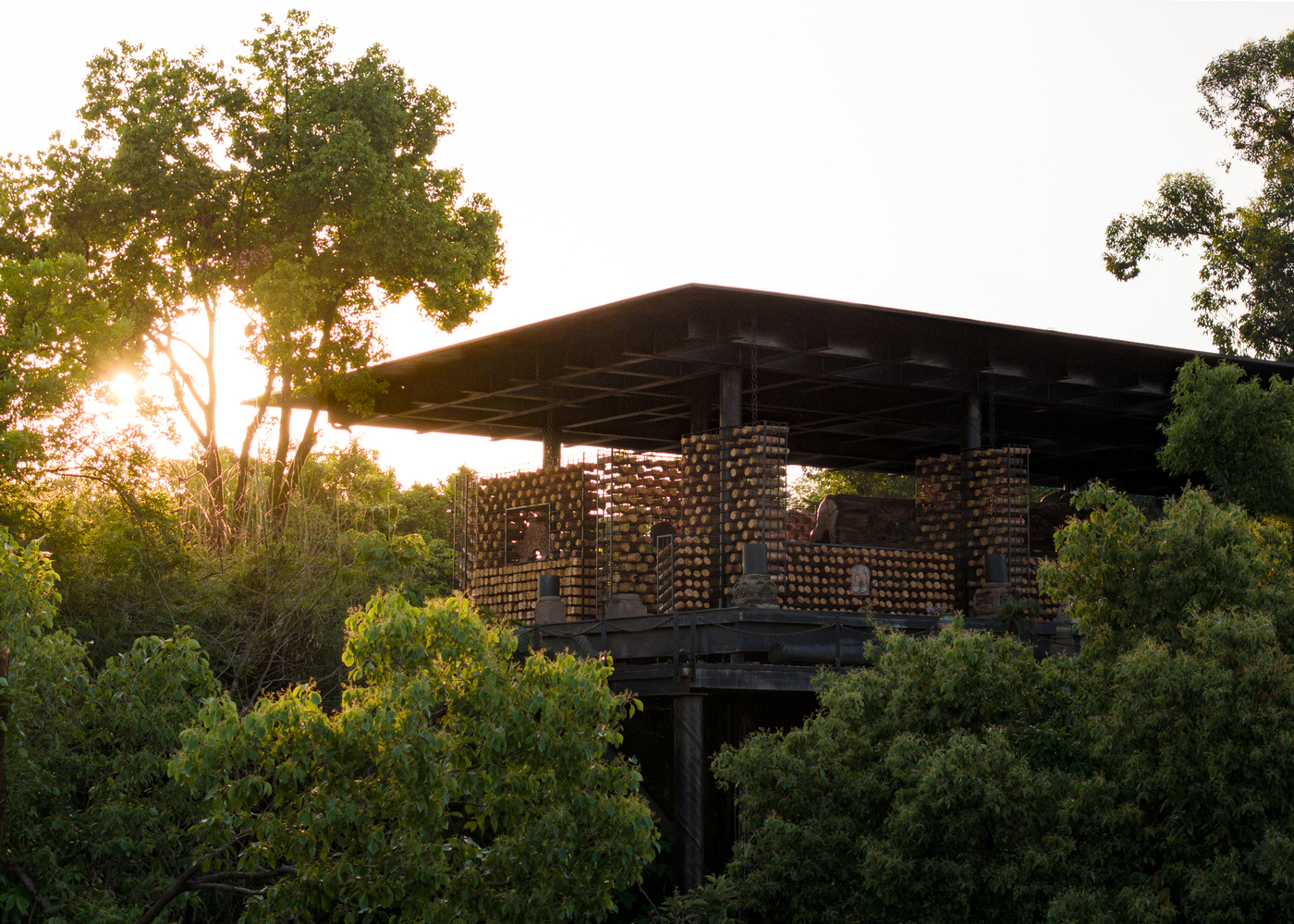
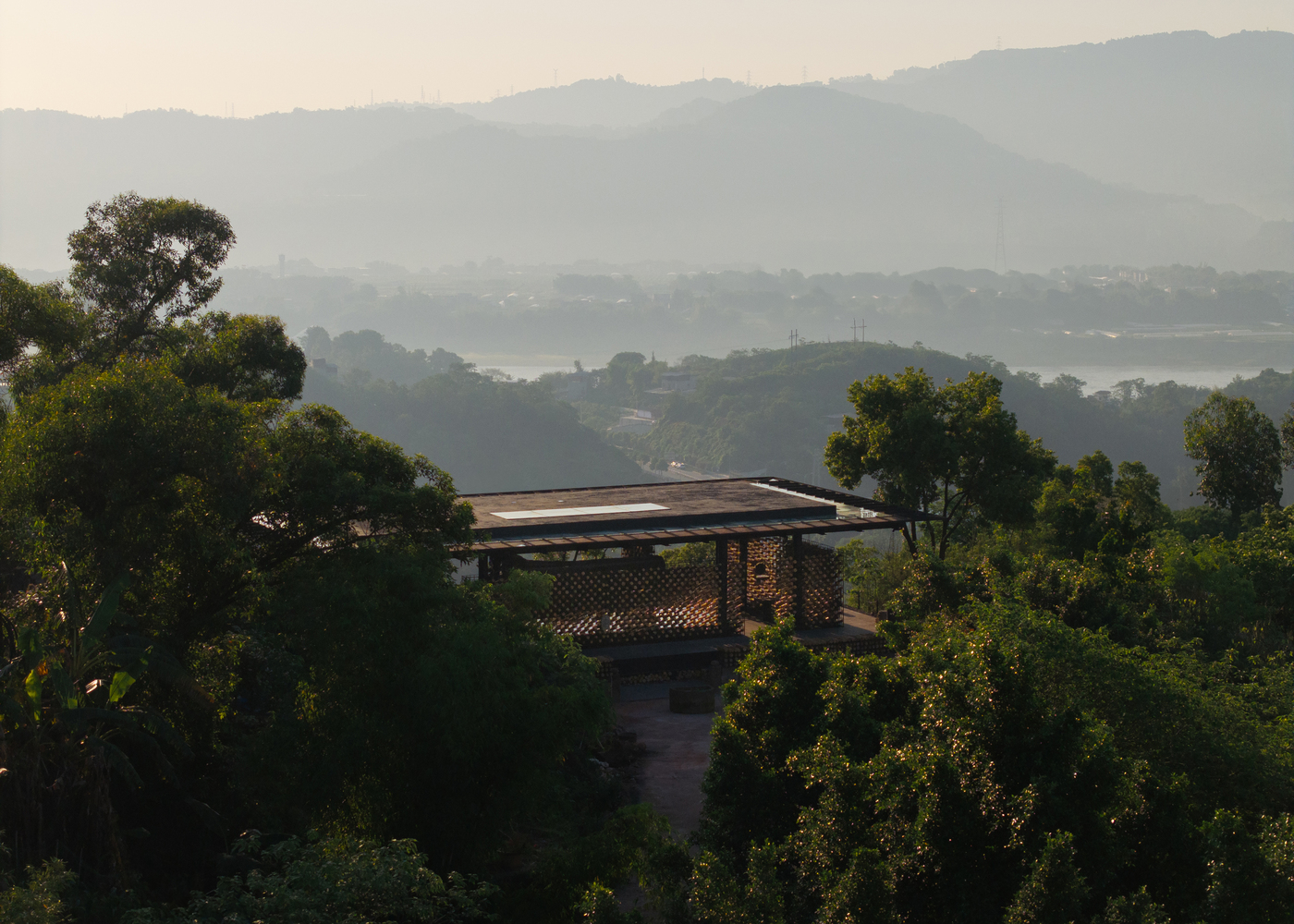
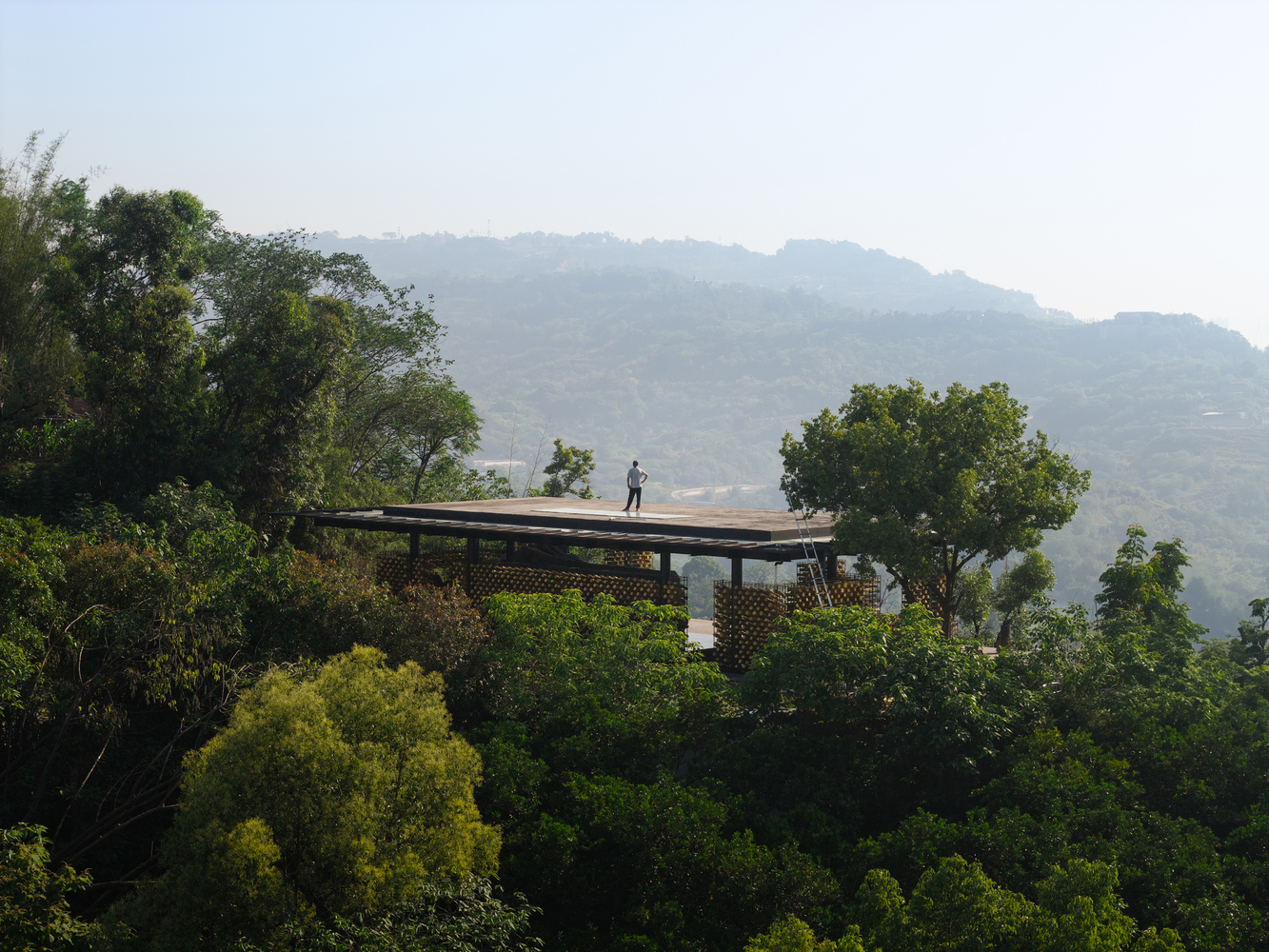
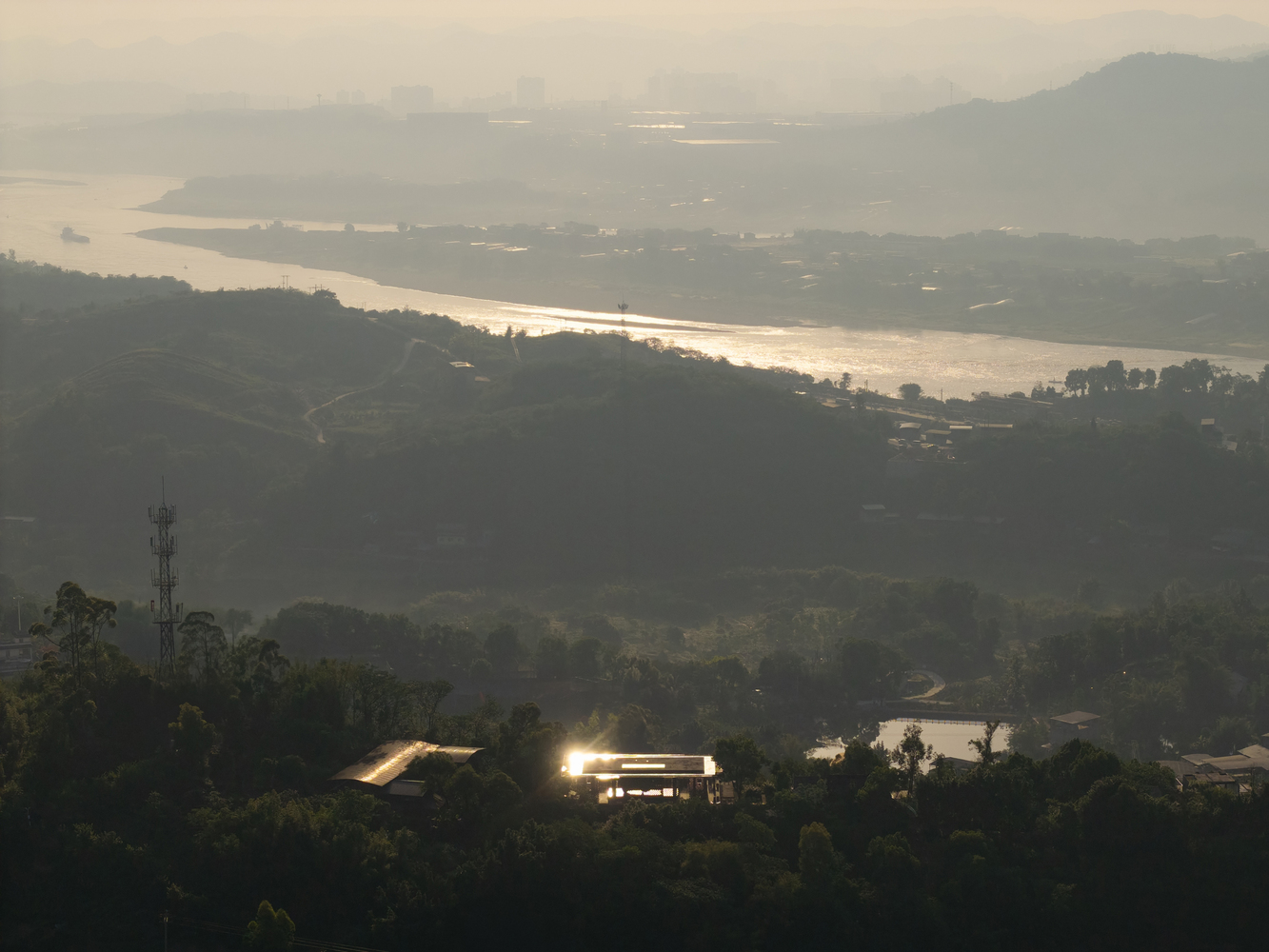
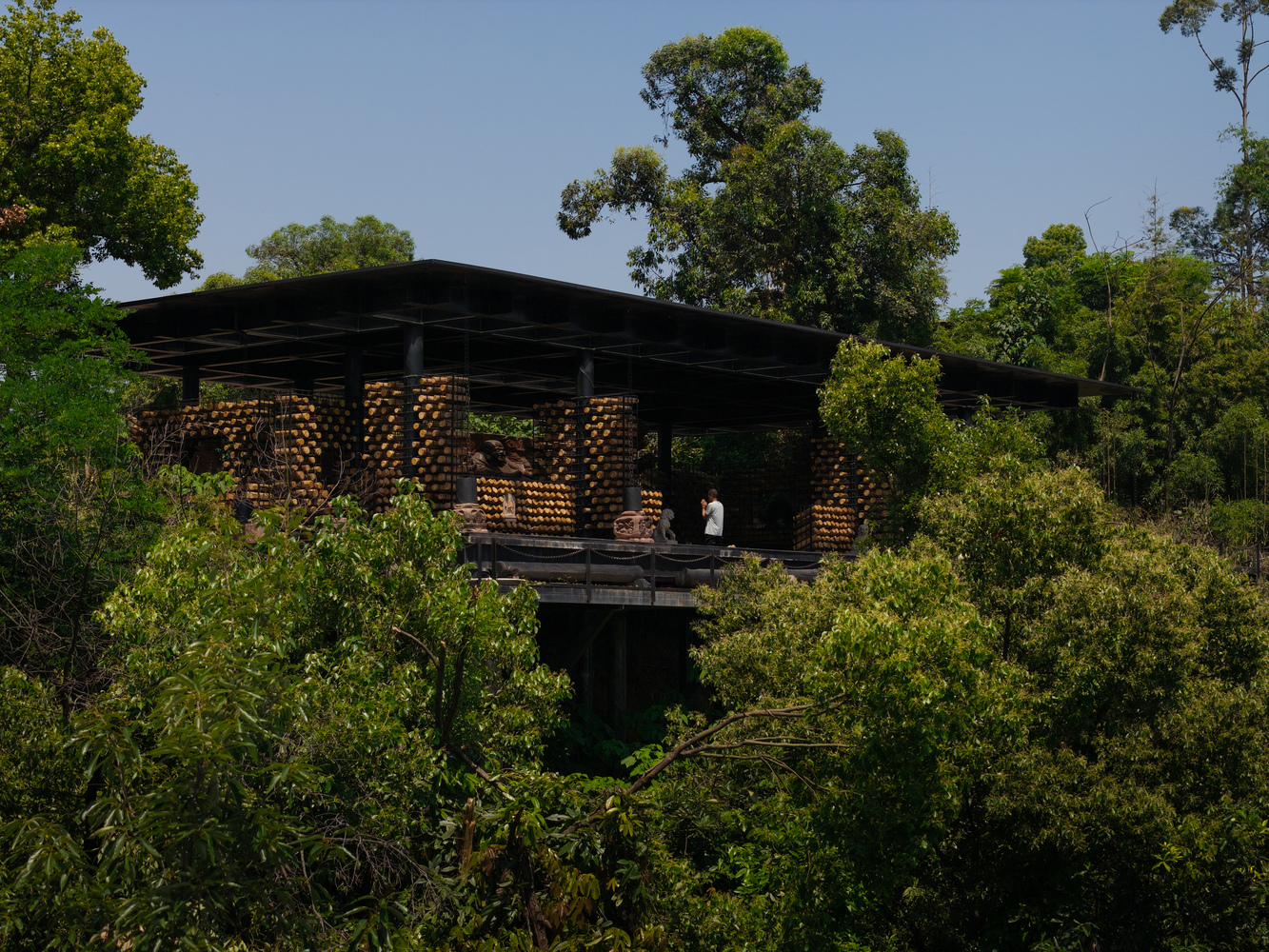
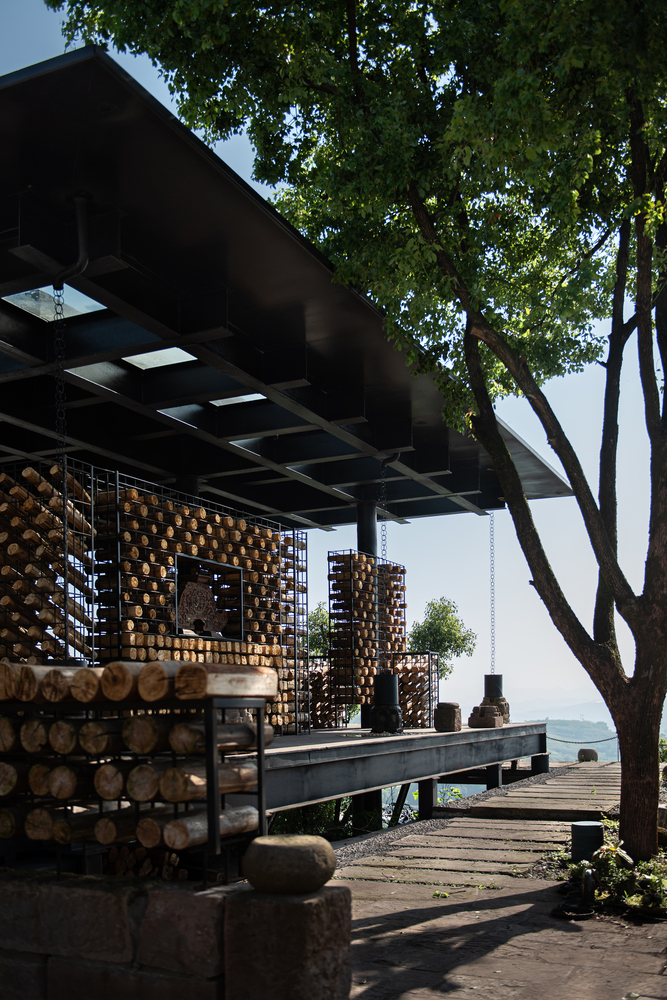
At the confluence of the Tiaodeng River and the Yangtze in Chongqing’s Dadukou District lies Little Nanhai, a turtle-shaped island once home to a temple dedicated to Nanhai Guanyin during the Tang and Song dynasties. Overlooking the Yangtze and the distant Yunzhuan Mountains, the Nanhai Buddha Pavilion designed by DoDesign sits on a cliff surrounded by bamboo and camphor trees.
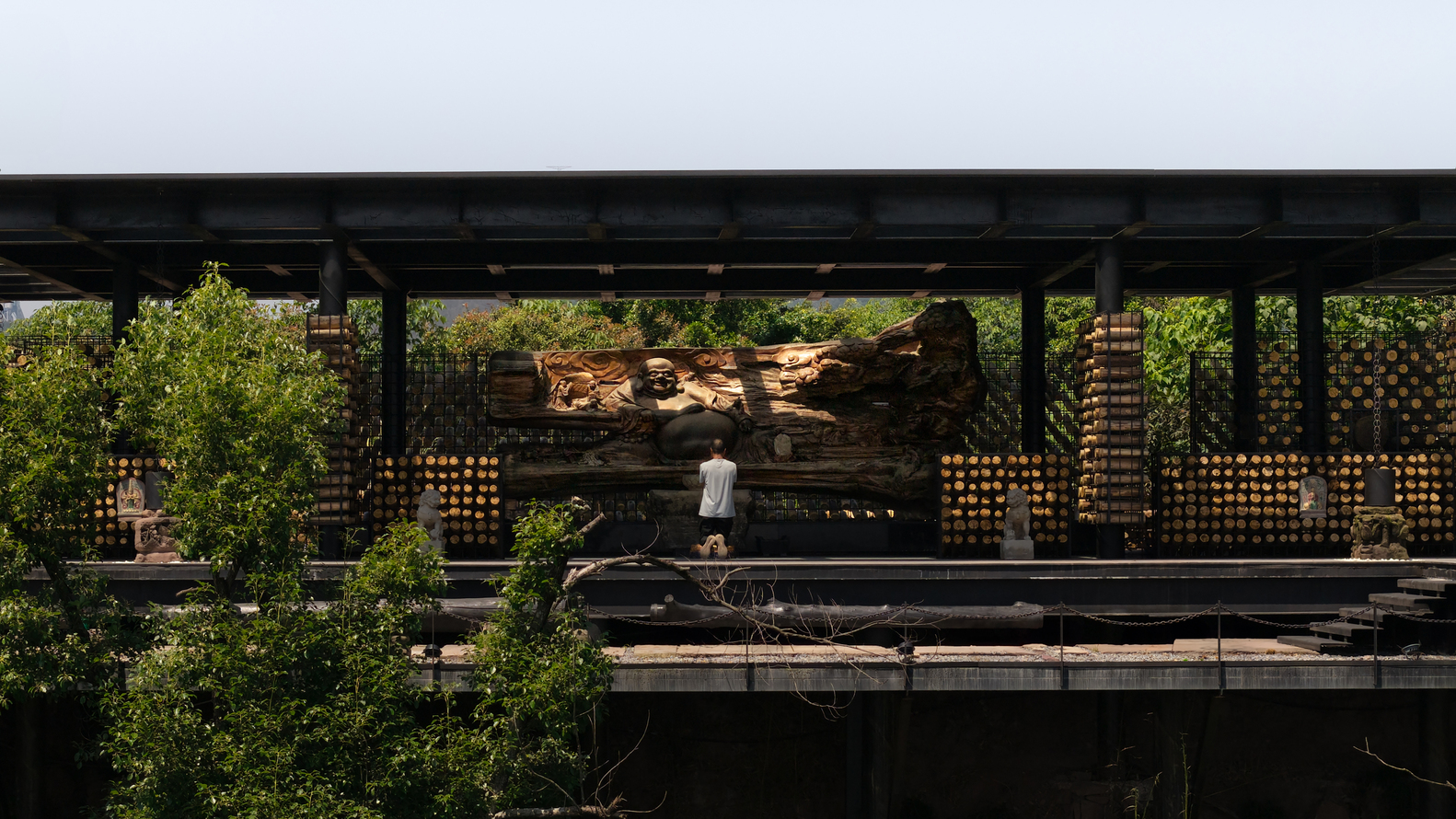
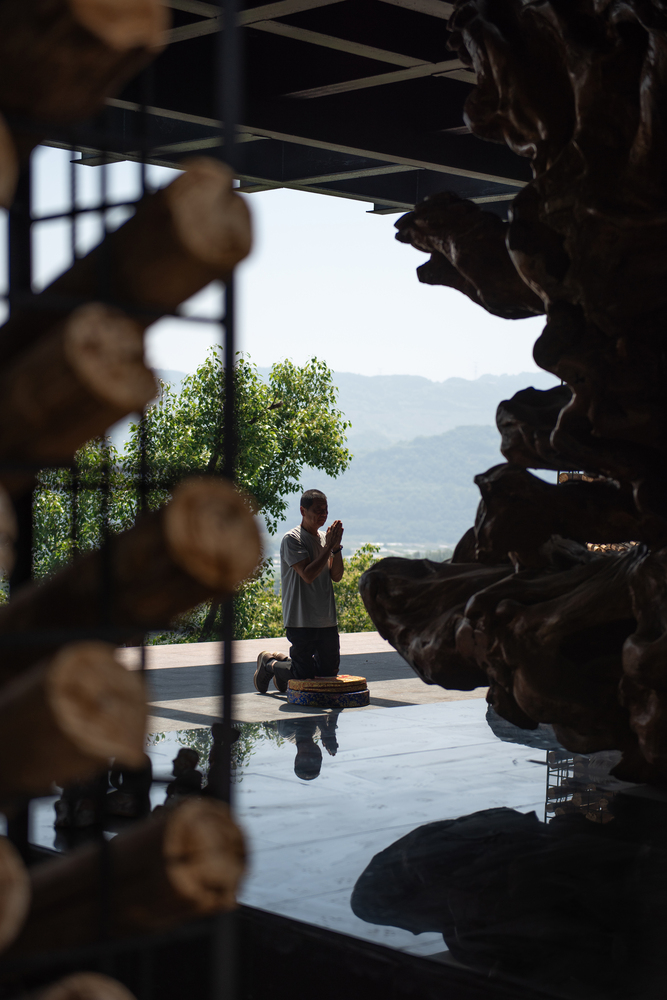
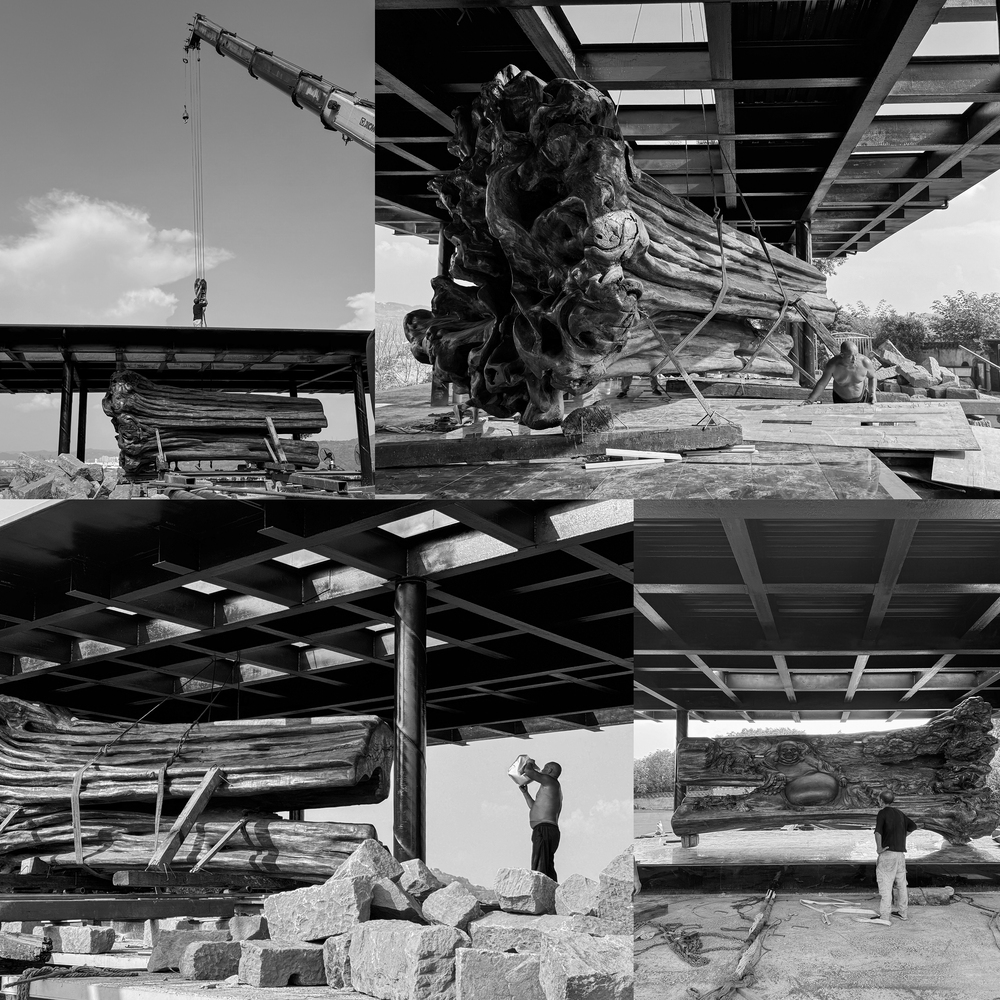
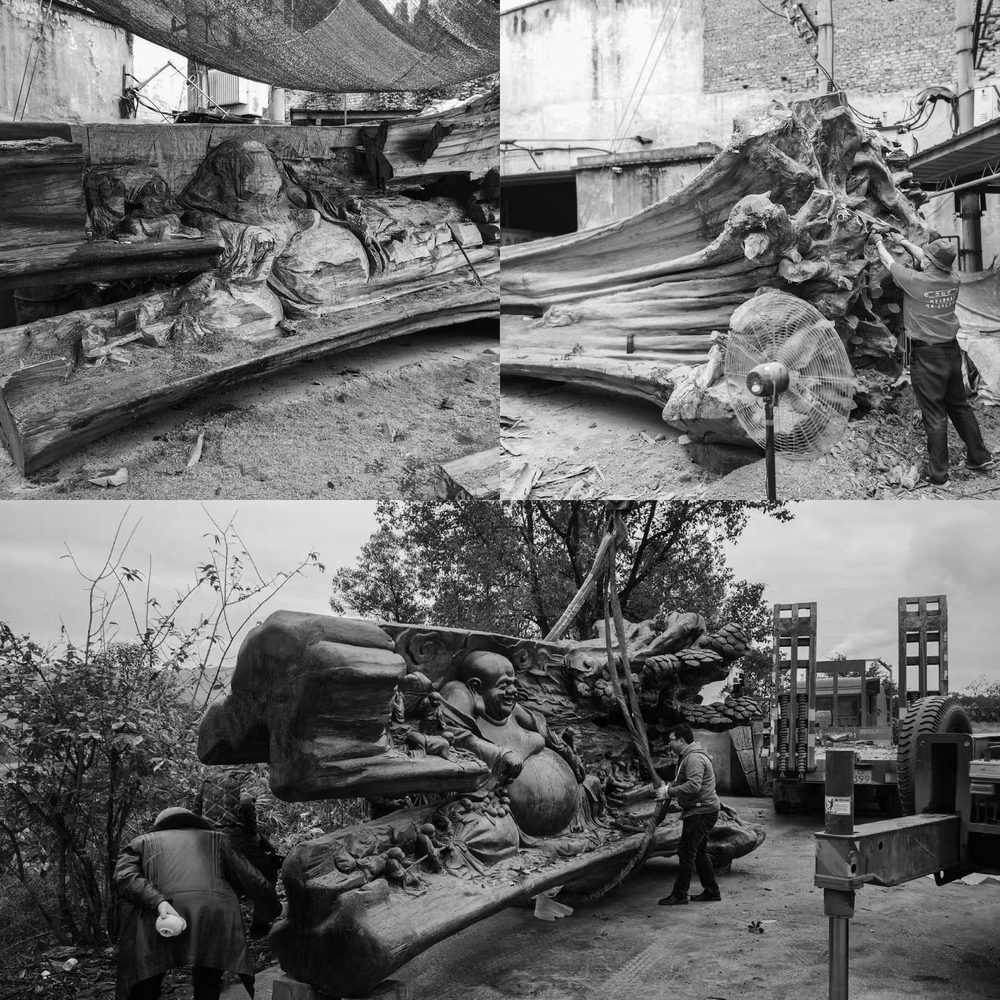
The project began with an unexpected discovery. While building an orchard shelter, the owner uncovered the ruins of a Ming-dynasty Maitreya Hall, inspiring a profound connection with Buddhism. After preserving the ruins with local heritage authorities, he acquired a seven-meter-long thousand-year-old crape myrtle trunk from Yunnan. Four master craftsmen from Dongyang spent eight months carving it into a reclining Maitreya Buddha. Initially protected only by a temporary shed, the sculpture gradually deteriorated under Chongqing’s harsh climate, prompting the commission of a permanent pavilion – not as a grand temple, but as a quiet shelter for the Buddha and its visitors.
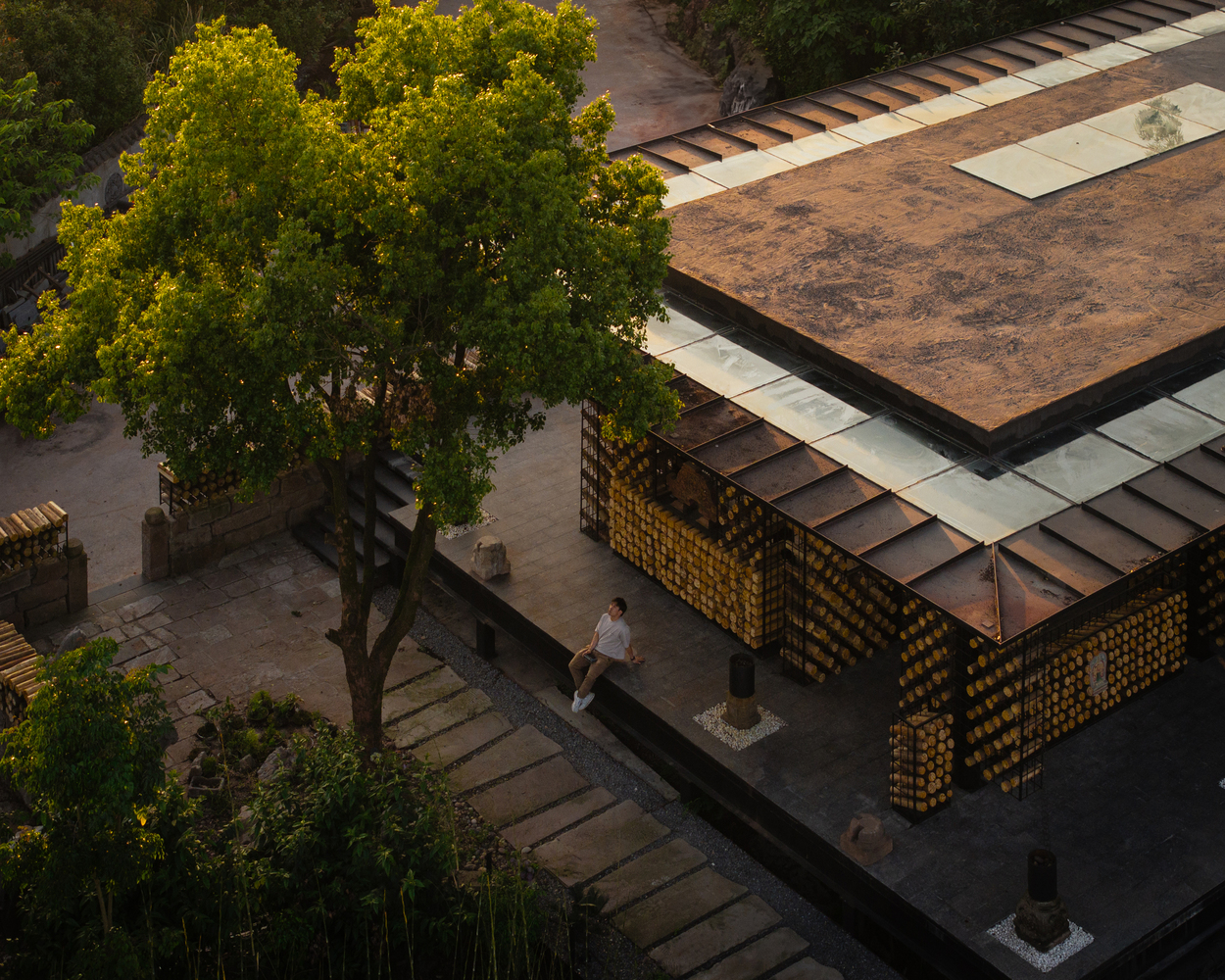
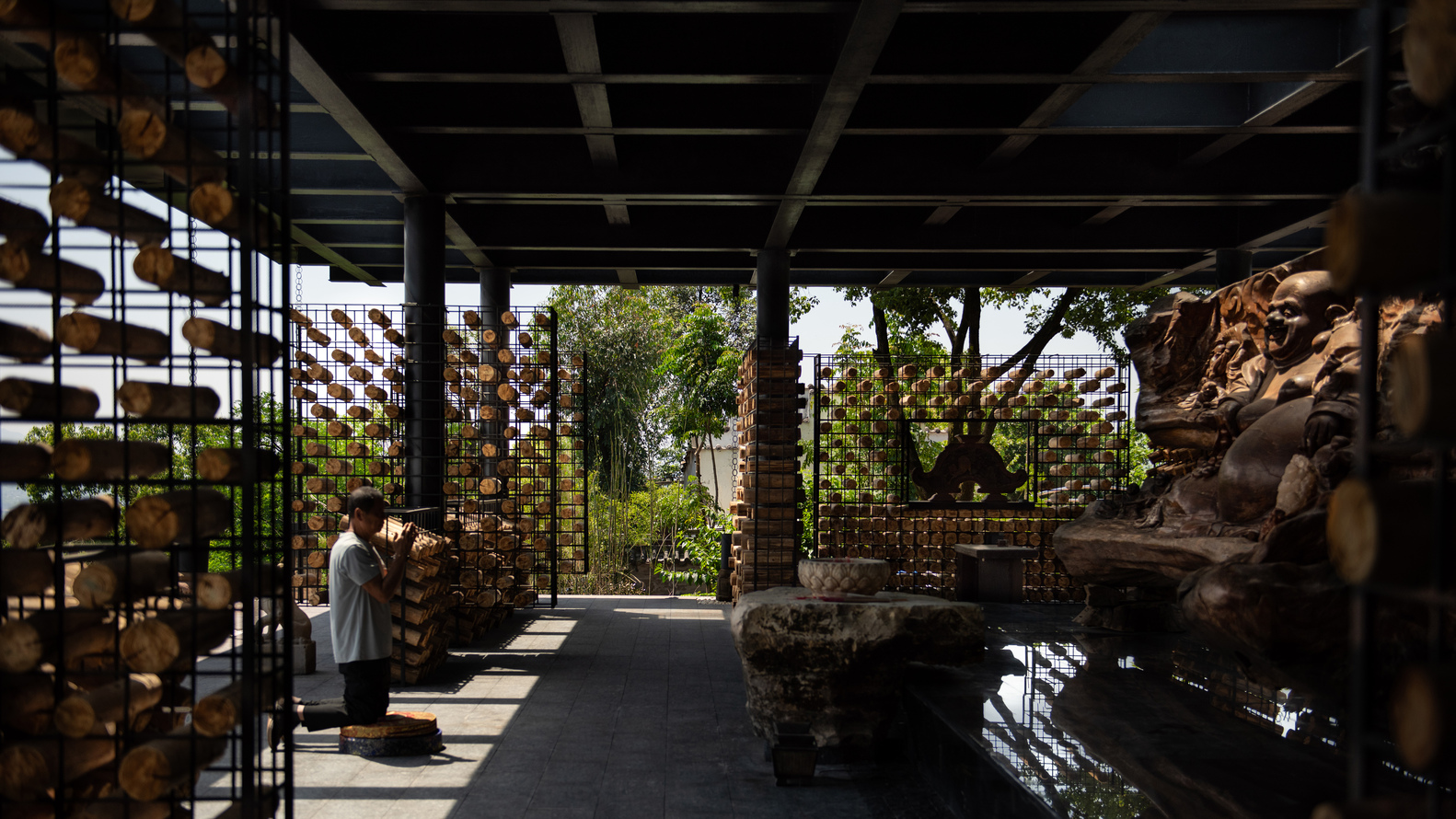
Rather than creating a monumental religious building, the design seeks to offer a place where worship and everyday life coexist. Pilgrims and villagers gather here to pray, rest, converse, read, and contemplate the surrounding landscape. A fifty-year-old camphor tree anchors the composition. The pavilion stretches along the cliff, cantilevering gently eastward beneath a lightweight steel waffle-beam roof. The reclining Buddha, originally facing the mountain path, was reoriented toward the Yangtze River and distant mountains. A sequence of walls guides visitors through changing views of light, wind, and landscape, allowing the journey toward the Buddha to become equally an encounter with nature and oneself.
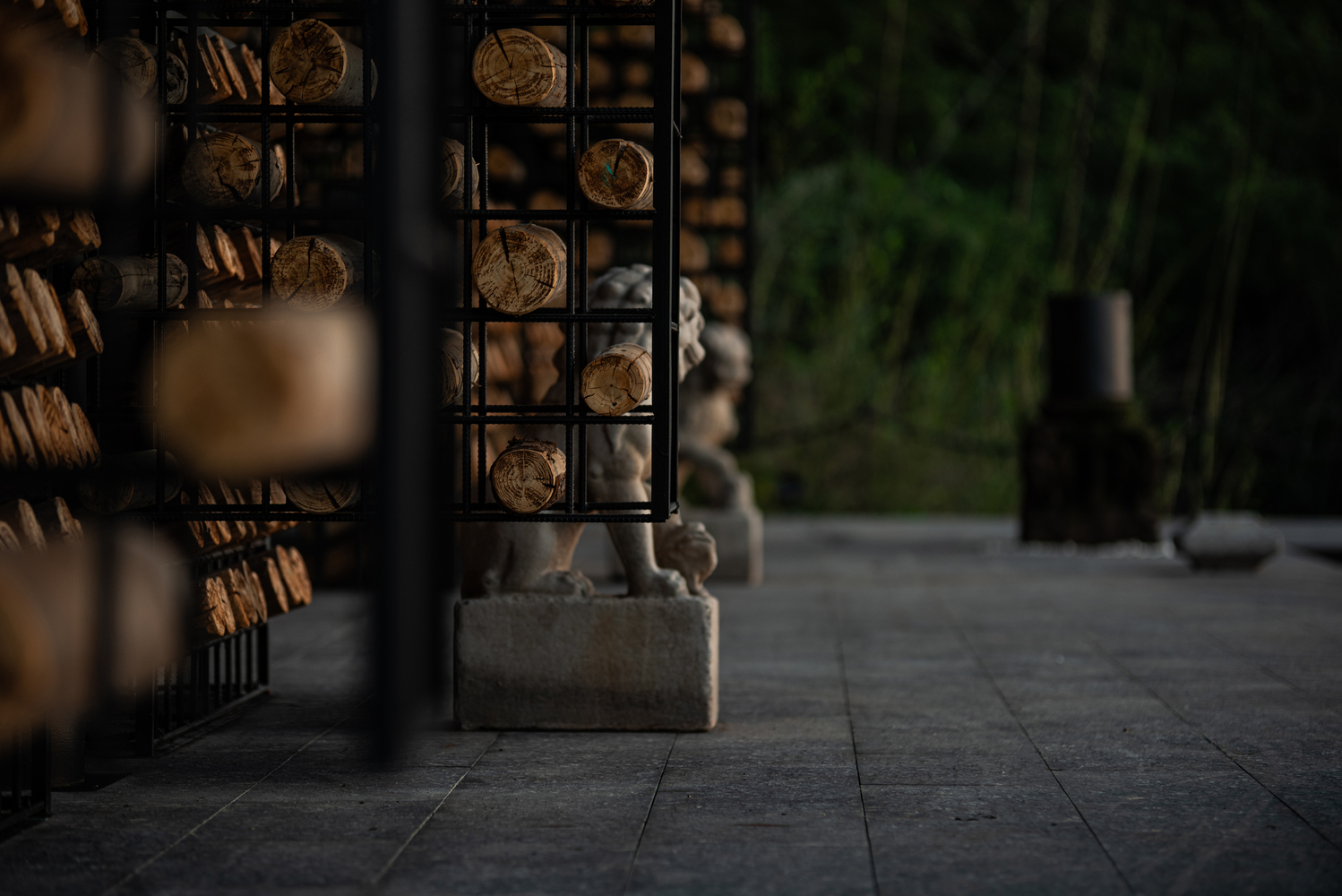
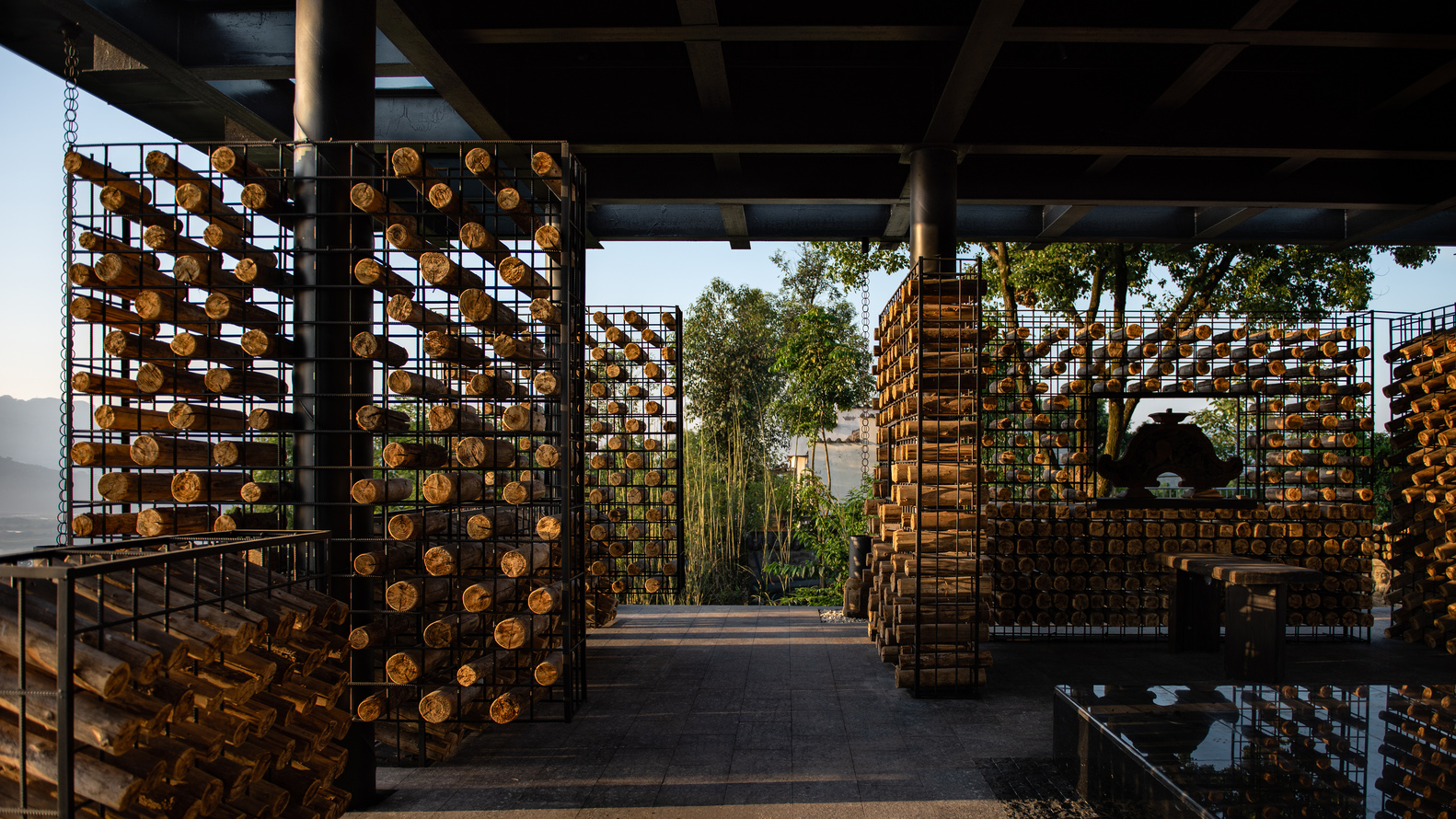
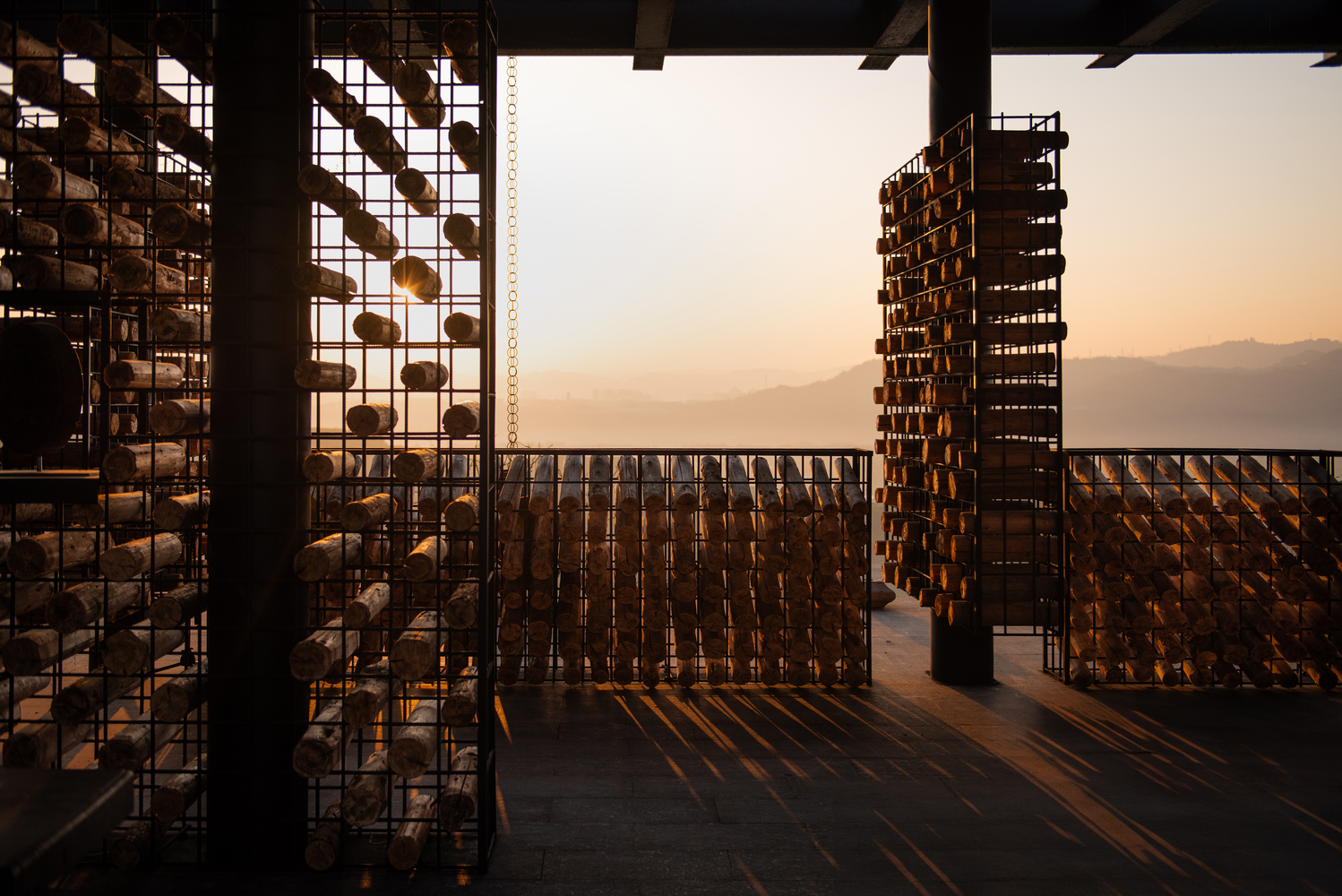
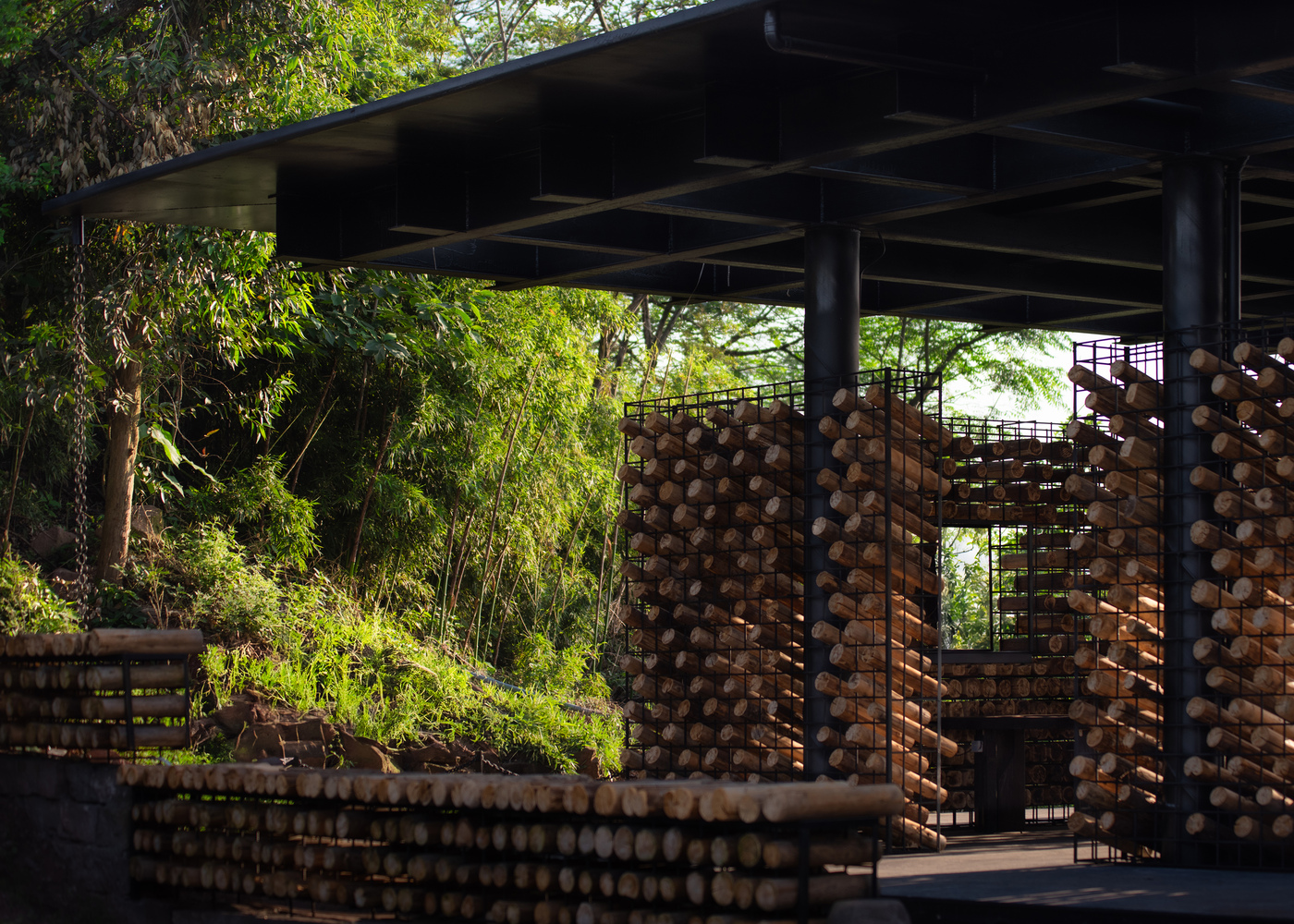
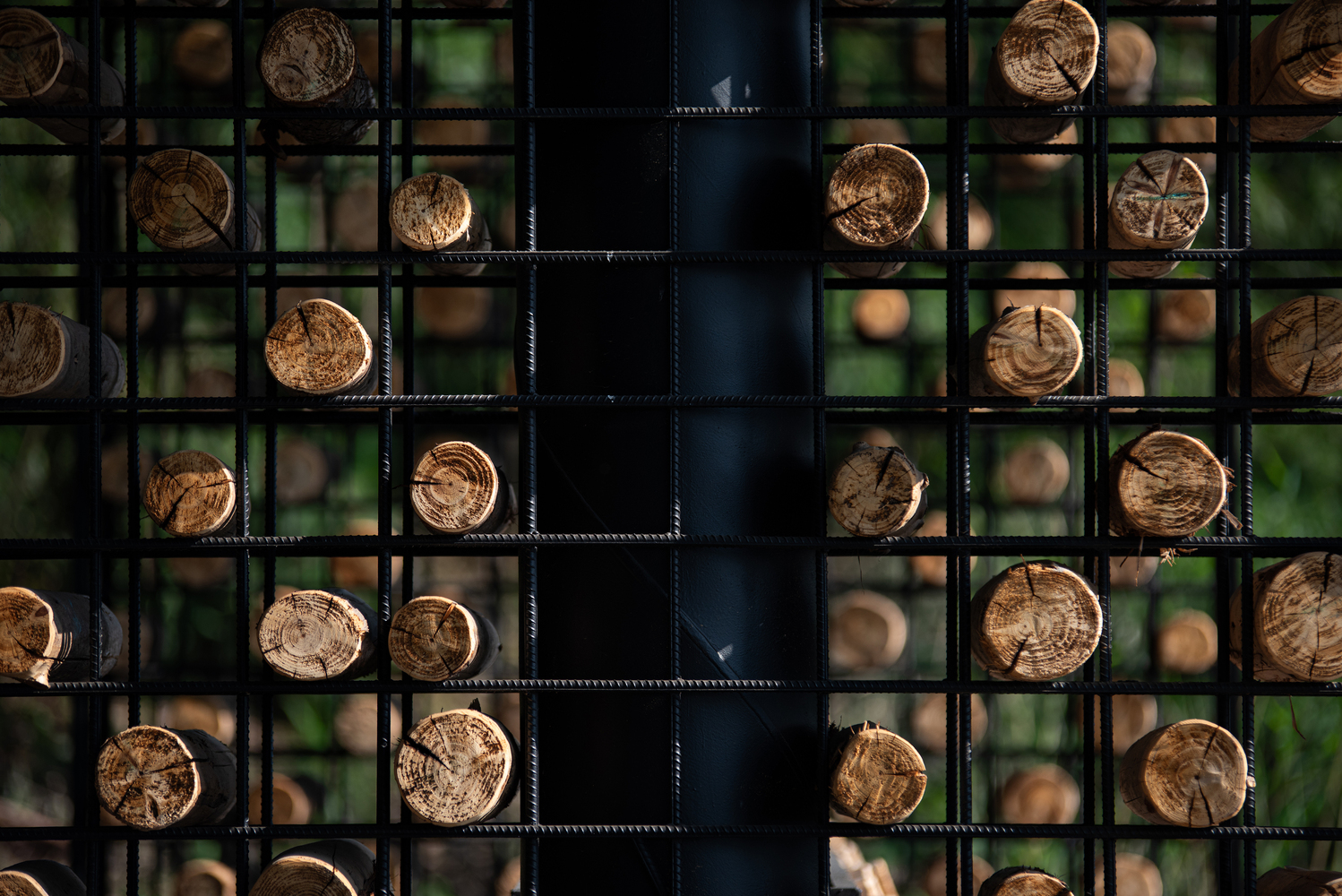
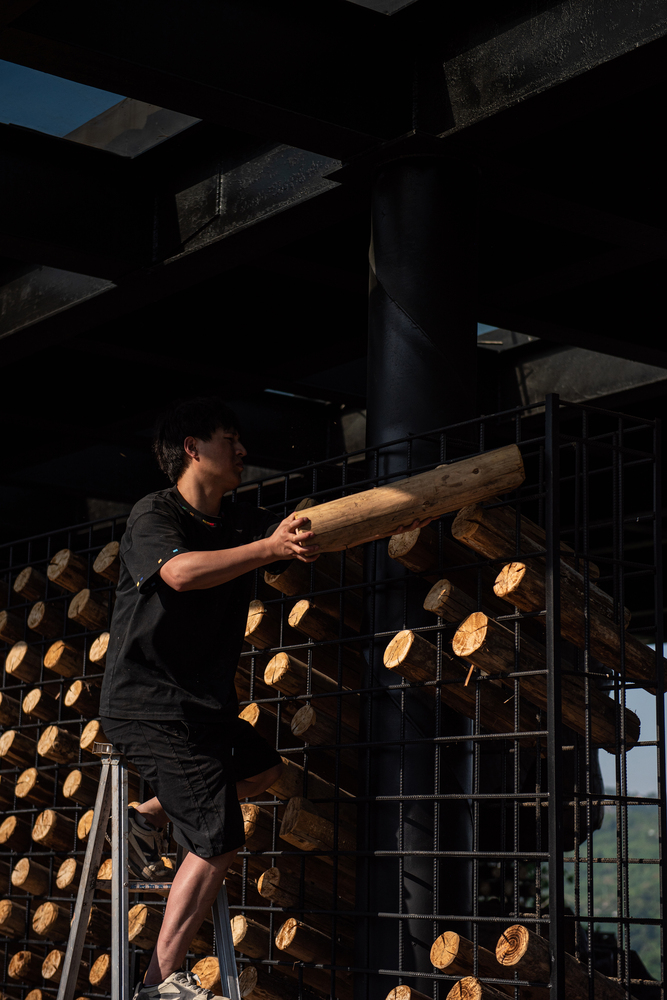
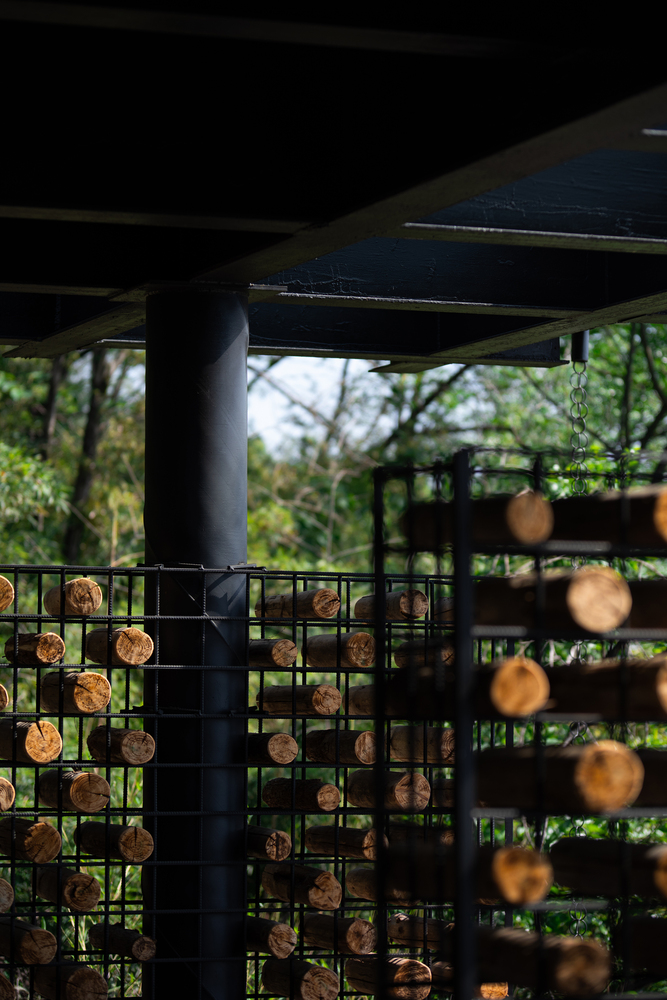
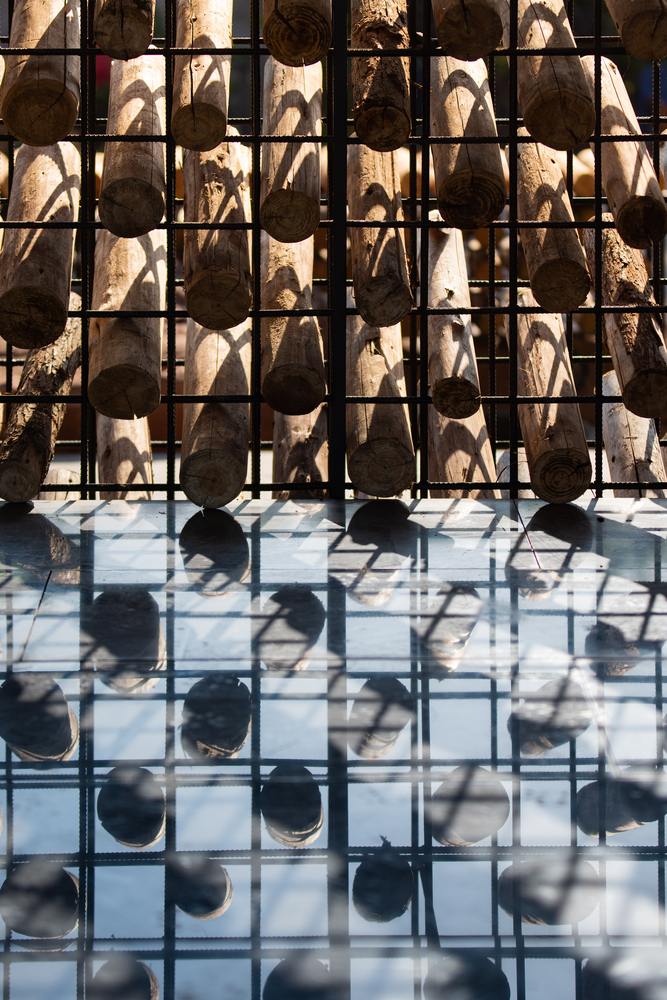
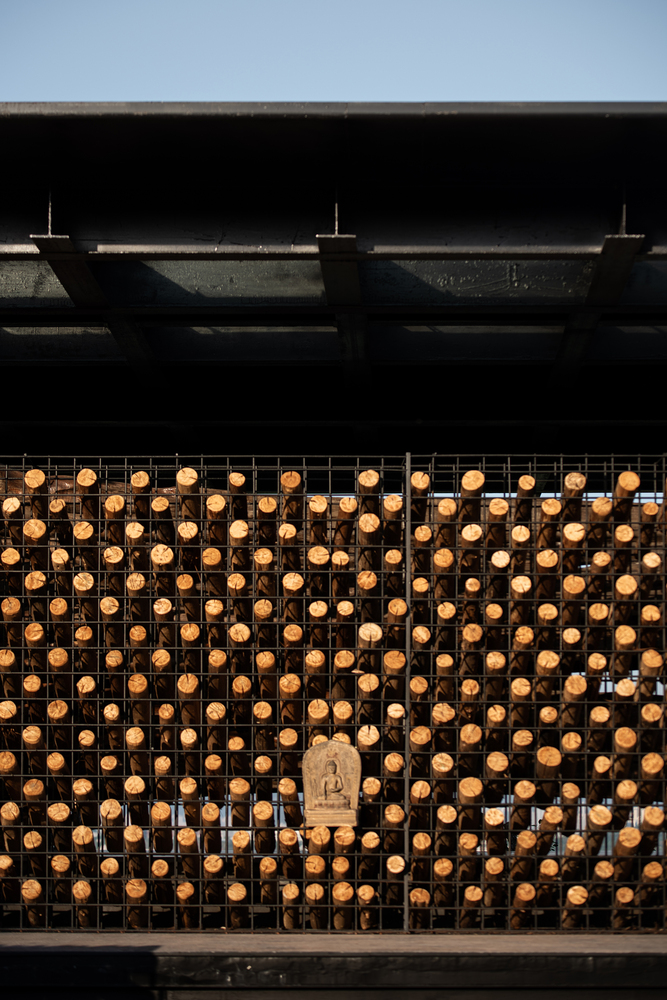
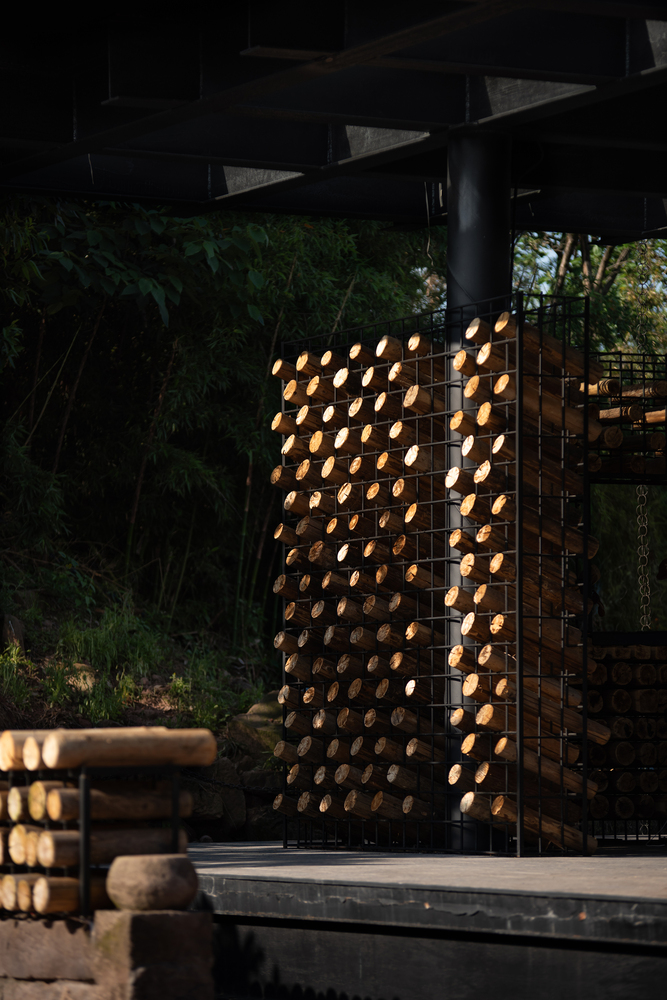
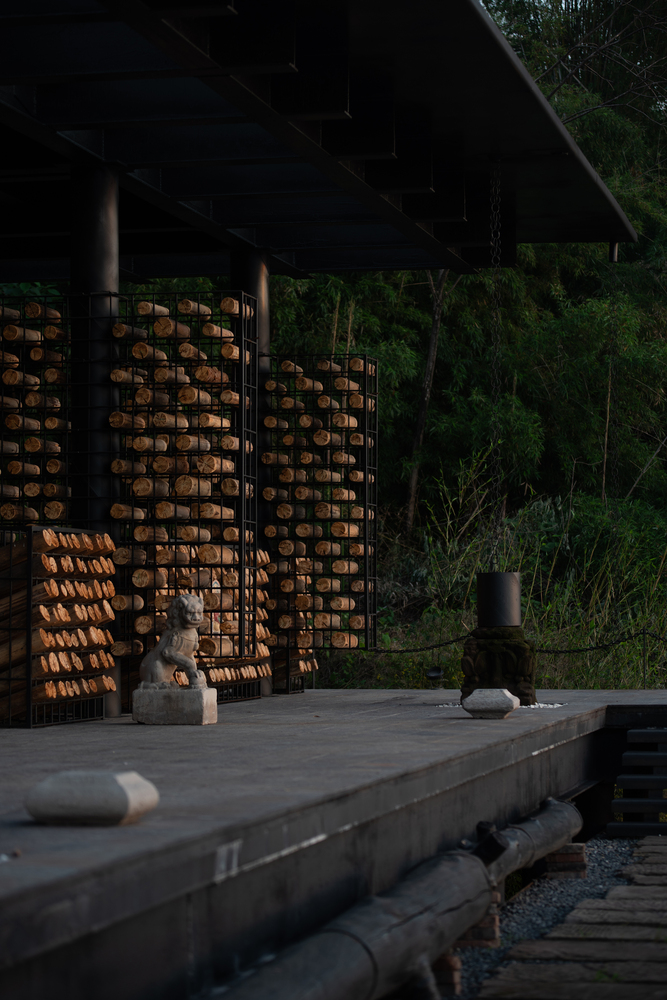
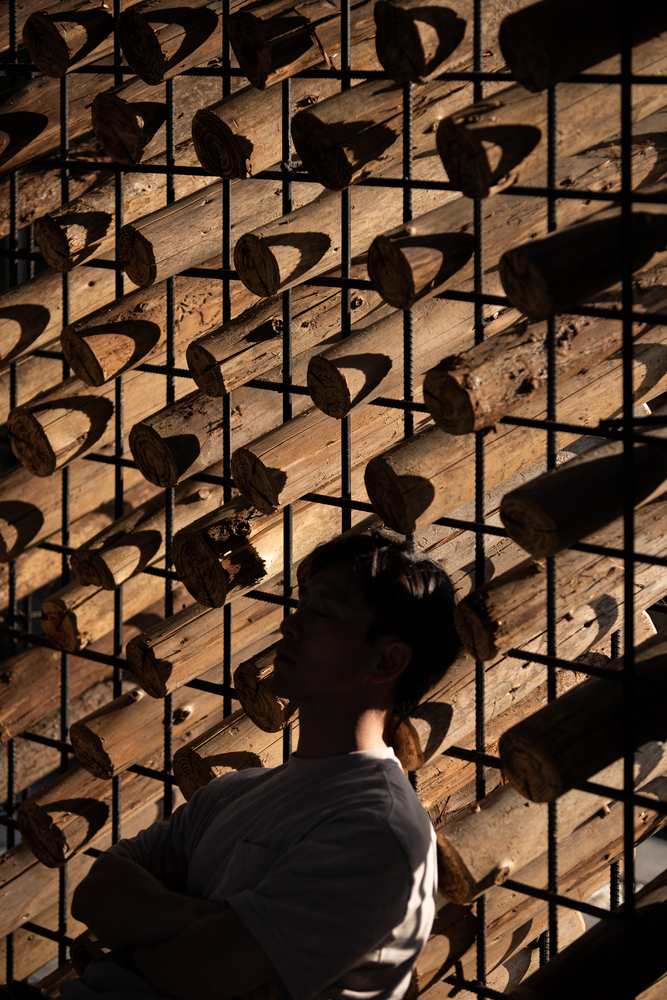
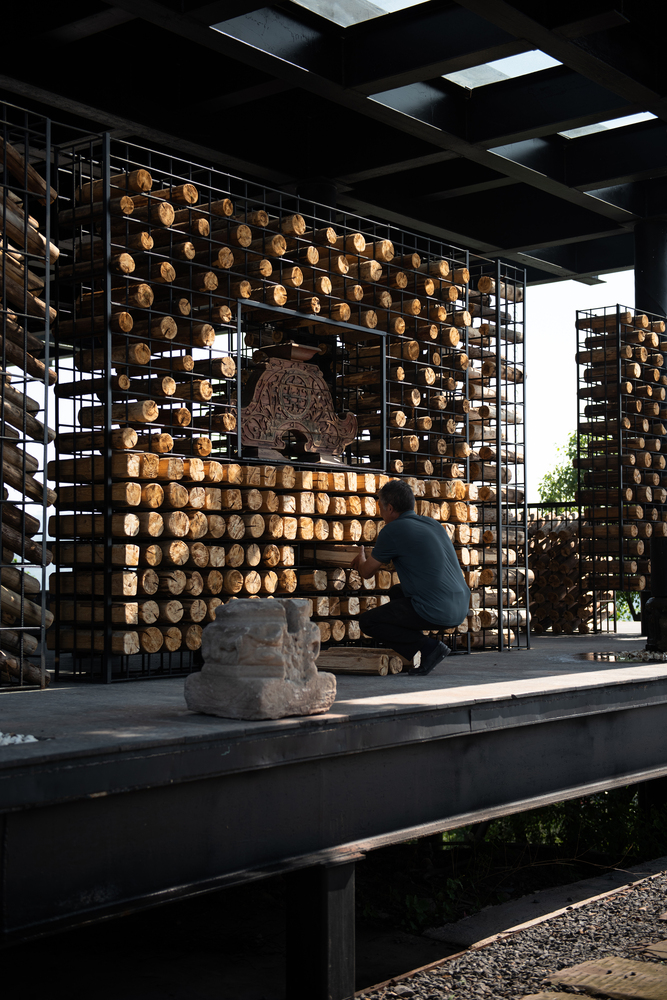
The pavilion embraces weathering as part of its architecture. Instead of conventional masonry, welded metal mesh frames are loosely filled with cedar logs of varying lengths, creating porous walls that age alongside the wooden Buddha. Oriented differently, each wall receives sunlight and rain uniquely, recording time through changing textures while allowing shifting light to animate the interior throughout the day.
The architecture also invites continuous participation. Although more than 4,000 cedar logs were prepared, only half were initially installed. The remaining logs are stacked beside the plaza, allowing pilgrims and visitors to place them freely over time. This collective act transforms construction into ritual, drawing people closer to both the architecture and the Buddha while reconnecting them physically with nature.
The Nanhai Buddha Pavilion remains intentionally unfinished. Wood continues to weather, light constantly changes, and visitors gradually reshape the building. Echoing the Diamond Sutra – ‘One should give rise to the mind without dwelling on anything’ – the pavilion embraces impermanence as its essence. Rather than a fixed monument, it becomes a gentle medium through which people may briefly encounter stillness, nature, and their own Buddha-nature.