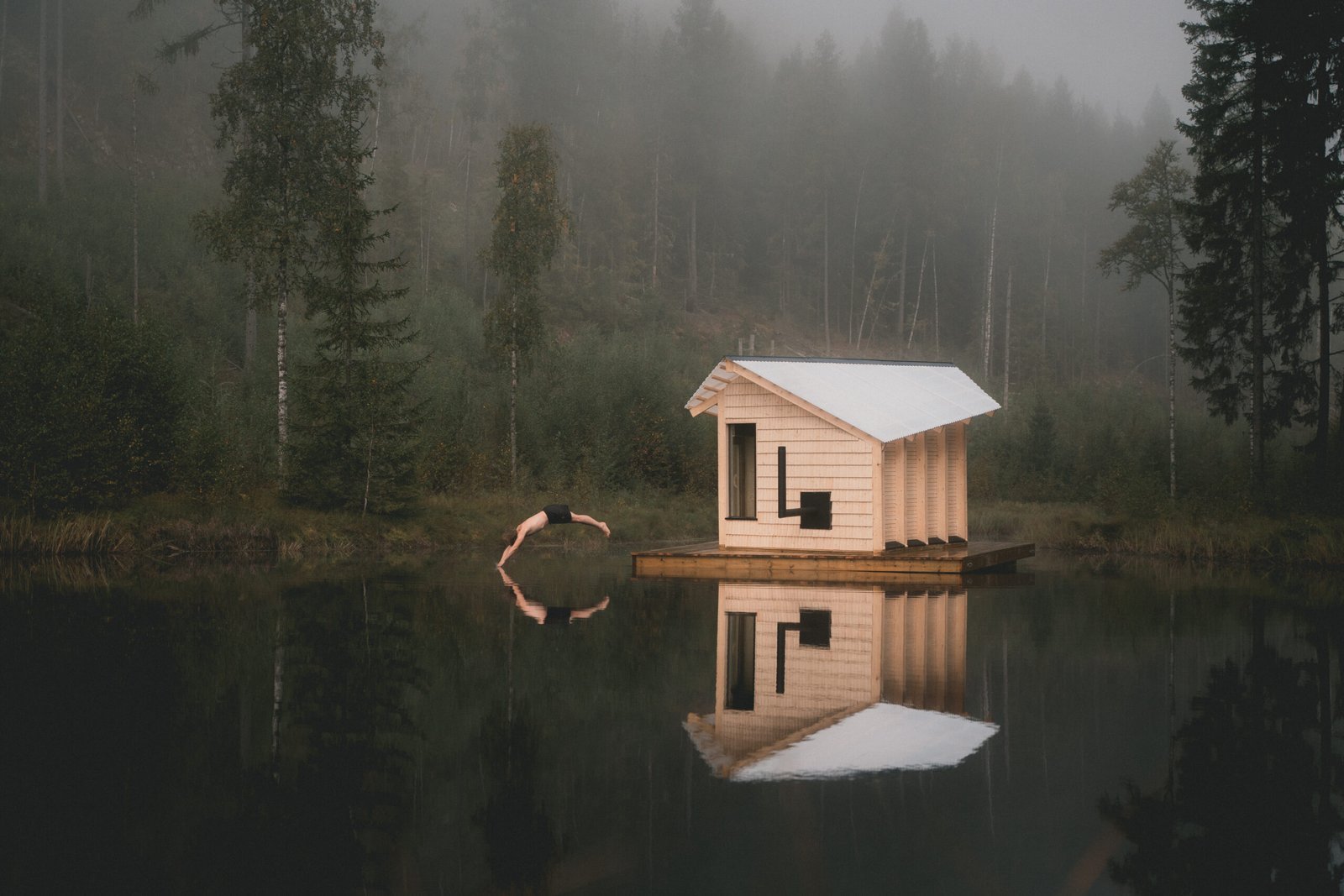
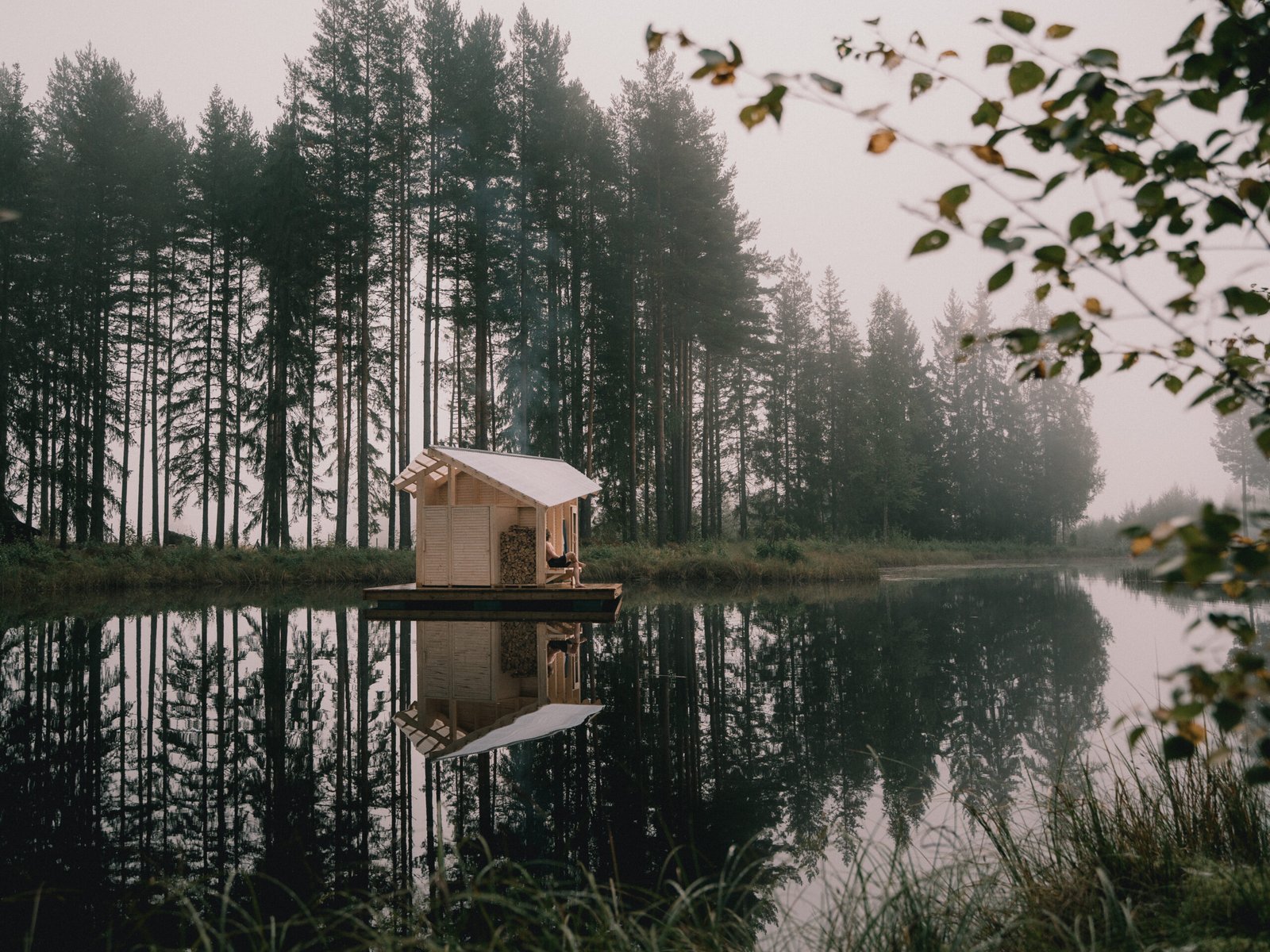
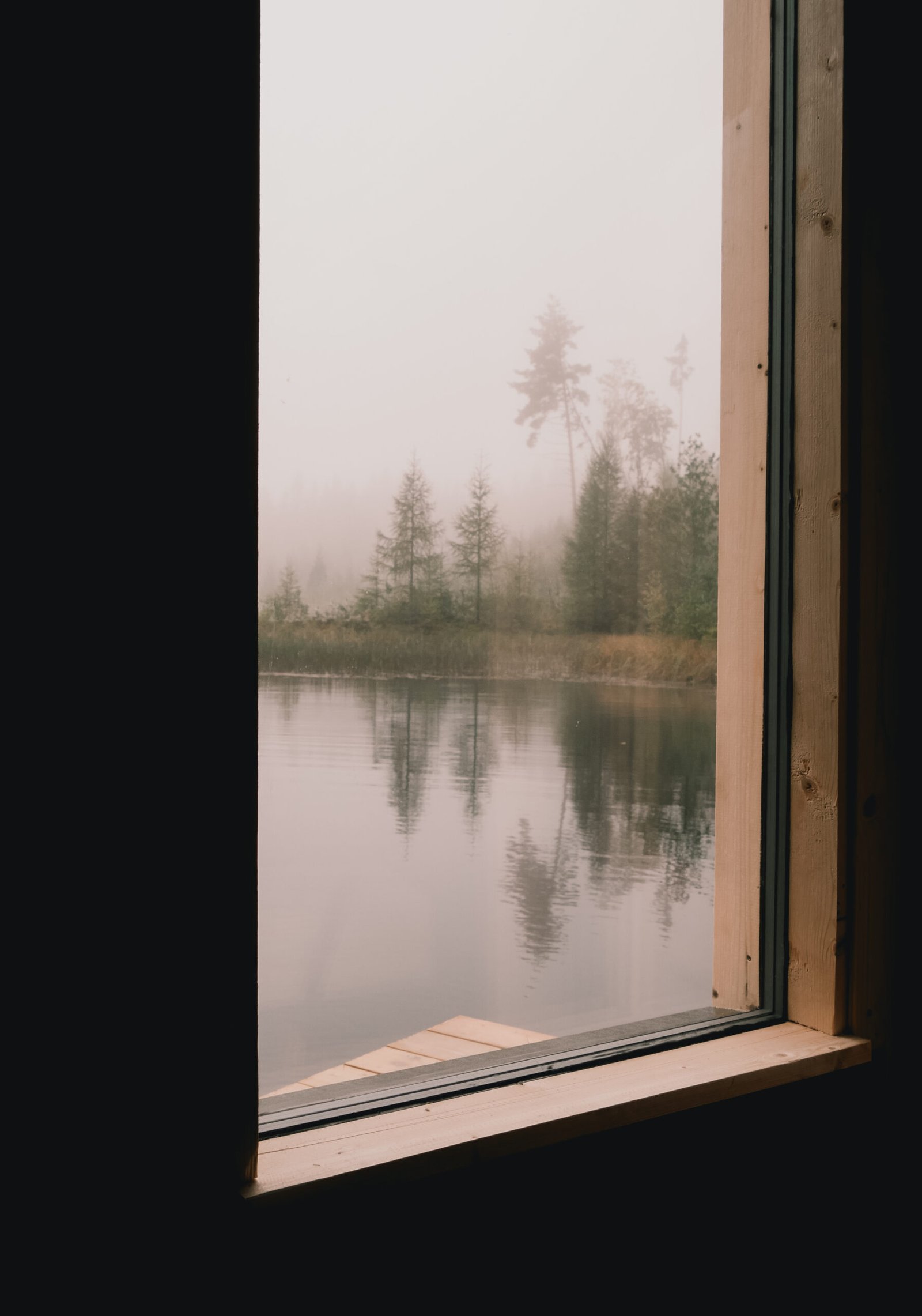
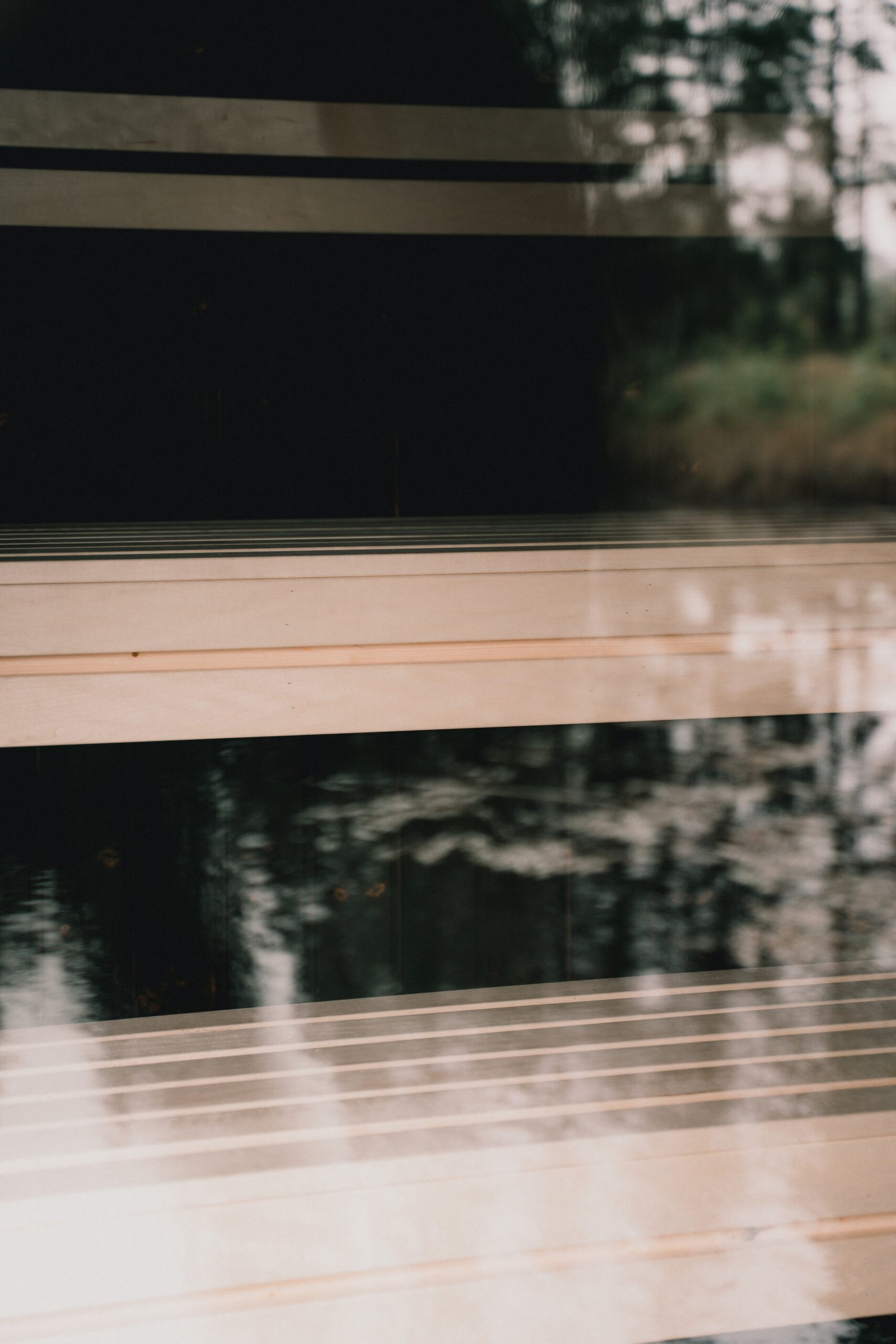
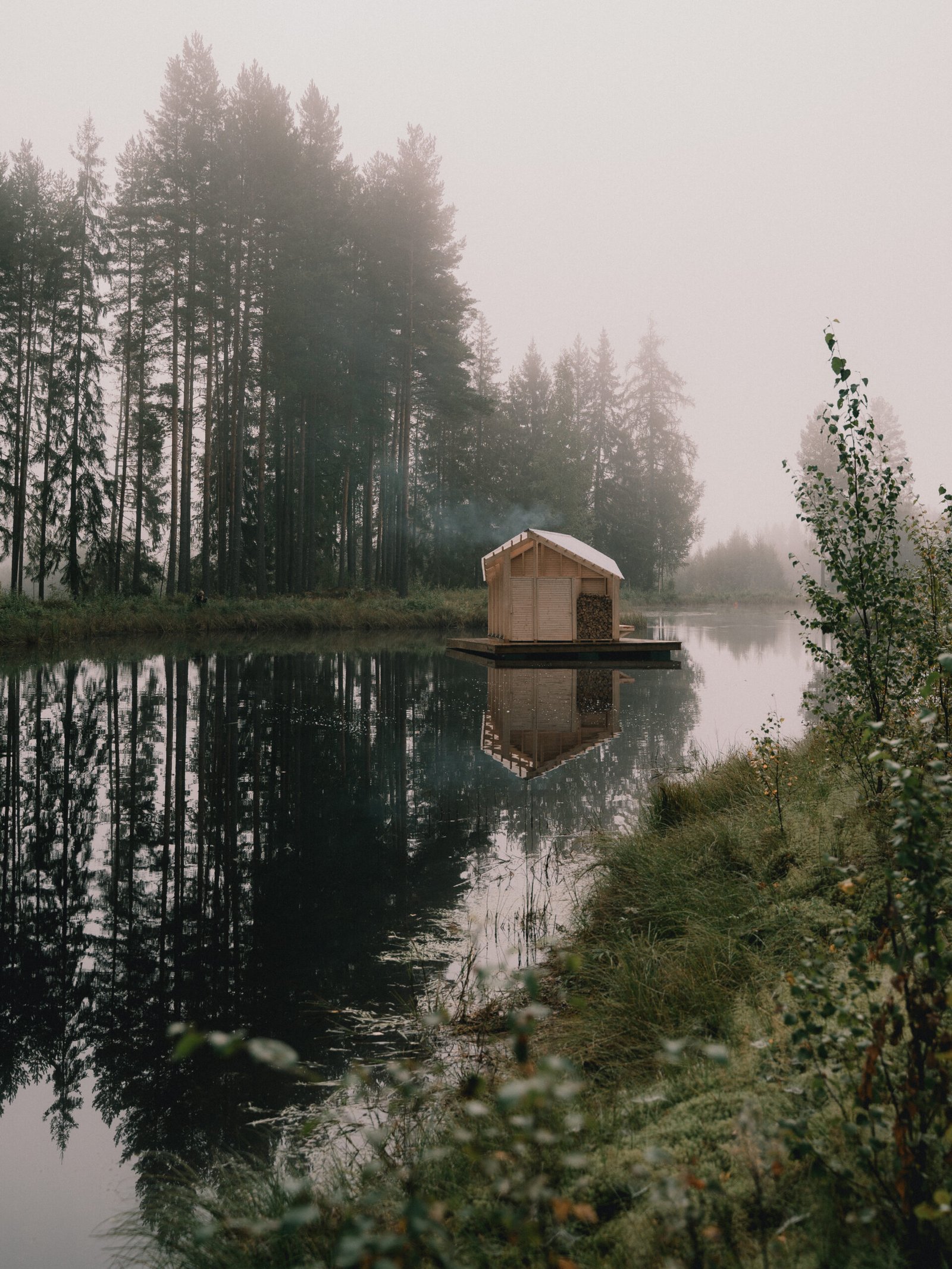
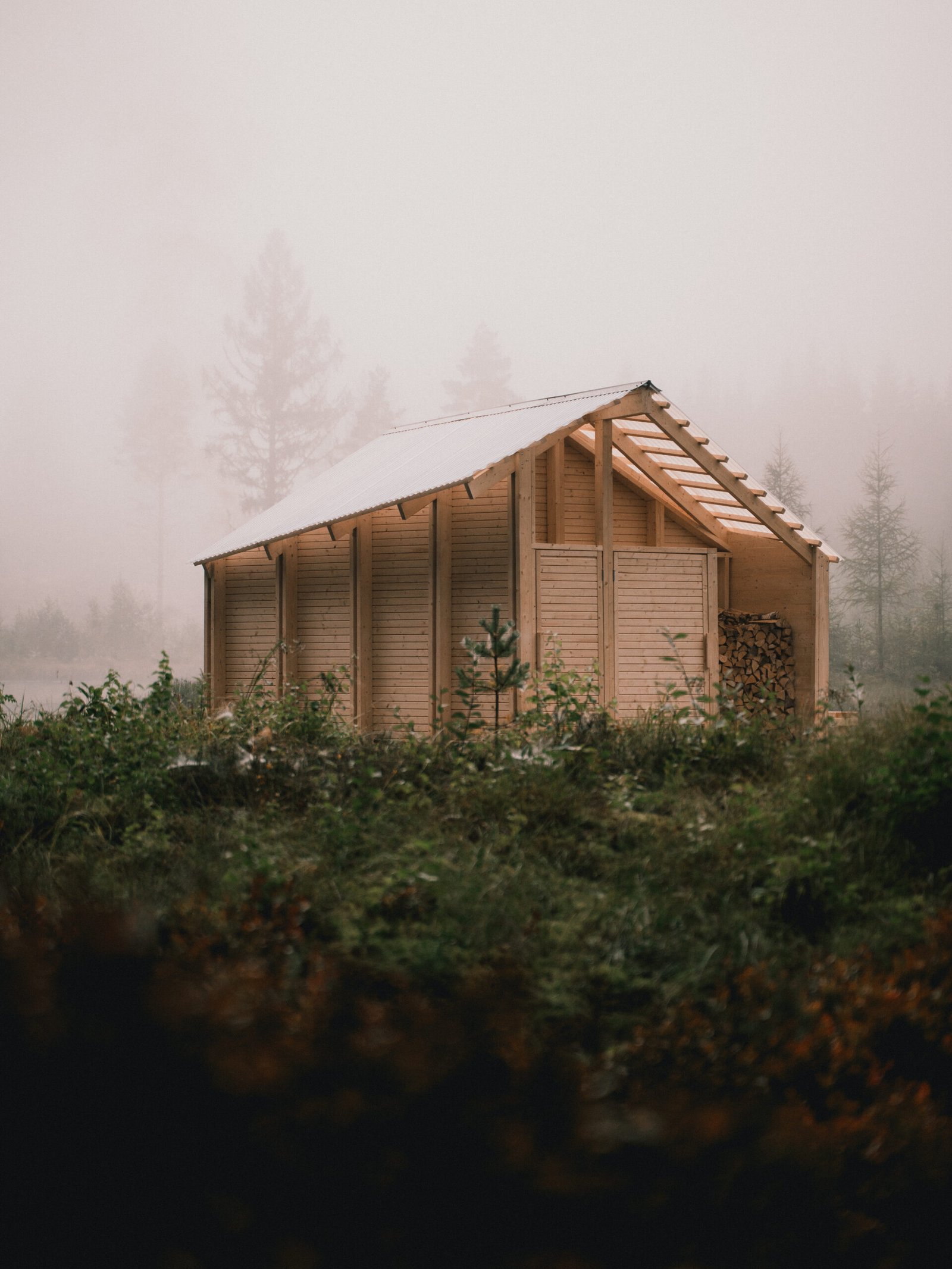
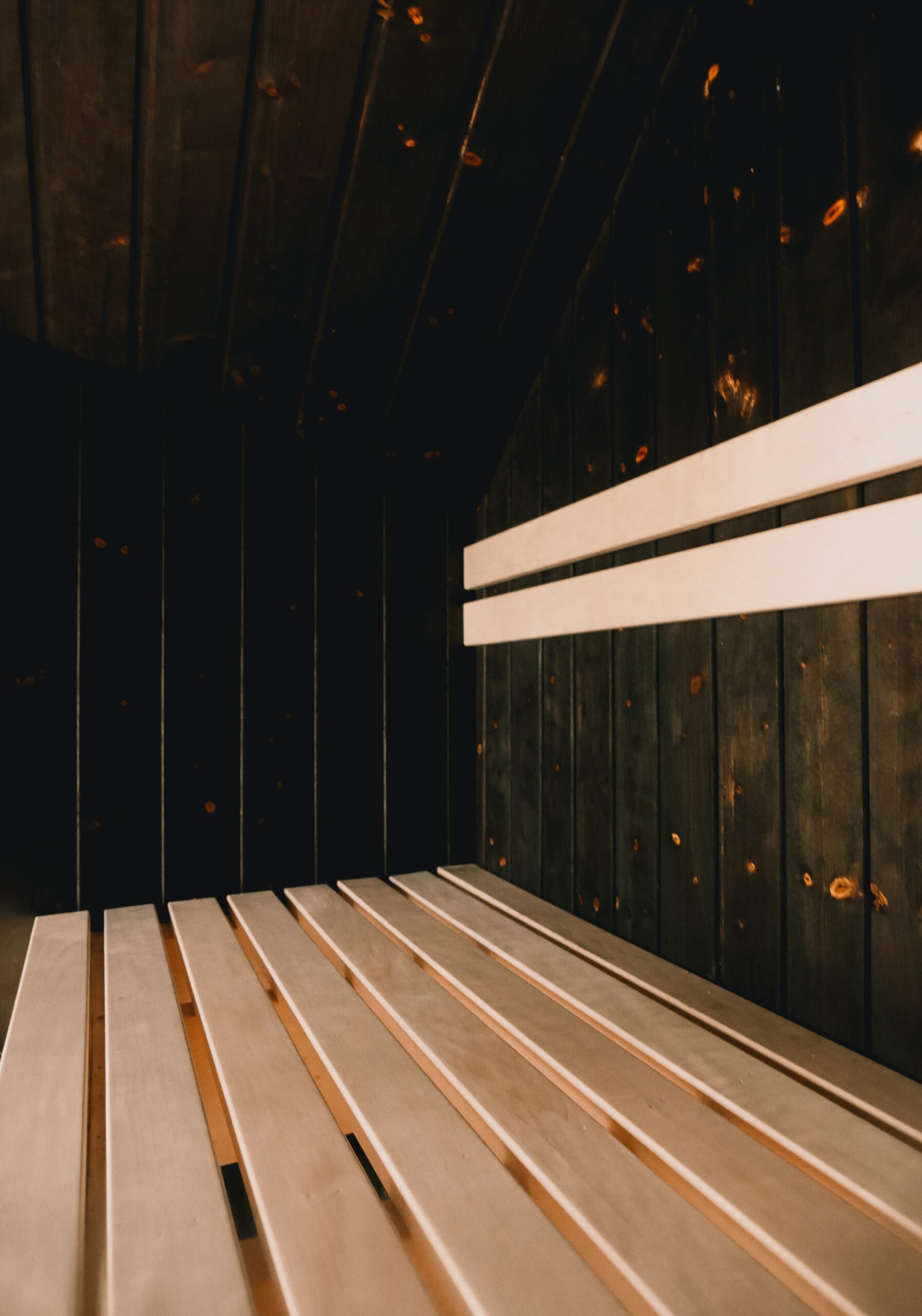
The only light comes from the wood-fired stove, the single window, and the reflection from the water outside. The window was placed deliberately low, framing the lake and the forest beyond. As you climb higher along the three seating levels, your view shifts, until, at the top, only the ripples of the lake remain.
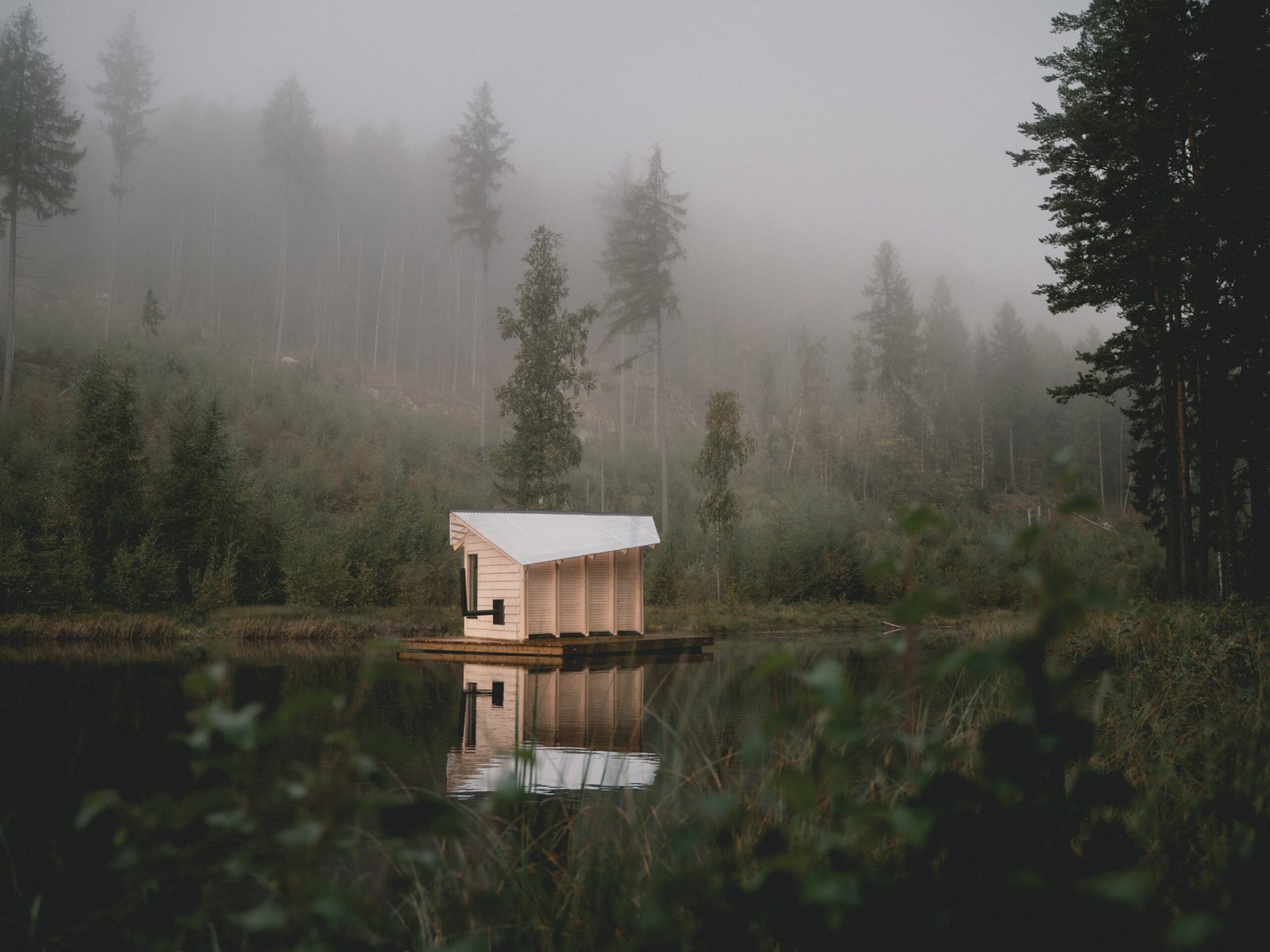
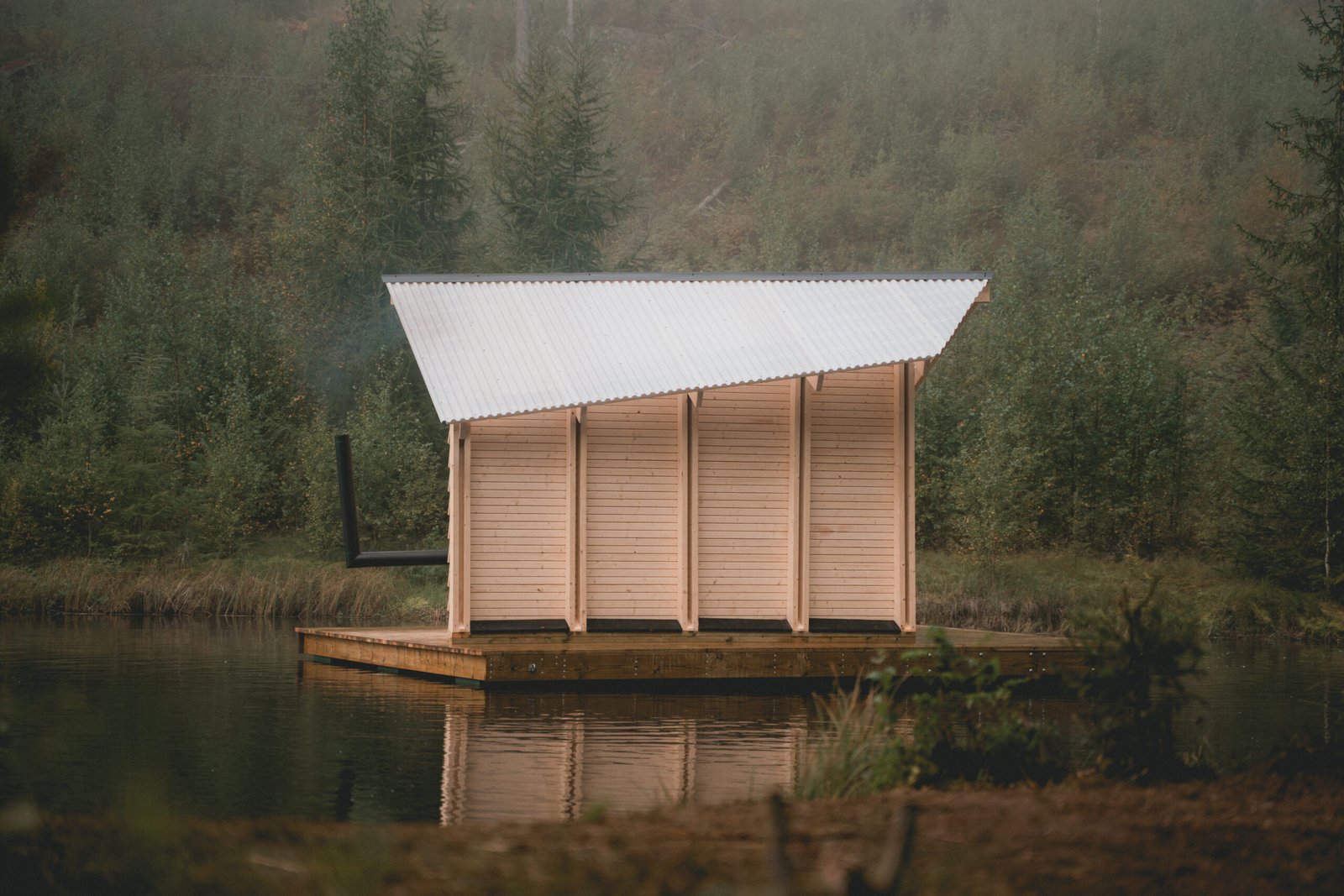
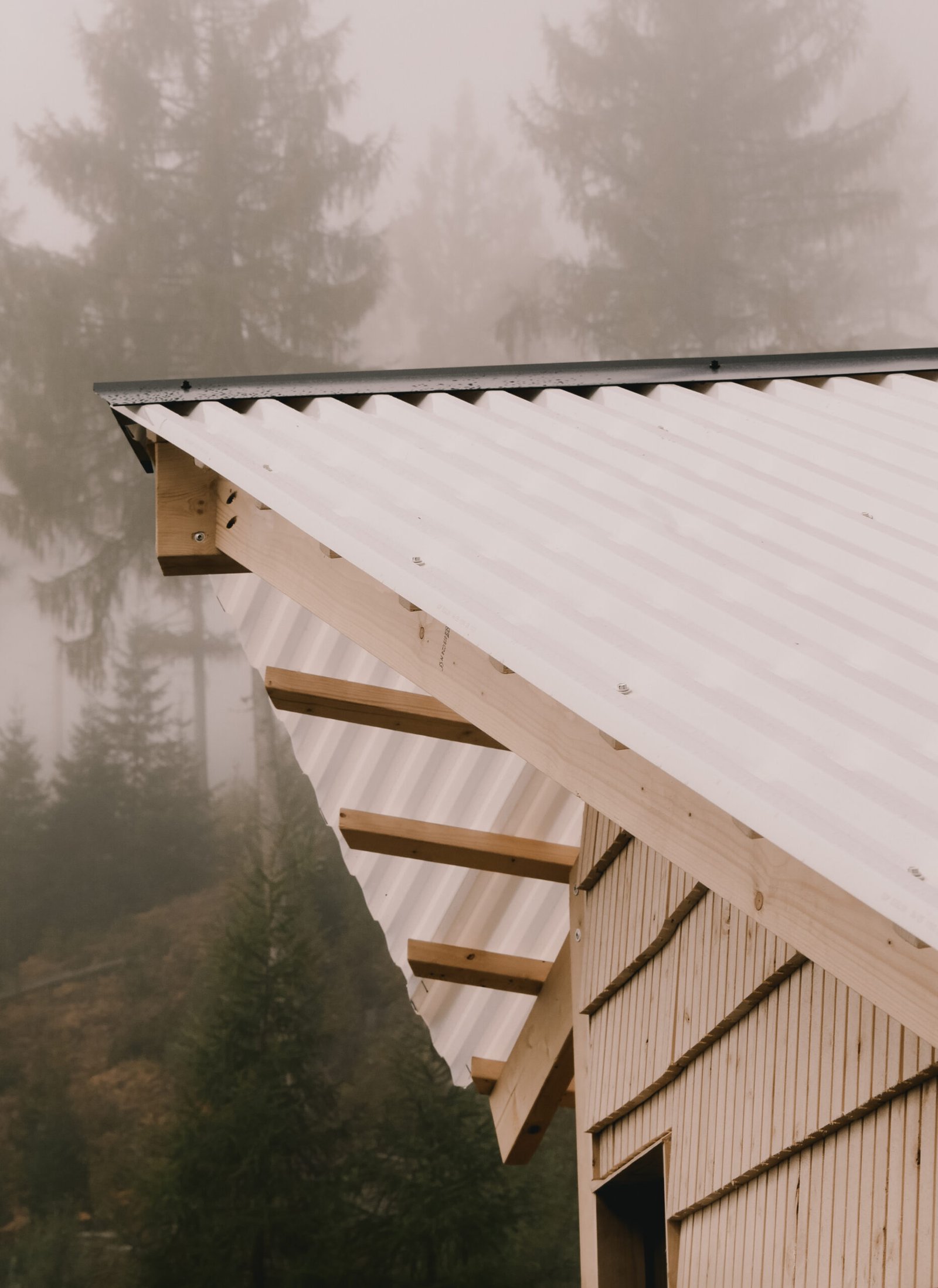
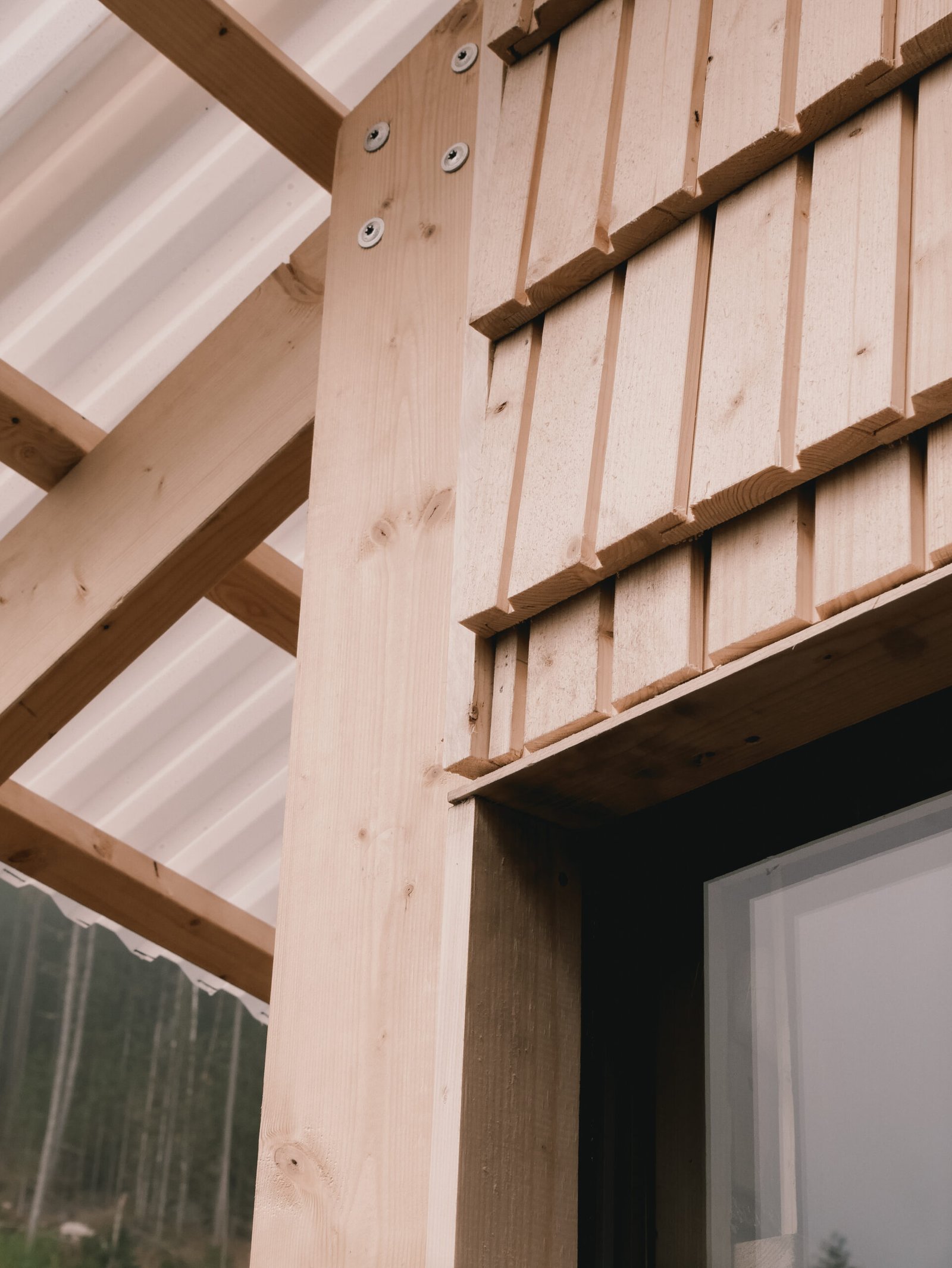
When materials ran short, necessity guided invention. Leftover panels were cut into shingles and used to clad one side of the sauna, adding texture and rhythm to the exterior. Every part of the building carries the mark of improvisation and care.
The construction was carried out by sixteen students, many of whom had little experience in carpentry. The complex roof geometry demanded precision, patience, and collective problem-solving. Yet, through that process, something peaceful emerged. A structure that floats lightly on the water, offering shelter, heat, and stillness.
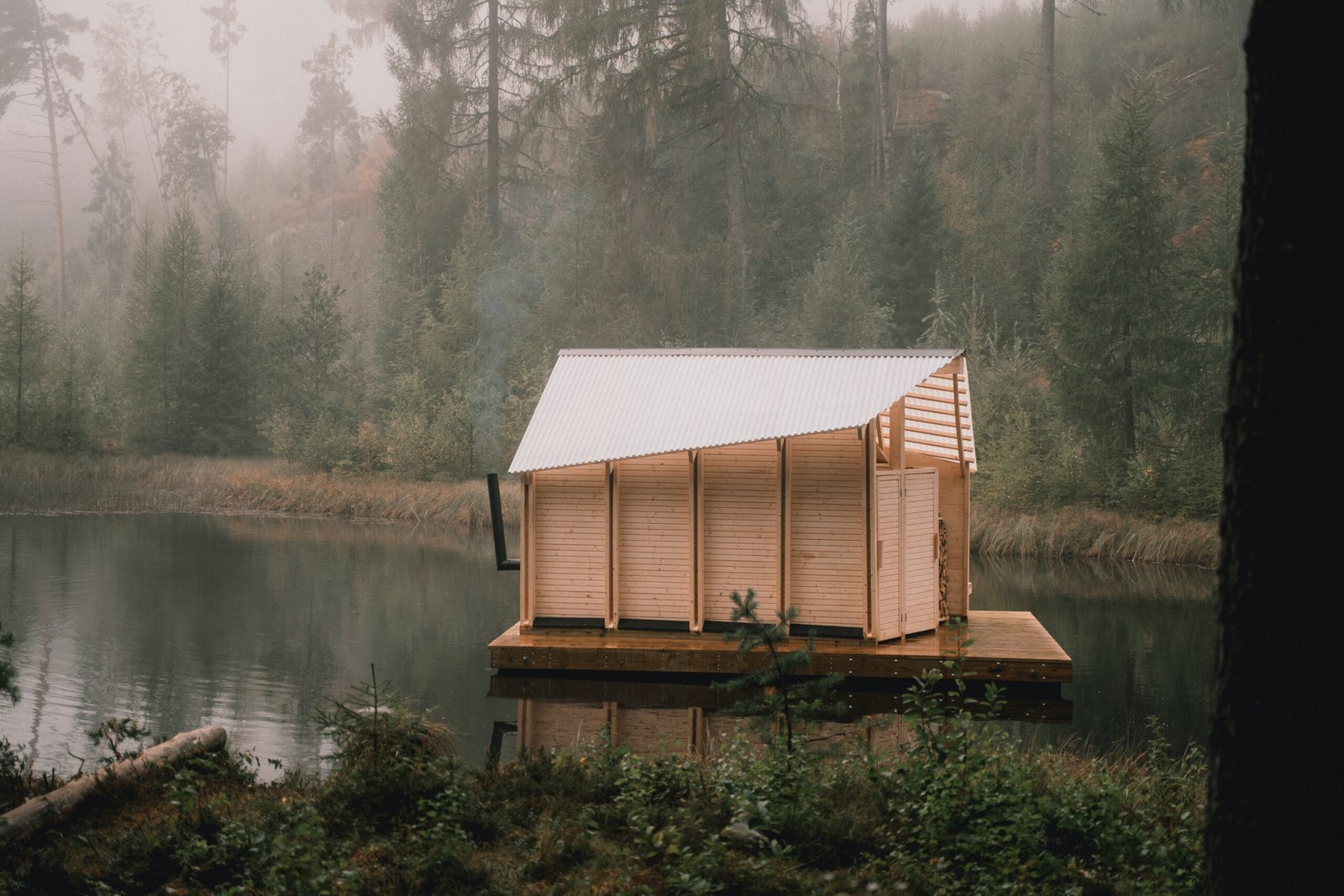
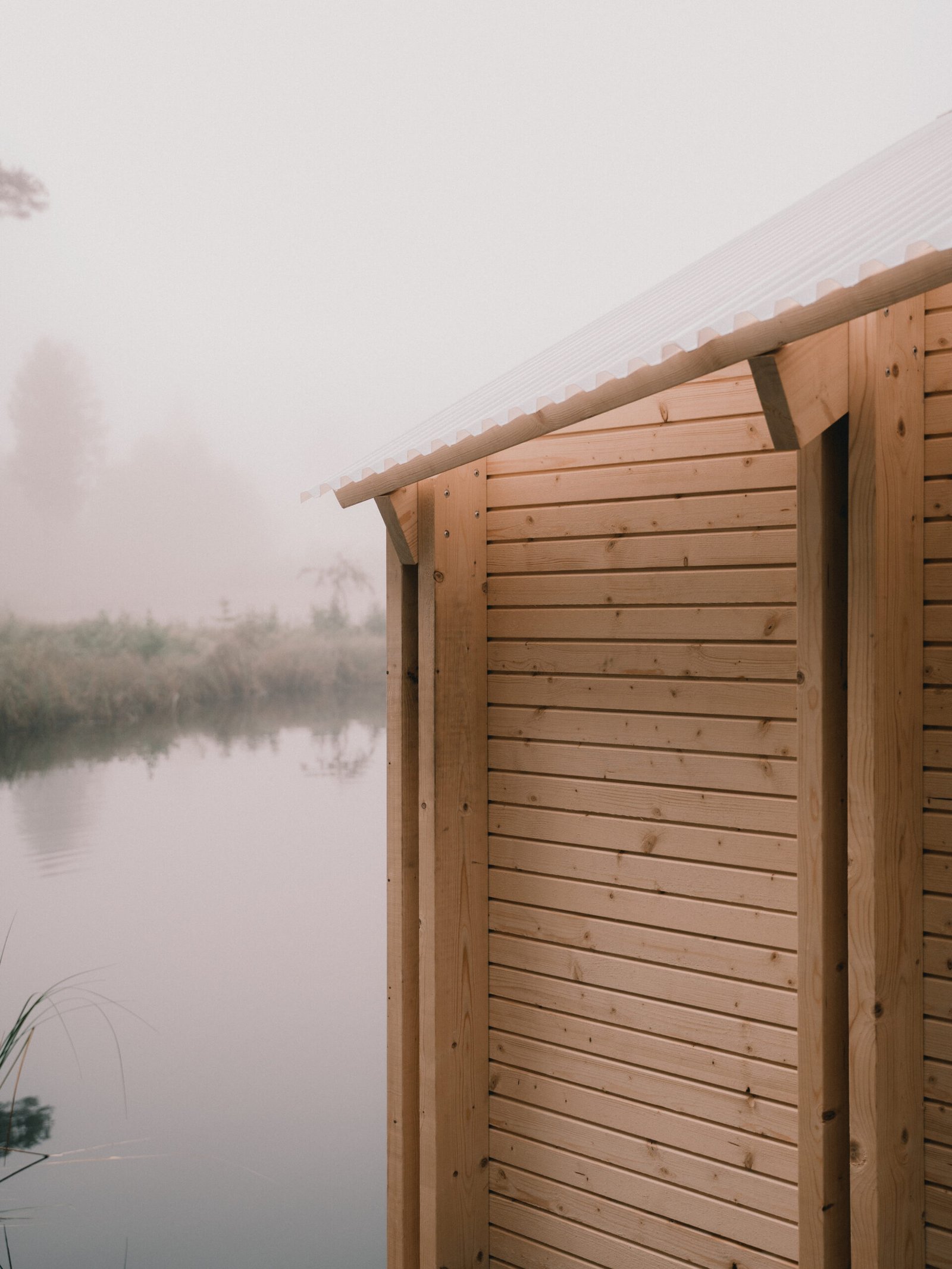
In order to balance its weight distribution, the sauna sits at a slight angle atop the pontoon, which is reflected in the angled eaves of its corrugated white polycarbonate roof. The roof was also designed with periods of heavy snowfall in mind, with its steep pitch preventing over-loading and its white color helping it to blend in with the surrounding landscape.
According to the studio, the primary references became the surrounding hills and forests, prompting them to explore a form that turns inward, almost like a carved-out cave. More than a sauna, it is a small sanctuary, a place where warmth meets water, and where craft, nature, and community come together in balance.