Supporting sustainability goals
This production model contributes to wider sustainability efforts by reducing agricultural waste and avoiding landfill or burning; lowering reliance on imported timber; and supporting green building frameworks such as LEED and Estidama. Internal assessments indicate that PSB® stores carbon within the material itself, contributing to lower overall environmental impact when compared to conventional panels.
PSB® EcoCore FR
One of DesertBoard’s key products is PSB® EcoCore FR, a fire-rated door core made from palm-based material. The product is designed for use in residential, commercial, and industrial buildings, where fire safety standards are a requirement. It has fire ratings of 30, 60, and 90 minutes, is suitable for a range of door systems, and manufactured using palm-based raw material.
The product has been independently tested against leading international fire safety standards in Europe, the UK and the US, and is approved by the UAE Ministry of Interior Civil Defence. This ensures it meets widely recognized benchmarks for fire-rated door performance across global markets. The company has also developed larger-format fire-rated door cores, including 3-metre variants, expanding design possibilities for developers and architects.
Market applications
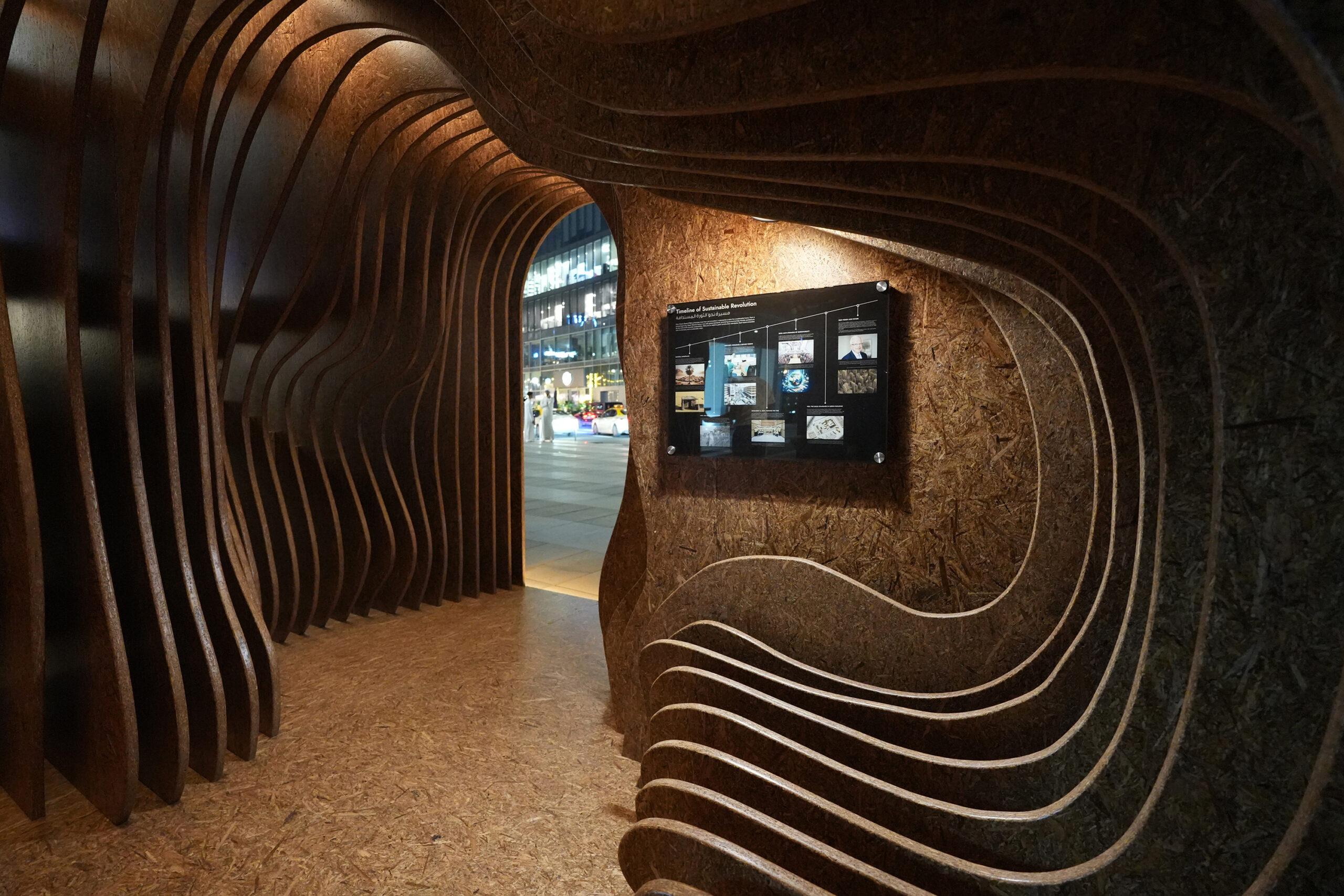
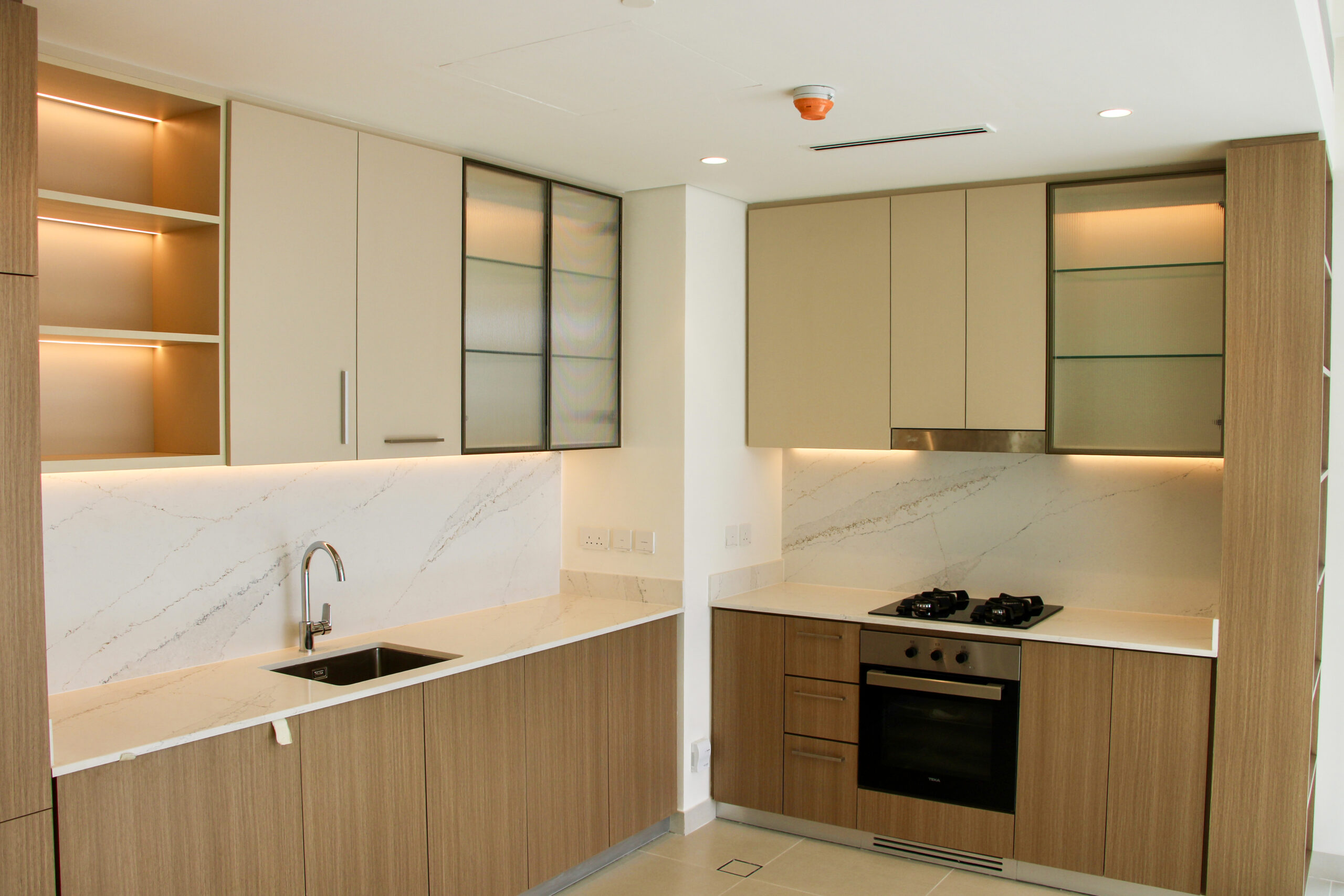
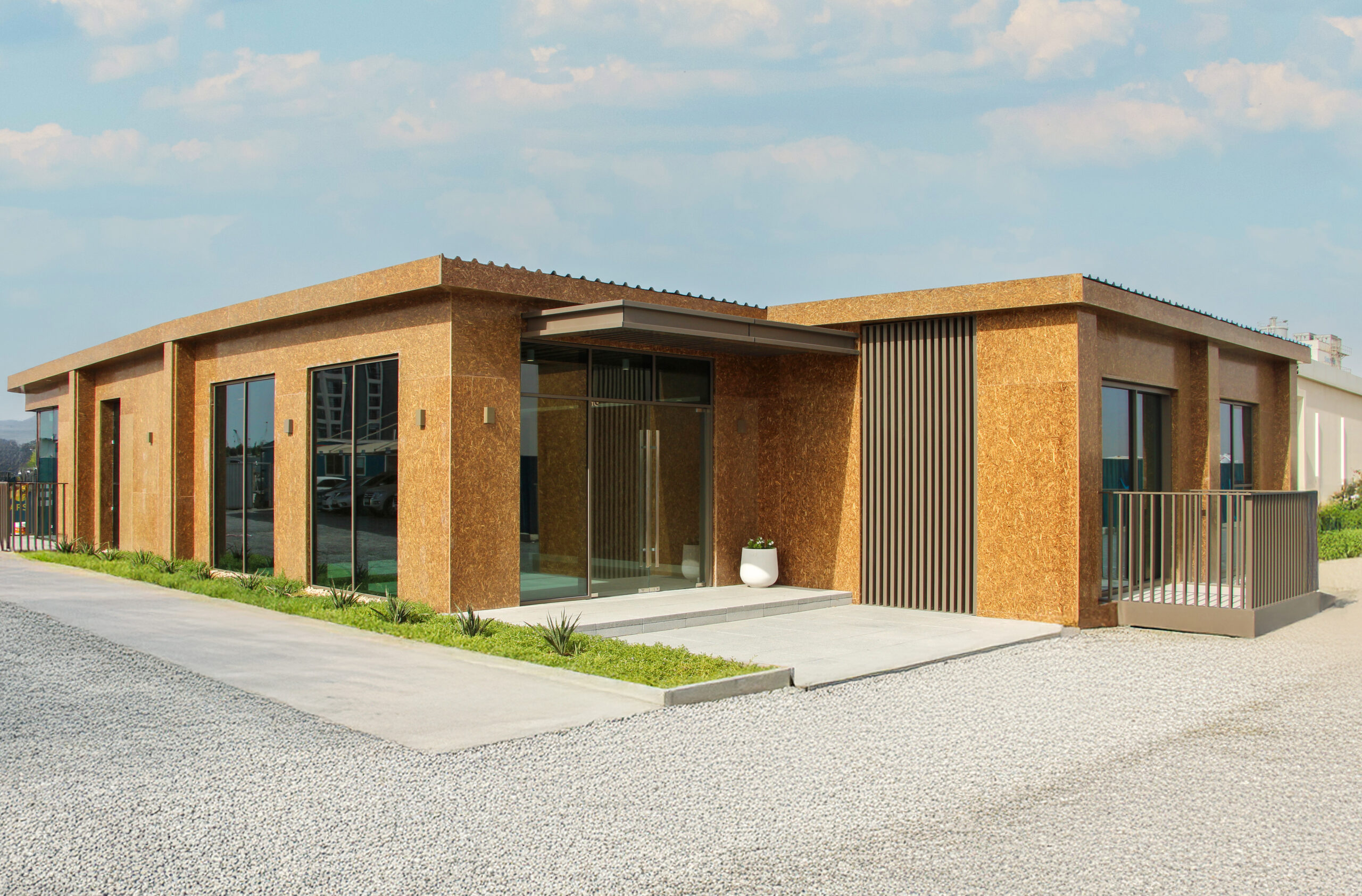
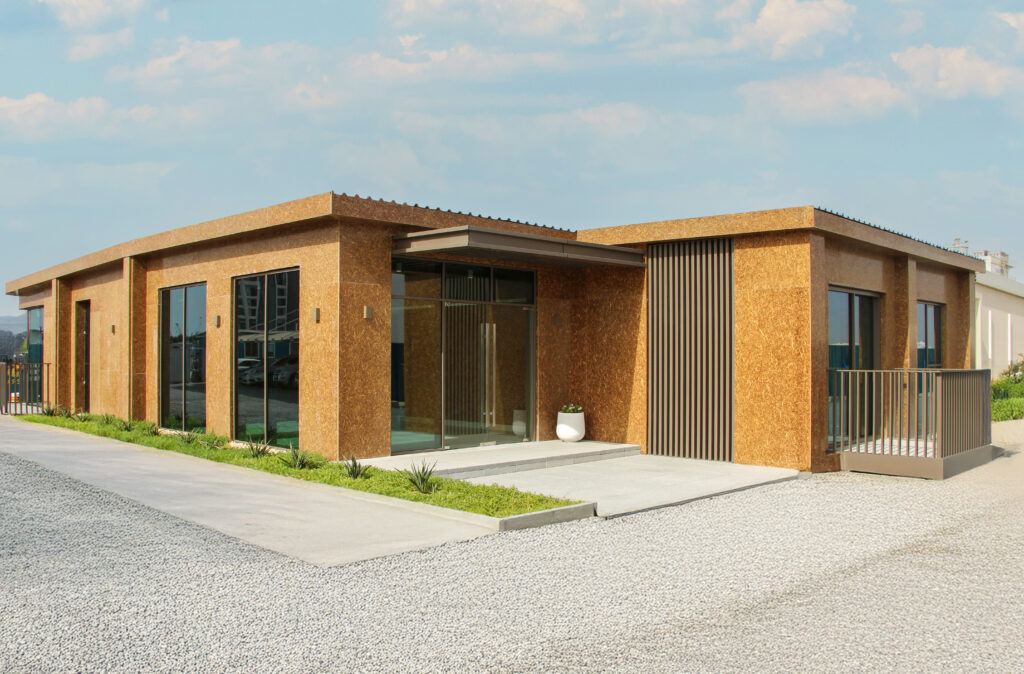
PSB® is already being used in door manufacturing through partners such as Abanos, with further applications across flooring, interior joinery and furniture and in fit-out and exhibition structures. These applications show how a locally produced material can replace imports while meeting performance and compliance requirements.
Scale and capacity
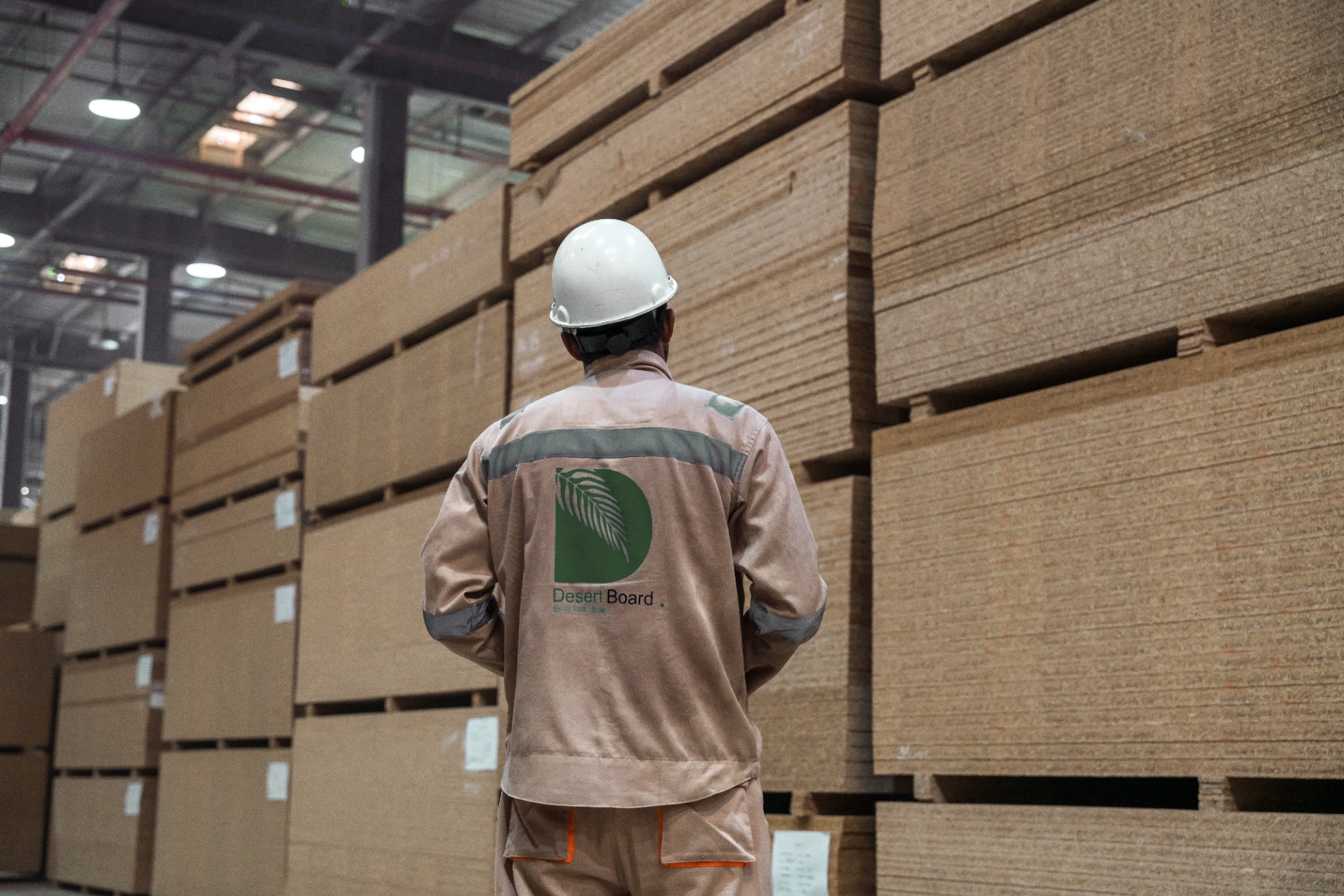
DesertBoard operates at an industrial scale, upcycling significant volumes of palm raw material annually and producing thousands of boards per day. This capacity allows it to serve both domestic demand and growing export interest. This growing demand is being driven by the construction, interiors, and events sectors within the UAE, alongside increasing interest from regional and international markets, including Saudi Arabia, Egypt, India, and Europe.
Technology and manufacturing
DesertBoard uses a combination of continuous press technology and proprietary processes to manufacture PSB®. Its boards are produced without formaldehyde-based adhesives, addressing concerns around indoor air quality associated with traditional wood panels. The engineered wood sector in the Gulf faces several challenges, including reliance on imports, high transport costs, and limited availability of low-emission materials. DesertBoard’s model explicitly addresses these issues through local sourcing, domestic manufacturing, and alternative raw materials.
“As the UAE continues to expand its manufacturing sector, materials like PSB® are expected to play a larger role. DesertBoard’s focus is on scaling production, expanding product applications, and entering new export markets, while continuing to develop bio-based alternatives for the construction industry,” concluded Kamal Farah, Director, DesertBoard.