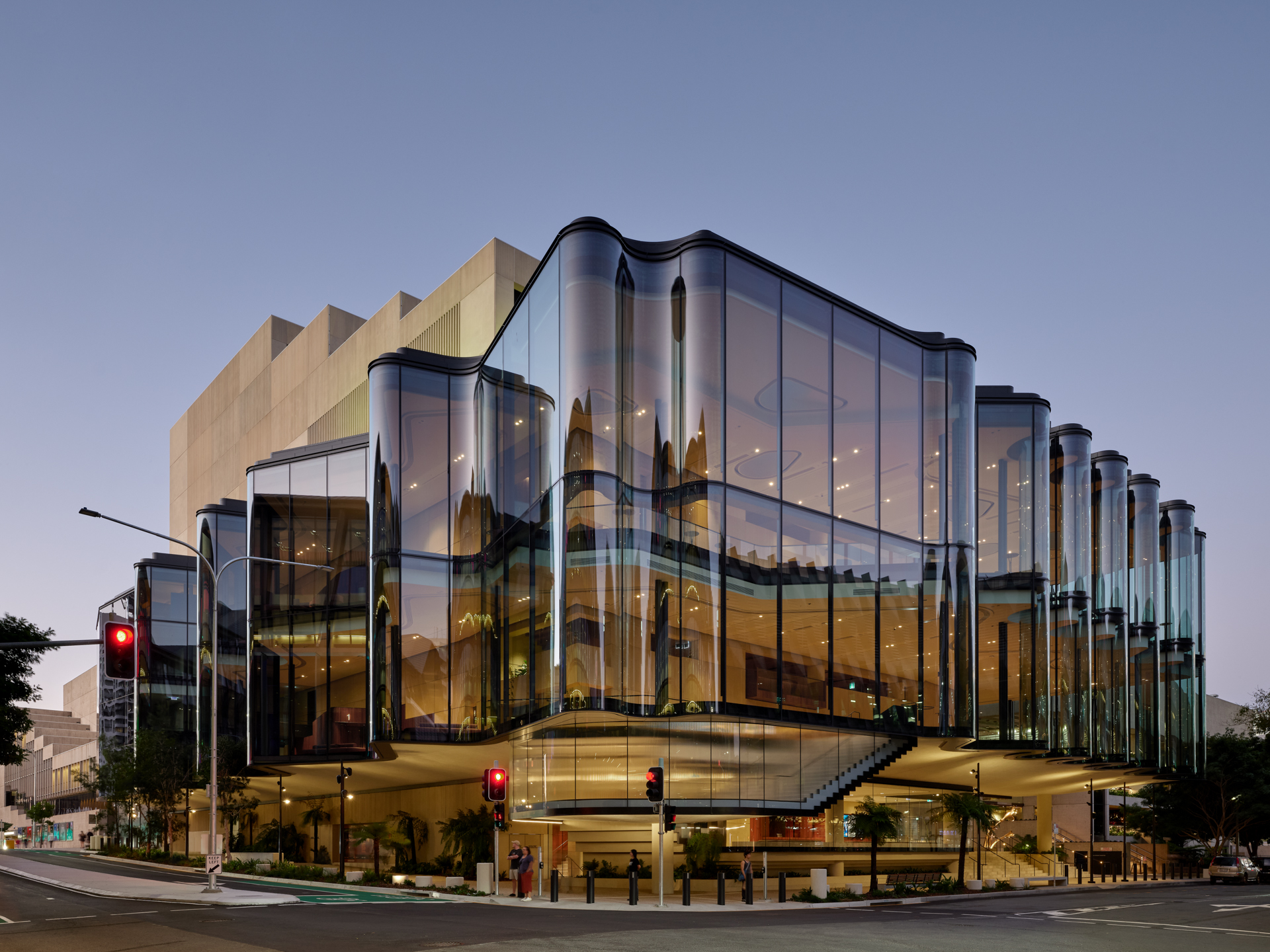
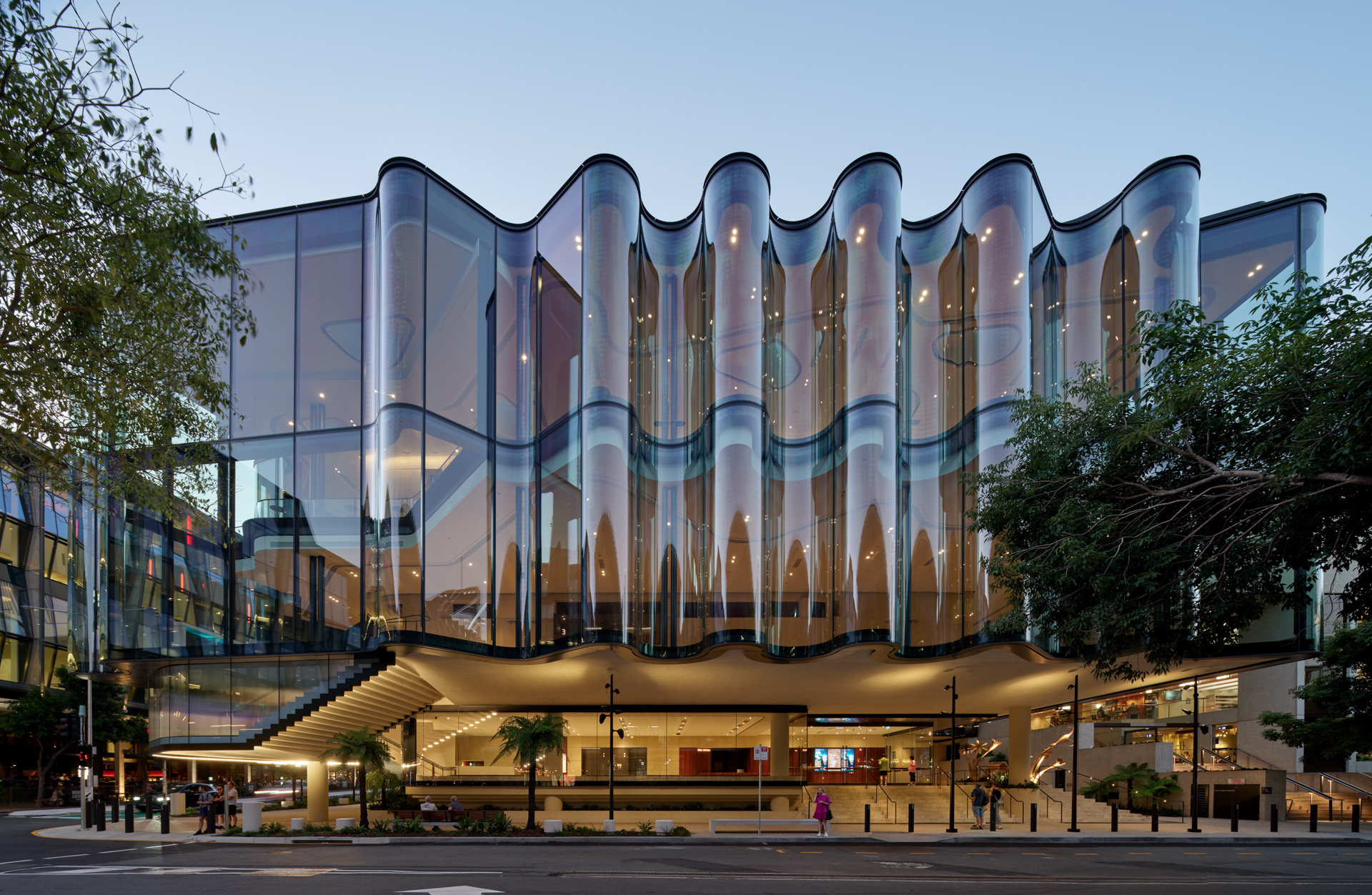
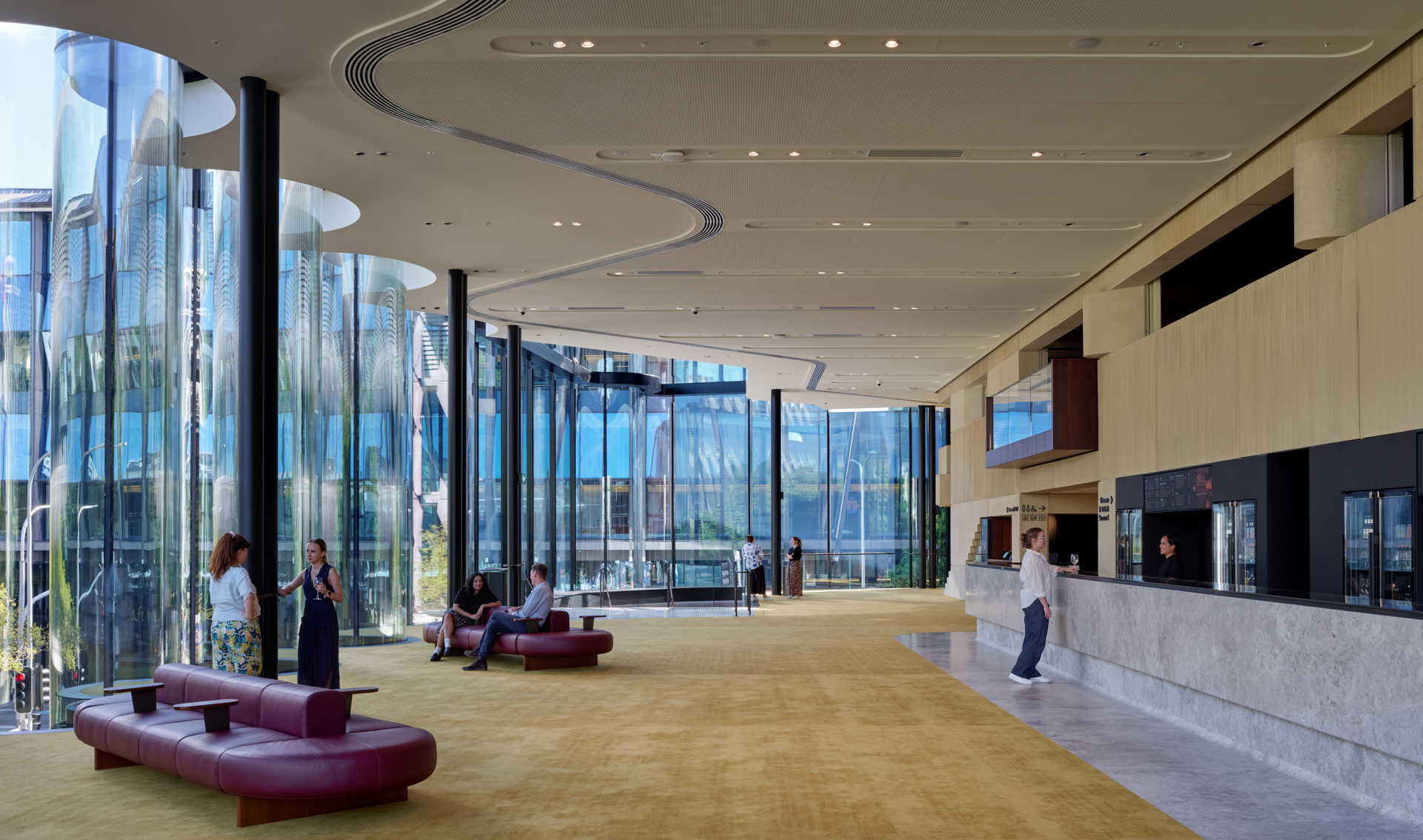
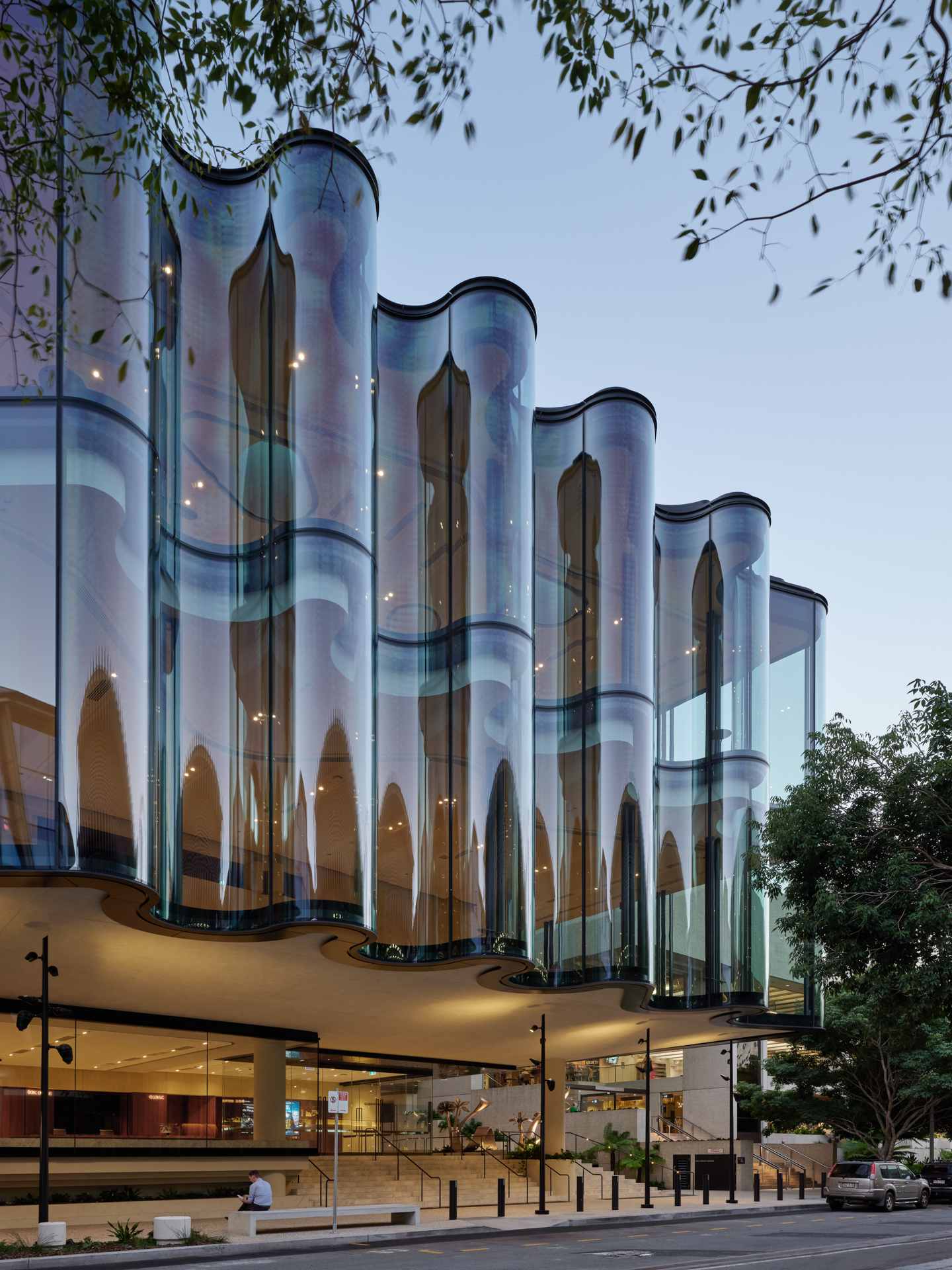
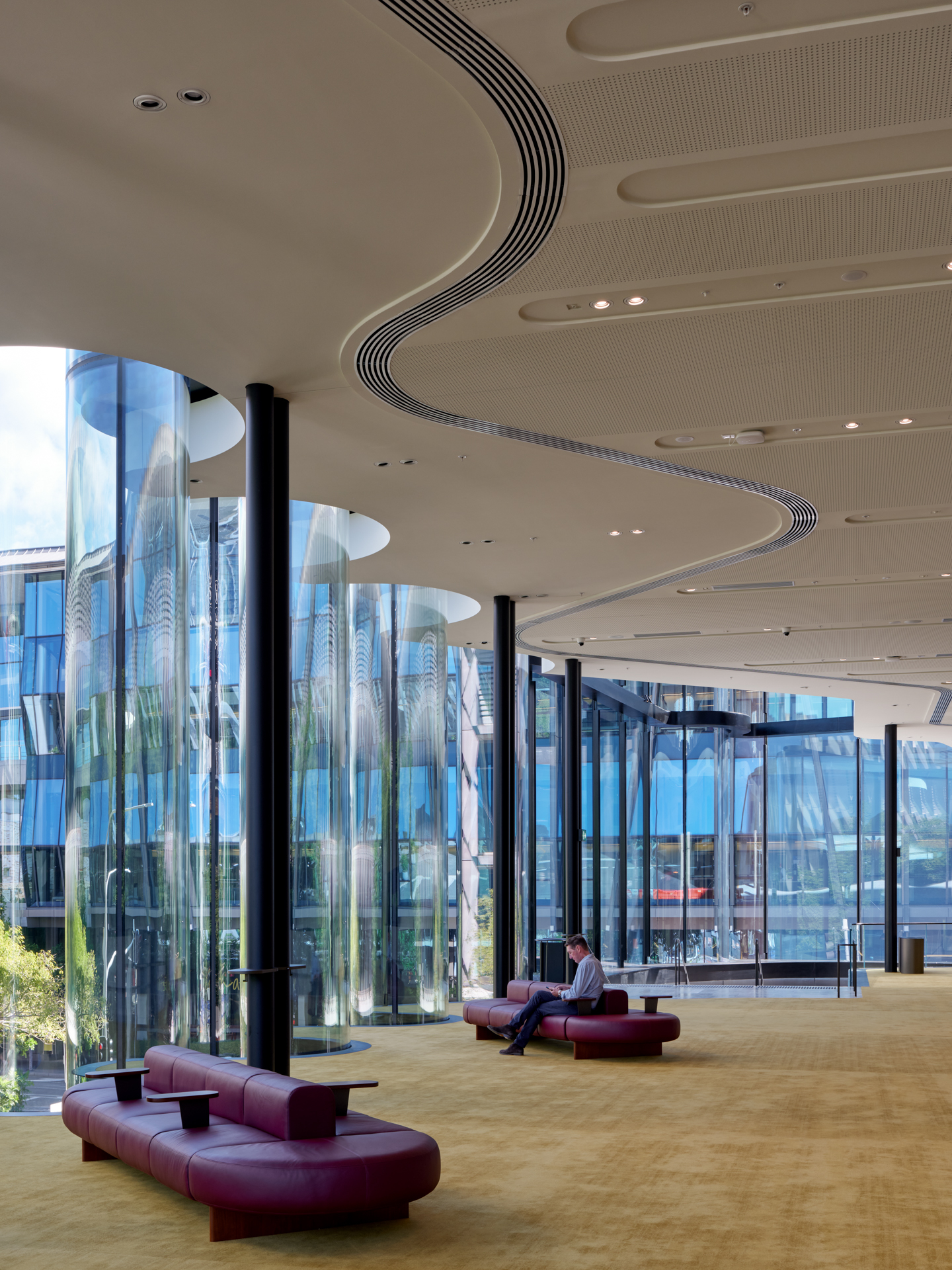
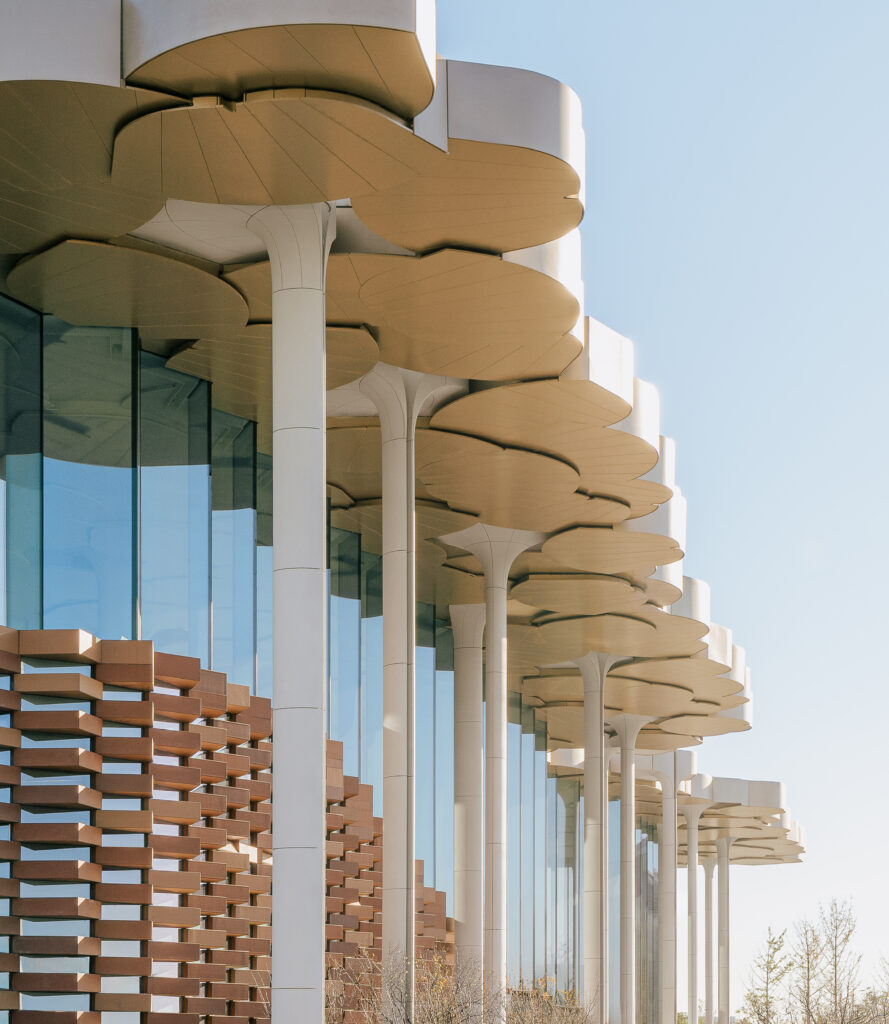
The wavy glass walls give dramatic character to the foyers. They are highly engineered for thermal performance, fabricated in four layers with an intervening air gap. The facets that receive direct sunlight are embedded with a black ceramic inlay that acts as an integrated louvre to block solar penetration, optimizing the building’s energy performance and minimizing glare.
Contrasts
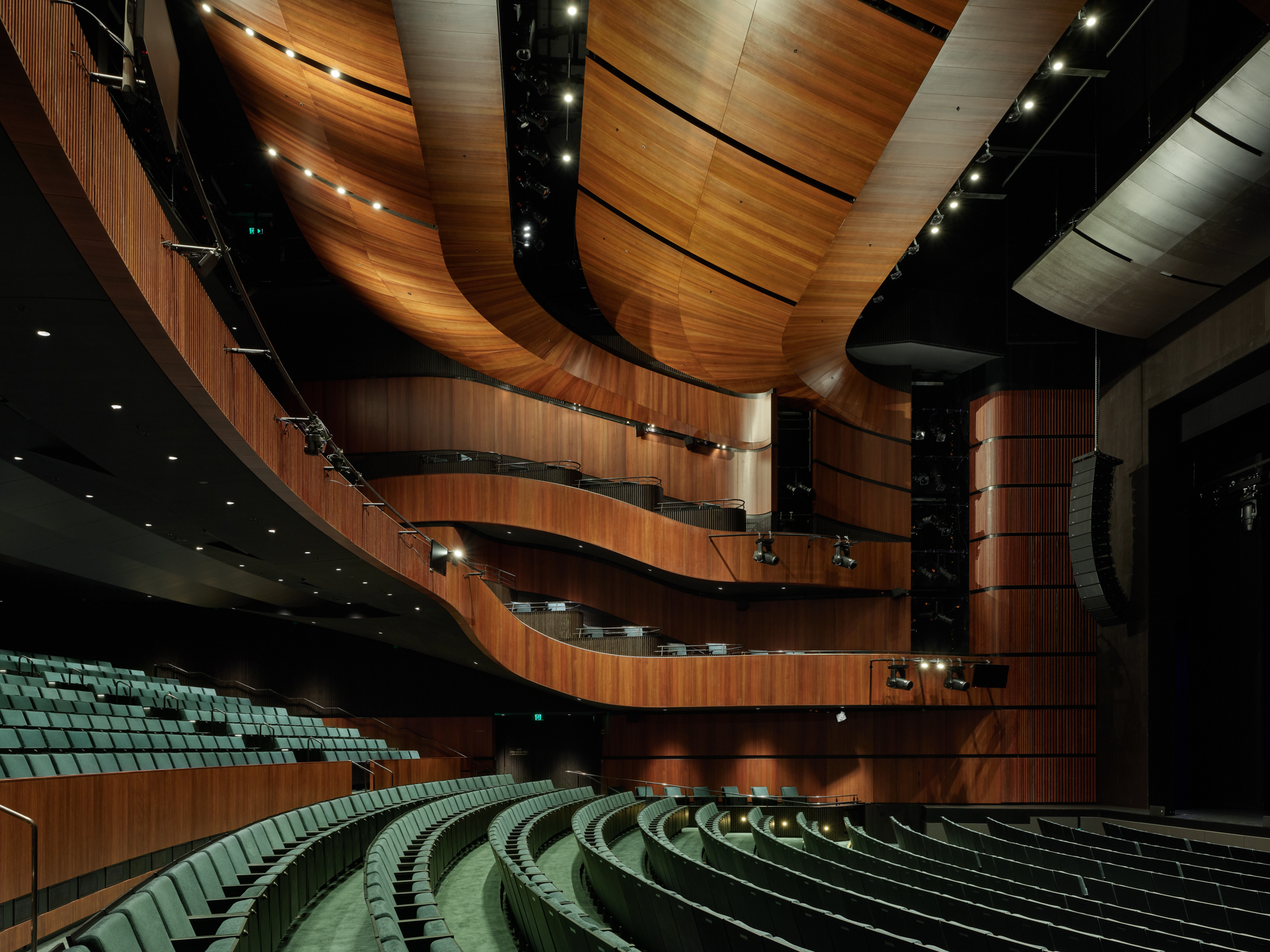
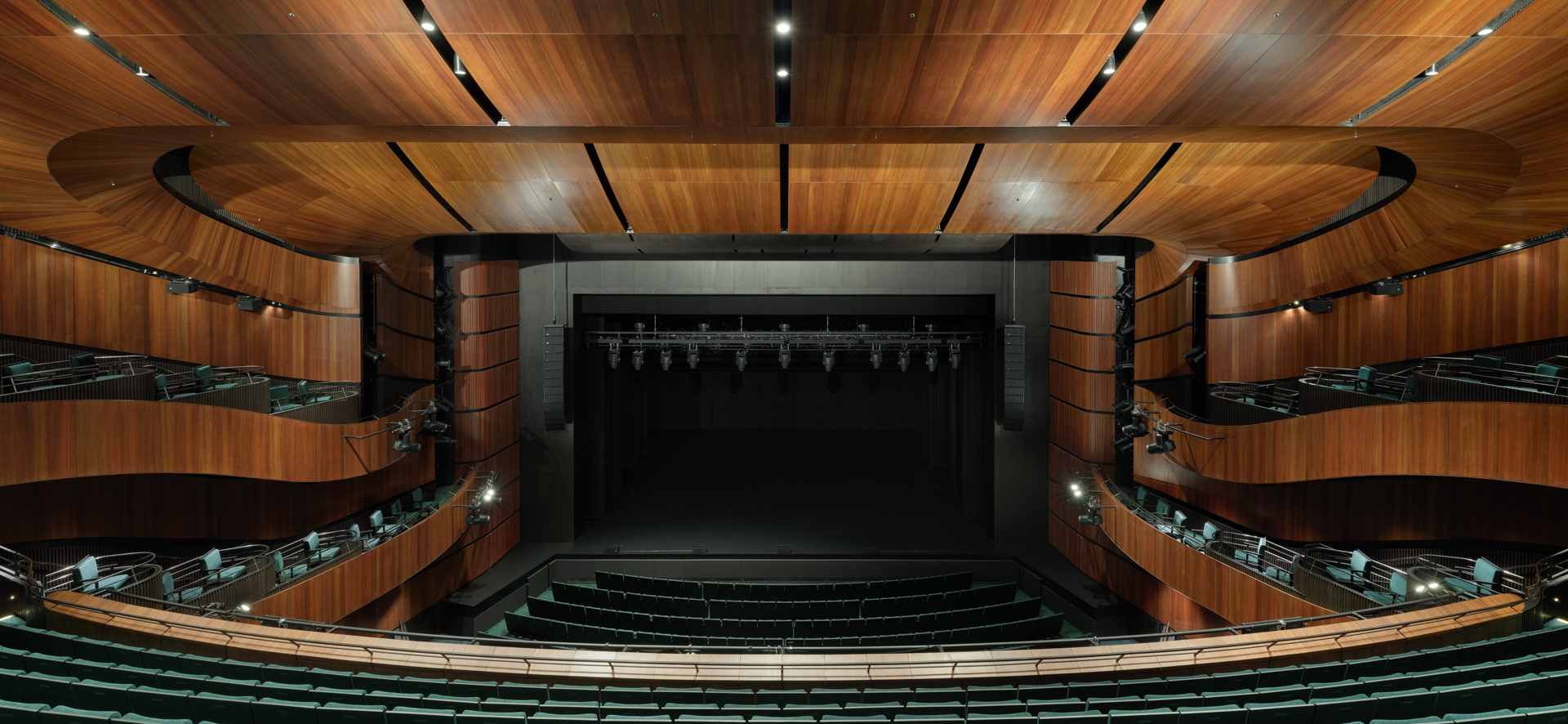
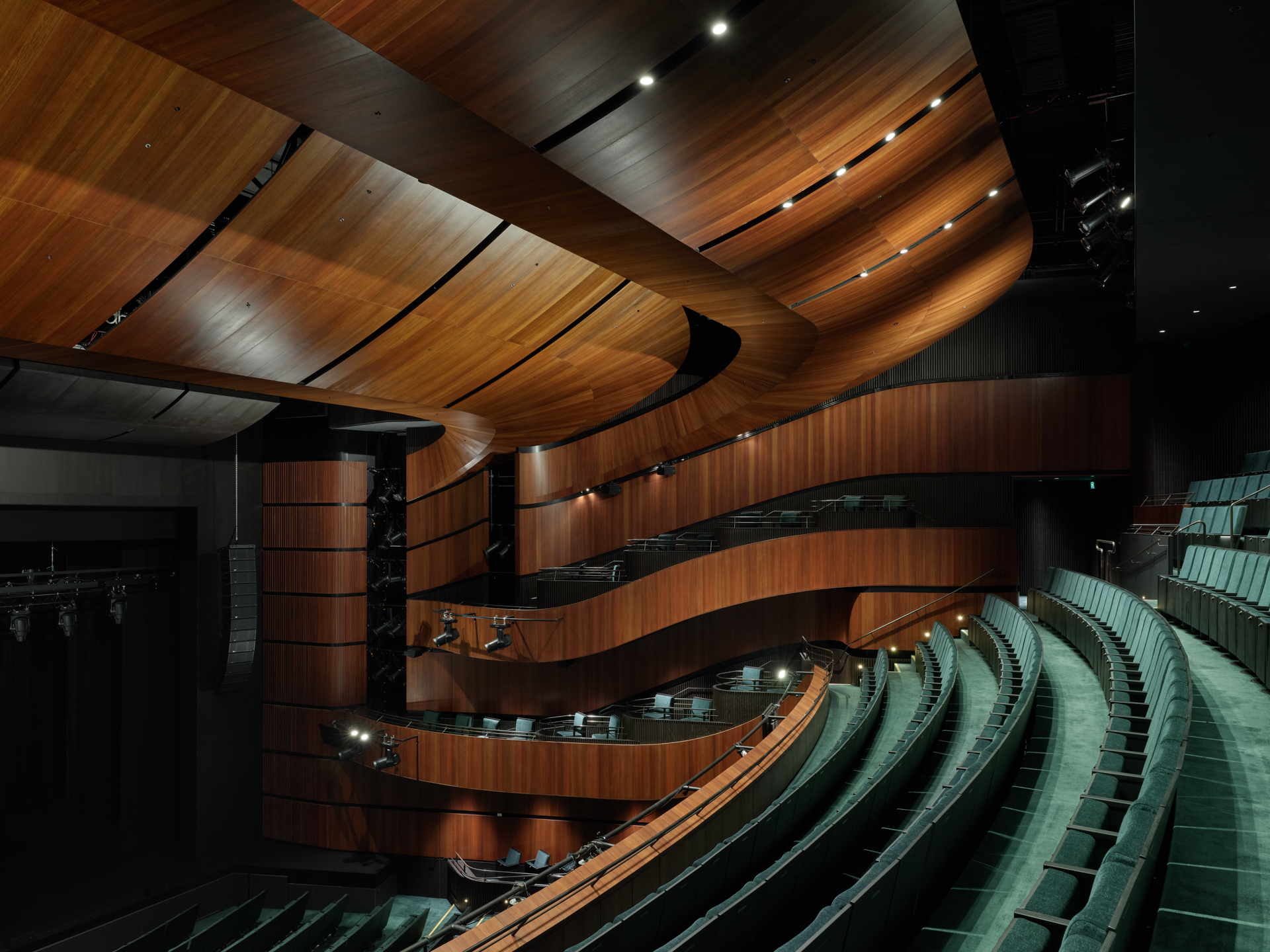
The lightness and airiness of the foyers contrast dramatically with the theater interior, conceived like a cocoon of dark grey ironbark walls and rainforest green carpet. The distance from the stage to the furthest seat in the theater is only 28 meters, only three meters longer than a half-Olympic pool. Together with wrap-around balconies, the atmosphere is incredibly intimate for both patrons and performers.
“The auditorium was conceived as a highly adaptable performance environment capable of hosting a wide spectrum of artforms. The theater was designed to operate like a finely tuned musical instrument – adjustable to support world-class opera, ballet, dance, symphony, theater and musical productions,” said Gumji Kang, Managing Director of Snøhetta Australasia. “Inspired by the qualities of stringed instruments, we have combined technical precision with atmospheric intimacy, enriched by layered timber ribbons that feel quintessentially Queensland.”
Fully automated
The orchestra pit has three floor sections that can be raised or lowered independently to accommodate orchestras of different sizes, and there are four different pit configurations, two more than the convention. The fly system is fully automated, with the fly tower being 24 meters high and fly lines extending out for objects and performers to reach far out over the audience.
“The appetite for the performing arts in Queensland is insatiable and the need for a new theater was flagged more than a decade ago. With the Glasshouse Theater now open alongside our four other theaters, we expect to welcome an extra 300,000 people to increase our visitation to 1.6million visitors per year,” said Rachel Healy, Chief Executive, QPAC.
“This 1,500-seat theater also gives us greater capacity to attract world-class talent and Australian exclusives to Queensland – such as global music icon Sting in The Last Ship – and will see the Queensland Cultural Precinct become one of Australia’s biggest and busiest cultural precincts as we move towards the Brisbane 2032 Olympic and Paralympic Games,” concluded Healy.