Studio Massimo creates a quiet, enduring workspace where architecture and nature are inseparable
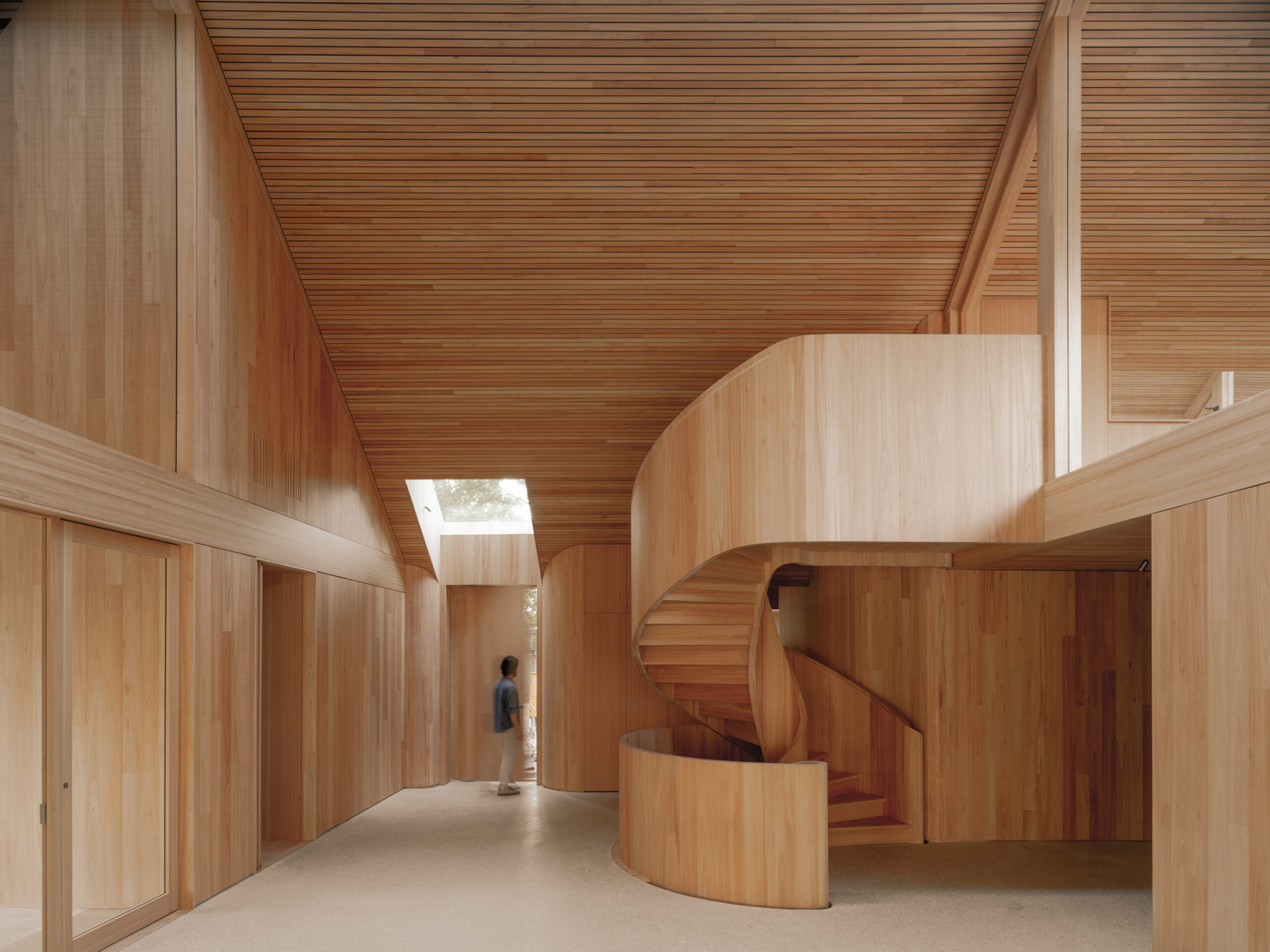
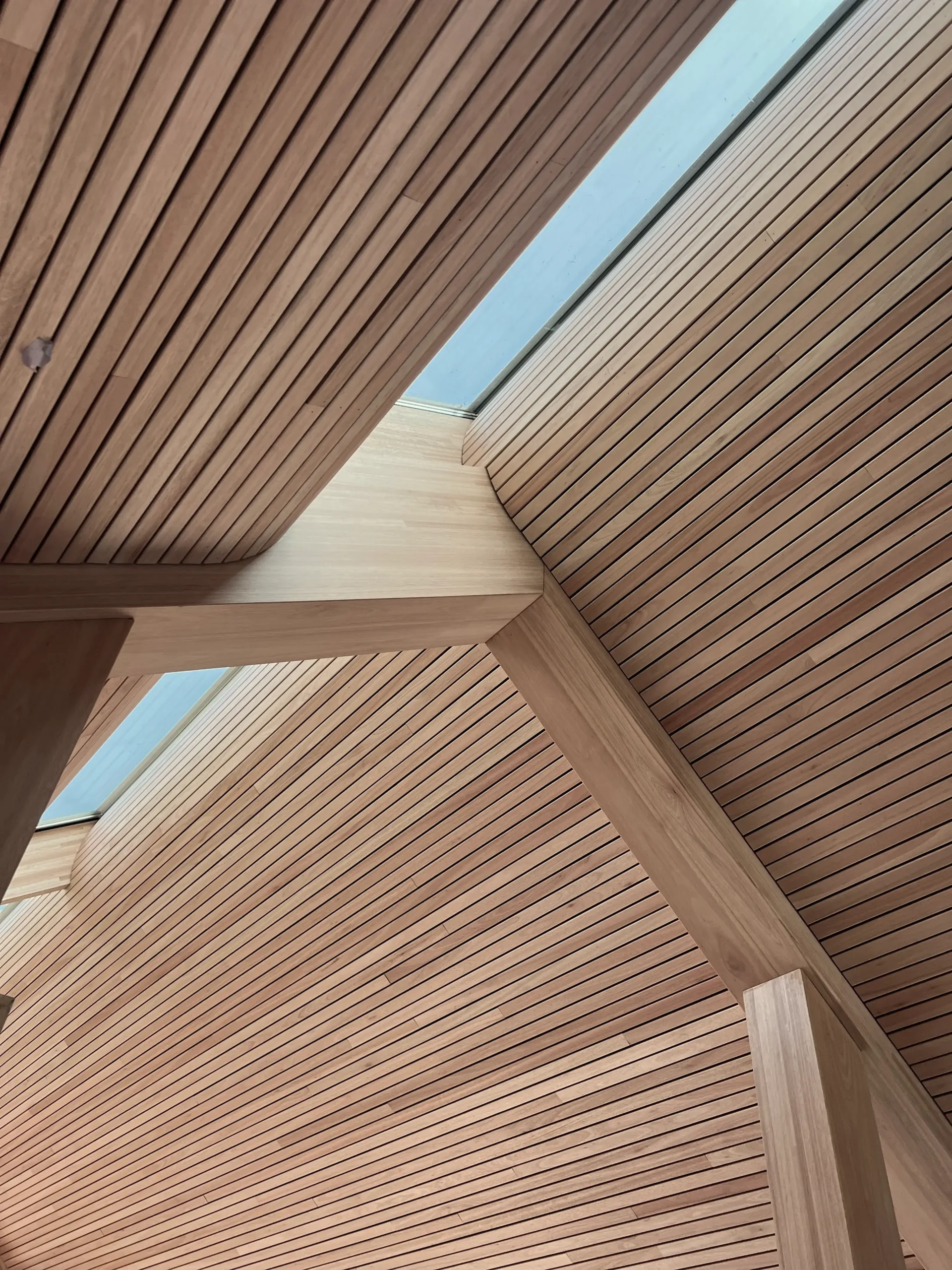
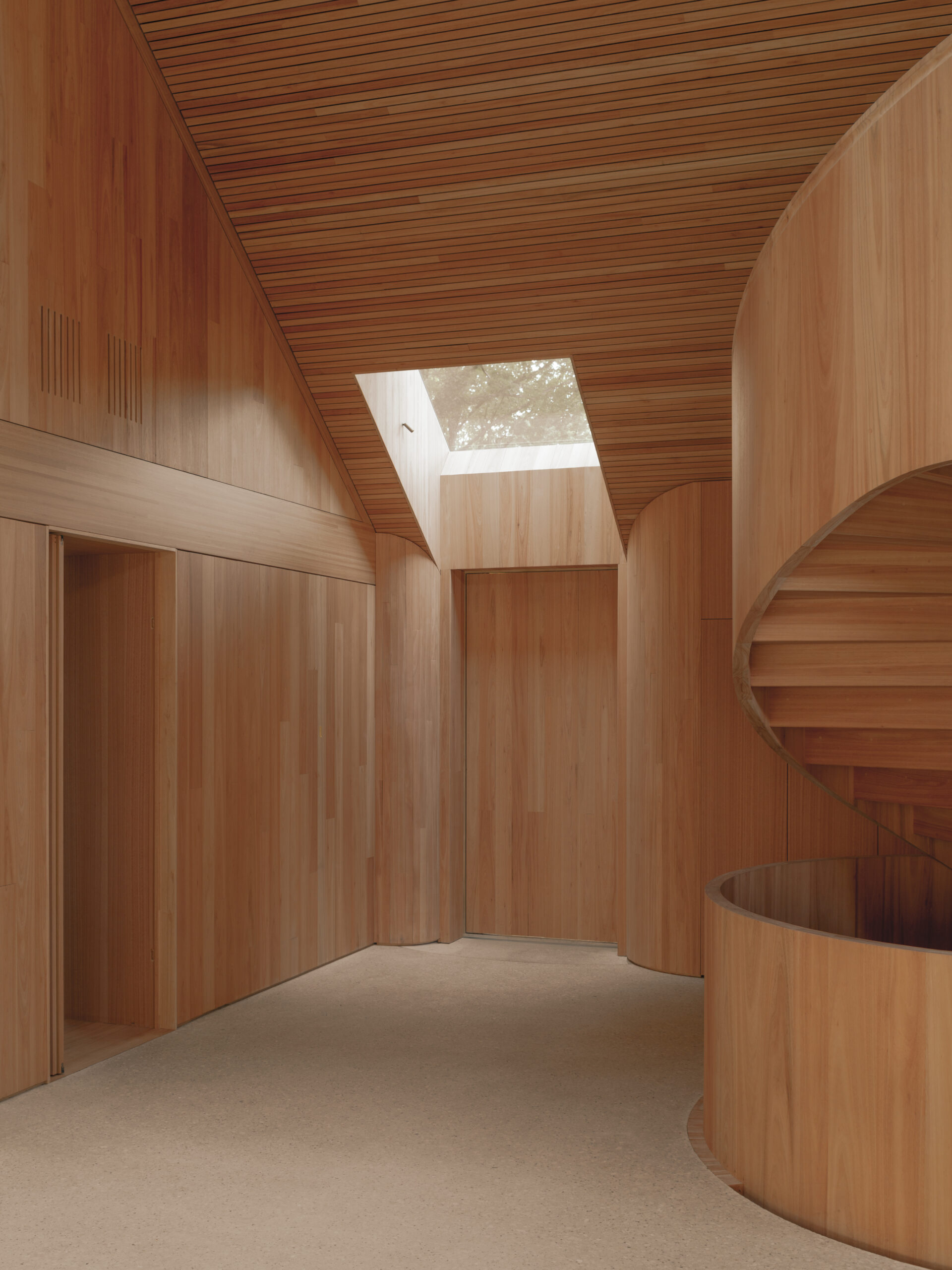
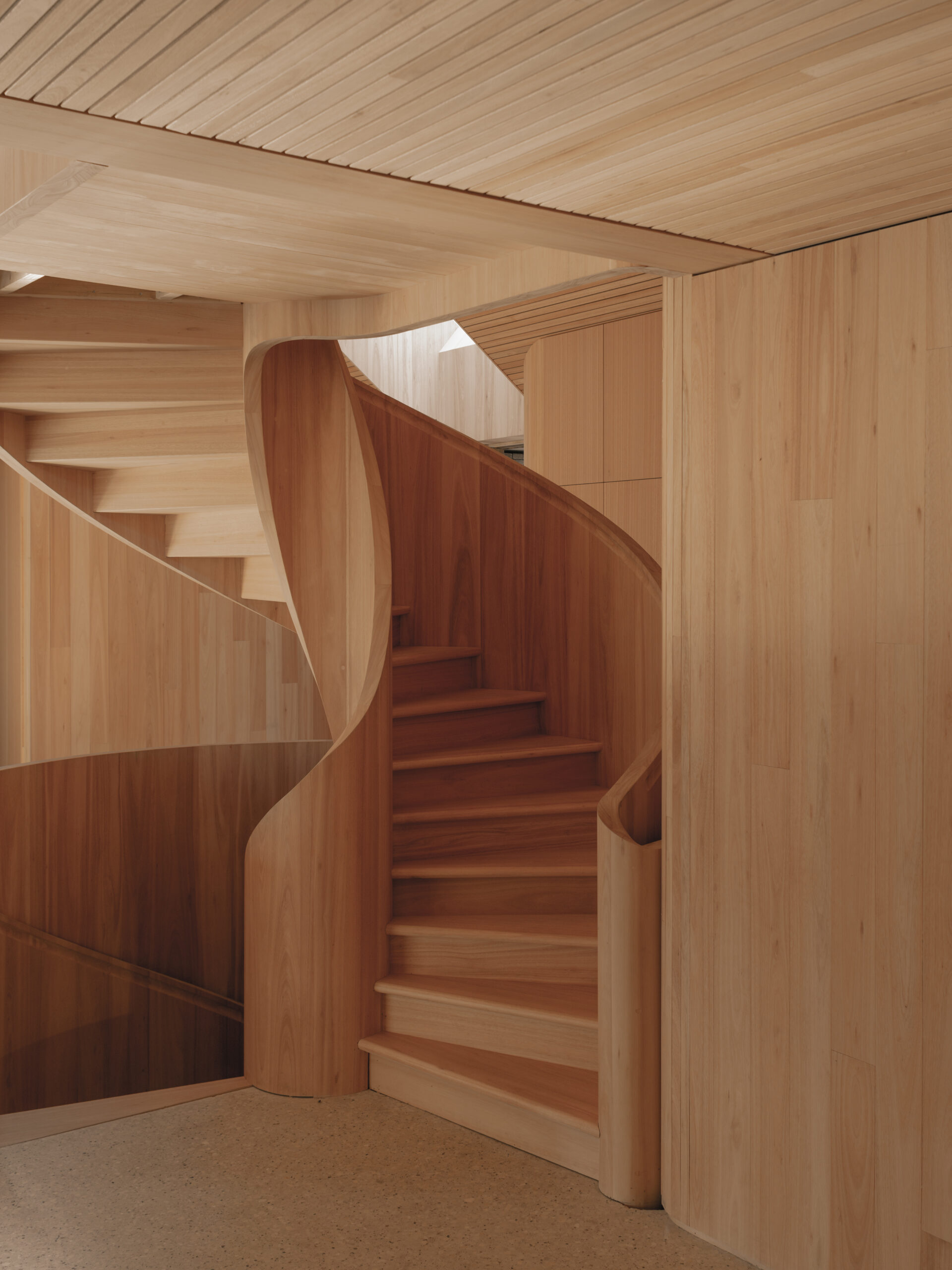
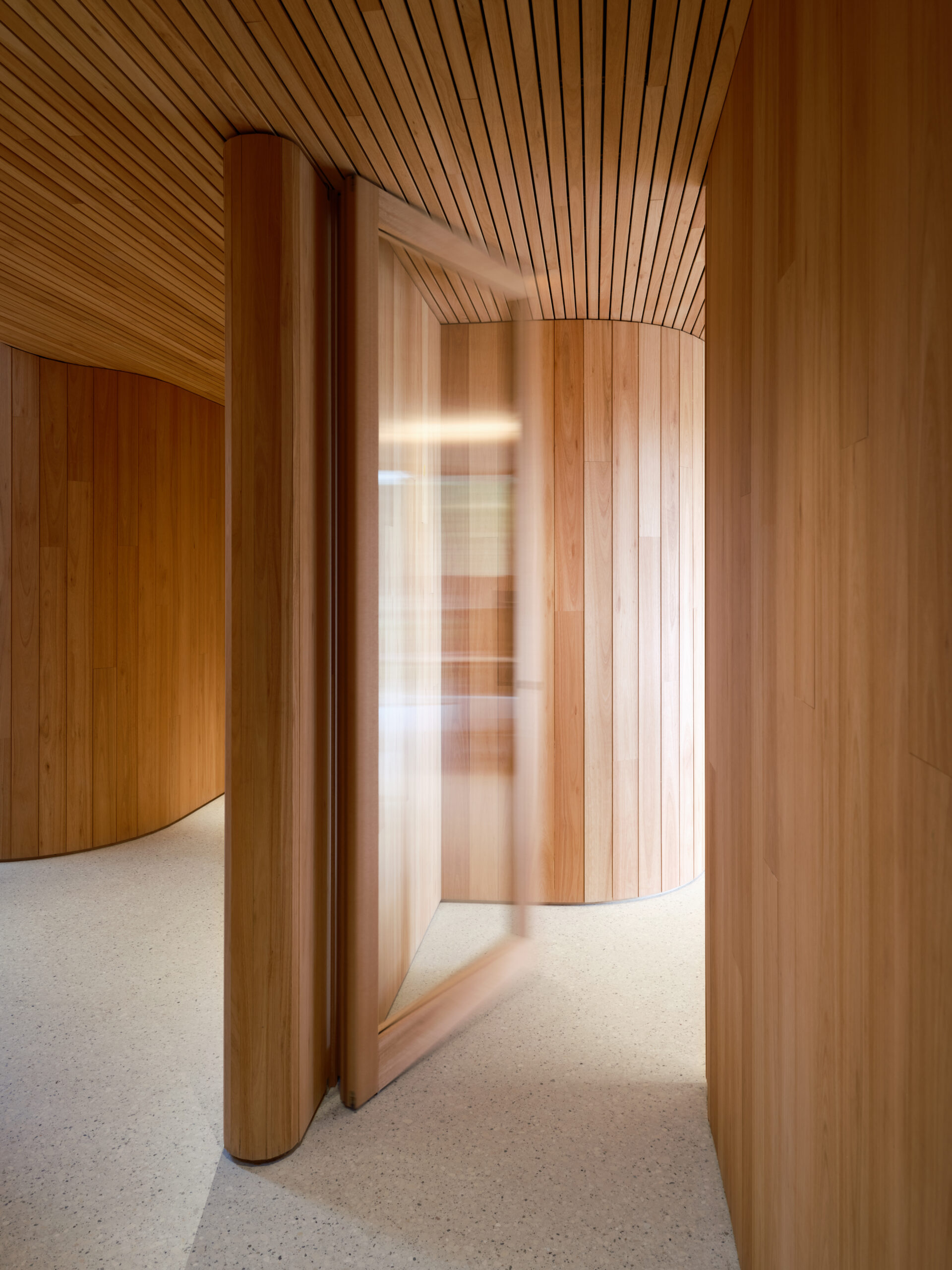
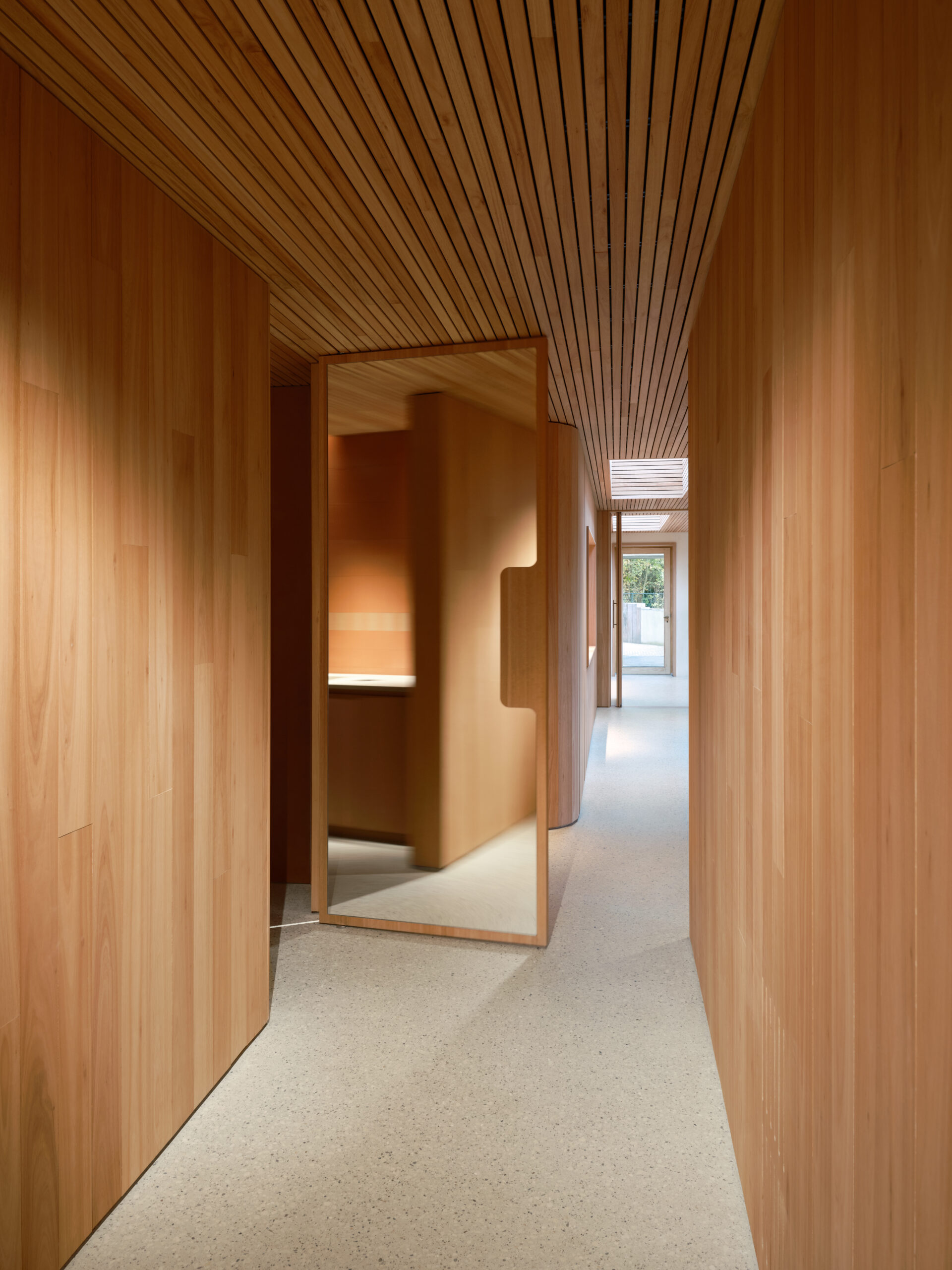
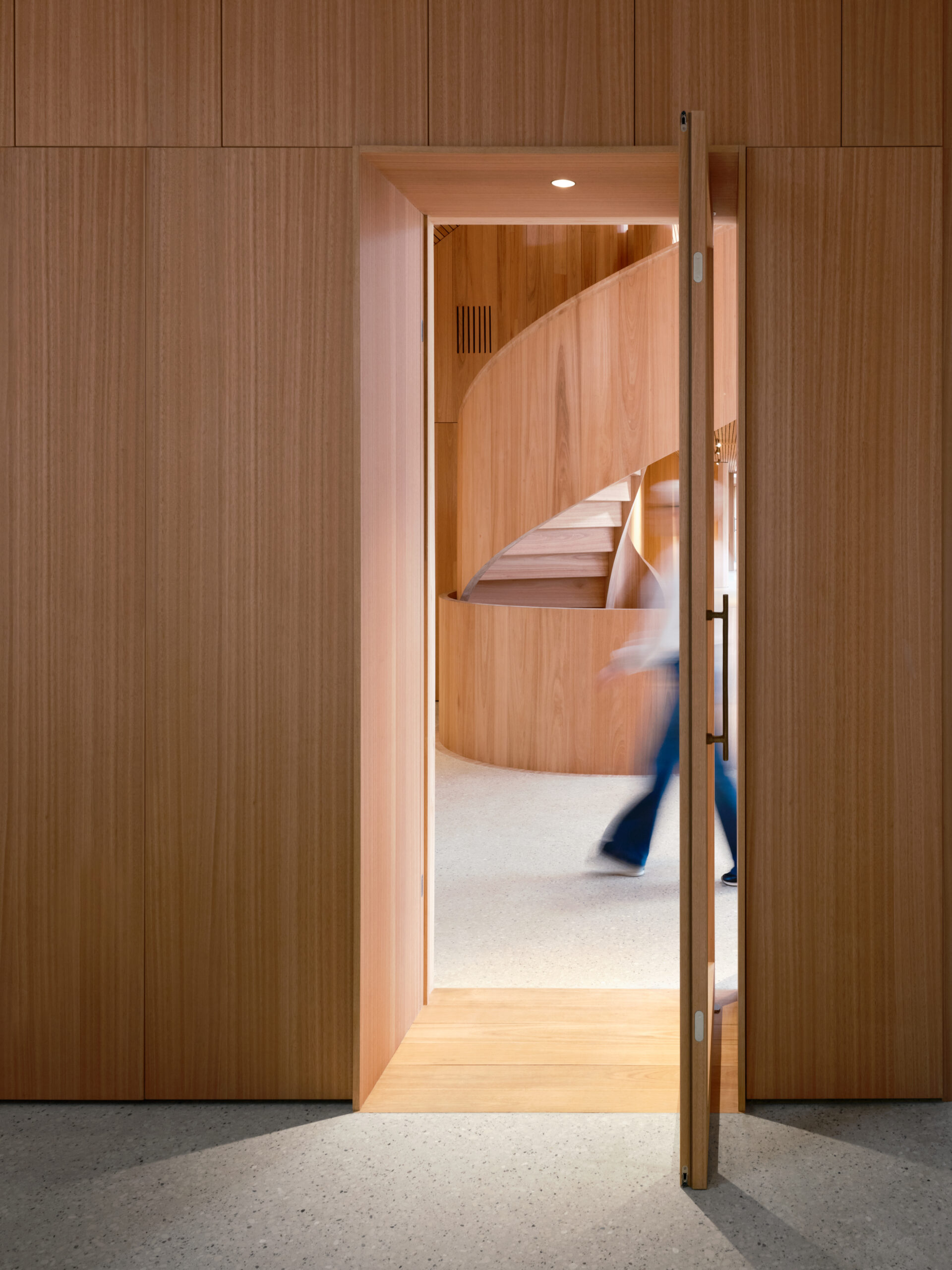
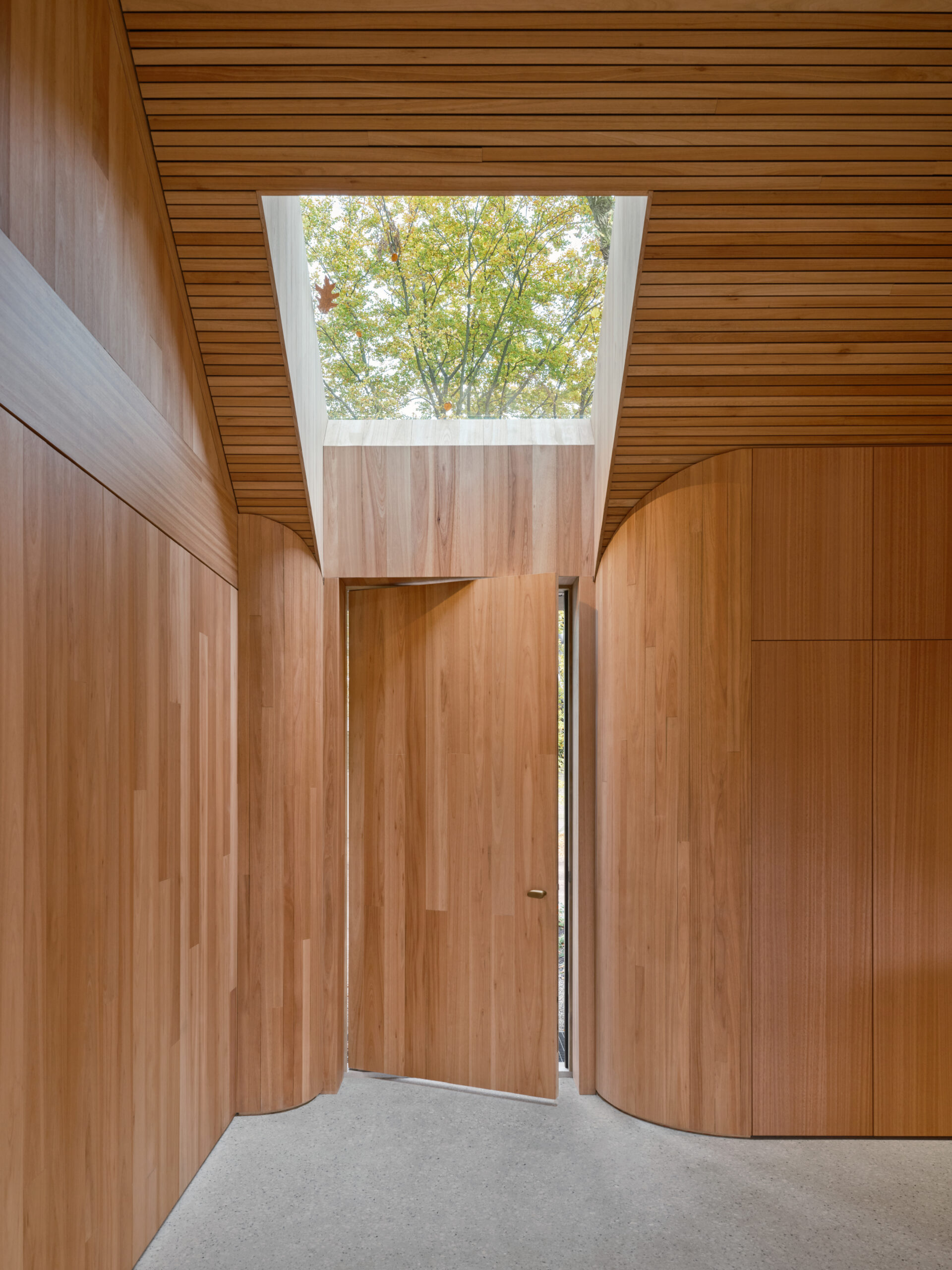
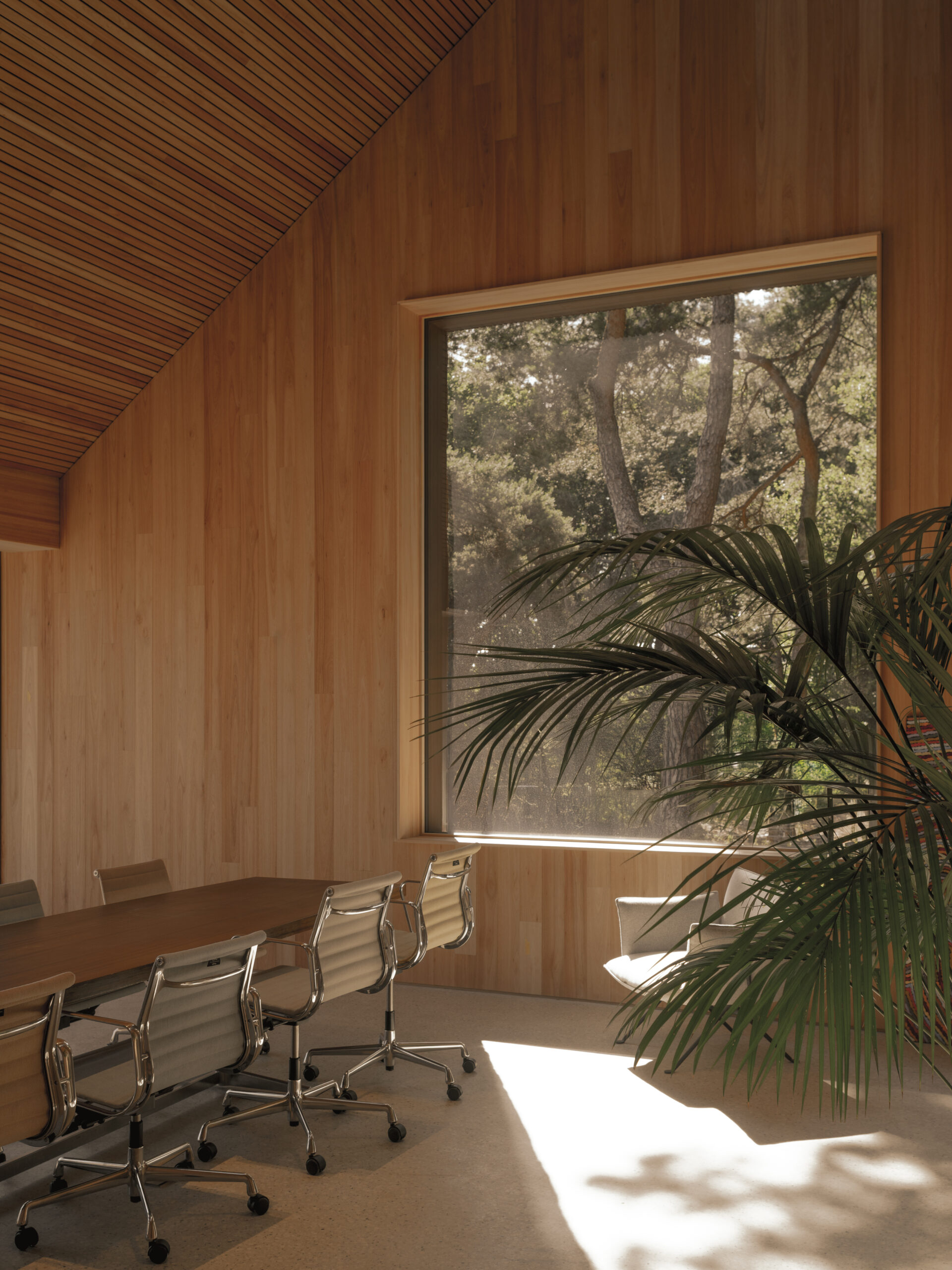
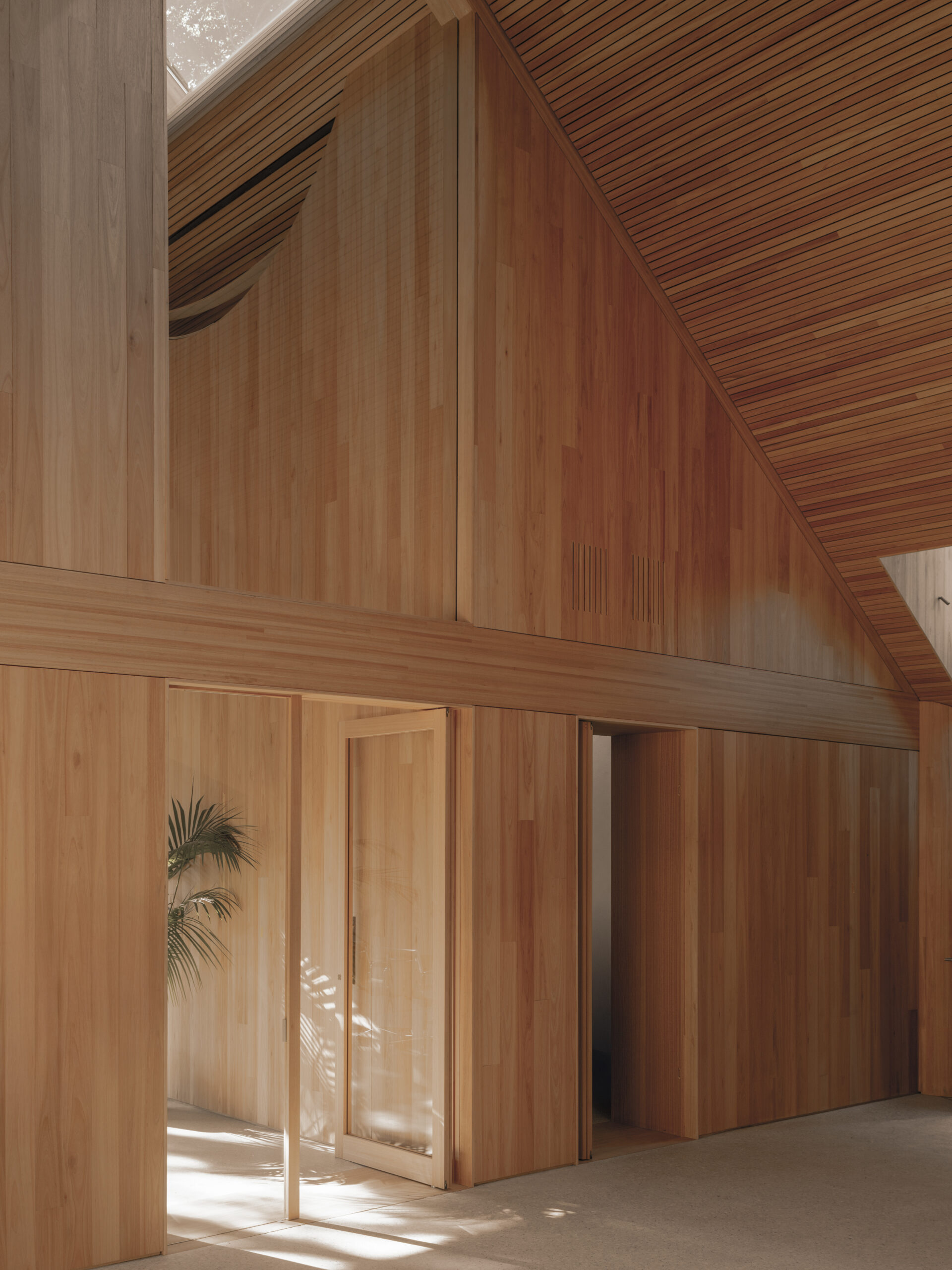
Primary structure consists of laminated timber columns and beams, while the interior is defined by Red Grandis used for walls, ceilings, built-in furniture, and joinery
July 3, 2026
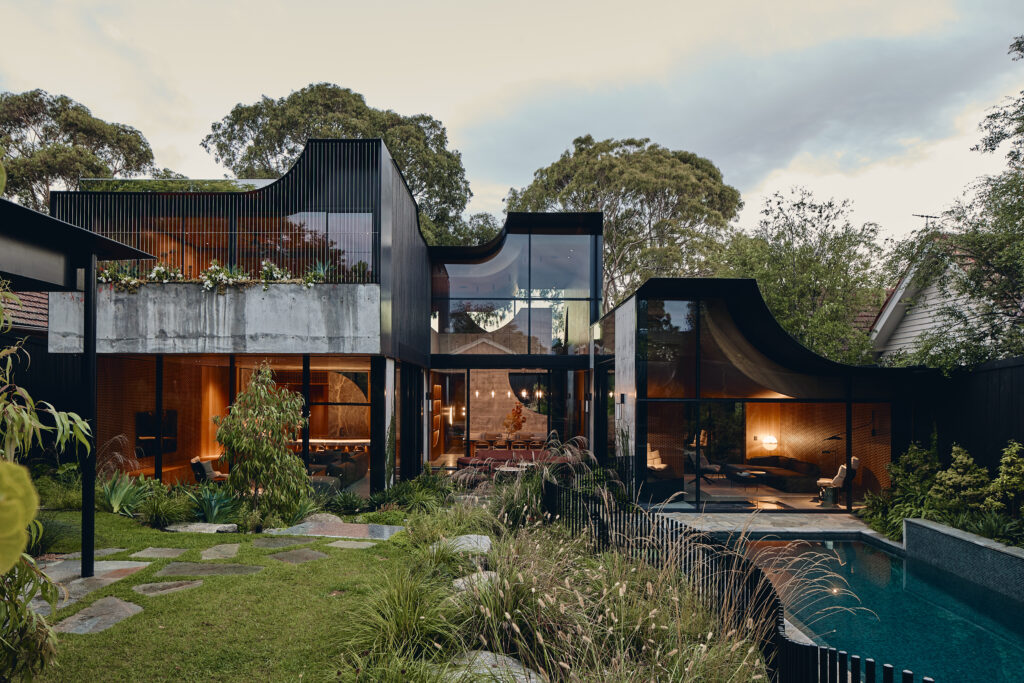
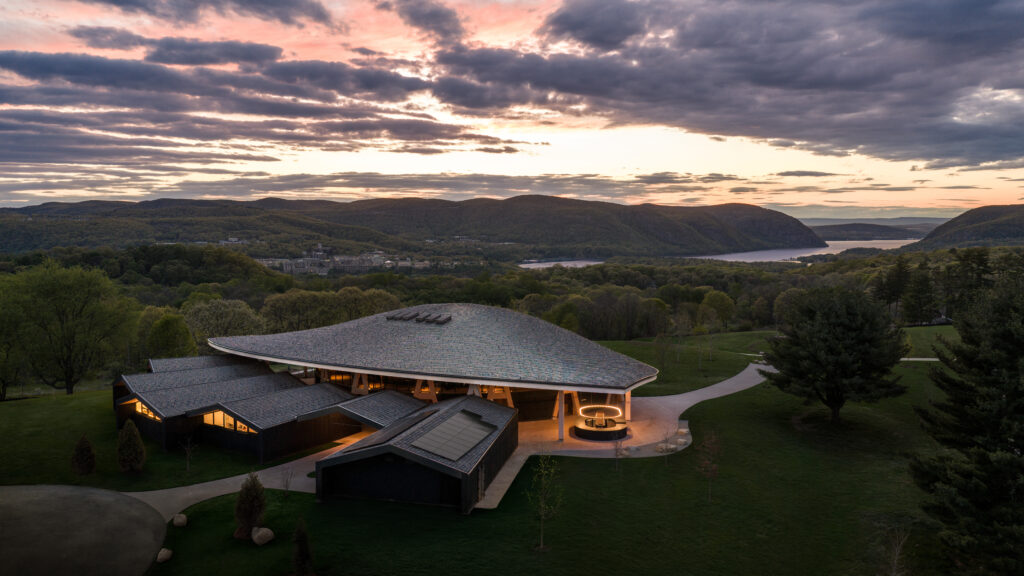
Set on the edge of the Blaricum heathland, the Tafelberg office is conceived as a place where work takes place within the landscape rather than apart from it. The building withdraws into its surroundings, allowing nature to remain visually continuous while quietly shaping the architecture’s form, materiality, and atmosphere.
The design is a contemporary interpretation of the plaggenhut – a modest, historical dwelling type once common in this region. Traditionally constructed with earthen walls and a sod-covered roof, the plaggenhut blended almost invisibly into the landscape. This archetype became the conceptual anchor for the project, informing its simplicity, restraint, and close relationship to the ground.
The site occupies one of the highest points of the heath, a protected glacial landscape characterized by subtle slopes, open views, and fragile vegetation. Rather than marking this position with a visible object, the building is designed as an extension of the terrain itself. A heather-covered roof, planted with a diverse mix of native, biologically grown species, allows the landscape to continue seamlessly across the architecture.
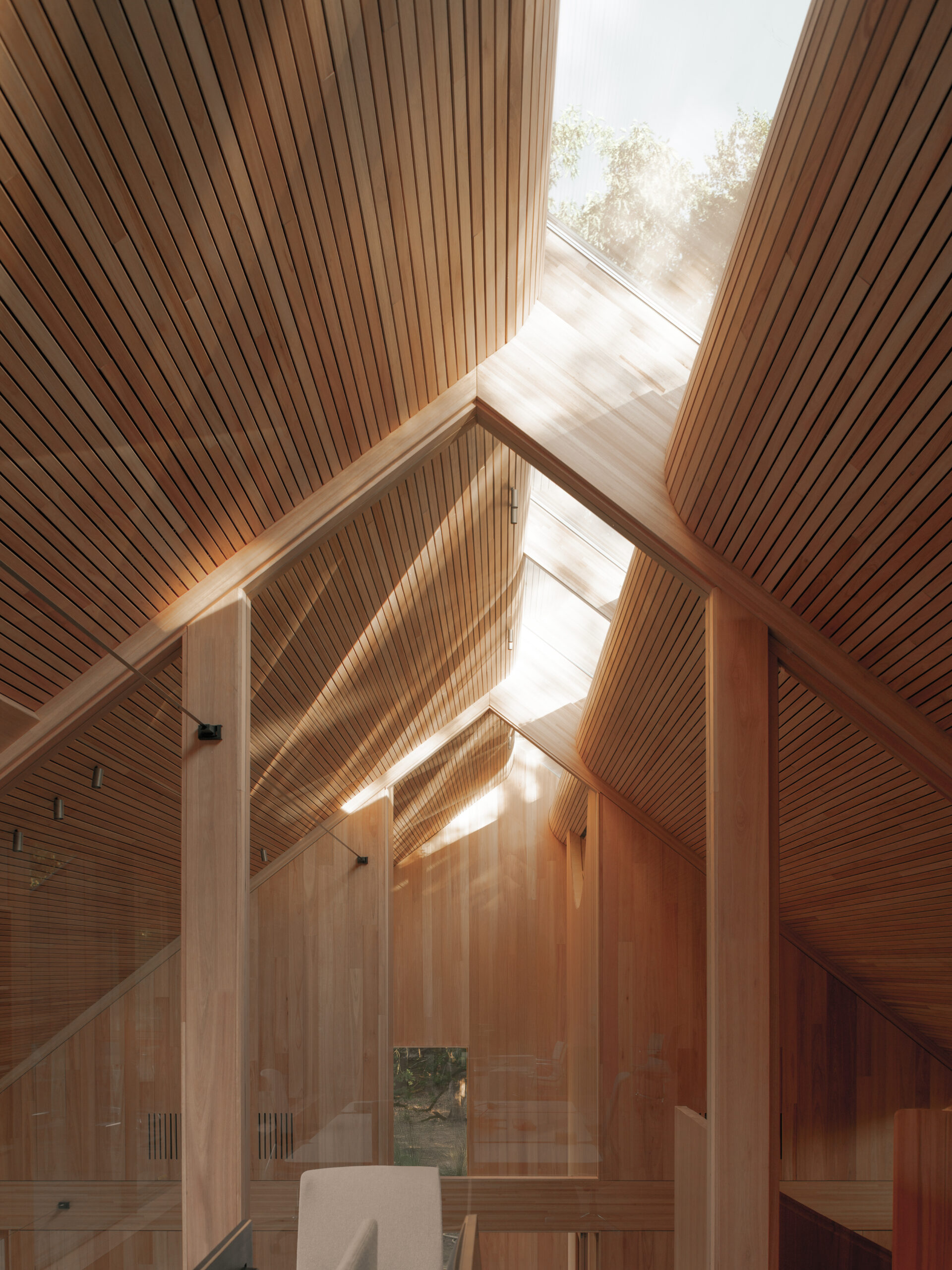
The primary structure consists of laminated timber columns and beams, while the interior is defined by continuous surfaces of Red Grandis wood, used for walls, ceilings, built-in furniture, and joinery.
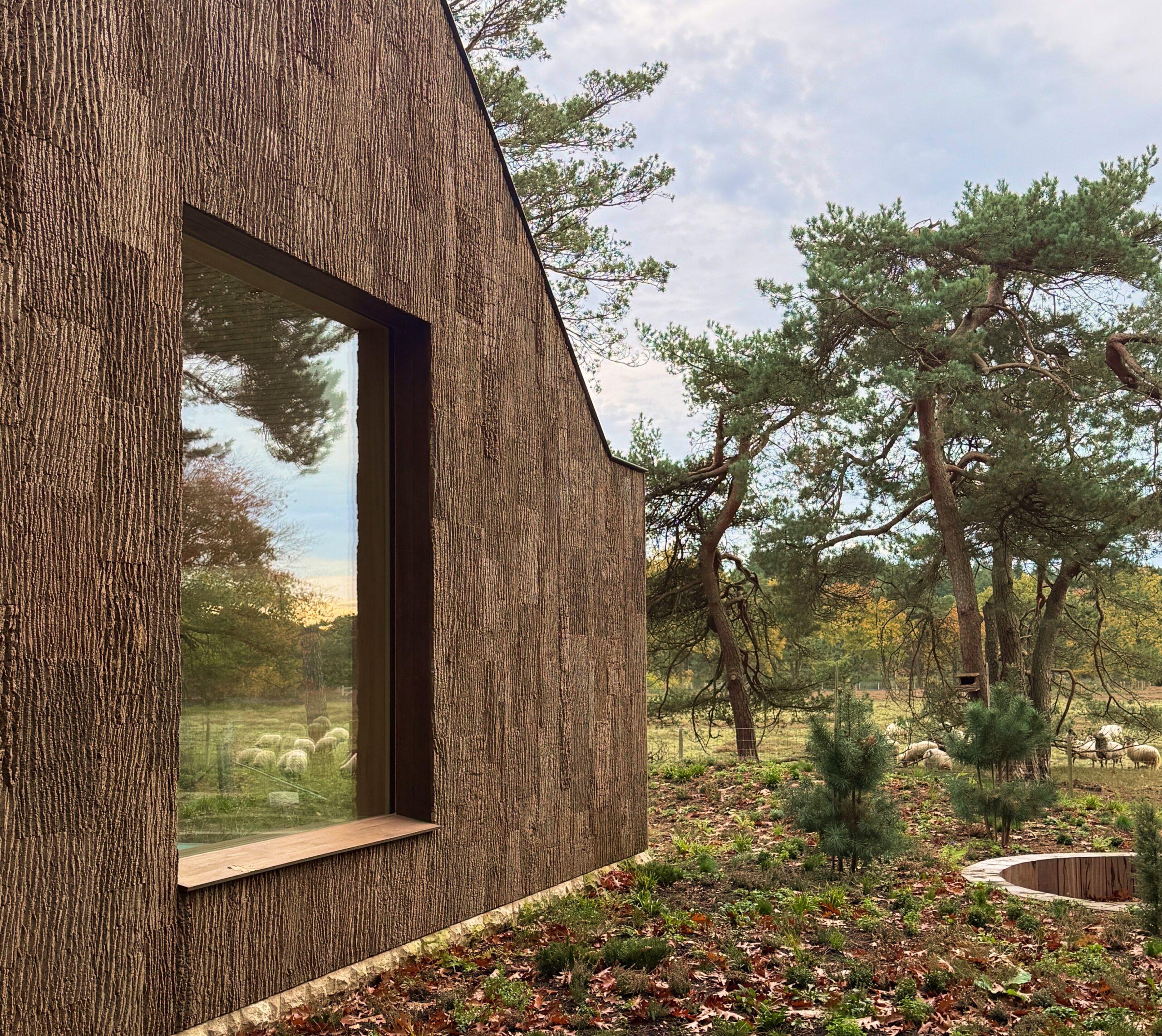
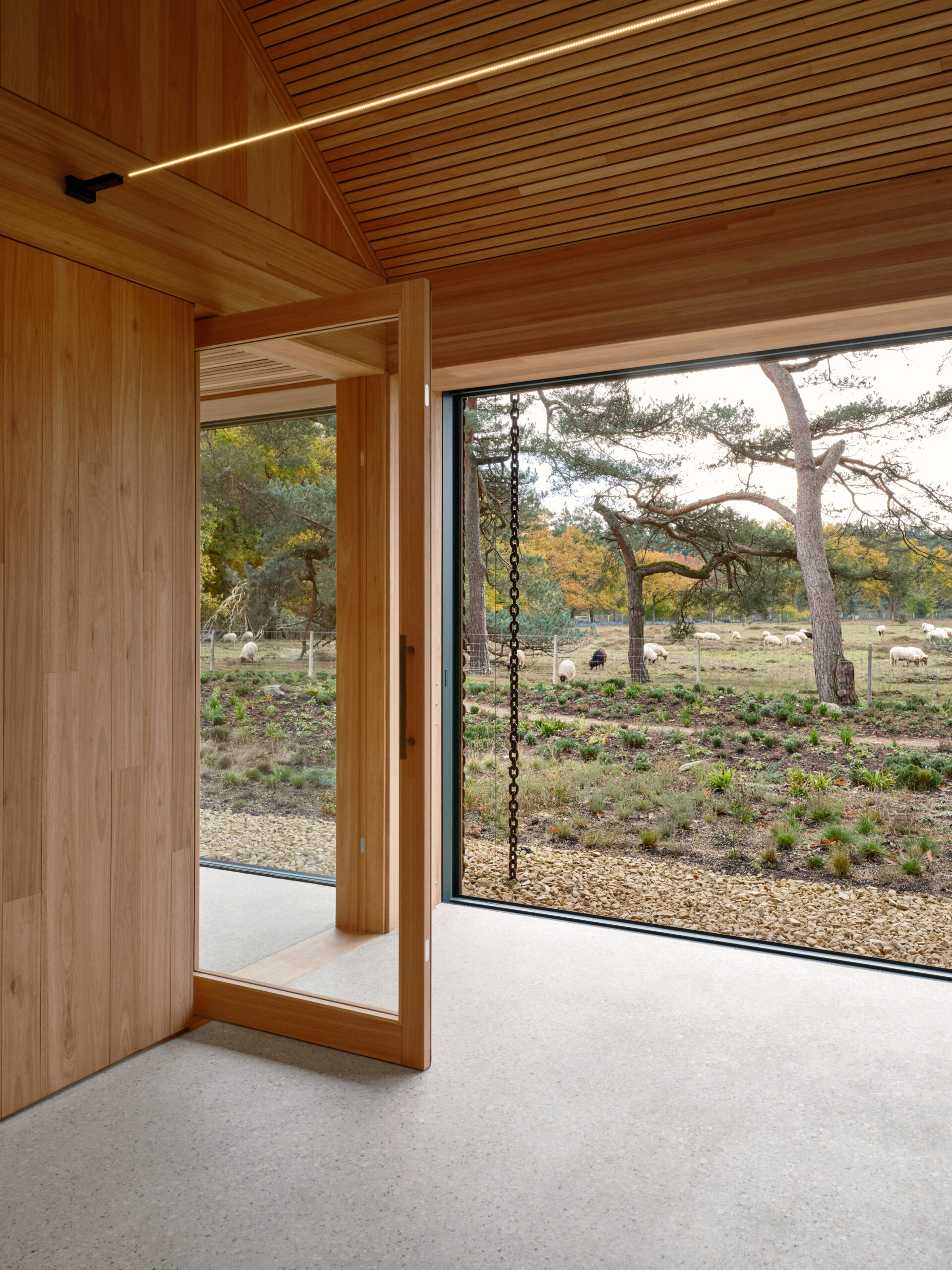
From surrounding paths, the office remains largely concealed, its presence revealed only through subtle openings and carefully framed views. Where fencing is required, it is kept low and discreet, responding pragmatically to grazing sheep while preserving the perception of openness.
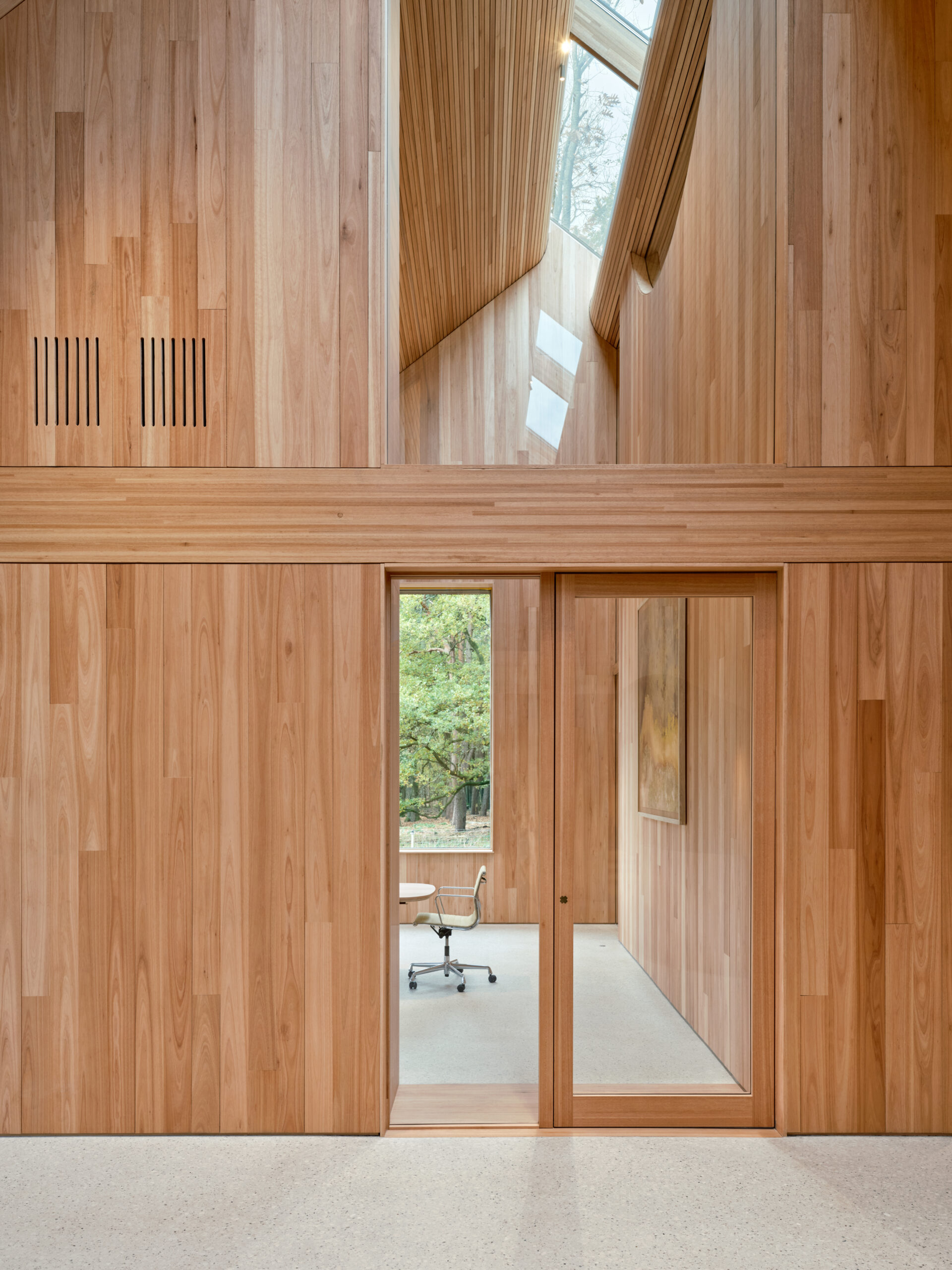
The design is driven by the principle of form follows nature: rather than imposing a shape on the site, the architecture responds to the logic of place – topography, vegetation, light, and long-term use. A narrow band of glazing cuts through the roof, bringing daylight deep into the interior while preserving the visual continuity of the planted roof.
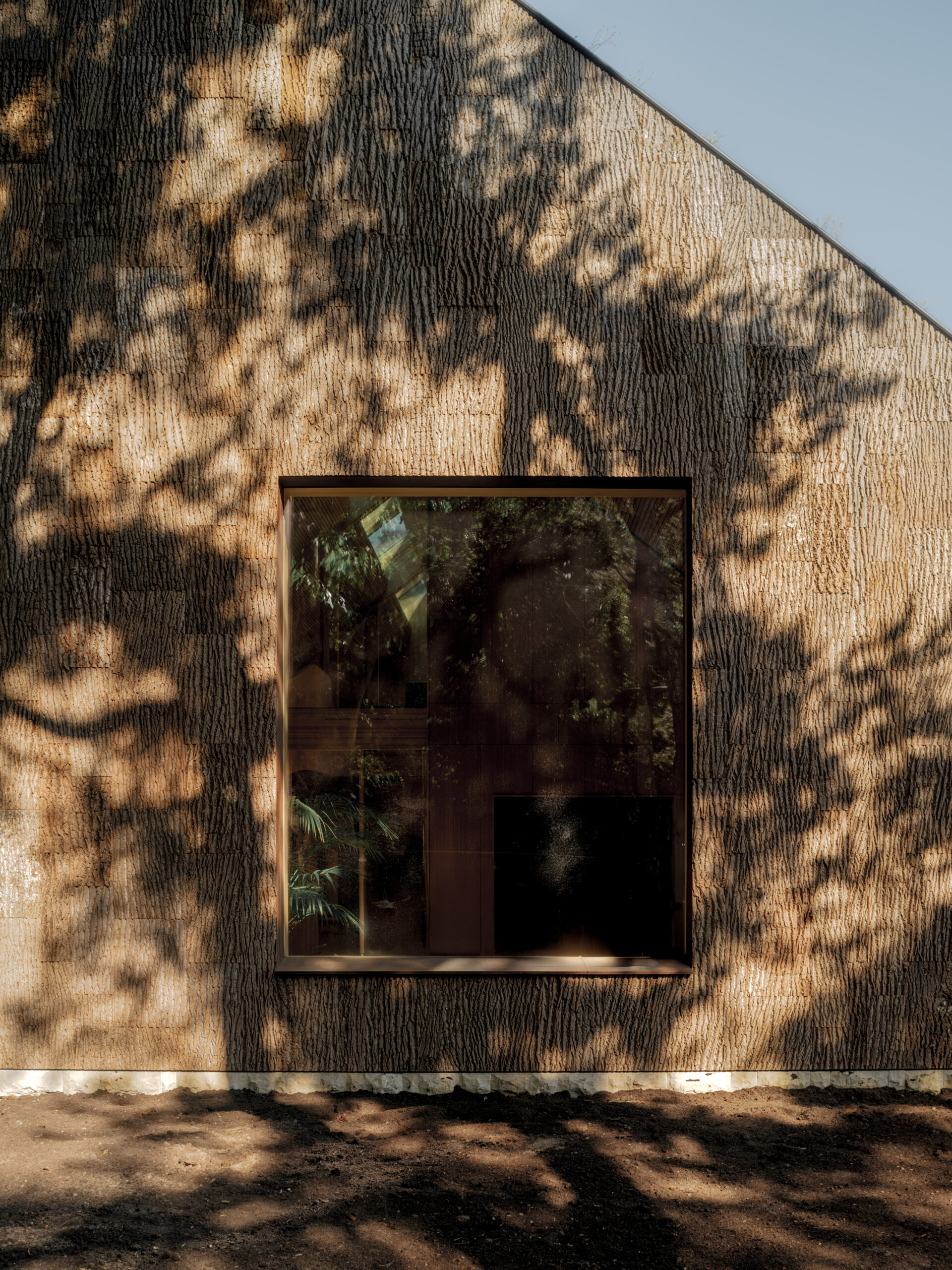
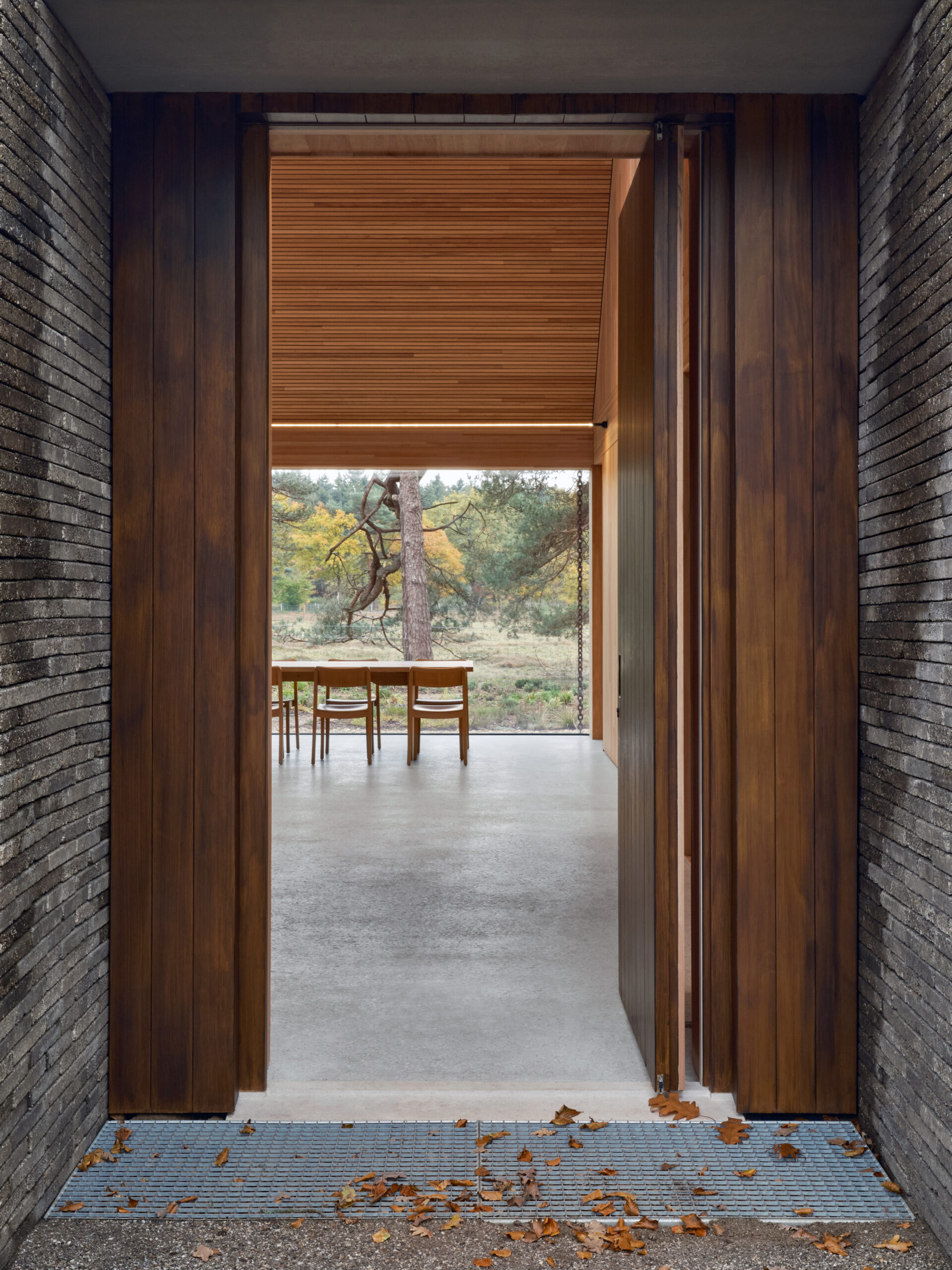
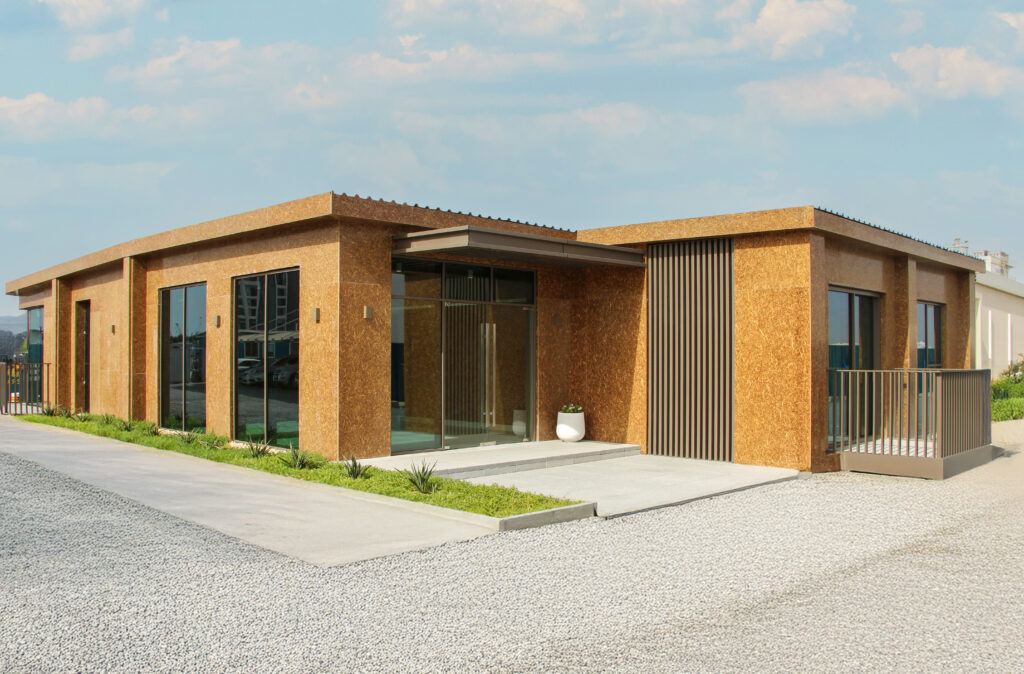
Material choices follow this same logic. The exterior is clad in poplar bark, applied in short segments to create a textured, almost geological surface. The material reinforces the building’s rough, tactile presence and evokes bark as a protective outer layer. Inside, the atmosphere shifts to warmth and refined precision.
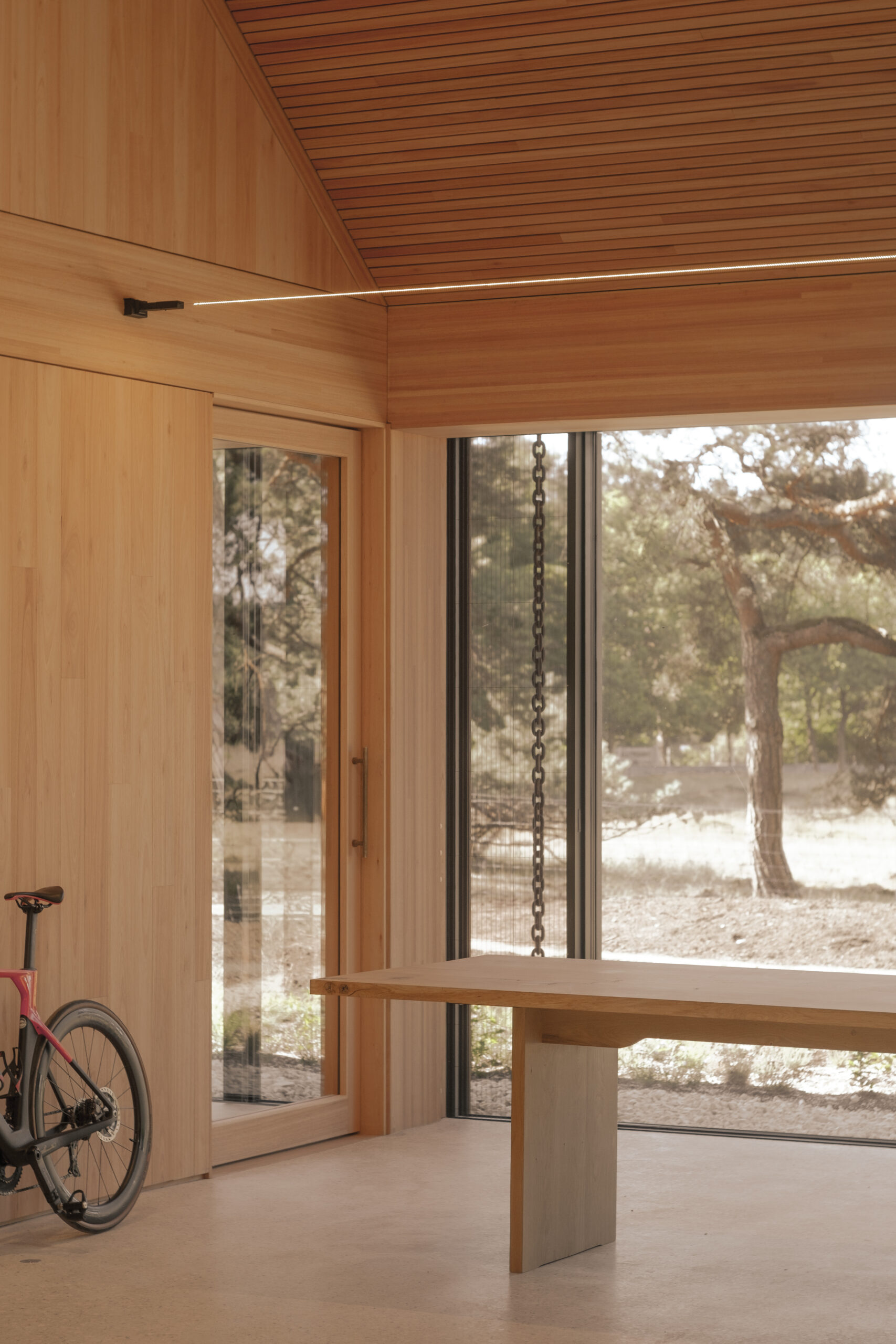
Interior spaces are organized around flow rather than strict separation. Curved walls and an enfilade-like sequence create long sightlines through the building, while technical systems are fully integrated into the architecture: ventilation slots are milled directly into wooden surfaces, and detailing is deliberately unobtrusive. Structure, finish, and detail merge into a single, continuous architectural language.
Working spaces open toward the heathland, offering expansive views and a close relationship to seasonal change. The contrast between the closed northern façade and the open southern elevation balances shelter and openness. Rainwater is guided visibly along reused steel chains, while the roof planting above integrates seamlessly with the surrounding ecosystem.
Rather than presenting itself as an object in the landscape, the Tafelberg office operates as part of it. By allowing form, materials, and construction to follow the logic of place, the building creates a quiet, enduring workspace where architecture and nature are inseparable.
“Working entirely in solid wood construction let us shape an office that feels closer to something grown than something built. The timber carries the structure, shapes the daylight, and gives the interior its warmth and quiet, while the poplar bark facade keeps the building tied to the landscape it sits in. What stays with me most about the finished project is how calm it is to be inside. Timber lowers the footprint of a building, and at the same time it changes how a space feels to the people who use it every day. That, to me, is where its real value lies,” concluded Max Verhoeven, Principal Architect, Studio Massimo.