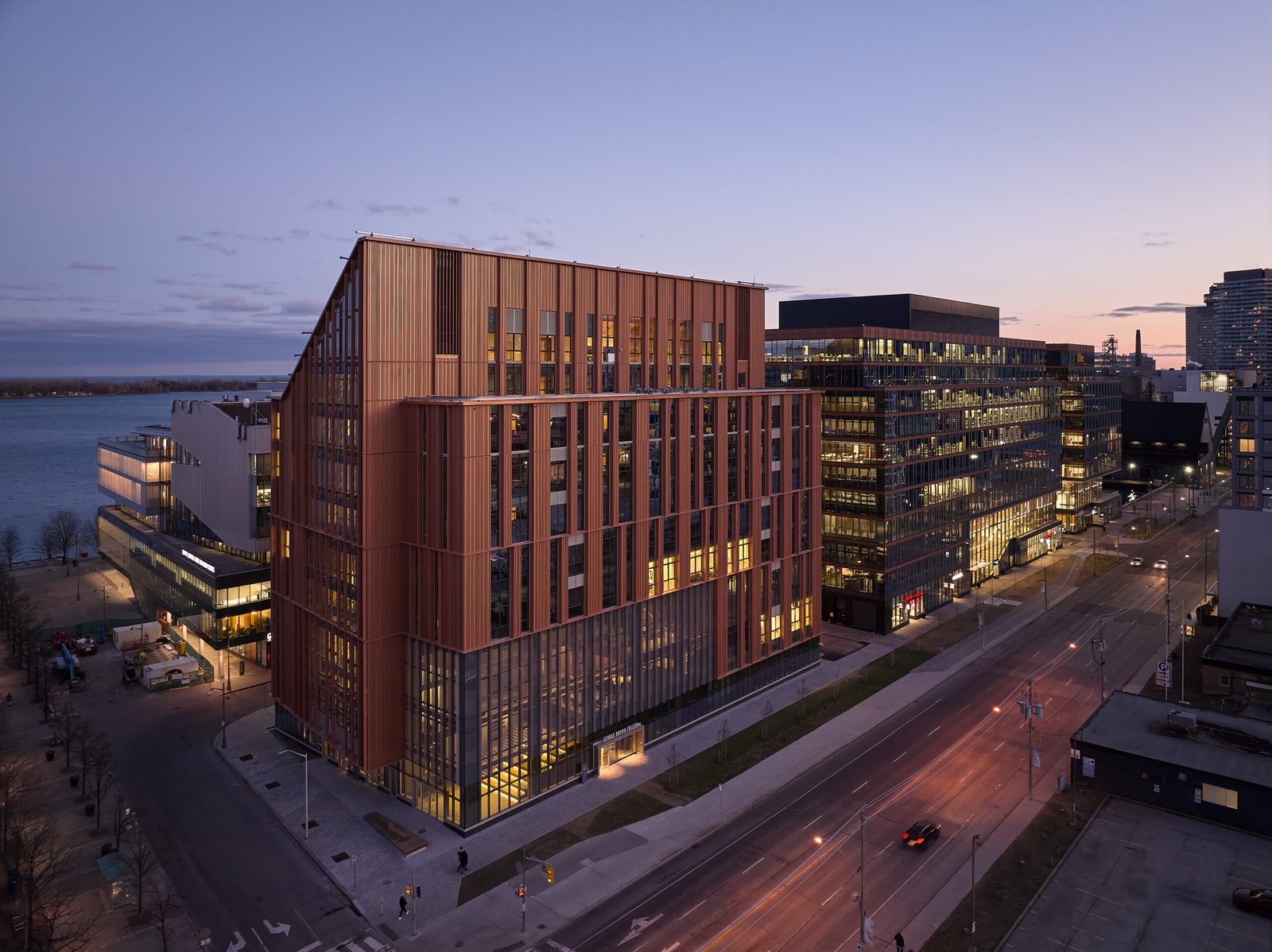
Limberlost Place, on Toronto’s waterfront, is perhaps the world’s first public tall timber building – a technical landmark that also elevates the art of architecture. Designed by Moriyama Teshima Architects in joint venture with Acton Ostry Architects, the project was selected via an international competition hosted by George Brown College for a building that would achieve the highest global standards for design, technology, and sustainability. George Brown set out to demonstrate its leadership in sustainability and climate-consciousness with a state-of-the-art building that would serve as a living laboratory for students and a showpiece for Canada’s tall timber construction industry.
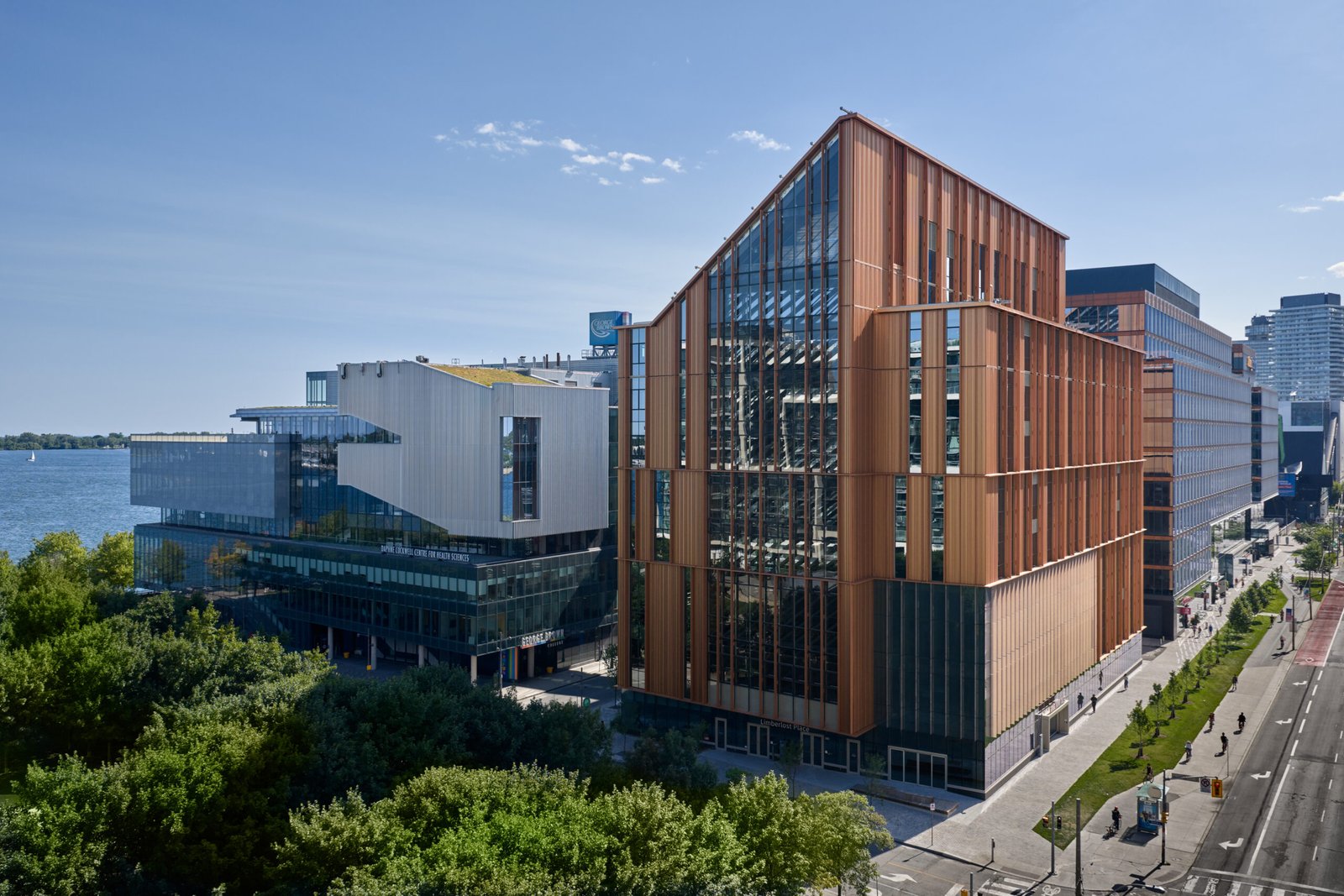
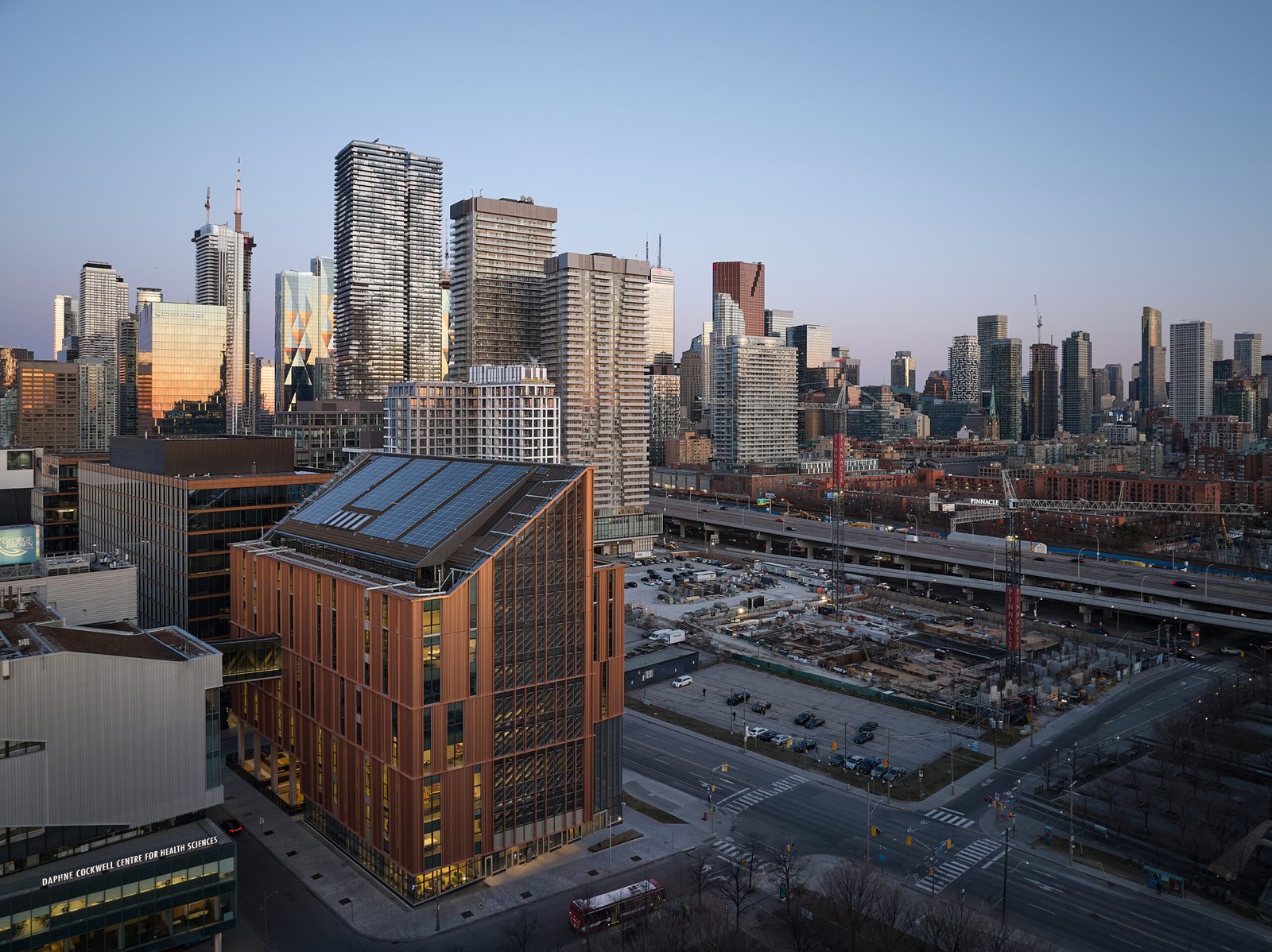
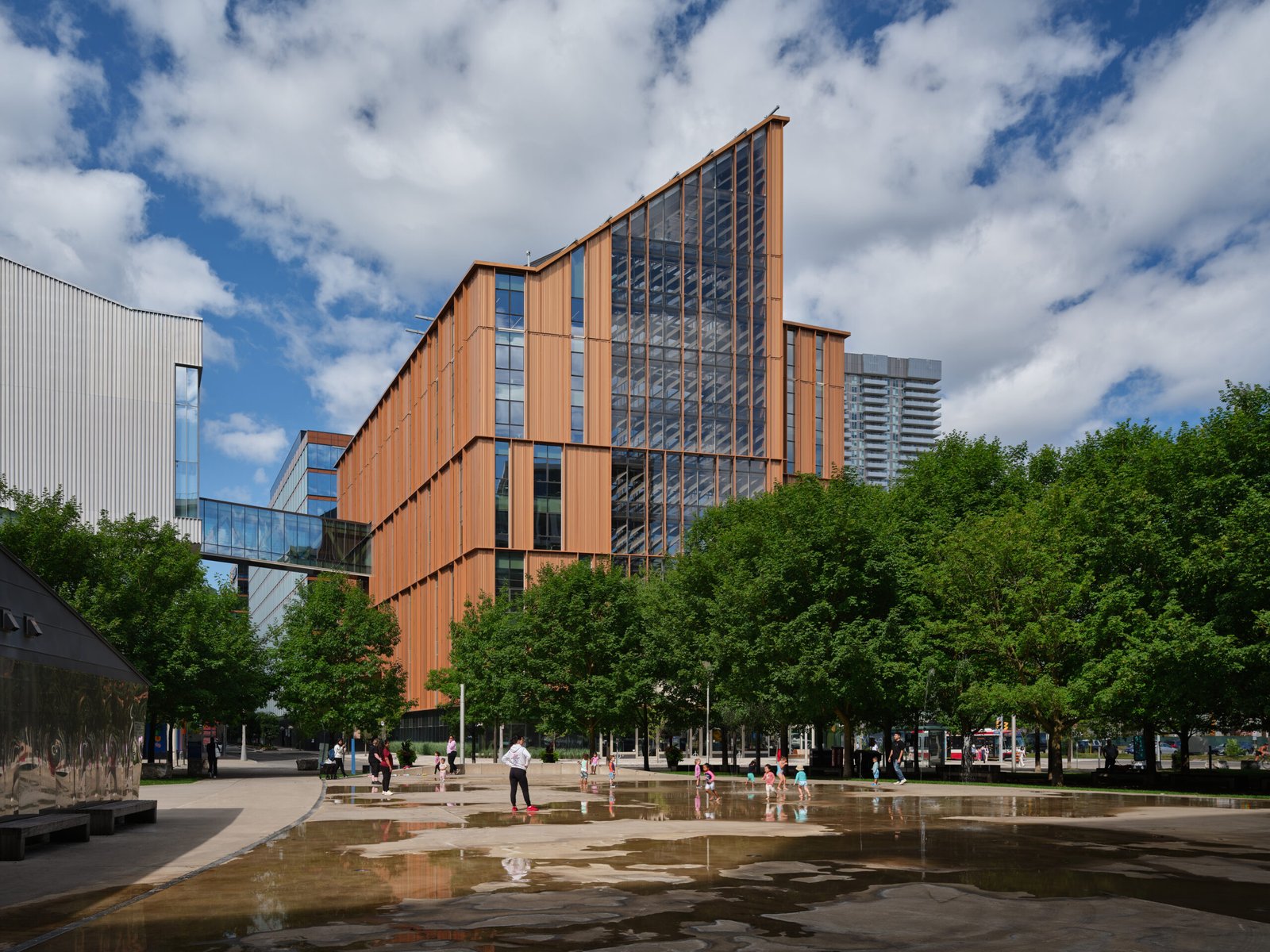
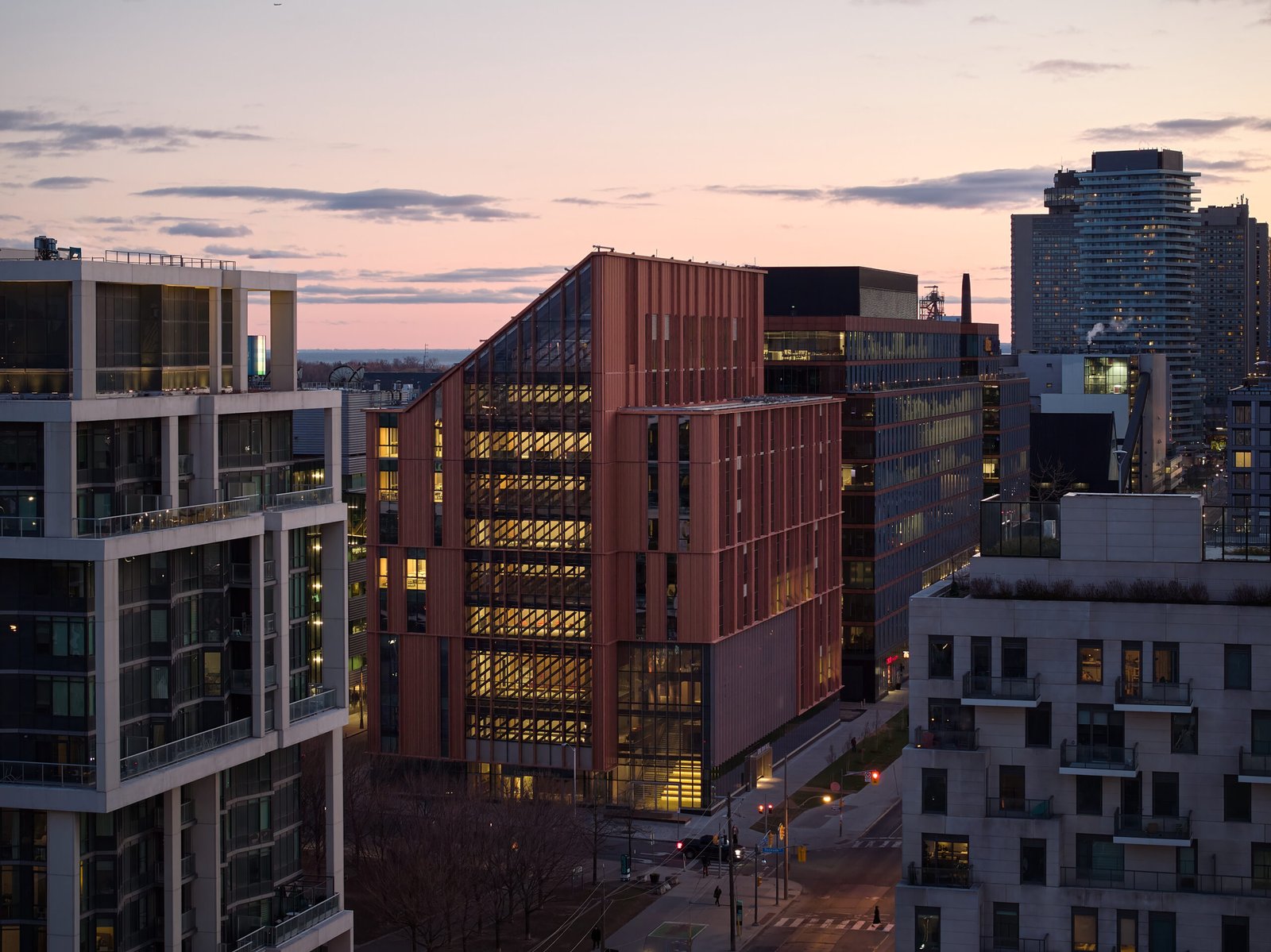
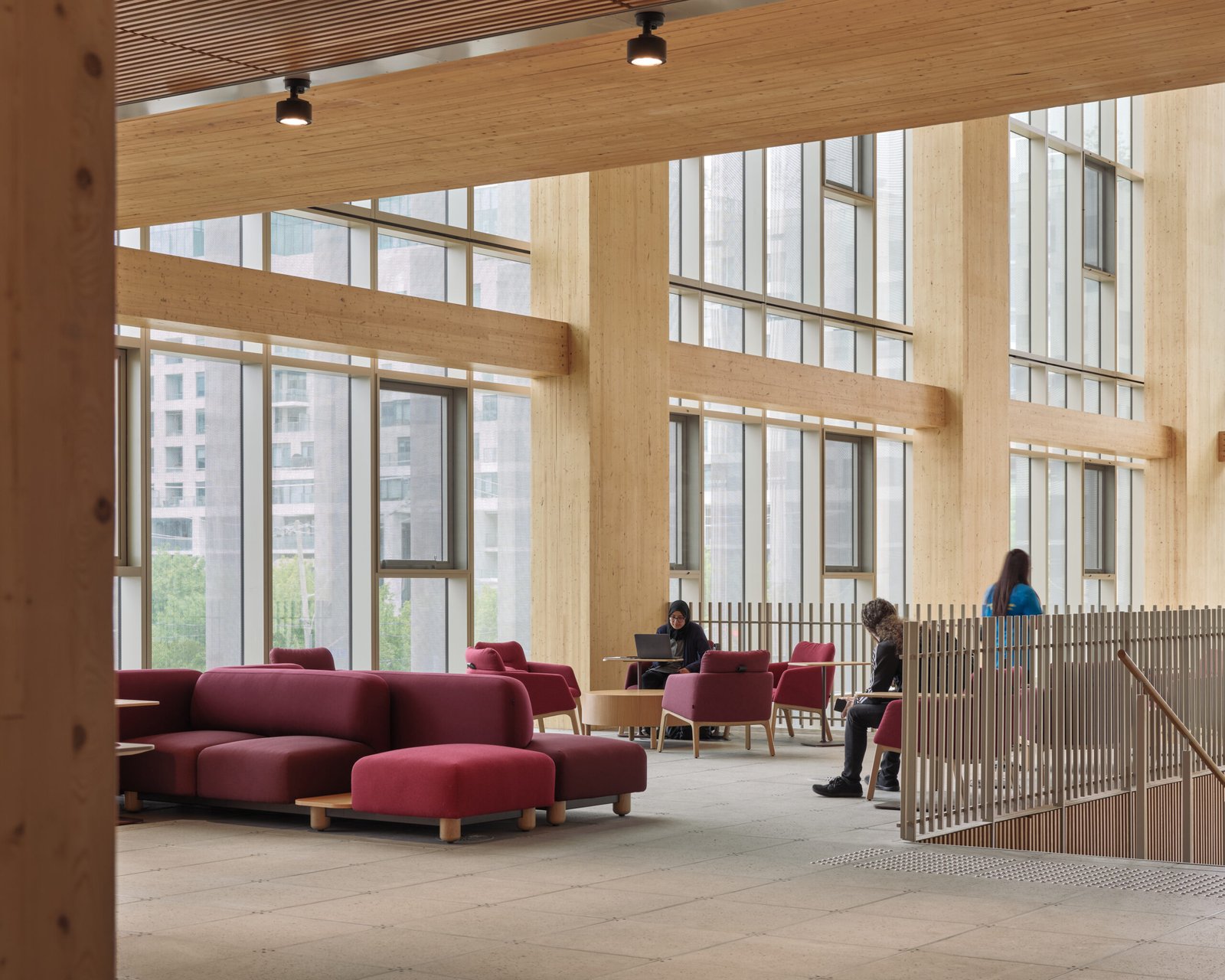
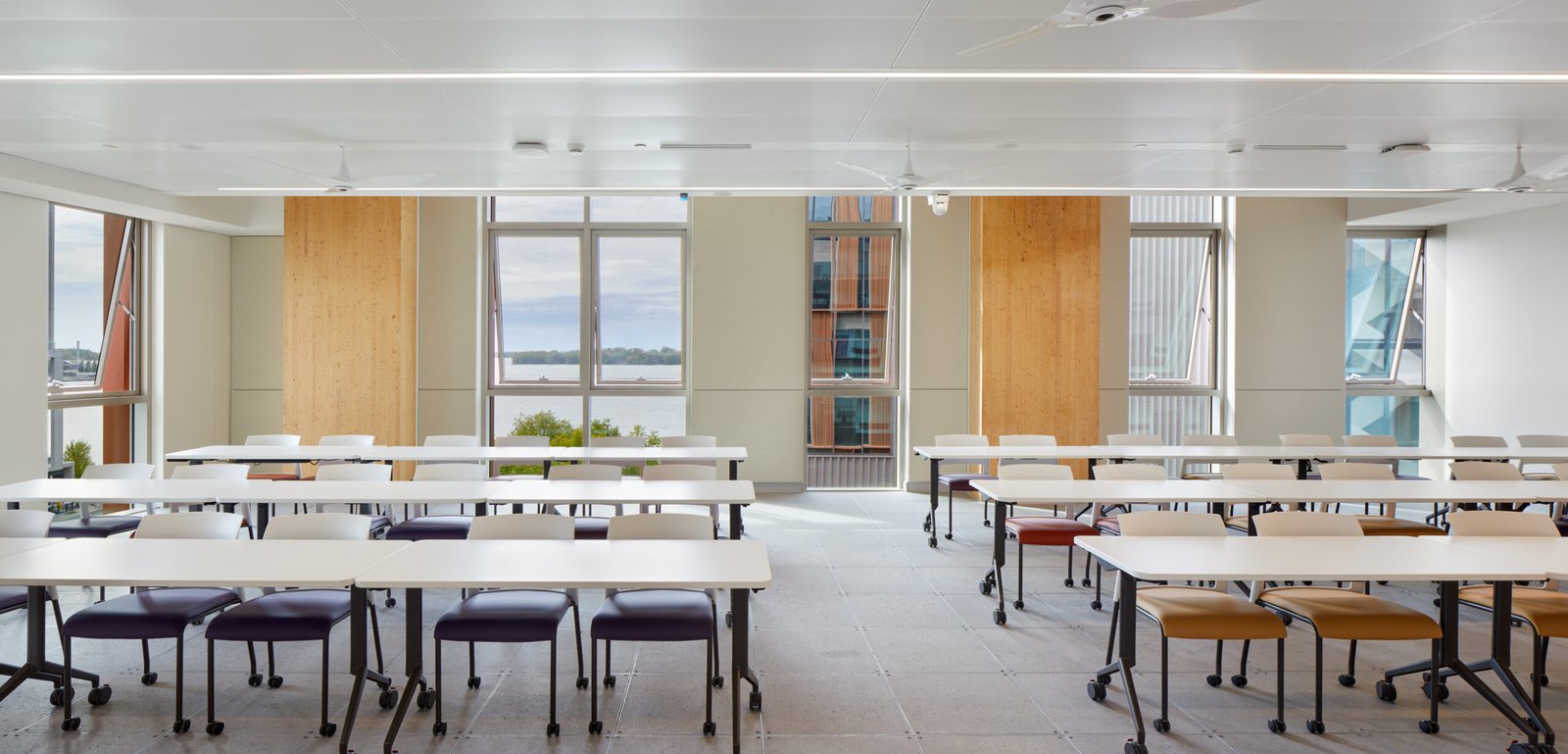
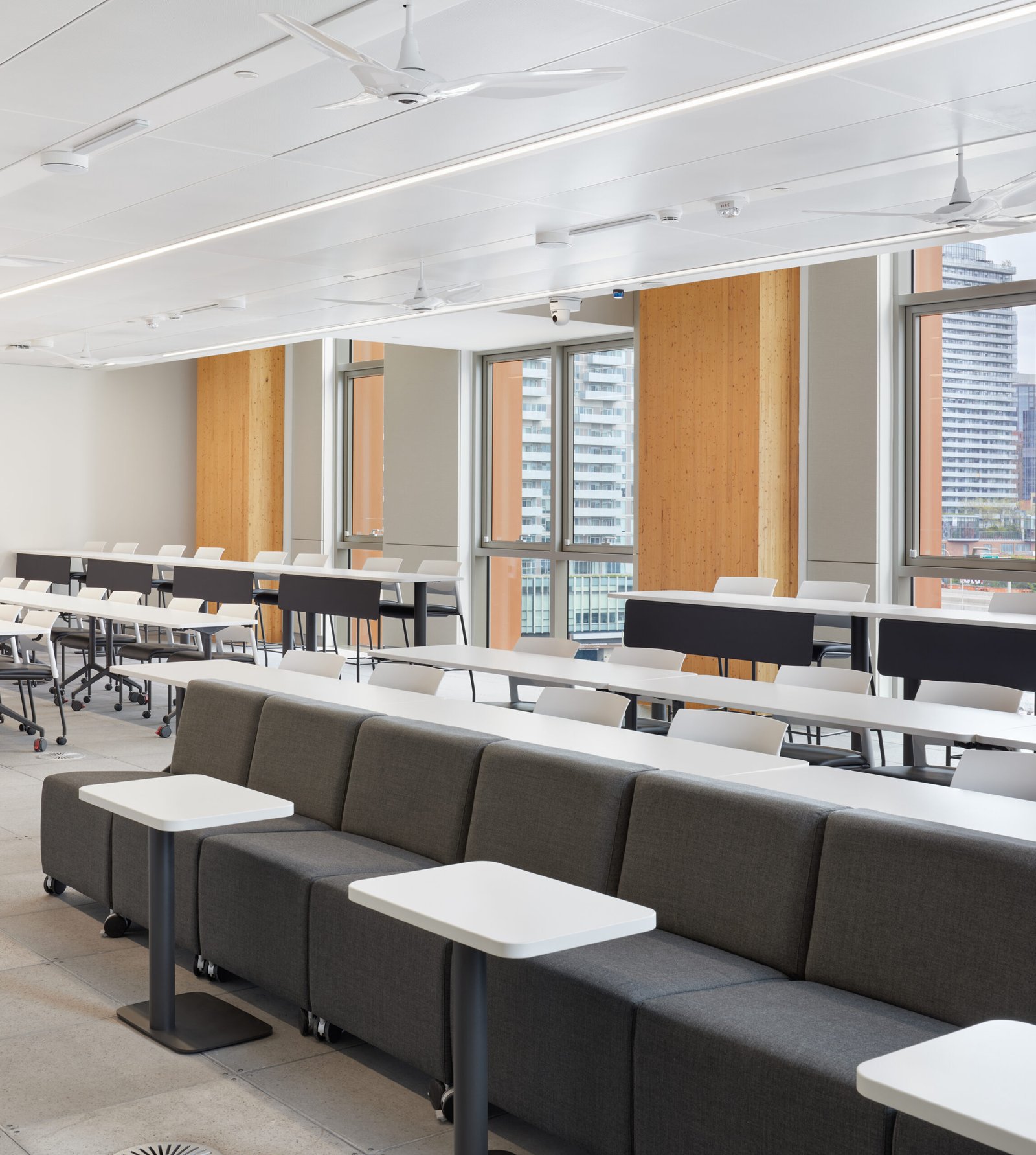
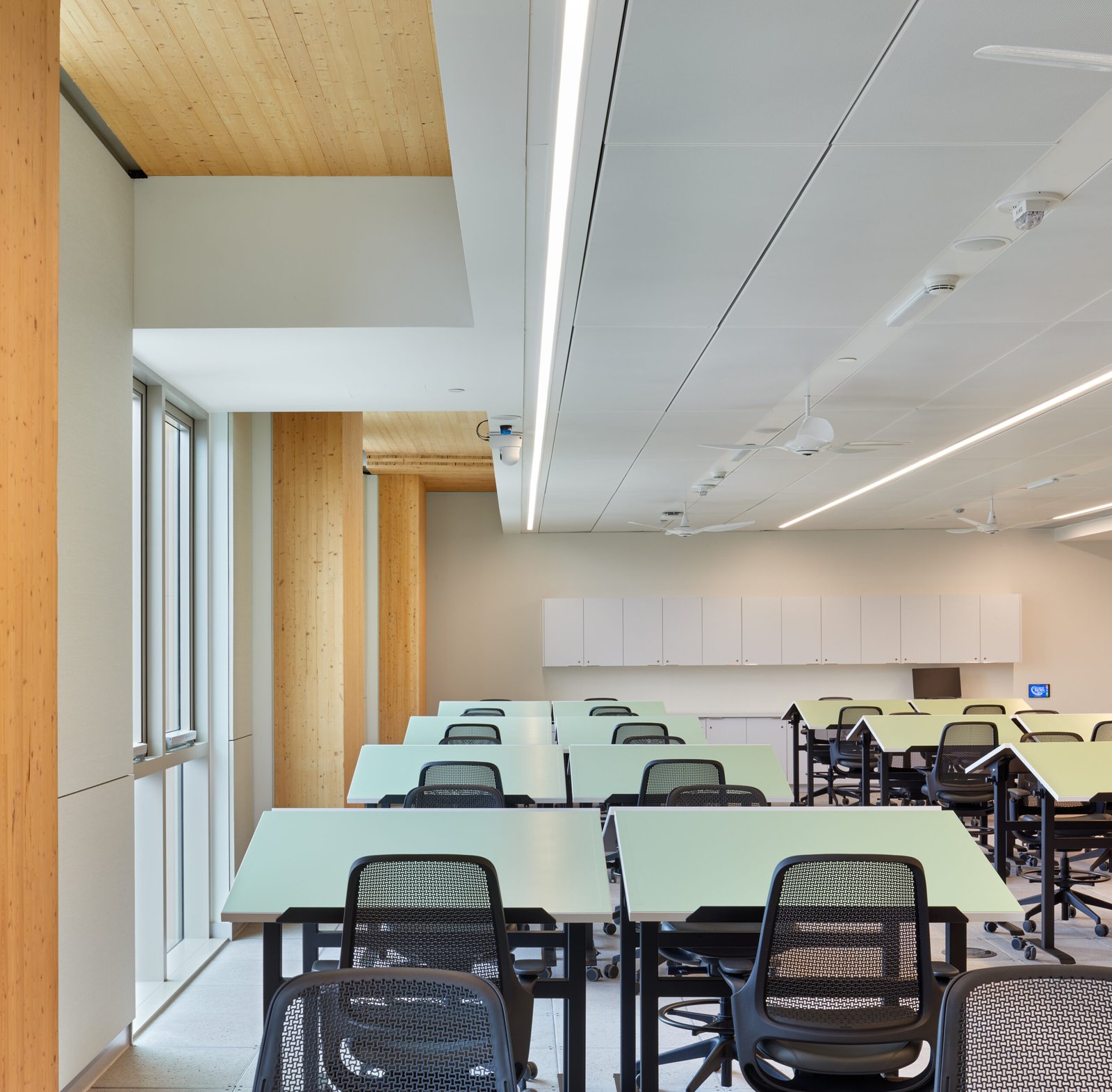
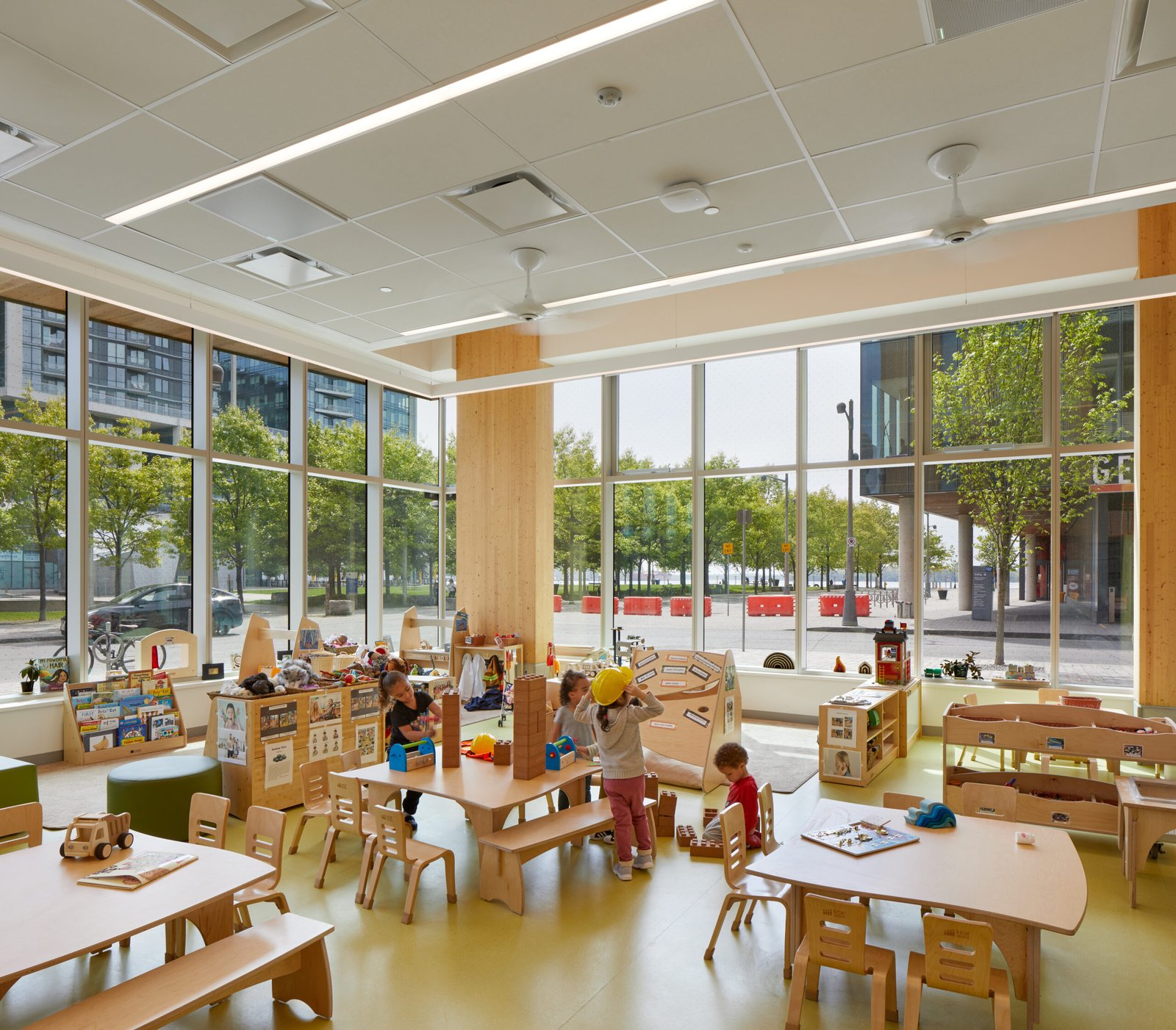
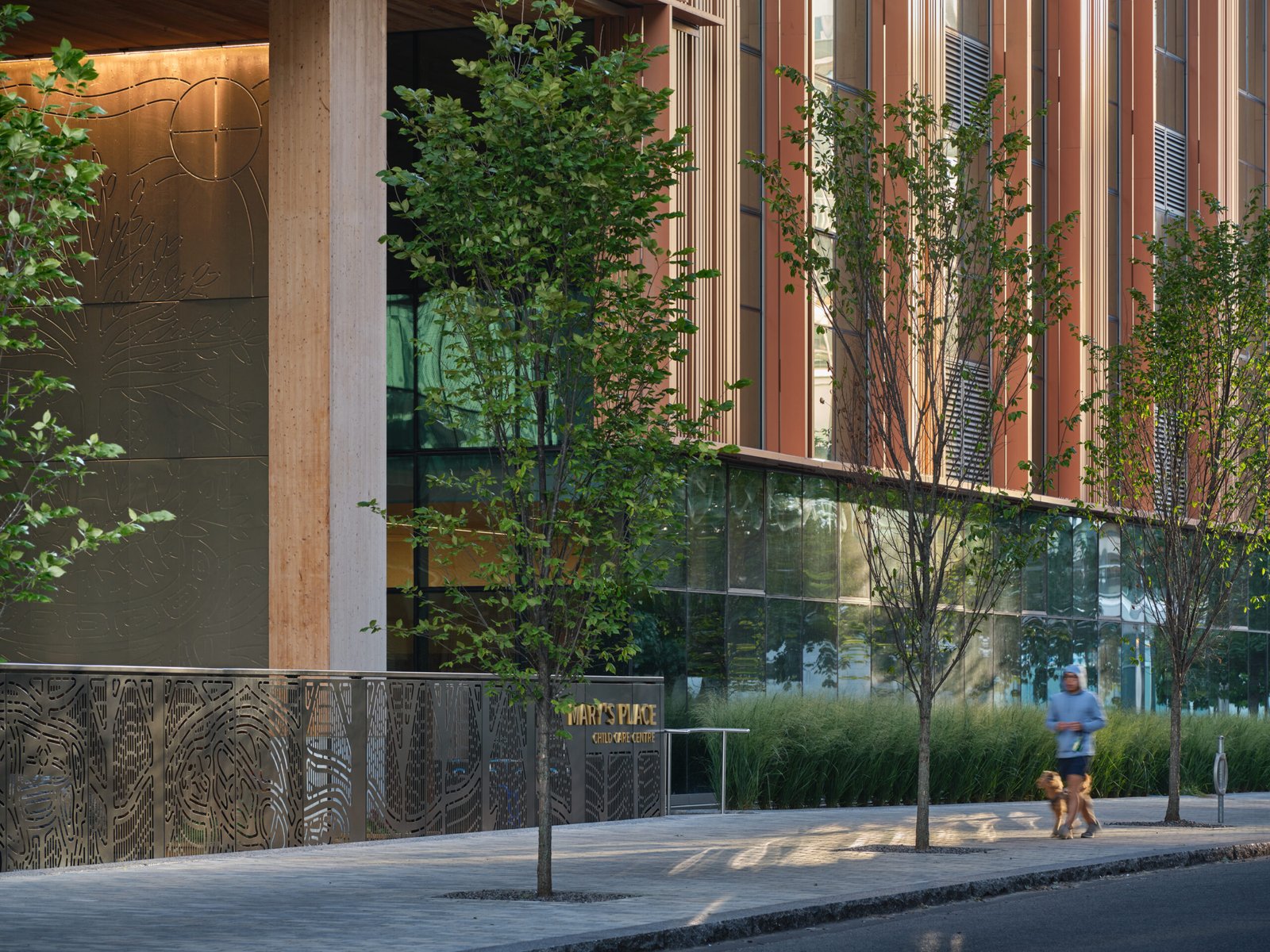
The 10-storey mass timber building includes classrooms for George Brown College’s School of Architectural Studies, its Brookfield Sustainability Institute, as well as the College’s executive offices, a fitness center, a daycare, and an event space. Limberlost Place’s design references the site’s Indigenous name – Tkaronto, ‘where there are trees standing in the water’ – and reinforces the City of Toronto’s broader vision to transform a rapidly developing eastern waterfront district into an ecologically responsive, architecturally striking, pedestrian-oriented urban realm. With capacity for 3,400 students, the building is expected to become a key contributor to the district’s vitality. Its bold copper-toned façade and sculptural roofline give the building a landmark presence, and its city-facing windows offer generous views into its warm interior wood structure.
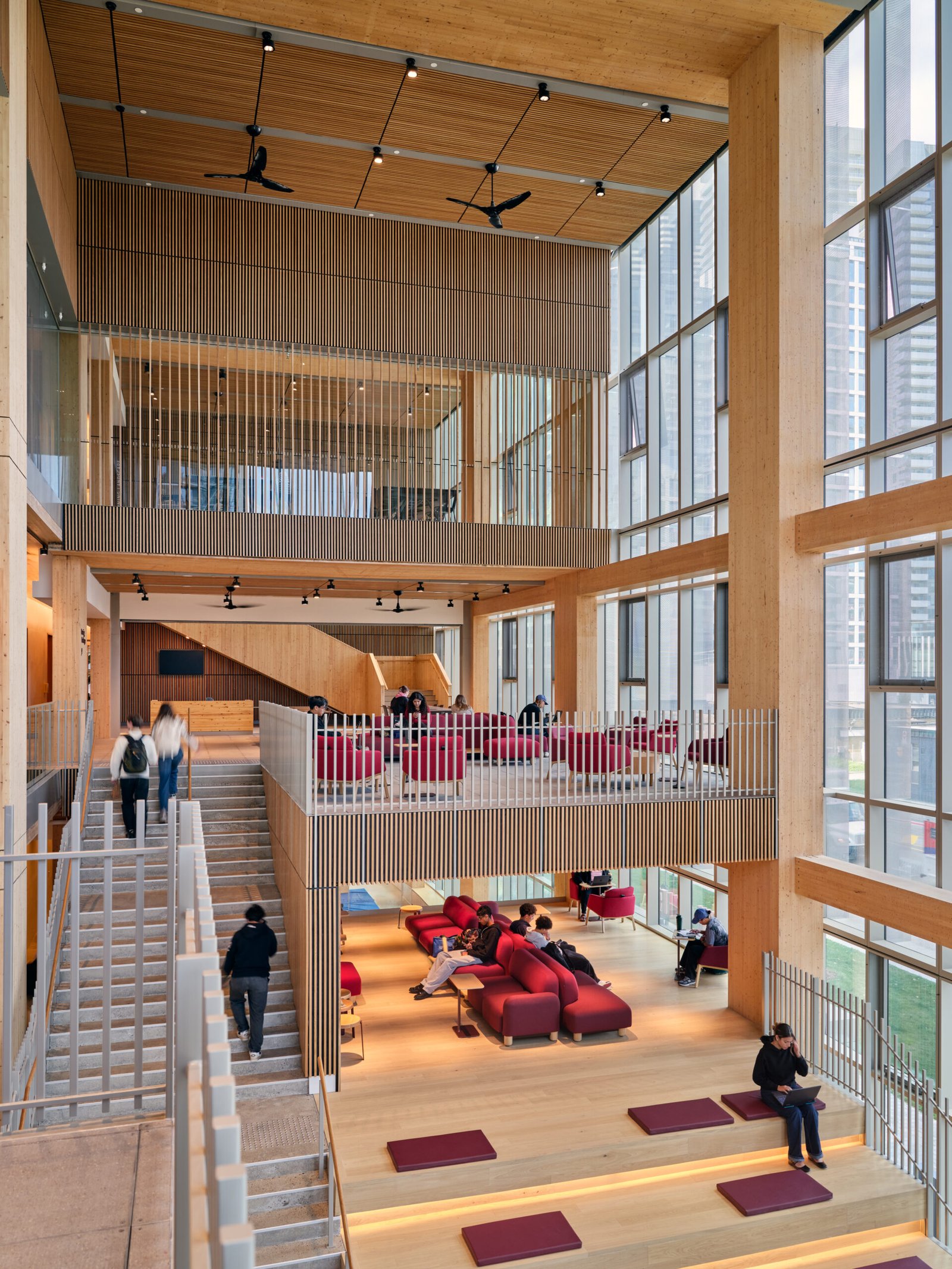
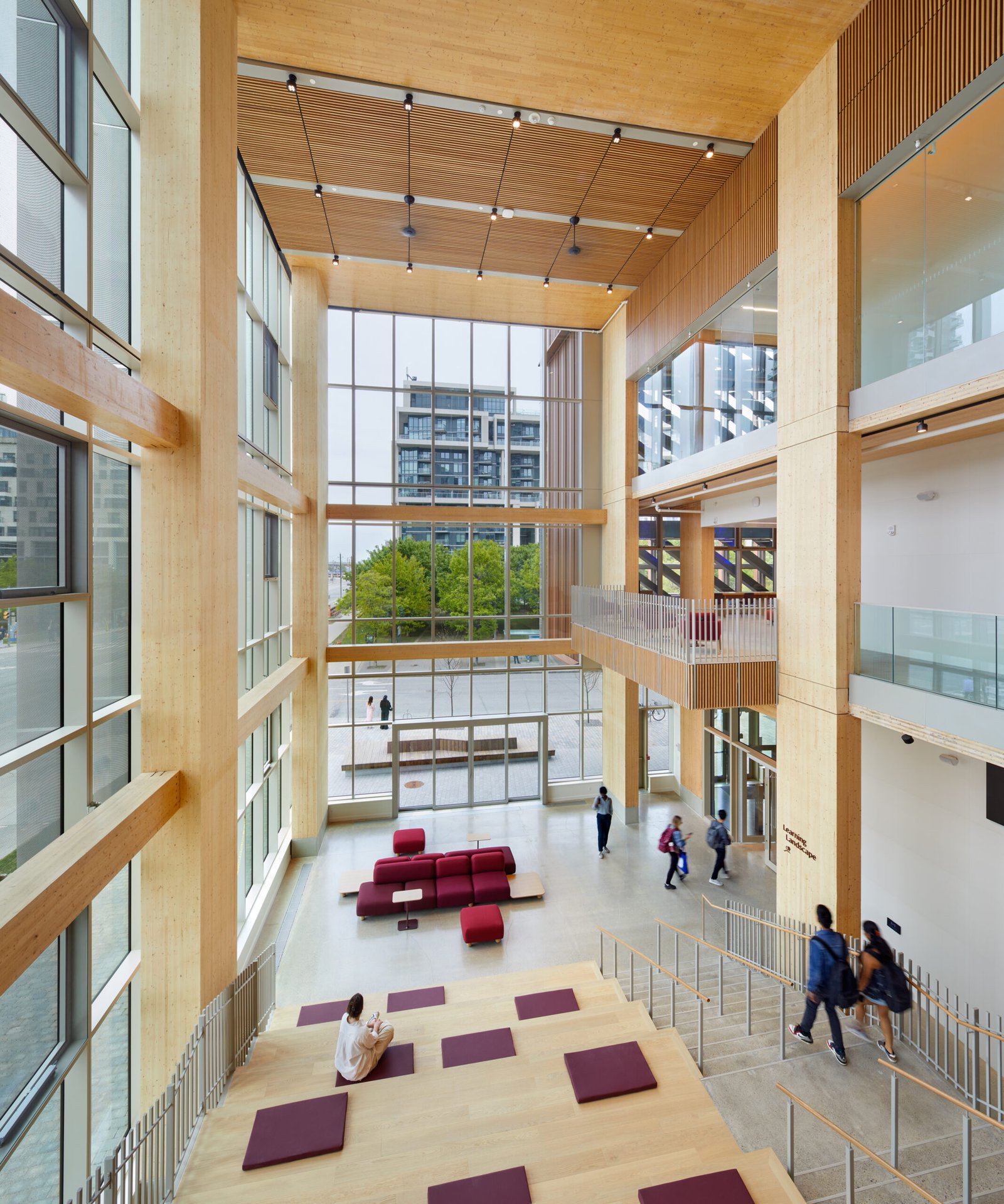
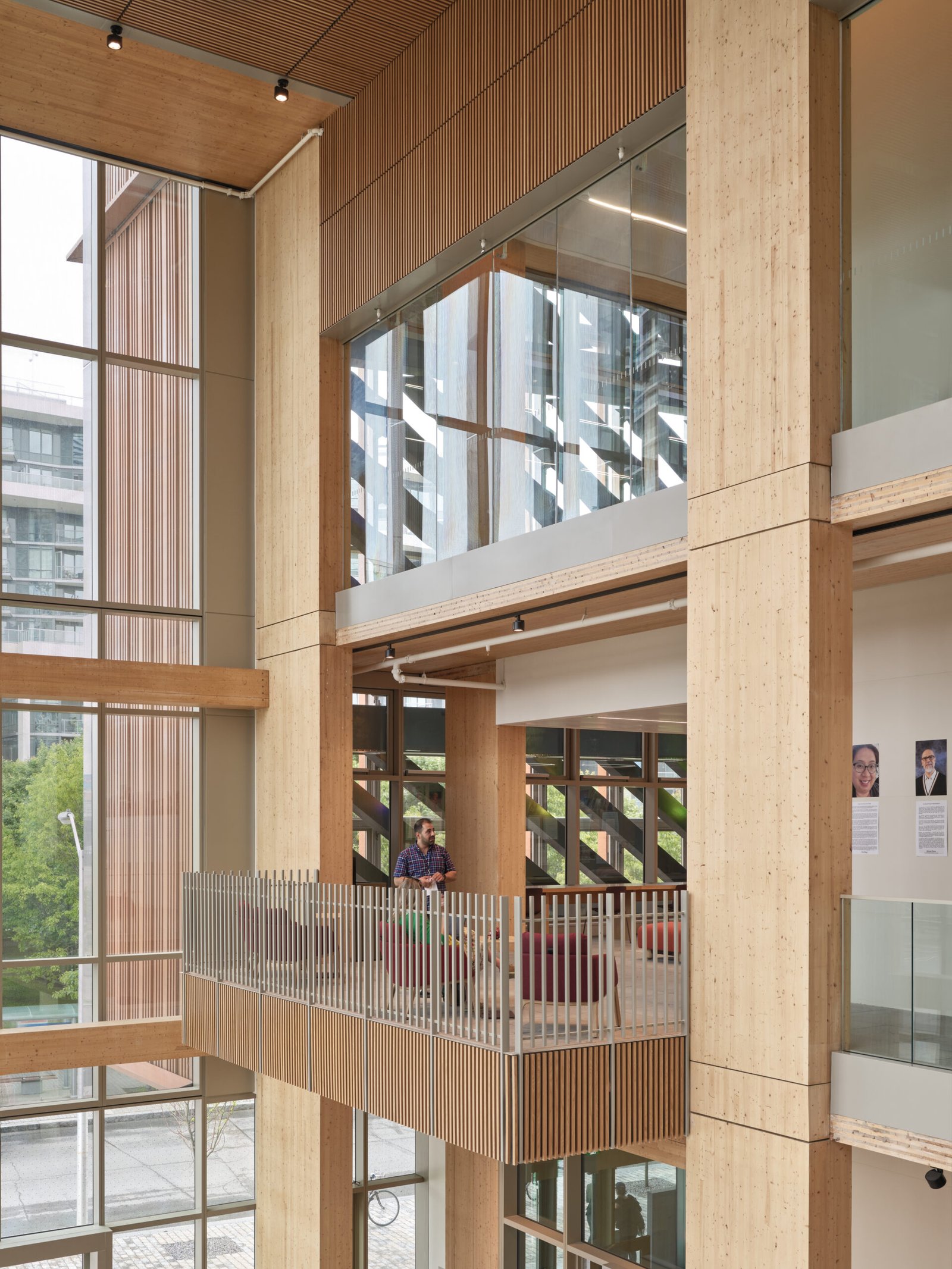
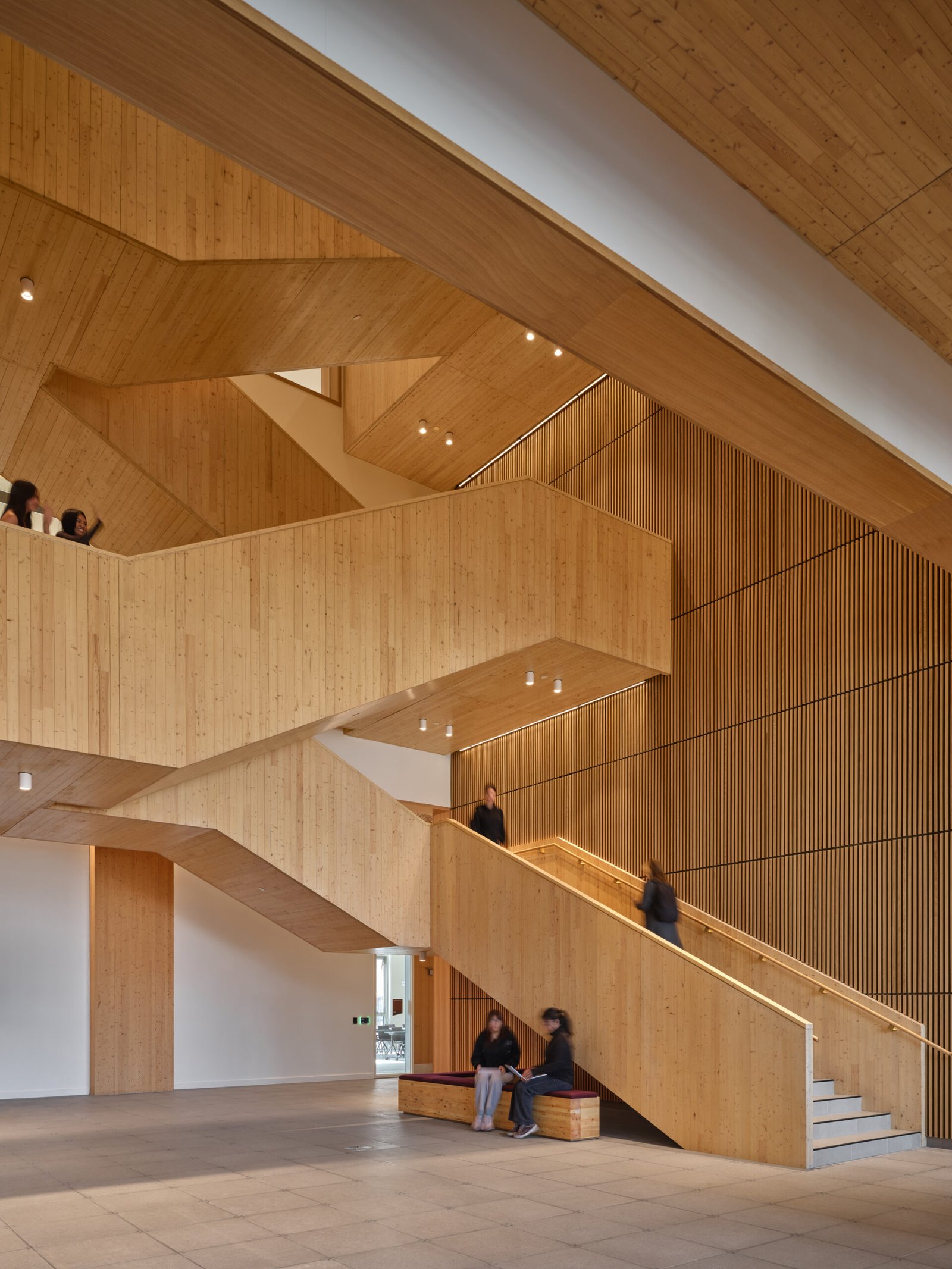
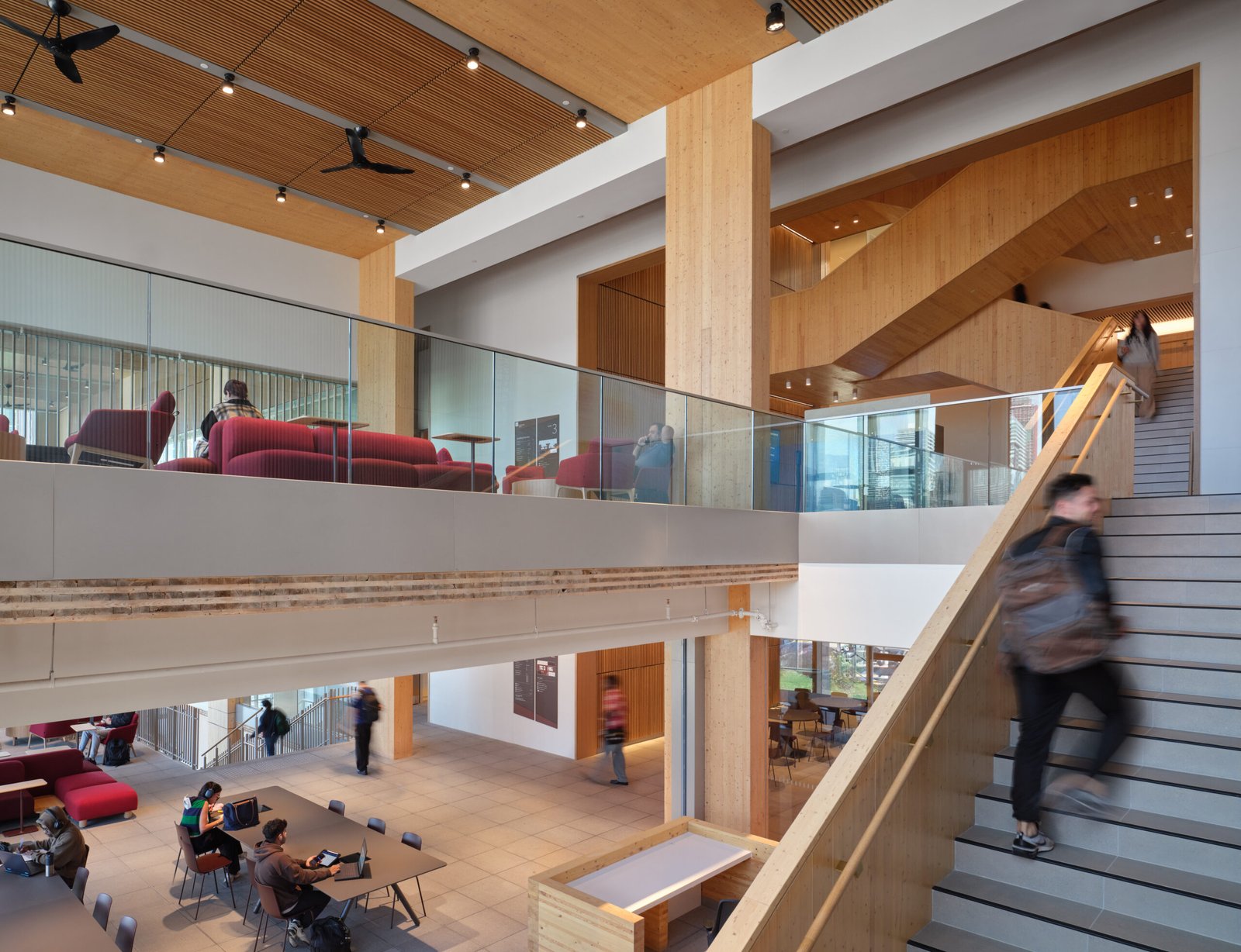
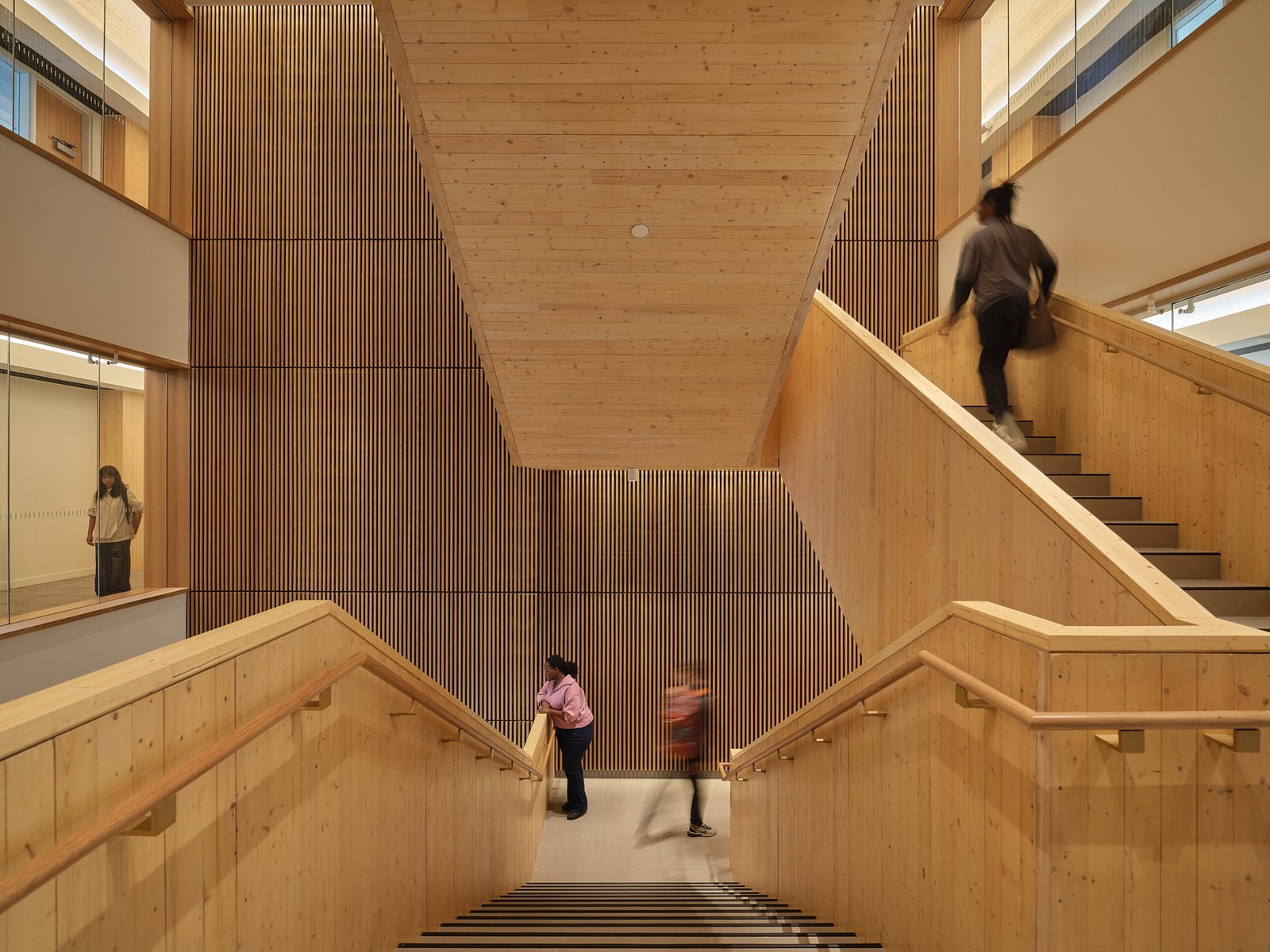
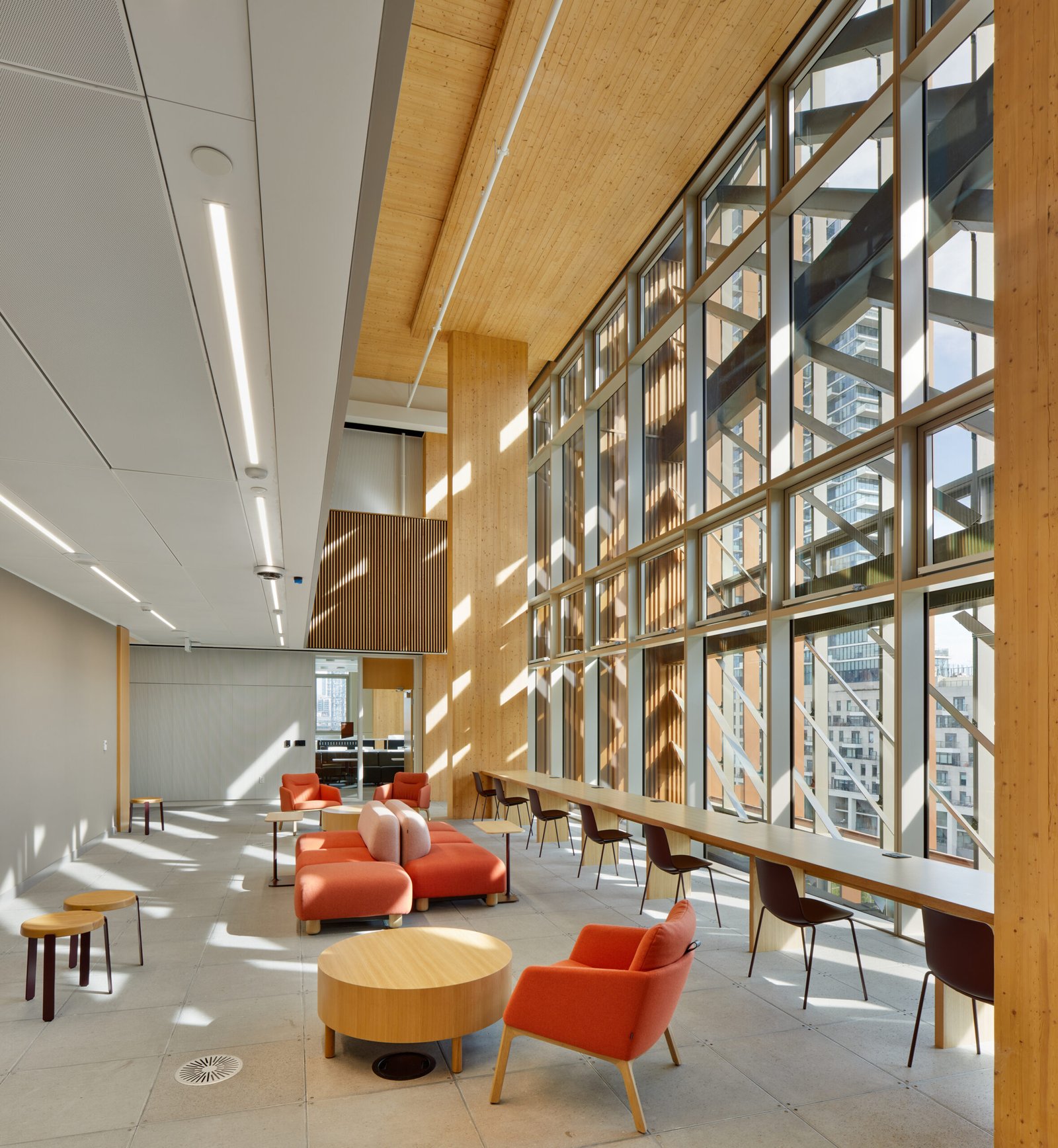
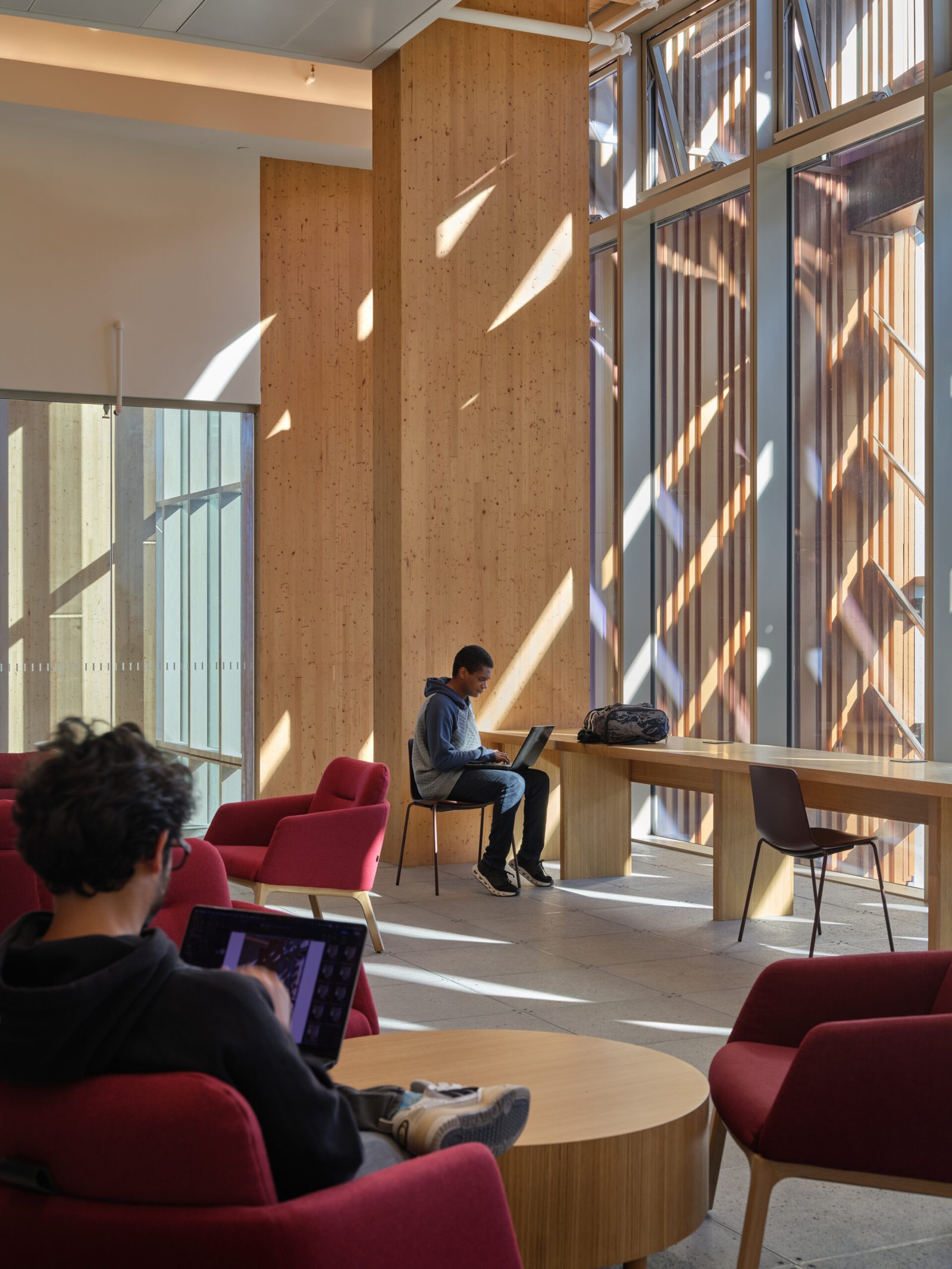
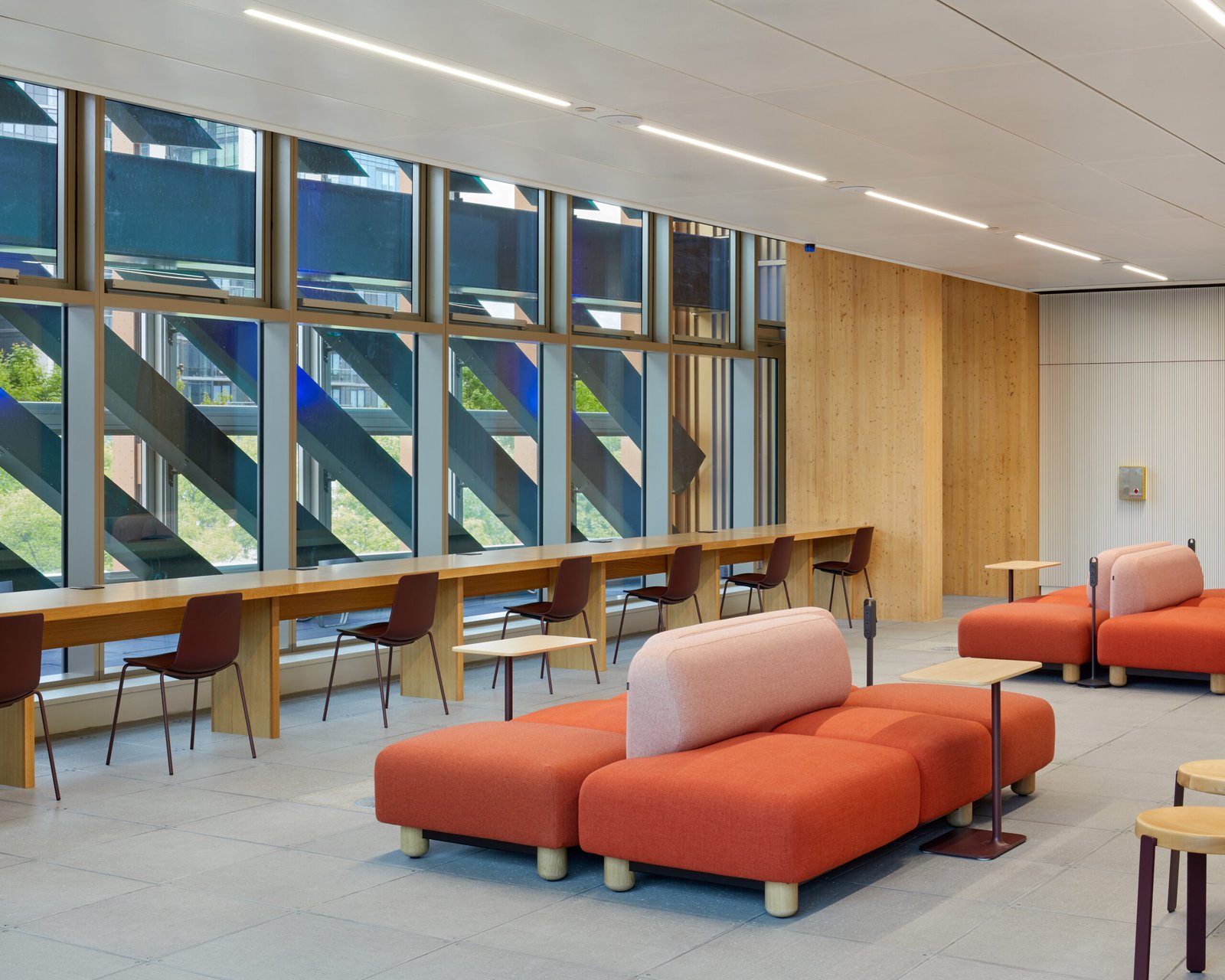
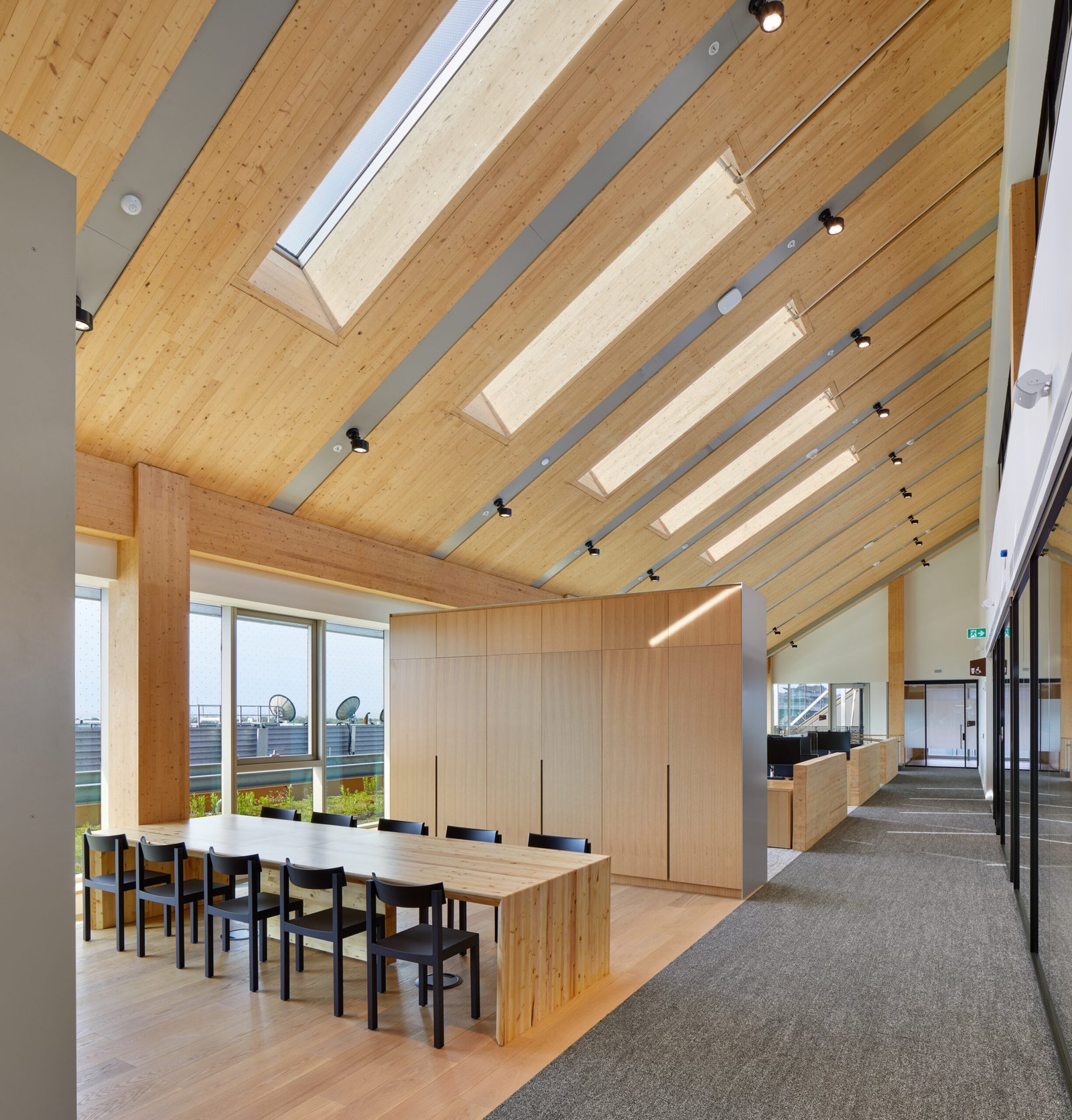
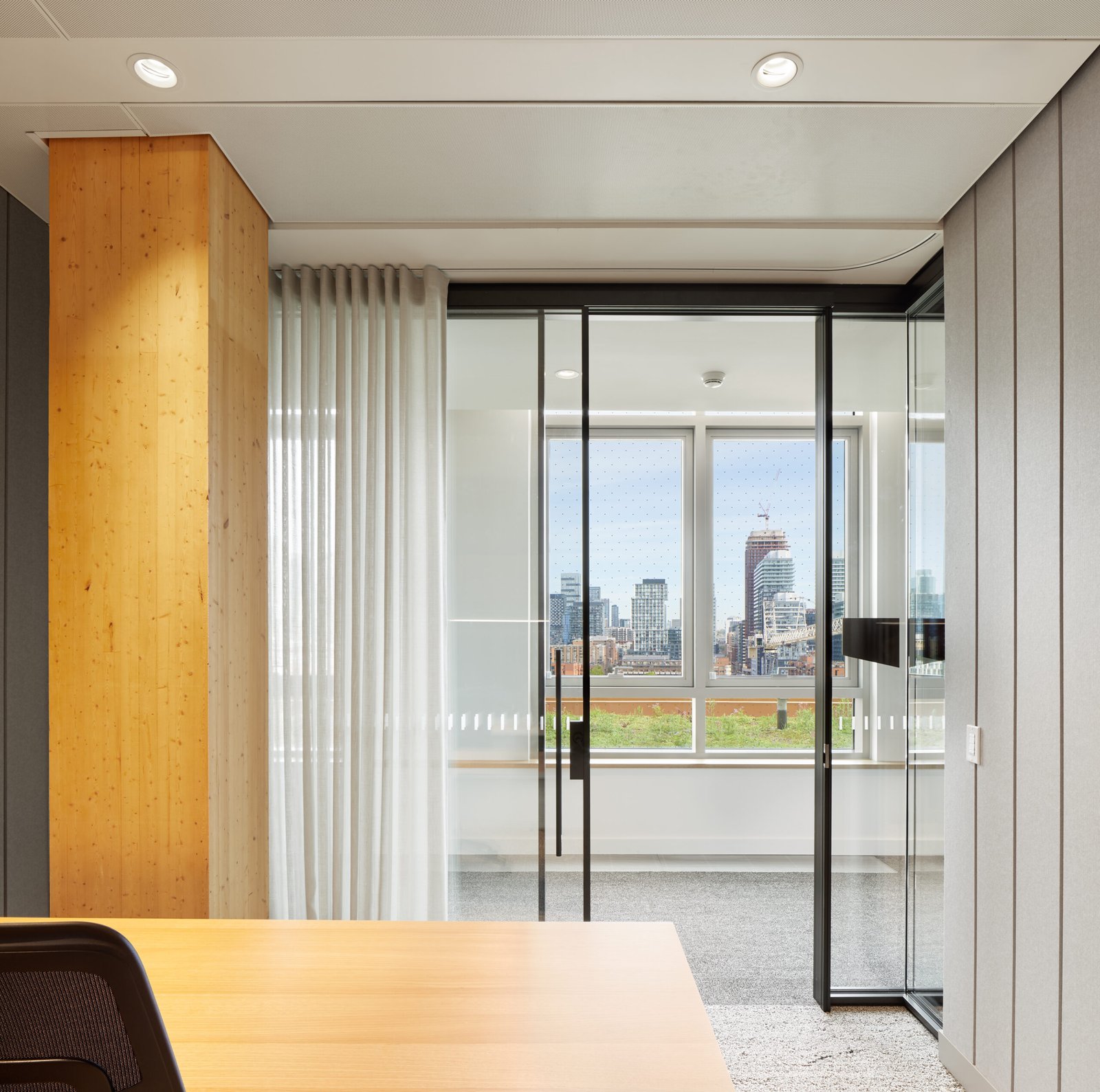
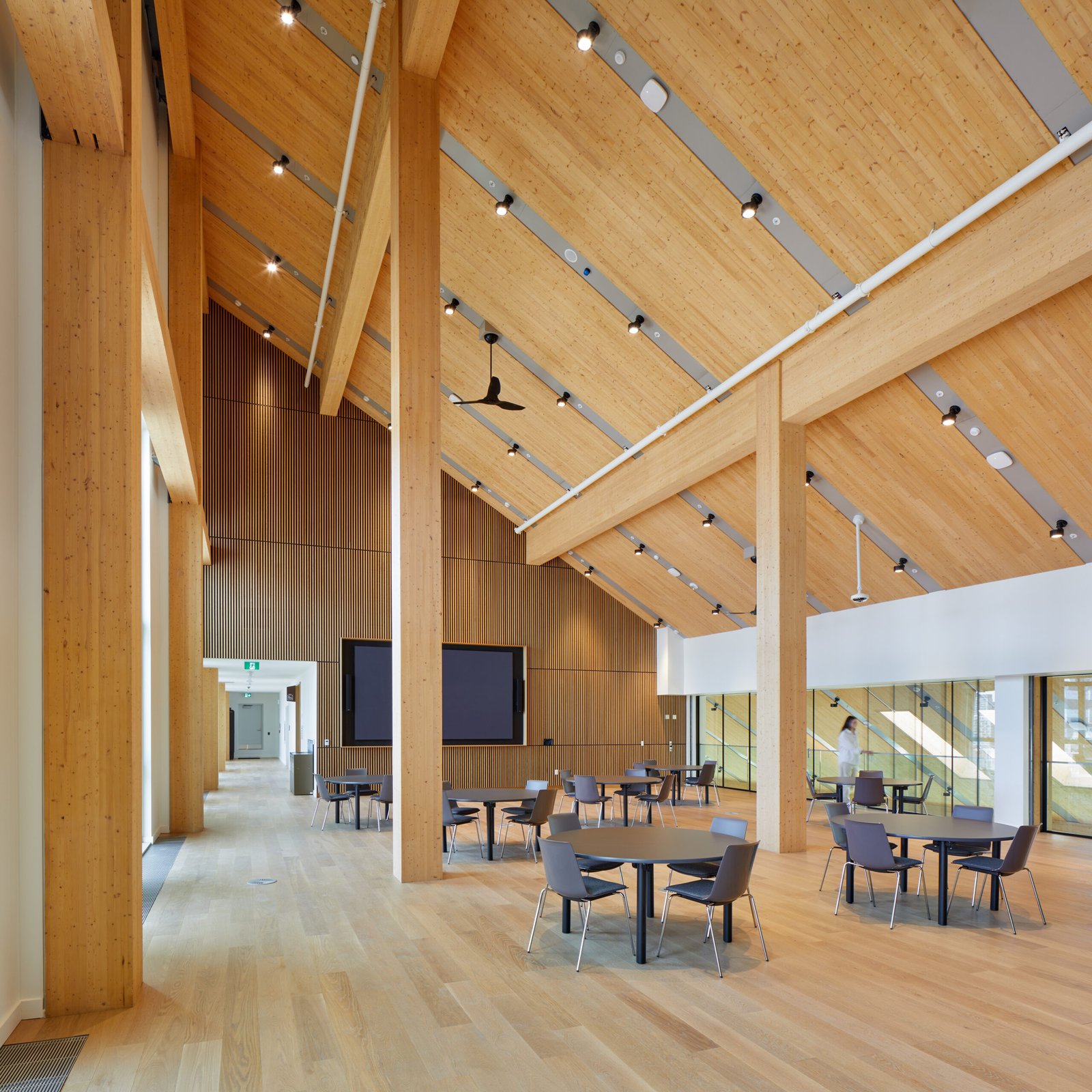
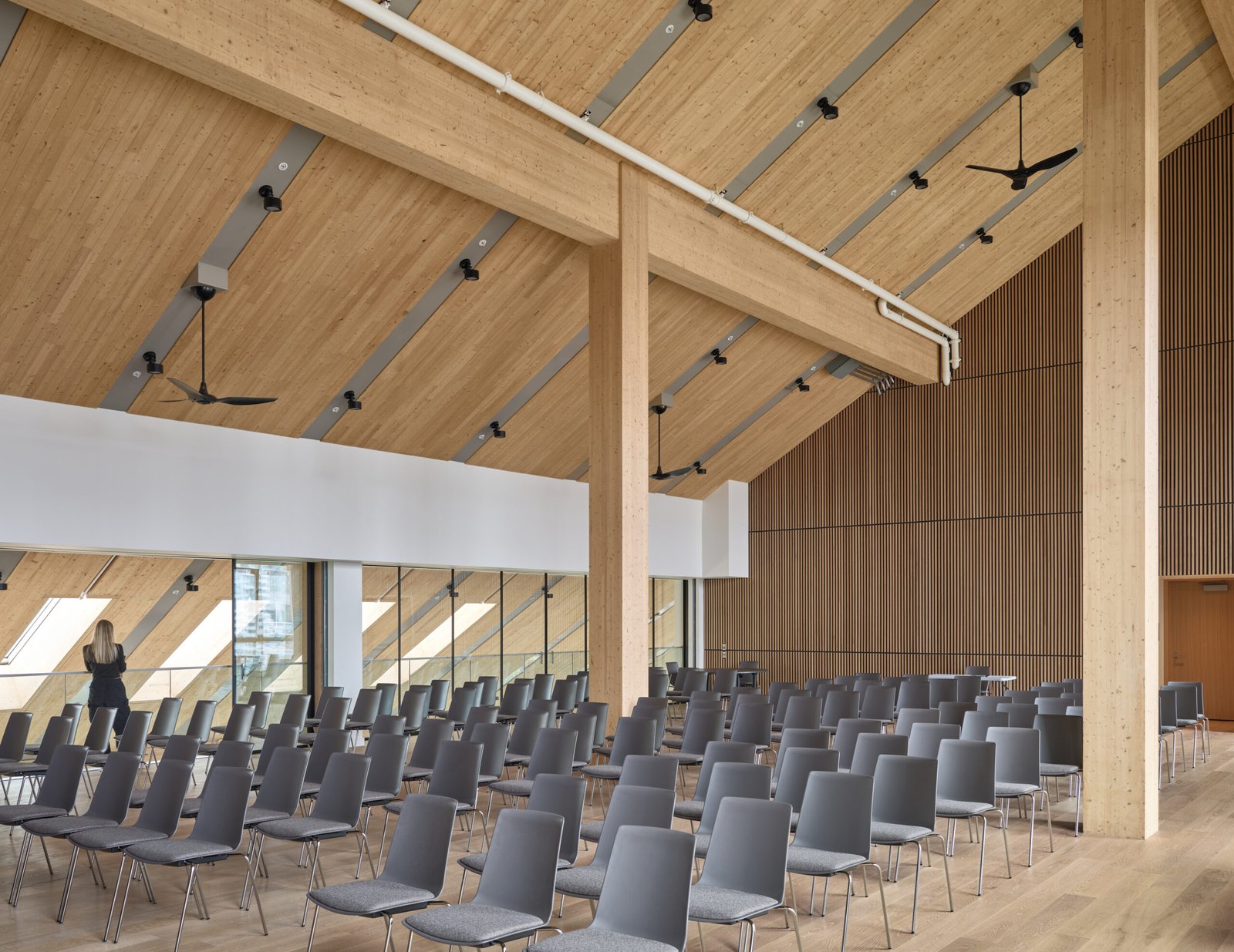
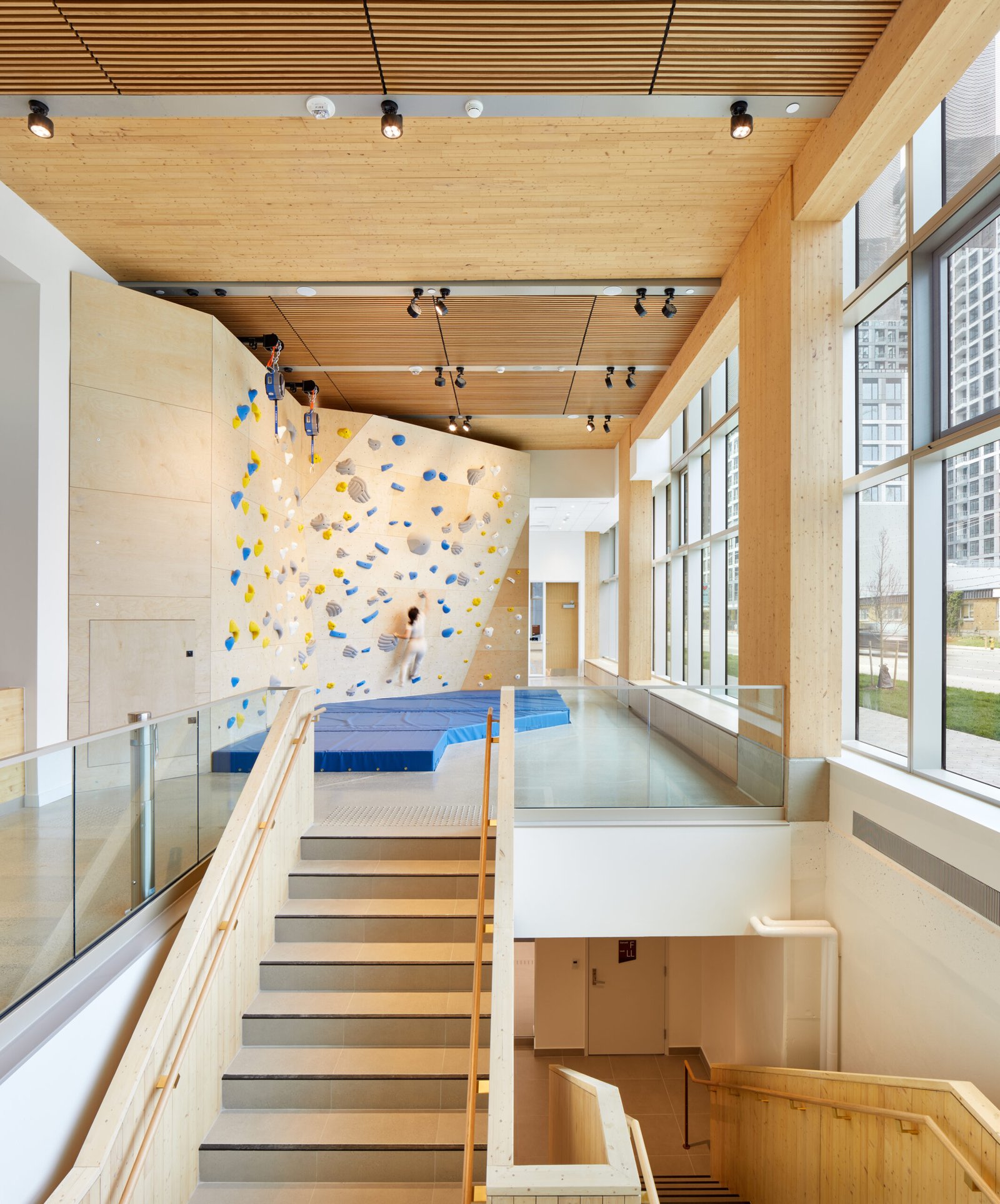
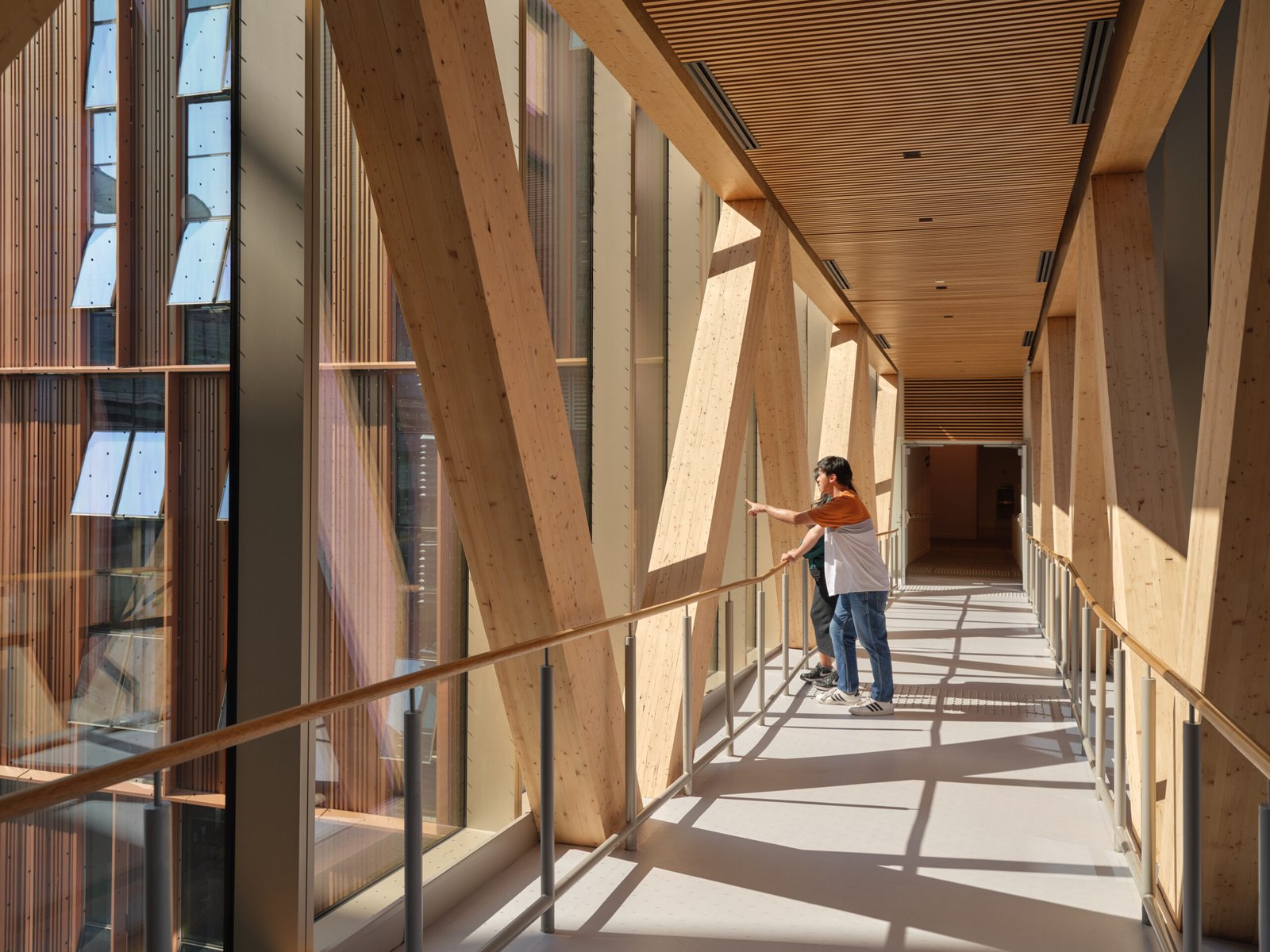
At entry, the soaring all-wood Learning Landscape physically and spiritually uplifts: monumental black spruce columns, the largest weighing 22,000 pounds, rise like tall forest trees. Slatted wood surfaces dapple daylight. A sculptural stair encourages users to rise through the building on foot. Sensory richness continues – not only through the natural appearance and even the smell of the wood, but also through operable windows, abundant natural light, and two nine-storey solar chimneys, which deliver fresh air via energy-free passive ventilation. Quiet ‘breathing rooms’ enhance the journey up the building, with oak desks, calming acoustics, and intuitive wayfinding that supports wellness and focus. Crowning the building, the Limberlost Event Space offers panoramic vistas of the lake and skyline.
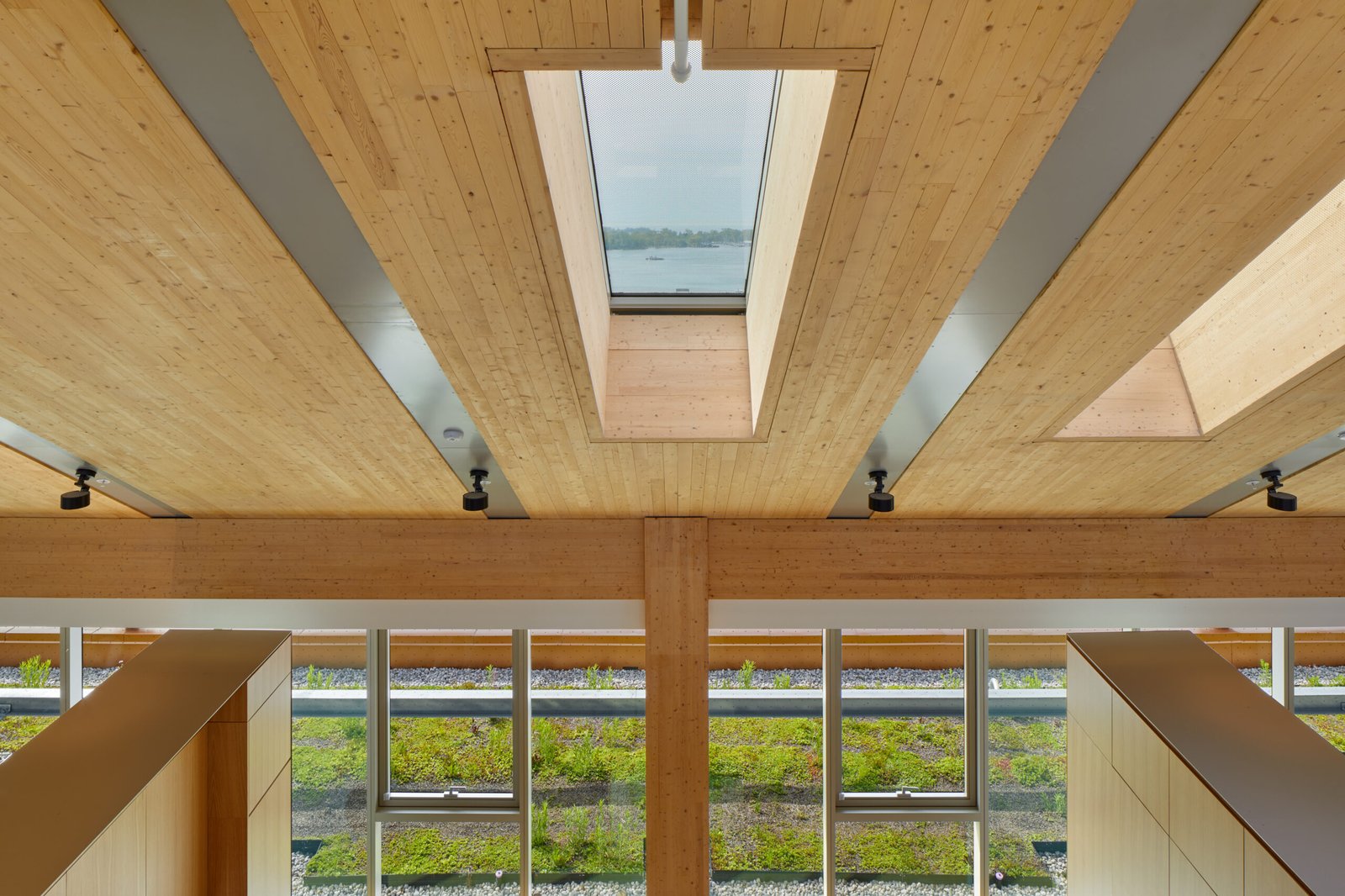
Tall timber and net-zero carbon are particularly challenging targets in Toronto’s regulatory context and extreme climate, and the team pioneered new solutions that are now reshaping national and provincial codes, which, at the project’s inception, only permitted non-assembly/public mass timber buildings of six storeys. Of note, a new structural system to enable 9-metre (29.5 foot), column-free spans across the 10 storeys within a strict height limit was a critical project ambition. Working with Fast + Epp, the team developed this shallow structural assembly of glulam columns, CLT-concrete slab bands, and CLT infill panels. Slim and refined, the solution demonstrates how designers can overcome the bulk typically associated with mass timber for more refined and elegant interiors. The team has now open-sourced this innovation, encouraging knowledge transfer and future innovation.
More than a sustainable landmark, Limberlost Place is an environment unlike any its users have known – an architectural catalyst for inspired exploration and learning. Commenting on the project, Carol Philllips, Partner, MTA said: “We approach this project with a great sense of pride and humility. It’s been a significant and deeply collaborative project that has had a major influence on everyone who has contributed to it, as well as the broader design and construction industry. During construction, the team provided over 350 tours and the project won 24 international design, sustainability and engineering awards. With its launch, we’re now looking forward to seeing what it does for George Brown’s community, socially and aesthetically.”